Article Contents:
- The History of Balusters: From Ancient Palaces to Modern Interiors
- Origin and Etymology of the Term
- Evolution of Balusters in Architecture
- Functional Purpose of Balusters in Modern Construction
- Structural Role and Safety
- Decorative Function and Impact on Interior Design
- Variety of materials for baluster manufacturing
- Wooden Balusters: Traditions and Natural Beauty
- Metallic balusters: strength and modern style
- Stone, Glass, and Composite Balusters
- Styles and Design of Balusters: From Classicism to Avant-Garde
- Classic Forms and Their Characteristics
- Modern trends and innovative solutions
- Technical parameters and standards when selecting balusters
- Sizes and proportions: what you need to know
- Safety requirements and load-bearing characteristics
- Manufacturing Technologies for Balusters: From Handcrafted to CNC
- Traditional Methods and Handcrafted Work
- Modern manufacturing technologies
- Installation and Mounting of Balusters: Key Aspects
- Methods of Attaching Newels to the Base
- Technical nuances and recommendations from professionals
- Care and Maintenance of Balusters: Extending Service Life
- Daily Care and Prevention of Damage
- Periodic Maintenance and Restoration
- Economic Aspects of Choosing Balusters
- Price-to-Quality Ratio for Different Materials
- Long-Term Economic Efficiency
- How to choose the perfect balusters for your interior
- Selection criteria considering interior style
- Practical Tips for Choosing and Ordering Balusters
- Conclusion: Create a Unique Staircase with Perfect Balusters
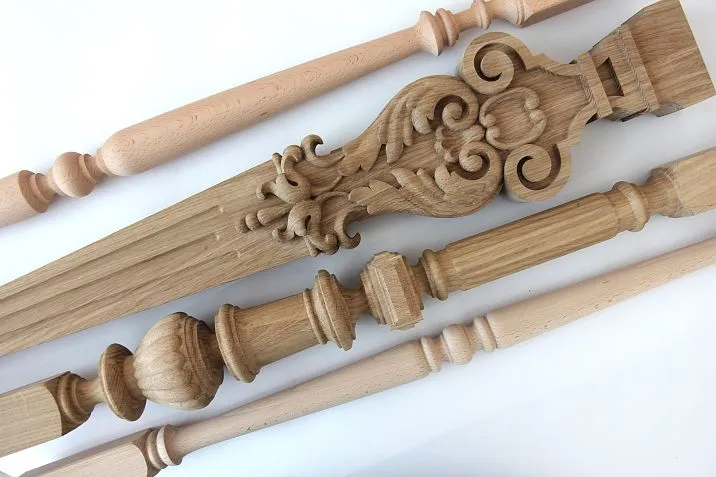
Have you ever wondered why some staircases literally capture attention, becoming the focal point of an interior? The secret lies in the details, and one of the most important is balusters. These elegant vertical supports not only hold handrails but also create a unique architectural look for the entire structure. Looking at baluster photoyou will immediately understand how diverse these elements can be — from classic turned to modern minimalist forms.
In this article, we will dive into the fascinating world of balusters, uncovering their history, functional purpose, variety of materials and forms. You will learn how to properly choose balusters for your interior, which technical parameters to pay attention to, and how these elements can transform the space of your home. Ready to discover new facets of familiar things? Then keep reading!


The History of Balusters: From Ancient Palaces to Modern Interiors
Few people consider that balusters have a multi-century history, tracing back to deep antiquity. These architectural elements underwent a long evolution before becoming what we see them as today.




The word 'baluster' has an interesting origin. According to one version, it comes from the name of the pomegranate flower, whose bud resembles the classic form of this architectural element. Another version links the name to reduced copies of columns used in architecture.
Amazingly, neither in Ancient Rome nor in Ancient Greece, despite their advanced architecture with columns and pilasters, balusters did not exist in the form we know them today. These elements began to appear only in the Renaissance era, and initially were used exclusively for balcony railings.
Evolution of Balusters in Architecture
Our factory also produces:


Evolution of Balustrades in Architecture
The first application of balusters for staircases dates back to the 15th century. It was then that architects began experimenting with forms and materials, creating increasingly refined and decorative variations of these elements. From the end of the 15th century, balusters became an indispensable part of architectural decoration, adorning the interiors of palaces, parks, and squares.
Over time, as architectural styles changed, so did the design of balusters. In the Baroque era, they became more ornate and decorative, in Classicism — strict and symmetrical, while Modernism brought asymmetrical, flowing forms. However, the core concept of balusters as vertical supports for handrails remained unchanged.
Today, looking at baluster photo, we can see how traditional forms combine with modern materials and technologies, creating unique architectural solutions for any interior.
Get Consultation
Functional Purpose of Balusters in Modern Construction
Balusters are not just decorative elements. They perform a number of important functions that make them indispensable in construction and interior design.
Structural Role and Safety
The primary function of balusters is to ensure safety. They create a reliable barrier, preventing falls from staircases or balconies. This is especially important in homes where there are children or elderly people.
In addition, balusters provide rigidity to the entire railing structure. They evenly distribute the load applied to the handrails, ensuring the stability and longevity of the entire system. Without balusters, handrails would be unstable and unable to perform their protective function.
According to building codes, the distance between balusters should not exceed 12 cm to prevent a child from slipping between them. This is an important parameter that must be considered when designing staircase railings.
Decorative Function and Impact on Interior
Despite the importance of their structural role, it is often the decorative function of balusters that takes center stage. These elements are capable of completely transforming the appearance of a staircase and the space as a whole.
Balusters can become true works of art, especially if they are crafted using carving or other decorative techniques. They set the tone for the entire interior, highlighting its style and character. Just look at baluster photo, to understand how diverse the design of these elements can be.
Depending on the chosen style, balusters can be:
- Strict and minimalist - for modern minimalist interiors
- Elegant and carved - for classical and neoclassical styles
- Wrought and ornate - for loft or industrial style interiors
- Combined, combining different materials - for eclectic spaces
Variety of materials for manufacturing balusters
Choosing a material for balusters is not only an aesthetic question, but also a practical one. Each material has its unique properties, advantages, and application characteristics.
Wooden balusters: traditions and natural beauty
Wood - the most traditional and, perhaps, the most popular material for making balusters. Its main advantages:
- Ecological and natural. Wood is a completely natural material that creates a special atmosphere of warmth and coziness in the home.
- Variety of species with different textures and shades. For making balusters, oak, beech, ash, pine, birch, larch, and other species are used.
- Ease of processing, allowing for the creation of complex decorative forms.
- Ability to restore after damage, significantly extending service life.
Wooden balusters can be turned (with carving done on a lathe) or carved (with a shape created by planing and forming radiused grooves and recesses). Each type has its own features and aesthetic qualities.
The service life of quality wooden balusters, with proper care, can reach 50 years and more. To protect against negative environmental effects, they are coated with varnish, oils, or wax.
Metallic balusters: strength and modern style
Metal balusters, especially those made of stainless steel, are becoming increasingly popular due to their unique qualities:
- Exceptional strength and durability. Metal balusters can withstand significant loads without deformation.
- Resistance to corrosion (especially stainless steel items), making them ideal for use in humid areas or outdoors.
- Easy maintenance. Metal surfaces do not absorb dirt and are easy to clean.
- Modern appearance that perfectly fits into high-tech, loft, or minimalist interiors.
Metal balusters can have various shapes and finishes: polished, matte, with decorative elements or perforations. They are often combined with other materials, such as glass or wood, creating unique design solutions.
Stone, glass, and composite balusters
Besides wood and metal, balusters are also made from other materials:
- Natural or artificial stone (marble, granite) creates a sense of luxury and monumentality. Stone balusters are exceptionally durable but have significant weight, requiring a particularly strong base.
- Glass adds lightness and airiness to the structure. Glass balusters are made from tempered glass, which has high strength and safety in case of breakage.
- Concrete and plaster are primarily used for outdoor structures or in loft or industrial-style interiors.
- Composite materials combine lightness, strength, and resistance to external influences. They can imitate other materials but possess improved characteristics.
Baluster styles and design: from classic to avant-garde
The choice of baluster style largely determines the character of the entire staircase and affects the overall perception of the interior. Let's consider the main stylistic directions and their features.
Classic forms and their characteristics
Classic balusters are characterized by symmetry and proportion. Their shape often resembles a vase or flower bud with expansion in the central part. Main characteristics of classic balusters:
- Symmetrical silhouette with smooth transitions between elements
- Proportionality and harmony of lines
- Traditional cross-section of 50×50 mm or 60×60 mm for wooden balusters
- Presence of decorative elements: rings, grooves, capitals
Classic balusters fit perfectly into interiors in the styles of classicism, neoclassicism, empire, baroque, or rococo. They create a sense of solidity and traditional elegance.
Colonial style, as a subtype of classicism, is characterized by simpler forms with clear geometric lines. Balusters in this style usually have a clear division into three sections: base, shaft, and capital.
Modern trends and innovative solutions
Modern baluster design reflects general trends in architecture and interior design: striving for simplicity, functionality, and clean lines.
Minimalist balusters have simple geometric shapes, often without decorative elements. They may be square, rectangular, or round in cross-section, sometimes positioned at an angle to create a dynamic composition.
Innovative solutions include combining different materials:
- Wooden handrails with metal balusters
- Glass panels framed in wood or metal
- Cable systems with wooden or metal posts
- Combination of different wood species or metals to create contrasting accents
Individual designer solutions are gaining increasing popularity: custom carved balusters with unique patterns, integration of brand or family symbols, use of unusual materials or forms.
When reviewing baluster photo, you can find inspiration for creating a unique design for your staircase that reflects your personal style and taste.
Technical parameters and standards when selecting balusters
When selecting balusters, it is necessary to consider not only aesthetic preferences but also technical parameters that ensure the safety and functionality of the structure.
Dimensions and proportions: what to know
Standard baluster dimensions are determined by construction norms and regulations, as well as ergonomic requirements:
- The height of balusters depends on the height of the handrail, which, according to regulations, should be 90-100 cm from the level of the step or floor. In homes where children live, it is recommended to increase the height to 110-120 cm.
- The cross-section of wooden balusters is usually 50×50 mm or 60×60 mm for square ones, and 50-60 mm in diameter for round ones. Metal balusters can have a smaller cross-section due to the high strength of the material.
- According to regulations, the distance between balusters should not exceed 12 cm to prevent a child from slipping between them.
- The number of balusters is calculated based on the length of the staircase and the recommended distance between them. The optimal distance is 15 cm between the centers of adjacent balusters.
Safety Requirements and Load Characteristics
Safety is a key aspect when designing stair railings. Main requirements include:
- Structural strength. The railing must withstand a horizontal load of at least 0.3 kN/m (approximately 30 kg per linear meter).
- No sharp edges or burrs. All railing elements must have rounded edges and smooth surfaces to prevent injuries and snagging clothing.
- Resistance to swaying. Quality railings should not have play or movable joints that may create a sense of unreliability.
- Material durability. The materials used must retain their properties throughout the entire service life of the structure.
When selecting balusters, consider the operating conditions: for outdoor structures or rooms with high humidity, choose materials resistant to moisture and temperature fluctuations.
Baluster manufacturing technologies: from handcraft to CNC
The quality of balusters largely depends on the manufacturing technology. Modern production combines traditional methods with innovative technologies, ensuring high precision and quality of finished products.
Traditional methods and handcraft
Handmade balusters are a true art requiring high skill and craftsmanship:
- Turning is a classic method for manufacturing turned balusters. The blank is secured in a lathe and rotated around its axis, while the craftsman gradually shapes the desired profile using special cutters. This process requires high skill and allows creating items with smooth lines and transitions. Each baluster is unique, with minor individual characteristics.
- Hand carving is used to create decorative elements. The craftsman uses special chisels and cutters of various shapes to carve patterns according to a pre-drawn design. This process is extremely labor-intensive but allows creating unique artistic pieces. Hand carving is especially valued in restoration work and recreating historical interiors.
Handcrafted balusters possess special value and individuality. They carry the energy of the craftsman and become not just a functional element, but a true work of art.
Modern manufacturing technologies
Modern technologies allow creating balusters with high precision and repeatability, reducing production time and cost of the items:
- CNC machining (numerically controlled machines) - a computer model of the baluster is converted into a machine program, and multi-axis milling machines with high precision reproduce the desired shape. This technology ensures perfect repeatability of items, allows creating complex shapes difficult to achieve manually, and significantly reduces production time.
- Laser cutting and engraving is used to create thin decorative elements and patterns. This technology ensures exceptional precision and line purity, allowing to apply logos, ornaments, and other decorative elements. Particularly effective when working with plywood and thin wooden panels.
- 3D scanning and reproduction allows accurately recreating historical baluster samples. This technology is used in restoration and recreating lost elements, ensuring high accuracy in copying complex shapes and reducing time spent on design and planning.
When choosing balusters, pay attention to the manufacturing technology - it directly affects the quality, precision, and durability of the items. On baluster photo you can see the difference between handcrafted items and those produced using modern technologies.
Baluster installation: key aspects
Even the highest quality balusters will not serve long and reliably without proper installation. Let's consider the main installation methods and technical nuances of this process.
Ways to mount balusters to the base
There are several main methods of attaching balusters to the base:
- Shank (dowel) mounting - holes are drilled in the lower part of the baluster and in the base (step or underbaluster), into which a wooden or metal dowel, previously coated with glue, is inserted. This method ensures a secure connection without visible fasteners, but requires high precision in marking and drilling.
- Self-tapping screw mounting - the baluster is secured to the base using self-tapping screws driven at an angle. Screw heads are recessed and masked with wooden plugs or putty. This method is easy to implement and ensures high connection strength, suitable for most types of staircases.
- Installation in grooves - grooves are cut into the stringer or understep, into which the balusters are inserted. The connection is secured with glue and/or small wedges. This method provides an aesthetic appearance without visible fasteners, but requires high precision in groove manufacturing.
Technical nuances and professionals' recommendations
When installing balusters, the following technical nuances should be considered:
- Connection of handrails to balusters can be achieved using special grooves at the bottom of the handrails, metal fastening elements (angles, plates), or special fastening systems that compensate for wood thermal expansion.
- Connection of handrail sections on straight sections is performed using angled mortise joints reinforced with dowels, while on turns special corner elements or bent sections are used. All connections must be smooth, without protruding elements that could injure the hand.
- Final finishing - after installation, all wooden elements are sanded to remove irregularities, then a finish coating (varnish, oil, wax) is applied to protect the wood and achieve the desired shade. Special attention is paid to handrails, which must be perfectly smooth and pleasant to the touch.
Professionals recommend carefully planning the placement of balusters, making precise measurements, and considering all structural features before beginning installation. This will help avoid errors and ensure a high-quality result.
Baluster maintenance: extending service life
Proper care of balusters significantly extends their service life and maintains their attractive appearance. Let's consider the main aspects of servicing these elements.
Daily care and prevention of damage
Regular care of balusters includes:
- Dust cleaning - use a soft dry cloth or special microfiber cloths. Movements should be directed along the grain of the wood for wooden balusters. Avoid using wet cloths for daily cleaning.
- Protection from mechanical damage - avoid impacts from hard objects on balusters, prevent contact with sharp metal objects. When moving furniture and large items, protect wooden surfaces with soft materials.
- Maintaining optimal microclimate - relative air humidity should be maintained within 40-60%. Avoid sudden temperature fluctuations. Use humidifiers or dehumidifiers as needed.
Periodic maintenance and restoration
Periodic baluster maintenance includes:
- Updating protective coating - depending on usage intensity and coating type, it is recommended to renew the protective layer every 3-5 years. Before applying a new coating, thoroughly clean and lightly sand the surface. Choose coatings compatible with the originally used materials.
- Repairing minor damage - small scratches can be masked using special wax pencils matched to the wood color. Deeper damage requires filling with specialized wood putty, followed by sanding and varnishing. In cases of significant damage to individual elements, replacement may be necessary.
- Professional restoration - for antique or valuable staircases, it is recommended to involve professional restorers. Comprehensive restoration may include disassembling the structure, restoring or replacing damaged elements, renewing all connections, and final finishing. Quality restoration preserves historical value and extends the staircase’s lifespan for decades.
Economic aspects of baluster selection
When planning a budget for a staircase, it is important to consider not only initial costs but also the long-term economic efficiency of various solutions.
Price-to-quality ratio for different materials
Baluster costs vary significantly depending on material, manufacturing complexity, and design:
- High-end wooden balusters (oak, walnut, beech) have high cost (from 1000 rubles per piece), but exceptional longevity (50+ years with proper care), high resistance to mechanical damage, dimensional and shape stability under humidity changes, and the possibility of multiple restorations.
- Mid-range wooden balusters (ash, larch) have moderate cost (500-1000 rubles per piece), good longevity (30-40 years), sufficient strength for most household conditions, good workability, and restorability.
- Economical options (pine, birch) have affordable pricing (from 200 rubles per piece), lifespan of 15-25 years with proper care, but require more careful protective treatment, are more susceptible to mechanical damage, and may require more frequent renewal.
- Metallic balusters have a wide price range depending on material (steel, stainless steel, wrought iron) and manufacturing complexity. They feature high durability and minimal maintenance requirements.
Long-term economic efficiency
Investing in high-quality balusters made from durable materials may seem significant, but in the long term, they prove economically justified:
- No need for replacement. High-quality balusters made from hardwood or stainless steel can serve the entire lifespan of a home without requiring full replacement.
- Restorability. Unlike many modern materials, natural wood can be restored, allowing the original appearance to be restored without full element replacement.
- Increased property value. A quality staircase with elegant balusters increases the market value of a home or apartment.
- Ecological aspect. Natural materials, especially wood, are renewable resources, and their production and disposal cause minimal environmental harm compared to synthetic materials.
When choosing balusters, it is important to find the optimal balance between initial costs and long-term economic efficiency, taking into account usage conditions, interior style, and personal preferences.
How to choose the perfect balusters for your interior
Choosing balusters is not only a technical but also a creative process that requires attention to detail and understanding of the overall interior concept.
Criteria for selection based on interior style
When choosing balusters, the following criteria must be considered:
- Compatibility with interior style. Balusters should harmoniously fit into the existing or planned room design. For classic interiors, choose turned balusters with decorative elements; for modern interiors, opt for minimalist forms; for eclectic interiors, select unusual material and form combinations.
- Compatibility with other staircase elements. Balusters should harmonize with handrails, treads, and other staircase elements in color, texture, and style.
- Proportionality. Size and shape of balusters should match the scale of the room and the staircase itself. In small spaces, large balusters may appear bulky, while in spacious halls, overly thin elements may look fragile and disproportionate.
- Functionality. Besides aesthetic qualities, balusters must ensure safety and ease of use for the staircase. This is especially important in homes with children or elderly residents.
Practical tips for selecting and ordering balusters
To ensure a successful choice of balusters, use the following practical tips:
- Explore various options. Browse catalogs, visit exhibitions, and study baluster photo online to understand what options exist and what you like.
- Define your budget. Determine in advance how much you are willing to spend on balusters, considering their quantity and material.
- Consult professionals. Interior designers and staircase specialists can provide valuable recommendations, taking into account the specific features of your space and interior style.
- Request samples. Before ordering a large quantity of balusters, ask for samples or visit a showroom to evaluate the material quality and craftsmanship.
- Assess wood quality (for wooden balusters). Pay attention to the absence of large knots, cracks, and other defects, uniform color and texture, and wood moisture content (optimal for interior work: 8-12%).
- Evaluate manufacturing precision. Quality balusters should have symmetrical shape, no waviness or unevenness on the surface, precise dimensions (tolerance not exceeding 1-2 mm), and professional sanding.
- Clarify delivery and installation conditions. Some manufacturers offer delivery and professional installation services, which can significantly simplify the installation process.
- Check warranty obligations. Reliable manufacturers provide warranties on their products, which is additional confirmation of their quality.
Conclusion: create a unique staircase with ideal balusters
Choosing balusters is a crucial step in creating a staircase that becomes not just a functional element, but a true decoration of your home. As we’ve seen, balusters serve not only a structural role, ensuring safety and reliability of the railing, but are also a key decorative element defining the style and character of the entire staircase.
The modern market offers a vast variety of balusters in different materials, forms, and styles, allowing you to find the perfect solution for any interior and budget. From classic turned wooden balusters to contemporary metal or glass constructions — your choice is limited only by your imagination and preferences.
When choosing balusters, it is important to consider not only aesthetic aspects but also practical ones: material, dimensions, mounting method, durability, and ease of maintenance. Properly selected and professionally installed balusters will delight you with their beauty and reliability for many years.
STAVROS company specializes in producing high-quality balusters from various materials, offering a wide range of models suitable for any interior style. Professional consultants will help you choose the optimal solution, taking into account all your preferences and room characteristics. Visit the catalog baluster photoTrust STAVROS professionals to create your staircase, and the result will exceed all your expectations!
Art of balusters: how to choose the perfect elements for your staircase | STAVROS Company