Article Contents:
- Historical Origins of Architectural Details
- Ancient Roots
- Medieval Transformations
- Renaissance: Return to Antiquity
- Baroque and Rococo: triumph of ornamentation
- Classicism: Return to Purity of Forms
- Eclecticism and Modernism
- Mullions as Decorative Center
- Constructive Significance
- Proportions of Muntins
- Decorative Treatment of Mullions
- Mullions and Stylistics
- Color solutions
- Sash Rails Above Doors and Windows
- Practical Functions
- Types of transoms
- Decorative Filling
- Materials of Sash Rails
- Sizes and proportions
- Framing of Doorways
- Structure of Portal
- Scale of Portal
- Decorative Filling
- Internal Portals
- Arched Portals
- Conclusion: Architecture as Art of Details

Architecture speaks the language of details. While the general volumes of a building create the first impression, it is precisely the details that form the character, individuality, and stylistic affiliation of the structure.Mold Intermediate Elementorganizes the vertical composition of the door panel, creating a visual structure.Sash Rail for Doorprotects the opening from precipitation and simultaneously emphasizes its significance, transforming a utilitarian element into an architectural accent.Door Frame Installationcreates a frame for transition between spaces, visually highlights the opening against the wall, forms the solemnity of entry. These elements, developed over millennia of architectural practice, continue to function in modern buildings, connecting us to the richest tradition of architecture.




Historical Origins of Architectural Details
The history of architectural details is the history of human civilization, captured in stone, wood, clay. Each era contributed its share to the development of the architectural language, enriching it with new forms, meanings, and technologies.




Ancient Roots
Ancient Greece laid the foundation of European architectural tradition, creating an order system — a universal language of architectural forms. In Greek architecture, the sash was called a 'hypertrom' — literally 'above the door'. This element was formed as a reduced copy of the antabement — the horizontal part of the order, crowning the column. The architrave, frieze, and cornice were repeated above the door opening in miniature, creating a scaled consistency across all parts of the building.
Greek temples demonstrated perfection in proportions, where every detail was mathematically connected to all others.Sash Rail for DoorIt was not a random ornament, but a logical consequence of the order system. Its size was determined by the module — the basic unit of measurement, usually equal to the radius or diameter of the column. All other dimensions were expressed in modules, creating a harmonious relationship.
Roman architecture inherited the Greek system but developed it, adding opulence, ornamentation, and engineering boldness. The Romans actively used arches, vaults, and domes — constructions unknown to the Greeks at such scales.Door Frame InstallationIn Roman architecture, it became more complex, including not only straight coverings but also arched forms.
Palazzo Cancelleria in Rome demonstrates the canonical form of the sash as part of Bramante-style windows — semicircular openings inscribed within a rectangle. The profiled cornice above the window not only protects from rain but also creates a rhythmic facade structure. Repeating sashes form horizontal lines, organizing the perception of the long wall.
Our factory also produces:


Medieval Transformations
The Middle Ages brought a radical rethinking of architectural forms. Romanesque architecture, with its massive walls, small windows, and semicircular arches, created its own language of details.Door Frame InstallationGothic architecture took verticality to the absolute. Pointed arches, reaching upward, changed the character of all architectural details. Door portals of Gothic cathedrals became complex sculptural compositions. The tympanum — the field above the door under the arch — was filled with relief images of biblical scenes. Archivolts were adorned with figures of saints, angels, and chimeras.
In Gothic architecture, it transformed into a 'vomperg' — a pointed gable above the portal, often adorned with 'crabbs' — hook-like projections at the edges — and a 'finial' — a finishing element at the top. This vertical composition emphasized Gothic architecture's aspiration toward heaven.
Sash Rail for DoorIn Gothic, it transformed into a gable — a pointed triangular pediment above the portal, often adorned with crab claws — hook-like projections at the edges, and a finial — the finishing element at the top. This vertical composition emphasized the Gothic architecture's upward reach toward the sky.
Medieval cathedral door sashes performed a structural function — reinforcing massive wooden panels. Wrought iron appliqués with scrolls, rosettes, and geometric patterns not only strengthened the doors but also created expressive decoration. Vertical and horizontal iron strips divided the door into rectangular panels — precursors to future latticed constructions.
Get Consultation
The Renaissance: Return to Antiquity
The Renaissance returned to ancient principles, but reinterpreted them creatively. Renaissance architects — Brunelleschi, Alberti, Bramante — studied Roman ruins, measured ancient temples, and restored forgotten proportional systems. The result was a synthesis of ancient harmony and a new understanding of space.
Door Frame InstallationIn Renaissance architecture, classical forms returned — pilasters on the sides, an antabement on top, a triangular or pointed gable. But the scale became different — more human, proportional, not overwhelming. Palazzo Rucellai in Florence demonstrates the Renaissance approach to facade decoration, where each element is subordinate to a strict proportional system.
Andrea Palladio systematized Renaissance principles in his treatise 'Four Books on Architecture,' which became architects' bedside book for centuries. Palladian windows — three-part openings with a semicircular central element — required a new approach to sashes.Sash Rail for DoorIt repeated the curved shape of the opening, creating complex plasticity.
Sebastiano Serlio developed 'serlians' — windows similar to Palladian ones but with wider side openings. Framing such windows became an architectural composition, where the sash played a key role, visually uniting the three openings into a single whole.
Baroque and Rococo: triumph of ornamentation
The 17th–18th centuries brought unprecedented decorative richness. Baroque aimed for dynamism, theatricality, emotional impact.Door Frame InstallationIt became a complex composition with broken pediments, volutes, cartouches, sculptural elements.
The broken pediment — a Baroque invention, where the two halves of the triangle are spread apart, and a decorative element — a vase, coat of arms, or sculptural group — is placed in the gap — created a dramatic effect, drew attention, emphasized the importance of the entrance. The consoles under the sash transformed into lavish S-shaped scrolls with acanthus leaves.Sash Rail for DoorWith a broken pediment, it created a dramatic effect, drew attention, and emphasized the importance of the entrance. The consoles under the sash became lush S-shaped scrolls with acanthus leaves.
Rococo pushed decoration to the extreme. Asymmetric compositions, rocaille ornaments — stylized shells and scrolls — covered all accessible surfaces.Mold Intermediate ElementOn Rococo palace doors, it represented intricate carving, where vegetal and abstract motifs interwove in whimsical compositions.
Reaction to the excesses of Baroque and Rococo, Classicism emerged at the end of the 18th and beginning of the 19th century. Architects returned to ancient principles, but in a new interpretation. Strictness, symmetry, clarity of composition, restraint in decoration became the main principles.
In Classicism, it became minimalist — clear pilasters, straight antabement, triangular gable without excesses. Decoration was reduced to a minimum — simple capitals, shallow relief, geometric clarity.
Door Frame InstallationIt formed as a three-part structure — architrave, frieze, cornice — with minimal profiling.Sash Rail for DoorNeoclassicism — the late stage of Classicism associated with Napoleonic France — added military symbolism, Egyptian motifs, monumentality. But the core principles remained Classicist — symmetry, proportionality, restraint.
In Classicism, it became minimalist — clear pilasters, straight antabement, triangular gable without excesses. Decoration was reduced to a minimum — simple capitals, shallow relief, geometric clarity.
Eclecticism and Modernism
The 19th century brought eclecticism - a deliberate mixing of styles from different eras. Neo-Renaissance, neo-baroque, neo-Gothic, neo-Russian style - all historical styles were revived, often within the same building.Door Frame InstallationIt could be Gothic on the main facade and Renaissance on the side.
Modernism at the end of the 19th and beginning of the 20th century created a fundamentally new visual language. Abandonment of symmetry, smooth organic forms, plant motifs, integration of various art forms.Mold Intermediate ElementIn modernism, they represented stylized plants - irises, lilies, climbing vines - with flowing, smooth lines.
Sash Rail for DoorIn modernism, they often took an asymmetrical form, following the general principle of abandoning classical symmetry. Cornices became stylized stems, pediments acquired curved outlines. Every detail became unique, created specifically for a particular building.
Mullions as a decorative center
A mullion - a vertical element dividing the door panel into sections - performs numerous functions, from structural to purely decorative.Mold Intermediate ElementIt organizes the vertical composition of the door, creates a visual structure, adds decorative elements.
Structural significance
Historically, mullions arose from structural necessity. High door panels, 2-2.5 meters tall, made of boards, are prone to warping - deformation due to humidity changes. Horizontal rails - upper and lower - limited horizontal deformation. Vertical mullions added rigidity vertically, preventing board sagging.
The framed door construction - a frame of beams with inserted panels - developed this idea. Side posts, upper and lower rails form the perimeter. Mullions - vertical beams between top and bottom - divide the opening into two, three, or four sections. Panels - thin boards - are inserted into the frame slots, filling the space between beams.
Such a construction is significantly more stable than a solid panel. The frame of beams provides rigidity, while thin panels can slightly expand or contract within the slots without visible deformation of the door.Mold Intermediate ElementIn modern doors, mullions are often purely decorative - the door may be made of MDF or plywood, requiring no reinforcement, but mullions are retained for visual structure.
The number of mullions determines the division of the door. One mullion creates two vertical panels - a symmetrical composition. Two mullions - three panels, where the central one may be wider than the side ones. Three mullions - four panels, creating a more complex rhythm. Too many mullions create clutter, too few - monotony.
Panel proportions
The ratio of height to width of panels is critically important for harmony. Vertically elongated panels with proportions of 1:2 or 1:3 emphasize the height of the door, creating an upward thrust. Such proportions are typical for grand entrance doors, entrances to ceremonial rooms.
Panels close to square with proportions of 1:1.2 or 1:1.5 create a more calm, balanced composition. Suitable for doors to living rooms, where no special grandeur is required. Horizontally elongated panels are rare - they visually lower the door, contradicting its function as a vertical element.
The number of panels vertically is also important. Two panels - upper and lower - create a simple composition. Three panels - upper, middle, lower - allow variation in proportions. The classic variant - upper smallest, middle largest, lower medium-sized. This creates a visual hierarchy, with the center of the composition at eye level.
Four or more panels create a complex multi-level composition. Such division is typical for high doors 2.5-3 meters tall, where more detailed structuring is required. Palace doors often had 6-8 panels, creating a rich rhythm of vertical and horizontal lines.
Decorative treatment of mullions
Mold Intermediate ElementIt can be smooth profiled or adorned with carving, moldings, appliqués. Simple profiling - rounded edges, rounded profiles, beveled edges on mullions - creates play of light and shadow, enriches visual perception without excessive decoration. Suitable for restrained classical interiors.
Wood carving transforms mullions into works of decorative art. Plant motifs - grapevines, acanthus leaves, roses - are carved using relief or bas-relief techniques. A carving depth of 5-15 millimeters creates expressive plasticity. Carved mullions become vertical accents in the door composition.
Geometric patterns - meanders, braids, diamonds, circles - create an orderly decorative system. Repeating ornament module forms a rhythm, organizing perception. Geometric carving is characteristic of neoclassical interiors, where clarity and form strictness are valued.
Applied elements - carved rosettes, cartouches, medallions - are placed on mullions, creating additional decorative accents.Mold Intermediate ElementMade of polyurethane, allows creating complex applied compositions that can be painted together with the door or in contrasting colors.
Mullions and stylistics
Each architectural style has characteristic types of mullions. Classicism prefers simple profiled mullions with minimal decoration. Clear vertical lines, precise proportions, symmetry - main principles. Panels are flat or slightly convex, without excessive relief.
Baroque loves opulence - mullions are adorned with carved garlands, volutes, acanthus leaves. Panels may be convex, concave, with decorative frames. Asymmetric compositions create dynamism.Mold Intermediate ElementIn the Baroque style, it demonstrates maximum decorative richness.
Modern created its own language of moldings - smooth organic lines, stylized plants, asymmetry. Moldings may have curved forms, following the general fluidity of modern shapes. Panels are adorned with stylized irises, lilies, climbing vines with the characteristic elegant curves of modern design.
Modern minimalism prefers smooth doors without panels or with minimal paneling. If present, moldings are thin vertical lines without profiling. The entire composition strives for simplicity, absence of decoration, and purity of form.
Color Solutions
The color of moldings affects the perception of the door. Moldings in the same tone as the door create a unified surface, where structure is perceived only through relief. This solution visually simplifies the door and suits modern interiors that value minimalism.
Contrasting moldings - dark on light doors or light on dark - emphasize structure, making it graphic and expressive.Mold Intermediate ElementDark moldings on white doors create a clear vertical graphic. This solution is characteristic of Scandinavian style, where contrast is valued.
Gilded moldings create a luxurious effect typical of palace interiors. Gilded moldings on white or colored doors attract attention and demonstrate prestige. Patination - partial removal of gold from protruding parts - adds an effect of noble antiquity.
Toning highlights the texture of wood. Moldings made from valuable species - oak, walnut, redwood - are coated with transparent lacquer, preserving the natural beauty of the material. The difference in texture between moldings and panels creates visual interest without additional decoration.
Moldings above doors and windows
A molding - a small profiled cornice above an opening - is one of the key elements of facade architecture.Sash Rail for DoorIt performs both practical and aesthetic functions, transforming a utilitarian necessity into an architectural accent.
Practical functions
Main utilitarian functionmolding for a doorProtection of the opening from precipitation. The projecting overhang deflects rain and meltwater from the door, preventing seepage into gaps between the frame and the wall. Without a molding, water runs down the door, enters gaps, causing dampness, mold, rotting of wooden elements, and corrosion of metal.
The overhang of the molding - the distance from the wall to the edge of the overhang - determines the effectiveness of protection. A minimum overhang of 15-20 centimeters provides basic protection against vertical rain. An overhang of 30-40 centimeters protects against slanted rain with moderate wind. For grand entrances, the overhang can reach 60-100 centimeters, creating a full overhang under which one can shelter.
The profiled shape of the molding is not accidental. The upper surface has a slight outward slope to ensure water runoff. The lower surface often has a drip - a protrusion or groove at the lower edge, which interrupts the water flow. Water droplets detach from the drip, falling downward, rather than running down the wall beneath the molding.
Protection from the sun - the second practical function. The overhang creates shade, preventing the door from overheating under direct sunlight. This is especially important for wooden doors, which may deform from overheating, and metal doors, which heat up significantly in the sun.Sash Rail for DoorExtends the service life of the door structure.
Visual completion of the opening - the third function. A door opening without a molding appears unfinished, like a cut-off frame. A molding creates an architectural completion, emphasizes geometry, and relates the opening to the scale of the facade. Even a simple flat overhang significantly improves the perception of the entrance.
Types of soffits
Straight molding - the simplest and most universal type, representing a horizontal cornice above an opening. It may be smooth or profiled, with dentils or modillions. StraightSash Rail for Dooris suitable for most architectural styles, from classicism to modernism, and easily integrates into any composition.
Triangular pediment - a classical element borrowed from ancient temple architecture. A molding with a triangular pediment gives the entrance a solemn, monumental character, indicating its importance. The pediment may be smooth or decorated with ornamentation in the tympanum - the space between the slopes. Acanthus - decorative elements at the corners and apex - complete the composition.
Segmental molding has the shape of a circular arc - semicircular or segmental. It creates a softer, more plastic composition compared to the angular triangle. Segmental moldings are characteristic of Baroque and Neoclassical buildings, where plasticity of forms is especially valued. The arc may be shallow or steep depending on the desired effect.
Broken pediment - a Baroque invention, where the two halves of the pediment are separated outward, leaving a central gap. A decorative element - a vase, cartouche with a coat of arms, sculptural group - is placed in the gap.Sash Rail for DoorWith a broken pediment, it creates a dramatic effect, attracts attention, and is characteristic of Baroque aesthetics of theatricality.
Complex multi-tiered moldings combine several elements. The lower cornice rests on consoles or modillions. The middle tier may include a frieze with ornamentation or dentils. The upper pediment crowns the composition. Such moldings are characteristic of grand entrances to palaces and mansions, where maximum solemnity is required.
Decorative filling
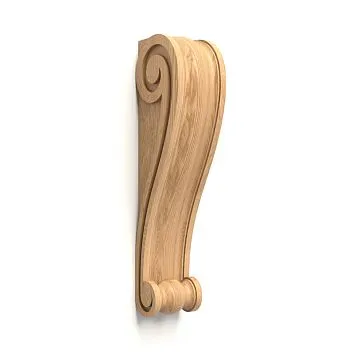
Consoles - brackets supporting the molding - are an important decorative element. Simple rectangular consoles create restrained classicism. S-shaped consoles with volutes are characteristic of Baroque. Carved consoles with vegetal motifs, masks, heraldic elements transformSash Rail for Doorinto a work of decorative art.
Modillions - small brackets placed at equal intervals under the cornice - create a characteristic rhythmic structure. A row of modillions forms a horizontal band, emphasizing the length of the cornice. The distance between modillions is usually equal to their height, creating a harmonious rhythm.
Dentils - small rectangular projections arranged in one or several rows - create a finer texture. This element is characteristic of the Ionic order and passed into classical architecture. Dentils may decorate the frieze of the molding, creating a decorative band.
A decorated tympanum becomes an expressive accent of the facade.Sash Rail for DoorA decorated tympanum becomes an expressive accent of the facade.
Sandbox materials
Natural stone - traditional material for monumental buildings. Granite, marble, and limestone sills are durable, prestigious, but heavy and expensive. Require a strong foundation and professional installation. The cost of a stone sill can reach hundreds of thousands of rubles, but its service life is measured in centuries.
Fiber concrete with glass fiber - a modern alternative to stone. Stronger at a lower weight, allows casting complex shapes, imitates stone texture. Fiber concrete sills are more affordable than stone sills with comparable durability. Frost resistance, moisture resistance, and UV resistance ensure a service life of 50 years or more.
Polyurethane with protective coating - a lightweight and affordable solution for low-rise construction. PolyurethaneSash Rail for Doorweighs dozens of times less than stone, easily mounted with adhesive, does not create load on structures. Special coatings provide moisture resistance, frost resistance, and UV protection. Service life of 25-30 years with proper installation and maintenance.
Wood is used in wooden houses, chalet, country, rustic style buildings. A wooden sill can be smooth, profiled, or decorated with carving. Requires protective treatment with antiseptics, moisture-resistant compounds, and periodic renewal of coating. With proper care, it lasts 30-50 years.
Dimensions and Proportions
The length of a sill is usually equal to the width of the opening plus 20-40 centimeters on each side. For a standard door 90 centimeters wide, the sill has a length of 130-170 centimeters. A too short sill, equal to the door width, looks sparse. A too long sill, significantly exceeding the opening, may conflict with adjacent facade elements.
The height of the sill from bottom to top is determined by the complexity of the profile. A simple straight cornice may be 15-25 centimeters high. A sill with a triangular pediment - 40-80 centimeters depending on the steepness of the pediment. Multi-tiered complex sills can reach 100-150 centimeters.
The overhang of the sill - a critical parameter for functionality and proportions. Minimum 15 centimeters for basic protection. Optimum 25-35 centimeters for reliable protection under most climatic conditions. Maximum is determined by structural capabilities - too large an overhang requires reinforced mounting or additional supports.
Proportionsmolding for a doormust correspond to the size of the opening and the scale of the building. A massive sill on a small one-story house looks inappropriate. On a large mansion, a modest cornice disappears. A professional architect calculates proportions, creating harmony among all elements.
Door portal framing
Door Frame Installationis not just a casing, but a complete architectural composition including side elements, the crowning part, sometimes plinth elements. A properly designed portal turns the entrance into an architectural masterpiece.
Portal structure
A classic door portal consists of several mandatory elements. Side pilasters or half-columns create vertical accents framing the opening. The base of the pilaster - an expanded foundation - forms a visual transition from the horizontal plinth or floor to the vertical. The shaft of the pilaster - the main part - can be smooth or decorated with fluting - vertical grooves.
The capital - the crowning part of the pilaster - has a shape corresponding to the chosen order. Doric capitals are simple with a square abacus and round echinus. Ionic capitals have characteristic volutes - spiral scrolls. Corinthian capitals with lush acanthus leaves - the most decorative. The choice of order determines the character of the entire portal.
The anta above the opening includes the architrave, frieze, and cornice. The architrave - the lower part - may be smooth or divided into horizontal bands - fasciae. The frieze - the middle part - provides space for decoration. The cornice - the upper part - creates an overhanging awning protecting the opening.
Sash Rail for Dooris formed as a continuation of the anta, often crowned with a pediment. The pediment may be triangular, arched, or broken. The tympanum of the pediment is decorated with reliefs, coats of arms, monograms.Door Frame Installationbecomes a multi-level composition.
Portal scale
The size of the portal should correspond to the size of the building and the significance of the entrance. The main entrance requires the most expressive portal - with tall pilasters, rich anta, and ornate pediment. Secondary entrances are designed more modestly. Service entrances may have minimal framing.
For a one-story house, a portal 2.5-3 meters high and 1.5-2 meters wide creates sufficient grandeur without overwhelming the building's scale. For a two-story mansion, the portal may be 3.5-4 meters high, spanning two floors. Such a scale creates monumentality, emphasizing prestige.
The width of pilasters is determined by the height of the portal. For a 3-meter-high portal, pilasters 25-35 centimeters wide create expressive verticals. For a 4-meter portal - 35-45 centimeters. Too narrow pilasters disappear, too wide ones create bulkiness.
The projection of elements from the wall plane creates depth in the composition. Pilasters may protrude 5-10 centimeters. The anta - 10-20 centimeters. The pediment - 15-30 centimeters. This gradation creates plastic expressiveness, especially noticeable under side lighting.
Decorative filling
Door Frame Installationmay include numerous decorative elements. Carved rosettes on pilasters or in the corners of the frame add accents. Plant garlands draping between pilasters create baroque opulence. Cartouches with coats of arms or monograms indicate the owner.
Consoles under the anta visually support the projecting part. S-shaped consoles with volutes are characteristic of baroque. Carved with plant motifs - for luxurious interiors. Simple geometric - for restrained classicism. The size of consoles should be visually sufficient for support - approximately one-third the height of the anta.
Fillet on pilasters creates additional vertical structure. Rectangular or oval recesses with frames may be smooth or filled with ornament. Fluting - vertical grooves - is a traditional way to decorate the shaft of pilasters, borrowed from ancient columns.
The tympanum of the pediment - a spacious field for placing decoration. Relief compositions, coats of arms, allegorical images, plant ornaments fill the triangular or arched space.Sash Rail for DoorWith a richly decorated tympanum, it becomes the dominant feature of the facade.
Internal portals
Door Frame InstallationInside the building, it should correspond to the exterior, creating a stylistic connection. Grand entrances from the hall to the drawing room, dining room may have portal-style treatment with pilasters and a pediment, though on a smaller scale than the exterior entrance.
The scale of the internal portal is smaller than the external one. For a standard opening 90 centimeters wide and 210 centimeters high, pilasters may be 12-18 centimeters wide. The anta 20-30 centimeters high. The pediment, if present, 30-50 centimeters from the bottom of the anta to the apex.
The decorative quality of internal portals may vary depending on the function of the room. Passage to the grand drawing room - the most ornate framing with carving, gilding, complex capitals. Passage to the office - more restrained decoration. Passage to the bedroom - delicate, intimate. Passages to technical rooms - minimal or none.
Mold Intermediate ElementThe door within the portal should match the style of the framing. A classical portal requires classical louvered doors. Baroque - richly decorated. Minimalist - smooth, without divisions. This consistency creates compositional unity.
Arched portals
Arched openings create a distinctive expressiveness characteristic of various historical styles. The semicircular Roman arch - a universal form used from antiquity to neoclassicism. The pointed Gothic arch creates vertical aspiration. The horseshoe Moorish arch is characteristic of oriental stylizations.
Door Frame InstallationOf the arched type, it includes the archivolts - a profiled arch repeating the shape of the arch. The archivolt may be smooth or decorated with ornament. The impost - a horizontal element from which the arch begins - is often decorated with carving or stucco.
The keystone at the apex of the arch - a traditional accent where the lines of the archivolts converge. In stone arches, the keystone actually closes the structure. In decorative arches, it is purely a visual element, but the tradition is preserved. A carved or mask-adorned keystone becomes the focal point of the composition.
The side pilasters of arched portals end at the level of the impost or continue upward to the anta. The first option creates the impression that the arch rests on the pilasters. The second - that the arch is set within a rectangular portal. Both solutions are historically justified, the choice depends on the desired effect.
Conclusion: architecture as the art of details
Great architecture is built from details.Mold Intermediate Elementorganizes the composition of the door,Sash Rail for Doorprotects and decorates the opening,Door Frame Installationtransforms a utilitarian element into an architectural work of art. Each of these details, refined over millennia of practice, continues to function in modern architecture.
Understanding the historical roots of architectural details allows for their thoughtful use. Knowledge of the functional and aesthetic tasks of each element helps create harmonious compositions. Respect for tradition combines with creative freedom - classical forms are adapted to modern materials, technologies, and aesthetic preferences.
Modern materials - polyurethane, fiber concrete, composites - make creating complex architectural details accessible.Mold Intermediate ElementPolyurethane reproduces wood carving with jewel-like precision at a lower cost. Fiber concrete sardines imitate stone at significantly less weight. Technologies expand possibilities, but principles remain unchanged.
Professional approach to designing architectural details begins with studying the context. The building's style, scale, function, and surroundings determine the character of the details.Door Frame Installationmust correspond to the building's architecture, be proportionate, stylistically accurate.
Investments in quality architectural details pay off in beauty, longevity, prestige. A building with thoughtfully designed details stands out, is memorable, and increases in value. The cost difference between a building with quality decoration and one without may reach 15-25 percent - more than the cost of the details themselves.
The main value is the daily aesthetic pleasure of admiring a beautiful building. When every detail is thoughtfully designed, when sardines, moldings, frames work together to create harmony - this creates a special quality of environment in which one wishes to live and work.
Company STAVROS offers a full range of architectural details for creating expressive facades and interiors. Wide assortment includesmoldingsof various styles and sizes,door sardinesfrom simple to complex multi-tiered, elements fordoorway framingof all types.
In-house production guarantees the quality of materials, precision of dimensions, and stable supply. Modern equipment allows creating details of any complexity. Professional consultants help select elements, calculate quantities, and develop compositions. Flexible pricing makes high-quality decor accessible for various budgets.
Create architecture where details work as a unified system, where each element carries its function and meaning — together with STAVROS, your reliable partner in the world of architectural details and classical beauty!