Article Contents:
- Advantages of Framed Interior Mirrors
- Where to Use Framed Mirrors?
- Advantages of Wall-Mounted Framed Mirrors
- Where to Use Wall-Mounted Mirrors?
- Advantages of Wall Mirrors
- Ideas for Using Wall Mirrors

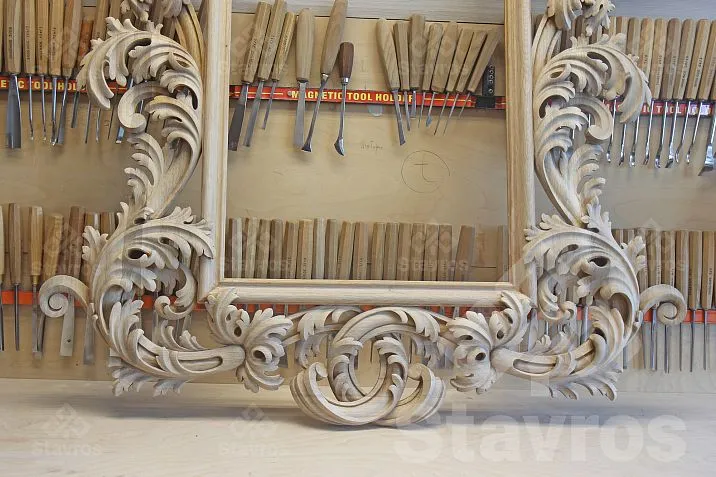

Interior Mirrors Mirrors are not just functional items, but also important decorative elements capable of radically changing the atmosphere of any room. Designers use mirrors to create visual accents, add light and a sense of space, as well as to give the interior a sense of completion and style.
In this article, we will thoroughly examine the types of interior mirrors, their application in design and selection features, as well as explain how you can transform your space using them, making it brighter, cozier, and more functional.
1. Framed Interior Mirrors: Classic and Elegance
Mirror with frame — This is an ideal option for those who want to add elegance and nobility to a room. Framed mirrors suit any interior style, from classic to modern minimalism.


Advantages of Framed Interior Mirrors
- Aesthetics and Style.
The frame gives the mirror expressiveness and a finished look. It can be carved, made of wood, metal, or even gilded, making the mirror a true work of art. - Versatility.
Framed mirrors harmoniously fit into any room: living rooms, bedrooms, hallways, or bathrooms. They can serve as the main accent on a wall or as part of a larger decorative composition. - Variety of materials.
Frames are made of wood, MDF, metal, or plastic. For classic interiors, it is better to choosemirrors with wooden frames with carved elements, while for modern styles, minimalist models with thin metal frames will suit.




Where to Use Framed Mirrors?
● Living Rooms. Place the mirror above the fireplace or on an accent wall. The frame will add an elegant accent to the interior.
● Bedrooms. A framed mirror looks great above a vanity table or at the head of the bed.
● Hallways. A large mirror in a substantial frame not only visually expands the space but also becomes a stylish decorative element.
Where to buy?
In the STAVROS catalog, there is a wide selection offramed interior mirrorsthat differ in high quality and refined design.
2. Wall-Mounted Framed Interior Mirrors: Functional Decor
Wall-Mounted Interior Mirror in Frame — This is an ideal combination of functionality and decor. Such mirrors are mounted on the wall and used to create accents in the interior, adding depth and light.
Our factory also produces:


Advantages of Wall-Mounted Framed Mirrors
- Space-saving.
Wall mirrors do not take up much space, making them ideal for small rooms. They visually expand the space and make it brighter. - Creating focal points.
Placing a mirror on a central wall or in a specific area can draw attention to that part of the room. This is especially effective in living rooms and bedrooms. - Variety of shapes and styles.
Wall mirrors in frames can be square, rectangular, oval, or round. In classic interiors, it is better to use mirrors with heavy carved frames, while for modern styles — with minimalist thin frames made of metal or plastic.
Get Consultation
Where to use wall mirrors?
● In the living room. Place a large mirror on the wall opposite the window — this will add light and depth to the space.
● In the bedroom. A wall mirror near the headboard or beside the dressing table will create a cozy atmosphere.
● In the bathroom. Use moisture-resistant models with frames to make the space bright and stylish.
Where to buy?
STAVROS company offers a wide selection ofwall interior mirrors in framesthat will highlight the style of your interior and add elegance.
3. Wall interior mirrors: visual space expansion
Wall interior mirrors — are a powerful tool for visually expanding space and creating a bright, airy interior. Wall mirrors suit rooms of any size and style, helping to make the room more spacious and cozy.
Advantages of wall mirrors
- Visual space expansion.
Wall mirrors reflect light and surrounding objects, creating an illusion of depth. This is especially effective in small rooms, such as hallways, entryways, and small living rooms. - Adding light.
By placing a mirror opposite a window, you can maximize natural lighting, making the room brighter and cozier. - Design Flexibility.
Mirrors can be part of a decorative wall composition, for example, in combination withinterior panels or wall art. They can be used to decorate an accent wall or as a central decorative element.
Ideas for using wall mirrors
● Mirror wall in the hallway. A fully mirrored wall will visually expand a narrow space, adding light and volume.
● Mirror composition. Use several mirrors of different sizes to create stylish decor in the living room or bedroom.
● Accent zones. Place a large mirror on the wall behind the sofa or dining table to add depth and elegance to the interior.
Where to buy?
Wide assortmentwall interior mirrors can be found in the STAVROS catalog.
4. How to choose an interior mirror?
- Determine the interior style.
○ For classic rooms, choosemirror in a wooden frame with carving or gilding.
For minimalism and modern style, models with thin metal frames or frameless mirrors are better suited.
- Consider the size of the room.
Large mirrors are suitable for spacious rooms, where they will become the central element of the interior.
Compact mirrors fit perfectly into small areas and hallways.
- Choose the right placement.
Place mirrors opposite windows or lights for maximum light reflection.
Use mirrors to create symmetry and balance in the room.
Results
Interior Mirrors It is not only a functional element but also a stylish accent that transforms the space, adding light, volume, and elegance. The variety of shapes, styles, and sizes allows you to choose the perfect mirror for any interior.
Choose quality and stylish mirrors from STAVROS to make your home bright, spacious, and unique!