Article Contents:
- Genetics of style: how the modern Russian interior was formed
- Peasant roots: functionality as beauty
- Noble heritage: elegance in details
- Merchant practicality: luxury with intelligence
- Architecture of emotions: how space affects a person
- Psychology of national space
- Ergonomics of traditions
- Technological revolution in traditional design
- Digital craftsmanship
- Innovative materials
- Smart technologies in traditional framing
- Material basis of style: from nature to laboratory
- Wood: eternal favorite in a new interpretation
- Stone: from foundation to decoration
- Metal: from forging to high technologies
- Planning principles: from izba to megahouse
- Centrifugal composition
- Smooth transitions between zones
- Connection with Nature
- Color symphony: palette of Russian soul
- Planning Solutions: Space for Modern Life
- Accent system
- Seasonal dynamics
- Lighting: from rushlights to LED
- Art of Zoning: Functional Uniqueness
- Artificial lighting: technologies and traditions
- Decorative lighting
- Furniture philosophy: between comfort and traditions
- Principles of the Modern Approach
- Systemic approach
- Technological Innovations
- Decorative systems: code of Russian culture
- Ornamental systems
- Reproduction Technologies
- Functional decorativeness
- Regional specificity: diversity in unity
- North Russian restraint
- Central Russian classicism
- Southern Russian Motifs
- Integration of modern technologies
- Hidden automation
- Climate Systems
- Multimedia in Traditional Framing
- Ecological Aspects of Modern Russian Design
- Natural materials
- Energy efficiency
- Psychology of Space: Influence of Russian Style on People
- Personalization within Traditions
- Individual Ornaments
- Adaptation to Lifestyle
- Collectible Items
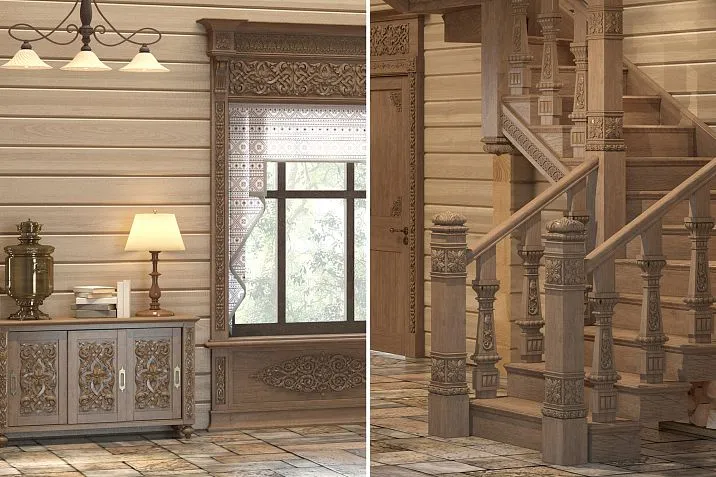
What happens when centuries-old wisdom of Russian architecture meets the needs of modern people? A unique phenomenon is born — interior of a home in modern Russian stylewhich proves that national identity and advanced technologies can coexist in harmony, creating spaces of incredible beauty and functionality.
In an era when homes are becoming increasingly similar to one another, when globalization erases cultural differences, creating interiors in modern Russian style becomes an act of creative resistance, a way to preserve and pass on to future generations that special sense of home which has been shaped over centuries in Russian culture. This is not merely a design choice — it is a philosophy of life embodied in architectural forms and decorative elements.


Style Genetics: How the Modern Russian Interior Was Formed
Modern Russian style in interior design is the product of a complex evolution, in which peasant traditions, noble refinement, merchant grandeur, and modern technological possibilities intertwined. Understanding this style’s genetics is critically important for creating authentic interiors.




Peasant Roots: Functionality as Beauty
The foundation of modern Russian style lies in peasant wisdom, according to which beauty is inseparable from practicality. Every element of a traditional Russian izba had a specific purpose, yet was aesthetically perfect. This philosophy finds its embodiment in modern interiors, where decor in Russian style performs not only an aesthetic, but also a functional role.
Modern designers have learned to extract the essence of traditional forms, adapting them to the needs of the 21st century. Carved door casings become elements of spatial zoning, traditional chests become storage systems, and stove tiles become decorative panels for modern fireplaces.
Our factory also produces:


Noble Heritage: Elegance in Details
Noble estates of the 18th-19th centuries introduced into Russian style refinement and elegance. It was here that the unique combination of European elegance and Russian soul was born, which today defines the face of modern Russian interiors.
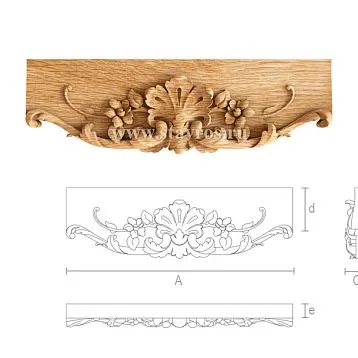
Special attention to material quality, perfection of proportions, refinement of decorative details — all this is the heritage of noble culture. Modern Decorative Appliqués in Russian Style continue this tradition, embodying classical proportions and ornaments in modern materials.
Get Consultation
Merchant Pragmatism: Luxury with Intelligence
The merchant class brought to Russian style a particular understanding of luxury — it must be not only beautiful, but practical; not only impressive, but durable. Merchants were willing to pay for quality, but demanded that every ruble be spent wisely.
This philosophy is especially relevant today, when creating interiors in modern Russian style requires significant investments. Quality materials, professional craftsmanship, thoughtful design — all this pays off in durability and timeless beauty.
Architecture of Emotions: How Space Influences a Person
Modern Russian interior is not merely a set of beautiful objects, but a complex system that influences a person’s emotional state, mood, productivity, and overall quality of life.
Psychology of National Space
Studies show that people living in interiors reflecting their cultural identity experience less stress, have more stable psyches, and better cope with life’s challenges. Russian interior creates a special atmosphere of security and stability, which is especially important in our rapidly changing world.
Natural materials — wood, stone, natural fabrics — create a sense of connection with nature, which is critically important for residents of megacities. Traditional ornaments activate cultural memory, creating a sense of generational continuity.
Ergonomics of Traditions
Modern ergonomics confirms the correctness of many traditional solutions. The height of Russian tables, the depth of benches, window proportions — all this evolved over centuries and reflects real human needs. Modern designers do not copy these solutions blindly, but adapt them to contemporary standards of comfort.
Capitals in Russian Style not only decorate interiors, but also perform an important psychological function — creating a sense of reliability and stability, which is especially important in today’s unstable world.
The technological revolution in traditional design
Modern technologies have opened previously unseen possibilities for implementing traditional Russian motifs in interior design. What once required months of handwork by a master carver can now be executed with jewel-like precision using high-tech equipment.
Digital craftsmanship
CNC machines allow reproduction of the most complex carved ornaments with perfect accuracy. Laser cutting opens up possibilities for creating delicate details that were previously unattainable even for the most skilled masters. 3D printing enables the creation of unique decorative elements based on individual projects.
But most importantly — modern technologies do not replace the creative impulse, but enhance it. The designer receives tools to realize the boldest ideas, while the client gets the opportunity to obtain a unique interior at an affordable price.
Innovative materials
The revolution occurred not only in processing methods, but also in the materials themselves. Polyurethane Inlays in Russian Style They are indistinguishable from wood in appearance but surpass it in all operational characteristics. They are not afraid of moisture, do not deform under temperature fluctuations, and are not susceptible to insect damage.
Modern coatings allow creating finishes that retain their original appearance for decades. Nanotechnologies add new properties to materials — self-cleaning, antibacterial effects, color changes depending on lighting.
Smart technologies in traditional framing
A modern home is unthinkable without smart technologies, and the Russian style is no exception. Moreover, traditional aesthetics provide excellent opportunities to conceal high-tech equipment.
Climate control systems can be integrated into traditional cornices and skirting boards. Smart home sensors easily hide behind carved elements. Multimedia equipment integrates into furniture in such a way that it does not disrupt the stylistic unity of the interior.
Material foundation of the style: from nature to the laboratory
Material selection in modern Russian interiors is a balance between historical authenticity and modern requirements for quality, durability, and eco-friendliness.
Wood: the eternal favorite in a new form
Wood remains the primary material of the Russian style, but modern processing technologies have radically changed its properties. Thermal treatment makes wood more stable, impregnation protects against pests and decay, special coatings enhance the natural beauty of the texture.
Modern manufacturers offer a wide range of wood species, including exotic ones that were previously unavailable. This allows creating unique color and texture solutions while preserving traditional aesthetics.
Stone: from foundation to decoration
Natural stone is used much more extensively in modern Russian interiors than in traditional ones. Modern processing technologies allow creating not only massive structural elements from stone, but also delicate decorative details.
Artificial stone expands the range of possibilities, allowing to imitate any natural stone and create unique compositions. Artificial materials often surpass natural ones in operational characteristics.
Metal: from forging to advanced technologies
Metal elements in Russian interiors were traditionally created by artistic forging. Modern technologies — laser cutting, CNC bending, casting in precise molds — allow creating metal items of incredible complexity and beauty.
New alloys have improved anti-corrosion properties, and modern coatings allow to imitate any historical patinas and textures.
Planning principles: from izba to megahouse
A modern home can be of any size — from a compact city apartment to a spacious country mansion. But the principles of space organization in the Russian style remain unchanged.
Centrifugal composition
Traditional Russian homes were built around a central element — the stove. In modern interiors, this role can be played by a fireplace, kitchen island, dining group, or relaxation zone. The key is to create a compositional center around which all space is organized.
This planning scheme is psychologically comfortable — it creates a sense of protection and family unity. Modern architects actively use this principle when designing both residential and public buildings.
Smooth transitions between zones
The Russian home has never known rigid boundaries between functional zones. Space flowed from one area to another, creating a sense of unity and spaciousness. Modern open-plan layouts perfectly correspond to this principle.
Finishing details in Russian style Helps create visual connections between different zones, highlight architectural features of the space, conceal technical elements.
Connection with nature
The traditional Russian home was closely connected with the surrounding nature. Large windows, terraces, verandas created a smooth transition between indoor and outdoor space. Modern technologies — panoramic windows, sliding glass walls, winter gardens — allow to strengthen this connection.
Color Symphony: The Palette of the Russian Soul
Color in Russian interiors is not merely an aesthetic choice, but a means of conveying emotions, creating moods, and influencing the psychological state of the inhabitants of the home.
Natural Foundation
The basic palette of modern Russian interiors draws from Russian nature, but is interpreted through the prism of contemporary knowledge about color psychology. Wood tones remain the foundation, but are enriched with more complex and refined shades.
White color is used not as pure white, but in various shades—from warm milk white to cold Arctic white. This creates a richer and more interesting palette, avoiding monotony.
Accent System
Bright colors in modern Russian interiors are used more subtly and thoughtfully than in traditional settings. Instead of bright red, warm terracotta; instead of screaming blue, deep indigo; instead of acid green, noble emerald.
This more complex color system creates interiors that do not strain the eyes, do not irritate the psyche, yet remain unmistakably Russian.
Seasonal Dynamics
One of the features of Russian style is its ability to transform seasonally. In summer, the interior may be lighter and fresher, in winter—warmer and cozier. Modern materials allow easy changes to color accents using removable decorative elements.
Lighting: From Wicker to LED
The lighting system in modern Russian interiors must address several tasks simultaneously—ensuring adequate illumination for various activities, creating the desired atmosphere, and highlighting the beauty of decorative elements.
Natural light as the foundation
Russian tradition has always valued natural lighting. Large windows, light-toned finishes, mirrors to amplify light flows—all these techniques are actively used in modern interiors.
Modern window systems allow creating enormous light openings without sacrificing thermal insulation. Smart glass can automatically adjust light transmission depending on time of day and weather conditions.
Artificial Lighting: Technologies and Traditions
Modern LED technologies have opened previously unseen possibilities for creating complex lighting scenarios. Adjustable color temperature allows creating lighting that changes throughout the day, mimicking natural rhythms.
Traditional lighting fixtures—wooden wheel chandeliers, wrought iron sconces, ceramic shades—are filled with modern content. LED elements can be embedded in unexpected places, creating striking backlighting for carved elements, cornices, niches.
Decorative lighting
Live fire has always held a special place in the Russian home. Modern fireplaces, candles, and flame simulations create that special atmosphere that makes a home truly cozy. Modern technologies allow creating a completely safe flame simulation, indistinguishable from the real thing.
Furniture Philosophy: Between Comfort and Traditions
Furniture in modern Russian interiors should combine traditional aesthetics with modern requirements for comfort and functionality.
Principles of the modern approach
Modern furniture in the Russian style does not copy historical models, but interprets them according to contemporary needs. Traditional proportions are adapted to modern ergonomic standards, historical aesthetics combine with innovative structural solutions.
Special attention is paid to the quality of materials and craftsmanship. Furniture is created not for a season, but for decades, fully aligning with the Russian tradition of creating things 'for centuries'.
Systemic Approach
Modern furniture in the Russian style is designed as a unified system, where each element complements the others. This allows creating harmonious interiors, avoiding random combinations and stylistic dissonances.
Modular systems allow adapting furniture to specific project conditions, changing configuration according to changing family needs.
Technological Innovations
Modern furniture manufacturing technologies allow creating items that surpass historical analogs in all parameters—strength, durability, functionality. Hidden mechanisms, thoughtful ergonomics, innovative materials—all serve to enhance user comfort.
Decorative Systems: The Code of Russian Culture
Decorative elements in modern Russian interiors are not merely ornaments, but carriers of cultural information, elements that transform an ordinary dwelling into a space filled with meaning.
Ornamental Systems
Traditional Russian ornaments are a complex symbolic system, where each element has its own meaning. Modern designers study this system, creating new compositions that preserve cultural semantics while adapting to contemporary aesthetics.
Computer technologies allow creating ornaments of incredible complexity, analyzing their harmony, and optimizing them for various application scales.
Reproduction Technologies
Modern methods of reproducing decorative elements — milling, laser cutting, casting in precise molds — allow achieving quality unattainable through manual production. At the same time, the possibility remains to create unique elements based on individual projects.
Functional Decorativeness
The modern approach requires each decorative element to serve not only an aesthetic but also a practical function. Carved panels can conceal engineering utilities, decorative cornices — integrate lighting systems, ornamental grilles — provide ventilation.
Regional Specificity: Diversity in Unity
Russia is a vast country, and different regions have developed their own characteristics of traditional architecture and decorative-applied arts. Modern design actively utilizes this richness, creating interiors that reflect a specific regional identity.
North Russian Reserve
The harsh beauty of the Russian North is reflected in a distinctive aesthetic — restrained color palettes, minimalist forms, special attention to the quality of each detail. Northern Russian interiors are distinguished by particular elegance and nobility.
Central Russian Classicism
Central Russia is the cradle of the Russian style we consider classic. Here, the main canons were formed, which are now adapted to modern conditions. The richness of decorative traditions allows creating interiors of incredible diversity.
Southern Russian Motifs
The milder climate of southern Russia allowed using brighter colors and more complex decorative compositions. Proximity to trade routes enriched local traditions with Eastern motifs. Modern southern Russian interiors are distinguished by particular warmth and cheerfulness.
Integration of Modern Technologies
A modern home is unthinkable without high-tech equipment. The designer's task is to integrate this equipment into traditional aesthetics so as not to disrupt stylistic unity.
Hidden Automation
Smart home systems can be completely concealed behind traditional decorative elements. Sensors are integrated into carved panels, wires are hidden in special cable channels disguised as trim, control panels are styled as traditional forms.
Climate Systems
Air conditioning and ventilation systems can also be integrated inconspicuously. Ducts are concealed behind suspended ceilings decorated in traditional style, grilles are styled as carved elements, external units are masked with decorative casings.
Multimedia in Traditional Framing
Televisions can be built into traditional furniture or concealed behind sliding panels. Audio systems are integrated into ceilings or walls. It is important that the technology does not dominate the interior but serves the family's comfort.
Ecological Aspects of Modern Russian Design
Ecological considerations are becoming an increasingly important factor when selecting materials and technologies. The modern Russian style, with its traditional closeness to nature, is ideally suited to embodying ecological principles.
Natural materials
Preference for natural materials — wood, stone, natural fabrics — not only corresponds to the style's aesthetics but also ensures the interior's ecological safety. Modern processing technologies allow preserving all the beneficial properties of natural materials while eliminating their drawbacks.
Energy efficiency
Traditional principles of Russian architecture — orientation by cardinal directions, use of thermal inertia of massive walls, natural ventilation — remain relevant today. Their combination with modern energy-efficient technologies allows creating homes with minimal energy consumption.
Durability as an Ecological Principle
Creating interiors that will last for decades is an important ecological principle. High-quality materials, professional craftsmanship, timeless design — all of this contributes to reducing the ecological footprint.
Personalization within Traditions
Modern technologies allow creating unique interiors that reflect the owner's individuality, lifestyle, personal history, while remaining within traditional aesthetics.
Individual Ornamentation
Modern designers can create personalized ornaments that include family symbols, professional attributes, personal preferences of the owner. These may be initials incorporated into traditional floral ornamentation, professional symbols adapted to Russian aesthetics, or images holding personal significance for the family.
Adaptation to Lifestyle
Modern families live differently than our ancestors did. The layout and equipment of the home must reflect the real needs of the modern person. Home offices, sports halls, children's playrooms — all of this can be designed in the Russian style while preserving functionality.
Collectible Items
Many people are enthusiasts of collecting — works of art, antiques, items of a specific theme. A Russian interior provides excellent opportunities for displaying collections, creating special exhibition zones, and integrating collectible items into the overall design concept.
Creation — this is not just a design task, but a cultural mission. It is a way to preserve and pass on to future generations the richness of Russian culture, adapting it to the realities of modern life. Modern technologies, innovative materials, and advanced design and production methods open up boundless opportunities for creative interpretation of traditional forms. At the same time, the core principles of Russian design remain unchanged — harmony with nature, functional beauty, attention to detail, and the creation of a home atmosphere.
This is a style for those who value depth and substance, who understand that true luxury lies not in the cost of materials, but in their ability to create a unique atmosphere, tell a story, inspire creativity and joy in life. This is a home that becomes an extension of its inhabitants' souls, a space where every detail matters, where traditions and innovations blend into a harmonious whole.
In conclusion, we would like to especially emphasize the role of professional manufacturers of decorative elements in the development of modern Russian style. The company STAVROS has been a recognized leader in creating high-quality items for interiors in Russian style for more than two decades. STAVROS’s participation in the restoration of the Alexandrovsky Palace in Tsarskoye Selo is a clear testimony to the company’s deep understanding of historical traditions and its ability to embody them in modern products. Each STAVROS item is created using advanced technologies while preserving the soul of traditional Russian craftsmanship. The wide range of decorative elements — from carved appliqués to complex architectural details — allows designers and architects to realize the most ambitious projects. Choosing STAVROS products means choosing quality proven over time and the opportunity to create an interior that will become a family treasure for many generations.
Interior of a house in modern Russian style: where centuries-old traditions meet innovations | Company STAVROS