Article Contents:
- The World of Furniture Hardware: From Functionality to Art
- Evolution of Furniture Hardware: From Simple to Complex
- Main Categories of Furniture Hardware: What You Need to Know
- Hinges: The Unnoticed Heroes of the Furniture World
- Guides: smoothness and reliability of movement
- Handles and Opening Systems: Functionality and Aesthetics
- Lift Mechanisms: Innovations for Your Comfort
- How to choose quality hardware: key criteria
- Materials and finishes: the foundation of durability
- Technical Specifications: What Really Matters
- Brands and Manufacturers: Who to Trust
- Where to buy furniture hardware in Samara: best options
- Specialized Stores: Professional Approach
- Construction Hypermarkets: Accessibility and Convenience
- Online stores: unlimited choice
- Wholesale bases: advantageous for professionals
- Furniture manufacturers: direct access to professional solutions
- Practical tips for choosing and installing hardware
- Planning and Preparation: The Key to Success
- Tools and materials: professional approach
- Step-by-Step Installation: From Theory to Practice

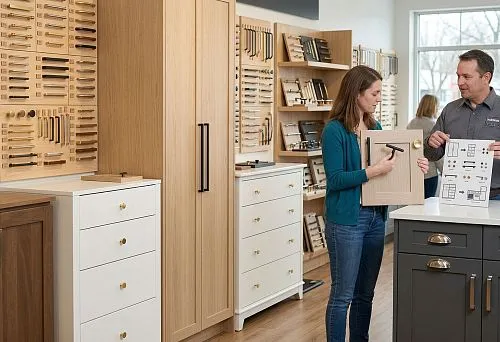
Creating ideal furniture is an art in which every detail matters. If wood, glass, or metal form the base, it is precisely the hardware that breathes life into these materials, transforming static structures into functional interior items. Hinges that ensure silent closing of doors, guides that allow you to pull out heavily loaded drawers with a single hand movement, stylish handles that become design accents — all these components determine not only the appearance but also the usability of furniture for many years. The question where to buy furniture hardware in Samara becomes crucial for those who aim to create truly high-quality interior items, whether professional furniture makers or passionate DIY enthusiasts.


The World of Furniture Hardware: From Functionality to Art
Furniture hardware has long ceased to be merely utilitarian. Today, it is complex engineering systems that not only ensure functionality but also become an essential part of the designer’s concept. Modern technologies allow creating hardware that operates almost silently, withstands tremendous loads, and remains aesthetically appealing.




Evolution of Furniture Hardware: From Simple to Complex
The history of furniture hardware spans millennia. From the simplest wooden pegs and leather hinges of antiquity to high-tech systems with electronic controls of our day — the evolution of these components reflects technological progress and changing perceptions of comfort.
In the Middle Ages, hardware was not only functional but also decorative. Wrought iron hinges and locks were adorned with intricate patterns, becoming true works of art. In the Baroque and Rococo eras, the decorative aspect of hardware reached its peak — gilded bronze inlays and handles turned furniture into luxurious interior pieces.
The Industrial Revolution brought standardization and mass production, making quality hardware accessible to broader segments of the population. The 20th century, with its functionalism and minimalism, changed the approach to design — hardware became more restrained but also more technologically advanced.
Today we observe a synthesis of all these trends. Modern hardware can be either deliberately minimalist, practically invisible, or intentionally decorative, becoming a central element of furniture design.
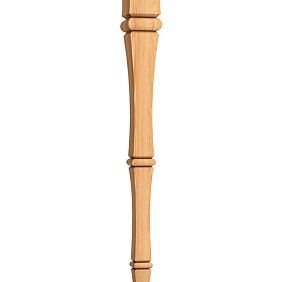
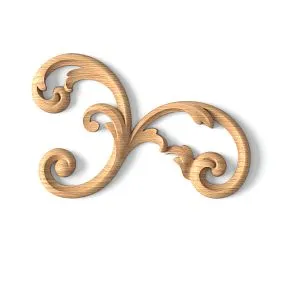
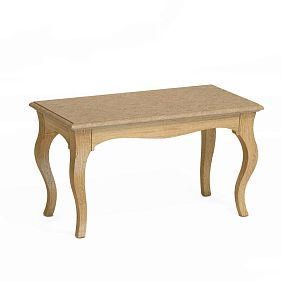
Our factory also produces:




Main Categories of Furniture Hardware: What You Need to Know
The variety of furniture hardware may initially be overwhelming. To make the right choice, it is essential to understand the main categories and their functional characteristics.
Get Consultation
Hinges: The Unnoticed Heroes of the Furniture World
Hinges are mechanisms that enable door movement. The quality of hinges determines how smoothly and quietly your furniture doors will open and close.
Surface-mounted hinges are installed on the surface of the door and furniture frame. They are visible when the door is open and are often used in classic furniture, where they can serve as a decorative element. Advantages: easy installation, affordable price, possibility of use as a decorative element. Disadvantages: visibility when the door is open, limited opening angle (usually up to 95-100 degrees).
Semi-surface-mounted hinges are partially recessed into the door, making them less noticeable. They provide an opening angle up to 110 degrees and are suitable for most standard furniture constructions. Advantages: versatility, good balance between price and functionality, wide range of models. Disadvantages: require more precise installation than surface-mounted hinges.
Inset hinges are completely hidden when the door is closed, creating an elegant minimalist look. They require routing both the door and the furniture frame. Advantages: aesthetic appearance, complete invisibility when the door is closed. Disadvantages: complex installation, higher price, usually smaller opening angle (up to 95 degrees).
Hinges with a soft-close mechanism feature a special mechanism that ensures smooth and silent closing of the door in the last centimeters of movement. This not only enhances user comfort but also prevents impacts, extending the furniture's lifespan. Advantages: smooth closing, impact and damage prevention, premium quality feel. Disadvantages: higher price, need for periodic adjustment of closing force.
Push-to-open hinge systems allow opening doors with a simple press on the facade, without using handles. This is an ideal solution for modern minimalist interiors. Advantages: clean design without handles, ease of use, contemporary appearance. Disadvantages: require precise adjustment, higher price, not always suitable for heavy doors.
Guides: smoothness and reliability of movement
Guides ensure the movement of drawers. The quality of the guides determines how easily the drawer will slide out and what weight it can support.
Ball-bearing guides provide smoother operation due to ball bearings. They can be partially or fully extendable, support up to 45-50 kg, and have a long service life (up to 50,000 cycles). Advantages: smooth operation, high load capacity, full extension capability, durability. Disadvantages: higher price, require precise installation.
Ball-bearing guides provide smoother operation due to ball bearings. They can be partially or fully extendable, support up to 45-50 kg, and have a long service life (up to 50,000 cycles). Advantages: smooth operation, high load capacity, full extension capability, durability. Disadvantages: higher price, require precise installation.
Hidden guides are mounted under the drawer bottom, remaining invisible from the outside. They provide full extension and create an elegant appearance. Advantages: elegant appearance, full extension, high load capacity (up to 50 kg). Disadvantages: complex installation, high price, require precise drawer manufacturing.
Tandem guides consist of two parallel mechanisms, providing high load capacity (up to 80 kg) and preventing misalignment even under uneven load. Advantages: exceptional stability, high load capacity, misalignment prevention. Disadvantages: high price, require professional installation.
Soft-close drawer systems ensure smooth closing of the drawer in the last centimeters of movement. This not only enhances user comfort but also prevents impacts, extending the furniture's lifespan. Advantages: smooth closing, impact prevention, premium quality feel. Disadvantages: higher price, need for periodic adjustment.
Handles and opening systems: functionality and aesthetics
Handles are not just a functional element, but also an important design detail capable of completely changing the appearance of furniture.
Handle-eyes are a classic option suitable for any interior style. They are ergonomic, easy to use, and available in a wide range of sizes (from 32 to 320 mm). Advantages: ease of use, wide range of designs, simple installation. Disadvantages: protrude from the facade surface, which may be inconvenient in narrow passages.
Button handles and push-button handles are compact solutions for small furniture. They protrude minimally from the facade surface, making them ideal for narrow passages. Advantages: compactness, minimal protrusion, simple installation. Disadvantages: less convenient to grip than eyes, especially with wet hands.
Inset handles do not protrude beyond the facade, preventing accidental snagging of clothing. They require facades to be routed, but create an elegant minimalist look. Advantages: do not protrude beyond the facade, create a clean design, convenient in narrow passages. Disadvantages: complex installation, require facades to be routed.
Profile handles are mounted along the entire length of the facade, creating a visual accent and ensuring convenient opening at any point. Advantages: ease of use, ability to open at any point, modern appearance. Disadvantages: more complex installation, higher price, not suitable for all interior styles.
Push-to-open systems allow opening drawers and doors with a simple press on the facade, without using handles. This is an ideal solution for modern minimalist interiors. Advantages: clean design without handles, ease of use, contemporary appearance. Disadvantages: require precise adjustment, higher price, not always suitable for heavy facades.
Lift mechanisms: innovations for your comfort
Lift mechanisms allow doors to open upward rather than sideways, which is especially convenient for upper kitchen cabinets or furniture in limited spaces.
Gas lift mechanisms operate using gas springs that compensate for the facade's weight, making it practically weightless. They provide smooth opening and closing, and allow the door to be locked in any position. Advantages: smooth movement, ability to lock in any position, long service life. Disadvantages: high price, need to select spring force according to facade weight.
Spring mechanisms operate using standard metal springs that compensate for part of the door's weight. They have a simpler construction and more affordable price. Advantages: affordable price, simple construction, sufficient reliability for light facades. Disadvantages: require periodic adjustment, limited service life, usually do not lock the door in intermediate positions.
Parallel lift mechanisms lift the facade parallel to the furniture body, saving space and providing convenient access to contents. Advantages: space-saving, convenient access to contents, high load capacity. Disadvantages: high price, complex installation, require free space above the cabinet.
Folding lift mechanisms allow the facade to fold when opening, minimizing required space. They are ideal for situations where there is limited space above the cabinet. Advantages: minimal required space, easy opening even for heavy facades, modern appearance. Disadvantages: high price, complex installation, require precise adjustment.
How to choose quality hardware: key criteria
Choosing quality hardware is an investment in the longevity and functionality of your furniture. Incorrectly selected hinges or guides can turn even the most beautiful furniture into a source of constant annoyance. Let’s consider the main criteria that will help make the right choice.
Materials and finishes: the foundation of durability
The material from which the hardware is made largely determines its durability, reliability, and appearance.
Stainless steel is a premium material for hardware subjected to intensive use. It is resistant to corrosion, mechanical damage, and temperature fluctuations. Stainless steel hardware has a long service life and retains an attractive appearance even after many years of use. Especially recommended for high-humidity areas — bathrooms, kitchens, outdoor furniture.
Zinc alloys are widely used for manufacturing hinges, handles, and decorative elements. They have good strength, corrosion resistance (with protective coating), and allow creating complex shapes. Zinc alloy hardware is affordable and offers a wide range of finishes — from chrome to patina. This is the optimal choice for most types of furniture in residential spaces.
Aluminum is a lightweight and strong material, ideal for profile handles and structural elements. It is corrosion-resistant, has a modern appearance, and is available in various colors and textures due to anodizing or powder coating. Aluminum hardware is especially popular in modern minimalist interiors and high-tech furniture.
Brass and bronze are premium materials for decorative hardware. They have a noble appearance that develops a distinctive patina over time, making each item unique. Such hardware is ideal for classic interiors, antique, and styled furniture. Brass and bronze items are known for their longevity and can serve for decades.
Plastic is used for non-critical hardware elements and budget solutions. Modern engineering plastics have high strength, UV resistance, and chemical resistance. Plastic hardware is available in a wide color range and can imitate various materials. It is especially convenient for children's furniture due to its lightness and safety.
Protective coatings play an important role in hardware longevity. Chrome plating, nickel plating, anodizing, powder coating — all these technologies protect the base material from corrosion and mechanical damage, and also give the hardware an attractive appearance. When choosing hardware, pay attention to coating quality — it should be even, without bubbles, cracks, or peeling.
Technical specifications: what really matters
When selecting hardware, it is important to pay attention not only to appearance but also to technical characteristics that determine its functionality and durability.
For hinges:
- Opening angle - standard hinges provide an angle of 90-110°, special models - up to 170-180°. The choice depends on the specific situation: for ordinary cabinets, 110° is sufficient, while corner constructions may require a larger angle.
- Number of adjustments - modern hinges should be adjustable in at least three planes (height, depth, and overlap), allowing perfect alignment of fronts even with minor installation inaccuracies.
- Type of soft-close - built-in or removable, with or without adjustable closing force. Adjustable soft-close mechanisms allow setting the closing speed according to the specific weight of the door.
- Number of open-close cycles - this parameter determines the hinge's durability. Quality models withstand 50,000 to 200,000 cycles, which, with average usage, ensures a service life of 15-20 years.
For slides:
- Type of extension - partial (75-80% of depth) or full (100%). Full extension ensures access to all contents of the drawer, which is especially important for deep constructions.
- Load capacity - from 25 to 80 kg depending on type and purpose. For kitchen drawers with dishes, it is recommended to choose guides with a load capacity of at least 40-50 kg.
- Presence of soft-close - ensures smooth closing of the drawer in the last centimeters of movement, preventing impacts and damage.
- Presence of synchronizer - prevents skewed wide drawers under uneven load or when pressed from one side.
- Number of open-close cycles - from 20,000 for basic models to 100,000 for premium ones. For frequently used drawers (e.g., in kitchens), it is recommended to choose guides with maximum durability.
For lift mechanisms:
- Load capacity - must match the weight of the front with a 20-30% safety margin. Insufficient load capacity will lead to rapid mechanism wear.
- Type of opening - parallel, rotational, folding. The choice depends on available space and user preferences.
- Presence of intermediate locking - allows leaving the door open at a desired height, which is convenient for frequent cabinet use.
- Presence of damper - ensures smooth closing and prevents impacts, extending the service life of the mechanism and front.
For handles:
- Center-to-center distance - distance between mounting hole centers for pull handles. Standard sizes: 96, 128, 160, 192, 256, 320 mm. When replacing handles, it is important to choose models with the same center-to-center distance or to account for old hole locations.
- Mounting type - screw, adhesive, with special clips. Screw mounting is the most reliable and repairable.
- Material and finish type - determine appearance and durability. For high-humidity areas, stainless steel or aluminum is recommended.
Brands and manufacturers: who to trust
The market offers many brands of furniture hardware, but not all provide the same quality. Choosing a reliable manufacturer is a guarantee of long-term durability and flawless performance of the hardware.
European manufacturers are traditionally associated with high quality and innovative solutions. They offer a wide range of hardware for all types of furniture, from basic models to premium solutions with extended functionality. European hardware is distinguished by precision manufacturing, durability, and the presence of all necessary quality certifications. Brands from Germany, Austria, and Italy are especially valued for their long-standing production traditions and strict quality control.
Asian manufacturers have significantly improved the quality of their products in recent years and offer hardware with good price-to-quality ratio. Many Asian companies specialize in specific types of hardware, allowing them to achieve high quality at affordable prices. When choosing Asian hardware, it is important to pay attention to the presence of certifications and warranty obligations. Leading Asian manufacturers include companies from South Korea, Taiwan, and some Chinese enterprises operating under international quality standards.
Russian manufacturers are also represented in the furniture hardware market. They are well-acquainted with the specifics of the domestic market and offer products adapted to Russian conditions. Many Russian companies work in partnership with European manufacturers, enabling them to offer quality hardware at competitive prices. In recent years, there has been significant improvement in the quality of domestic hardware, especially in the mid-price segment.
When choosing a brand, pay attention to:
- Company history and market reputation - well-known brands with long histories value their reputation and maintain consistently high quality.
- Presence of quality certifications and compliance with standards - international ISO certifications, national quality standards, environmental certifications.
- Warranty obligations and technical support - reliable manufacturers provide long-term warranties (from 5 years) and ensure technical support.
- Availability of spare parts and components - the ability to purchase individual components for repair extends the service life of the hardware.
- Professional and end-user reviews - opinions from those who have already used the product can provide valuable information about actual quality and durability.
Where to buy hardware in Samara: best options
Samara - a major industrial and trading center, offering a wide selection of furniture hardware. The question where to buy furniture hardware in Samara is relevant for both professional furniture manufacturers and home craftsmen. Let's consider the main options for purchasing quality hardware in this city.
Specialized stores: professional approach
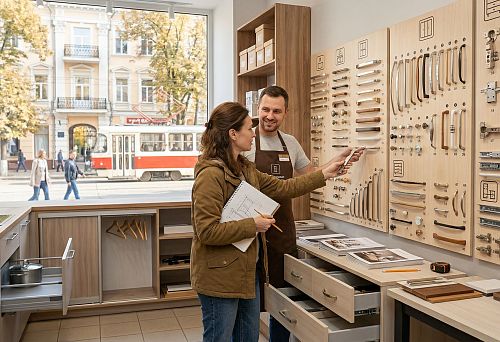
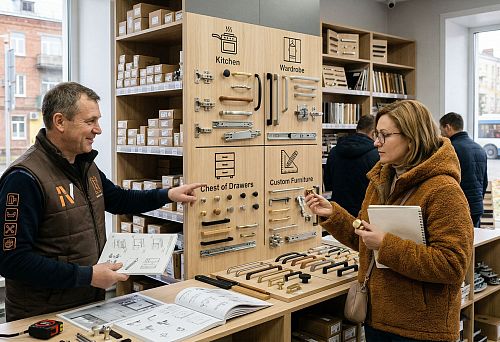
Specialized furniture hardware stores are places where you can find a wide range of products and receive professional consultation.
Advantages of specialized stores:
- Wide assortment - from basic hardware to specialized solutions for specific tasks.
- Professional consultations - staff at such stores are usually well-versed in products and can provide valuable advice on selection and installation.
- Ability to see and test hardware before purchase - this is especially important for mechanical components such as hinges and guides.
- Availability of complementary products - fasteners, installation tools, marking templates.
- Ability to order non-standard items for a specific project - if the required hardware is not in stock, it is usually available for order from suppliers.
Several specialized furniture hardware stores operate in Samara, located in different parts of the city. They offer both basic inventory for everyday needs and professional solutions for furniture manufacturing. Many of them have their own warehouses, ensuring availability of popular items and fast delivery of ordered goods.
Construction hypermarkets: accessibility and convenience
Large construction hypermarkets also offer furniture hardware, although their selection is usually limited to basic models.
Features of purchasing in hypermarkets:
- Convenient location and extended operating hours - many hypermarkets operate until late evening or 24/7, which is convenient for those who undertake repairs during their free time.
- Ability to purchase hardware along with other construction materials - this saves time and simplifies logistics during comprehensive renovations.
- Regular promotions and special offers - large chains often hold sales and offer discounts on certain product categories.
- Availability of loyalty programs and cumulative discounts - regular customers can receive additional bonuses and benefits.
- Ability to return or exchange items if necessary - large chains typically have more flexible return policies than small specialized stores.
Several large chain hypermarkets operate in Samara, where basic furniture hardware can be purchased. This is a convenient option for those who do not require specialized solutions and value the ability to make all purchases in one place. However, it should be noted that the hardware assortment in hypermarkets is usually limited to mass-market models, and consultations regarding specific issues may be less qualified.
Online stores: unlimited choice
Online shopping is becoming an increasingly popular way to purchase furniture hardware, and this is not surprising — online stores offer a vast selection of products with delivery directly to your door.
Advantages of online purchases:
- Extremely wide assortment - online stores are not limited by retail space and can offer thousands of items, including rare and specialized products.
- Ability to compare prices and features - online catalogs allow for quick comparison of different models and selection of the optimal option.
- Access to real customer reviews - this helps evaluate the quality and functionality of hardware based on other users' experiences.
- Delivery to home or pickup point - no need to spend time traveling to stores, especially when purchasing large quantities of hardware.
- Often lower prices - due to the absence of costs for maintaining retail spaces, online stores can offer more competitive pricing.
Many specialized stores in Samara have their own online presences, allowing customers to browse the assortment and prices before visiting. Additionally, residents of the city can order hardware from federal online stores with delivery to Samara. This is especially convenient for those seeking specific or rare models that are difficult to find in local stores.
When choosing an online store, pay attention to:
- Seller's reputation - customer reviews, ratings, length of time operating in the market.
- Completeness of product descriptions - availability of detailed technical specifications, photos, instructions.
- Delivery terms - delivery times, costs, ability to track orders.
- Return and exchange policy - ability to return a product if it does not fit or has a defect.
- Payment methods - availability of convenient options for you (credit card, electronic money, cash on delivery).
Wholesale bases: advantageous for professionals
For professional furniture manufacturers and large projects, wholesale bases for furniture hardware may be the optimal option.
Advantages of wholesale purchases:
- Significantly lower prices when purchasing large quantities - wholesale discounts can reach 30-50% off retail prices.
- Ability to order directly from manufacturers - minimizing intermediaries in the supply chain reduces the final cost.
- Availability of professional technical support - consultations on selecting hardware for specific projects, assistance with calculating required quantities.
- Ability to order non-standard items - wholesale suppliers usually have closer ties with manufacturers and can organize production of hardware according to individual requirements.
- Flexible payment and delivery terms - option for payment deferral, direct delivery of large quantities to the production facility.
Several wholesale bases operate in Samara and its region, specializing in furniture hardware. They are primarily oriented toward working with legal entities, but many of them also serve individual customers upon sufficient purchase volume. Regular customers are often offered special cooperation terms, including a personal manager, priority order processing, and additional discounts.
Furniture manufacturers: direct access to professional solutions
Some furniture factories in Samara have their own stores, where they sell not only finished furniture but also components, including hardware.
Features of purchasing from furniture manufacturers:
- Access to professional hardware used in manufacturing is a guarantee of quality and compatibility with specific types of furniture.
- Guarantee of compatibility with specific furniture models - especially important when replacing faulty hardware on furniture from a particular manufacturer.
- Ability to receive consultation from specialists who work with this hardware daily - practical advice on installation and operation.
- Often more favorable prices on branded components - manufacturers may offer special prices on original hardware for their furniture.
This option is especially convenient if you want to replace or update the hardware on furniture purchased from a specific manufacturer. Additionally, many furniture factories offer installation services, which may be convenient for those without experience in DIY assembly.
Practical tips for selecting and installing hardware
Correct selection and proper installation of hardware - the key to long-lasting, flawless furniture operation. Here are some practical tips to help you avoid common mistakes.
Planning and preparation: the key to success
Before heading out to buy hardware in SamaraIt is necessary to conduct thorough planning and preparation.
Create a detailed list of required hardware - account for all furniture elements requiring hardware and the quantity of each type. For large projects, it is recommended to create a table specifying the type of hardware, quantity, technical specifications, and approximate cost.
Conduct precise measurements - for hinges, measure door thickness and mounting type; for slides, measure cabinet and drawer depth; for handles, measure center-to-center distance or facade dimensions. Inaccurate measurements may result in purchasing incompatible hardware and necessitating repeat trips to the store.
Determine style and color scheme - hardware should harmonize with the overall furniture and interior design. Prepare material samples or color charts to select perfectly matching elements.
Assess expected load - for cabinets with heavy contents (books, dishes), choose reinforced hinges and slides with high load capacity. Underestimating load is one of the most common mistakes leading to premature hardware failure.
Consider room characteristics - for humid areas (bathrooms, kitchens), choose corrosion-resistant materials; for children's rooms, select safe models without sharp edges and with finger protection.
Calculate budget - determine how much you are willing to spend on hardware, and allocate funds prioritizing critical components. Remember, cutting corners on hardware quality often leads to additional costs for repairs and replacements in the future.
Tools and materials: professional approach
Quality installation of hardware requires appropriate tools and materials.
Basic tool set:
- Drill with bit and drill set - significantly speeds up installation and ensures more precise fastening.
- Tape measure and square - for accurate measurements and marking.
- Pencil and marker - for marking installation positions of hardware.
- Marking templates - special tools for precise positioning of holes for hinges, handles, and other hardware.
- Mallet (rubber or wooden) - for carefully fitting parts without damaging the surface.
- Screwdriver set - various sizes and types (cross, flathead, Torx) for working with different fasteners.
- Hex keys - for adjusting many types of hinges and slides.
- Router - for cutting recesses for hinges, locks, and other inset components.
Additional materials:
- Quality screws - appropriate size and type for specific material (wood, MDF, particleboard).
- Conformers - for secure connection of cabinet furniture parts.
- Plugs - for concealing fasteners and creating an aesthetically pleasing appearance.
- Adhesive for additional fixation - some hardware types require additional securing with adhesive.
- Furniture wax - for covering minor defects and scratches that may occur during installation.
Investing in quality tools pays off quickly - they not only simplify work but also ensure more precise installation, directly affecting hardware longevity. For one-off projects, consider renting specialized tools such as routers or hinge templates.
Step-by-step installation: from theory to practice
Correct sequence of actions during hardware installation will help avoid errors and ensure high-quality results.
Hinge installation:
- Marking hinge positions - determine the optimal placement of hinges on the door (usually 100-150 mm from the top and bottom edges; for tall doors, a third hinge may be needed in the middle).
- Preparing mounting holes - drill 35 mm diameter holes 12-13 mm deep using a special router bit or Forstner bit for cup hinges.
- Installing hinges on the door - insert the cup hinge into the prepared hole and secure with screws.
- Mounting hinge plates - install hinge plates on the furniture frame, ensuring they are perfectly vertical.
- Hanging the door - connect the hinges to the hinge plates by snapping or tightening the mounting screws.
- Position adjustment - use adjustment screws to set the door's position for height, depth, and overlap to create even gaps and proper alignment.
Installing guides:
- Marking positions - determine the height for each drawer and mark the guide mounting lines on the side walls of the cabinet.
- Checking symmetry - ensure the markings on opposite walls are at the same height; otherwise, the drawer will be misaligned.
- Mounting guides to the frame - install the guides along the marked lines and secure them with screws, starting from the front.
- Installing mounting parts on the drawer - attach mounting parts to the drawer's side walls, precisely aligning them relative to the front panel.
- Assembly and check - insert the drawer into the frame and check its smooth operation; adjust guide positions if necessary.
- Final adjustment - adjust the drawer front's height and angle to create even gaps.
Installing handles:
- Determining positions - select the optimal placement of handles on the fronts, considering ergonomics and aesthetics.
- Marking hole positions - use a template or ruler to accurately mark hole positions, ensuring symmetry on all fronts.
- Drilling holes - drill holes of the appropriate diameter (typically 4-5 mm for standard screws) using a wood drill bit or a special bit for laminated surfaces.
- Installing handles - insert mounting screws from the inside of the front and screw on the handle until snug, but do not overtighten to avoid damaging the front.
- Checking reliability - ensure the handle is securely fastened and has no play.
Installing lift mechanisms:
- Marking positions - determine the optimal placement of mechanisms on the cabinet side walls according to the manufacturer's instructions.
- Mounting frame parts - install the main mechanism components on the cabinet side walls, ensuring precise alignment.
- Installing front mounting parts - attach mounting parts to the front, precisely following the dimensions and positions specified in the instructions.
- Connecting front to mechanism - mount the front onto the installed mechanisms in the frame and secure the connection.
- Adjusting opening force - adjust spring or gas strut tension according to the front's weight.
- Testing operation - test the mechanism through its full range of motion, ensuring smooth operation and secure locking in the open position.