Article Contents:
- Anatomy of stair railing: understanding structural elements
- Classification of balusters by structural features
- Wood science: choosing wood species for stair components
- Oak: the standard of strength and prestige
- Ash: flexibility and modern aesthetics
- Beech: Universality and Accessibility
- Production technologies: from classics to innovations
- Turning: classical elegance
- Milling: complex geometric shapes
- Carving: artistic uniqueness
- Selection criteria: technical and aesthetic aspects
- Dimensional characteristics and proportions
- Style compatibility with interior
- Economic aspects of purchasing stair components
- Factors Affecting Cost
- Cost Optimization Without Compromising Quality
- Purchase process: from planning to delivery
- Preliminary Planning
- Supplier Selection
- Quality control upon receipt
- Innovative solutions in manufacturing stair components
- Thermal modification of wood
- Laser processing and engraving
- Composite materials
- Trends in the market for stair components
- Ecological sustainability and development
- Individualization and customization
- Integration of smart technologies
- Regional market characteristics
- Climate requirements
- Traditions and Preferences

A staircase in a house is not just a functional structure for moving between floors. It is an architectural element that shapes the first impression of the home and reflects the taste of its owners. When creating a truly impressive staircase structure, special attention should be paid to selecting quality components. Buy balusters and newel posts for stairs Correct — means ensuring not only safe movement, but also creating a unique aesthetic image of the entire interior.
The modern market for stair components offers a wide variety of solutions — from classic wooden items to ultra-modern composite materials. However, natural wood remains the benchmark for quality, durability, and natural beauty. Choosing balusters and newel posts correctly requires a deep understanding of technical characteristics, aesthetic principles, and installation specifics of different types of products.


Anatomy of stair railing: understanding structural elements
Before making a purchase decision, it is necessary to clearly understand the role of each element in the overall stair railing system. Balusters are vertical support posts located between steps and handrails, creating a reliable safety barrier. Their main function is not only to prevent falls but also to evenly distribute the load from handrails to the base of the staircase.
Newel posts perform a more serious structural role — they are the main load-bearing elements of the entire railing system. Installed at key points along the stair run, posts bear the main load and provide rigidity to the entire structure. That is why higher requirements are placed on their strength and reliability of fastening.




Classification of balusters by structural features
Standard balusters make up the main mass of vertical railing elements. They are installed at equal intervals along the entire length of the stair run and have standardized dimensions. Typical height of standard balusters ranges from 700 to 900 millimeters, ensuring compliance with construction safety norms.
Corner balusters are used at stair turns and have a special configuration that allows for smooth handrail transitions. Their construction often includes additional fastening elements and reinforced bases to compensate for increased loads in corner zones.
Start and end posts mark the beginning and end of the stair run. These elements usually have increased dimensions and more complex decorative finishes, emphasizing their special status in the overall composition.
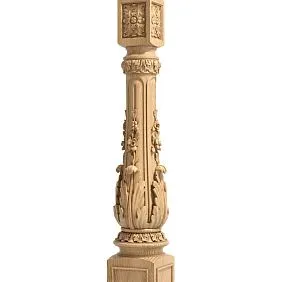
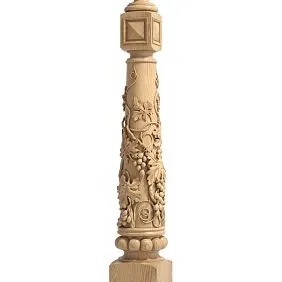
Our factory also produces:



Wood science: choosing wood species for stair components
The choice of material for balusters and posts determines not only the appearance of the staircase but also its functional characteristics. Each type of wood has unique properties that make it more or less suitable for specific usage conditions.
Get Consultation
Oak: the standard of strength and prestige
Oak balusters and posts represent the pinnacle of quality in the world of wooden staircase elements. The density of oak wood reaches 700-800 kg/m³, providing exceptional strength and durability. Natural tannins in oak create inherent protection against pests and fungal damage.
The color range of oak varies from light golden to rich brown tones, allowing elements to be matched to any interior concept. Expressive texture with clearly defined growth rings creates a unique visual effect, especially when using transparent lacquers.
Ash: Flexibility and Modern Aesthetics
Ash balusters are distinguished by exceptional impact resistance and flexibility, making them an ideal choice for heavily used staircases. The light-colored ash wood with contrasting dark grain creates a modern and dynamic visual appearance.
The technological properties of ash allow for the creation of balusters with complex curved shapes without the risk of cracking or deformation. This is especially important when manufacturing elements for spiral staircases or structures with non-standard geometry.
Beech: Universality and Accessibility
Beech staircase elements combine high quality with reasonable cost. The uniform structure of beech wood ensures even processing and excellent receptivity to various finishes — from natural oils to colored lacquers.
A distinctive feature of beech is its ability to undergo thermal treatment, which significantly increases dimensional stability and resistance to moisture. Thermally treated beech acquires a noble chocolate tone and improved performance characteristics.
Production technologies: from classics to innovations
Modern production of balusters and posts combines traditional woodworking methods with advanced technologies. Understanding the specifics of various technological processes will help make an informed choice when purchasing.
Turning: Classic Elegance
Turned balusters are manufactured on lathes using various cutters and forming tools. This method allows creating items with perfectly symmetrical shapes and smooth transitions between sections.
Modern CNC lathes ensure the highest precision in reproducing shapes, which is critically important when manufacturing large batches of balusters. Computer control allows creating the most complex profiles with micron-level accuracy.
Milling: Complex Geometric Forms
Milled balusters feature more complex geometry and a greater variety of decorative elements. Multi-axis milling centers allow creating items with spiral grooves, polygonal cross-sections, and complex transitions between different sections.
Milling technology is especially effective for manufacturing balusters with square or rectangular cross-sections featuring decorative elements on the edges. Such items are ideal for modern interiors in minimalist or high-tech styles.
Carving: Artistic Uniqueness
Carved balusters represent the pinnacle of craftsmanship in woodworking. Each item is created individually, taking into account the characteristics of the wood and artistic intent. Modern CNC machines allow realizing the most complex ornaments and decorative compositions in wood.
Balusters with combined processing, where turned elements are combined with carved inserts, are particularly valuable. Such items become true works of art and can dramatically transform the appearance of the staircase.
Selection Criteria: Technical and Aesthetic Aspects
When deciding to purchase balusters and posts, numerous factors must be considered, each influencing the final result. Proper evaluation of all criteria will help avoid mistakes and create a truly high-quality staircase structure.
Dimensional Characteristics and Proportions
The height of balusters should comply with building codes, which establish a minimum guardrail height of 900 millimeters for residential spaces. However, aesthetic considerations may require adjusting this parameter upward.
The diameter or cross-section of balusters is selected based on overall staircase proportions and stylistic requirements. For classic interiors, balusters with a diameter of 60-80 millimeters are suitable, while modern styles allow using thinner elements with a diameter of 40-50 millimeters.
The distance between balusters is regulated by safety requirements — the gap should not exceed 150 millimeters to prevent child injuries. In homes with young children, it is recommended to reduce this parameter to 120 millimeters.
Stylistic harmony with the interior
The design of balusters should harmonize with the overall interior concept. Classic styles require traditional forms with rich decoration, while modern styles prefer minimalist geometric solutions.
Baroque and Rococo styles require balusters with elaborate decoration, including floral ornaments, scrolls, and complex profiles. Such items are often gilded or patinated to emphasize the luxury of the style.
Classicism and Empire lean toward strict geometric forms with minimal decoration. Balusters in these styles feature clear proportions and noble restraint.
Modern styles are characterized by smooth lines and natural motifs. Balusters in the modern style often have asymmetrical forms and decoration inspired by the natural world.
Modern styles prefer minimalist solutions emphasizing material quality and precision of execution. Simple geometric forms highlight the beauty of natural wood.
Economic aspects of purchasing stair elements
The cost of balusters and posts varies widely depending on numerous factors. Understanding pricing will help optimize the project budget without compromising quality.
Factors Affecting Cost
Wood species is the primary pricing factor. Items made from exotic species may cost 5-10 times more than those made from coniferous species. Oak balusters occupy an intermediate position, combining high quality with reasonable cost.
Processing complexity directly affects the price of items. Simple turned balusters are significantly cheaper than carved elements with elaborate decoration. Handwork always increases cost compared to machine production.
Order volume significantly affects the unit cost of items. Large batches allow for substantial discounts, especially when ordering directly from the manufacturer.
Manufacturing lead times also affect the price. Rush orders typically cost 20-30% more than standard orders.
Cost optimization without compromising quality
Reasonable savings are possible through proper project planning and selection of optimal solutions. Using a combined approach — where the majority of balusters are made from affordable materials, while accent elements are made from premium species — allows creating an impressive result within a limited budget.
Standardizing sizes and shapes also contributes to cost reduction. Using standard solutions is significantly cheaper than custom design, especially for small projects.
The purchasing process: from planning to delivery
Successful purchase of stair elements requires careful planning and understanding of all stages of the process. Proper organization of procurement will help avoid errors and achieve the desired result.
Pre-planning
The process begins with precise determination of material requirements. A detailed specification must be prepared, including the quantity of each type of baluster, post dimensions, surface treatment requirements, and delivery timelines.
Creating a technical specification will help obtain accurate commercial offers from various suppliers and compare their terms. The technical specification must include all critically important product parameters.
Supplier selection
When selecting a supplier, consider not only price offers but also the company’s reputation, product quality, manufacturing lead times, and warranty terms. It is recommended to request product samples to evaluate the quality of processing and compliance with stated characteristics.
An important factor is the supplier’s own production, which guarantees quality control at all manufacturing stages. Companies operating solely as intermediaries may not always ensure consistent product quality.
Quality control upon receipt
When receiving the order, carefully inspect the products. Check for compliance with dimensions, surface finish quality, absence of wood defects, and damage incurred during transportation.
Special attention should be paid to wood moisture content, which must match the intended operating conditions. Exceeding the allowable moisture level may cause deformation and cracking of items after installation.
Innovative solutions in the production of stair elements
The modern industry of stair component manufacturing actively adopts innovative technologies that expand design possibilities and improve product performance.
Thermal modification of wood
Thermal treatment technology allows significantly improving wood properties without using chemical impregnation. Processing at 160-230°C alters the structure of cell walls, increasing dimensional stability and moisture resistance.
Thermally modified wood acquires a noble dark tone and improved performance characteristics. Such balusters are especially suitable for use in high-humidity conditions.
Laser processing and engraving
Laser technologies open new possibilities for decorating wooden balusters. Laser engraving allows applying intricate ornaments, logos, and even photographic images with micron-level precision.
Laser cutting enables creating delicate elements and complex geometric shapes that cannot be achieved using traditional processing methods.
Composite materials
Modern composite materials based on wood fibers and polymer binders combine the advantages of natural wood with enhanced performance characteristics. Such balusters are not susceptible to cracking, deformation, or moisture damage.
Composite elements are especially relevant for outdoor staircases and spaces with extreme operating conditions.
Trends in the market for stair components
The market for stair elements continuously evolves under the influence of changing consumer preferences and technological advancements. Understanding key trends will help make a forward-looking choice.
Ecological Sustainability
Growing attention to environmental issues stimulates demand for products made from certified wood. Consumers increasingly choose items with verified raw material origin from managed forests.
The development of waste-free production technologies allows minimizing the ecological footprint of staircase element production. Recycling waste into pellets, briquettes, and composite materials has become a standard practice.
Individualization and customization
Modern consumers increasingly demand unique solutions that reflect their individuality. This stimulates the development of small-batch and single-unit production technologies with deep customization capabilities.
Digital design technologies allow clients to participate in creating baluster designs, view the result in virtual reality, and make adjustments before production begins.
Integration of smart technologies
The future of staircase elements may include integration with smart home systems. Built-in lighting, motion sensors, and wireless charging stations will transform balusters into multifunctional elements of modern interiors.
Such innovations do not compromise the aesthetics of wooden products but rather expand their functional capabilities and increase their value for consumers.
Regional market specifics
The Russian market for staircase components has its own characteristics, related to climatic conditions, woodworking traditions, and consumer preferences.
Climate Requirements
Severe Russian winters impose special requirements for dimensional stability of wooden products. Significant temperature and humidity fluctuations necessitate the use of well-dried wood and high-quality protective coatings.
Special attention is paid to frost resistance of materials for outdoor staircases. Using local wood species adapted to climatic conditions is often preferable to exotic materials.
Traditions and Preferences
Russian consumers traditionally prefer natural materials and classic forms. Oak and pine balusters remain the most popular choices for most projects.
Interest is growing in modern styles and innovative materials, especially among younger buyers. This creates opportunities for developing new directions in staircase element design.
Choosing and purchasing balusters and posts for a staircase is an investment in safety, comfort, and the aesthetics of living space. High-quality wooden elements serve for decades, retaining their beauty and functionality with minimal maintenance.
The modern market offers a vast variety of solutions for any needs and budgets. The key is to approach selection thoughtfully, considering all technical and aesthetic aspects of the project. Buy balusters and newel posts for stairs Choosing a reliable supplier means ensuring the success of the entire project and obtaining a result that will delight for many years.
Investments in high-quality staircase elements pay off not only through longevity and reliability but also by increasing property value. A beautiful staircase with quality balusters becomes a home’s calling card and a source of pride for owners.
For many years, STAVROS has been a recognized leader in producing exclusive staircase elements from natural wood. Our long-standing experience, modern equipment, and highly skilled craftsmen guarantee impeccable quality of every item. We offer a full range of services — from consultations on material selection to manufacturing unique balusters and posts according to individual projects. Choosing STAVROS means selecting reliability, quality, and decades of experience in creating architectural masterpieces that will adorn your home for years to come.
Get Consultation

● Universality. The wooden trim K-017 is suitable for any style and room, whether it's a living room, bedroom, office, kitchen, bathroom, or hallway. The wooden trim K-017 can be used for various purposes and tasks, such as framing, cladding, decorating, or zoning. The wooden trim K-017 easily complements other decorative elements, creating a harmonious and cohesive look.
from 23.26 $

Precision Furniture Leg MN-153
from 10.78 $

Wooden decor N-370.1R
from 14.42 $

Furniture handle Module HL-049M
from 27.80 $