Article Contents:
- Artistic possibilities of decorative baseboards
- Definition and features of decorative elements
- Stylistic directions of decorative solutions
- Carved art in modern baseboards
- Traditions and modernity of carving techniques
- Classic styles of carved baseboards
- Modern interpretations of carved decoration
- Materials for exclusive items
- Choosing wood for artistic processing
- Technical Requirements for Materials
- Manufacturing technologies on order
- Modern manufacturing equipment
- Design and approval process
- Quality control of exclusive items
- Integration into various interior styles
- Classic interiors and carved elements
- Modern styles and innovative solutions
- Ethnic styles and cultural motifs
- Harmony with furniture and architectural elements
- Coordination with furniture facades
- Interaction with ceiling elements
- Features of operation and maintenance
- Protective coatings for carved surfaces
- Care for Carved Elements
- Economic aspects of ordering
- Pricing of exclusive items
- Price-to-value ratio
- Frequently Asked Questions

Modern interior design increasingly turns to exclusive solutions capable of highlighting the uniqueness of space and creating an unparalleled atmosphere. Wooden Decorative Skirting Board Becomes one of the key elements capable of radically transforming the perception of a space, turning an ordinary interior element into a work of art. Ordering custom carved and decorative baseboards opens up boundless opportunities to realize the boldest design ideas, allowing to create interiors that cannot be replicated using standard solutions.
Decorative and carved baseboards represent the highest level of craftsmanship in woodworking, combining the functionality of a traditional baseboard with the artistic value of a decorative element. Such items require not only highly skilled craftsmanship but also a deep understanding of the stylistic features of various design directions, making them accessible only under conditions of individual production.


Artistic possibilities of decorative baseboards




Definition and features of decorative elements
Decorative baseboards differ from standard items by complex profile geometry, presence of decorative elements, and non-standard proportions. Unlike classic rectangular or minimally profiled baseboards, decorative items may feature wavy lines, variable height, asymmetrical elements, and complex curved surfaces. Decorative wooden baseboard Offers broad possibilities for creating unique forms that become independent architectural elements.
Decorative skirting boards may include various decorative elements: relief panels, geometric patterns, stylized plant motifs, abstract compositions. A feature of such items is the possibility of integrating functional elements — hidden channels for communications, built-in lighting, ventilation grilles — into the decorative composition without compromising overall aesthetics.
The manufacturing technology of decorative skirting boards requires the use of specialized equipment — multi-axis CNC milling machines capable of processing complex three-dimensional surfaces with high precision. This allows creating items with perfectly smooth transitions between different profile elements and flawless geometry of complex forms.
Our factory also produces:


Stylistic directions of decorative solutions
Modern interpretations of decorative skirting boards encompass a wide range of stylistic directions. Organic forms inspired by natural structures create smooth lines mimicking water flow, plant growth, crystal structures. Such solutions are especially popular in eco-style and biomorphic design, where connection with nature is important.
Geometric decorative skirting boards use mathematical principles to create complex patterns and compositions. Fractals, parametric curves, topological forms allow creating visually intriguing elements that become focal points in modern interiors. Beautiful wooden skirting boards of this type require high manufacturing precision and quality materials.
Futuristic decorative skirting boards are characterized by streamlined forms reminiscent of elements of spacecraft or high-tech devices. Such items often integrate modern technologies — LED lighting, sensor elements, interactive surfaces.
Get Consultation
Carved art in modern skirting boards
Traditions and modernity of carving techniques
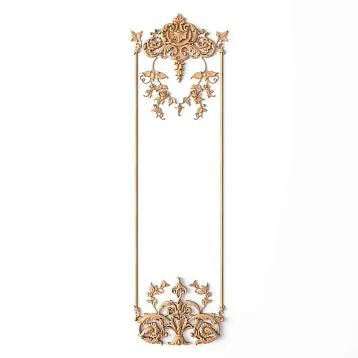
Carved skirting boards represent an embodiment of centuries-old woodworking traditions adapted to the requirements of modern design. Wooden skirting made by hand Carving in the form of execution requires deep knowledge of traditional techniques and modern wood processing capabilities. Carving can be performed in various techniques: flat relief, high relief, incised, three-dimensional, each creating its own visual effects and suitable for specific stylistic tasks.
Traditional carving motifs include plant ornaments — grapevine, oak leaves, roses, tulips, geometric patterns — meander, braiding, rhombuses, religious and mythological symbols. Modern carving expands this palette with abstract compositions, stylized forms, minimalist geometric solutions.
Modern carving technologies combine manual craftsmanship with capabilities of CNC machines. This allows creating items with perfect repeatability of elements while preserving the uniqueness of each piece. Laser engraving adds possibilities for creating fine details and complex textures.
Classic styles of carved skirting boards
Wooden Shoe-Shape Skirting Board represents a classic example of a traditional profile that can be enhanced with carved elements. Baroque carving is characterized by opulence, dynamism, and abundance of decorative elements. Acanthus leaves, cartouches, masks, musical instruments create a luxurious composition emphasizing the status of the interior.
Rococo differs with more elegant and refined carving forms. Asymmetric compositions, shells, flowers, ribbons create a light, airy atmosphere. Rococo carving is often complemented with gilding or silvering, enhancing the decorative effect.
Gothic carving uses architectural motifs — pointed arches, trilobes, four-leaf clovers, geometric patterns. The strictness and monumentality of Gothic forms create a solemn atmosphere suitable for representative interiors.
Neoclassicism prefers restrained but expressive carving with clear geometric forms, laurel branches, rosettes, meanders. Symmetry and proportion are the main principles of neoclassical carving.
Modern interpretations of carved decoration
Modern carving adapts traditional motifs to the requirements of modern design, creating simplified, stylized versions of classical ornaments. Wooden skirting board options with modern carving may include abstract geometric patterns, minimalist plant motifs, textures imitating natural materials.
Ethnic carving borrows motifs from various cultures — Scandinavian runes, Celtic knots, African masks, Asian symbols. Such elements allow creating interiors with a distinct cultural identity.
Technological carving uses motifs related to modern technologies — microchip schematics, molecular structures, cosmic objects. Such solutions are popular in interiors of high-tech companies and modern living spaces.
Materials for exclusive items
Selection of wood for artistic processing
The quality of carved or decorative skirting boards largely depends on the proper selection of material. Oak wooden skirting board is considered one of the best options for artistic processing due to its dense structure, pronounced texture, and excellent mechanical properties. Oak allows creating fine carving details that retain sharp contours for many years.
Walnut has a beautiful texture and uniform structure, making it ideal for complex decorative processing. Various shades of walnut wood — from light brown to dark chocolate — allow creating expressive color solutions without additional staining.
Ash is distinguished by contrasting texture and high strength, which is especially important for delicate carved elements. The light color of ash wood serves as an excellent base for various finishing techniques — toning, brushing, patination.
Exotic wood species - mahogany, ebony, rosewood, teak - are used to create premium exclusive items. The unique colors and textures of these species create unparalleled visual effects.
Technical requirements for materials
Wood for carved and decorative skirting boards must be carefully dried to a moisture content of 8-12% and have stable geometry. The presence of knots, cracks, or resin pockets is unacceptable, as these defects may cause damage to delicate carved elements.
For complex decorative items, laminated wood from lamellas is often used, ensuring geometric stability and eliminating deformation. Quality bonding of lamellas with water-resistant adhesives guarantees the longevity of the item.
How to make a wooden skirting board Items with carved elements require special material preparation, including additional drying, stabilization, and sometimes impregnation with strengthening compounds to enhance the mechanical properties of the wood in areas of delicate carved details.
Custom manufacturing technologies
Modern production equipment
Manufacturing Wooden Baseboards Producing items with carved and decorative elements requires the use of high-tech equipment. Multi-axis CNC milling machines allow processing complex three-dimensional surfaces with precision down to tenths of a millimeter. Modern CAD/CAM automated design systems ensure accurate modeling of the future item and optimize the processing workflow.
Laser machines are used to create delicate carved details, engraving, and cut-out elements. Laser processing ensures perfectly clean cut edges and allows creating complex-shaped parts that are inaccessible to traditional milling.
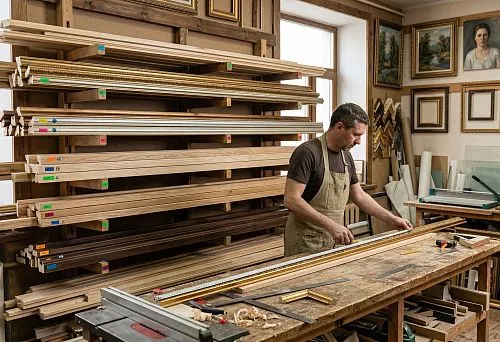
Manual finishing remains a crucial stage in producing exclusive items. Experienced carvers impart individuality to the item, refine details that cannot be mechanically produced, and create smooth transitions between elements.
Design and approval process
Creating an exclusive carved or decorative skirting board begins with a detailed study of the interior for which it is intended. The designer analyzes the room’s stylistic features, architectural characteristics, color palette, and lighting conditions. Based on this analysis, a concept for the future item is developed.
Three-dimensional modeling allows visualizing the future skirting board within the context of the interior, evaluating proportions, detailing, and color scheme. The client can view the result before production begins and make necessary adjustments.
Manufacturing a prototype or part of the item helps assess the quality of processing, carving detail, and compliance with technical specifications. After the prototype is approved, mass production begins.
Quality control of exclusive items
The quality of carved and decorative skirting boards is controlled at every stage of production. Incoming material inspection excludes the use of defective wood. Intermediate processing control ensures compliance with geometric parameters and surface quality.
Final inspection includes checking the quality of carved details, absence of chips or scratches, color tone conformity, and quality of protective-decorative coating. Each item undergoes individual acceptance by a master technologist.
Integration into various interior styles
Classic interiors and carved elements
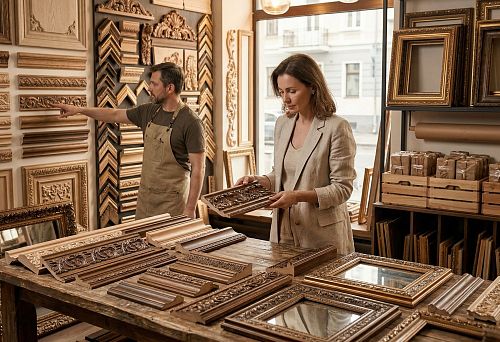
Wooden Skirting Boards in Interior Design Classic style requires a special approach to ornament selection and proportions. High carved skirting boards with rich decorative finishes emphasize the grandeur and elegance of classic interiors. Traditional motifs — acanthus leaves, rosettes, palmettes — create the atmosphere of palace halls.
Color solutions for classic carved skirting boards may vary from natural wood tones to white, cream, or gold. Gilding individual carved elements enhances the decorative effect and highlights the interior’s status.
Wide Wooden Skirting Board Height of 150-250 mm allows placing complex multi-level carving with detailed ornamentation. Such items become full-fledged architectural elements that define the character of the interior.
Modern styles and innovative solutions
Modern interiors in minimalist, high-tech, and loft styles require fundamentally different approaches to decorative elements. Carving in such interiors should be restrained, geometric, and functional. Abstract patterns, technological motifs, minimalist textures create a modern character of the item.
Integrating modern technologies into carved skirting boards opens new possibilities. Built-in LED lighting can highlight the relief of carving, creating dynamic lighting effects. Hidden channels for communication allow combining decorative and functional aspects.
Eco-style implies using natural motifs in carving — leaves, branches, flowers — but in stylized, simplified forms. Natural wood finishing with oils and waxes emphasizes the eco-friendliness of the item.
Ethnic styles and cultural motifs
Ethnic interiors offer broad opportunities for using traditional ornaments from various cultures. Scandinavian carving with runes and geometric patterns, Celtic interlacing, Russian traditional ornaments create a distinct cultural identity for the interior.
It is important to maintain authenticity when reproducing traditional ornaments, considering their symbolic meaning and cultural context. Modern interpretations of ethnic motifs should retain recognizability while adapting to contemporary requirements.
Harmony with furniture and architectural elements
Coordination with furniture facades
Carved skirting boards should harmoniously match the furniture in the room. Wooden skirting boards require special attention to stylistic unity. The skirting board ornamentation may repeat the carving motifs on furniture facades or door panels, creating a cohesive composition.
The color solution for carved elements should consider the tone of the furniture. Contrasting combinations may create bright accents, tonal ones - a calm, harmonious atmosphere. Using the same wood species for the skirting board and furniture ensures a natural interior unity.
The dimensional proportions of the carved skirting board should correspond to the scale of the furniture and room. In interiors with large furniture, tall skirting boards with large ornamentation are appropriate; in elegant interiors - more delicate solutions.
Interaction with ceiling elements
Carved skirting boards are often complemented by ceiling elements - cornices, moldings, coffered ceilings. Unified style and ornamentation create a complete architectural composition. Wooden High Skirting Board may visually continue into vertical elements - pilasters, columns, creating a complete architectural system.
Repeating ornamental motifs across various interior elements creates rhythm and unity in composition. It is important to maintain a balance between repetition and variety, avoiding monotony or chaos.
Features of Operation and Maintenance
Protective coatings for carved surfaces
Carved skirting board elements require special attention to protective finishing. The complex geometry of the surface creates zones with varying accessibility for applying coatings. Wooden skirting board for painting with carved elements requires special application technologies - spraying, dipping, ensuring even coverage of all surfaces.
Varnish coatings must have sufficient elasticity to function under temperature and humidity fluctuations. Polyurethane varnishes provide high wear resistance and long-lasting protection.
Oil-based coatings highlight the natural beauty of wood, but require regular renewal. Wax coatings create a pleasant tactile surface, but are less resistant to mechanical impacts.
Care for carved elements
Care for carved skirting boards requires special methods and tools. Dust from carving recesses is removed with soft brushes or compressed air. Wet cleaning must be performed with special care, avoiding moisture entering deep recesses.
Restoration of damaged carved elements requires high qualification. Chips and damages are restored manually using traditional carving techniques. Wood selection for repair must consider not only species, but also grain direction, density, and color.
Economic aspects of ordering
Pricing of exclusive items
The cost of carved and decorative skirting boards significantly exceeds the price of standard items and is determined by the complexity of the ornament, dimensions, wood species, and order volume. Simple decorative profiles increase cost 2-3 times compared to standard ones; complex carving may increase price 5-10 times.
Design and prototype manufacturing constitute a significant portion of the cost for small orders. For larger volumes, these expenses are distributed, reducing unit cost. Using standard ornaments is cheaper than developing individual solutions.
The manufacturing time for exclusive items ranges from 2-3 weeks for simple decorative profiles to 2-3 months for complex carved compositions. This must be considered when planning renovation.
Price-to-value ratio
Large wooden baseboard with artistic treatment represents a significant investment, which is recouped by the uniqueness and longevity of the item. Exclusive carved elements become family heirlooms, passed down from generation to generation.
Well-executed carving does not lose relevance over time, but rather gains additional value as an antique element. This makes investments in carved skirting boards economically justified in the long term.
Frequently Asked Questions
Can a solid wood carved skirting board be ordered?
A carved skirting board made from solid wood is not only possible, but also the preferred option for creating high-quality decorative elements. Solid wood ensures material uniformity, which is critical for carving - absence of glue joints, differences in density and color allows creating clear, detailed ornamentation. For carving, dense hardwoods are best suited - oak, beech, ash, walnut, which allow executing fine details without chips or cracks. Solid wood also ensures the longevity of carved elements and the possibility of restoration if needed. Modern technologies allow manufacturing carved skirting boards from solid wood of any complexity - from simple decorative profiles to highly complex artistic compositions with numerous fine details.
How does a decorative skirting board differ from a standard one?
A decorative skirting board differs from a standard one in profile complexity, presence of decorative elements, and individual design. While standard skirting boards have simple geometric shapes - rectangular or minimally profiled, decorative items feature wavy lines, variable height, complex curved surfaces. Decorative skirting boards may include relief elements, geometric patterns, stylized ornaments, transforming them into full-fledged decorative interior elements. The manufacturing technology for decorative skirting boards requires specialized equipment and high skill from craftsmen. Such items are always custom-made, taking into account the specific interior, its style, and dimensional requirements.
Carved baseboards are suitable for a wide range of interior styles, from historical to modern. In classical styles—baroque, rococo, neoclassicism—carved elements with rich ornamentation emphasize the grandeur and luxury of the interior. English and French classicism prefer more restrained but expressive carving with geometric motifs. Ethnic styles—Russian terem, Scandinavian, Celtic—use traditional ornaments corresponding to their respective cultures. Modern interiors in loft, high-tech, and minimalism styles allow carved elements, but in simplified, stylized forms—abstract patterns, technological motifs, geometric compositions. Eco-style implies natural motifs in carving—stylized leaves, branches, flowers. It is important to maintain stylistic unity between the carved baseboard and the overall interior concept.
Modern production capabilities allow to realize any designer's idea in the field of decorative and carved baseboards, creating unique interiors that reflect the owner's individuality and meet the highest aesthetic standards.
Carved and decorative baseboards to order: exclusive solutions for a unique interior | Company Stavros