Article Contents:
- Genealogy of Architectural Perfection
- Ancient Roots of Modernity
- Renaissance as a Source of Inspiration
- Revolution of Materials in Architectural Decoration
- Birth of the Polyurethane Era
- Technological Process of Modern Production
- Multifaceted Modern Solutions
- Order Systems in Modern Execution
- Decorative Elements and Their Functionality
- Technical Advantages of Polyurethane Solutions
- Mechanical properties of the material
- Climate resistance and durability
- Chemical Inertness and Ecological Safety
- Design Possibilities and Stylistic Directions
- Neoclassical Elegance
- Baroque Opulence in Modern Execution
- Modernism and Its Contemporary Interpretations
- Innovative Manufacturing Technologies
- Digital Design and Prototyping
- Automated Production Lines
- Quality control and certification
- Installation Technologies and Mounting Systems
- Foundation Preparation and Layout
- Modern Fastening Systems
- Final Finishing and Protection
- Economic aspects of application
- Comparative Cost of Materials
- Long-Term Economic Efficiency
- Impact on Real Estate Market Value
- Ecological and Social Aspects
- Ecological Safety of Materials
- Energy efficiency of production
- Industry's Social Responsibility
- The Future of Architectural Decoration
- Nanotechnologies and Smart Materials
- Digital Technologies and System Integration
- Biotechnologies and Ecological Innovations
- Regional application specifics
- Adaptation to Climatic Conditions
- Cultural and Architectural Traditions
- Practical recommendations for use
- Architectural planning
- Technical design
- Frequently Asked Questions
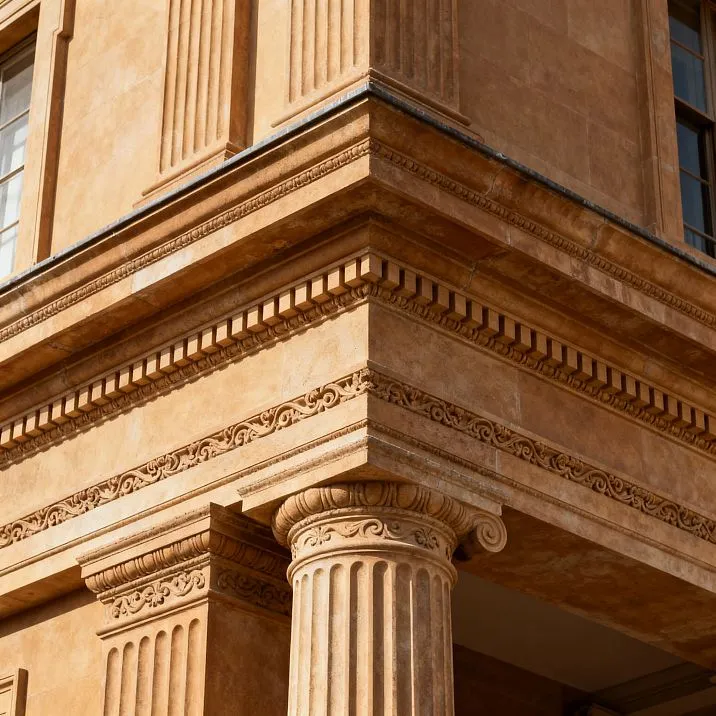
What transforms an ordinary building into a work of art? What force can breathe life into blank walls and make passersby slow down in admiration?Facade Molded Decorationhas answered the eternal human longing for beauty, embodying millennia of architectural traditions and revolutionary achievements of modern technology.
In the era of digital architecture, when algorithms design buildings and robots construct structures, it is preciselyFacade Molded DecorationIt remains an embodiment of human creativity and artistic vision. Each element tells a story, every line carries emotion, every ornament reflects cultural heritage and the personality of the creator.
Modern materials and manufacturing technologies have opened boundless possibilities for realizing the most daring architectural concepts. What once required months of meticulous handcrafting by stonemasons is now produced with mathematical precision in automated production cycles, while preserving the full beauty and expressiveness of handcrafted art.


Genealogy of Architectural Perfection
The history of sculptural decoration begins deep in the millennia, when the first civilizations sought to adorn their dwellings with symbols of power, wealth, and spirituality. From Egyptian pyramids to Greek temples, from Roman baths to Byzantine cathedrals — everywhereFacade Molded Decorationserved not merely as decoration, but as a language through which architecture spoke to humanity.




Ancient Roots of Modernity
Ancient Greek masters created a system of architectural orders that still defines the canons of beauty in construction. The Doric order with its masculine simplicity, the Ionic with its elegant volutes, the Corinthian with its luxurious acanthus leaves — all these elements find new embodiment in modern polyurethane sculptural decoration.
The Roman Empire gifted the world with arches, vaults, domes, lavishly adorned with decorative elements. It was the Romans who first began using molding technologies for mass production of architectural details, laying the foundations of modern industrial production of stucco.
Byzantine tradition enriched the architectural language with Eastern motifs, creating a unique synthesis of ancient heritage and Christian symbolism. Complex geometric ornaments, vegetal motifs, refined capitals — all of this is reflected in modern collections of architectural decoration.
Our factory also produces:


Renaissance as a Source of Inspiration
The Renaissance revived ancient ideals of beauty, reinterpreting them through the prism of humanist values. Leonardo da Vinci, Michelangelo, Bramante created architectural masterpieces where each decorative element served as an embodiment of mathematical harmony and artistic perfection.
Palladian architecture systematized the principles of using order systems, creating a guide for applying classical elements under new conditions. These principles remain relevant today in the design offacade molded decormodern buildings.
Get Consultation
Revolution of Materials in Architectural Decoration
The 20th century brought revolutionary changes in materials science, fundamentally transforming the possibilities of creating architectural decoration. The emergence of polymer materials ushered in a new era in construction history, where traditional limitations of weight, workability, and durability were overcome.
The Birth of the Polyurethane Era
The development of polyurethane technologies in the 1970s in the USA was a true breakthrough in the production of architectural decoration. This synthetic polymer combined the best qualities of all known construction materials, surpassing them in many parameters.
Polyurethane is obtained as a result of an exothermic reaction between polyisocyanates and polyols. By controlling the reaction conditions — temperature, pressure, component ratio — one can obtain materials with specified properties: from elastic to rigid, from light to dense, from transparent to opaque.
The key advantage of polyurethane was the ability to cast under pressure in closed molds. This ensures reproduction of the finest relief details with precision down to microns, which is unattainable when working with traditional materials.
The technological process of modern production
Modern productionfacade molded decorrepresents a high-tech process where each stage is controlled by computer systems. The accuracy of component dosing reaches ±0.1%, ensuring the stability of material properties from batch to batch.
Component preparation begins with careful drying to remove moisture and impurities. The polyol component is mixed for half an hour at a speed of 500–1000 rpm to ensure homogeneity. The isocyanate component requires special storage conditions in an inert atmosphere.
Molds for casting are made from various materials: metal for mass production, silicone for small batches and complex geometries, composite materials for special applications. The quality of the mold determines the quality of the finished product.
Multifaceted Modern Solutions
The modern market offers an astonishing variety of elementsfacade molded decor, capable of meeting any architectural challenge. From classical order systems to avant-garde abstract compositions — polyurethane technologies allow the realization of any creative concept.
Order Systems in Modern Execution
Classical architectural orders are experiencing a new rebirth in polyurethane execution.Moldings, cornices, and pilastersreproduce the canonical proportions of ancient prototypes with flawless accuracy.
Doric columns, with their minimalist beauty, find application in modern architecture, where noble simplicity of form is valued. Fluted shafts create a play of light and shadow, animating the facade with rhythmic verticals. Simple echinus capitals emphasize the constructive logic of the order.
Ionic columns, with their characteristic volutes on capitals, introduce elegance and refinement into architectural composition. Modern technologies allow reproduction of the finest details of spiral scrolls, creating an effect of handcrafted masterwork.
Corinthian orders, with their luxurious capitals adorned with acanthus leaves, demonstrate the capabilities of polyurethane technologies in reproducing complex vegetal ornaments. Each leaf is crafted with botanical precision.
Decorative elements and their functionality
ModernPolyurethane appliquésperform not only aesthetic, but also practical functions. Eaves and sardines protect walls from atmospheric precipitation, interfloor bands conceal technological joints, and plinth elements protect the lower part of the building from mechanical damage.
Window and door casings create expressive accents on the facade, emphasizing the architectural significance of openings. Keystone stones above arches not only decorate but also visually support the structure, creating an illusion of masonry.
Rosettes, medallions, cartouches serve to place symbolic information — coats of arms, monograms, dates. These elements personalize the building, making it unique and memorable.
Balustrades and railings combine decorative function with safety. Polyurethane balusters precisely reproduce classical profiles, but surpass stone analogs in strength and durability.
Technical advantages of polyurethane solutions
Facade Molded Decorationmade of polyurethane demonstrate a complex set of technical advantages, making it the optimal choice for modern construction. Each material characteristic opens new possibilities for architects and builders.
Mechanical Properties of the Material
Density of polyurethane products is 500-700 kg/m³, which is five times less than natural stone density at comparable strength characteristics. This revolutionary advantage allows creating large-scale decorative compositions without reinforcing load-bearing structures.
Compressive strength reaches 60-80 MPa, matching the properties of high-quality concrete. Bending strength is 80-120 MPa, exceeding similar characteristics of many traditional materials. This allows manufacturing extended elements without intermediate supports.
Impact resistance of polyurethane significantly exceeds the properties of brittle materials. Elements are not damaged by accidental mechanical impacts, which is especially important in urban environments with heavy traffic and high pedestrian activity.
Elastic modulus of the material is in the range of 2000-4000 MPa, providing sufficient rigidity while retaining the ability to undergo elastic deformation. This is critically important for facade elements subjected to thermal building deformations.
Climate Resistance and Durability
Freeze resistance of polyurethane products exceeds F300, meaning the ability to withstand more than 300 freeze-thaw cycles without loss of strength. This ensures reliable operation in harsh climatic conditions.
The material's water absorption does not exceed 1-2% by mass, which excludes destruction due to freezing expansion of water in pores. The closed polymer structure prevents moisture penetration into the material's bulk.
Temperature stability of polyurethane ensures retention of properties in the range from -60°C to +80°C. This temperature range covers all possible operating conditions in temperate and northern latitudes.
Biological resistance excludes damage by fungi, mold, microorganisms. Polyurethane is not a nutrient medium for biological objects, which is especially important under conditions of high humidity and variable moisture levels.
Chemical inertness and ecological safety
Polyurethane demonstrates high resistance to aggressive environments. Acids, alkalis, salts, organic solvents do not exert destructive effects on the polymer matrix. This ensures longevity in polluted urban atmospheres.
Resistance to ultraviolet radiation is achieved by introducing special stabilizers — benzophenones, benzotriazoles, sterically hindered amines. These additives absorb harmful radiation, preventing polymer degradation at the molecular level.
Ecological safety of the material is confirmed by international certificates. Fully polymerized polyurethane does not emit toxic substances and meets the strictest ecological standards for building materials.
Design possibilities and stylistic directions
Universality of polyurethane as a material opens boundless opportunities for creative self-expression.Facade Molded Decorationcan realize any stylistic direction — from strict classicism to avant-garde modernism.
Neo-classical elegance
Neoclassical style is experiencing a new rebirth in modern architecture, where classical forms receive a contemporary interpretation. Polyurethane technologies allow reproducing the finest details of historical prototypes with museum-level accuracy.
Pediments with classical proportions adorn entrances of public buildings, banks, representative offices. Triangular or pointed arch forms are emphasized by elegant acroteria at corners and a central cartouche with symbolic composition.
Antabements — horizontal crowning elements of classical orders — adapt to modern requirements. Architrave, frieze, and cornice perform not only decorative, but also functional roles, concealing technical communications and ensuring water runoff.
Pilasters create rhythmic division of the facade, emphasizing its vertical composition. Base, shaft, and capital precisely reproduce classical proportions, but are executed in lightweight and durable polyurethane.
Baroque opulence in modern execution
Baroque, with its love for complex forms, rich decoration, and dramatic effects, finds ideal embodiment in polyurethane technologies. The material allows creating the most intricate compositions without limitations on geometric complexity.
Cartouches with botanical ornamentation demonstrate the virtuosity of polyurethane technology in reproducing organic forms. Each leaf, each scroll is meticulously crafted with botanical precision, creating an illusion of living nature.
Mascarons — decorative masks adorning castle stones and consoles — embody the theatricality of the Baroque style. Expressive facial features, intricate hairstyles, and decorative elements are reproduced with remarkable detail.
Volutes and spirals create dynamic compositions that guide the viewer's gaze along a predetermined trajectory. The mathematical precision of spiral curves combines with the organic plasticity of forms.
Modern and its contemporary interpretations
The Modern style, with its natural motifs and flowing forms, receives new life in polyurethane execution. The technology enables reproduction of the most complex organic forms, unattainable in traditional materials.
Botanical ornaments — irises, lilies, grapevines — create poetic compositions on building facades. Each element is meticulously crafted with biological precision, conveying the distinctive characteristics of plants.
Zoomorphic motifs — stylized images of animals and birds — introduce dynamism into architectural compositions. Swans, peacocks, dragons become an organic part of the decorative system.
Modern geometric ornaments are based on natural forms but stylize them into recognizable symbols. Waves, clouds, flames create rhythmic compositions on the facade surface.
Innovative Production Technologies
Modern productionfacade molded decorIntegrates advanced automation, quality control, and ecological safety technologies. Each stage is optimized to achieve maximum quality with minimal resource expenditure.
Digital design and prototyping
3D modeling has revolutionized the process of creating new decorative elements. Designers can experiment with shapes, proportions, and details in a virtual environment, instantly seeing the results of changes.
Parametric design allows creating families of related elements, where changing one parameter automatically recalculates the entire product geometry. This accelerates collection development and ensures stylistic unity.
Algorithmic ornament generation uses mathematical models to create complex decorative compositions. Fractal geometry, natural growth algorithms, crystalline structures become sources of inspiration for new forms.
Virtual reality allows designers and clients to 'walk around' a building with installed decor before production begins. This eliminates errors in perception of scale and proportions.
Automated production lines
Robotic production ensures consistent product quality at high productivity. Industrial robots perform dosing, mixing, and pouring operations with precision unattainable by humans.
Vision systems control product quality in real-time. Each item is scanned by laser sensors, detecting the slightest deviations from the standard.
Intelligent control systems optimize production process parameters based on big data analysis. Machine learning helps predict and prevent defects.
Zero-waste production is achieved through complete utilization of raw materials and energy. Waste from one process becomes raw material for another, creating a closed-loop material flow.
Quality control and certification
Multi-level quality control covers all production stages — from incoming raw material inspection to acceptance testing of finished products. Each parameter is documented and archived to ensure traceability.
Climate testing simulates operating conditions in various climatic zones. Special chambers replicate freeze-thaw cycles, UV exposure, and high humidity.
Mechanical testing determines material strength characteristics. Modern computer-controlled testing machines ensure high accuracy and reproducibility of results.
International certification opens access to global markets. ISO 9001, CE-marking, and other international standards confirm product compliance with global quality levels.
Mounting technologies and mounting systems
Successful installationfacade molded decorRequires a professional approach and modern mounting technologies. The lightweight nature of polyurethane elements significantly simplifies installation compared to traditional materials.
Foundation preparation and marking
The quality of the substrate determines the reliability and longevity of the decorative system. The surface must be flat, dry, and free of peeling coatings and contaminants. Deviations from flatness must not exceed 3 mm per linear meter.
Priming the substrate improves adhesive bond strength and prevents moisture absorption from the adhesive. The primer type is selected based on the wall material — concrete, brick, various types of plaster require specialized compositions.
Element placement marking is performed using laser levels and professional measuring tools. Marking accuracy is critically important for creating a harmonious composition and correct perception of proportions.
Coordination with engineering systems prevents conflicts between decorative elements and technical utilities. Ventilation ducts, electrical conduits, and drainage systems must be integrated into the overall design.
Modern mounting systems
Combined mounting combines the advantages of adhesive bonding and mechanical fastening. The adhesive takes on constant loads and ensures even stress distribution, while mechanical fastening protects against extreme impacts.
Polyurethane adhesives create a strong and elastic bond with the substrate. One-component formulations polymerize under atmospheric moisture, while two-component formulations offer faster curing and higher strength characteristics.
Mechanical fastening is performed using special anchors with polymer sleeves, preventing corrosion and thermal bridges. The number and placement of fastening points are calculated based on the dimensions, mass of elements, and wind loads.
Expansion joints are provided to compensate for thermal deformations of the building. The width of the joints is calculated based on climatic data and construction materials.
Final finishing and protection
Sealing of joints between elements prevents moisture penetration into the structure. Polyurethane sealants provide elastic and durable connections capable of compensating for minor movements of elements.
Priming and painting of elements can be done either at the factory or on-site after installation. Factory painting ensures better coating quality but requires careful handling during transportation and installation.
Protective coatings with UV filters prevent fading and degradation of material under solar radiation. Modern coatings retain their original color for 10-15 years.
Anti-vandal coatings protect surfaces from graffiti and mechanical damage. Special formulations allow easy removal of dirt without damaging the base coating.
Economic aspects of application
Facade Molded DecorationPolyurethane demonstrates attractive economic indicators at all stages of its life cycle. Initial cost, operating expenses, impact on property value — all factors favor polyurethane solutions.
Comparative material cost
The cost of polyurethane elements is 30-50% of the cost of similar natural stone products with comparable aesthetic qualities. This makes high-quality decoration accessible for mid-range construction projects.
Transportation costs are significantly reduced due to the low weight of polyurethane products. A truck can carry 5-7 times more decorative elements compared to stone equivalents, proportionally reducing the per-unit delivery cost.
Installation costs are reduced due to the simplicity of processing and low weight of elements. Two installers can handle the volume of work that would require a team of five workers and lifting equipment when using stone.
Storage costs are minimized by compact packaging and the possibility of multi-level storage. Polyurethane elements do not require special storage conditions, simplifying logistics.
Long-term economic efficiency
The service life of quality polyurethane elements is 25-50 years without major repairs. This exceeds the performance of many traditional materials and ensures long-term cost savings.
Operating expenses are minimal due to the material's resistance to atmospheric effects. The absence of need for regular painting and repairs reduces the total cost of ownership.
Building energy efficiency can be improved through additional insulation at element attachment points and the organization of air gaps, reducing heat losses.
Insurance costs may be reduced due to the non-combustibility of polyurethane and the absence of risk of collapse of heavy elements. Some insurance companies offer discounts for buildings with polymer decoration.
Impact on property market value
Quality facade decoration increases the market value of a property by 15-25% according to real estate appraisals. This effect is especially noticeable for residential properties in prestigious areas.
Commercial properties with striking decoration attract more tenants and allow setting premium rental rates. A prestigious appearance is especially important for office centers and shopping complexes.
Sales speed improves due to the emotional appeal of buildings with quality decoration. Buyers are willing to pay extra for architectural expressiveness and uniqueness.
The branding value of buildings increases when they become recognizable architectural objects. This is especially important for corporate real estate and representative offices.
Environmental and social aspects
Modern productionfacade molded decorThe industry takes into account requirements for ecological safety and social responsibility. Sustainable development has become an integral part of manufacturers' business strategies.
Ecological safety of materials
Fully polymerized polyurethane is a chemically inert material that does not emit toxic substances during operation. International certificates confirm safety for human health and the environment.
The absence of volatile organic compounds (VOCs) in finished products ensures a healthy microclimate in rooms. This is especially important for residential buildings and social facilities.
Resistance to biological damage eliminates the need to apply fungicides and antiseptics during operation. The material does not create a favorable environment for pathogenic microorganisms.
The possibility of recycling at the end of the life cycle reduces environmental impact. Polyurethane products can be ground and used as fillers for new composites or other applications.
Production energy efficiency
Modern production lines use energy-saving technologies and renewable energy sources. Solar panels, wind generators, and heat recovery systems reduce the carbon footprint of production.
Optimization of logistics chains minimizes transportation costs and associated CO2 emissions. Regional production and local raw material supply shorten delivery distances.
Zero-waste technologies ensure maximum utilization of raw materials. Waste from one process becomes raw material for another, creating closed material flow cycles.
Emission cleaning systems prevent atmospheric pollution. Multi-stage filtration and catalytic oxidation ensure compliance with the strictest environmental standards.
Social Responsibility of the Industry
Creating highly qualified jobs contributes to the development of regions where manufacturers are present. Modern production requires skilled specialists, stimulating the development of vocational education.
Support for cultural and educational projects strengthens ties with local communities. Many manufacturers fund the restoration of historical landmarks using their products.
Development of related industries creates a multiplier effect for regional economies. Demand for raw materials, equipment, and logistics services stimulates supplier development.
International cooperation facilitates technology transfer and experience exchange. Russian manufacturers actively participate in international exhibitions and conferences.
Future of architectural decoration
The development of technologies continues to expand the possibilities of applicationfacade molded decor. New materials, manufacturing processes, and digital technologies open up prospects that were once considered science fiction.
Nanotechnologies and smart materials
Introducing nanoparticles into a polyurethane matrix dramatically improves material properties. Nanoclays enhance barrier characteristics, nanocarbon improves conductivity, and nanodioxide titanium provides photocatalytic properties.
Self-cleaning surfaces with photocatalytic properties break down organic pollutants under ultraviolet light. Buildings with such finishes become active purifiers of urban air.
Thermochromic additives create surfaces that change color depending on temperature. In summer, buildings may become lighter, reflecting excess heat, while in winter they darken, absorbing solar energy.
Piezoelectric inclusions allow generating electricity from mechanical deformations caused by wind loads. Decorative elements become power sources for autonomous systems.
Digital technologies and system integration
The Internet of Things (IoT) transforms decorative elements into components of smart buildings. Embedded sensors monitor structural conditions, environmental parameters, and object safety.
Augmented reality (AR) revolutionizes design, installation, and maintenance processes. Special applications allow viewing hidden utilities, accessing technical information, and performing diagnostics.
Blockchain technologies ensure traceability of materials from production to disposal. Digital product passports contain complete information on composition, properties, and usage history.
Artificial intelligence optimizes design solutions by analyzing multiple factors: climatic conditions, architectural environment, budget constraints, and aesthetic preferences.
Biotechnologies and ecological innovations
Biodegradable polymers for temporary structures fully degrade under natural conditions within a specified time. This is an ideal solution for exhibition pavilions, temporary structures, and seasonal objects.
Living facades integrate vegetation into architectural composition. Special elements create conditions for moss, lichen, and succulent growth, transforming buildings into vertical gardens.
Carbon-negative materials absorb carbon dioxide from the atmosphere during operation. Buildings become active participants in the fight against climate change.
Closed production cycles ensure full waste utilization. Principles of circular economy are implemented at all stages of the product's life cycle.
Regional application specifics
Selection and applicationfacade molded decormust consider climatic, cultural, and economic characteristics of different regions. Localization of solutions increases their efficiency and longevity.
Adaptation to Climatic Conditions
Northern regions require special attention to frost resistance and snow loads. Elements must withstand extremely low temperatures and significant mechanical impacts from snow and ice.
Southern territories with intense ultraviolet radiation require enhanced UV protection. Special stabilizers and light-reflecting pigments extend the service life of decorative coatings.
Coastal zones with aggressive saline environments require the use of corrosion-resistant fastening systems and special protective coatings. High humidity may stimulate microbial growth.
Mountainous regions with sharp temperature fluctuations and intense solar radiation impose higher requirements for material thermal stability and quality of mounting connections.
Cultural and Architectural Traditions
Historic cities require a special approach to decorative element styling. New decoration must harmonize with existing buildings, preserving the architectural unity of the historic environment.
Regional architectural schools have their own characteristics in proportions, ornamentation, and color schemes. Successful projects take into account these traditions, creating modern interpretations of local styles.
Religious and cultural restrictions may influence the choice of decorative motifs. Some ornaments and images may be unacceptable in certain cultural contexts.
National building codes and standards define technical requirements for materials and structures. Product certification must comply with local regulations.
Practical application recommendations
Successful applicationfacade molded decorRequires a systemic approach combining architectural, technical, and economic aspects of the project.
Architectural Planning
Conceptual design must begin with context analysis — surrounding built environment, landscape, and functional purpose of the building. Decorative elements should enhance the architectural concept, not exist independently from it.
Scaling of elements is critically important for proper perception of composition. Too small details are lost on large facades, while too large elements overwhelm the architecture of small buildings.
Rhythmic organization of elements creates musicality in architectural composition. Regular repetitions, variations, and accents form an emotional impact on the viewer.
Color solution must consider the characteristics of perception under different lighting conditions. Daylight, artificial lighting, and seasonal changes affect color and form perception differently.
Technical Design
Load calculation includes not only the weight of elements, but also wind, temperature, and seismic impacts. Modern programs allow modeling the behavior of decorative systems under various conditions.
Selection of fastening systems depends on wall material, size and mass of elements, and climatic conditions. There are no universal solutions — each project requires an individual approach.
Coordination with engineering systems prevents conflicts between decorative elements and technical utilities. Ventilation, drainage, and lighting must be integrated into the overall composition.
Detailing of connection nodes requires special attention to sealing, thermal deformation, and accessibility for maintenance. Quality of detailing determines the longevity of the entire system.
Frequently asked questions
How long does polyurethane facade molding last?
The service life of quality polyurethane decoration ranges from 25 to 50 years depending on climatic conditions and installation quality. The material is resistant to corrosion, rot, and freeze damage. With proper installation and minimal maintenance, elements retain their original appearance for decades. Warranty period is typically 10–15 years.
Can polyurethane elements be painted, and how often is this necessary?
Polyurethane holds any facade paint — acrylic, silicone, or polyurethane — well. The surface does not require special preparation, and paint is applied using standard methods. When using quality paints with UV protection, repainting is required no more frequently than once every 10–15 years. It is recommended to use breathable compositions.
What advantages does polyurethane decoration have over natural stone?
Main advantages: weight is 5–7 times less than stone, reducing structural load; cost is 2–3 times lower for comparable quality; ease of installation and processing; high relief detail; resistance to freeze-thaw cycles; ability to create elements of any complexity without geometric limitations.
Can polyurethane decoration withstand Russian climate conditions?
Modern polyurethane compositions are specifically adapted for harsh climatic conditions. Freeze resistance exceeds F300 cycles, temperature stability from -60°C to +80°C. The material is not afraid of sharp temperature fluctuations, high humidity, or UV radiation. Long-term operational experience in various regions of Russia confirms the material’s reliability.
Is polyurethane safe in case of fire?
Polyurethane d