Article Contents:
- Constructive anatomy of the P-shaped profile
- Dimensional typology and modular coordination
- Material science aspects of the construction
- Manufacturing Technologies
- Preparation operations
- Profiling and assembly
- Final finishing
- Architectural integration into interior concepts
- Visual correction of spatial parameters
- Zonal organization of space
- Engineering functionality of modern beams
- Electrical communications
- Lighting systems
- Ventilation systems
- Installation Technologies and Fastening Systems
- Preparation work and marking
- Joining technologies
- Stylistic directions of application
- Neoclassicism: a modern interpretation of traditions
- Modern minimalism: function as aesthetics
- Scandinavian design: closeness to nature
- Loft: industrial aesthetics
- Economic aspects of application
- Lifecycle Cost Analysis
- Impact on property value
- Technological innovations and development trends
- Composite materials of new generation
- Smart technologies in decor
- Ecological trends
- Regional application specifics
- Adaptation to Climatic Conditions
- Transport and logistics factors
- Quality Control and Standardization
- Incoming material inspection
- Geometric control
- Quality control of finishes
- Conclusion: architectural expressiveness through technological perfection

Architectural space is born not only from functional necessity but also from the desire for harmony of forms. In modern interior design, the false P-shaped beam occupies a special place as a constructive element capable of radically changing the perception of room volume. This architectural technique, originating from classical architecture, is experiencing a new rebirth today thanks to innovative production and installation technologies.
The P-shaped configuration of a decorative beam is not a random solution but the result of centuries of evolution of construction technologies. The shape resembling the letter 'P' in cross-section provides an optimal balance between visual massiveness and constructive lightness, creating an illusion of a load-bearing element while imposing minimal load on the ceiling.
In an era when every square meter of living space is valued as gold, the ability to work with visual illusions becomes a key skill for modern designers. And it is precisely here that the P-shaped false beam demonstrates its unique capabilities, allowing the creation of architectural expressiveness without sacrificing usable area.

Constructive anatomy of the P-shaped profile
The geometry of the P-shaped false beam is defined by three main planes: two vertical walls and a horizontal upper part. This apparent simplicity conceals complex engineering logic, taking into account the laws of spatial perception, installation requirements, and operational loads.
The cavity formed by the P-shaped profile creates a universal technical space for housing utilities. Modern residential and public buildings are filled with engineering systems: electrical wiring, low-voltage networks, air conditioning systems, fire alarm systems. False beam in the shape of P elegantly solves the problem of their concealed placement, preserving the aesthetic of the ceiling space.




Dimensional typology and modular coordination
Standardization of P-beam dimensions is based on a modular coordination system that takes into account both ergonomic requirements and technological production capabilities. Basic cross-sections vary from compact 50×50×50 mm to massive 200×200×200 mm, providing a wide range of architectural solutions.
The height of the profile determines its visual weight in the interior. Low beams (50-75 mm) create a delicate rhythm, suitable for rooms with limited ceiling height. Medium sizes (100-150 mm) provide an optimal balance between expressiveness and proportionality. Massive profiles (180-200 mm and above) are intended for spacious rooms with high ceilings, where the goal is to create a sense of monumentality.
The width of the internal cavity directly affects the functional capabilities of the beam. Narrow cavities (30-50 mm) are suitable for housing electrical cables and low-voltage systems. Wide cavities (80-120 mm and above) allow for placing ventilation ducts, large cable bundles, lighting elements.
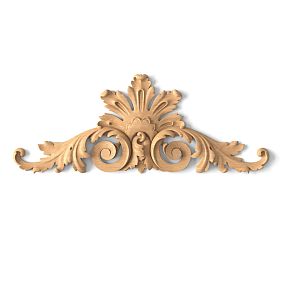
Our factory also produces:





Material aspects of construction
Material selection for manufacturing L-shaped beams is determined by a complex of factors: operational requirements, aesthetic preferences, budget constraints. Modern industry offers solutions made from natural wood, composite materials, polyurethane compounds.
Natural wood remains the benchmark for quality and aesthetic appeal. Spruce, due to its accessibility and ease of processing, holds leading positions in mass production. Its light-colored wood with a distinct grain pattern easily accepts staining, allowing for a wide range of color options.
Larch represents a compromise between price and premium characteristics. High wood density (up to 800 kg/m³) ensures exceptional structural strength. Natural tannin content imparts inherent biostability, which is especially valuable under varying humidity conditions.
Oak is traditionally associated with aristocratic quality and longevity. Dense wood structure (900-1000 kg/m³) creates a sense of fundamentality, while its noble grain develops a refined patina over time. Wooden beams Oak beams can serve for centuries, becoming family heirlooms.
Get Consultation
Manufacturing Technologies
Manufacturing high-quality L-shaped false beams requires strict technological discipline at every stage of production. The process begins with careful selection of timber based on moisture content, absence of defects, and uniformity of structure.
Preparation operations
Kiln drying timber to 8-12% moisture content is a critically important stage, determining the dimensional stability of the finished product. Modern programmable drying chambers provide gentle drying regimes, eliminating internal stresses and cracks.
Sorting timber by quality allows rational use of raw material. First-grade boards without knots or defects are used for visible surfaces, while second-grade material is used for internal structural elements hidden from view.
Timber cutting is performed on high-precision equipment with programmable control. Modern format sawing machines ensure dimensional accuracy of ±0.1 mm, which is critical for quality assembly of profiled elements.
Profiling and assembly
L-shaped profile formation is performed on a four-sided planer equipped with special cutter heads. High-speed processing (up to 6000 rpm) ensures ideal surface quality, eliminating the need for additional sanding.
Assembly of profile elements is performed on special fixtures ensuring geometric accuracy. Modern polyurethane adhesives create bonds stronger than the wood itself. Pressing in pneumatic clamps at 0.8-1.2 MPa ensures even adhesive distribution and prevents voids.
Final finishing
Surface quality of L-shaped beams is largely determined by finishing treatment. Sanding is performed in multiple stages with progressive reduction of abrasive grit from P120 to P220. This ensures a perfectly smooth surface ready for application of protective-decorative coatings.
Brushing — a special technology for revealing wood texture — imparts a distinctive relief to the surface. Soft fibers are removed with metal brushes, exposing hard annual rings. The result is a three-dimensional texture that beautifully plays with light and shadow.
Architectural integration into interior concepts
Application of L-shaped false beams in modern interior design goes far beyond simple decoration. These elements become active participants in shaping architectural space, influencing its perception, scale, and functional organization.
Visual correction of spatial parameters
Proper placement of beams can dramatically alter the perception of room proportions. Longitudinally oriented elements visually elongate space, creating an effect of infinity. This technique is especially effective in narrow spaces — corridors, galleries, elongated living rooms.
Transverse placement of beams expands space, making it more balanced. In square rooms, this technique avoids monotony, creating a dynamic rhythm on the ceiling surface.
Diagonal placement of beams — a complex but effective technique creating a sense of movement and modernity. Such a solution requires professional calculation of proportions and especially careful detailing of intersection nodes.
Zonal organization of space
In the era of open floor plans, L-shaped false beams become a zoning tool, allowing functional areas to be distinguished without erecting physical partitions. Groups of beams positioned over different zones create visual boundaries without compromising overall spatial integrity.
The kitchen zone can be delineated by a system of parallel beams oriented along working surfaces. This solution not only zones the space but also allows for concealed placement of exhaust ventilation.
The living room zone is traditionally furnished with more complex compositions — intersecting beams creating a coffered ceiling structure. This imparts a sense of grandeur and elegance to the space.
Engineering functionality of modern beams
Modern L-shaped false beams have long ceased to be purely decorative elements. The internal cavity of the profile has become a technological space resolving numerous engineering tasks.
Electrical installations
Placing electrical wiring within beams ensures not only aesthetics but also enhanced safety. Wooden-encased cables are less susceptible to mechanical damage, and properly organized ventilation prevents overheating.
Modern requirements for the number of electrical outlets in residential spaces are constantly increasing. Outlets, switches, USB ports, and internet connectors require laying multiple cables. L-shaped beams allow organizing these runs compactly and safely.
Low-voltage systems - internet, television, security alarm, home automation - also find their place within the profile. Separate placement of power and low-voltage cables eliminates mutual electromagnetic interference.
Lighting Systems
Integrating LED strips into the structure of P-shaped beams opens new possibilities for lighting design. Hidden backlighting creates an effect of "floating" beams, giving the ceiling a light and airy feel.
Directional lighting placed within the beams can serve as the primary light source in the room. Even distribution of fixtures along the beam ensures comfortable illumination without harsh shadows.
Accent lighting allows highlighting the texture of wooden beams, creating a play of light and shadow on the wooden surface. Side lighting especially effectively reveals the relief of brushed surfaces.
Ventilation systems
Modern requirements for indoor air quality stimulate the development of mechanical ventilation. Compact ducts of supply-exhaust ventilation systems easily fit inside large P-shaped profiles.
Distributed ventilation systems with multiple air exchange points require a branched duct network. Beams allow hiding these utilities without compromising the architectural integrity of the interior.
Mounting technologies and fastening systems
The quality of installation of P-shaped beams determines not only the aesthetic result but also the durability of the structure. Modern mounting technologies take into account the characteristics of different types of ceilings, beam materials, and operational loads.
Preparation and marking
Precise marking is the foundation of quality installation. Laser plane builders ensure ideal horizontal alignment and parallelism of mounting lines. Deviations unnoticed during marking become critical after installing beams 3-6 meters long.
Preparing the base surface requires special attention. The ceiling must be flat, clean, and degreased. Significant unevenness (more than 2-3 mm) prevents tight beam fitting and weakens mounting.
Calculating loads on mounting elements takes into account not only the weight of the beams themselves but also possible additional loads - built-in lighting, decorative elements, accidental impacts during maintenance.
Mounting technologies
Adhesive mounting is used for lightweight polyurethane and small wooden beams. Modern polyurethane-based construction adhesives create a strong, flexible bond that compensates for thermal and moisture deformations.
Adhesive is applied in zigzag patterns on the inner surfaces of the P-shaped profile. Even distribution of the adhesive ensures maximum contact area and prevents air bubble formation.
Mechanical mounting is used for heavy wooden beams and in cases requiring higher reliability. Hidden self-tapping screws are installed through the side walls of the profile with a spacing of 40-60 cm.
Pre-drilling holes prevents wood cracking. The hole diameter should be 0.5-1 mm smaller than the screw diameter to ensure secure engagement.
Combined systems combine the advantages of different mounting methods. The beam is initially fixed with adhesive, then additionally secured with mechanical fasteners. Screw locations are masked with putty and tinted to match the wood color.
Stylistic application directions
The architectural versatility of P-shaped false beams allows integrating them into the most diverse stylistic concepts. From strict classicism to bold avant-garde - in every direction, beams find their place and interpretation.
Neoclassicism: a modern interpretation of traditions
Modern classicism leans toward the purity of forms and nobility of materials. Moldings and beams made of natural oak or ash with natural texture create an atmosphere of respectability without excessive pomp.
The geometry of placement adheres to the principles of classical architecture - symmetry, proportionality, rhythmic organization. The repetition module of elements is based on classical golden section proportions.
The color palette leans toward natural wood tones with a slight patina, emphasizing the material's nobility. Glossy lacquered finishes give way to matte finishes, creating a more restrained and refined appearance.
Modern minimalism: function as aesthetics
Minimalist design philosophy finds its ideal embodiment in P-shaped beams. Clear profile geometry, absence of decorative excesses, emphasized functionality - all this aligns with the principles of the style.
Color solutions lean toward monochromatic palettes. White or light-gray beams on a white ceiling create a delicate play of volumes without disrupting the overall restraint of the interior. Contrasting solutions - dark beams on a light background - are used as accent elements.
Beam placement adheres to strict logic of functional zoning. Each element has a clear purpose and place within the overall composition. Randomness and chaos are excluded.
Scandinavian design: closeness to nature
Northern design philosophy values the naturalness of materials and their inherent beauty. Light-colored pine or birch wood with minimal processing emphasizes the connection to nature and creates a sense of purity.
Surface treatment of beams should preserve the naturalness of the material. Light brushing reveals the structure of annual rings but does not create excessive decoration. Semi-transparent oil finishes highlight the beauty of wood without hiding it.
Integration with other wooden elements - baseboardsThe combination of exposed beams, trim, and furniture creates a cohesive composition unified by a common material and color scheme.
Loft: industrial aesthetics
Industrial style requires a special approach to beams. Here, intentional roughness, tool marks, and imperfect surfaces are valued. Beams should appear as genuine structural elements.
Dark staining mimicking aged wood emphasizes the industrial character. Metallic accents imitating connection elements add authenticity.
Asymmetric placement, varying cross-section sizes, and intersections at non-standard angles highlight the informal nature of the style. Visible fastening elements become part of the decorative solution.
Economic aspects of application
The economic efficiency of using L-shaped false beams is determined not only by initial costs but also by long-term benefits. A properly designed and quality-executed beam system serves for decades without requiring significant maintenance expenses.
Life Cycle Cost Analysis
Initial investments in quality wooden beams are recouped through their longevity. Natural wood, with proper care, can last for centuries, gradually acquiring a noble patina of age.
Operational expenses are minimal and reduced to periodic dust cleaning and reapplication of protective coating every 10-15 years. Modern varnishes and oils provide long-term protection of wood from external factors.
The ability to modify and update the appearance without replacing the beams adds economic appeal. Changing the color scheme through repainting or staining is significantly cheaper than replacing entire elements.
Impact on property value
Well-executed decorative beams enhance interior visual appeal, positively impacting property market value. Expert appraisals show a 3-7% increase in value when architectural elements are professionally utilized.
Exclusive solutions using expensive wood species or custom elements can significantly enhance the prestige of a property. Such interiors attract buyers with high aesthetic standards.
Technological innovations and development trends
The modern industry of decorative elements continuously evolves, adopting new materials, technologies, and design solutions. L-shaped false beams are not excluded from these processes.
New-generation composite materials
Modern composites based on wood fibers and polymer binders combine the aesthetics of natural wood with improved performance characteristics. These materials do not deform with humidity changes, do not crack, and require no special care.
3D printing technologies open new possibilities for creating elements with complex geometry. Beams with complex internal channels, integrated fastening elements, and embedded light guides have become a reality.
Smart technologies in decor
Integrating smart home elements into beam construction transforms them into active interior components. Sensors for motion, temperature, and humidity embedded in beams provide automatic control of lighting and climate.
Wireless technologies eliminate the need for additional cable runs. Wi-Fi modules integrated into beams enable control of all systems via mobile applications.
Ecological trends
Growing attention to eco-friendliness stimulates the use of certified wood from sustainably managed forests. FSC and PEFC certification is becoming a standard for responsible manufacturers.
Water-based, non-toxic coatings, free of formaldehyde and other volatile compounds, make beams completely safe for health. This is especially important in children's rooms and bedrooms.
Regional application specifics
Climate conditions in different regions impose specific requirements on materials and installation technologies for L-shaped false beams. What works well in a temperate climate may be unacceptable in a sharply continental or tropical climate.
Adaptation to Climatic Conditions
In regions with harsh winters, thermal stability of materials becomes particularly important. Sharp temperature fluctuations between heating seasons and transitional periods can cause wood deformation. Thermally stabilized wood better withstands such fluctuations.
In humid regions, the quality of protective coating and material biostability are critical. Larch, with its natural resistance to rot, is preferable to pine. Special impregnations provide additional protection against biological damage.
Transportation and logistics factors
Distance from production centers affects project economics. The cost of delivering long elements can constitute a significant portion of total expenses. Regional manufacturers gain a competitive advantage due to proximity to consumers.
Local production development supports job creation and regional economy. Using local wood species reduces the product's ecological footprint.
Quality control and standardization
Ensuring consistent quality of L-shaped false beams requires strict adherence to technological regulations and systematic control at all production stages. Modern quality standards impose strict requirements on materials, dimensional accuracy, and the appearance of finished products.
Incoming material inspection
The quality of the finished product is established during the selection of raw materials. Wood moisture content is controlled using electronic moisture meters with ±1% accuracy. Visual sorting excludes the use of materials with unacceptable defects.
Strength tests of adhesive joints are conducted on samples from each batch. Modern requirements specify a joint strength of no less than 10 MPa under shear and no less than 0.6 MPa under tension.
Geometric control
Dimensional accuracy is controlled using coordinate measuring machines with precision to 0.01 mm. Deviations from nominal dimensions must not exceed ±0.5 mm for external dimensions and ±0.3 mm for internal cavities.
Straightness of beams up to 6 meters in length is checked on special stands. The allowable deflection sag must not exceed L/500, where L is the beam length in mm.
Coating uniformity is controlled by thickness gauges. The minimum coating thickness should be 60-80 microns for varnishes and 100-120 microns for paints.
Adhesion of the coating is tested by the grid-cut method according to GOST. Coating delamination is not permitted. Surface gloss is measured by gloss meters and must match the declared characteristics.
Conclusion: architectural expressiveness through technological perfection
Conclusion: Architectural expressiveness through technological excellence
The P-shaped false beam in modern interior design represents a symbiosis of aesthetics and functionality, tradition and innovation. This architectural element, having undergone centuries of evolution from a constructive necessity to decorative perfection, is experiencing a new rebirth thanks to advanced manufacturing and installation technologies.
Material science aspects of production consider requirements for durability, ecological safety, and aesthetic appeal. Modern wood processing technologies allow obtaining materials with specified properties, adapted to specific operating conditions.
Material science aspects of production consider requirements of durability, eco-friendliness, and aesthetic appeal. Modern wood processing technologies enable obtaining materials with specified properties, tailored to specific operating conditions.
Installation technologies ensure secure mounting while preserving the possibility of disassembly and modification. Combined mounting systems combine advantages of various methods, guaranteeing long-term operation without deformation or damage.
Stylistic universality P-shaped false beams allows integrating them into any design concepts — from strict classicism to avant-garde modernism. Proper selection of material, dimensions, and color scheme ensures harmonious integration into the overall interior composition.
Economic efficiency of application is determined not only by initial costs but also by long-term prospects. High-quality beams made of natural wood serve for decades, gradually increasing their aesthetic value and positively affecting property value.
Technological innovations open new application possibilities. Composite materials, smart technologies, and ecological solutions expand the functionality of traditional beams, transforming them into active elements of modern smart homes.
Regional adaptation considers climatic features, logistical capabilities, and local traditions. Globalization of technologies is combined with consideration of local specifics, creating optimal solutions for each specific case.
Quality control at all production stages guarantees compliance of finished products with the highest standards. Modern measurement and testing methods exclude defective products reaching consumers.
The future of P-shaped false beams is linked to further development of materials science, production technologies, and design concepts. Integration with smart home systems, use of eco-friendly materials, and customization of solutions to individual needs are the main directions of development.
In a world where technologies change at dizzying speed, architectural elements made of natural wood remain a constant, symbolizing connection with nature, traditions, and authentic values. Wooden beams create in the home an atmosphere of coziness, stability, harmony — qualities especially valuable in today’s dynamic world.
Company STAVROS, with its rich experience in producing high-quality items from natural solid wood, offers solutions embodying the best traditions of craftsmanship and advanced production technologies. Each beam is crafted with special attention to detail, using premium materials and time-tested technologies. Choosing STAVROS products means choosing not just a decorative element, but an investment in the beauty, functionality, and longevity of your home. This solution will delight you and your loved ones for many years, creating a unique atmosphere of comfort and elegance.