Article Contents:
- The grandeur of oak wood: a natural work of art
- Structural advantages: when strength meets beauty
- Aesthetic value: each item is a unique masterpiece
- Technological mastery: transforming nature's gift into architectural perfection
- Premium raw material selection: choosing the best from the best
- Precision processing: where traditions meet innovations
- Architectural diversity: from functionality to artistry
- Moldings: elegant interior accents
- Crown mouldings: the crown of architectural composition
- Baseboards: the foundation of harmonious interior
- Stylistic universes: oak in various interior concepts
- Classic luxury: timeless elegance
- Scandinavian minimalism: beauty in simplicity
- Modern eclecticism: bold combinations
- Innovative processing and finishing technologies
- Brushing: revealing natural texture
- Thermal modification: enhancing stability
- New generation coatings: protection and beauty
- Ecological responsibility: caring for the planet's future
- Certified forestry: guarantee of origin
- Zero-waste production: rational use of resources
- Application in various interior zones
- Living room: the formal zone of the home
- Bedroom: oasis of tranquility
- Office: respectability and functionality
- Kitchen: practicality and beauty
- Technical specifications and operational properties
- Moisture resistance: protection against deformation
- Thermal stability: maintaining dimensions
- Biostability: protection against pests
- Installation and Setup: Professional Approach
- Surface Preparation: The Foundation of Quality
- Final finishing: perfection in details
- Jointing elements: flawless connections
- Care and maintenance: Preserving beauty for years
- Regular Care: Simple Rules
- Coating restoration: renewing protection
- Minor repairs: addressing damage
- Economic Aspects: Investment in Quality
- Material cost: fair price for quality
- Durability: Economic Efficiency
- Impact on Property Value: Added Value
- Design Trends and Development Prospects
- Integration with "Smart Home": Technologies of the Future
- Personalization: Uniqueness in Every Detail
- Ecological Innovations: The Future Lies in Natural Materials
- Conclusion: STAVROS — Craftsmanship Proven by Time
In an era of impersonal synthetic solutions, oak materials remain a bastion of true beauty and unmatched quality. When it comes to creating interiors with character, oak materials become the magical key that transforms an ordinary space into a true palace of nobility and refinement.
Why exactly does oak occupy such a special place in the hearts of connoisseurs of beauty? The answer lies in the remarkable combination of physical and aesthetic properties of this legendary species, perfected by nature over centuries.


The Grandeur of Oak Wood: A Natural Work of Art




Structural Advantages: When Strength Meets Beauty
Oak wood has a density of 650-750 kg/m³, providing exceptional mechanical strength to finished products. Each fiber of this noble material is imbued with incredible resistance to external influences, creating a natural protection against deformation even under extreme loads.
Tannins — natural preservatives found in oak wood — serve a dual function. They not only impart the material with a distinctive noble hue ranging from golden-brown to deep brown, but also form a natural barrier against pests and biological degradation processes.
Geometric stability — another unique property of oak. When properly processed, Oak moldings maintain their original dimensions for decades, without warping, cracking, or shrinking.
Our factory also produces:




Aesthetic Value: Each Item — a Unique Masterpiece
The texture of oak wood is striking for its expressiveness and versatility. Clearly defined annual rings create a unique pattern that cannot be artificially replicated. From soft sandy tones to deep chocolate hues — the color palette of oak opens boundless possibilities for design creativity.
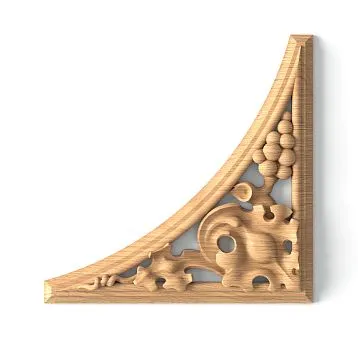
Each piece of wood possesses an individual texture, transforming even the simplest Oak cornices into works of natural art. This uniqueness makes the interior truly exclusive, where you cannot find two absolutely identical elements.
Get Consultation
Technological Mastery: Transforming Nature's Gift into Architectural Perfection
Premium Raw Material Selection: Choosing the Best from the Best
Creating elite oak products begins with careful selection of wood. Trees must reach an age of at least 100-120 years to acquire the necessary density and structural stability. Each trunk undergoes visual sorting by experienced masters capable of "reading" the material's potential.
Kiln drying — a process requiring special delicacy and patience. The moisture content of the wood gradually decreases from natural 60% to optimal 6-8% in special chambers under strictly controlled conditions. Temperature is maintained at 45-55°C, and air humidity is regulated with jewel-like precision.
Precision Processing: Where Tradition Meets Innovation
Modern technologies allow us to fully unleash the potential of oak wood. CNC machining ensures micron-level precision — down to 0.05 mm. Programmable tool movement trajectories create complex profiles with absolute repeatability.
Oak Baseboards Undergo a multi-stage processing: from initial cutting to final sanding. Each stage is controlled by specialists guaranteeing flawless quality of the finished product.
Architectural Diversity: From Functionality to Artistry
Moldings: Elegant Interior Accents
Wooden moldings transform ordinary walls into masterpieces of architectural art. These elegant strips create visual transitions between different surfaces, conceal technological seams, and add depth and dimension to the space.
Profile variety is breathtaking: from minimalist rectangular sections to complex multi-level forms with refined curves. Each profile is developed with specific tasks in mind — creating light and shadow effects, visually dividing zones, or forming decorative panels.
Crown Molding: The Finishing Touch of Architectural Composition
Oak ceiling moldings are the finishing touch of any interior, giving it completeness and elegance. They create a smooth transition between walls and ceiling, visually increasing the room's height and adding grandeur to the space.
Wall moldings serve not only a decorative but also a functional role. They provide a base for hanging curtains, create accent lines, and help zone the space. Carved elements transform simple moldings into true works of art.
Baseboards: The Foundation of a Harmonious Interior
Baseboards are the detail that unifies all interior elements into a single composition. Oak baseboards do more than hide the technological gap between floor and walls — they create the visual foundation of the entire space.
Wide baseboards 100-150 mm high emphasize the scale of the interior and give it a respectable appearance. Narrow baseboards 60-80 mm are more delicate and suitable for minimalist solutions. Ornamental profiles with carved elements turn baseboards into independent decorative elements.
Stylistic universes: oak in various interior concepts
Classic Luxury: Timeless Elegance
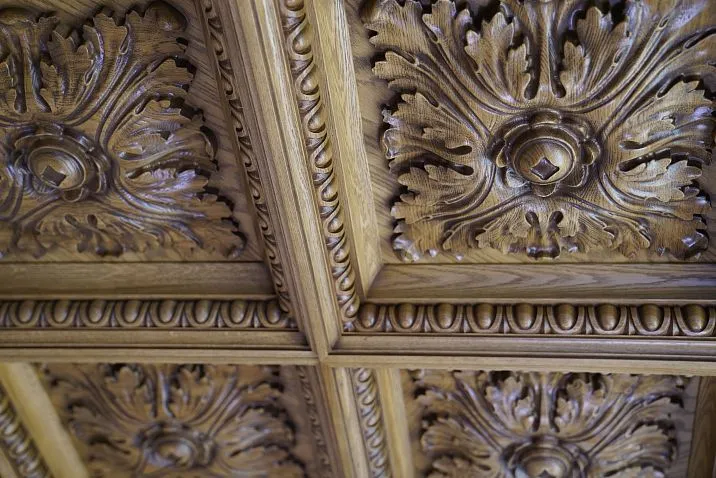
In classical interiors, oak materials reveal their potential most fully. Carved moldings with complex floral ornaments, massive cornices with multi-level profiles, wide baseboards with elegant curves — all of this creates an atmosphere of an aristocratic home.
Dark tones of stained oak highlight the nobility of the material and add depth to the interior. Golden hues add warmth and coziness. The contrast between light walls and dark oak elements creates a dramatic effect.
Scandinavian minimalism: beauty in simplicity
Light shades of natural oak perfectly match the philosophy of northern design. Simple geometric forms without excessive decoration emphasize the natural beauty of the material. Oil finishes preserve the tactile sensation of wood and allow it to 'breathe'.
Thin moldings create delicate accents without disrupting overall harmony. Minimalist cornices emphasize clean lines. Narrow baseboards complete the composition without drawing excessive attention.
Modern eclecticism: bold combinations
In modern interiors, oak materials successfully combine with metal, glass, and concrete. The contrast between warm wood and cold industrial materials creates a unique atmosphere. Asymmetric moldings form avant-garde panels on walls.
Innovative processing and finishing technologies
Brushing: revealing natural texture
Mechanical processing with special brushes removes soft fibers, revealing the structure of annual rings. The resulting tactile relief is emphasized by contrasting toning, creating an effect of aged wood. This treatment is especially effective on large elements — wide baseboards and massive cornices.
Thermal modification: increased stability
Processing wood at high temperatures in an oxygen-free environment radically changes its properties. Thermally modified wood gains increased dimensional stability, resistance to moisture and biological damage. The color of the material becomes more saturated and uniform.
Coatings of the new generation: protection and beauty
Modern oil-based coatings based on natural components penetrate deeply into the wood structure, creating reliable protection from within. Polyurethane varnishes form a durable surface film resistant to abrasion and chemical exposure.
Nanocoatings impart self-cleaning properties and antibacterial effects to the surface. This is especially important for spaces with high hygiene requirements.
Ecological responsibility: care for the planet's future
Certified forestry: guarantee of origin
All materials undergo FSC certification, confirming their origin from forests managed according to sustainable development principles. This guarantees the preservation of biodiversity and protection of forest ecosystems for future generations.
Traceability of the supply chain allows tracking the path of each product from the time of log preparation to the final consumer. Transparency of the process ensures responsible use of natural resources.
Waste-free production: rational use of resources
Modern technologies allow using up to 98% of the volume of processed timber. Waste from main production is recycled into fuel briquettes, wood flour, and other useful products.
Recycling programs for old items give a second life to oak materials. Restoration and recycling allow creating new items from already used wood.
Application in various interior zones
Living room: the grand entrance of the home
In the living room, oak materials create an atmosphere of grandeur and hospitality. High baseboards visually increase the space, while elegant moldings form decorative wall panels. Ceiling cornices with LED lighting create a floating ceiling effect.
Bedroom: oasis of tranquility
In the bedroom, oak elements contribute to creating a calming atmosphere. Warm wood tones set the mood for rest, and natural texture reduces stress. Delicate moldings form a headboard, while wide baseboards unify the space.
Office: respectability and functionality
A home office requires a special approach to design. Massive oak elements emphasize the seriousness and respectability of the owner. Bookshelves with carved cornices, molding panels, and high baseboards — all create an atmosphere of an English club.
Kitchen: Practicality and Beauty
Oak materials in the kitchen must combine beauty with practicality. Special moisture-resistant coatings protect wood from steam and splashes. Baseboards conceal technical equipment, while moldings adorn furniture facades.
Technical characteristics and operational properties
Moisture Resistance: Protection Against Deformation
Oak wood has natural resistance to moisture due to its high tannin content. Additional treatment with special compounds enhances these properties, allowing materials to be used in rooms with high humidity.
Thermal Stability: Preservation of Dimensions
Oak has a minimal coefficient of thermal expansion, ensuring dimensional stability of products despite temperature fluctuations. This is especially important in the Russian climate, which features significant seasonal variations.
Biostability: Protection Against Pests
Oak's natural antiseptic properties provide reliable protection against fungal damage and insects. Additional treatment with bioprotective compounds enhances these properties.
Installation and mounting: professional approach
Surface preparation: the foundation of quality
Installation quality directly depends on surface preparation. Walls must be flat, dry, and free of contaminants. Marking is performed using a laser level to ensure perfect geometry.
Fastening systems: reliability for decades
Modern fastening systems provide secure fixation without damaging the surface. Hidden fasteners preserve aesthetics, while adjustable elements allow compensation for wall irregularities.
Jointing Elements: Flawless Connections
End joints are performed using special fixtures ensuring perfect profile alignment. Corner joints are formed using the "birdsmouth" method or with special corner elements.
Care and Maintenance: Preserving Beauty for Years
Regular care: simple rules
Daily care involves removing dust with a soft cloth or microfiber cloths. Wet cleaning is done with slightly damp cloth without using aggressive cleaning agents.
Restoration of Finish: Renewing Protection
Periodic renewal of protective coating extends the lifespan of products. Oil-based coatings can be easily restored by partial application without disassembling elements. Lacquer coatings require full renewal with prior surface preparation.
Minor Repairs: Repairing Damage
Minor scratches and dents are removed using special wax pencils of matching shade. Deep damage requires local sanding and application of repair compound.
Economic aspects: investment in quality
Material Cost: Fair Price for Quality
The price of oak materials is determined by profile complexity, raw material quality, type of treatment, and order volume. Items made from selective wood cost 40-60% more than standard ones but possess exceptional aesthetic qualities.
Durability: Economic Efficiency
The lifespan of quality oak products is 50-80 years with proper care. This makes them economically advantageous compared to materials requiring frequent replacement.
Impact on Property Value: Added Value
Using natural oak materials increases property value by 15-25%. This makes investments in quality finishing economically justified.
Design Trends and Development Prospects
Integration with "Smart Home": Technologies of the Future
Modern oak materials can integrate with "smart home" systems. Hidden LED strips in moldings create scene lighting, while sensors in baseboards monitor room microclimate.
Personalization: uniqueness in every detail
Laser engraving technologies allow personalizing patterns and inscriptions on oak materials. This opens new opportunities for creating unique interiors.
Ecological Innovations: The Future Lies in Natural Materials
Development of "green" technologies stimulates demand for natural materials. Oak products with zero carbon footprint will become the standard of the near future.
Conclusion: STAVROS — craftsmanship proven by time
In a world where artificial materials often imitate natural beauty, genuine oak materials remain the benchmark of quality and elegance. Each item carries centuries of natural wisdom and human craftsmanship, creating a unique synergy capable of transforming space.
Choosing oak materials is a choice in favor of durability, eco-friendliness, and unparalleled beauty. It is an investment not only in interior design but also in quality of life, creating an atmosphere that will delight generations.
Modern manufacturing technologies allow us to fully unleash the potential of this noble material while preserving its natural essence. From simple skirting boards to exquisite carved cornices — every item becomes part of an architectural symphony, where nature itself plays the main part.
Environmental responsibility and sustainable development make oak materials a choice for the future. In an era of growing environmental awareness, natural materials are no longer just a fashionable trend — they are a conscious necessity.
For 23 years, STAVROS has perfected the art of working with oak wood, creating pieces that will become a highlight of any interior. Our rich experience, modern technologies, and unwavering commitment to excellence allow us to offer clients solutions of the highest quality. STAVROS — this is the guarantee that every decorative element will become not just a functional detail, but a true work of art capable of transforming your home into a dream space. Choosing STAVROS means selecting a partner for whom quality, beauty, and customer satisfaction are the top priorities in creating materials worthy of the most refined interiors.