Article Contents:
- Lineage of perfection: origins of elitism
- Renaissance heritage in modernity
- Workshops as temples of craftsmanship
- Regional schools of craftsmanship
- Material philosophy: selectivity at the molecular level
- Wood as a Living Substance
- Exotic breeds: luxury of rarity
- Metallic hardware as jewelry art
- Upholstery materials: touch of luxury
- Stylistic symphony: from baroque to avant-garde
- Baroque theatricality in the modern home
- Neoclassical harmony
- Modernism and its Italian interpretation
- Modern Italian design
- Psychology of ownership: why elite remains elite
- Emotional attachment
- Social status and self-identification
- Philosophy of long-term thinking
- Market of elitism: investments in beauty
- Cost Formation
- Investment attractiveness
- Global market trends
- Art of choice: criteria of true elitism
- Material expertise
- Quality of execution
- Ergonomic characteristics
- Caring for elitism: art of preserving beauty
- Climate Conditions
- Regular maintenance
- Professional Maintenance
- Conclusion: when perfection becomes the norm

Close your eyes and imagine: sunny Tuscany, ancient workshops, where generations of families pass down secrets of creating perfection... This is how it is born Luxury Italian furniture — not as a commodity, but as a work of art, capable of transforming an ordinary dwelling into a palace, and everyday life into a celebration of aesthetic enjoyment.
In an era of mass production and disposable items, Italian luxury furniture remains an island of authenticity, where every scroll of carving, every line of silhouette, every tone of patina tells a story. This is furniture for those who understand the difference between possession and ownership, between purchase and investment in beauty.
What makes Italian furniture elite? Is it only origin and price? Or is there something greater behind these items — a philosophy of life, where quality matters more than quantity, and beauty becomes a daily necessity of the soul?


Lineage of perfection: origins of elitism
The elitism of Italian furniture traces its roots back to ancient times, to eras when Italy was the cradle of the Renaissance, and its masters created not merely household items, but true treasures of art. This tradition has never been broken — it has merely evolved, absorbing the achievements of each era.




Renaissance heritage in the modern era
In the 15th century, Florentine masters discovered the secret that still defines the essence of elite Italian furniture: beauty must serve life, and life must be worthy of beauty. Classic Furniture Created in those times not for the display of wealth, but to elevate the spirit through daily contact with the beautiful.
Cassoni — wedding chests adorned with scenes from ancient mythology — became the first examples of furniture as art. Each piece told a story, carried symbolic meaning, became part of family traditions. This philosophy remains in modern elite furniture: each item is unique, each carries a fragment of the Italian soul.
The proportions of the golden ratio, discovered by Renaissance architects, still define the harmony of Italian furniture. Mathematical precision combined with artistic intuition creates forms perceived as natural, organic, timeless.
Our factory also produces:


Workshops as temples of craftsmanship
Modern Luxury Italian furniture Born in workshops that resemble artistic studios more than industrial production lines. Here, there are no assembly lines or stamping machines — only the master’s hands, his eyes, his soul, infused into every piece.
Family traditions play a key role in preserving quality. Secrets of wood processing, recipes for varnishes and paints, carving and inlay techniques are passed from father to son, from teacher to student. This is not merely professional skill — it is cultural heritage that cannot be copied or stolen.
Modern technologies do not replace handcrafting, but complement it. Precision machines perform rough shaping, but final finishing, fitting, and polishing are done only by humans. Each piece passes through the hands of several craftsmen — a carpenter, a carver, a polisher, a upholsterer — and each adds something unique.
Get Consultation
Regional schools of craftsmanship
Italy is a country of incredible diversity, and each region has contributed to the development of elite furniture art. The Venetian school is renowned for the elegance of its lines and virtuoso use of gilding. The Tuscan tradition leans toward monumentality and the natural beauty of wood. Neapolitan masters are unmatched in inlay techniques — inlaying with various types of wood.
These regional differences are preserved to this day. A buyer of elite furniture can choose not only a style, but also a regional tradition, making each purchase even more meaningful and personalized.
Milanese designers create furniture for the future, but always with an eye on the great past. Here, the boldest experiments with form and materials are born, but the foundation remains Italian — attention to detail, quality of execution, harmony of proportions.
Material philosophy: selectivity at the molecular level
What distinguishes elite furniture from mass-produced goods at the most fundamental level? Materials. Not just expensive materials, but materials chosen with an understanding of their soul, their potential, their purpose.
Wood as a living substance
Solid wood furniture Elite-class furniture is made only from wood that has lived a worthy life. Centuries-old oaks, hundred-year-old walnuts, ancient chestnuts — each tree has its own story, reflected in its unique wood grain pattern, depth of color, and texture character.
The process of selecting wood for elite furniture resembles the selection of precious stones. Masters study each tree, analyze its structure, predict how it will behave during processing. The best specimens are set aside for years — the wood must air-dry, stabilize, and reach an ideal state.
Drying elite wood is a separate art. Natural air-drying lasts years, but only it preserves all the natural qualities of the material. Modern kiln methods are used only for final refinement, when the wood’s moisture is brought to ideal parameters.
Exotic woods: luxury of rarity
Elite Italian furniture often uses rare and exotic woods, each possessing unique properties. Ebony with its deep black color and mirror-like sheen, rosewood with its purple veins and spicy aroma, redwood with its noble tone — all these materials require special craftsmanship in processing.
Working with exotic woods is the highest level of furniture art. Each species has its own character, quirks, secrets. The master must feel the material, understand its behavior, anticipate its reaction to various influences.
Inlaying with exotic woods creates unique decorative effects. The marquetry technique — creating pictures from multi-colored wood — has been perfected by Italian masters. Each element is selected not only by color, but also by the direction of the grain, creating additional optical effects.
Metallic hardware as jewelry art
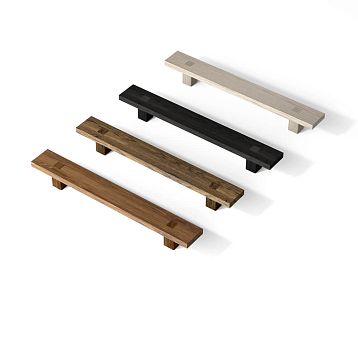
Furniture hardware Elite-class hardware is not merely functional elements, but works of decorative applied art. Handles, locks, hinges, decorative inlays are handmade from noble metals — bronze, silver, even gold.
The process of creating elite hardware includes multiple stages: casting, forging, chasing, engraving, patination. Each stage requires the highest level of craftsmanship and may take days or even weeks. The result — unique pieces that become ornaments of furniture.
Patination — the art of artificially aging metal — allows creating the effect of centuries-old aging. Different patination techniques yield different effects: from the noble green of old copper to the deep black of aged iron.
Upholstery materials: touch of luxury
Leather for upholstering elite furniture is a separate universe of quality. Only leather from young animals raised under special conditions is used. The tanning process may take up to a year, and the number of operations is counted in dozens.
Vegetable tanning — the oldest method of leather processing — is still used to create the most prestigious upholstery materials. Tanning agents are extracted from oak, chestnut, and other plant bark. The process is long and labor-intensive, but the result is unmatched — the leather becomes soft, elastic, with a wonderful natural aroma.
Hand-stitching leather upholstery is a high art. Each stitch is done manually with a special tool, and the thread is impregnated with wax for added strength. Such upholstery lasts for decades, becoming even more beautiful with time.
Stylistic Symphony: from Baroque to Avant-Garde
Luxury Italian furniture It does not limit itself to one style — it encompasses all the richness of Italian culture, from majestic Baroque to bold avant-garde experiments.
Baroque theatricality in a modern home
Furniture in Baroque style — this is the peak of ornamentation, the triumph of form over function, a feast for the eyes. Every item becomes a piece of stage art, capable of transforming an ordinary room into an opera set.
Modern Baroque retains the essence — the emotional impact of the style. Curved lines, rich carving, gilding create an atmosphere of luxury and grandeur. However, modern Baroque items are adapted to the needs of the 21st century: they are more functional, ergonomic, and easier to maintain.
Cabriole legs — curved furniture legs — remain a distinctive feature of Baroque style. Modern craftsmen create them using 3D modeling, allowing for ideal proportions and structural strength.
Classical Harmony
Classicism in elite furniture — this is the triumph of reason over emotion, mathematical harmony over ornamentation. Strict proportions, noble materials, restrained decoration create an atmosphere of aristocratic elegance.
Modern Neoclassicism adapts historical forms to contemporary needs. Beds In the classical style, items may have traditional proportions but are equipped with modern orthopedic systems, built-in lighting, and adjustment systems.
Inlay in classical furniture is used sparingly, as an accent, highlighting the main compositional lines. Geometric ornaments, botanical motifs, heraldic symbols create a subtle play of light and shadow on the wooden surface.
Modern and its Italian interpretation
Italian Modernism at the turn of the 19th-20th centuries gifted the world revolutionary forms based on natural motifs. Curved lines of plant stems, floral ornaments, asymmetrical compositions created a new language of furniture design.
Modern interpretation of Modernism in elite Italian furniture combines historical forms with innovative materials. Glass, metal, composite materials enter into dialogue with traditional wood, creating unexpected and expressive combinations.
The technique of bending wood, mastered by Modernists, has reached unprecedented perfection in modern Italy. Using steam and special tools, the most complex curves are created, which appear natural and organic.
Modern Italian Design
Modern elite Italian furniture is a synthesis of traditions and innovations, where classical principles of beauty are realized through modern technologies and materials. This is furniture for people who value quality but are not ready to live in a museum.
Italian minimalism — this is not asceticism, but concentrated luxury. Every line is precisely crafted, every material is ideal, every detail is functional and beautiful. The absence of unnecessary decoration is compensated by flawless craftsmanship.
Ecological sustainability has become a new criterion of elitism. Use of renewable materials, zero-waste technologies, recycling programs — all this is part of the philosophy of responsible luxury.
Psychology of Ownership: Why Elite Remains Elite
What happens to a person when they become an owner elite Italian furniture? This is not simply a change of decor — it is a transformation of lifestyle, thinking, self-perception.
Emotional Attachment
Elite furniture creates a special emotional bond with its owner. These are not merely functional items, but companions in life, witnesses of important moments, keepers of family traditions. Every scratch, every mark from time does not spoil the furniture, but adds character, turning it into a family heirloom.
Quality furniture ages beautifully. Wood acquires a noble patina, leather becomes softer and more elastic, metallic hardware develops a patina of time. This process of natural aging creates uniqueness that cannot be faked or purchased.
Repair and restoration of elite furniture — this is not a necessity, but a pleasure. Owners carefully monitor the condition of their items, invite specialists for preventive care, invest in maintaining perfect condition. This is an investment in beauty, which pays off over years of aesthetic enjoyment.
Social Status and Self-Identification
Owning elite furniture is a certain social marker, but not vulgar display of wealth, but a subtle way to show belonging to a circle of people who value quality and beauty. This is a code understood by the initiated.
Guests in a home with elite furniture subconsciously feel a special atmosphere. The quality of the items, their harmony, and thoughtful arrangement create a sense of order, stability, and good taste of the owners. This works on reputation, creating a positive impression.
Children raised in an environment of quality furniture absorb an understanding of beauty from childhood, learn to appreciate quality, and develop an aesthetic taste. This is an investment in the family's future, passing on cultural values to the next generations.
Philosophy of Long-Term Thinking
Purchasing luxury furniture is a manifestation of long-term thinking. Instead of changing the decor every few years, owners of luxury furniture create spaces that last for decades. This is a more rational approach from both economic and ecological perspectives.
Quality furniture does not morally become outdated. Classic forms remain relevant for centuries, and the quality of craftsmanship guarantees physical durability. Such furniture can serve several generations of a family, becoming a family heirloom.
Repairability of luxury furniture is an important factor of longevity. Unlike mass-produced items, quality furniture can be repaired, updated, and adapted to changing needs. This makes investing in luxury furniture even more justified.
The Market of Luxury: Investments in Beauty
Market elite Italian furniture — it is a special ecosystem where its own laws, rules, and pricing principles operate. Understanding these mechanisms will help make the right choice and evaluate the investment prospects.
Formation of Value
The price of luxury furniture is formed by many factors, where the material component is merely the visible part of an iceberg. The main cost consists of intangible assets: design, brand, craftsmanship, exclusivity.
Developing a new model of luxury furniture may take months or even years. Designers study historical samples, experiment with materials, create numerous prototypes. All these costs are incorporated into the final product's price.
The skilled labor of master craftsmen constitutes a significant part of the cost. An hour of work by a top-tier master carpenter may cost hundreds of euros, and creating a complex item takes weeks of labor. This explains the high cost of luxury furniture.
Investment attractiveness
Quality antique furniture demonstrates a steady increase in value on global auction markets. Items from the 18th-19th centuries show an average annual growth of 5-7%, comparable to bank deposit returns, but with much greater enjoyment from ownership.
Modern luxury furniture by renowned designers also has investment potential. Limited editions, original works, and items with history can significantly increase in price over 10-20 years. This makes purchasing luxury furniture not only an aesthetic but also a financial investment.
The liquidity of quality furniture on the secondary market is quite high. There are specialized auctions, galleries, and dealers willing to purchase quality items. This creates certain guarantees for investors.
Global Market Trends
The market for luxury furniture demonstrates steady growth, despite economic crises. Demand from emerging countries compensates for possible declines in activity on traditional markets. China, India, and countries of the Middle East are becoming the largest buyers of Italian luxury furniture.
Digitalization of trade opens new opportunities for producers and buyers of luxury furniture. Virtual showrooms, online consultations, digital catalogs make luxury furniture more geographically accessible, without reducing its status.
Ecological trends influence the luxury furniture market. Buyers increasingly pay attention to the origin of materials, eco-friendliness of production, and the possibility of secondary recycling. This creates new opportunities for responsible manufacturers.
The Art of Choice: Criteria of True Luxury
How to distinguish genuine luxury furniture from expensive counterfeits? What criteria should a buyer know to avoid overpaying for a brand and to receive real quality?
Material Expertise
Real solid wood differs from veneered surfaces not only visually but also tactilely. Live wood has a natural temperature, a slightly rough surface even after polishing, and a distinctive aroma. Artificial materials are cold, perfectly smooth, and often have a chemical odor.
The quality of wood is determined by fiber density, absence of defects, and beauty of texture. Luxury furniture uses only selected parts of the trunk, where fibers run straight, without knots or cracks. Color and texture variations may be an artistic technique, but not a material defect.
Luxury furniture hardware has substantial weight, smooth lines, and quality finish. Hinges operate silently, drawers slide out effortlessly, and locks engage precisely. Cheap hardware squeaks, sticks, and wears out quickly.
Craftsmanship Quality
Joints of details in luxury furniture are fitted with jewel-like precision. Gaps are minimal and uniform, connections are strong and reliable. Glue joints are practically invisible, mechanical fasteners are hidden from view.
Finishing coatings of luxury furniture have uniform structure, deep gloss, and pleasant tactile surface. Lacquer should not have drips, bubbles, or foreign inclusions. Quality coating is resistant to mechanical impacts and does not dull over time.
Carved elements should be clear, symmetrical, without chips or unevenness. Hand-carved details differ from machine-carved ones by subtle differences in details, liveliness of execution, and individual character of each element.
Ergonomic Characteristics
Luxury furniture is created taking into account anthropometric data and ergonomic principles. Seats have proper height and angle, backs provide spine support, armrests are positioned at a comfortable level.
Furniture and interior items Premium-class items undergo rigorous testing for ease of use. Every detail is thoughtfully designed for comfort: from countertop height to shelf depth in cabinets.
Transformation and adjustment mechanisms operate smoothly and precisely. Gas springs, telescopic guides, and swivel mechanisms—all must function flawlessly and silently.
Caring for elegance: the art of preserving beauty
Using premium furniture implies a special approach to care and operation. This is not a burdensome obligation, but a pleasant ritual that extends the life of beautiful pieces.
Climate conditions
Premium wooden furniture is sensitive to changes in temperature and humidity. Optimal conditions: temperature 18-24°C, humidity 40-60%. Sudden fluctuations in these parameters may cause deformation of wooden elements and cracking of finishes.
Direct sunlight can fade wood and damage lacquered finishes. Furniture should be placed away from windows or protected with curtains or blinds. Exotic wood species are especially sensitive to ultraviolet rays.
Heating appliances should be placed at least one meter away from wooden furniture. Dry hot air quickly dries out wood, which may lead to cracking and deformation. Humidifiers help maintain an optimal microclimate.
Regular Maintenance
Daily cleaning of premium furniture involves removing dust with a soft dry cloth. It is better to use natural materials—cotton, linen, wool. Synthetic fabrics may generate static electricity and attract dust.
Weekly wet cleaning is performed with slightly damp cloth, followed by thoroughly drying the surface. Moisture must not be allowed to enter joints, threads, or decorative elements.
Monthly treatment with specialized wood care products nourishes the wood, restores the finish’s luster, and creates a protective film. Only proven products recommended by the furniture manufacturer should be used.
Professional maintenance
Premium furniture requires professional inspection and maintenance once a year. Specialists will check the condition of all mechanisms, perform adjustments, lubrication, and replace worn parts if necessary.
Restoration of premium furniture is a high art requiring deep knowledge and specialized skills. Minor scratches, scuffs, and faded areas can be restored using special techniques and materials.
Insuring premium furniture against damage, theft, and natural disasters is a sensible precaution. Specialized insurance companies offer policies tailored to the unique characteristics of art and antique items.
Conclusion: when perfection becomes the norm
Luxury Italian furniture — these are not just interior items, but an investment in quality of life, in beauty that will delight for decades. This is the choice of people who understand the difference between expensive and valuable, between fashionable and timeless.
In a world of mass production and rapidly changing trends, premium furniture remains an island of constancy and quality. It reminds us that true beauty is timeless, and human craftsmanship is capable of creating wonders.
Choosing premium furniture means choosing a philosophy of life where quality matters more than quantity, where beauty is a necessity, not a luxury. This decision affects not only the appearance of our home, but also our self-perception, our way of thinking, and our self-identification.
The modern market offers worthy alternatives to traditional Italian furniture. Russian manufacturers have learned to embody the best principles of Italian furniture art, creating pieces that match European standards in quality and even surpass them in understanding local needs.
STAVROS presents a new generation of furniture manufacturers who combine Italian philosophy of beauty with Russian reliability and practicality. Every piece created by STAVROS masters carries the spirit of Italian perfection, adapted to Russian realities.
STAVROS does not copy Italian samples but creatively reinterprets them, creating a unique aesthetic where classical principles of beauty are realized through modern technologies and materials. This is furniture for people who value authentic quality and understand true luxury.
STAVROS’s production facilities are equipped with advanced equipment, but the company’s greatest wealth is its team of craftsmen devoted to their craft. Every joiner, every painter, every finisher contributes not only professional skills but also a piece of their soul to their work.
Choosing STAVROS means investing in the future of your home, in beauty that will delight for many years, in quality that will meet the highest expectations. This is the choice of people who are unwilling to compromise on beauty and quality.
STAVROS proves that Russian furniture can be premium, that domestic craftsmen are capable of creating masterpieces worthy of the best global examples. This is a new chapter in the history of Russian furniture art, written with respect for traditions and faith in the future.