Article Contents:
- Introduction: The Role of Furniture Hardware Elements in Modern Interior Design
- Main Categories of Furniture Hardware Elements
- 1. Functional Elements
- Hinges and Catches
- Drawer guides
- Transformation Mechanisms
- Locks and Latches
- 2. Decorative Elements
- Handles and Appliqués
- Moldings and Decorative Inserts
- Decorative Carvings and Inlays
- 3. Innovative and Functional Decorative Elements
- LED and Built-in Elements
- Decorative Elements with Automation Features
- Synergy of Functionality and Design
- Interior Individualization
- Aesthetic appeal
- Traditional craftsmanship and handwork
- Modern Digital Technologies
- Innovative materials
- Durability and Reliability
- Time and cost savings
- Flexibility and Adaptability
- Aesthetic value
- Minimalism and Clean Lines
- Eco-friendly materials and sustainable production
- Innovative Technologies and Digital Design
- Individualization and customization
- 1. Define Functional Requirements
- 2. Study the Range and Technical Specifications
- 3. Compare Offers from Different Suppliers
- 4. Consult Professionals
- 5. Consider Budget and Price-to-Quality Ratio
- Traditional Stores and Specialized Centers
- Online stores and e-commerce platforms
- Recommendations for Choosing a Supplier
Furniture is not just functional household items, but true works of art, where every detail plays a decisive role. One of the most important components of any furniture is hardware, which not only ensures its operational qualities but also gives the interior a unique style.Furniture Hardware Elements are those small, yet extremely significant details that transform an ordinary item into a design masterpiece. In this article, we will thoroughly examine what furniture hardware elements are, what types they come in, how modern technologies are changing their production, and why choosing them correctly is the key to an ideal interior.


Introduction: The Role of Furniture Hardware in Modern Interior Design
Every piece of furniture, whether a cabinet, table, or chest, consists of many components. Hardware is precisely those components that allow furniture to function properly: from drawer slides to decorative handles, hidden locks, and guides. Modern interiors require not only high functionality but also aesthetic expressiveness, so furniture hardware elements play a dual role – they perform a practical function and are an important part of the design.
Modern manufacturers use both traditional craftsmanship techniques and advanced digital technologies to create quality and durable hardware. Thanks to this, it can be said thatFurniture Hardware Elements – these are not just spare parts, but true masterpieces of engineering art capable of transforming an interior.




Main categories of furniture hardware elements
Our factory also produces:


1. Functional elements
Functional components ensure proper and comfortable use of furniture. They include:
Hinges and soft-close mechanisms
Hinges are a basic element that enables opening and closing doors of cabinets, chests, and other furniture. Modern hinges can be equipped with soft-close mechanisms, eliminating sharp impacts and noise, thus extending the product's lifespan. Such devices are an essential part Furniture Hardware Elements and are often used in both classic and modern design.
Drawer guides
Drawer guides, whether roller or ball-bearing, ensure smooth and silent drawer movement. They provide comfort during furniture use and help optimize space inside cabinets and chests. High-quality guides contribute to the durability of the structure and are an essential component of functional hardware.
Transformation Mechanisms
In modern interiors, furniture often needs to perform several functions simultaneously. Transformation mechanisms allow changing the configuration of furniture items – unfolding sofas, transforming tables, rearranging drawers and shelves. These elements are an example of how functionality can combine with innovative design.
Locks and latches
Locks, latches, and fasteners play an important role in the safety and functionality of furniture. They ensure secure closure of doors and drawers, preventing accidental opening and protecting the contents. Modern solutions use both classic mechanical locks and electronic systems integrated into smart homes.
Get Consultation
2. Decorative elements
Decorative elements not only improve the appearance of furniture but also help emphasize its style. They can be standalone accents or part of functional hardware.
Handles and appliqués
Decorative handles, appliqués, and profiles are among the most popular decorative solutions. They come in various shapes and finishes: from classic wrought iron to ultra-modern minimalist models. Properly chosen handles can become a highlight of the interior, transforming the facade of a cabinet or chest.
Moldings and decorative inserts
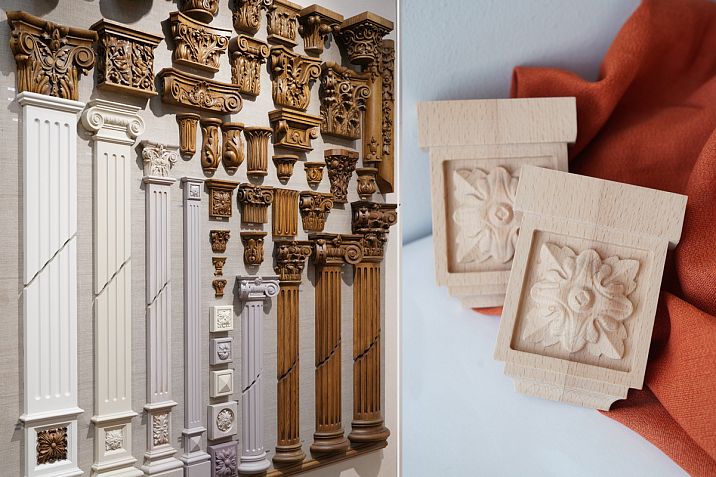
Moldings serve to conceal joints between furniture elements, giving the item a finished look. Decorative inserts made of wood, metal, or composite materials allow creating unique patterns and textures, making the furniture truly exclusive.
Decorative carving and inlay
These techniques belong to traditional craftsmanship, still valued for their artistic merit. Hand-carved wood, inlay with precious or semi-precious stones – all these elements give furniture a unique charm and turn it into a true work of art.
3. Innovative and functional decorative elements
Modern technologies allow creating decorative elements that combine both aesthetic and functional value.
LED and built-in elements
Modern solutions include built-in LED lighting that can be integrated into facades or drawers. Such elements not only enhance the appearance of furniture but also make it more functional, enabling ambient lighting.
Decorative elements with automation features
Elements incorporating sensors, touch controls, and remote control systems are becoming increasingly popular. They not only improve functionality but also add a high-tech accent to the interior, which is especially relevant for modern 'smart' homes.
Role of furniture hardware elements in interior design
Synergy of functionality and design
Eachfurniture hardware element performs its role, combining both functional and aesthetic qualities. For example, quality hinges with stoppers not only ensure smooth door opening, but also make the furniture's appearance more refined. Thus, properly selected components allow creating a harmonious and balanced interior, where every detail contributes to the overall benefit.
Interior Individualization
Furniture decorative elements allow interior owners to express their individuality. Thanks to a wide variety of shapes, colors, and finishes, you can create unique solutions that highlight your style. The ability to order %sfurniture hardware element according to individual parameters allows adapting furniture to specific tasks and requirements, making your interior truly exclusive.
Aesthetic appeal
Decorative elements often become the central accent in an interior. They are capable of transforming even the simplest furniture, adding elegance and charm. Aesthetically thought-out details improve the overall perception of space, creating an atmosphere of coziness and harmony.
Production Technologies of Furniture Hardware Elements
Traditional craftsmanship and handwork
Many decorative elements were created by masters using traditional techniques. Hand carving, inlay, and decorative finishes are methods passed down from generation to generation. Such items were always valued for their uniqueness and artistic expressiveness. Handmade work allows achieving maximum detail, which gives furniture an individual character.
Modern digital technologies
In the last decades, modern technologies have fundamentally changed furniture hardware production. The use of computer modeling (CAD) allows designers to create precise 3D models, which are then processed using laser cutting and CNC machines. This ensures high precision, uniformity of products, and the possibility of mass production without loss of quality. Modern technologies not only speed up the production process but also enable creating complex decorative patterns previously inaccessible through traditional methods.
Innovative materials
The use of new materials has become one of the key directions in the development of furniture hardware. High-strength composites, modern plastics, and innovative coatings allow creating products that differ in durability, lightness, and aesthetic appeal. Natural wood and MDF remain popular due to their warm texture and versatility, but modern materials open new opportunities for experimenting with shape and color.
Advantages of Quality Furniture Hardware Elements
Durability and reliability
Quality furniture hardware elements guarantee a long service life of furniture. The use of modern technologies and proven materials allows minimizing wear and preventing breakdowns, which is especially important for items used daily.
Time and Cost Savings
Correct selection of hardware allows not only to improve furniture functionality, but also significantly reduce costs for repairs and updates. Instead of replacing entire furniture, you can replace individual components, which saves considerable funds and time.
Flexibility and Adaptability
A wide range of elements allows selecting optimal solutions for any interior. Regardless of whether you need a classic, modernist, or ultra-modern style, you will always find suitable items. The ability to order components according to individual parameters provides additional flexibility in interior design.
Aesthetic value
Decorative elements can turn a standard item into a unique work of art. They emphasize style, add accents, and make the interior more harmonious and attractive. Even small details, executed with high quality, can significantly influence the overall perception of space.
Modern Trends in Furniture Hardware Elements
Minimalism and Clean Lines
Modern interiors increasingly strive for simplicity and functionality. Minimalist decorative elements with clear lines and neutral colors are popular in high-tech, Scandinavian, and contemporary minimalist interiors. Such solutions create a sense of lightness and airiness, making the space visually more spacious.
Eco-friendly materials and sustainable production
Modern consumers are increasingly paying attention to the ecological aspect of products. Natural wood, MDF, recycled materials, and eco-friendly coatings have become the standard for creating furniture and hardware. These materials are not only safe for health but also contribute to creating a warm, natural atmosphere in the interior.
Innovative Technologies and Digital Design
The application of digital technologies allows creating unique decorative patterns and complex constructions. Laser cutting, 3D modeling, and CNC machines open new horizons for creativity, enabling the realization of the most daring design ideas. Innovative furniture hardware elements have become an indispensable part of modern interiors, where functionality and aesthetics work in harmony.
Customization and personalization
Each interior is unique, and modern consumers strive for every detail to reflect their individuality. The ability to order %s furniture hardware element according to individual parameters allows creating items perfectly matching the size, style, and functional requirements of a specific project. Customization has become an important trend, enabling designers to realize unique ideas and create exclusive interiors.
Practical Recommendations for Choosing Furniture Hardware Elements
1. Define Functional Tasks
Before proceeding to select decorative and functional elements, determine what role they should play in the interior. For example, if you need to ensure smooth door opening, pay attention to quality hinges and stoppers. If the task is to give furniture a unique style, focus on decorative appliqués, handles, and moldings.
2. Study the assortment and technical specifications
When choosing, pay attention to the materials used, dimensional accuracy, and processing technology. Modern furniture hardware elements must be manufactured according to strict quality standards, ensuring their durability and reliability. Do not hesitate to %sorder furniture hardware elements according to individual parameters, if the standard assortment does not meet your needs.
3. Compare offers from different suppliers
Conduct market research and compare offers from different stores. Pay special attention to supplier reputation, warranty terms, and customer reviews. Reliable companies provide detailed technical descriptions, photos, and quality certificates, which will help you make an informed decision.
4. Consult with professionals
If you have any doubts or questions, consult experts. Designers, furniture specialists, and renovation professionals will help you select optimal solutions, inform you about the latest trends, and provide installation recommendations. This is especially important when implementing individual projects, where every detail matters.
5. Consider your budget and the price-to-quality ratio
Price is an important factor when choosing furniture hardware components. Compare prices while taking into account the quality, durability, and functionality of the items. Remember that investing in quality components pays off through reduced future costs for repairs and furniture updates.
Where to buy furniture hardware components
Traditional Stores and Specialized Centers
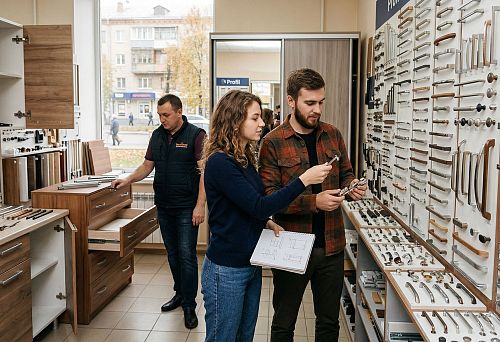
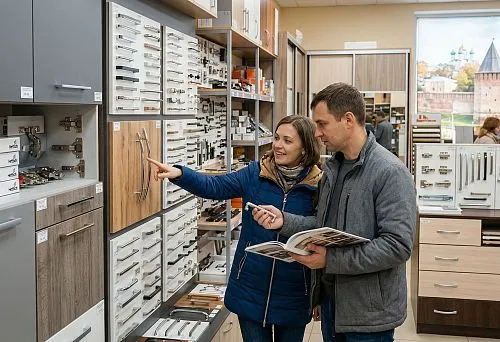
Many professionals prefer to purchase furniture hardware from specialized centers, where a wide range of products is available. Such stores allow you to see the products in person, assess their quality, and receive professional consultations from specialists.
Online stores and online platforms
Modern technologies allowto buy furniture hardware components online. Online stores offer a convenient interface, detailed descriptions, technical specifications, and customer reviews, making the selection process as simple and comfortable as possible. You can compare offers, take advantage of promotions and discounts, and order products for delivery directly to your doorstep.
Supplier Selection Recommendations
When choosing a supplier, pay attention to:
● Reputation and work experience. Companies with a long history and positive reviews guarantee reliability and high product quality.
● Product range and customization options. A good supplier offers a wide selection of standard and custom solutions, allowing you to choose ideal elements for any project.
● Delivery conditions and after-sales service. Fast delivery, warranty obligations, and professional support are important factors that will help you make the optimal choice.
Conclusion: Art in Every Detail
Furniture Hardware Elements Furniture hardware is an essential part of modern interiors, combining functionality, aesthetics, and innovation. Properly selected decorative and functional components can transform any furniture, giving it uniqueness and style. From classic handles to innovative transformation mechanisms — every detail contributes to creating a harmonious space that reflects your taste, personality, and pursuit of perfection.
Using modern technologies, high-quality materials, and an individual approach, you can create an interior where every detail, everyfurniture elementserves as a source of inspiration and joy. Do not be afraid to experiment, order items according to individual parameters, and combine traditional craftsmanship with the latest technological solutions. After all, it is precisely in the details that true art lies, capable of transforming your space and making it truly unique.
If you want to learn more about modern trends, receive professional recommendations andto buy furniture hardware components high-quality products, visit the websitestavros.ru. Here you will find a wide range of products, detailed descriptions, and the opportunity to order components that will become the key to creating the perfect interior.
Thus, furniture hardware is not just functional components, but a true tool for creativity and expressing individuality. From selecting materials and technologies to unique design solutions — every detail plays an important role in creating a space that will delight you every day. Invest in quality, choose trusted suppliers, and enjoy the process of creating an interior where everyfurniture hardware element becomes a work of art.