Article Contents:
- Anatomy of Pricing: What Lies Behind the Numbers
- Material as the Basis of Cost
- Technological Factors in Pricing Formation
- Regional pricing characteristics
- Logistical Components of Cost
- Seasonal market fluctuations
- Qualitative Characteristics and Their Impact on Cost
- Wood Grade as a Pricing Factor
- Moisture as a Critical Parameter
- Design Solutions and Their Price Positioning
- Simple geometric forms
- Machined Profiles of Medium Complexity
- Artistic Carving as the Peak of Craftsmanship
- Technological Innovations and Their Impact on Pricing
- Production Automation
- Innovative materials and coatings
- Market Segments and Their Characteristics
- Economy segment
- Mid-range segment
- Premium segment
- Economic Factors and Market Trends
- Impact of Currency Exchange Rates
- Energy Expenditures
- Comparative Analysis of Price Categories
- Ownership cost
- Impact on property value
- Practical Recommendations for Selection
- Defining priorities
- Cost Optimization
- Working with Suppliers
- Future of the Market and Forecasts
- Technological Trends
- Ecological requirements
- Market Prospects
- Conclusion
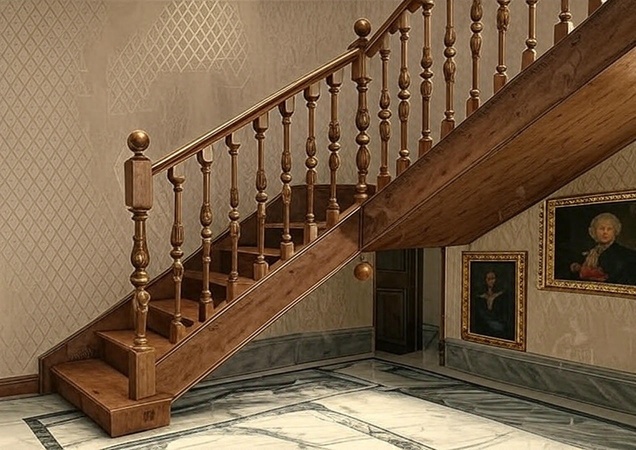
When discussing the creation of a stair railing, the first question that arises for the client is: how much will it cost? But behind this simple question about price lies a whole world of factors that determine the final cost. Why do some wooden supports cost several hundred rubles, while others cost several thousand? What causes the price to fluctuate within such wide ranges? Let's explore the economics of stair beauty.
The modern market offers an astonishing variety of solutions — from budget pine products to exclusive handcrafted oak masterpieces. Each price category has its own features, advantages, and limitations. Understanding these nuances will help make an informed choice that satisfies both aesthetic needs and financial capabilities.


Anatomy of Pricing: What Lies Behind the Numbers




Material as the Basis of Cost
Tree species is the primary factor determining the base cost of the product. Pine, traditionally occupying the lower price segment, offers the optimal price-to-quality ratio. Its soft structure facilitates processing, reducing labor costs, and its widespread availability ensures stable supply at reasonable prices.
Larch occupies the mid-price segment, offering significantly improved performance characteristics. Its natural resinous nature provides protection against moisture and insects, which is especially valuable for outdoor structures. Increased density requires more powerful equipment and sharp tools, which is reflected in production costs.
Oak and beech form the premium market segment. Their exceptional hardness and durability justify the high cost for those who value quality over economy. Processing hardwoods requires specialized equipment, skilled craftsmen, and significant time investment.
Our factory also produces:


Technological Factors in Pricing Formation
The method of processing significantly affects the final cost of the product. Simple rectangular blanks obtained by planing belong to the most affordable category. Turning adds artistic value but requires additional operations and skilled labor.
CNC machines allow creating complex profiles with high precision and repeatability. However, the cost of programming and setting up equipment is distributed across the entire batch, making individual items economically unviable.
Logistical cost components
Get Consultation
Regional pricing features
Geography of production and consumption significantly affects the final price. Transporting wooden items over long distances increases cost by 15-25% of the base price. This is especially noticeable when delivering to remote regions lacking developed transportation infrastructure.
The geography of production and consumption significantly affects the final price. Transporting wooden items over long distances increases the cost by 15-25% from the base price. This is especially noticeable when delivering to remote regions where there is no developed transportation infrastructure.
Regional producers have an advantage in proximity to consumers and absence of significant transportation costs. However, their product range may be limited by local wood species and technological capabilities.
Large production centers located in forested regions offer the most competitive prices due to raw material accessibility and developed production infrastructure. Moscow and St. Petersburg, despite their distance from major logging regions, compensate for this with high consumer concentration and advanced logistics.
Seasonal market fluctuations
The construction industry is subject to seasonal fluctuations that directly affect demand and prices for stair components. The spring-summer period is characterized by peak activity, when prices reach their maximum. The autumn-winter decline allows for significant discounts, especially when ordering large batches.
New Year holidays traditionally coincide with reduced business activity, creating opportunities for advantageous purchases. Many manufacturers offer special terms for orders placed during the off-season.
Planning a purchase with consideration of seasonal factors can save up to 20-30% compared to peak prices. However, it is necessary to consider increased production times during periods of high demand.
Quality characteristics and their impact on cost
Wood grade as a pricing factor
Wood grade determines not only the appearance but also the operational characteristics of the finished product. The highest grade "Extra" implies the complete absence of visible defects on the front surfaces. Such wood costs 2-3 times more than second-grade material but ensures a flawless appearance of the finished product.
First-grade wood allows for the presence of small healthy knots up to 10 mm in diameter, which practically does not affect strength but may be noticeable on the finished product. This compromise between quality and price makes first-grade wood the most popular choice for residential interiors.
Second and third-grade woods contain larger knots and may have minor defects. Such wood is suitable for structures where appearance is not critical, or for items that will be painted with opaque paints.
Moisture as a critical parameter
Moisture content of wood significantly affects both quality and cost of finished products. Kiln drying to 8-12% moisture requires substantial energy and time, but ensures dimensional stability and absence of deformation during use.
Air drying is cheaper but requires long time and does not guarantee uniform moisture throughout the stock. Items made from under-dried wood may crack and deform after installation.
Thermally treated wood represents a premium segment, where high-temperature treatment not only reduces moisture but also modifies the material's structure, enhancing its stability and resistance to biological degradation.
Design solutions and their pricing positioning
Simple geometric shapes
Rectangular or square-section balusters belong to the most accessible category. Their manufacturing requires minimal operations — sawing and planing. The absence of complex profiles allows using high-performance equipment and minimizing manual labor.
Beveled angles and simple chamfers add a finished look to the item, practically not affecting cost. Such elements are easily produced on standard woodworking equipment in automatic mode.
Conical shapes require additional processing but remain within an accessible price segment. Modern four-sided planers allow creating conical shapes with high precision and productivity.
Moderately complex turned profiles
Turning processing opens wide possibilities for creating decorative elements. Simple turned profiles with smooth diameter transitions increase the item's cost by 30-50% compared to simple shapes.
Classic profiles with base, shaft, and capital require more complex equipment setup and skilled operator. Processing time for one baluster increases by 2-3 times, which accordingly reflects in the price.
Combined profiles combining turned and milled elements belong to the upper segment of turned products. The need to reposition the blank and change equipment significantly increases labor costs.
Hand-carved art as the pinnacle of craftsmanship
Hand-carved Balusters for wooden stairs price which can reach tens of thousands of rubles per piece, becoming true works of art. Each element is crafted individually by an experienced master carver, eliminating the possibility of mass production.
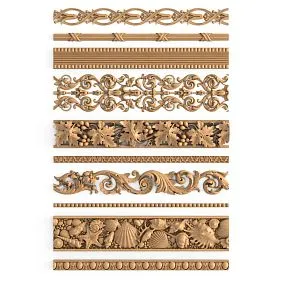
Relief carving with plant motifs requires the highest level of craftsmanship and may take several days of work. The complexity of the design, the depth of detail, and the size of the item determine the final cost.
Carved relief creates delicate structures that appear weightless despite the heaviness of the wood. Such items require special care during processing, as thin elements are easily damaged.
Technological innovations and their impact on pricing
Production automation
Modern CNC machining centers revolutionize the production of wooden items. The ability to create complex 3D profiles with high precision opens up new design possibilities while maintaining reasonable costs.
Programmable equipment allows creating unique items in small batches without significant cost increases. The setup time of the machine is recouped already when producing 10-20 identical parts.
Robotic lines ensure consistent quality and high productivity. Eliminating the human factor minimizes defects and allows maintaining competitive prices even for complex items.
Innovative materials and coatings
Thermally modified wood has improved stability and biostability characteristics. High-temperature treatment alters the material's structure, making it more homogeneous and predictable in processing.
Special stains and coatings can significantly increase the item's cost, but they provide additional protection and longevity. Fire-retardant compounds, antiseptics, and hydrophobic impregnations expand the application range of wooden posts.
Nanotechnology coatings represent the future of the industry. Self-cleaning and antibacterial surfaces can fundamentally change approaches to using wooden structures.
Market segments and their characteristics
Economy Segment
Budget solutions are aimed at mass consumers, where price is the determining factor. Using second-grade pine, simplest processing forms, and minimal finishing allow offering products at affordable prices.
Standardized sizes and shapes enable mass production with minimal equipment retooling costs. Limited assortment is offset by low cost and quick availability.
Simplified packaging and logistics further reduce overhead costs. Selling in large batches through construction hypermarkets ensures wide product availability.
Mid-Range Segment
The mid-market segment offers a reasonable balance between price and quality. Using first-grade wood, more complex processing forms, and quality finishing ensure an attractive appearance at moderate cost.
Extended range of sizes and profiles allows satisfying most design requirements. The ability to make minor modifications to standard items adds flexibility without significant cost increases.
Quality packaging and service support the product's image. Consultative support and warranty obligations increase consumer trust.
Premium Segment
Luxury items are aimed at discerning customers willing to pay for exceptional quality and uniqueness. Using premium wood species, complex artistic processing, and flawless finishing justify the high cost.
Individual approach to each order allows creating unique items based on original sketches. The ability to modify any parameters ensures full alignment with the designer's concept.
Exclusive service includes personal consultations, author supervision, and extended warranties. Brand prestige becomes additional value for prestige projects.
Economic factors and market trends
Impact of currency exchange rates
Imported equipment and tools constitute a significant portion of the cost of producing high-quality wooden items. Fluctuations in exchange rates directly affect finished product prices with a 2-3 month delay.
Dependence on imported coatings and hardware creates additional risks for pricing. Producers are forced to include currency risks in product cost or seek domestic alternatives.
Localization of component production gradually reduces the industry's currency dependence. Development of domestic machine-building and chemical industries creates conditions for price stabilization.
Energy costs
Woodworking is an energy-intensive industry, where electricity costs account for up to 15% of production cost. Rising energy tariffs inevitably reflect on the prices of finished products.
Drying chambers consume the most energy in the production cycle. Implementing energy-saving technologies and using renewable energy sources helps curb cost increases.
Optimizing production processes and improving equipment energy efficiency become key factors in competitiveness. Investments in modernization pay off through reduced operating expenses.
Comparative analysis of price categories
Ownership cost
Analysis of total cost of ownership should consider not only initial acquisition costs but also expenses for operation, maintenance, and possible replacement. High-quality solid wood products serve for decades without losing functionality.
Budget options may require replacement or repair within 5-7 years of use. Costs for dismantling old and installing new elements may exceed the initial price difference.
The possibility of restoration and updating finishes extends the service life of quality products. Premium solid oak balusters may last for centuries with proper care.
Impact on property value
Quality stair railings increase the attractiveness and market value of real estate. Investments in premium wooden elements pay off upon property sale.
Aesthetic appeal and functionality of stair structures influence the overall perception of interior design. Harmonious combination of all elements creates a cohesive image of quality housing.
Setting priorities
Practical Recommendations for Selection
Priority definition
Choosing wooden balusters for stairs price Which match the project budget, requires clear understanding of priorities. For residential interiors, aesthetic qualities and durability are more important, for commercial objects — functionality and ease of maintenance.
The intensity of stair usage determines requirements for material strength and durability. Residential staircases experience less load compared to public buildings.
Climate conditions of operation influence the choice of wood species and finish type. Outdoor structures require enhanced biostability and moisture resistance.
Cost Optimization
Planning purchase during off-season allows significant discounts. Many manufacturers offer special terms for orders placed during low-demand periods.
Ordering in bulk ensures wholesale prices and priority service. Combining orders with neighbors or construction partners can yield substantial savings.
Choosing standard sizes and profiles eliminates additional charges for custom manufacturing. Adapting the project to standard products is often more cost-effective than ordering unique items.
Working with suppliers
Direct cooperation with manufacturers eliminates trade markups and ensures better prices. Many factories work with retail clients upon reaching a certain minimum order.
Long-term relationships with reliable suppliers guarantee stable prices and quality. Regular customers receive priority in order fulfillment and additional discounts.
Comprehensive supply of all stair system elements from one manufacturer ensures compatibility and stylistic unity. This also simplifies logistics and reduces overall costs.
Future market trends and forecasts
Technological Trends
Development of digital design technologies allows creating highly detailed virtual models of stair structures. Clients can preview results before production begins, reducing risks and increasing satisfaction.
Automation of production processes continues to develop, reducing manual labor and improving product quality. Robotic lines ensure consistent characteristics and shorten manufacturing times.
Additive technologies are beginning to enter woodworking, opening opportunities for creating complex geometric forms. 3D printing with wooden composites may revolutionize the production of unique items.
Ecological Requirements
Growing demands for eco-friendly construction materials stimulate the development of sustainable forestry. FSC and PEFC certification is becoming a mandatory requirement for many projects.
Using local wood species reduces the product's carbon footprint and supports regional economies. Short logistics chains are becoming a competitive advantage.
Advancements in wood waste recycling technologies enable the creation of new composite materials with improved properties. Such materials may compete with traditional solid wood.
Market Prospects
Rising household incomes stimulate demand for high-quality finishing materials. Consumers increasingly choose durable solutions, willing to pay a premium for quality.
Development of individual housing construction creates a stable demand for stair elements. The trend toward unique interiors supports the premium segment.
Digitalization of trade simplifies access to a wide range of products. Online platforms allow comparing offers and selecting optimal options based on price-to-quality ratio.
Conclusion
Pricing for Wooden balusters are a complex process taking into account numerous factors—from raw material cost to processing complexity and market conditions. Understanding these mechanisms helps make an informed choice that satisfies both aesthetic requirements and financial possibilities. The modern market offers solutions for any budget, but it is important to remember that cutting corners on quality may result in additional expenses in the future. Investments in quality materials and professional manufacturing pay off through longevity and enduring attractiveness of stair constructions.
Technological progress gradually reduces the cost of complex items, making quality products more accessible. Automation in production and new materials open opportunities to create unique solutions at reasonable prices.
When choosing suppliers of stair components, it is important to turn to companies with a proven reputation and long-standing experience. STAVROS has established itself as a reliable partner, offering a wide range of quality products at competitive prices. Our specialists will help select the optimal solution for any project, taking into account all requirements for quality, design, and budget. Choosing STAVROS means investing in the longevity, beauty, and reliability of your stair constructions.
When selecting suppliers of stair components, it is important to choose companies with a proven reputation and long-standing experience. STAVROS has established itself as a reliable partner, offering a wide range of quality products at competitive prices. Our specialists will help you find the optimal solution for any project, taking into account all requirements for quality, design, and budget. Choosing STAVROS means investing in the durability, beauty, and reliability of your stair structures.