Article Contents:
- Value of Architectural Details
- Details as Carriers of Style
- Scale and proportions
- Rhythm and Repetition
- Transitions and Boundaries
- Hiding Imperfections
- Individuality and Character
- Door Frame Trimmed with a Door Header
- Functions of a Door Header
- Types of Door Headers
- Materials for Door Headers
- Installation and Finishing
- Color solutions
- Polyurethane Ceiling Moldings
- Advantages of Polyurethane
- Types of Ceiling Moldings
- Installation of Polyurethane Stucco
- Painting and decorating
- Moldings and Their Decorative Value
- Functions of Moldings
- Stylistic Aspects of Moldings
- Horizontal Beams
- Transoms as Composition Finishes
- Coordination with Interior Design
- Final Composition: Unity of Details
- Principles of Compositional Unity
- Vertical Space Structure
- Horizontal Rhythmic Structure
- Light and Shadow in Architectural Composition
- FAQ: Popular Questions about Architectural Details
- Are Door Headers Required for Door Openings?
- What Width Should a Ceiling Cornice Have?
- Can Polyurethane Moldings Be Installed on a Suspended Ceiling?
- How to Choose the Style of Architectural Details?
- What Paint to Use for Polyurethane Moldings?
- Why are door casings needed?
- Can details from different styles be combined?
- How to care for architectural details?
- Conclusion: perfection in details

Great architects of the past understood a simple truth: the beauty of a building is composed of details. From majestic columns to a modest door casing, from luxurious ceiling rosettes to elegant cornices — each detail plays its part in the symphony of architectural space.framing the doorway with a casingcreates a transition between rooms, organizes spatial structure, adds character to the interior.Polyurethane Ceiling Moldingstransforms a flat ceiling surface into an architectural work filled with volume and expressiveness. Door casings — vertical elements of door panels — complete the composition, creating a visual connection between different levels of finish.


Value of architectural details
In the era of mass production and standardization, architectural details acquire special value. They transform the faceless boxes of modern buildings into individual spaces filled with character and soul. Understanding the role of details in architectural composition is the key to creating truly expressive interiors.




Details as carriers of style
Architectural style is expressed precisely in details. You can build two identical houses with identical layouts, but decorate them completely differently, using various decorative elements. Classical profiled door casings, elegantPolyurethane Ceiling Moldingscarved door casings will create the atmosphere of a classical mansion. Simple geometric frames, minimalist ceiling cornices, smooth doors without decoration — and the same house becomes a modern minimalist residence.
Each historical era developed its own set of characteristic details. Baroque is recognized by its lavish volutes, broken pediments, abundance of sculptural decoration. Classicism — by strict proportions, symmetrical compositions, order elements. Modern — by flowing plant lines, asymmetrical forms, elegant curves. Art Deco — by geometric patterns, stepped forms, contrasting combinations. A professional designer or architect selects details that precisely match the chosen style, creating a cohesive image.
Our factory also produces:



Scale and proportions
Architectural details create a scaled structure of space, helping a person orient themselves within it, feel comfortable.framing the doorway with a casingemphasizes the size of the opening, relates it to the scale of the wall and the entire room. A too narrow casing on a wide opening will look lost, while a too wide one on a narrow opening will appear overpowering.
Classical architecture developed complex proportional systems where the sizes of all elements are mathematically related to each other. The golden section, modular systems, order canons — all are tools for creating harmonious proportions. Modern design often simplifies these systems, but the main principle remains unchanged — all details must be proportionate to each other and to the human scale.
A door opening height of 210–220 centimeters is comfortable for a person, creating a sense of sufficient space without being oppressive. A casing width of 8–12 centimeters is proportional to such an opening. A ceiling cornice 10–15 centimeters wide harmoniously completes a wall height of 2.7–3 meters. These proportions have been developed over centuries of architectural practice and are perceived as natural and correct.
Get Consultation
Rhythm and Repetition
Architectural details create a rhythmic structure of space through repetition of elements. A row of identically decorated door openings in a gallery of rooms creates a regular rhythm, organizing movement through space. Repeating modulesof polyurethane ceiling moldingsin a coffered ceiling create an orderly structure, calming the eye.
Rhythm can be simple — uniform repetition of identical elements at equal intervals. Or complex — alternation of different elements, creation of groups, accentuation of individual sections. Changing rhythm attracts attention, creates visual accents. A door opening with a wider and more ornate frame among a row of simple openings becomes a compositional center, indicating the importance of the room it leads to.
Repetition of details links different levels of finish. The skirting board profile may repeat the door casing profile, creating visual unity at the lower level of the room. The ceiling cornice may vary the same profile at an enlarged scale. Door casings may repeat the vertical division rhythm of walls with moldings. Such repetition creates a complex system of visual connections, unifying the space.
Transitions and boundaries
Architectural details mark important transitions and boundaries in space.framing the doorway with a casingmarks the boundary between rooms, creates a frame for transitioning from one space to another. This frame may be modest, almost unnoticed — in modern minimalist interiors. Or grand, attention-grabbing — in classical spaces, where the door opening is treated as a portal with pilasters and a pediment.
The ceiling cornice creates a boundary between the wall and the ceiling, visually completing the vertical surface. Without a cornice, this boundary appears unfinished and abrupt. The cornice softens the transition, adds elegance, creates shadow that emphasizes the spatial volume. The skirting board performs a similar role at the boundary between the wall and the floor, protecting the lower part of the wall and concealing the junction of different materials.
Hiding imperfections
Practical function of architectural details — masking constructive and finishing imperfections.framing the doorway with a casinghides irregularities at the edges of openings, gaps between door frames and walls. Without a casing, these defects would be visible, spoiling the impression of the finish.
Polyurethane Ceiling Moldingsin the form of a cornice hides irregularities at the junction of walls and ceilings, gaps formed due to building settlement. Wide cornices can hide significant differences in ceiling levels, mask beams, ventilation ducts. Door casings hide the joints of panels, creating an illusion of monolithic door panels.
This function is especially important in old buildings, where perfect surface alignment is practically impossible. Architectural details allow creating an impression of flawless finish, without resorting to expensive and labor-intensive major leveling. Strategic placement of decorative elements covers problematic zones, while overall decorative saturation distracts attention from minor imperfections.
Individuality and character
In mass production, architectural details become a tool for individualizing space. The choice of specific casing profiles, styleof polyurethane ceiling moldings, and design of intermediate elements reflects the owner's taste and character. Two rooms with identical layouts will appear completely different due to different finishing details.
You can choose restrained, minimalist details that create a calm, neutral atmosphere. Or ornate, eye-catching elements that transform the interior into a theatrical space. You can follow strict historical canons or experiment by combining elements of different styles. Architectural details are the language through which space tells its story.
Casing around the door opening
The door opening is one of the most important elements of the interior, organizing movement between rooms and creating a visual structure of space.framing the doorway with a casingIt turns a utilitarian passage into an architectural element that can become a decoration of the interior.
Functions of the door casing
The main practical function of the casing is to cover the gap between the door frame and the wall. When installing a door, there remains a gap between the frame and the opening, which is filled with mounting foam. This technological seam must be concealed, and the casing performs this task elegantly and effectively. Without a casing, the opening looks unfinished, rough, and poorly finished.
The second function is protection of the opening edges from mechanical damage. The corners of the opening are susceptible to chipping, abrasion, and dirt. The casing takes on these impacts, protecting the wall finish. If necessary, the casing can be easily replaced, whereas repairing a damaged corner of the opening is significantly more complex and expensive.
The third function is aesthetic.framing the doorway with a casingIt creates a frame that visually highlights the opening, emphasizes its geometry, and relates to the scale of the room. The casing can be simple and inconspicuous or expressive and decorative, depending on the interior style and the role of the specific opening.
Types of casings
Flat casings are the simplest and most universal type, consisting of flat strips without profiling or with minimal beveling. Such casings are suitable for modern minimalist interiors, where clean lines and the absence of unnecessary decoration are important. The width of flat casings is usually 7-10 centimeters, which is sufficient to cover the mounting seam but does not create excessive bulk.
Profiled casings have a complex cross-section with grooves, ribs, and rounded elements that create play of light and shadow. Such casings are characteristic of classical interiors, whereframing the doorway with a casingbecomes an important decorative element. The profile can be symmetrical or asymmetrical, simple or complex multi-tiered.
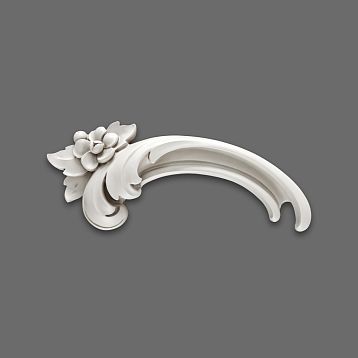
Carved casings with ornamentation are the most decorative type, transforming the door opening into a piece of carpentry art. The carving can be through-cut, creating a lace-like effect, or relief, with protruding ornamentation. Classical motifs include plant elements — grapevines, acanthus leaves, roses, geometric patterns — meanders, braids, stylized ornaments.
Telescopic casings have a special construction with an extendable element, allowing adjustment of width and installation on walls of different thicknesses. This practical solution is especially convenient when walls have varying thicknesses within a single room or when additional thermal or acoustic insulation is used.
Materials for casings
Solid wood is the traditional and most prestigious material for door casings. Oak, beech, ash possess strength, beautiful texture, and durability. Wooden casings can be stained to highlight the natural wood grain, painted in any color, or covered with varnish or oil.framing the doorway with a casingSolid wood creates a sense of solidity, quality, and connection to nature.
MDF with coating is a practical and affordable alternative to solid wood. Modern technologies allow creating MDF casings with any profiles and coatings — film imitating various wood species, enamel, natural wood veneer. MDF casings are stable, do not deform due to humidity changes, and are easy to install.
Polyurethane is used to create especially decorative casings with rich ornamentation. Polyurethane casings are lightweight, moisture-resistant, do not warp, and are easy to paint. They are ideal for rooms with high humidity or for creating luxurious classical interiors on a limited budget.
Metal — brass, bronze, stainless steel — is used in modern interiors to create an industrial or high-tech character. Metal casings are strong, durable, and create an interesting contrast with traditional finishing materials.
Installation and finishing
The classic method of installing casings involves cutting the corners at 45 degrees, creating invisible joints. This requires precision and professional tools — a miter saw or a miter box. Vertical casings are connected to horizontal ones, forming a rectangular frame around the opening. In some cases, the horizontal casing may be wider than the vertical ones or have a more elaborate profile, creating a visual completion of the composition.
An alternative method is using decorative corner elements that cover joints and turn them into decorative accents. Carved corner rosettes add eleganceto the casing around the door opening, creating rhythmic points in the composition.
Capitals and bases transform side casings into simplified pilasters, creating an order-based composition. The capital — a decorative element at the top of the casing — can be simple rectangular or complex with volutes and acanthus leaves. The base at the bottom creates a visual foundation, transitioning to the skirting board.
Color Solutions
Traditional solution - moldings in the same tone as the door leaf, creating a unified composition of the door and its frame. If the door is dark, the moldings are also dark; if light, the moldings are light. This solution creates cohesion, logic, and classic elegance.
Contrasting solution - moldings of a different color, highlighting the opening against the wall. White moldings on colored walls - a classic combination that emphasizes the architectural detail of the opening. Dark moldings on light walls create a graphic, modern effect.framing the doorway with a casingContrasting color attracts attention and becomes an expressive element of the interior.
Moldings in the same tone as the walls create a minimalist effect, where the opening is perceived only through the relief of the frame without color contrast. This solution visually expands the space, creating a sense of wall continuity.
Polyurethane ceiling molding
The ceiling is often underestimated in design projects, although it occupies a significant area and significantly affects the perception of space.Polyurethane Ceiling MoldingsTransforms a flat surface into an architectural masterpiece, adds height to the room, and creates elegance and completeness in the interior.
Advantages of polyurethane
Polyurethane revolutionized the decorative molding industry, making classical beauty accessible to a wide range of people.Polyurethane Ceiling MoldingsIt has several advantages over traditional plaster molding. The first and foremost is its low weight. A polyurethane cornice 15 centimeters wide weighs about 400-500 grams per linear meter, whereas a gypsum equivalent can weigh 3-5 kilograms.
Low weight is critical for installation on suspended and tensioned ceilings, which are not designed to bear significant loads. Polyurethane molding can be mounted using a special adhesive without additional mechanical fasteners, simplifying installation and not damaging the ceiling. Gypsum molding requires a reliable base and often additional fastening with screws or anchors.
Second advantage - moisture resistance. Polyurethane does not absorb moisture, does not deform under high humidity, and does not develop mold.Polyurethane Ceiling MoldingsIdeal for bathrooms, kitchens, pool and sauna rooms - anywhere where gypsum molding quickly deteriorates due to moisture.
Third advantage - strength and durability. Polyurethane does not crack, flake, or chip under accidental impacts. Gypsum molding is brittle and may be damaged by mechanical stress, requiring careful handling. Polyurethane molding lasts for decades without losing its appearance or properties.
Fourth advantage - affordable price. Production of polyurethane molding by casting into molds is significantly cheaper than handcrafting by master molders. This makes classical decoration accessible to a wide range of people, democratizing beauty.
Types of ceiling molding
Cornices - the most common type of ceiling molding, creating a transition between the wall and the ceiling.Polyurethane Ceiling MoldingsCornices can have various profiles - from simple smooth ones to complex multi-tiered ones with ornamentation. Cornice widths vary from modest 5 centimeters for small rooms to impressive 30-40 centimeters for high grand halls.
Cornices can be smooth with a minimalist profile, suitable for modern neoclassical interiors. Or richly decorated with modillions, dentils, ornamental friezes - for creating luxurious classical spaces. Some cornices have hidden niches for LED lighting, creating a floating ceiling effect.
Moldings - decorative overlays of various profiles, used to create compositions on the ceiling. With moldings, wall and ceiling panels, coffered ceilings, and frame surrounds for chandeliers and lamps are created.Polyurethane Ceiling MoldingsMoldings in the form of moldings are easily combinable, allowing the creation of compositions of any complexity.
Rosettes - round or oval elements serving as frames for central chandeliers. Rosettes can be smooth with minimal relief or richly ornamented with acanthus leaves, palmettes, geometric patterns. Rosette diameters range from 30 centimeters to 2 meters and more for exceptionally large rooms.
Brackets and consoles - decorative elements imitating supporting structures. They are placed under cornices, creating the impression that the cornice rests on these elements. Brackets are especially characteristic of Baroque and Renaissance interiors, where they are often adorned with volutes, cartouches, and mascarons.
Domes and coffers - complex three-dimensional elements creating deep niches on the ceiling. Dome elements are used to highlight the central area of the room and create a vertical accent. Coffers form a regular grid of recesses, creating a rhythmic ceiling structure.
Installation of polyurethane molding
Installationof polyurethane ceiling moldingsInstallation is relatively simple and can be done independently with basic skills. Required: special polyurethane adhesive (usually polymer adhesive like "liquid nails"), tape measure, pencil, miter saw for precise corner cutting, sharp knife or fine-toothed saw, putty knife for filling joints.
Surface preparation is critically important for secure mounting. The ceiling and walls at the installation site must be clean, dry, and degreased. Loose or peeling paint areas must be removed, and the surface must be primed. On tensioned ceilings, molding is mounted only to the wall, not touching the ceiling fabric.
Marking - the next important step. Using a laser or water level, a line is drawn on the wall along which the cornice will be mounted. The line must be strictly horizontal; otherwise, the cornice will appear skewed. Room corners often do not form exactly 90 degrees, so the cutting angle is determined individually for each corner.
Corner cutting is the most challenging step for beginners. Cornices are cut at a 45-degree angle using a miter saw. It is important to correctly orient the element in the miter saw - the cornice must be placed upside down, as it will be mounted on the wall. Practice on scrap pieces may be required for complex profiles.
Adhesive application is performed using a special adhesive, which is applied to the back of the element in a zigzag or dot pattern. The element is pressed against the wall and ceiling and held for several minutes until the adhesive sets. Excess adhesive is immediately wiped away with a damp cloth. Joints between elements are filled with putty and sanded after drying.
Painting and Decorating
Polyurethane Ceiling MoldingsIt is supplied in white, ready for painting. Painting is not mandatory - white molding on a white ceiling creates a classic elegant look. However, painting allows the molding to be adapted to any interior color scheme.
Priming before painting improves paint adhesion and reduces paint consumption. Water-based acrylic primer is used, applied with a roller or brush in one coat. After the primer dries, paint is applied - usually water-based acrylic paints that are odorless, dry quickly, and form a durable finish.
Color solutions are diverse. Classic - white molding on a white or light ceiling. Contrast - molding of another color, standing out against the ceiling background. You can paint the molding to match the wall color, creating visual continuity. Or use a contrasting color to walls, emphasizing the architectural structure.
Gilding - a traditional way to enrich molding, transforming it into luxurious decor. Modern materials - gold leaf, gold paints, wax pastes with metallic pigment - allow creating a gilded effect at an affordable price. Gold can cover the entire molding or be applied only to protruding ornamental elements.
Patination creates an effect of noble antiquity. Dark paint or patinating wax is applied into the recesses of the relief, then partially wiped off from the protruding parts. This creates a play of light and dark tones, emphasizes the depth of the relief, and adds volume.
Mullions and their decorative significance
Mullions - vertical decorative elements on door panels - complete the door frame composition, create visual connection between different levels of finish. Although mullions seem like a small detail, their presence or absence significantly affects the perception of the door and the entire interior.
Functions of mullions
Historical function of mullions - reinforcing the door panel, creating a frame that prevents warping. Traditional louvered doors consisted of a frame - vertical stiles and horizontal rails - and thin louvers inserted into the frame's grooves. Mullions - vertical frame elements - created structural rigidity.
Modern doors made of MDF or solid wood on a glued basis do not require mullions structurally - a solid panel is sufficiently strong and stable. However, mullions are preserved as decorative elements, reproducing the traditional construction of louvered doors. They create vertical division of the panel, add architectural expressiveness, and link the door with other interior elements.
Mullions create a rhythmic structure - usually the door panel is divided into 2-4 vertical segments. Two mullions create a three-part composition - a wide central section and two narrow side segments. Three mullions form a four-part structure of equal or alternating width segments. The rhythm of mullions can correspond to the rhythm of vertical wall divisions with moldings.
Stylistics of mullions
In classical interiors, mullions are usually profiled, protruding above the plane of the louvers, creating a relief play of light and shadow. The profile can be simple - one or two rounded edges and beads, or complex - multi-tiered with ornamentation. The width of classical mullions is 6-10 centimeters, creating an expressive relief without excessive bulkiness.
In modern interiors, mullions are often simplified to a minimum - thin strips or routed grooves indicating division without pronounced relief. Some modern doors have hidden mullions - division is indicated only by seams between MDF panels or thin metallic inserts.
Mullions can be supplemented with decorative appliqués at intersections with horizontal elements. Rosettes, medallions, carved appliqués transform utilitarian joints into decorative accents, enriching the door's composition.
Horizontal rails
In addition to vertical mullions, door panels often have horizontal rails, creating vertical division. Traditional scheme - division into 3-4 horizontal tiers, creating from 6 to 16 louvers depending on the number of mullions and rails. Each louver can be flat, convex, or concave, smooth or decorated.
The height ratio of tiers follows proportional rules. The lower tier is usually higher than the upper one - this creates visual stability, corresponding to perception logic (a heavier base). The middle tier can be the highest, creating vertical elongation of the door. The golden section is often used to determine optimal proportions.
Louvers as composition completion
Louvers - areas between mullions and rails - complete the door panel composition. They can be recessed - located deeper than the frame, creating a play of light and shadow. Or projecting - protruding above the frame, forming a convex relief. Flat louvers create a minimalist effect.
Louvers can be decorated with ornamentation - carving, routed patterns, applied decorative elements. In luxurious interiors, louvers are adorned with inlays, marquetry - inlaid ornaments from contrasting wood species. Some louvers have glass inserts, creating translucency and visual lightness.
The color of louvers may differ from the frame color, creating contrast and emphasizing the door's structure. Dark louvers in a light frame - a classic solution, creating depth. Light louvers in a dark frame - a more modern option. Louvers can be veneered with precious wood species, while the frame is painted with enamel.
Coordination with interior
The design of mullions and the overall door composition must coordinate with other interior elements. If walls are adorned with molding panels, it is logical to use doors with pronounced louvered structure. The profile of mullions can repeat or vary the profile of wall moldings, creating stylistic unity.
If the interior usesPolyurethane Ceiling Moldingswith a specific ornamentation, similar motifs can be used in louver decoration. Ifframing the doorway with a casinghas rich carved decoration, the door panel should also have a corresponding level of decorative detail.
Color coordination is also important. Doors can match the color of the trim, match the color of furniture, or contrast with walls. It is important that the color of the doors is part of the overall color palette of the interior, not creating dissonance.
Final composition: unity of details
Creating a harmonious interior requires coordinating all architectural details into a unified composition.framing the doorway with a casing, Polyurethane Ceiling MoldingsMullions on doors, baseboards, cornices - all these elements must work together, creating a cohesive system.
Principles of compositional unity
Stylistic consistency - the first principle. All details must belong to one style or closely related styles. Classical profiled casings require corresponding classical cornices, latticed doors with traditional middle panels. Minimalist flat casings pair with sleek cornices and smooth doors without pronounced structure.
Proportional consistency - the second principle. The sizes of all elements must be proportionate to each other. The width of casings, cornices, and skirting boards is typically in the ratio 1:1.5:2 - skirting boards are the narrowest, casings are medium, cornices are the widest. This proportion creates visual harmony and aligns with perceptual logic.
Material consistency - the third principle. It is preferable to use one material or materials of comparable character for all details. Wooden casings pair with wooden skirting boards and cornices.Polyurethane Ceiling Moldingsmay be combined with polyurethane wall moldings. Mixing materials is permissible but requires a refined sense of proportion.
Color consistency - the fourth principle. Architectural details are usually painted in one color or similar shades. A classical solution is all details in white, creating a unified system against colored walls. An alternative is all details matching wall tones, visible only through relief. Contrasting solutions require special caution.
Vertical Structure of Space
Architectural details create a vertical structure organizing space from floor to ceiling. Skirting boards form the lower tier, creating a transition from floor to wall. Door casings and middle panels organize the middle tier at eye level, where primary attention is focused. Ceiling cornices complete the composition, forming the upper tier.
This three-tiered structure corresponds to classical proportional systems. The lower tier is the base, a zone of stability. The middle tier is the main tier, a zone of activity. The upper tier is the culmination, a zone transitioning to the sky. Proper proportion of these tiers creates a sense of harmony and alignment with human scale.
framing the doorway with a casingconnects all three tiers, creating a vertical accent. The casing begins at the skirting board or slightly above, rises to the upper part of the wall, sometimes supplemented by a pediment connecting to the ceiling cornice. This vertical connection creates spatial unity.
Horizontal rhythmic structure
In addition to vertical structure, details create horizontal rhythm. A row of door openings in a wall or in a gallery of rooms forms a regular repetition of vertical accents. Distances between openings, their size, and detailing create a rhythmic structure that can be simple - uniform repetition, or complex - with variations and accents.
Polyurethane Ceiling Moldingsin the form of moldings creates horizontal division of walls and ceilings. Molded panels placed at equal intervals form a rhythm that soothes and organizes perception. Coffered ceilings with regular molding grids create spatial rhythm, organizing room volume.
Coordinating vertical and horizontal rhythms creates a complex compositional system. Vertical middle panels on doors may align rhythmically with vertical moldings on walls. Horizontal lintels on doors correspond to horizontal bands on walls. Such coordination creates visual musicality in space.
Light and shadow in architectural composition
Relief architectural details come alive only with proper lighting.Polyurethane Ceiling Moldingscreates a play of light and shadow that changes throughout the day depending on the angle of light incidence. Morning and evening light, slanting at a sharp angle, creates long expressive shadows that emphasize relief. Midday light, falling vertically, softens shadows, creating a more tranquil perception.
also responds to lighting. Side light from wall sconces highlights the casing profile, revealing its relief. Top light from ceiling fixtures creates soft shadows defining volume.
framing the doorway with a casingIt also responds to lighting. Side lighting from wall sconces highlights the profile of the door casing, revealing its relief. Upper lighting from ceiling fixtures creates soft shadows that define volume.
FAQ: Popular questions about architectural details
Are door casings mandatory?
From a technical standpoint, casings are not mandatory - one can neatly plaster the door openings. However,framing the doorway with a casinghides technological seams, protects corners from damage, adds completeness to the interior. In modern minimalist interiors, hidden casings are used - recessed into the wall, creating an invisible frame.
What width should the ceiling cornice have?
The cornice width depends on ceiling height. For standard 2.7-meter ceilings, an optimal width is 8-12 centimeters. For ceilings 3 meters and higher, cornices 12-20 centimeters can be used. In spacious rooms, wider cornices appear more proportionate.Polyurethane Ceiling Moldingsis available in a wide range of sizes for any room.
Can polyurethane molding be mounted on a suspended ceiling?
Yes, but with specific considerations.Polyurethane Ceiling Moldingsis mounted only to the wall, not touching the suspended ceiling fabric. A 3-5 millimeter gap is left between the cornice and ceiling, visually imperceptible. An alternative is special lightweight cornices that can be glued directly to the fabric with special adhesive.
How to choose the style of architectural details?
Style is determined by the overall interior concept. For classical interiors, details with profiling and ornamentation are chosen. For modern interiors - minimalist smooth forms. Neoclassicism uses simplified classical profiles.framing the doorway with a casingmust match the style of doors, furniture, and overall finish.
What paint to use for polyurethane moldings?
Water-based acrylic paints are optimal - they are odorless, dry quickly, and form a durable coating. Before painting,Polyurethane Ceiling Moldingsit must be primed with an acrylic primer. Apply 2-3 layers of paint with light sanding in between. A protective lacquer finish shields the paint from dirt.
Why are moldings needed on doors?
In traditional lath-and-plaster doors, moldings served a structural function - reinforcing the door panel. In modern doors, they are decorative elements that create vertical divisions, adding architectural expressiveness. Moldings connect the door to other interior elements - wall moldings, vertical divisions on facades.
Can details from different styles be combined?
Combining styles requires high professionalism and refined taste. It is safer to stick to one style or use closely related directions - for example, various variations of classicism.framing the doorway with a casingandPolyurethane Ceiling Moldingsmust be stylistically coordinated.
How to care for architectural details?
Painted details require minimal care. Regular dry cleaning with a soft brush prevents dust accumulation in relief. Stains are removed with a slightly damp cloth and mild detergent.Polyurethane Ceiling Moldingsrequires no special care and retains its appearance for decades.
Conclusion: perfection in details
Creating a harmonious interior is an art of harmonizing multiple elements into a unified composition.framing the doorway with a casingcreates an architectural structure, organizes space, and adds elegance.Polyurethane Ceiling Moldingstransforms a simple ceiling into an architectural masterpiece, filling the room with volume and character. Moldings complete the composition, linking various elements into a unified whole.
Every detail matters. Neglecting small things destroys the impression of the most expensive materials and craftsmanship. Attention to details turns an ordinary space into a work of art. Professionally installed, properly selected, and stylistically coordinated architectural details create an interior that pleases the eye and warms the soul.
Modern technologies make classical beauty accessible.Polyurethane Ceiling Moldingsreproduces historical samples with perfect accuracy at an affordable price. The material's lightness simplifies installation, and durability guarantees a flawless appearance for decades. A wide range of profiles and styles allows realizing any designer's vision.
A professional approach requires understanding the relationships between elements, knowledge of proportional systems, and a sense of style. Consulting with an experienced designer or architect helps avoid mistakes and create a truly cohesive composition. Investments in professional design pay off with results - an interior that looks expensive, elegant, and unique.
The result is a space that reflects the owner's taste and individuality, creating a sense of completeness and harmony. A home where every detail is thought out, where architectural decoration does not merely adorn but creates the character of the space. An interior that becomes a daily source of aesthetic pleasure and a source of pride.
The result is a space that reflects the owner's taste and individuality, creating a sense of completeness and harmony. A home where every detail is thoughtfully considered, where architectural decor does not merely adorn but shapes the character of the space. An interior that becomes a daily source of aesthetic pleasure and a source of pride.
Company STAVROS offers a full range of architectural details for creating harmonious interiors. The wide assortmentof polyurethane ceiling moldingsincludes cornices, moldings, and rosettes of all sizes and styles. The collection of door casings, baseboards, and decorative elements covers everything needed for comprehensive finishing.
STAVROS's own production guarantees stable product quality, precise dimensions, and flawless surfaces. Modern equipment allows reproducing historical samples with museum-level accuracy or creating new original forms. Eco-friendly materials ensure safety for health.
STAVROS's professional consultants help select optimal solutions for a specific project. Calculating the required quantity of elements, recommendations on combinations, and installation consultations - full support at all stages. Years of experience allow anticipating potential problems and offering proven solutions.
Flexible pricing policies make quality decor accessible for projects of various scales. Wholesale discounts, individual pricing for large orders, regular promotions - STAVROS ensures that beauty is accessible to everyone. Create interiors that become works of art, together with STAVROS!