Article Contents:
- Oak as a material: natural perfection in every fiber
- Unique characteristics of oak wood
- Moisture resistance and dimensional stability
- Aesthetic advantages of oak stair elements
- Color palette and staining options
- Compatibility with various interior styles
- Technical aspects of oak element production
- Drying and material preparation process
- Processing technologies and shaping methods
- Varieties of oak stair elements
- Classic turned forms
- Carved and decorative elements
- Size range and standards
- Standard sizes for residential spaces
- Non-Standard Solutions
- Mounting and Installation Systems
- Traditional pegged joints
- Modern metal systems
- Protective coatings and final processing
- Oil finishes
- Lacquer systems
- Price categories and economic aspects
- Pricing factors
- Long-Term Economic Efficiency
- Care and maintenance features
- Daily care
- Preventive maintenance
- Comparison with alternative materials
- Oak versus other wood species
- Wood versus artificial materials
- Trends and innovations
- Modern Processing Technologies
- Ecological trends
- Regional characteristics and offerings
- Moscow market
- Regional Manufacturers
- Criteria for selecting quality products
- Visual assessment
- Technical documentation
- Conclusion
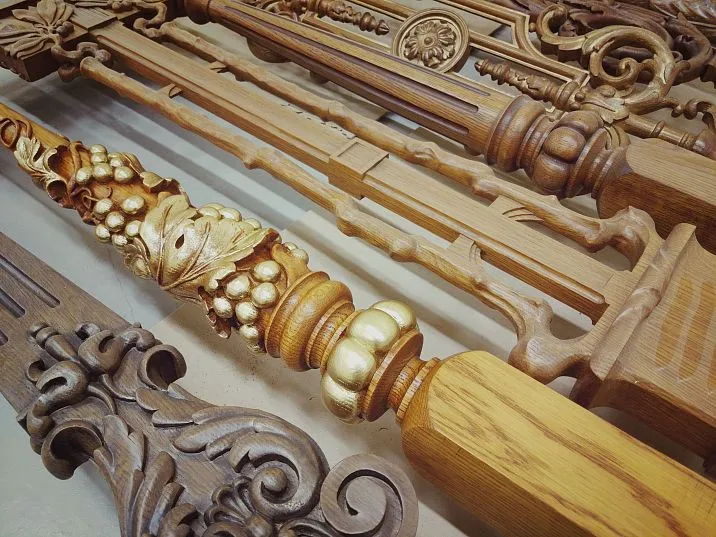
What turns an ordinary staircase into an architectural masterpiece capable of delighting generations? The answer lies in the details — in those very vertical oak supports, which not only ensure safety but also create an atmosphere of aristocratic luxury. When you decide to buy oak balustersyou are investing not just in a functional element, but in a legacy that will serve your family for decades.
Oak is not just wood. It is a symbol of strength, longevity, and nobility, embodied in every fiber. Imagine a staircase where each support post tells the story of centuries-old craftsmanship traditions, where touching the handrail evokes a sense of connection with nature and time. It is precisely this magic that oak elements create in the interior of a modern home.


Oak as a material: natural perfection in every fiber




Unique characteristics of oak wood
Oak wood has a density of 700-800 kg/m³, making it one of the strongest among hardwoods. This density ensures exceptional resistance to mechanical damage, scratches, and dents. Unlike softwoods, oak does not deform under load and retains its original geometry for decades.
The natural tannins present in wood act as natural antiseptics. They protect the material from fungi, mold, and insects without the use of chemical treatments. This is especially important for families with children, where ecological safety is paramount.
The structure of oak fibers creates a unique pattern that becomes more pronounced over time. Annual rings form a distinctive texture, while medullary rays create the very "mirrors" that give oak its recognizable noble appearance.
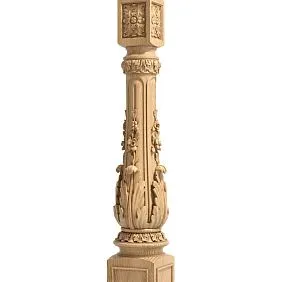
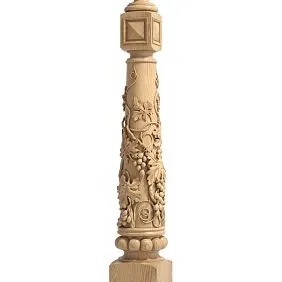
Our factory also produces:



Moisture resistance and dimensional stability
One of the main advantages of oak is its low hygroscopicity. The wood slowly absorbs and releases moisture, minimizing seasonal deformations. The shrinkage coefficient of oak is only 0.4% radially and 0.8% tangentially, which is half that of pine.
This stability is especially important for stair constructions, where precision of joints is critical for safety. Oak elements do not loosen over time, preserving their original fastening rigidity. In heated rooms, oak virtually does not change dimensions, eliminating gaps and creaks.
Oak's frost resistance allows its use even in unheated rooms. The wood withstands multiple freeze-thaw cycles without losing strength, making oak elements a universal solution for any operating conditions.
Get Consultation
Aesthetic advantages of oak stair elements
Color palette and staining options
Oak's natural color ranges from light yellow to brown with a golden hue. The sapwood is usually lighter than the heartwood, creating a natural tonal variation in the finished product. Over time, oak darkens under exposure to light and oxygen, acquiring a noble patina.
Oak stains exceptionally well, allowing virtually any desired shade. Stains penetrate deeply into the wood structure, creating even coloring without masking the natural texture. Popular shades include stained oak, white oak, wenge oak, and classic walnut.
Brushing technique is especially effective on oak. Removing soft fibers accentuates the relief of annual rings, creating a tactilely pleasing surface with a pronounced texture. Brushed oak appears more dimensional and adds depth to interiors.
Compatibility with various interior styles
Oak elements fit organically into classic interiors, where tradition and quality are valued. In English style, oak creates the atmosphere of historic estates, while in American classicism, it emphasizes solidity and respectability.
Modern styles also welcome oak, especially in Scandinavian direction, where the naturalness of materials is prized. White oak pairs beautifully with white walls and minimalist furniture, creating a sense of spaciousness and light.
In loft style, oak adds warmth to industrial interiors. The combination of rough brickwork with noble wood creates an interesting contrast and makes the space more cozy and livable.
Technical aspects of oak element production
Drying and material preparation process
Quality drying is the foundation of oak product longevity. The process begins with natural air-drying outdoors for 6-12 months. This allows the wood to gradually adapt to humidity changes without developing internal stresses.
Kiln drying is conducted at 45-60°C with gradual humidity reduction to 8-12%. Controlled conditions ensure even moisture removal and prevent cracking. The entire process takes 2-4 weeks depending on the thickness of the blanks.
Wood stabilization includes aging in a climate chamber at parameters matching operating conditions. This is the final preparation stage that guarantees dimensional stability of finished products.
Processing technologies and shaping techniques
Turning oak requires specialized tools and high operator skill. The wood's hardness causes increased tool wear, but it allows achieving perfectly smooth surfaces with clear diameter transitions.
Milling decorative elements is performed on CNC machines, ensuring high precision and repeatability. Specialized cutters for hardwoods allow creating complex profiles without chips or scratches.
Hand carving in oak is the pinnacle of craftsmanship. The wood's hardness demands sharp tools and precise movements, but the result surpasses all expectations. Carved oak elements become true works of art.
Varieties of oak stair elements
Classic turned profiles
Simple cylindrical profiles remain the most popular due to their versatility and affordability. Diameter varies from 40 to 60 millimeters depending on stair dimensions and aesthetic preferences.
Spindle-shaped profiles with smooth diameter transitions create a more elegant silhouette. Such elements are especially suitable for classic interiors, where traditional proportions and form harmony are valued.
Multi-step profiles with clear transitions suit modern interiors. Geometric precision of forms highlights the architectural logic of the structure and creates a sense of technical perfection.
Carved and decorative elements
Plant motifs are classic for oak carving. Grapevines, oak leaves, roses, and other designs create a rich surface texture. Each element is unique and bears the mark of the carver's skill.
Geometric patterns suit modern interiors. Diamonds, spirals, and interlacing create rhythmic compositions without excessive ornamentation. These elements are easier to manufacture and more affordable.
Combined solutions combine turned and carved elements. The base can be turned on a lathe, while decorative details are added by hand carving. This offers the optimal balance of price and artistic value.
Size range and standards
Standard sizes for residential spaces
The most popular cross-sections are 50×50 and 60×60 millimeters at a height of 900 millimeters. These sizes provide sufficient strength at a reasonable cost and are suitable for most private homes.
For prestigious interiors, elements with cross-sections of 70×70 and 80×80 millimeters are used. Increased dimensions create a more monumental appearance and emphasize the status of the object.
Round profiles with diameters of 50–60 millimeters are popular in classical interiors. They create a softer silhouette and are pleasant to the touch, which is important for handrails.
Non-standard solutions
Custom sizes are manufactured for specific projects. This may be necessary for restoring historical buildings or implementing unique design solutions.
Variable cross-sections along the height create interesting visual effects. The element may widen toward the base or have decorative bulges in the middle.
Curved elements for spiral staircases require special manufacturing technology. Oak bending is possible only in steamed condition using special forms.
Quality mounting of furniture moldings requires understanding their specific behavior within the furniture structure. Unlike architectural moldings, furniture elements are subjected to more intensive impacts and must ensure disassemblability for transportation and assembly.
Traditional pegged joints
Cylindrical pegs with a diameter of 8–12 millimeters are a classic solution for attaching to treads. The insertion depth is 25–30 millimeters, ensuring secure fixation.
Conical pegs provide a tighter fit and eliminate play. Such a joint is especially important for heavy oak elements, where any loosening of the connection is unacceptable.
Adhesive reinforcement of pegged joints increases reliability by several times. Modern polyurethane adhesives create bonds stronger than the wood itself.
Modern metal systems
Threaded stainless steel bolts provide maximum connection strength. A diameter of 8–10 millimeters is sufficient for most applications.
Hidden fasteners preserve the aesthetic of the item. Metal elements are completely concealed within the wood and do not disrupt the overall visual integrity.
Adjustable systems allow for adjusting the position of elements after installation. This is important when working with uneven bases.
Protective coatings and final finishing
Oil finishes
Natural oils penetrate deeply into the oak structure, highlighting its natural beauty. Linseed oil creates a matte surface with a slight sheen, pleasant to the touch.
Tung oil provides better protection against moisture and mechanical damage. The coating lasts longer but requires professional application.
Wax coatings applied over oil provide additional protection and give the surface a silk-like finish. Wax is easy to renew and repair.
Urethane coatings create a wear-resistant, high-strength finish for heavily used surfaces. Acrylic formulations provide an eco-friendly coating for residential spaces with children.
Polyurethane varnishes provide maximum protection against wear and moisture. Two-component formulations create exceptionally strong coatings for heavily used surfaces.
Water-based varnishes are environmentally safe and odorless. They are suitable for children’s rooms and spaces with high ecological requirements.
Matte varnishes preserve the natural appearance of wood, hiding the presence of the coating. Glossy finishes highlight the texture and create a more formal look.
Price categories and economic aspects
Pricing Factors
The grade of wood significantly affects the cost. Premium grade wood without knots or defects costs 2–3 times more than standard material. Radial cutting increases the price by 30–40%.
Processing complexity determines labor costs. Simple turned elements are affordable, while hand-carved items may cost 10 times more.
Order volume affects unit cost. Mass production reduces price by 20–30% compared to individual items.
Long-term economic efficiency
The service life of quality oak elements is 50–100 years with proper care. This makes them economically advantageous despite their high initial cost.
Significantly impacts property value. High-quality oak stair constructions increase the attractiveness of the property to buyers and may increase its value by 5-10%.
Minimal maintenance costs – another advantage of oak elements. Periodic renewal of the coating every 5-7 years is the only required procedure.
Care and Maintenance Features
Daily Care
Dry cleaning with soft cloth or vacuum cleaner with soft attachment is the basis for caring for oak surfaces. Dust and dirt are removed without damaging the finish.
Wet cleaning is performed with slightly damp cloth without using aggressive cleaning agents. Special wood-based formulations are safe and effective.
Polishing with wax-based compounds once a month maintains the luster and protective properties of the finish. Wax is applied in a thin layer and buffed to a shine.
Preventive Maintenance
Fasteners are inspected once a year. Check for absence of play, cracks, and other defects. Connections are tightened as needed.
Coating renewal is required every 5-7 years depending on usage intensity. Surface is sanded and covered with a new layer of protective compound.
Controlling humidity in the room maintains wood stability. Optimal parameters: 40-60% humidity at 18-22°C temperature.
Comparison with alternative materials
Oak vs Other Wood Species
Spruce is significantly cheaper than oak, but inferior in strength and durability. Softwood is easily damaged and requires more frequent coating renewal.
Ash is similar to oak in characteristics, but has less pronounced texture. Ash elements cost 20-30% less than oak ones.
Beech surpasses oak in structural uniformity, but is less resistant to moisture. Requires mandatory protective treatment to prevent rotting.
Wood vs Synthetic Materials
Metal elements are stronger than wooden ones, but feel cold to the touch and require corrosion protection. Cost of quality metal items is comparable to oak.
Composite materials imitate wood, but lack its tactile qualities. Service life is limited to 15-20 years due to polymer degradation.
Fiberglass is long-lasting and requires no maintenance, but looks artificial. High cost is not offset by aesthetic qualities.
Trends in development and innovation
Modern Processing Technologies
Laser engraving allows creating complex patterns with high detail. The technology opens new possibilities for personalizing products.
3D milling creates volumetric compositions of any complexity. Computer control ensures precision and repeatability of results.
Thermal modification changes wood properties, increasing stability and longevity. Thermally modified oak takes on a dark color without using dyes.
Ecological trends
FSC certification guarantees wood origin from sustainably managed forests. Environmental responsibility becomes an important factor in selection.
Zero-waste production minimizes environmental impact. Waste is used to produce fuel briquettes and other useful products.
Local production reduces carbon footprint from transportation. Regional manufacturers gain advantage over importers.
Regional Features and Offers
Moscow Market
The capital region offers the widest selection of oak elements. Competition among manufacturers ensures reasonable prices with high quality.
Moscow’s logistical advantages allow rapid delivery of products to any point in the region. Developed infrastructure reduces transportation costs.
High household incomes create demand for premium products. This stimulates technological development and improves product quality.
Regional manufacturers
Northwestern regions specialize in processing local oak. Proximity to raw material base ensures competitive pricing.
Central regions develop furniture production, including stair elements. Skilled workforce guarantees high product quality.
Southern regions use imported oak from Europe. This ensures access to higher-quality material, but increases cost.
Criteria for selecting quality products
Visual assessment
Uniform color indicates proper drying and processing. Stains and discolorations may indicate wood defects or processing errors.
Surface quality must be flawless. Scratches, tool marks, or chips are unacceptable. The surface must be smooth and pleasant to the touch.
Geometric accuracy is critical for quality installation. Deviations in size exceeding 1 millimeter are unacceptable for critical components.
Technical documentation
Quality certificates confirm compliance with standards. Documents must include information on wood species, moisture content, and grade.
Manufacturer's warranty commitments indicate confidence in product quality. Serious companies offer warranties of 3-5 years.
Technical support includes advice on installation and operation. Qualified specialists help avoid errors during setup.
Conclusion
Choosing oak staircase elements is a decision in favor of quality, beauty, and longevity. Buy oak balusters Means investing in an inheritance that will serve generations. Noble oak wood creates an atmosphere of respectability and comfort, transforming an ordinary staircase into an architectural feature of the interior.
Modern production technologies allow creating high-quality items while preserving traditional craftsmanship. Each element undergoes careful quality control and meets the strictest standards. Choosing the right supplier guarantees receiving products that exceed all expectations.
Investments in quality oak elements pay off through long service life, minimal maintenance costs, and increased property value. This is a solution for those who value true quality and are unwilling to compromise.
When choosing a supplier of oak staircase elements, it is important to turn to proven manufacturers with a long-standing reputation. STAVROS is a recognized leader in producing high-quality solid oak items. Years of experience, modern technologies, and strict quality control allow STAVROS to create products that meet the highest standards. Choosing STAVROS means you are not just getting quality staircase elements, but works of art that will delight with beauty and reliability for many years.