Article Contents:
- Beech as a phenomenon in the woodworking industry
- Botanical characteristics determining material quality
- Microscopic architecture of perfection
- Chemical composition: formula of strength and beauty
- Technological features of producing sawn beech boards
- Revolutionary approaches to beech drying
- Precision planing: the art of perfect surface
- Quality control at the molecular level
- Mechanical and physical properties: numbers speaking of superiority
- Strength characteristics at world level
- Dimensional stability: predictability of behavior
- Thermal and acoustic properties
- Comparative analysis: beech in context of other species
- Beech versus oak: battle of European giants
- Beech and ash: rivalry for supremacy in furniture production
- Exotic species: is it worth paying more?
- Application of beech boards: from utility to art
- Furniture industry: king of mass production
- Floor coverings: beauty and practicality
- Special applications: where beech is indispensable
- Architectural elements: beauty in details
- Quality standards and certification
- European standards: benchmark for the world
- Russian requirements: adaptation of international standards
- Ecological certification: responsibility toward nature
- Innovations and development prospects
- Thermal modification: enhancement of natural properties
- Chemical modification: molecular engineering
- Nanotechnology: the future has arrived
- Economy of Production and Consumption
- Cost Structure: From Forest to Finished Product
- Pricing Policy: Premium for Quality
- Market Outlook: Sustainable Growth
- Technological Solutions for Working with Beech
- Specialized equipment
- Cutting Tools: Requirements for Quality
- Dust Extraction and Air Purification Systems
- STAVROS: The Art of Working with Beech in Every Detail
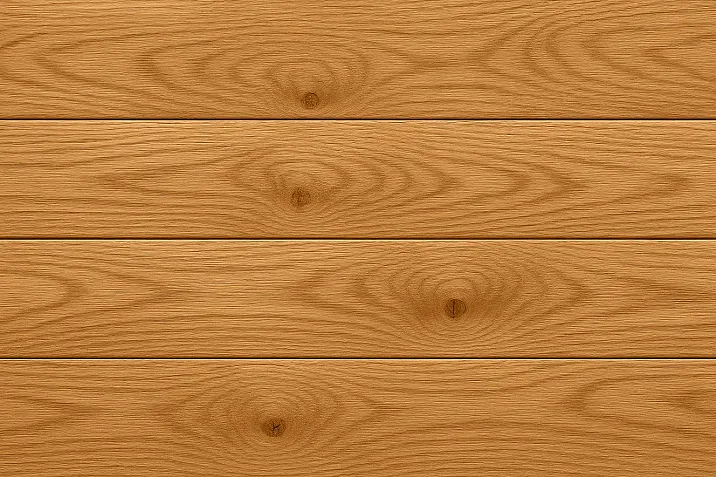
When European cabinetmakers speak of perfection, they invariably recall beech. Sanded Beech Board It is not just timber — it is the embodiment of centuries-old woodworking traditions, where every millimeter of surface reflects the harmony between natural perfection and human craftsmanship. Why exactly has beech become synonymous with quality in the furniture industry? What lies behind its flawless uniform structure, and why are European manufacturers willing to pay a premium for this material?
Answers to these questions lie in the unique properties of beech wood, which for centuries has shaped quality standards in woodworking. From Viennese Biedermeier furniture to modern Scandinavian interiors — beech remains the material of choice for those unwilling to compromise on quality and aesthetics.
Today, when the market is flooded with synthetic analogs and composite materials, natural beech boards become even more valuable. They represent a living connection to craftsmanship traditions, where each fiber carries the memory of decades of growth in European forests, and every finished surface is ready to serve for generations.


Beech as a Phenomenon in the Woodworking Industry




Botanical Features Determining Material Quality
European Beech (Fagus sylvatica) — it is not just a tree, but the result of millions of years of evolutionary refinement. Growing in Europe’s temperate climate, beech developed a unique wood structure that perfectly combines strength, uniformity, and workability. The average age of technical maturity is 80–100 years, ensuring the formation of a dense, stable fiber structure.
Growing climate conditions play a decisive role in forming high-quality beech wood. Slow growth under temperate climate conditions with adequate moisture creates a fine-grained structure with minimal differences between early and late wood. This ensures the legendary uniformity for which beech is prized worldwide.
The beech root system, extending to a depth of up to 1.5 meters, ensures the tree receives stable mineral nutrition. This is reflected in the density and mechanical properties of the wood — the density of dried beech ranges from 650–750 kg/m³, placing it on par with oak in mechanical properties.
Our factory also produces:




Microscopic Architecture of Perfection
Under the microscope, the structure of beech wood resembles a perfectly organized mechanism. Vessels of small diameter (up to 0.1 mm) are evenly distributed throughout the cross-section, creating a characteristic diffuse-porous structure. This fundamentally distinguishes beech from oak, which has large vessels, and ensures superior surface workability.
Beech ray cells have a unique feature — they reach a height of up to 1000 micrometers, which is 5–10 times greater than in most other species. It is precisely these large rays that create the characteristic "mirror-like" luster on radial sections, which furniture makers and designers so highly value.
The thickness of cell walls in beech reaches 4–6 micrometers, ensuring high density and strength of the material. At the same time, the pores between cells remain sufficient for even penetration of protective coatings and dyes.
Get Consultation
Chemical Composition: Formula of Strength and Beauty
Beech wood contains 40–45% cellulose, which is 3–5% more than in coniferous species. The increased cellulose content ensures high fiber strength and structural stability under various influences.
Lignin content in beech is 25–30% — this is the optimal amount to ensure structural rigidity without compromising workability. Extractives are relatively low — only 2–4% — making beech a neutral material that does not affect the color of applied finishes.
A distinctive feature of beech is its low content of resins and tannins, which ensures excellent compatibility with all types of adhesives, varnishes, and paints. This quality is especially valued in furniture manufacturing, where flawless finish quality is required.
Technological Features of Producing Sanded Beech Boards
Revolutionary Approaches to Beech Drying
Drying beech wood is an art requiring deep understanding of the physicochemical processes occurring within the material’s structure. Beech contains up to 60–70% moisture in freshly cut condition, and the removal process must be as gentle as possible to prevent cracking and warping.
Modern technologies offer several revolutionary approaches to beech drying. Vacuum drying at reduced pressure allows moisture removal at temperatures of 40-50°C, eliminating thermal stresses in the wood. The process takes 15-20 days compared to 30-40 days for traditional kiln drying.
Radio frequency drying is another innovative technology, where moisture is removed from the inside out under the influence of a high-frequency electromagnetic field. This ensures uniformity of the process and eliminates the formation of internal cracks that may only appear during mechanical processing.
Precision planing: the art of perfect surface
Planing beech boards requires a special approach, taking into account the unique properties of this species. High density and hardness of beech (3.8 Brinell units) impose strict requirements on the quality of cutting tools and processing parameters.
Planed beech board It results from a multi-stage process where each operation is performed with jewel-like precision. Initial planing removes a 2-3 mm allowance, leveling the surface and eliminating drying defects. Final planing ensures a mirror-smooth surface with roughness Ra not exceeding 6.3 micrometers.
A critically important parameter is feed rate — for beech, it should not exceed 6-8 m/min, compared to 12-15 m/min for softwoods. This mode ensures the absence of scratches and burns, typical of aggressive processing of hardwoods.
The blade sharpening angle for planing beech should be 25-30°, ensuring optimal balance between cutting edge sharpness and durability. Tool replacement or sharpening frequency is 2-3 times higher than for coniferous species, but the resulting surface quality is worth it.
Quality control at the molecular level
Modern quality control systems for planed beech boards include methods allowing assessment of material condition at the molecular level. Infrared spectroscopy enables determination of cellulose degradation degree during drying and processing.
Ultrasonic defectoscopy reveals internal defects invisible to visual inspection. The speed of ultrasound propagation through beech wood should be 4500-5200 m/s for first-grade material.
Laser geometry control systems provide measurement accuracy down to ±0.01 mm. This ensures compliance of finished products with the strictest technical requirements.
Mechanical and physical properties: numbers speaking of superiority
World-class strength characteristics
Beech wood demonstrates outstanding mechanical properties, making it an ideal material for manufacturing load-bearing structures and furniture. The static bending strength reaches 120 MPa, comparable to oak and significantly exceeding coniferous species' values.
The modulus of elasticity of beech is 14-16 GPa, ensuring high structural stiffness and minimal deformation under load. Impact toughness reaches 80-100 kJ/m², making beech resistant to dynamic impacts.
Beech hardness — 3.8-4.2 Brinell units — is especially important. This characteristic determines the material's wear resistance and its ability to retain its original appearance under intensive use. No wonder beech has traditionally been used for flooring in public buildings.
Dimensional stability: predictable behavior
Beech swelling coefficients are well studied and predictable: along the grain — 0.1%, radially — 5.8%, tangentially — 11.8%. These values allow precise calculation of material behavior under changes in ambient humidity.
The equilibrium moisture content of beech at 20°C and 60% relative air humidity is 12%. A 10% change in air humidity causes a 2-2.5% change in wood moisture, resulting in corresponding dimensional changes.
The anisotropy coefficient (ratio of tangential swelling to radial) for beech is 2.0-2.2, indicating relatively good material stability. For comparison, in pine this ratio can reach 3.0-3.5.
Thermal and acoustic properties
The thermal conductivity of dry beech is 0.17-0.20 W/(m·K), which is 1.5-2 times higher than in coniferous species. This should be considered when using beech in enclosing structures, but for furniture and interior elements this parameter is not critical.
The specific heat capacity of beech wood — 1.65-1.70 kJ/(kg·K) — provides comfortable tactile sensations when touching the material. Beech does not feel cold to the touch like metal, but also does not heat up like plastic.
Beech's acoustic properties make it an ideal material for musical instruments. The speed of sound in beech wood along the grain is 5200-5800 m/s, ensuring purity and clarity of sound.
Comparative analysis: beech in the context of other species
Beech versus oak: battle of European giants
Comparing beech with oak is a classic in the woodworking industry. Both materials have European origins, similar mechanical properties, but radically different optimal applications. Oak surpasses beech in durability and resistance to biological damage due to its high tannin content.
However, beech has significant advantages in workability. Its homogeneous structure without large vessels allows achieving perfectly smooth surfaces during planing and sanding. Solid Wood Items Beech has a more uniform color and accepts various finishes better.
Economic factors also play a role: beech is typically 15-25% cheaper than oak for comparable characteristics. This makes it an attractive choice for mass production of furniture and interior elements.
Oak and beech: a rivalry for leadership in furniture production
Beech is often considered an alternative to oak in furniture production. Both materials have a light tone, good strength, and excellent workability. However, beech has a more contrasting texture due to clearly defined annual rings.
Oak surpasses beech in structural uniformity, which is critically important for manufacturing furniture with smooth surfaces. Beech is better suited for items where wood texture serves as a decorative element.
In terms of strength characteristics, the materials are comparable, but beech has higher impact toughness, making it preferable for sports equipment and tool handles.
Exotic species: is it worth paying more?
Tropical species — merbau, teak, wenge — offer unique decorative possibilities, but they fall short of oak in terms of technological efficiency and eco-friendliness. Oak is easier to process, bonds better, and has predictable characteristics.
Exotic species require special processing regimes, expensive tools, and create problems with waste disposal. Oak is a material whose processing technologies have been refined over centuries of European experience.
Oak plank applications: from utility to art
Furniture industry: king of mass production
Oak is the foundation of the European furniture industry. It is used to manufacture frames for upholstered furniture, chairs, tables, and cabinets. The uniformity of its structure allows for producing parts with identical characteristics, which is critically important for mass production.
Moldings, cornices, baseboards Oak products are distinguished by flawless surface quality and precise geometric dimensions. They are easily painted in any color, imitate expensive wood species, and retain their appearance for decades.
Bent-laminated oak furniture is a separate area of application where the unique properties of this species are utilized. Pre-steamed oak wood easily takes on complex shapes and retains them after drying.
Flooring: Beauty and Practicality
Oak parquet and solid oak flooring are classics of European interiors. High hardness ensures wear resistance, and uniform structure ensures even wear without forming waves or unevenness.
Modern thermal treatment technologies allow obtaining oak floors in various shades — from golden to dark brown. Thermal treatment not only changes the color but also increases dimensional stability by 40-60%.
A distinctive feature of oak is its ability to be restored multiple times. Due to the significant thickness of the working layer, oak floors can be sanded 4-6 times, ensuring a service life of up to 50-80 years.
Special applications: where oak is indispensable
Oak kitchenware — cutting boards, spatulas, peelers — is valued for its hygiene and durability. Dense structure does not absorb odors or fats, is easy to clean and disinfect.
Oak children's toys meet the strictest safety requirements. The material contains no harmful substances, has a pleasant smooth surface, and is resistant to mechanical impacts.
Musical instruments — another area where oak demonstrates its unique properties. Drum shells, piano keys, parts of wind instruments — everywhere, oak’s acoustic qualities and stability are valued.
Architectural elements: beauty in details
Oak stair elements — steps, handrails, balusters — combine strength with decorativeness. Oak’s ability to undergo precise mechanical processing allows creating complex profiled elements with perfect surface quality.
Oak window and door blocks are popular in European construction. The material provides excellent thermal insulation, does not deform under temperature and humidity fluctuations, and is easily painted in any color.
Quality standards and certification
European standards: a global benchmark
European standard EN 13556 sets requirements for oak wood for various applications. The standard divides the material into four strength classes: C18, C24, C30, C35, where the number indicates the characteristic bending strength in MPa.
Visual sorting of oak is regulated by standard EN 1611-1, which establishes allowable sizes and quantities of knots, cracks, and other defects for each grade. The highest grade FAS (Firsts and Seconds) practically contains no visible defects.
Moisture content of planed oak boards is regulated by standard EN 13183 and should be 8±2% for indoor use and 12±2% for outdoor use. Moisture control is performed using electronic moisture meters with accuracy ±0.5%.
Russian requirements: adapting global standards
GOST 8486-86 regulates requirements for hardwood lumber, including oak. The standard establishes five wood grades: premium, first, second, third, and fourth.
Premium grade practically contains no defects and is intended for manufacturing high-quality furniture and musical instruments. First grade allows a limited number of healthy knots and is used in furniture production.
Technical specifications TU 13-0281138-42-89 establish additional requirements for planed beech timber, including surface roughness parameters, dimensional accuracy, and moisture content.
Ecological certification: responsibility toward nature
The FSC (Forest Stewardship Council) certification system ensures control over sustainable forestry. Beech wood with an FSC certificate is guaranteed to originate from forests managed according to sustainable development principles.
PEFC (Programme for the Endorsement of Forest Certification) certification — the European alternative to FSC, also guaranteeing ecological responsibility in timber harvesting.
The 'Blue Angel' eco-label is awarded to products made from wood that does not contain formaldehyde and other harmful substances in concentrations exceeding permissible limits.
Innovations and Development Prospects
Thermal modification: improving natural properties
Thermal modification of beech at 160-220°C significantly improves its performance characteristics. The process is carried out in a steam environment without oxygen access, preventing combustion and ensuring uniform treatment.
Thermal treatment reduces the equilibrium moisture content of beech by 40-50%, significantly improving dimensional stability. The material becomes less prone to warping and cracking under changes in ambient humidity.
The color of thermally treated beech changes from light golden to dark brown depending on temperature and duration of the process. This allows obtaining a material with decorative properties similar to valuable tropical species.
Chemical modification: molecular engineering
Acetylation of beech — a chemical modification process of cellulose in which hydroxyl groups are replaced by acetyl groups. This significantly reduces the wood's ability to absorb moisture and practically eliminates biological damage.
Furfurylation — treatment with furfuryl alcohol followed by polymerization — transforms beech into a material with unique properties. Density increases by 1.3-1.5 times, hardness by 2-3 times, while retaining wood's workability.
Surface silanization creates a hydrophobic layer protecting wood from moisture without impairing its vapor permeability. Silanized beech can be used in high-humidity conditions without additional protection.
Nanotechnology: the future has arrived
Zinc oxide nanoparticles introduced into the beech wood structure impart antibacterial properties. Such material is ideal for medical furniture, children's products, and kitchenware.
Nanocrystalline cellulose can be used to create reinforcing coatings on beech surfaces. Such coatings achieve a tensile strength of 500 MPa while maintaining transparency and elasticity.
Self-healing coatings based on microcapsules allow beech products to automatically "repair" minor scratches and abrasions upon heating to 50-60°C.
Economics of production and consumption
Cost structure: from forest to finished product
Raw material cost accounts for 40-45% of the price of finished planed boards. This is significantly higher than for coniferous species (25-30%), but is explained by beech's slower growth rate and correspondingly higher log cost.
Drying costs account for 15-20% of total cost due to the need for gentle regimes and long processing times. High-quality kiln drying of beech takes 30-40 days compared to 10-15 days for pine.
Mechanical processing accounts for 20-25% of total costs. High requirements for tool quality, low feed rates, and frequent blade sharpening — all increase product cost.
Pricing policy: premium for quality
Planed beech boards cost 2.5-3.5 times more than pine boards of comparable dimensions. This premium is justified by superior quality characteristics and expanded application possibilities.
On the European market, beech wood prices show stable annual growth of 3-5%, linked to limited resources and increasing demand for eco-friendly materials.
Regional price differences can reach 30-40%. German and French wood is traditionally priced higher than Eastern European wood due to manufacturers' reputation and superior forestry quality.
Market prospects: steady growth
The global beech wood market demonstrates steady annual growth of 4-6%, outpacing overall lumber market growth. Key growth drivers include furniture industry development in emerging countries and rising demand for eco-friendly materials.
The Asia-Pacific region shows the highest consumption growth rates — up to 8-10% annually. China, South Korea, and Japan actively import European beech for high-quality furniture production.
The North American market is stable with annual growth of 2-3%. Here, beech competes with local species — maple, cherry, walnut — but finds its niche in the premium segment.
Technological solutions for working with beech
Specialized equipment is required for working with beech wood, taking into account its high hardness and density. Four-sided planers must have a power of at least 45 kW to process boards 200 mm wide.
Beech profiling milling machines are equipped with spindles rotating at up to 12,000 rpm. This ensures high surface quality and minimizes the likelihood of scratches and chips.
Drying chambers for beech must maintain a precise temperature-humidity regime with deviations no more than ±2°C for temperature and ±5% for humidity. The air circulation system must provide a speed of 1.5–2.0 m/s.
Cutting tools: quality requirements
Cutting tool: quality requirements
Beech planer knives are manufactured from high-speed steels of HSS grades or hard alloys. The cutting angle should be 25–30°, ensuring optimal balance between sharpness and durability of the cutting edge.
Beech profiling cutters must have hard alloy inserts or be entirely made of hard alloy. The rounding radius of the cutting edge must not exceed 0.01 mm to achieve ideal surface quality.
Beech sawing saws are equipped with hard alloy teeth with special grinding. The front angle should be minimal (5–10°) to reduce cutting forces, while the rear angle should be maximal (15–20°) to reduce friction.
Dust extraction and air cleaning systems
Processing beech produces a large amount of fine dust, which can be hazardous to workers' health. Extraction systems must provide suction speed of at least 20 m/s in the cutting zone.
Filtering units must provide a cleaning efficiency of at least 99.5% for particles larger than 1 micrometer. This requires the use of special HEPA filters or electrostatic precipitators.
Systems returning cleaned wood dust back into the production process allow reducing production waste and generating additional profit from the sale of technological wood chips.
STAVROS: the art of working with beech in every detail
In the world of woodworking, there are companies that simply work with wood, and there are those who understand the soul of each species, feel its character, and reveal its potential. STAVROS belongs to the second category — this is a company where working with beech is elevated to the level of high art, where every Sanded Beech Board passes from raw stock to a perfect material under the vigilant control of master craftsmen.
The philosophy of STAVROS is based on deep respect for European woodworking traditions, which have been developed over centuries. Here, they understand that beech is not just wood — it is a material with character, requiring a special approach at every stage of processing. From raw material selection to final surface finishing — each operation is performed with an understanding of the unique properties of this remarkable species.
STAVROS' production facilities represent an ideal synthesis of traditional technologies and modern innovations. Here, time-honored methods of wood selection and preparation harmoniously combine with high-tech equipment from leading global manufacturers. Each machine is specifically set up for working with beech, and every technological process is optimized to reveal all the qualities of this material.
STAVROS' quality control system sets standards exceeding the strictest international requirements. Each batch of raw material undergoes careful selection based on multiple parameters — from moisture content and density to absence of internal defects. The drying process is controlled to the degree of a single degree, and planing is performed with jewel-like precision.
STAVROS' research and development center continuously works to improve beech processing technologies. New wood modification methods are studied, innovative processing techniques are developed, and modern protective coatings are tested. Research results are immediately implemented in production, ensuring clients access to the most advanced solutions.
STAVROS' team of specialists are top-class professionals, many of whom have dedicated decades to working with beech. They know every peculiarity of this species, understand how to reveal its beauty, and how to ensure maximum longevity of finished products. Their knowledge and experience are a priceless asset of the company, passed down to new generations of masters.
STAVROS' customer service is not just about selling materials — it is a partnership in achieving perfection. Qualified consultants will help select the optimal beech grade for specific tasks, calculate the required material quantity considering technological losses, and provide recommendations on processing and application.
Choosing STAVROS means choosing not just a supplier of planed beech boards, but a reliable partner in creating products that will serve for generations. This is an investment in quality, beauty, and durability — values that never go out of style and remain always relevant in a world where so much is temporary and superficial.