Article Contents:
- Advantages of Using Polyurethane Elements for Wall Decoration
- Types of Polyurethane Wall Decor
- 1. Moldings and trim
- 2. Decorative Molding
- 3. Trim
- 4. Rosettes and Capitals
- Tips for Choosing and Installing Polyurethane Decor
- Mistakes to avoid when decorating walls
- 1. Excessive decoration
- 2. Incorrect size of elements
- 3. Ignoring the overall concept
Wall decoration in interior design plays a key role in creating a cozy and stylish space. Modern design solutions offer numerous ways to decorate walls, giving them expressiveness, volume, and individuality. One of the most popular methods of decoration is using polyurethane molding, which is distinguished by durability, ease of installation, and wide application possibilities.
Polyurethane products allow you to create a unique interior in various styles: classical, neoclassical, modern, baroque, minimalism. In this article, we will consider how to properly use polyurethane decor for wall decoration, what types of elements exist, and what to pay attention to when choosing and installing.


Advantages of Using Polyurethane Elements for Wall Decoration
Using polyurethane products for wall decoration is a practical and stylish solution that has several advantages.
- Strength and durability. Unlike gypsum molding, polyurethane decorative elements do not crack, do not deform over time, and are resistant to mechanical damage.
- Moisture resistance. Polyurethane molding does not fear moisture, making it an ideal choice for decorating walls in bathrooms, kitchens, and other rooms with high humidity.
- Ease of installation. Polyurethane interior decor is attached using special adhesive, requiring no complex preparatory work or professional equipment.
- Versatility. Polyurethane molding can be purchased for any interior — from classical compositions with rich ornamentation to modern minimalist solutions.
- Ecological safety. Polyurethane elements are safe for health and do not emit harmful substances.




Types of Polyurethane Wall Decor
Our factory also produces:

1. Molding and Cornices
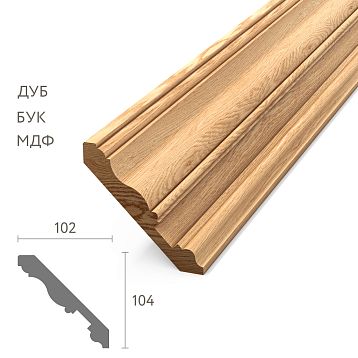
Polyurethane moldings and cornices — this is a universal way to decorate walls and create the effect of volumetric panels. They are used for zoning space, highlighting architectural elements, as well as for decorating junctions between walls and ceilings.
How to use moldings in interior design?
● Dividing the wall into upper and lower parts to create panels.
● Decorating frames for paintings, mirrors, or decorative inserts.
● Creating a harmonious transition between walls and ceilings.
Get Consultation
2. Decorative Molding
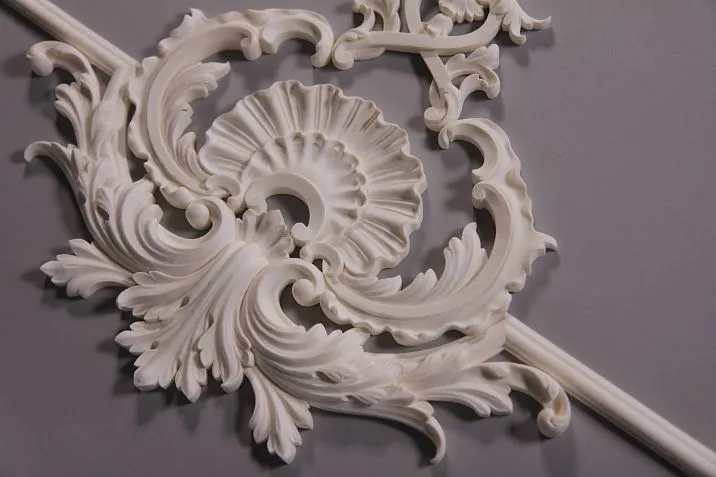
Polyurethane appliqués add additional volume and expressiveness to walls. They are used in classical interiors and can also be integrated into modern styles in combination with other elements.
Application of molding in interior design:
● Decorating door and window openings.
● Decorating walls to create elegant compositions.
● Using in furniture to add originality.
3. Trim
Polyurethane trim helps decorate walls, creating smooth transitions between different decorative elements. It is often used to decorate arches, doorways, and columns.
Where can trim be used?
● In interiors with classical architectural solutions.
● For zoning space and emphasizing lines.
● In combination with other elements to create a cohesive composition.
4. Rosettes and capitals
Rosettes and capitals made of polyurethane are decorative elements that highlight the elegance of the interior.
How to use rosettes and capitals in interior design?
● As a central element on walls or ceilings.
● In decorating columns and pilasters.
● In creating symmetrical classical compositions.
Tips for selecting and installing polyurethane decor
Choose elements depending on the interior style
One of the key aspects of successfully decorating walls using polyurethane products is selecting elements appropriately based on the room's style. For classical interiors, pay attention to carved moldings, capitals, rosettes, and other polyurethane moldings that will emphasize the sophistication of the space. They add depth, volume, and historical elegance to the interior, especially when combined with antique furniture or luxurious fabrics.
If your interior is designed in a modern style, it is better to use smooth and minimalist elements. They will help create clear geometric lines, emphasize strict forms, and add lightness to the interior. In such spaces, it is appropriate to use polyurethane moldings, cornices, and skirting boards without complex patterns, which will help achieve harmony and clean lines.
In loft interiors, you can combine polyurethane decor with brick walls or concrete surfaces, creating a contrast between industrial roughness and refined decoration. In such cases, polyurethane appliqués look especially effective when painted in contrasting colors to enhance the accent.
Scandinavian interiors imply light tones and minimalism, so here you can use thin moldings and simple geometric patterns. It is important that polyurethane decor complements rather than overloads the space.
Correctly combine colors
Polyurethane wall molding Most often painted white, as this shade makes the room appear brighter, visually enlarges the space, and emphasizes architectural forms. However, this does not mean that other colors are unsuitable.
● For classical interiors – white, cream, pastel shades, and patina-effect colors (gold, silver, bronze). They will help create the effect of aged molding, as in historical palaces.
● For modern interiors – contrasting solutions such as black, graphite, gray, dark blue. They emphasize the minimalism of the space and create expressive lines.
● For children's rooms and creative spaces – you can use soft pastel shades that will create lightness and coziness.
It is important to note that polyurethane items can be painted in any color, allowing them to be adapted to any interior design. You can highlight decorative elements by painting them in a contrasting shade, or, conversely, integrate them into the wall by painting them the same color.
Use combined solutions
Combination polyurethane decorative elements Combined with wallpaper, decorative plaster, or painted walls, they allow creating unique interiors. This approach makes walls more expressive, adds texture, and creates a multi-layered effect.
● Moldings combined with wallpaper – create a paneling effect, especially when used in the lower part of the wall. This is a popular technique for decorating living rooms and dining rooms in a classical style.
● Polyurethane appliqués and decorative plaster – allow making the interior dynamic and rich in details.
● Molded decor and paint – painted in the same tone as the walls decorative polyurethane elements create a refined and elegant effect.
Combined solutions allow highlighting specific zones in the room, zoning the space, and giving the interior individuality.
Plan the placement of elements in advance
Before installing polyurethane decorative molding, it is necessary to carefully plan its placement to achieve a harmonious result. Mistakes at this stage may lead to disproportionate elements and disruption of the overall design concept.
● Create a layout. Before installation, mark the wall using painter's tape or a pencil. This will allow you to visualize how the polyurethane moldings, cornices, trim, and appliqués will look in your interior.
● Consider lighting. Shadows from decorative moldings can significantly alter the perception of space, so it's important to plan the placement of light sources in advance. For example, hidden lighting along cornices can create a floating ceiling effect.
● Combine elements. A good result can be achieved by combining different types of polyurethane decor. For example, polyurethane rosettes you can combine with appliqués and moldings, creating complex architectural compositions.
● Consider ceiling height. In low-ceilinged rooms, it's better to use thin, elongated elements to visually increase the room's height.
A prepared plan will significantly simplify the installation process and help avoid errors when installing polyurethane decorative elements.
● Proper selection and installation of polyurethane decorative moldings help create an impressive and stylish interior that will delight for years. It's important to consider the room's style, correctly combine colors, use combined solutions, and plan the placement of elements in advance.
Polyurethane moldings It is a universal tool for interior design, allowing you to realize the most daring design ideas. Whether it's classic luxury or modern minimalism, polyurethane products will help create a harmonious and aesthetically pleasing space.
Mistakes to avoid when decorating walls
Decorating walls using polyurethane moldings and other polyurethane decorative elements is a way to create a stylish and expressive interior. However, even the most expensive and high-quality polyurethane items may look poorly if mistakes are made in their use. Let's examine the main issues to avoid, so your interior remains harmonious and aesthetically perfect.
1. Excessive decoration
Using decorative polyurethane moldings allows you to add elegance to the interior, but an excessive number of elements can lead to overcrowding the space. If a room has too many appliqués, moldings, capitals, and rosettes, the space becomes heavy and loses its lightness.
Why is this a problem?
● An excessive number of details can create chaos in the interior, depriving it of visual balance.
● In small rooms, polyurethane wall moldings, when improperly used, can make the room feel cramped and overloaded.
● If walls are filled with ornaments and relief details, it distracts attention from furniture, textiles, and other decorative elements.
How to avoid this mistake?
● In small rooms, use a minimal number of elements, preferring thin moldings, trim, and neat rosettes.
● If you want to add accents, simply decorate one wall, for example, in the living room or bedroom.
● Do not overload the interior: polyurethane decorative moldings should complement the space, not dominate it.
● Use polyurethane decorative elements in combination with plain walls or wallpaper to maintain a balance between simplicity and elegance.
2. Incorrect size of elements
When decorating walls, it is important to consider the proportions of polyurethane decorative elements relative to the size of the room. Too large rosettes, moldings, and capitals may look inappropriate, especially in small rooms.
What problems arise when choosing too large elements?
● They create disproportion, making the room appear visually smaller.
● Tall and narrow rooms may appear even more elongated if using overly long moldings or bulky cornices.
● If walls are decorated with bulky elements, all other furniture and textiles may be lost against their backdrop.
How to choose the right size?
● For small rooms, choose thin moldings and lightweight decorative elements, such as Polyurethane appliqués.
● In high-ceilinged rooms, use medium-sized cornices and moldings that won't weigh down the space.
● Wide moldings and bulky rosettes are better suited for large halls and spacious rooms, where they won't appear bulky.
● Always base your choice on the size of furniture and ceiling height to ensure all elements look harmonious.
3. Ignoring the overall concept
One of the most common mistakes is using polyurethane decorative moldings without considering the overall interior style. If moldings, cornices, appliqués, and trim do not match the room's style, the interior may appear disjointed and unharmonious.
Why is this a problem?
● Using bulky carved cornices in modern minimalism will look inappropriate.
In a classic interior, too minimalist polyurethane items may not emphasize the room's style.
If polyurethane wall molding does not match the furniture, lighting, and other details, the interior becomes inconsistent.
How to create a harmonious design?
Select polyurethane decorative elements according to the room's style. For classic interiors, choose carved capitals, molded rosettes, and heavy cornices. For modern interiors, use smooth moldings and geometric elements.
Consider the color scheme: if walls are dark, polyurethane wall molding should be light, and vice versa.
Before purchasing polyurethane decor for the interior, create a visual plan to help properly distribute the elements.
4. Poor Installation
Even the most beautiful polyurethane items can spoil the interior if installed incorrectly. Installation errors cause polyurethane decorative elements to look sloppy, detach over time, or create a sense of chaos.
What mistakes are made during installation?
Incorrect surface preparation – if the wall is uneven, moldings and trim will adhere unevenly.
Poor quality adhesive – if an inappropriate adhesive is used, polyurethane molding may detach quickly.
Errors in marking – if elements are placed without precise calculation, asymmetry may occur, spoiling the appearance.
Poorly aligned details – when installing moldings and cornices, it is important to ensure there are no gaps between elements.
How to avoid these problems?
Before installation, clean and level the wall surface to ensure the polyurethane decor adheres securely.
Use high-quality adhesive specifically designed for polyurethane molded decor.
Before installation, make markings to ensure elements are placed evenly and symmetrically.
If elements require fitting, use a sharp knife or special saw to achieve smooth joints.
To make wall decoration with polyurethane decorative elements look aesthetically pleasing, it is important to avoid common mistakes. Excessive polyurethane wall molding may overload the interior, while incorrect element sizes may make the space unharmonious. It is important to consider the overall design concept to ensure polyurethane molded decor matches furniture and lighting. Equally important is quality installation, which ensures durability and neatness of the decoration.When choosing polyurethane decorative molding, consider the room's style, proportions, and color scheme. This will help create a harmonious, stylish, and cozy interior where polyurethane items become elegant accents. Browse the selection of polyurethane decor at STAVROS and select the ideal elements for wall decoration.
Conclusion
Wall Decoration with polyurethane moldings is not just a way to decorate a room, but an opportunity to give the interior individuality, elegance, and style. polyurethane products perfectly suitable for creating both classic and modern interiors, adding expressiveness and architectural completeness to the space. Using molding, appliqués, trim, rosettes и capitals allows highlighting room proportions, zoning the space, and giving walls a volumetric, rich appearance.
Thanks to their lightness, strength, and resistance to moisture, decorative polyurethane elements perfectly suitable for any room – from living rooms and bedrooms to bathrooms and kitchens. They are easy to install, paint in desired shades, and the variety of shapes and styles allows you to realize the boldest design solutions.
To Polyurethane Decor appears harmonious, it is important to consider the interior style and properly select Relief Decoration, coordinating it with the wall color, furniture, and textiles. In online store of polyurethane moldings you can find solutions for any design tasks – from refined classic cornices and capitals to modern minimalist moldings and trim.
Which polyurethane decorative elements which style best suits your interior? Which wall decoration style suits you best? Create a unique design using polyurethane molding decorationhighlighting the aesthetics and individuality of your space. Explore a wide range of polyurethane decor for interiors On the website STAVROS and find the perfect solution for your home.