Article Contents:
- Philosophy of Decorative Details: From Function to Emotion
- Psychological Impact of Decorative Elements
- Cultural Code in Decorative Details
- Typology of Decorative Elements: From Miniature to Monumental
- Applied Elements: Point Accents of Great Art
- Trim Elements: Rhythm and Structure of Space
- Three-Dimensional Decorative Elements
- Materials as the basis of artistic expression
- Wood: The Living Breath of Nature in Interior
- Modern Materials: Expanding the Boundaries of Possibility
- Processing Techniques and Final Finishing
- Bio-tech: Organic forms of the future
- Classic style: symmetry and elegance
- Russian Style: Soul and Symbolism
- Modern Style: Minimalism and Functionality
- Eclecticism: Creative Mixing of Traditions
- Manufacturing Technologies: From Craft to Advanced Technologies
- Assembly and fitting
- Design Possibilities and Stylistic Solutions
- Handcrafted Details: Soul in the Details
- Application of Decorative Details in Various Interior Zones
- Living Room: Theater of Everyday Life
- Bedroom: Sanctuary of Peace and Solitude
- Kitchen: Where Functionality Meets Beauty
- Children's Room: World of Fantasies and Dreams
- Color and Texture: Play of Light and Shadow
- Natural wood tones
- Staining and patination
- Texture Play
- Installation and Mounting: The Art of Integration
- Preparatory work
- Mounting methods
- Final finishing
- Care and maintenance: preserving beauty for years
- Regular Cleaning
- Updating Finishes
- Restoration and repair
- Trends in development: looking into the future
- Ecological requirements
- Digital technologies
- Personalization
- Psychology of Perception: How Details Affect Us
- Emotional Impact of Forms
- Impact on Productivity
- Frequently Asked Questions
- Conclusion: The Art of Living Beautifully

Do you know what can turn an ordinary room into a work of art? What makes guests stand in awe at the threshold of your home? The answer lies in the seemingly insignificant elements — precisely those decorative detailsthat many underestimate, considering them mere decoration. Yet it is precisely these 'small details' that shape the character of space, create mood, and transform a home into a reflection of its owner's soul.
In the world of design, there is an undeniable truth: the devil is in the details. The most expensive furniture and flawless finishes cannot create a truly alive space without those magical accents that breathe life into the interior. It is precisely the details that make a home not just beautiful, but soulful; not just stylish, but unique.






Philosophy of Decorative Details: From Function to Emotion
Why does a person feel the need to surround themselves with beautiful objects? This question has intrigued psychologists and designers for more than a century. The answer lies in a deep human need for harmony, beauty, and self-expression.Our factory also produces:


Psychological Impact of Decorative Elements
Modern research convincingly proves: our surrounding environment has a direct impact on our psycho-emotional state. Thoughtfully chosen interior details can reduce stress levels, increase productivity, improve mood, and even influence sleep quality.
Carved elements with smooth lines soothe the nervous system, geometric ornaments stimulate mental activity, and natural motifs in decoration create a sense of connection with the surrounding world. Each detail acts as a tuning fork, setting our psyche to a specific frequency.
Tactile sensations play a special role. Wooden surfaces, with their unique texture, evoke feelings of warmth and security; elements polished to perfect smoothness offer a sense of perfection; and relief carving stimulates tactile receptors, creating multi-layered sensations.
Get Consultation
Cultural code in decorative details
Each era, each culture created its own unique language of decorative forms. What did acanthus leaves mean in antiquity? Why did Gothic masters love pointed arches? Why did Russian carvers adorn their works with solar symbols?
Modern interior decoration details carry the genetic memory of generations. Choosing classical rosettes, we subconsciously strive for the harmony and perfection valued for centuries. Preferring minimalist forms, we express modern values — functionality, honesty of materials, respect for space.
Typology of decorative elements: from miniature to monumental
The world of decorative details is astonishing in its diversity. Each element has its purpose, character, and role in creating the overall symphony of the interior.
Applied elements: pinpoint accents of great art
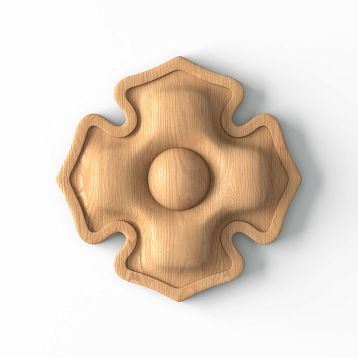
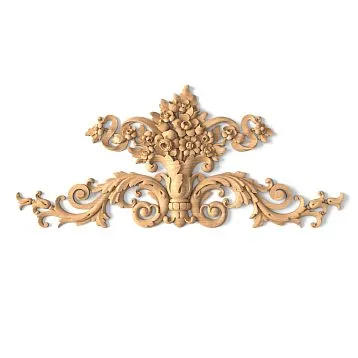
decorative inlays for furniture They represent, perhaps, the most accessible and effective way to transform space. These small elements, whose sizes vary from miniature rosettes with a diameter of 30 mm to imposing compositions of 400×600 mm, can radically change the perception of any piece of furniture.
Small appliqués work like jewelry — they add elegance without overloading the overall composition. Medium-sized elements measuring 100×150 mm become compositional centers, attracting attention and structuring perception. Large appliqués transform an ordinary cabinet door into a work of decorative art.
The special charm of applied elements lies in their versatility. The same element can look completely different depending on the context of application. A classical rosette on dark oak creates a sense of strict elegance, while the same rosette on light birch evokes a feeling of lightness and airiness.
Molding items: rhythm and structure of space
If appliqués are pinpoint accents, then carved molding is the rhythmic foundation of the interior. Skirting boards, cornices, door casings, and moldings create visual lines that organize space, making it more structured and complete.
A carved skirting board is not just a practical element concealing the junction between wall and floor. It is a decorative border that visually raises the ceiling, making the room more majestic and noble. A skirting board 120–150 mm high with a classic profile can transform an ordinary room into an aristocratic salon.
Cornices perform an even more complex task — they create a transition between wall and ceiling, softening sharp lines and adding volume to the space. An ornate cornice with plant motifs can become the main decorative focal point of the room.
Three-dimensional decorative elements
Three-dimensional decorative elements are the pinnacle of decorative art. Carved panels, volumetric compositions, decorative consoles do not merely adorn space — they create additional semantic layers within it.
Wall panels function as windows into another reality. Narrative carving can tell stories, abstract compositions can evoke specific emotional states, and geometric patterns can structure the perception of space.
Decorative consoles combine beauty with functionality. They can serve as supports for shelves, stands for decorative objects, or as standalone art objects, creating play of light and shadow on the wall.
Materials as the basis of artistic expression
The choice of material for decorative details determines not only their appearance, but also the nature of their impact on people, the durability of the item, and its artistic interpretability.
Wood: the living breath of nature in the interior
Wood remains the unsurpassed material for creating interior decorative elements. Its natural beauty, ability to be finely worked, ecological properties, and unique energy make it the ideal choice for those who value authenticity and naturalness.
Each wood species has its own unique character. Oak evokes a sense of solidity and nobility. Its dense structure allows creating the finest details that retain clarity of form for decades. Oak decorative elements are especially suitable for classical interiors, where traditions and stability are valued.
Ash combines strength with expressive texture. Its light tones and contrasting annual rings create a dynamic pattern that enlivens even the most restrained forms. Ash decorative elements work beautifully in modern interiors.
Linden is a material for the most delicate work. Its softness and uniform structure allow creating details of incredible complexity. Linden elements are often used in restoration work, where it is necessary to recreate historical samples with maximum accuracy.
Pine and spruce, despite their accessibility, possess a special charm of coniferous species. Their resinous aroma, warm tones, and expressive texture create the atmosphere of a country house even in an urban apartment.
Modern materials: expanding the boundaries of possibility
The development of technology has opened new horizons in creating decorative elements. High-density MDF allows creating details of the most complex configuration with an ideally smooth surface, ready for any finishing treatment.
Polyurethane has revolutionized the production of decorative elements. This material combines lightness with strength, allows reproducing the most delicate details, and is resistant to moisture. Polyurethane elements are especially suitable for rooms with high humidity — bathrooms, kitchens, winter gardens.
Composite materials based on wood fibers combine the best qualities of wood and modern binders. They are stable, do not deform, are easy to process, and can imitate any wood species.
Modern processing techniques allow to fully reveal the beauty of the material. Different types of sanding create various tactile sensations – from silky smoothness to pleasant roughness.
Brushing wood highlights its natural texture, creating an effect of antiquity. This technique is especially effective on oak and ash, where the contrast between hard and soft layers of wood is most pronounced.
Thermal treatment changes the color of wood without using dyes. The wood acquires noble dark tones, becomes more stable and resistant to external influences.
Patination creates an effect of noble antiquity. Artificially aged elements appear as if they have adorned interiors for centuries, accumulating history and the energy of time.
Patina creates an effect of noble antiquity. Artificially aged elements appear as if they have adorned interiors for centuries, accumulating history and the energy of time.
Stylistic Directions: From Classic to Avant-Garde
Each interior style requires its own approach to selecting decorative details. Understanding stylistic features helps create a harmonious composition where each element contributes to the overall concept.
Classic style: symmetry and elegance
Classical interior decoration details are based on ancient proportions and time-tested forms. Here, symmetry, the golden ratio, and canons of beauty, developed over millennia, prevail.
Acanthus leaf – the king of classical ornamentation. This motif, borrowed from antiquity, can be interpreted in countless ways – from strict architectural forms to lavish baroque compositions. Acanthus leaves are suitable both as small inlays on furniture and as large decorative panels.
Rosettes – another classical motif symbolizing perfection and completion. Circular compositions with radial symmetry create a sense of calm and stability. Rosettes can be either geometrically strict or richly decorated with plant elements.
Meander – an ornament in the form of a broken line – symbolizes eternity and infinity. This ancient Greek motif works beautifully as a framing element, creating clear boundaries and rhythmic structures.
Russian style: soul and symbolism
Russian decorative traditions are distinguished by particular spirituality and symbolic richness. Each element here is not merely decoration, but carries deep meaning.
Plant ornaments in the Russian style always had sacred significance. Oak leaves symbolized strength and longevity, birch branches – purity and renewal, rowan berries – protection from evil forces. Modern interpretations of these motifs preserve their symbolic meaning, adapting to contemporary aesthetic requirements.
Solar symbols – circles, rosettes, stars – were intended to attract solar energy into the home and repel darkness. In modern interiors, these motifs create a sense of warmth and protection.
Geometric ornaments – diamonds, zigzags, braids – structured space and symbolized order in the universe. These motifs work beautifully in modern ethnic interiors, creating a connection with national roots.
Modern Style: Minimalism and Functionality
The modern approach to decorative details fundamentally differs from historical styles. Here, beauty arises not from an abundance of ornamentation, but from the perfection of proportions, purity of lines, and expressiveness of materials.
Geometric forms become the basis of modern decoration. Simple rectangles, circles, triangles, devoid of additional decoration, create a sense of order and calm. Their beauty lies in the perfection of proportions and quality of execution.
Texture play replaces traditional ornamentation. The contrast between smooth and rough surfaces, matte and glossy finishes creates visual interest without excessive decoration.
Asymmetric compositions reflect a modern understanding of life's dynamism. They create a sense of movement, development, and constant change.
Eclecticism: creative blending of traditions
An eclectic approach allows combining elements of different styles, creating unique author interiors. Here, classical rosettes can coexist with geometric forms of modernism, and ethnic motifs – with modern materials.
The success of eclectic decoration depends on the ability to find unifying elements – a common color palette, repeating proportions, recurring motifs. Professional designers use the "third repetition" principle – each element must have at least two echoes in the interior.
Manufacturing technologies: from craftsmanship to advanced technologies
Modern production of decorative elements represents a unique synthesis of traditional craftsmanship and advanced technologies. Each stage of production requires special knowledge and skills.
Design and Planning
Creating a new decorative detail begins with deep analysis. Designers study historical analogs, analyze current trends, and consider production technological capabilities. Each element undergoes numerous iterations before acquiring its final form.
Modern software allows creating 3D models of any complexity. Parametric modeling enables quickly generating variations of the basic design, adapting it to different sizes and proportions.
Virtual reality opens new possibilities for presenting projects. The client can see how decorative elements will look in their interior even before production begins.
Production technologies
Computer Numerical Control (CNC) machines have revolutionized the production of decorative elements. They allow creating details with precision down to hundredths of a millimeter, reproducing the most complex forms with perfect repeatability.
Laser cutting opens opportunities for creating intricate elements of unprecedented complexity. A laser beam can cut material up to 30 mm thick, creating details impossible to manufacture using traditional methods.
3D printing, although not yet widely adopted in the production of decorative elements, opens amazing prospects. Today, one can print a prototype of any complexity within a few hours.
Handcrafted processing: soul in details
Despite technological advancements, manual craftsmanship remains indispensable. Only human hands can imbue an item with that elusive soulfulness which distinguishes a work of art from a mass-produced product.
Final finishing, texture creation, and attention to the smallest details—all of this requires experience, intuition, and artistic sensitivity. The master feels the material, understands its characteristics, knows how to highlight its strengths and conceal its flaws.
Application of decorative elements in various interior zones
Each room has its own specificity, functional requirements, and aesthetic features. Understanding these nuances will help correctly select and place decorative elements.
Living room: the theater of everyday life
The living room is the face of the home, the place where guests are received and family evenings are held. Here, decorative elements should create an atmosphere of solemnity and hospitality.
Furniture fronts In the living room, they can become the main decorative accent. An elaborately decorated wall or buffet transforms into a work of art, setting the tone for the entire room.
Wall decorative panels create additional compositional centers. They can be executed in harmony with the furniture or, conversely, contrast with it, creating a dynamic balance.
Ceiling rose fixtures under chandeliers not only serve a practical function, concealing wiring, but also create an impressive frame for the central light fixture. A large carved rose fixture can become a standalone decorative element, drawing attention even when the chandelier is turned off.
Bedroom: sanctuary of rest and solitude
The bedroom requires a special approach to decoration. Here, overly active or stimulating elements are inappropriate. Decorative details should promote relaxation and create an atmosphere of intimacy.
The headboard of the bed is an ideal place for placing decorative elements. Carved panels with botanical motifs, geometric compositions, abstract patterns—all of this can transform the headboard into a work of art.
Nightstands adorned with elegant appliqués create a sense of coziness and completeness. Small details here work better than large ones—they do not overload the space but add elegance.
Decorative elements on a dresser or vanity should harmonize with the overall bedroom style. Here, suitable are mirrors in carved frames, decorative boxes with appliqués, and stands for ornaments.
Kitchen: where functionality meets beauty
Kitchen facades carry a significant decorative load—they occupy a large area and are constantly in view. Decorative appliqués on kitchen facades must combine beauty with practicality.
Classic kitchens allow for rich decoration—carved appliqués with botanical motifs, filigree with relief ornaments, decorative cornices and moldings. All of this creates an atmosphere of a home hearth, a place where food is prepared not just for consumption, but for family happiness.
Modern kitchens require a more restrained approach. Here, suitable are simple geometric appliqués, minimalist handles, decorative inserts made of contrasting materials.
Children's room: world of fantasies and dreams
The children's room opens up special opportunities for decorative creativity. Here, one can use fairy-tale motifs, bright colors, unusual shapes.
Decorative elements in a child's room must be safe—without sharp edges, small parts, toxic coatings. But this does not mean they must be dull. Carved panels with animals, fairy-tale characters, cosmic motifs will transform the child's room into a world of magic.
Functionality here is especially important. Decorative hooks for clothes, shelves for toys, frames for children's drawings—all of this must be not only beautiful but also convenient for the child.
Color and texture: play of light and shadow
Decorative interior elements live not only through their form, but also thanks to color and texture. Properly chosen shades and textures can radically change the perception of even the simplest forms.
Natural wood tones
The natural beauty of wood does not require additional coloring. Different wood species offer a rich palette of shades—from nearly white lime to practically black ebony.
Light-colored species—birch, maple, beech—create a sense of freshness and purity. They visually expand the space, making it more airy and light. Light decorative elements are especially good in small rooms and northern rooms.
Dark-colored species—oak, walnut, wenge—convey a sense of solidity and nobility. They create contrasts, emphasize the architecture of the room, making the interior more expressive. Dark elements work wonderfully in spacious rooms with good lighting.
Red-colored species—cherry, mahogany, paduk—add warmth and coziness to the interior. These shades create an atmosphere of a home hearth, especially suitable for living rooms and dining rooms.
Staining and Patination
Modern processing techniques allow changing the color of wood while preserving its natural texture. Staining enables achieving any desired shade—from delicate pastel tones to rich, deep colors.
Patina creates an effect of noble antiquity. Artificially aged elements look as if they have adorned interiors for centuries. Patina can be gold, silver, or copper, creating various decorative effects.
Crackle – a technique for creating small cracks on the surface – adds a special charm to decorative elements. Such details look like vintage finds, each crack telling its own story.
Texture play
Surface texture is no less important than color. Different types of finishing create various tactile and visual effects.
Polished surfaces reflect light, creating highlights and reflections. They emphasize the clarity of forms, making details more expressive. Polishing is especially effective on dense wood species – oak, beech, ash.
Matte surfaces absorb light, creating soft transitions. They appear more natural, highlighting the natural beauty of wood. Matte finish is suitable for large elements that should serve as a background rather than drawing primary attention.
Relief surfaces create play of light and shadow. Every protrusion and indentation acts as a miniature chiaroscuro effect, making the surface lively and dynamic.
Installation and mounting: the art of integration
The most beautiful decorative elements can disappoint if improperly installed. Mounting is the final note in creating a decorative composition, requiring not only technical skills but also artistic sense.
Preparation Work
Quality mounting begins with careful surface preparation. The base must be flat, clean, and dry. Any irregularities, stains, or remnants of old coatings may negatively affect the installation quality.
Marking is a critically important stage. Even minor deviations from vertical or horizontal alignment will be noticeable and spoil the overall impression. Laser levels, special templates, and measuring tools are used.
Methods of mounting
The choice of mounting method depends on the size and weight of the element, the material of the base, and the conditions of use. Small overlays can be mounted with adhesive, medium-sized elements require additional mechanical fastening, and large details require a robust support system.
Hidden mounting ensures aesthetic purity – mounting elements are not visible on the front surface. This is especially important for thin, delicate details, where visible screws or nails would disrupt the overall harmony.
Adhesive joints distribute load evenly across the entire contact surface. Modern adhesives create bonds stronger than the wood itself.
Final finishing
After installation, elements require finishing – filling joints, sanding, applying protective coatings. This stage requires special attention to detail.
All joints must be perfectly fitted. Gaps over 0.5 mm are unacceptable – they will be visible and spoil the impression. Special color-matched putties are used if necessary.
Finish coating not only protects wood but also highlights its beauty. The right lacquer or oil can dramatically change the perception of a decorative element.
Care and maintenance: preserving beauty for years
Decorative interior elements are a long-term investment in home beauty. Proper care will ensure their attractive appearance for decades.
Regular cleaning
Dust and dirt not only worsen the appearance of decorative elements but may also damage protective coatings. Regular cleaning with a soft cloth or special brush will help preserve the original beauty.
For cleaning carved elements with complex relief, special soft-bristle brushes are used. A vacuum cleaner with a brush attachment will help remove dust from hard-to-reach areas.
Wet cleaning is only permissible for elements with high-quality protective coatings. Special wood care products, free of aggressive substances, are used.
Coating renewal
Even the highest-quality protective coatings wear out over time. Periodic renewal of lacquer or oil will help maintain decorative elements in perfect condition.
The frequency of renewal depends on the conditions of use. In residential spaces with normal microclimate, coatings may last 7–10 years. In high-humidity or intensive-use conditions, more frequent renewal may be required.
Minor damage to oak balusters can be repaired yourself using special wax pencils or wood putty. It is important to select the material to match the wood tone precisely for an undetectable repair.
Minor damage – scratches, chips, dents – can be repaired by the owner. Special repair compounds, waxes, and mastics are used for this.
Serious damage requires professional intervention. An experienced craftsman can restore even severely damaged elements, returning them to their original beauty.
Trends in development: looking toward the future
The world of interior decorative details is constantly evolving. New technologies, materials, and design approaches open up incredible possibilities.
Ecological Requirements
Growing consumer environmental awareness affects the entire decor industry. Increasing attention is paid to the use of renewable materials, eco-friendly technologies, and waste minimization.
FSC certification guarantees that the wood comes from sustainably managed forests. Water-based varnishes and paints replace toxic solvents. Waste recycling has become an obligatory part of the production process.
Digital technologies
Digitalization covers all aspects of creating decorative elements – from design to sales. Virtual reality allows clients to see future elements in their interiors. Augmented reality simplifies the selection and placement of decor.
The Internet of Things opens new possibilities for "smart" decorative elements. Built-in sensors can monitor microclimate, lighting, and security. Decor becomes not only beautiful but also functional.
Personalization
Mass customization allows creating unique decorative elements for each client. Parametric design enables adapting basic shapes to individual requirements.
3D printing makes it possible to create elements of any complexity in a single copy. Each home can receive unique decorative details reflecting the owner's personality.
Psychology of Perception: How Details Affect Us
Modern research in neuropsychology reveals surprising facts about how decorative elements influence our subconscious.
Emotional Impact of Forms
Different shapes evoke different emotional reactions. Rounded shapes are associated with safety, comfort, and femininity. Angular shapes create a sense of dynamism, strength, and masculinity.
Symmetrical compositions calm the mind, creating a sense of order and stability. Asymmetrical compositions stimulate, encourage creative thinking, and create a sense of movement.
Vertical lines visually increase the height of a room, creating a sense of grandeur. Horizontal lines expand the space, giving a feeling of stability and calm.
Impact on productivity
Properly chosen decorative elements can enhance work productivity. In office spaces, geometric ornaments stimulate analytical thinking, while botanical motifs promote creativity.
Studies show that the presence of decorative elements made from natural wood reduces stress levels, improves concentration, and enhances overall well-being.
Frequently asked questions
How to choose decorative elements for a small room?
In small spaces, prefer light shades and small details. Vertical elements visually increase ceiling height, while mirror inserts expand the space. Avoid overloading — better a few high-quality elements than many small details.
Can decorative elements of different styles be combined?
Eclectic combinations are possible but require a professional approach. Unifying factors may include a shared color palette, repeating proportions, or materials. It’s important to follow the principle of dominance — one style should be primary, others complementary.
What decorative elements suit a child’s room?
In a child’s room, the main requirement is safety. Elements should have no sharp edges, small parts, and eco-friendly finishes. Bright, cheerful motifs — animals, plants, fantasy characters — are suitable. Functionality is important — hooks, shelves, frames should be child-friendly.
How to care for carved decorative elements?
Regular cleaning with soft cloth or special brush will help remove dust. For wet cleaning, use special wood cleaning solutions. Avoid abrasive cleaners and excessive moisture. Periodically renew protective coatings according to manufacturer recommendations.
Can decorative elements be installed by oneself?
Small inserts can be installed yourself using quality adhesive and following instructions. Large and heavy elements are better installed by professionals. Incorrect installation may not only damage the appearance but also create a safety hazard.
How to determine the quality of decorative elements?
Pay attention to the clarity of carving, absence of chips or cracks, and quality of sanding. Good elements have uniform color, smooth surface (except intentionally textured ones), pleasant natural wood scent. Avoid items with sharp chemical odors or visible defects.
Do decorative elements affect property value?
Quality decorative elements harmoniously integrated into the interior can increase property value by 10-20%. Unique, custom-made solutions are especially valued. However, moderation is important — over-decorating may repel potential buyers.
What mistakes are most commonly made when choosing decorative elements?
Main mistakes: mismatch with interior style, incorrect scale (too small or too large elements), overloading space, cutting corners on quality, ignoring functionality. Also, often overlooked is the need for a unified concept — all elements should contribute to a common idea.
Conclusion: the art of living beautifully
Interior decoration details This is not luxury, but necessity for those who understand that home should not be merely a place of residence, but a space for the soul. Every detail embodies a fragment of craftsmanship, history, and beauty. Choosing quality decorative elements means investing not only in the aesthetics of our home, but also in our own emotional well-being.
The modern world of decorative details offers boundless opportunities for creativity and self-expression. From classic forms, tested over centuries, to avant-garde solutions reflecting the spirit of the times — everyone can find elements that resonate with their inner world.
Remember: true beauty is not born from the quantity of decorative elements, but from their harmonious combination, quality of execution, and alignment with the overall interior concept. Each detail should have its place and purpose, contributing to the creation of a cohesive whole.
In the era of mass production, unique, custom-made solutions are especially valued. Quality decorative elements from reputable manufacturers not only beautify interiors but also become family heirlooms passed down from generation to generation.
STAVROS has been creating unique decorative elements for many years, transforming ordinary interiors into works of art. Every STAVROS product is the result of meticulous craftsmanship by experienced artisans, use of premium materials, and advanced technologies. STAVROS understands that details create atmosphere, and each element is designed with consideration for its role within the overall interior composition. Choosing STAVROS means choosing quality proven over time, and receiving not just decorative elements, but keys to creating your dream home.