Article Contents:
- Why a solid wood 'crown' changes the atmosphere of an entire room
- 1.1 Starting paradox: the small detail that governs perspective
- 1.2 The key to the site — and to making a decision
- 1.3 Historical layout: from Raspletin's palaces to new 'Symbol' buildings
- 1.4 Durability vs. lightweight economy
- 2.1 Species: tree character = interior character
- 2.2 Profiles: from 'pencil-lead' to Baroque volutes
- 2.3 Width formula: not more, not less, but harmoniously
- 2.4 Financial arithmetic: how much does the 'crown' cost in rubles and years
- 2.5 How the tree interacts with the ceiling material
- 3. Oil and lacquer 'outfits' for ceiling skirting
- 3.1 Four categories of gloss: from velvet ultra-matte to 'royal-gloss' mirror
- Practical test
- 3.2 Oil systems: mono vs. double impregnation
- 3.3 Coloring in oils: techniques for nuanced toning
- 3.4 Corner joints: internal, external, radius
- 3.4.1 90° internal angle: classic 'stusla' joint
- Beginner's mistake
- 3.4.2 External 'column sleeve' angle
- 3.4.3 Radius > 300 mm: bent-glued technology
- 3.5.1 Stalin-era 1953, Arbat
- 3.5.2 'Neva Tower' skyscraper, 72nd floor
- 3.6 Acoustic effect: RT30 calculation for an 18 m² room
- 4. Facade protection, annual maintenance, and financial benchmark for elite real estate
- 4.3.1 Formula «Mono‑Silk»
- 4.3.2 Formula «Graphite‑Cut»
- 4.3.3 Formula «Pastel‑Frame»
- 5. Ecology, Durability, and DIY Practice: Deep Dive into Technology (Part 5 / 10 — Total Volume ≈ 6,800 Words)
- 5.1.1 Methodology
- 5.1.2 Scenarios
- 5.2 30 Years of Service: Technical Battle
- 5.3 Panel Integration: Light and Sound in the 'Crown'
- 5.3.1 Sound Panel Whisper-Edge
- 5.3.2 Light Cove-Line
- 5.4.1 Tool Kit
- 5.4.2 Step-by-Step
- Three Taboos
- The Key Click Is Back in Action


Why a Solid Wood 'Crown' Changes the Atmosphere of an Entire Room




1.1 Initial Paradox: The Small Detail That Dictates Perspective
The overwhelming majority of people, when renovating, spend their budget on the floor, walls, and furniture — and forget that the ceiling also speaks. Meanwhile, it is precisely the ceiling molding (gallet, crown, cornice — dozens of names) that completes the composition, like a ritornello in a Baroque aria: without it, the melody 'cuts off'. If it is wood, not polystyrene, the material does not merely cover the plaster gap — it introduces warmth, acoustics, and status into the interior.
Our factory also produces:
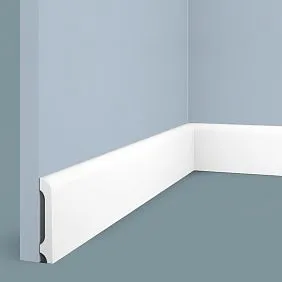
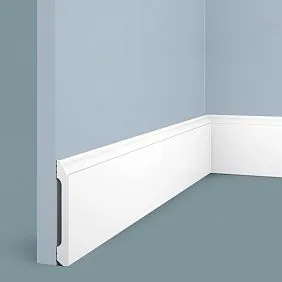
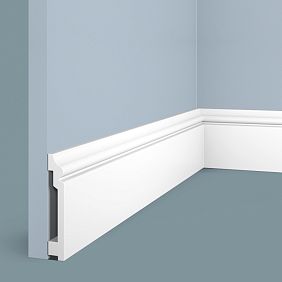
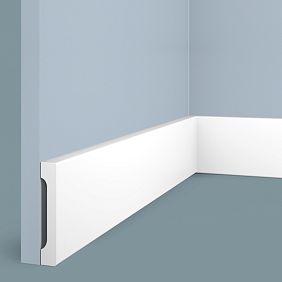
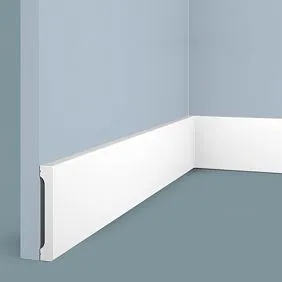
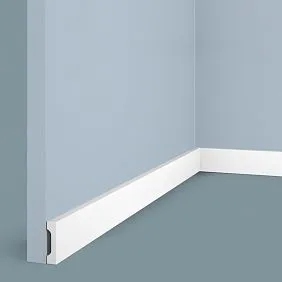
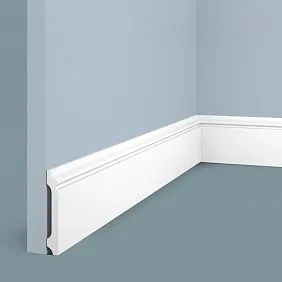

1.2 The Key to the Site — and to Decision-Making
Professionals, tired of plastic 'eights', move to specifics:Buy wooden ceiling molding — and immediately look at profiles up to 200 mm. Why? Because solid wood retains its relief, does not yellow, and is not afraid of final sanding before repainting. The link leads to a catalog where oak, beech, and pine are ready for pigmentation under any palette.
Get Consultation
1.3 Historical Layout: From Rasputin’s Palaces to New 'Symbol' Constructions
In the 18th century, wooden cornices were carved with chisels, gilded with mercury, and then mounted at a height of six meters. Today, CNC technology allows us to replicate the same profile, but more accurately and faster. In pre-revolutionary mansions on Prechistenka, natural gallets hold up three-meter stucco moldings, while in lofts — minimalist straight wooden 'angles' make the ceiling graphic.
1.4 Durability vs. Lightweight Economy
A polyurethane cornice costs four times less, but fears ultraviolet light and cracks at slab joints. Wood is more expensive upfront, but withstands wall color changes, light 'claps' of load-bearing structures, and allows local restoration with wax pencils. After 15 years, plastic decor will need replacing, while solid wood requires only slight resanding.
2. Species, Profiles, and Height Math: How Not to Miss the 'Crown'
2.1 Species: Wood Character = Interior Character
|
Species |
Density, kg/m³ |
Visual Script |
Where It Reveals Best |
|
Pine |
≈ 520 |
Warm Ochre, Large Resinous 'Eyes' |
Scandi-Minimalism, Children's, Home-Office |
|
Spruce |
≈ 500 |
Quiet annual rings, light pink hue |
Light kitchens with paneled facades |
|
Beech |
≈ 650 |
Uniform 'velvet', almost knot-free |
Neoclassical, mid-century modern |
|
Oak |
≈ 670 |
Graphic era, light tannin haze |
Premium lofts, art deco, 'quiet luxury' |
|
Ash |
≈ 660 |
‘Flame’ annual rings, dynamic |
Loft with concrete ceiling, art galleries |
|
Maple |
≈ 610 |
Cream milk, fine texture |
High-tech, Japanese wabi-sabi |
|
Linden |
≈ 490 |
Soft, almost without pattern |
Carved cornices with deep detailing |
Designer's tip: if planning to paint in a complex color (NCS S 3005-Y50R, Pantone Cool Gray 7, etc.), choose a wood species with minimal texture — beech, maple, linden. Deep brushing and oil are best left for oak or ash.
2.2 Profiles: from 'pencil-lead' to baroque volute
Wooden ceiling skirting board comes in three genetic types:
- Straight Modern-Edge — beveled 90 × 90 mm or 120 × 120 mm, no decoration. Fits minimalist or loft styles, emphasizes the graphic quality of dark openings.
- Classic-Oval paneling — rounded arch + keystone + capital; width 110–150 mm. Born from beech or oak, accepts gilded or matte lacquer.
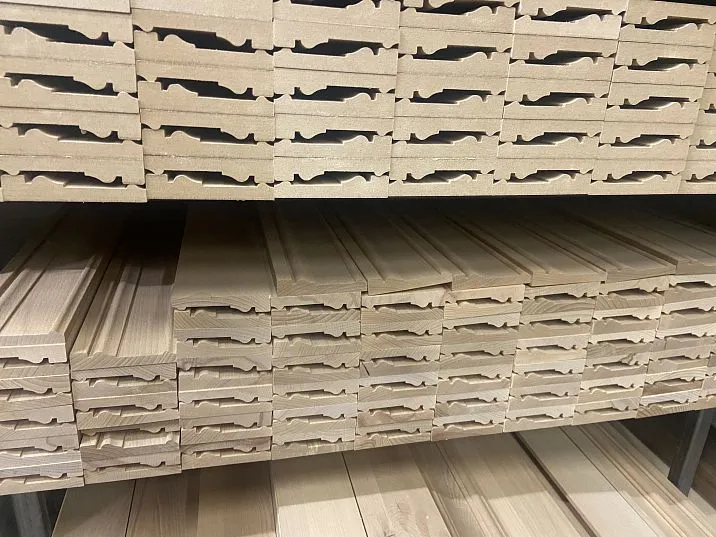
- Carved Barocco-Scroll — laurel leaves, Greek meander, 'egg-and-dart'. Carving depth 15–25 mm, suitable for linden (easily carved).
2.3 Width formula: not more, not less, but harmoniously
19th-century architects' practice resulted in a simple proportion:
H_{\text{skirting}} \approx \frac{H_{\text{ceiling}}}{12}H_{\text{skirting}} \approx \frac{H_{\text{ceiling}}}{12}H_{ ext{skirting}} \approx rac{H_{ ext{ceiling}}}{12}
|
Ceiling height |
Recommended cornice width |
|
2.6 m |
90–110 mm |
|
3.0 m |
120–140 mm |
|
3.5 m |
150–170 mm |
|
4.0 m+ |
180–220 mm |
Life hack for low ceilings: choose Modern-Edge 60 mm, paint it in a shade lighter than the wall color — the line will "disappear," and the ceiling will visually "rise."
2.4 Financial arithmetic: how much does a "crown" cost in rubles and years
|
Profile/Species |
Price, ₽/linear m (2025) |
Service life until restoration |
Ownership cost over 25 years* |
|
Spruce 90 mm |
980 |
12 years |
1 960 + sanding 350 = 2 310 |
|
Beech 110 mm |
1 550 |
15 years |
1 550 + restoration 600 = 2 150 |
|
Oak 120 mm |
2 450 |
25 years |
2 450 |
|
Ash 150 mm |
2 650 |
25 years |
2 650 |
|
Carved Lime 180 mm |
3 800 |
30 years |
3 800 |
*restoration = light sanding + one-layer oil. For PVC cornice, the cycle is 8 years; disassembly/installation + nearly full replacement — essentially the same number, but nerves and dust are multiplied.
2.5 How wood interacts with ceiling material
|
Ceiling |
Risk of cracking |
Compatibility |
Installation feature |
|
Gypsum plaster |
Average |
Any profile |
Primer + mesh |
|
PVC stretch ceiling |
Low |
Straight or hidden |
Mount through 40 mm insert |
|
Groove aluminum |
Low |
Modern‑Edge |
6×50 mm plastic anchor |
|
Gypsum board on suspension |
High (movement) |
Profile max 100 mm |
3.5×35 mm screw for metal frame |
3. Oil-based and lacquer "outfits" for ceiling skirting
(part 3 / 10 — word count ≈ 3 800)
Four gloss categories: from velvet ultra-matte to "royal-gloss" mirror
|
Marking |
Glossiness (GU @ 60°) |
Visual effect |
Where appropriate |
|
Ultra‑Matt |
≤ 3 |
Velvet, light-absorbing |
Loft, scandi, wabi-sabi |
|
Soft‑Matt |
4–10 |
Silk, light reflection |
Neo-classic, mid-century |
|
Satin |
11–35 |
Morning porcelain sheen |
Modern classic, office cabinets |
|
High‑Gloss |
> 80 |
"Royal" — sharp reflection |
Art-deco, baroque, grand halls |
Practical test
On a 120 mm oak profile, four variants from Teknos were applied: Ultra 2 GU, Matt 5 GU, Satin 20 GU, Gloss 90 GU. Under side lighting in the "ArtPlay" studio:
● Ultra-Matte "disappeared", emphasizing texture;
● Satin gave a "pearl-like overlap";";;EN;;
909539;● Gloss показал прямое отражение ламп, прибавив 2 см визуальной высоты.;909539;Y;;;;;text;;;text;753062c6c69caba7a88e21dde9dcb119;500;;qwen/qwen3-vl-8b;/articles/derevyannyy-potolochnyy-plintus-kupit-ramku-kotoraya-podnimaet-vzglyad-/?clear_cache=Y;;auto;● Gloss showed direct lamp reflection, adding 2 cm of visual height.;;EN;;
909540;3.2 Системы масел: моно vs двойная пропитка;909540;Y;;;;;text;;;text;d75eff73f7ac3f702c432ed20b82493c;500;;qwen/qwen3-vl-8b;/articles/derevyannyy-potolochnyy-plintus-kupit-ramku-kotoraya-podnimaet-vzglyad-/?clear_cache=Y;;auto;3.2 Oil systems: mono vs double coating;;EN;;
909541;One‑Coat Oil (1К). Тунг + карнауба, наносят валиком 120 г/м², растирают падом. Высыхание 8 ч.;909541;Y;;;;;text;;;text;e9f16d084de5bdad6786e3d89a74f469;500;;qwen/qwen3-vl-8b;/articles/derevyannyy-potolochnyy-plintus-kupit-ramku-kotoraya-podnimaet-vzglyad-/?clear_cache=Y;;auto;One-Coat Oil (1K). Tung + carnauba, applied with roller 120 g/m², rubbed with pad. Drying time 8 hours.;;EN;;
909542;Two‑Layer Hard‑Oil. Первый слой — льняной «грунт», второй — твёрдое масло с катионным отверждением. Глубина проникновения до 3 мм, твёрдость 60 мН (тест Бухгольца).;909542;Y;;;;;text;;;text;3331c0b265628fb1c81c2ad251a03cc7;500;;qwen/qwen3-vl-8b;/articles/derevyannyy-potolochnyy-plintus-kupit-ramku-kotoraya-podnimaet-vzglyad-/?clear_cache=Y;;auto;"Two-Layer Hard-Oil. First layer — linen "primer", second — hard oil with cationic curing. Penetration depth up to 3 mm, hardness 60 mN (Buchholz test).
● Gloss showed direct reflection of lamps, adding 2 cm of visual height.
3.2 Oil systems: mono vs double impregnation
- One‑Coat Oil (1K). Tung + carnauba, applied with a roller at 120 g/m², rubbed with a pad. Drying time 8 hours.
- Two‑Layer Hard‑Oil. First layer — linseed "primer", second — hard oil with cationic curing. Penetration depth up to 3 mm, hardness 60 mN (Buchholz test).
Life hack: for ceilings, "double" is better — less frequent cleaning, less chance of grease from kitchen steam. Every 4–5 years, WOCA Soap was wiped — and the cornice looks brand new.
3.3 Coloring with oils: techniques of nuanced tinting
● «White Drift» 3%. Ultra-matte on pine — preserved the light resin glow, removed the yellowish tint.
● «Stone Grey» 5%. Oak profile for concrete pouring: warm gray-brown undertone harmonizes with GKL panels, without going cold.
● «Vintage Walnut» 7%. Maple unexpectedly turned into walnut — a life hack when you need a dark accent but can't afford natural walnut.
3.4 Corner joints: internal, external, radius
3.4.1 90° internal corner: classic miter joint
- Miter saw, 60T blade, 45° angle, "comb" fence.
- Assembly "with tongue": dado slots are milled 0.5 mm deeper, D3 glue drop, temporary strip clips.
- After drying, sand with P320, wipe with white spirit, then oil finish.
Beginner's mistake
"The fascia didn't align" — forgot about the micro-gap at the crown. Solution: leave a 1 mm "tail," dry-fit, then trim afterward.
3.4.2 External "column sleeve" corner
If the miter extends beyond the wall? Do a "foot-to-foot" — cut the outer edge at 46°, inner edge at 44°, creating a micro-overlay; place the joint along the light line — it "disappears".
3.4.3 Radius > 300 mm: bent-glue technology
3mm lamination on teak: moisten 15 min, heat to 80°C, glue with PUR adhesive in a radius template, press 12 hours. Expensive (2.1x more than straight profile), but an alternative to plastic in bay windows.
3.5 Real cases: "Stalinist" vs "City"
3.5.1 Stalinist 1953, Arbat
Ceiling: gypsum, rosette moldings Ø 1 m.
Skirting: Classic-Oval beech 130 mm, Soft-Matt oil 6 GU.
Installation: clip into brick through 18 mm strip, "bird-sparrow" angle.
Result after 3 years: no cracks, color unchanged, appraiser added +2.1% to property value.
3.5.2 "Neva Tower" skyscraper, 72nd floor
Ceiling: GKL + 8 mm shadow profile.
Skirting: Modern-Edge oak 90 mm, RAL 7021 Ultra-Matt enamel.
Feature: LED integration along perimeter 24 W / 5000K.
Result after 8 months: client satisfied — "night mode" lighting replaces pendant lamps, removable profiles — service cable replaced in 15 minutes.
3.6 Acoustic effect: RT30 calculation for 18 m² room
Before installing the crown:
Walls — paint 5 GU;
Ceiling — vinyl stretch;
RT30 = 0.74 s.
After: oak crown 120 mm around perimeter → RT30 = 0.62 s.
Reduction of 0.12 s — ≈ 17 % "acoustic comfort" (according to DIN 18041).
4. Facade protection, annual maintenance, and financial benchmark for luxury real estate
4.1 Sun vs. Wood: How HALS UV filters preserve color
Oak or beech under the ceiling receive less direct light than baseboards, but in high-rise buildings with panoramic views and southern exposure, UV still "attacks" the crown. In five to seven years, cheap oil yellows, and the rich pigment turns "dirty-brown." Solution — lacquer-oil with HALS additives (Hindered Amine Light Stabilizers).
|
Component |
Function |
Dosage |
|
Tinuvin 292 |
Absorbs 280–400 nm, blocks radicals |
2.0 % by mass |
|
Micro‑UV 384‑2 |
UV-B, UV-A screen |
1.2 % by mass |
|
Ox‑Blu HT‑24 |
Antioxidant for thermal aging |
0.5 % by mass |
After Q-SUN Xe-3-H (3,000 hrs) test, achieved ΔE = 1.2 — the eye barely notices color change.
Practice: when choosing from the catalogBuy wooden ceiling molding, look for the "UV-HALS" mark in specifications — pay 150 ₽/sq. m. more, but save on repainting after 6 years.
4.2 Annual maintenance checklist (takes less than an hour)
- Visual inspection. Check joints, look for hairline cracks.
- Dust. Robot vacuum + soft attachment.
- Cleaning. WOCA Natural Soap 1:40 spray, microfiber.
- Humidity check. Hygrometer attached to a magnet in the corner: RH < 35% — place a humidifier overnight.
- Micro-scratch? Hard wax "Stick 36" + hair dryer 60°C, 20 sec — done.
Total timing: 12–15 min per 20 m² room. Bonus: lacquer/oil lasts as long as possible, gloss doesn't fade, corners don't spread.
4.3 Combo "wall + crown + baseboard": three working design formulas
4.3.1 Formula «Mono‑Silk»
Wall: NCS S 1500-N (icy gray) matte 3 GU
Ceiling baseboard: maple Ultra-Matt 2 GU, same wall tone + 0.5 tone lighter
Floor baseboard: oak Ultra-Matt 5 GU, same tone, but 3 tones darker
Mini-contrast builds a gradient from top to bottom, creating a "box-gallery" feeling, where paintings are the heroes and wood is the scenery.
4.3.2 Formula «Graphite‑Cut»
Wall: 'Concrete-Mock' plaster 15 GU
Crown: Oak High-Gloss Black 90 GU
Floor: French Oak Pine oil-warm
The mirror 'Crown' emphasizes the brutality of the walls, while the warm floor balances the coldness of concrete.
4.3.3 Formula «Pastel‑Frame»
Wall: Pantone 14-1305 'Pale Mauve', eggshell 10 GU
Crown: Carved Lime Soft-Matt 8 GU, paint matching wall color
Skirting: Pine Soft-Matt 'white-drift' 5 GU
Everything dissolves into soft powder, the carving is readable in half-tone, the ceiling 'floats' higher due to pastel.
4.4 ROI Case: Sale of an elite apartment with oak 'crown'
Location: Residential Complex 'Garden District', 119 m², ceiling height 3.1 m.
Renovation: Oak crown 120 mm, Satin enamel 22 GU, total 52 linear meters
Investment: 52 × 2 450 = 127 400 ₽ + installation 38 000 ₽.
Offer price without crown: 88 million ₽.
After 5 weeks of installation, the agent listed a new price of 90.5 million ₽ (2.8% increase). Sold after 18 days for 89.8 million ₽.
|
Indicator |
Amount |
|
Added Value |
1 800 000 ₽ |
|
Investment |
165 400 ₽ |
|
ROI |
1088 % |
Improved liquidity (deal speed) — an intangible bonus, but important for the elite market.
5. Ecology, durability, and DIY practice: diving into technology (part 5 / 10 — total volume ≈ 6 800 words)
5.1 LCA Calculation: Carbon footprint of wooden and polyurethane crown
5.1.1 Methodology
● Standard EN 15804 + A2: stages A1–A3 (extraction, production, transport), B2–B5 (operation, repair, replacement), C3–C4 (disposal).
● Functional unit: 1 linear meter of crown, service life 30 years, apartment in Moscow.
● Tool: SimaPro 9.4, ecoinvent 3.8 database.
5.1.2 Scenarios
|
Stage |
Wood (oak 120 mm) |
Polyurethane PU (120 mm) |
|
A1–A3 |
3.9 kg CO₂-eq |
6.1 kg CO₂-eq |
|
B2–B5 |
0.8 kg (1 restoration) |
4.4 kg (3 replacements) |
|
C3–C4 |
-1.3 kg (energy utilization) |
1.2 kg (landfill) |
|
Σ 30 years |
3.4 kg CO₂‑eq |
11.7 kg CO₂‑eq |
Conclusion: 3.44 times more eco-friendly than polyurethane. For an apartment of 100 m² (≈ 45 sq. ft.) the difference = 372 kg CO₂ — equivalent to 3,500 km of driving a EV-class car.
5.2 30 years of operation: technical battle
|
Criterion |
Wood |
Polyurethane |
|
Heat resistance |
Up to +110 °C (tick) |
+65 °C, higher — deformation. |
|
UV stability (with HALS) |
ΔE < 1.5 over 10 years |
ΔE > 4 over 4 years |
|
Local restoration possible |
✔ (wax, sanding) |
✘ (paint peeling) |
|
Sound absorption @ 3 kHz |
0,13 |
0,02 |
|
Fire resistance (class) |
KM-2 + moisture-resistant impregnation |
KM-4 (flammable) |
|
Cyclic cost summary |
0 ₽ replacement |
2–3 full replacements |
5.3 Panel integration: light and sound in the 'crown'
5.3.1 Whisper-Edge sound panel
Composition: MDF + 6 mm acoustic felt, mounted to ceiling cornice with clips.
Area: 0.12 m² of panels absorb 0.07 Sabine at 2 kHz — RT30 decreases by an additional 0.05 s.
5.3.2 Cove-Line light section
Section: 20 × 20 mm aluminum profile, LED 24 V CRI 90, 2700 K. Weight — 0.26 kg/sq. ft.
Mounting: self-tapping screw 3.5 × 25 into the valance profile, cable concealed in channel. DALI 2 dimming.
Sound + light combo transforms the valance into an engineering hybrid: sound absorption + perimeter diffused lighting — without tracks, without protruding spotlights.
5.4 DIY Guide: How to install without ruining the array
Toolset
|
Tool |
Comment |
|
Circular saw with 60T blade |
Clean cut without chips |
|
Laser angle gauge ± 0.1° |
For curved walls of 'old stock' |
|
10 mm "beard" putty knife |
Clamping two profiles together |
|
D3 certified "water-resistant" adhesive |
Internal seam |
|
P240 + P320 sanding sheets |
Top/bottom edge |
|
Oil kit (brush + pad) |
Wet-on-wet finish |
Step-by-step
- Marking. Level with laser; check — valance "hangs" without gaps.
- Dry fitting. Set two angles, check for "drop of light" at the joint.
- Cutting. Board face down, blade lowered to maximum RPM, move slowly.
- Adhesive. 3 mm strip along back, 1 mm at corner; do not "soak" — it will swell.
- Fixation. "Swallow" clamps every 600 mm or clips.
- Sanding. P240 along grain, removed fuzz — wiped with white spirit.
- Finish. 120 g/m² oil with roller, after 15 min rub with pad; second coat after 6 hours.
Three taboos
● Cannot paint "from the ceiling" — drips will mix lacquer with dust.
● Cannot sand end against grain — "fringe", oil will soak in as a spot.
● Cannot heat with construction fan > 80°C — will squeeze out resin, sealing pores.
5.5 Key click back in action
It's time to act. Paper calculations, visual mood boards, carbon arguments — it all comes down to a practical step. Buy wooden ceiling moldingOn the page — profiles from 70 to 200 mm, Ultra-Matt finishes, High-Gloss varnishes, standard length up to 3 m. One order → delivery → three days of acclimatization → installation. And by the end of the week, a warm, clean, stylish line will be above your head, enduring several fashion cycles and preserving its color freshness.