Article Contents:
- Ceiling moldings: the art of architectural framing
- Philosophy of ceiling decoration
- Visual impact and proportions
- Material science: choosing wood for ceiling applications
- Material requirements
- Elite species for premium solutions
- Technological solutions from coniferous species
- Profiles and design: from classic to avant-garde
- Classic Solutions
- Modern geometry
- Author's solutions
- Size range: selection to match architecture
- Profile Height and Room Scale
- Profile complexity and dimensions
- Technologies of premium-class production
- Raw Material Preparation
- Precision processing
- Quality Control
- Manufacturing Technologies: Precision as the Key to Quality
- Natural oils
- Lacquer systems
- Staining and color solutions
- Integration with lighting systems
- Hidden Lighting
- Spot lighting
- Installation: professional technologies
- Preparatory work
- Mounting methods
- Corner processing
- Stylistic solutions
- Classic Interiors
- Modern aesthetics
- Eclectic spaces
- Features of application in different rooms
- Living rooms and formal halls
- Bedrooms and private zones
- Kitchens and bathrooms
- Combination with Other Interior Elements
- Harmony with window casings
- Coordination with furniture
- Interaction with lighting
- Maintenance and operation
- Regular Maintenance
- Restoration and renewal
- Economic Aspects
- Investment attractiveness
- Comparison with alternatives
- Trends of development
- Technological Innovations
- Ecological requirements
- Customization
- Supplier selection: criteria of professionalism
- Production capacities
- Assortment and flexibility
- Service and support
- Frequently Asked Questions
- What is the optimal height for ceiling molding?
- Can ceiling moldings be used in humid rooms?
- How to properly care for wooden ceiling moldings?
- How long do wooden ceiling moldings last?
- Is it possible to manufacture moldings according to an individual project?
- What documents should the supplier provide?
- Is it worth buying skirting with pre-finished coating?
- How to Calculate the Required Amount of Material?
- Conclusion

Ceiling molding made of natural wood is more than just a decorative element. It is the finishing touch that transforms an ordinary room into a work of architectural art. When you decideBuy wooden ceiling moldingyou invest in beauty that will delight the eye for decades.
In the world of finishing materials, wooden ceiling moldings occupy a special place. They combine functionality with aesthetics, concealing technical joints between the ceiling and wall, while simultaneously creating a noble framing of space. Each plank carries the history of wood, its unique texture and natural beauty, which cannot be reproduced by artificial materials.


Ceiling skirting: the art of architectural framing




Philosophy of ceiling decoration
Ceiling skirting performs a significantly more complex task than its floor counterpart. It must create a visual connection between vertical and horizontal planes, form proper room proportions, and emphasize the architectural style of the interior.Wooden skirting boardsCeiling skirting requires special manufacturing precision, as any defects at this level become especially noticeable.
Placement at eye level makes every detail critically important. Irregularities, chips, mismatched patterns at corners — all of this immediately catches the eye. That is why manufacturing ceiling skirting requires the highest craftsmanship and the use of only premium materials.
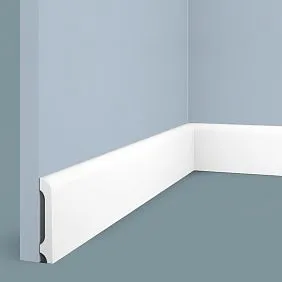
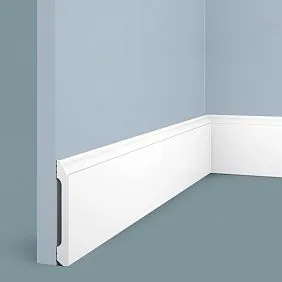
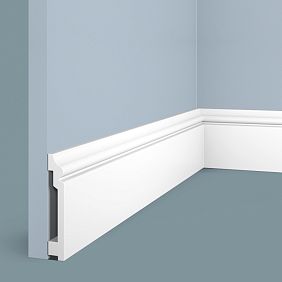
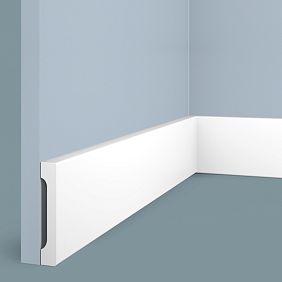
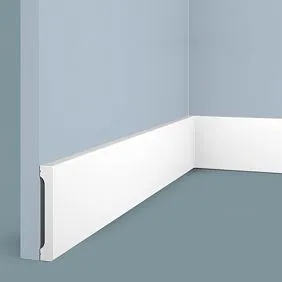
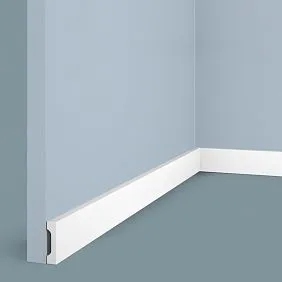
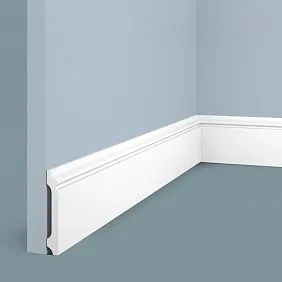
Our factory also produces:

Visual impact and proportions
A properly selected ceiling skirting can radically change the perception of space. A wide profile makes the room feel more intimate and cozy, while a narrow one visually expands and lightens the space. The play of light and shadow on relief elements adds depth and dynamism to the ceiling zone.
The color of the skirting also plays a key role in forming the atmosphere. A contrasting solution draws attention to architectural lines, while a tonal solution creates a sense of unity and continuity of space.Modern baseboardsMade from solid wood, they allow implementing any designer concept.
Get Consultation
Wood science: choosing wood for ceiling applications
Requirements for material
Ceiling skirting operates under special conditions. It is exposed to temperature fluctuations from heating systems, may experience increased humidity in bathrooms and kitchens, yet must maintain stability in shape and dimensions. Choosing wood species is critically important for the longevity of the product.
Dimensional stability is the main requirement for ceiling skirting materials. Even minor deformations lead to gaps, disruption of corner geometry, and detachment from surfaces. Therefore, preference is given to species with low linear expansion coefficients and minimal tendency to warp.
Premium species for premium solutions
Oak remains an indisputable leader among materials for ceiling skirting. Its dense structure, natural moisture resistance, and noble texture make oak products a benchmark of quality. Tannins in the wood provide natural protection against mold and decay, which is especially important for ceiling applications.
Ash, with its expressive texture and high strength, presents an excellent alternative to oak. The light hue of ash wood is ideal for modern minimalist interiors, where clean lines and noble simplicity are essential.
Walnut is the choice of connoisseurs of luxury. Its rich chocolate color palette, exquisite wood grain pattern, and superior technical characteristics make walnut skirting a decoration for the most prestigious interiors.
Technological solutions from coniferous species
Do not underestimate the potential of coniferous species for manufacturing ceiling skirting. Properly processed spruce from northern regions has a dense structure, beautiful texture, and natural resinous properties, providing additional protection against moisture.
Larch, with its unique resistance to moisture and insects, represents a premium solution among coniferous species. The characteristic pattern of annual rings creates an expressive texture, while its natural amber hue adds warmth and coziness to the interior.
Profiles and design: from classic to avant-garde
Classic solutions
Traditional multi-level profiles with smooth transitions, moldings, and decorative grooves create a sense of fundamentality and solidity. Such skirting is ideal for classic interiors, where every detail should emphasize the status and impeccable taste of the owners.
Manufacturing complex classical profiles requires the highest craftsmanship. Each curve must be executed with jewel-like precision, transitions must be perfectly smoothed, and proportions must be mathematically accurate.Wooden moldingsProfiles of classical form become true masterpieces of carpentry art.
Modern geometry
Minimalist linear profiles with sharp edges reflect the spirit of modern architecture. Simplicity of forms emphasizes functionality, creating a sense of order and logic. Such solutions fit perfectly into lofts, high-tech interiors, and Scandinavian spaces.
The geometric clarity of modern profiles requires absolute manufacturing precision. Even minor deviations from specified dimensions immediately become noticeable, destroying the impression of strictness and order. Modern CNC equipment allows achieving the required precision.
Custom Solutions
For unique projects, it is possible to create custom profiles based on original sketches. Modern technologies allow translating the most daring design ideas into wood, creating decorative elements that do not exist anywhere else in the world.
Developing an original profile begins with a detailed analysis of the interior, its stylistics, proportions, and color palette. Every line is carefully considered in terms of perception, functionality, and technological feasibility.
Dimensional range: selection according to architecture
Profile Height and Room Scale
Choosing the height of a ceiling skirting board is an art of creating proper proportions. For standard ceilings 2.5–2.7 meters high, profiles 80–120 mm in height are optimal. They create a balanced perception without visually overloading the space.
High ceilings 3–4 meters require more substantial profiles 120–200 mm and above. Such dimensions match the scale of the room, creating an impression of monumentality and respectability.Wide Wooden Skirting Boardbecomes a dominant architectural element.
Profile Complexity and Dimensions
The more complex the profile, the more pronounced its dimensions must be. Small details on a narrow skirting board are lost and unreadable. Rich classical profiles require corresponding dimensions to fully reveal their decorative potential.
Simple geometric profiles, on the contrary, can be more compact. Their expressiveness lies in the purity of lines and precision of proportions, not in the abundance of details.
Premium-Class Manufacturing Technologies
Raw material preparation
Quality ceiling skirting begins with properly prepared raw material. Wood undergoes multi-stage drying to a moisture content of 8±2%, ensuring dimensional stability during use. Chamber drying is conducted according to special regimes for each wood species.
Material sorting excludes the use of boards with knots, cracks, discoloration, or other defects. Only premium-grade material is used for ceiling skirting, where even minor imperfections are unacceptable.
Precision Processing
Modern four-sided CNC machines process all skirting surfaces in one pass with precision to 0.1 mm. Special cutting heads are custom-made for each profile, ensuring perfect repeatability of shape.
Cutting speed, feed rate, and depth of cut are individually calculated for each wood species. This ensures surface quality, eliminating the need for additional finishing.
Quality control
A multi-level control system covers all production stages. Incoming material inspection, intermediate checks during processing, and final inspection of finished products — all this guarantees compliance with the highest quality standards.
Measurement systems control profile geometry in real time. Any deviations are immediately detected and corrected, ensuring parameter stability across the entire batch.
Coatings and finishes: protection and aesthetics
Natural Oils
Oil-based finishes using linseed or tung oil deeply penetrate the wood structure, highlighting its natural beauty. Such finishes create a breathable protective layer, allowing the wood to regulate humidity in the room.
Oil application requires special technology. Wood is pre-sanded to perfect smoothness, then oil is applied in multiple layers with intermediate sanding. The result is a silky surface with a natural sheen.
Urethane coatings create a wear-resistant, high-strength finish for heavily used surfaces. Acrylic formulations provide an eco-friendly coating for residential spaces with children.
Modern polyurethane varnishes provide maximum protection against mechanical damage and moisture. For ceiling skirting, where mechanical impact is minimal, emphasis is placed on the durability and stability of the finish.
Two-component varnishes create an exceptionally strong finish, resistant to ultraviolet light and temperature fluctuations. This is important for skirting boards located near windows or heating systems.
Staining and color solutions
Staining allows changing the color of wood while preserving its texture. This opens up wide possibilities for color solutions in interior design, allowing skirting to be adapted to any palette.
Professional staining ensures even color, resistance to fading, and preservation of the original shade for many years. Any shades are possible — from imitating exotic species to custom color solutions.
Integration with lighting systems
Hidden lighting
Modern design often involves integrating ceiling skirting with lighting systems. Special profiles with grooves for LED strips create a floating ceiling effect, adding modernity and technology to the interior.
Designing backlighting requires consideration of multiple factors: LED power, heat dissipation, accessibility for maintenance. The wooden housing must provide reliable electrical component insulation.
Spot lighting
Built-in lights in ceiling skirting create unique lighting effects, enabling complex lighting scenarios. Such solutions require special manufacturing precision and prior planning of the entire system.
Installation: Professional Technologies
Preparation Work
Quality installation of ceiling skirting begins with careful surface preparation. The ceiling and walls must be perfectly flat, dry, and free of dust and contaminants. Even minor irregularities lead to gaps and geometric distortion.
Special attention is given to room corners. In older buildings, corners are rarely perfectly straight, requiring an individual approach to each joint. Professional installers use special measuring tools to accurately determine angles.
Methods of mounting
Adhesive mounting is suitable for light profiles provided surfaces are perfectly flat. Modern mounting adhesives ensure reliable bonding with various base materials.
Mechanical mounting with screws is used for heavy, solid skirting boards. Fasteners must be concealed, not compromising the product's aesthetics. Special recessed screw heads are embedded into the wood and masked with putty.
Combined method combines the reliability of mechanical mounting with even adhesive contact. This method is applied to particularly critical areas.
Corner processing
Professional corner processing is the pinnacle of an installer's skill. Complex profiles require precise trimming of each relief element, alignment of lines, and creation of an ideal transition between boards.
Internal and external angles are processed differently. Each type of angle has its own technologies and special tool. The result is a seamless joint, where the seam is almost invisible.
Stylistic solutions
Classic Interiors
In classical interiors, ceiling molding plays the role of an architectural order, creating proper proportions and emphasizing the significance of the space. Rich multi-level profiles with traditional motifs — gutters, ovals, beads — require appropriate scale and quality of execution.
The color solution for classical moldings tends toward noble shades of natural wood. Patination, artificial aging, gilding of individual elements — all of this creates a sense of historical value and authenticity.
Modern aesthetics
Modern interiors require minimalist solutions with clear geometry and functional meaning.wood trim itemsModern design is characterized by simplicity of form with impeccable execution quality.
The color palette of modern solutions ranges from natural wood tones to contrasting solutions — white, black, colored moldings, creating accents in the interior.
Eclectic spaces
Many modern interiors combine elements of different styles and eras. In such spaces, ceiling molding should serve as a unifying element, creating harmony between various details. Universal profiles of medium complexity are suitable for most eclectic solutions.
Features of application in different rooms
Living rooms and grand halls
Grand rooms require a special approach to selecting ceiling moldings. Here, the most luxurious and expressive profiles are appropriate, emphasizing status and creating a festive atmosphere.Molding — bestsellerare often presented exactly by such solutions.
The sizes of moldings for grand rooms must correspond to the scale of the space. High ceilings allow using especially wide and complex profiles, becoming the dominant decorative element.
Bedrooms and private zones
In bedrooms, it is important to create an atmosphere of comfort and tranquility. Ceiling moldings here should be more restrained, not drawing excessive attention. Preference is given to natural wood tones, which promote relaxation.
Integration with hidden lighting is especially relevant in bedrooms, where soft diffused light creates a romantic atmosphere and contributes to comfortable rest.
Kitchens and bathrooms
Wet areas impose special requirements on materials and finishes. It is necessary to use moisture-resistant wood species or provide reliable protection with coatings. Oak, with its natural moisture resistance, is the optimal choice for such conditions.
Finishes must be especially resistant to moisture and temperature fluctuations. Polyurethane varnishes provide reliable protection, preserving the beauty of wood for many years.
Combination with other interior elements
Harmony with door and window casings
Ceiling moldings must harmonize with other wooden elements of the interior — door and window casings, furniture, panels. Unity of material, color, and finish creates a cohesive concept of the space.
Solid wood materialsof the same wood species and with identical finish ensure ideal coordination of all interior elements.
Coordination with furniture
The color and texture of the ceiling molding must harmonize with the room's furniture. This does not mean complete matching — tonal differences are acceptable, creating depth and layering in the interior.
Interaction with lighting
Natural and artificial lighting significantly affects the perception of ceiling molding. Relief elements create play of light and shadow, changing throughout the day. When planning lighting, this effect must be taken into account.
Care and Maintenance
Regular Maintenance
Ceiling moldings made of natural wood require minimal maintenance due to their placement. Regular dry vacuuming with a soft brush removes dust from relief elements.
Wet cleaning is performed only when necessary, using a well-wrung cloth without aggressive cleaning agents. Excess moisture may damage the protective coating.
Restoration and renewal
One of the main advantages of wooden moldings is the possibility of restoration. Minor damages are removed by local sanding and repainting. Serious damages require dismantling the damaged section and replacing it with a new element.
Complete re-coating may be required after 15-20 years of use. This procedure restores the molding to its original appearance and extends its service life by another decade.
Economic Aspects
Investment Appeal
High-quality wooden ceiling skirting boards are a long-term investment. The initially high cost is offset by durability, restorability, and increased property value.
Premium finishes using natural materials are always in demand in the real estate market. Potential buyers are willing to pay extra for quality finishes, which partially offsets initial costs.
Comparison with alternatives
Polyurethane and polystyrene alternatives are significantly cheaper than wooden ones, but they lag behind in durability, eco-friendliness, and restorability. When calculating long-term ownership costs, wooden skirting boards are often more economically advantageous.
Trends in development
Technological Innovations
Advancements in wood processing technologies continuously expand the possibilities for manufacturing ceiling skirting boards. CNC machines allow creating profiles of any complexity with the highest precision.
Laser engraving opens new possibilities for decoration, allowing the application of delicate ornaments and patterns onto the wood surface.
Ecological Requirements
Growing ecological requirements stimulate the use of wood from certified forests, environmentally friendly coatings and adhesives. This increases the appeal of wooden skirting boards for eco-conscious consumers.
Customization
The trend toward interior individualization stimulates demand for unique solutions. The ability to manufacture skirting boards according to custom projects becomes an important competitive advantage.
Supplier selection: criteria of professionalism
Production Facilities
A serious manufacturer must have modern equipment capable of ensuring the required quality and production volumes. Own drying facilities, CNC machines, quality control systems — all these are signs of a professional approach.
Assortment and flexibility
A wide range of ready-made solutions and the ability to manufacture custom profiles indicate a high level of production. Flexibility in working with clients, readiness to adapt products to specific requirements — important advantages.
Service and support
Professional consultations during selection, technical support during installation, warranty service — all this creates additional value for the client.
Frequently asked questions
What is the optimal height for ceiling skirting boards?
For standard ceilings 2.5–2.7 m, skirting boards 80–120 mm high are recommended. For high ceilings, wider profiles up to 200 mm and above can be used.
Can ceiling skirting boards be used in humid rooms?
Yes, but it is necessary to choose moisture-resistant species (oak, larch) and quality protective coatings. Good room ventilation is important.
How to properly care for wooden ceiling skirting boards?
Regular dry cleaning with a vacuum cleaner using a soft brush. Wet cleaning should be done only when necessary, using well-wrung fabric without aggressive chemicals.
How long do wooden ceiling skirting boards last?
With proper material selection and quality installation — 20–30 years and more. Oak products can last for decades without losing quality.
Is it possible to manufacture skirting boards according to a custom project?
Yes, modern technologies allow manufacturing skirting boards of any complexity according to original sketches. This requires special tool development and increases the cost.
What documents should the supplier provide?
Certificates of conformity, sanitary-epidemiological conclusions, quality passports. For eco-conscious buyers, FSC or PEFC certificates are important.
Is it worth buying skirting boards with pre-finished coating?
Factory-applied coatings are usually better quality and more durable than DIY finishes. Professional equipment and controlled conditions ensure an outstanding result.
How to calculate the required amount of material?
Measure the room's perimeter, add 10–15% for trimming and possible damage. Consider the standard plank length when calculating the number of joints.
Conclusion
SolutionBuy wooden ceiling moldingThis is a choice in favor of quality, beauty, and longevity. Natural wood possesses unique properties that cannot be replicated with artificial materials. A properly selected and professionally installed ceiling skirting board will become an interior decoration for many years.
Modern manufacturing technologies allow creating products of any complexity with the highest quality. A wide selection of wood species, profiles, and finishing options opens up limitless possibilities for realizing the most daring design ideas.
Investments in high-quality wooden ceiling skirting boards are offset by their durability, restorability, and increased property value. In a world that values naturalness and eco-friendliness, wooden products are becoming increasingly attractive.
STAVROS is a recognized leader in producing premium wooden trim products. Decades of experience, modern technologies, and strict quality control guarantee outstanding results. Using premium wood from northern forests and European equipment, STAVROS creates products that serve as industry benchmarks for quality. Each skirting board undergoes multi-stage inspection, ensuring perfect geometry and flawless finish. STAVROS offers not just products, but comprehensive solutions for creating harmonious interiors, including professional consultations, custom manufacturing, and technical support. Choosing STAVROS means receiving a quality guarantee proven by time and thousands of satisfied customers.