Article Contents:
- Classic interior and its requirements for baseboards
- The order system is a law, not a recommendation
- Four requirements of a classic interior for baseboards
- Classic styles — and different requirements for baseboards
- Tall wooden baseboard 100–120 mm and above: proportions for large spaces
- Why exactly 100 mm is the threshold mark for classic style
- K-series STAVROS profiles for classic interiors
- How a tall baseboard changes the perception of a room
- Carved wooden baseboard: handcrafted and milled work
- What a 'carved' baseboard means in the precise sense
- Milled profile vs hand carving: what's the real difference
- Combining carved baseboard with other moldings
- Patina, gilding, aging: decorative finishing techniques for classic baseboards
- Patina: a noble trace of time
- Gilding: luxury without vulgarity
- Wood aging: brushing and charring
- Combination with parquet, moldings, and classic furniture
- Parquet and baseboard: the principle of a single wood species
- Moldings and baseboard: a dialogue between top and bottom
- Classic furniture and baseboard: a dialogue of vertical and horizontal
- Examples: living room, bedroom, study in classic style
- Classic living room: Baroque and Neoclassical
- Classic bedroom: quiet luxury
- Classic study: oak and dark oil
- FAQ: Answers to Popular Questions
- About the Company STAVROS

A classic interior is not nostalgia. It is a system. A system in which every element knows its place, carries its load, and obeys the laws of proportion formulated back in Ancient Greece and unchanged since then by a single iota. The cornice at the ceiling — the upper belt, completing the vertical. The wall — the middle belt, the main canvas of the interior. And the baseboard at the floor — the lower belt, the foundation, 'the slab at the base of the column,' as the very etymology of the word states.
In classic interiorWooden High Skirting Board— is not a technical element meant to cover the gap between the floor and the wall. It is an architectural detail, equivalent to a molded cornice, equivalent to the profile of a door casing, equivalent to the shape of a chair leg. To neglect the baseboard in a classic interior is like wearing a formal suit without a belt: formally dressed, but something is fundamentally wrong.
beautiful wooden skirting board— in classic style is a tall profile with pronounced relief, made of solid oak, finished with oil or patina, coordinated with cornices, casings, and parquet into a unified ensemble. This is precisely the conversation ahead.





Classic interior and its requirements for baseboards




The order system is law, not a recommendation
Those who have studied architectural history know: the order system is not a 'style'. It is the mathematics of beauty, a set of rules by which all horizontal and vertical divisions of a building or space relate to each other in strict proportions. Doric, Ionic, Corinthian orders—each has its own module, its own ratios of heights and widths. And the interior of a classical house reproduced this system with the same precision as the facade.
What does this mean in practice? The baseboard in a classical interior is the 'base' of the wall's order. Its height, its profile, its projection are proportionally related to the height of the ceiling cornice (analogous to the 'entablature'), the width of the architrave (analogous to the 'pilaster'), and the height of furniture legs (analogous to the 'pedestal').
To violate this system is to destroy the proportion. Installing a low, flat baseboard in a room with high ceilings and rich stucco cornices is an architectural error. Not a matter of taste—precisely an error: like a wrong note in a chord.
Our factory also produces:
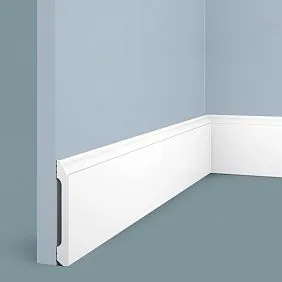
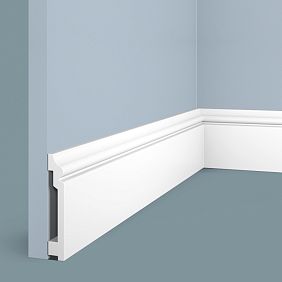
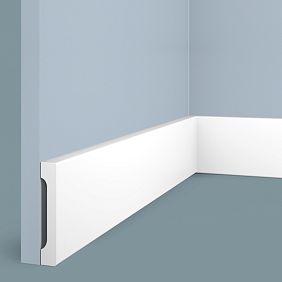
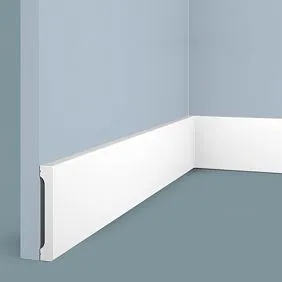
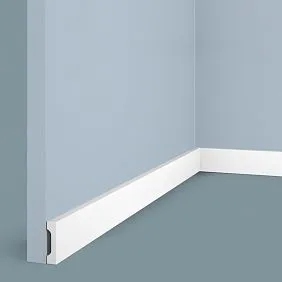
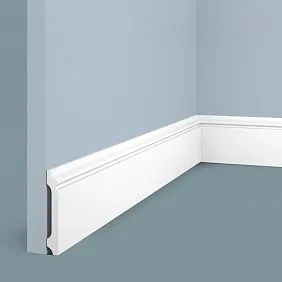
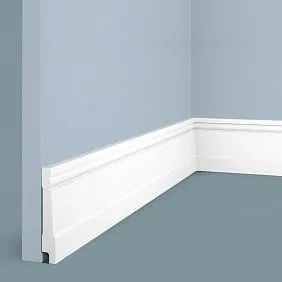
Four requirements of a classical interior for a baseboard
First—height. In classicism, the baseboard must be tall. Not 'decently tall', but precisely tall—from 100 mm and above for ceilings 2.8–3.0 m, from 130 mm for 3.0–3.5 m, from 160 mm for 3.5 m and above. This is not a question of fashion—it's proportion.
Second—profile. The baseboard must be shaped. A flat profile in a classical interior is an anachronism, a foreign element. Relief with rolls, cavettos, fillets, and flutes—this is the language of classical architecture. The baseboard either speaks it or remains silent.
Third—material. Only natural wood, only solid wood. No MDF, no PVC, no 'wood-like'—in a classical interior, materials are discernible. Especially when antique furniture or expensive solid wood parquet is placed nearby.
Fourth—coordination. The baseboard must be part of the system: the same species and the same finish as thewooden cornices of the KZ series for curtains, with thearchitraves of the K series for doors, with the parquet and furniture.
Get Consultation
Classical styles—and different requirements for the baseboard
Complete guide to classical furniture divides classical styles into several historical eras, each of which imposes its own specific requirements on the baseboard:
| Style | Baseboard Height | Profile type | Finish |
|---|---|---|---|
| Classicism | 100–130 mm | Restrained shaped | White satin enamel, oil |
| Baroque | 130–170 mm | Rich, multi-element | White gloss, gilding |
| Rococo | 100–120 mm | Elegant, with fine relief | White, pastel |
| Empire | 130–170 mm | Monumental, with a 'shelf' | Dark oil, white |
| Neoclassical | 80–120 mm | Restrained shaped | White matte enamel |
| English style | 110–140 mm | Rich shaped | White semi-gloss |
Tall wooden baseboard 100–120 mm and above: proportions for large spaces
Why exactly 100 mm is the threshold for classic skirting boards
Tall wooden skirting boardbegins where the profile ceases to be a technical solution and becomes an architectural detail. This boundary is around 100 mm. At heights below 80 mm, a skirting board in a classic interior 'doesn't read'—it is present but doesn't carry proportional weight. At 100 mm—it becomes visible, it forms the lower zone of the room, it 'separates' the floor from the wall architecturally, not just technically.
For a 3.0 m ceiling, the optimal skirting board height range is 110–140 mm. For rooms with ceilings of 3.5 m and above—from 150 mm, up to formal profiles of 200+ mm.
STAVROS K-series profiles for classic interiors
STAVROS K-series moldingscovers the entire range of tall classic profiles:
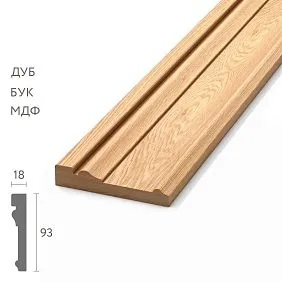
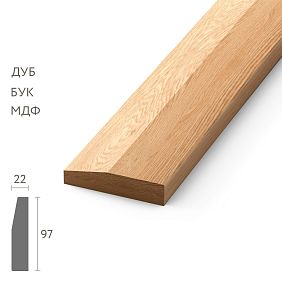
K-070 (from 950 rub./lm, ~110 mm)—the first truly 'tall' profile in the K-series. Double cavetto in the upper part, developed middle shelf, lower bevel. For ceilings 2.8–3.2 m—the standard for a richly decorated classic living room. In oak with 'walnut' oil finish—aristocratic and substantial.
K-009 (from 1,420 rub./lm, ~130 mm)—a profile in the Empire tradition. Three relief elements in the upper part: cavetto, shelf, scotia. Wide middle zone. Lower cavetto. For interiors with ceilings 3.0–3.5 m—this is the 'correct' skirting board: sufficiently monumental, sufficiently detailed.
K-018 (from 1,630 rub./lm, ~150 mm)—a formal profile. Four relief elements. Very wide middle zone. Monumental 'plinth' at the base of the wall. For historical interiors, restoration projects, mansions with ceilings 3.2–3.5 m. In white semi-gloss enamel—this is classic English mansion style.
K-066 (from 2,580 rub./lm, ~170 mm)—a profile for formal halls. Height comparable to some cornice moldings near the ceiling. Rich relief with five elements. Creates a powerful 'horizontal belt' at the base of the wall. Combined with a 200–250 mm ceiling cornice molding—a full-fledged order 'frame' for the wall.
K-104 (from 6,060 rub./lm, ~200+ mm)—the pinnacle of the K-series. A profile of palatial scale. Used in formal halls, mansion foyers, representative offices with historical interiors. This is not just a skirting board—it is an architectural element that, without exaggeration, defines the space.
How a tall skirting board changes the perception of a room
A tall wooden skirting board works on several visual effects simultaneously:
The 'base' effect. With a tall skirting board, the wall 'stands' on a base—like a column on a plinth. The room gains 'stability,' a sense of completeness in the architectural concept.
The 'scaling' effect. In a large room with high ceilings and rich decor, a tall skirting board 'correctly' scales the space: details are large, proportions are maintained. A low skirting board in the same space looks accidental.
The 'framing' effect. A tall skirting board at the bottom and a profiled cornice at the top form a 'frame' for the wall. The wall inside the frame is a canvas. Everything on it: wallpaper, painting, panels, fabric—is perceived as part of a deliberate composition.
Carved wooden skirting board: hand and machine work
What a 'carved' skirting board means in the precise sense
Carved wooden skirting board—a concept often used broadly. Strictly speaking, 'carved' refers to a skirting board with decorative elements executed by carving—hand or machine—on top of the main profile. This is not just a 'figured' profile obtained by milling the cross-section: these are additional decorative elements on the front surface.
Such elements can be:
-
Acanthus leaves—a classic motif dating back to the Corinthian order
-
Egg-and-dart ornament—alternating oval and arrow, characteristic of the Ionic order
-
Meander—a continuous geometric ornament, 'Greek border'
-
Rosettes—round floral motifs placed at regular intervals
-
Volutes and scrolls—spiral elements of Baroque and Classicist tradition
Precisely such acarved wooden skirting boardis used in restoration projects and in interiors aiming for historical accuracy.
Milled Profile vs Hand Carving: What's the Real Difference
Today, most 'carved' elements of wooden millwork are produced on CNC machines — with precision unattainable by hand and at a significantly more accessible price. This is not a compromise — it's a technological reality.
Milled Profile (3D milling, as in the STAVROS K-series) — perfectly precise relief, fully reproducing the profile in every piece. High stability, perfect geometry, accessible price.
Hand Carving — a living tool, the living trace of a chisel. Micro-irregularities and the finest variations in relief create a 'handcrafted' effect that a machine cannot replicate. Each piece is unique. Price — 4–8 times higher than milled.
For most classic interiors — the milled profile of the K-series fully solves the task. Hand carving is justified in the restoration of historical objects or in exclusive projects where the authenticity of handwork is fundamental.
Combining carved baseboard with other millwork
A carved baseboard obligates consistency in the entire millwork system. In STAVROS, the unified K-series is provided for this: profiles of baseboards, casings, andKZ-series cornicesare stylistically coordinated — they speak the same architectural language. This eliminates visual conflict between elements.
For a carved baseboard like K-018 or K-066 — a corresponding casing with a similar profile at the door opening and a ceiling cornice with comparable relief. Only in this trio does a 'classic interior' emerge — not just an 'expensive renovation'.
Patina, Gilding, Aging: Techniques of Decorative Finishing for Classic Baseboards
Patina: The Noble Trace of Time
Patina is a surface 'aging' effect of the material, which in a classic interior is valued higher than novelty. True patina forms on antique items over decades: oil darkens in the recesses of the profile, light protrusions wear down to a lighter tone, creating a 'dark recess — light ridge' contrast. This effect makes the relief visually deeper and richer.
In the decorative finishing of baseboards, patina is imitated by several techniques:
Technique of 'Dark Wax in Recesses'. The main color is cream or light gray. Dark wax (umber, burnt sienna) is manually worked into the recesses of the profile. After polishing — light ridges contrast with dark recesses. Effect: the baseboard looks as if it has been in the interior for thirty years.
Technique of 'Antique'. The base is white or cream enamel. On top — a semi-transparent glazing layer of a dark tone (umber or graphite, diluted with varnish). The glaze is wiped off the protruding parts of the profile with a damp cloth, remaining in the recesses. Classic result — patinated 'antique'.
Technique of 'Crackle'. A special two-component varnish creates a network of fine cracks on the surface, imitating the cracked varnish of antique furniture. Used rarely — requires professional skills.
Gilding: Luxury Without Vulgarity
Gilding a wooden baseboard is a Baroque and Classicist tradition, dating back to Versailles and St. Petersburg palaces. Applied in two versions:
Full Gilding — the entire front surface of the baseboard is covered with gold leaf (or imitation gold — 'potale'). Used in formal halls, in interiors in the spirit of Baroque of the highest concentration. This is an extreme solution, requiring a corresponding scale of the room.
Partial Gilding (gilding on details) — only the protruding parts of the profile are covered with gold: the ridges of ovolos, fillets, ribs. The main tone is white or cream. Effect: the baseboard 'shimmers' with gold where light falls. This is the solution used in most modern classic interiors. Rich, but not flashy.
Practical materials for gilding baseboards:
-
14-karat leaf potale: an accessible alternative to gold leaf, durable when coated with varnish
-
Acrylic 'gold' paint (Pearl, Rust-Oleum, Caparol and similar): applied with a brush, adheres well to relief
-
Gilded wax: applied with a finger or sponge, accentuates the protruding relief
Wood Aging: Brushing and Charring
In addition to patinating the finish, techniques for physically aging the wood itself are applied — before applying the finish:
Brushing — treating the surface with a metal brush, which removes the soft fibers of earlywood, leaving a relief of the hard fibers of latewood. Result: a pronounced texture with the relief of annual rings. Under dark oil on an oak baseboard K-070 — the effect of 'old wood' with a depth of several centuries.
Light Charring — the surface is treated with a gas torch until a thin charred layer forms. After brushing — the texture is black-brown, with silver accents. The 'shou sugi ban' technique — Japanese, but in Western classic interiors, it is used to create 'age' and a dark tone.
Artificial Defects (worm holes, chains) — pinpoint strikes with a metal tool create random dents and 'marks' on the surface. Used rarely, only for authentic imitation of very old wood.
Combination with parquet, moldings, and classic furniture
Parquet and skirting: the principle of a single wood species
Wooden skirting in a classic interior — and wooden parquet beneath it. This is the pair that defines the 'wooden register' of the room's lower zone. And this pair has an unwritten rule: the wood species and tone must be coordinated.
Natural oak parquet — oak skirting under the same oil. Oak parquet under 'walnut' oil — K-070 or K-009 skirting under 'walnut' oil. Bleached oak parquet — K-034 or K-125 skirting under white oil (or white enamel from beech).
The only permissible exception: skirting in white paint with any parquet. This is a classic 'English' technique — white (or cream) walls, white skirting, wooden floor. Here, the contrast between the parquet and the white skirting works to delineate the horizontal zones, not to merge them.
In combination withwooden staircase components— skirting, railings, steps from the same solid oak form an ensemble where no element falls out of the overall picture.
Moldings and skirting: a dialogue between top and bottom
A molded ceiling cornice is the upper horizontal belt of a classic interior. Wooden skirting is the lower one. Between them — the wall. These three elements form a 'frame,' and their proportional relationship is critical for the harmony of the interior.
Practical rule: skirting height = 55–75% of the ceiling cornice height. If the molded cornice is 200 mm — K-009 skirting (~130 mm) or K-018 (~150 mm). If the cornice is 150 mm — K-006 skirting (~80 mm) or K-070 (~110 mm). If the cornice is 100 mm — K-034 or K-125 skirting (60–70 mm, already on the verge of modernity).
Another important guideline: the relief of the skirting and the relief of the molded cornice should be 'related' — not identical, but from the same architectural language. A Baroque skirting with the lush K-066 profile + a strict geometric cornice — conflict. K-066 + a molded cornice with acanthus leaves — consistency.
Classic furniture and skirting: a dialogue between vertical and horizontal
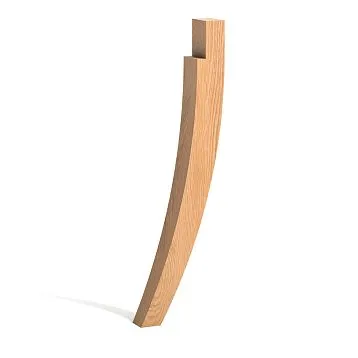
Classic Furniturestands on legs. Legs are the vertical element connecting the item to the floor. And the skirting, covering the lower zone of the wall, visually 'picks up' the legs: it creates a horizontal 'belt' from which the furniture 'grows'.
Wooden furniture legsfrom the same wood species (oak or beech) as the skirting — is an unnoticeable but important detail of consistency. When a chair leg, the skirting by the wall, and the door casing are from the same solid wood, with the same oil or the same paint, the interior gains that very 'cohesion' which is impossible to explain but easy to feel.
Leg height is another parameter of the dialogue. With high legs (100–150 mm), K-009 or K-018 skirting (130–150 mm) creates a rhythmic 'rhyming' in height: legs and skirting are of the same scale. With low legs (40–60 mm) — K-006 or K-070 skirting (80–110 mm) is more organic.
Examples: living room, bedroom, study in classic style
Classic living room: Baroque and Neoclassicism
Interior 1: Neoclassical living room with a 3.0 m ceiling
White walls with a soft texture. Molded ceiling cornice 160 mm. Herringbone parquet from natural oak.
Skirting: K-009 (~130 mm), oak, white satin enamel. Casings of the same proportions — K-series shaped.wooden cornices KZ-seriesfor curtains in white paint. Furniture: sofa with carved wooden backs in white enamel, armchairs on high oak legs.
Effect: an impeccable 'frame' around each wall, a unified white wooden 'voice' for all the trim.
Interior 2: Baroque living room with a 3.5 m ceiling
Walls upholstered in silk moiré in 'ivory' color. Molded ceiling cornice 220 mm with acanthus leaves. Square parquet from tinted oak.
Skirting: K-066 (~170 mm), oak, white glossy enamel with partial gilding of protruding ribs with imitation gold leaf. Shaped casings with similar gilding. Curtain cornices — with a golden accent.
Effect: the skirting 'responds' to the gilding of the hardware and mirror frames, creating a unified golden 'rhythm' along the horizontal of the lower and upper belts.
Classic bedroom: quiet luxury
Interior 3: Classicist bedroom with a 2.9 m ceiling
Walls in 'dusty rose' color (semi-matte acrylic). Restrained molded cornice, 120 mm. Wide plank parquet, oak under white oil.
Baseboard: K-070 (~110 mm), beech, white matte enamel. In the bedroom — the finish tone of the baseboard should be soft: matte, not glossy, without gilding. A tall carved wooden baseboard here — it's sophistication without strain, a detail that isn't noticed immediately, but without which something would be missing.
Furniture: bed with a tall carved headboard in white semi-matte enamel, dresser with a marble top.Furniture legsmade of beech in white paint — a unified tone with the baseboard.
Effect: the bedroom is 'stitched together' with white wood from floor to ceiling. The soft wall color — a contrast. Warm floor made of whitewashed oak — the foundation.
Classic study: oak and dark oil
Interior 4: Study in the style of an English library, ceiling 3.0 m
Walls with wooden oak panels (panels from floor to 1.1 m). Wooden ceiling cornice — K-series, 100 mm, oak with 'dark walnut' oil. Oak parquet, 'dark walnut' oil.
Baseboard: K-009 (~130 mm), oak, 'dark walnut' oil. The baseboard 'flows' into the lower edge of the panels — a unified dark wooden 'plinth' 1.24 m high (130 mm baseboard + 1,110 mm panels). This is a powerful architectural technique: the lower zone of the study is completely 'wooden', the upper — the wall in a different material.
Effect: the study feels 'weighty', 'stable', 'serious'. Precisely the atmosphere created by good classic furniture — and which the wrong baseboard can destroy.
FAQ: Answers to popular questions
How tall should a wooden baseboard be in a classic interior?
From 100 mm for a 2.8 m ceiling, from 130 mm for a 3.0–3.5 m ceiling, from 160 mm for a ceiling above 3.5 m. Below 80 mm in a classic interior — the baseboard 'gets lost' and fails to perform its architectural function.
What is patina on a baseboard — how is it created?
Patina — a decorative effect of artificial 'aging': dark pigment in the recesses of the profile, light raised ridges. Achieved by applying dark wax into the recesses followed by polishing the raised areas, or using the 'antique' technique — a glazing layer over white enamel.
Can a carved wooden baseboard be combined with modern furniture?
Yes — in the 'neoclassical' or 'modern classic' style. A carved tall baseboard + minimalist modern furniture create an interesting contrast. The main thing — unity of color scheme: if the baseboard is white, the furniture should also be in a neutral palette.
Is it necessary for the baseboard and parquet to match in wood species?
Ideally — yes. Especially under oil: different species yield different tones even under the same oil. Under paint — the species is hidden, matching is not mandatory. The most reliable solution: order the baseboard and parquet boards from the same manufacturer from the same batch.
What is better — hand carving or milled profile for a classic baseboard?
For most classic interiors — the milled profile of the K-series fully solves the task: precise relief, stable geometry, affordable price. Hand carving is justified in the restoration of antique objects or in projects where the authenticity of handwork is fundamental.
How to calculate the height of a baseboard, knowing the height of a plaster cornice?
Baseboard height = 55–75% of the plaster cornice height. Cornice 200 mm → baseboard 110–150 mm. Cornice 150 mm → baseboard 80–110 mm. Cornice 100 mm → baseboard 60–75 mm.
About the company STAVROS
Classic interior — it's patient work with details. Each of them must be done correctly, because in classic style, everything is noticeable. An imprecise profile is noticeable. An uncoordinated tone is noticeable. Poor-quality wood is noticeable — especially next to antique furniture and solid wood parquet.
Tall wooden baseboard K-seriesSTAVROS — from K-070 (from 950 rub./lm) to K-104 (from 6,060 rub./lm) — these are thirty profiles, covering the entire range from restrained neoclassicism to ceremonial baroque. Solid beech and oak, kiln-dried to 8–10% moisture content. 3D milling with accuracy to tenths of a millimeter. Hand sanding P180 — the surface is ready for any finish without additional processing.
For the skirting board —K-series casingsof the same profile families,KZ-series cornicesfor curtains made from the same solid wood,Furniture legsfor classic furniture. For stairs —components made of oak and beechFor high-humidity rooms —KPU-seriespolyurethane moldings with similar classic profiles.
Samples — from 180 rub. Stock program. Shipment on the day of order. Delivery throughout Russia and CIS countries.
STAVROS — when a classic interior gets the baseboard it deserves.