












































































Article Contents:
- Slats and skirting board — two elements from the same material in a unified interior
- Material unity as the foundation
- Linearity as a unifying principle
- When the connection is broken
- Wooden skirting board as a horizontal line + slats as a vertical accent
- Skirting board as a horizontal anchor
- Slats as vertical energy
- Playing with proportions: skirting board width and slat width
- Slatted partitions behind the sofa or at the head of the bed — how to coordinate with the skirting board
- Slatted panel at the head of the bed: does the skirting board continue or break?
- Wall behind the sofa: slatted screen and skirting board line
- Uniform wood species and color: slats, skirting board, trim from the same collection
- Why 'similar' tones don't work
- Collection principle: order everything together
- Which wood species work best in this system
- Toning: exact match or intentional contrast
- Geometric patterns on the wall made from slats and skirting board
- Vertical slats + horizontal skirting board: classic grid
- Horizontal slats + horizontal skirting board: multi-level horizontality
- Diagonal slats: dynamism and modernity
- Frame patterns: slats as moldings
- Checkerboard and modular patterns
- Zoning space with slats and skirting board
- Kitchen-living room: slatted partition and double skirting board
- Bedroom: relaxation area and wardrobe area
- Children's room: play area and study area
- Complete order of wooden products for finishing one room
- What is included in a complete order
- Economy of a complete order
- How to correctly calculate an order
- Practical tips for installing slat systems in combination with skirting boards
- Skirting board first — then slats
- Gap between the skirting board and the lower end of the slat
- Uniform line of the upper ends of the slats
- Hidden mounting of slats
- FAQ - answers to popular questions
- About the Company STAVROS

In interior architecture, there are two elements that are perceived as purely technical and therefore often go unnoticed. The first is Wooden baseboard, traced along the entire perimeter of the floor. The second is wooden slats on the walls: vertical, horizontal, diagonal. Individually, each of them solves its own task. Together, when they are made from the same wood species, in a unified tone, with a single placement logic — they transform the room into something completely different. No longer just a finished space, but an architectural statement.
This article is about how wooden slats and Wooden baseboard work together — as a unified interior language, where the horizontal responds to the vertical, the wood species echoes the wood species, and the geometry of the pattern resonates with the rhythm of the floor profile. It's about how zoning is built from these two elements, accents are created, and a sense of wholeness is born that cannot be bought separately in any store.


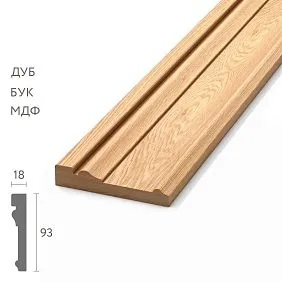

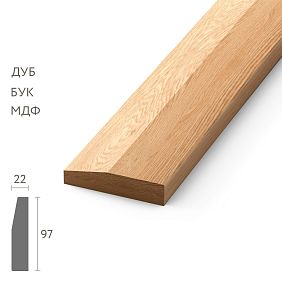


Slats and skirting board — two elements made from the same material in a unified interior
A tricky question: why do two people with the same budget, the same furniture, and the same layout end up with completely different spaces? One — cozy, cohesive, 'designer-like.' The other — just a decently finished room where everything is correct, but something is missing?
The answer often lies in the details — in whether the finishing elements are connected to each other. wooden patterns on wall slats and the line of the floor skirting board — these are not two random decisions, but a unified system. When they are coordinated — that very 'designer' intonation appears.




Material unity as the foundation
Wood is a living material. Two pieces of wood from the same species in one room will always resonate, even if they are six meters apart. Texture, grain pattern, shade — all of this creates an invisible thread that binds the elements into a single whole.
WhenWooden trim — both the skirting board and the slats — are made from the same wood species, the same collection, with the same finish, the space is stitched together from within. It's not explicitly noticeable, but it's immediately felt.
Our factory also produces:




Linearity as a unifying principle
Skirting board — a horizontal line. Slats — vertical, less often horizontal. Linearity is a language that speaks of order, rhythm, structure. When both line systems are made from the same material — the rhythm of the skirting board at the bottom sets the intonation, which the slats pick up and develop upward. Like in music: the bass sets the pulse, the upper voices unfold it.
Get Consultation
When the connection is broken
Let's take a common mistake: a white plastic skirting board and natural oak wooden slats on the walls. It seems like a small thing. But these are two different materials, two different languages. Plastic says: 'They saved money here.' Oak says: 'They invested here.' They contradict each other, and the space feels it. A wooden floor skirting board made from the same species as the slats — this is not a luxury, it's logic.
Wooden skirting board as a horizontal line + slats as a vertical accent
In architectural theory, the horizontal and vertical are two primary tools for managing space. The horizontal calms, expands, grounds. The vertical energizes, lifts, elongates. The combination of both directions in one room creates a dynamic balance — a space that has both stability and movement.
Skirting board as a horizontal anchor
wooden floor baseboard — is a horizontal line encircling the entire room along the perimeter. The wider it is, the more pronounced the horizontal line, the more powerfully the interior is 'grounded.' A wide skirting board 120–150 mm high visually lowers the height of the room — and this is good in rooms with very high ceilings where proportionality is needed. A narrow skirting board 50–70 mm is almost invisible, it is neutral.
When the skirting board is made from solid oak or ash with an expressive texture — the horizontal line gains material weight. It doesn't just separate the floor and the wall, it forms the lower tier of the interior, a plinth belt on which the walls 'stand.'
Slats as vertical energy
Vertical wooden slats on the wall — this is rhythm and upward movement. Regularly spaced verticals create a sense of order and height. They work like Gothic pillars in a cathedral: the gaze slides upward, the ceiling seems higher, the space — more solemn.
In modern interiorsSlatted partition between the living room and dining room — one of the most popular zoning techniques. It doesn't block the space, doesn't put up a solid wall, but clearly separates the zones, allowing light and air to pass between the slats. And if at the bottom both zones are connected by a single skirting board made from the same species — the partition organically grows out of it, like trees from the ground.
The Proportion Game: Skirting Board Width and Batten Width
One of the key questions in design: how do the sizes of the skirting board and batten relate? This is not a minor detail—it's a proportion that is immediately visible.
General rule: the batten should be narrower than or equal to the skirting board, but never wider. A wide 120 mm skirting board + a thin 20 mm batten is the perfect ratio. The skirting board provides solidity at the bottom, the batten provides graphic quality and lightness above. If the batten is as wide or wider than the skirting board, the lower tier loses dominance, and the space becomes restless.
| Baseboard Height | Optimal batten width | Batten spacing |
|---|---|---|
| 70–90 mm | 15–25 mm | 60–100 mm |
| 100–120 mm | 20–35 mm | 80–120 mm |
| 130–150 mm | 30–50 mm | 100–150 mm |
Batten partitions behind a sofa or at a bed headboard—how to coordinate with the skirting board
There are two points where batten wall panels most often encounter the question of the skirting board—the bedroom (bed headboard) and the living room (wall behind the sofa). In both cases, the coordination logic is the same, but the details differ.
Batten panel at the headboard: does the skirting board continue or is it interrupted?
DecorativeSlatted partitionat the bed headboard usually occupies an entire wall—from floor to ceiling or up to a certain height. The skirting board should either continue along the base of the batten panel or transition organically into it.
Option 1—the skirting board continues. The wooden floor skirting board runs along the entire perimeter of the room, including the base of the batten wall. In this case, the battens 'grow' directly from the skirting board. The lower end of the outer battens rests on the top edge of the skirting board. It looks monolithic and finished—provided the wood species and tone are the same.
Option 2—the skirting board transitions into a horizontal batten. Along the base of the batten panel, instead of a standard skirting board, a wide horizontal batten (flat, 80–100 mm high) is installed. It serves as the skirting board but visually is part of the batten system. On the other walls—a standard wooden skirting board of the same species and tone.
Incorrect option—the batten panel starts directly from the floor, without a skirting board. In this case, the lower ends of the vertical battens 'hang' in the air above the gap at the floor. This is sloppy and technically incorrect: the space under the battens collects dust, and fastening elements are visible in the gaps.
Wall behind the sofa: batten screen and skirting board line
In the living room, the batten panel behind the sofa is an accent wall. It stands out in color, material, texture. And here arises the temptation to make the skirting board invisible or remove it altogether on the accent wall—so it 'doesn't interfere' with the batten pattern.
This is a mistake. The skirting board on the accent wall doesn't interfere—it completes. It provides support for the lower edge of the batten panel, a visual anchor. Without a skirting board, the batten wall seems 'ungrounded,' floating—and that's not the effect needed.
Correct solution: a skirting board of the same species and tone as the battens runs along the base of the accent wall. It can be slightly wider than on the other walls (100–120 mm versus 70–80 mm) to emphasize the importance of this wall. The transition at the corner is smooth, via a standard corner joint.
Uniform species and color: battens, skirting board, millwork from the same collection
This is the most important principle. Violating it is the main reason why interiors with wooden elements lose integrity.
Why a 'similar' tone doesn't work
Two planks from different species, even if close in color, will give different textures, different sheens, different behavior under lighting. Oak and ash look similar at first glance, but under direct sunlight, oak gives an expressive, large pattern, ash—a calmer, finer one. In the same space, they will clash.
Finishes must also match. An oil finish on the battens and a varnish finish on the skirting board will give different sheens, different visual sensations of the surface. Even with a perfectly matching tone—a mismatch in finish reveals 'patchiness.'
Collection principle: order everything together
millworkWooden trimfor one room as a single order from one manufacturer: skirting board, wall battens, partition battens, moldings, casings, cornices. From the same batch of solid wood, with the same tinting, with the same finish.
This solves several problems at once. First, it guarantees tonal unity: all elements were painted from the same bucket, there are no 'almost the same' random mismatches. Second, it saves time: one delivery instead of five different ones. Third, during installation, there is no 'matching'—everything is compatible by default.
Which wood species work best in this system
Oak is the universal leader. Rich, expressive texture, high density, durability. On a wide baseboard, the texture is fully visible; on thin slats, it appears as delicate stripes. Can be stained to any shade from bleached to almost black.
Ash is a lighter, slightly more restrained alternative to oak. Suitable for Scandinavian style, modern neoclassicism, minimalism with warm accents.
Walnut is dark, noble, with chocolate tones. A luxurious choice for classic and neoclassical interiors, studies, guest rooms with a monumental character.
Beech has a fine, uniform texture and takes paint excellently in any color. Ideal if painting is planned (white, gray, colored) — then texture is not important, surface smoothness is.
Staining: exact match or intentional contrast
There are two legitimate approaches to color in the 'baseboard + slats' system.
The first is monochromatic: everything in a single tone, baseboard and slats create a unified wooden layer in the space. This offers maximum integrity and calm.
The second is contrasting: slats one or two shades darker than the baseboard. Baseboard — light oak, slats — dark walnut oak. This creates hierarchy: the baseboard recedes into the floor, merging with it, while the slats stand out as an accent. This solution adds depth and visual complexity.
What is unacceptable: slats lighter than the baseboard. In such a combination, the lower tier appears 'overloaded,' and the slats look faded and random.
Geometric patterns on the wall made from slats and baseboard
This is where the real decorator's play begins.wooden ornamentSlats are not just parallel stripes. They are geometry capable of turning an ordinary wall into a work of art.
Vertical slats + horizontal baseboard: classic grid
The simplest pattern: vertical slats evenly spaced across the entire wall, with a wide horizontal baseboard at the bottom. The rhythm of verticals is interrupted by the horizontal baseboard below and, optionally, a cornice above. The result is a clear architectural grid, resembling a classical pilaster system.
This pattern works well in high-ceilinged rooms (from 3 meters) and in styles ranging from neoclassicism to modern minimalism.
Horizontal slats + horizontal baseboard: multi-level horizontality
If the slats on the wall are arranged horizontally, they engage in direct dialogue with the baseboard. The entire wall becomes a system of horizontal stripes of varying widths (thin slats + spacing between them + wide baseboard at the bottom).
This technique visually expands the room to the maximum — everything is directed along the wall, across the room. Works well in narrow, long corridors, small rooms that need to be 'stretched'.
In this case, the baseboard should be the widest horizontal element — wider than the gaps between the slats. This maintains hierarchy: the baseboard is the foundation, the slats are the theme developing above.
Diagonal slats: dynamism and modernity
Slats laid at a 45-degree angle create powerful diagonal energy. The eye moves along the diagonal lines, making the space seem more dynamic, less static.
When using diagonal slats, the baseboard takes on special significance — as a horizontal 'stop' beneath the angular movement. It calms, 'grounds' the diagonal dynamism, preventing it from becoming chaotic. This is why with diagonal slats, the baseboard should be particularly expressive — wide, with a clear profile, in a dark, reliable tone.
Frame patterns: slats as moldings
One of the classic techniques is creating a frame pattern on the wall using slats. Slats are assembled into rectangular frames, inside which the wall is either painted a different tone, wallpapered, or left neutral.
SuchWooden itemsThey create the effect of classic wall panels but are significantly cheaper and easier to install than traditional boiserie. In this system, the baseboard serves as the lower 'rail' from which the vertical slats of the frames begin. The logic is obvious: the baseboard is the horizontal start, the frame slats are the development of the vertical.
Such a frame pattern looks magnificent in living rooms with a neoclassical character, in formal hallways, in bedrooms with a bed centered on an accent wall.
Checkerboard and modular patterns
A more complex variation is alternating vertical and horizontal slats in a checkerboard or modular grid pattern. Inside each cell — either a smooth surface, a carved decorative element, or an insert of another material (metal, fabric, glass).
In such a system, the baseboard functions as a 'grounding' element: it is more monolithic, less fragmented than the slat grid above. It provides visual relief from the complex pattern.
Zoning space with battens and baseboard
Wooden battens are one of the most elegant tools for zoning open spaces. Unlike solid partitions, they divide zones without destroying air and light. And in combination with a properly selected baseboard, this zoning becomes complete.
Kitchen-living room: slatted partition and double skirting board
In open layouts, the kitchen and living room are separated functionally, but not structurally. A batten partition—full or partial—visually marks the boundary. But what to do with the baseboard?
Two legitimate solutions. First: a single baseboard along the entire perimeter of both zones, made from the same wood species in the same tone. This emphasizes the unity of the open space, and the partition 'floats' within it as a functional but non-dividing element. Second: in the living room area—baseboard tone A, in the kitchen area—the same material, tone B (slightly darker or lighter). The baseboard subtly supports zoning without creating a rigid boundary.
The batten partition must have a lower horizontal base—a support batten or a small baseboard profile, matching the tone of the main baseboard. Without it, the partition appears 'unattached' to the floor.
Bedroom: rest area and wardrobe area
In spacious bedrooms, a batten partition often separates the wardrobe or bathroom area. The baseboard here should be uniform—along the entire perimeter of the bedroom, including the area behind the partition. This creates a sense of spatial integrity even when divided.
Children's room: play area and study area
In children's rooms, battens are an excellent way to visually mark two functional spaces: play and study. Battens in the play area can be colored (painted solid wood in bright tones), battens in the study area—neutral. But the baseboard should be uniform—this stitches both spaces into one room, preventing them from 'splitting' into two unrelated rooms.
Complete order of wood products for finishing one room
A topic professionals value but amateurs often ignore: when ordering all wooden decor as a 'package' is more cost-effective than buying piecemeal.
What is included in a complete order
Fullwooden productsfor finishing one room includes:
-
Wooden floor baseboard of the required height and profile—along the room perimeter, accounting for doorways and trimming allowance.
-
Wall battens—required width, height, and quantity for all designed panels.
-
Ceiling cornice (if planned)—from the same wood species and tone.
-
Door architraves—from the same wood species to create a unified wooden system in the room.
-
Batten partition elements (if planned)—including horizontal base battens and upper crosspieces.
-
Decorative overlays and ornaments (rosettes, corner elements)—for classic or neoclassical style.
Economics of a complete order
Ordering the entire package from one manufacturer usually provides a 10–20% discount compared to purchasing each item separately. Delivery costs are saved (one shipment instead of several). The manufacturer can cut all elements precisely to the room dimensions—then there will be no leftovers on site, everything will fit exactly.
Most importantly: all material is from the same wood batch. This guarantees absolute tone uniformity—something impossible to ensure when purchasing from different places or at different times.
How to correctly calculate an order
Three numbers are needed for calculation: room perimeter (for baseboard and cornice), wall area to be finished with battens (for wall battens), and batten layout scheme (spacing, width, height). A good manufacturer will calculate it themselves based on the room plan indicating wall width and height, door and window locations.
Practical tips for installing batten systems in combination with baseboard
A beautiful paper project can easily be ruined during installation. Several rules that preserve the result.
First baseboard—then battens
Always install the baseboard first. It sets the horizontal line from which vertical battens are aligned. If battens are installed first and then the baseboard is fitted—there is a high risk of misalignments, gaps at the base, and uneven joints.
After installing the baseboard, check its level with a spirit level. It is along the top edge of the baseboard that the lower ends of vertical battens will be aligned.
Gap between skirting board and bottom end of batten
The bottom end of the vertical batten should not rest on the skirting board — a 1–2 mm gap is required between them. This compensates for thermal expansion. With tight wood-to-wood contact, seasonal expansion of the batten can cause the skirting board to bulge or shift.
Uniform line of top ends of battens
If the battens do not go up to the ceiling but to a certain height (e.g., 180 cm), their top ends must be perfectly aligned to a single horizontal line. To achieve this, first mark a horizontal line with a laser level and indicate it with painter's tape or a pencil. All battens are cut strictly along this line.
Concealed batten mounting method
Wooden battens on walls are mounted in two ways: with screws and washers (visible heads are masked with wooden plugs or wax pencils) or with adhesive and mounting clips (completely concealed mounting, front surface without fastening points). For decorative battens in residential interiors, concealed mounting is preferable — the front surface remains clean.
FAQ — answers to popular questions
Can wooden battens and wooden skirting boards of different wood species be combined?
Theoretically — yes, if the tones are professionally matched. In practice, this is difficult: even with matching colors, the textures of two wood species 'clash' with each other. It is recommended to use one species or, at minimum, one group of species (e.g., oak and ash — both are diffuse-porous and visually similar).
What is the optimal batten spacing for a wall panel?
Depends on the room height and batten width. The narrower the batten, the tighter the spacing can be. For a 20 mm batten, the optimal spacing is 60–100 mm (distance between battens). For a 40 mm batten — 80–150 mm. Too frequent spacing makes the wall 'solid', too sparse — disjointed.
Is a skirting board needed under a batten partition that does not adjoin a wall?
If the partition stands freely in space (freestanding), a skirting board is not needed — both from a practical and aesthetic standpoint. If the partition adjoins walls and floor, a bottom profile is mandatory.
Yes, but under certain conditions. It is necessary to choose moisture-resistant wood species (teak, larch, thermowood), ensure quality moisture protection, and provide good ventilation. Modern technologies allow using wood even in bathrooms and saunas.
Yes, with the correct choice of wood species and finish. Oak, larch, teak — moisture-resistant species. Finish — waterproof varnish, at least 3 coats. In bathrooms, battens are placed where water does not directly hit (area above the bathtub, away from the shower).
How to secure battens to brick or concrete walls?
Use mounting adhesive (polyurethane, reinforced) in combination with dowels. Dowels are installed first to secure until the adhesive dries, then the adhesive takes over the main load.
How to calculate the number of battens for a wall?
Determine the wall length (in mm), subtract the widths of all battens that will fit on the wall. Divide the remaining distance by the number of gaps (equal to the number of battens plus one). This will be the spacing between battens. If the spacing is not a round number or is inconvenient — adjust the number of battens.
About the company STAVROS
If you want your wooden skirting board and wooden battens to be not two random elements but a unified system — contact STAVROS company. This is a manufacturer of a full range of wooden moldings and decorative products made from solid oak, ash, walnut, and beech.
STAVROS manufactures complete sets for interior finishing:wooden floor baseboardskirting boards of any height and profile, wall battens for creating decorative panels and partitions,decorative wooden ornamentsand carved overlays, architraves, cornices — all from the same batch of wood, with the same tinting, with the same finish. STAVROS specialists will calculate the material quantity based on your room plan, match the tone to your floor and style, and organize delivery on time.


