Article Contents:
- The History of the Wooden Chair: From Antiquity to the Present Day
- From Throne to Everyday Item
- Revolution in Production
- Modern trends
- Variety of Wooden Chairs: From Classic to Avant-Garde
- Classic Models: Beyond Time and Trends
- Modern Interpretations: Functionality and Minimalism
- Ethnic Motifs: The Character of Different Cultures
- Designer Solutions: Art in Every Detail
- Materials and Technologies: Secrets of Quality Furniture
- Wood species: character and features
- Production Technologies: From Handcrafted to Mass Production
- Finishing and Protection: Beauty and Durability
- Where to Buy Wooden Chairs: Market Overview
- Specialized Furniture Stores: Quality and Service
- Online Stores: Convenience and Wide Selection
- Furniture Factories: Direct from the Manufacturer
- Furniture Fairs and Exhibitions: New Arrivals and Trends
- How to Choose the Perfect Wooden Chairs for Your Interior
- Style and Design: Harmony with the Interior
- Ergonomics and Comfort: Comfort First
- Quality and Durability: An Investment for Years
- Practical Aspects: Dimensions, Weight, Foldability
- Caring for Wooden Chairs: Preserving Beauty for Years
- Regular Care: Cleanliness and Protection
- Care Specifics for Different Types of Finishes
- Restoration and Renewal: A Second Life for Old Chairs
- Wooden Chairs in Various Interiors: Ideas and Inspiration
- Kitchen and Dining Room: Functionality and Coziness
- Living Room and Office: Prestige and Comfort
- Bedroom and Children's Room: Safety and Individuality
- Open Spaces: Terraces, Porches, Gardens
- Conclusion: a choice that won't disappoint

The interior of a home is a canvas on which we paint the story of our lives. Every detail, every piece of furniture contributes to the overall picture, creating the atmosphere in which we live, work, and relax. And among the variety of interior items, chairs occupy a special place — indispensable companions of our daily life, silent witnesses of family dinners, friendly gatherings, and working days.
Wooden chairs are classic, tested over centuries. They combine functionality and aesthetics, practicality and coziness. But where to buy wooden chairsthat will become not just furniture, but a true decoration of your home? How to choose a model that will perfectly fit your interior and last for many years? Let's figure it out together.


The history of the wooden chair: from antiquity to our days
Before diving into the world of modern wooden chairs, let's take a brief journey through time and trace the evolution of this seemingly simple piece of furniture.




From throne to everyday item
The chair as a piece of furniture has an ancient history. In ancient Egypt, chairs were a privilege of pharaohs and nobility — common people sat on benches or directly on the floor. Egyptian chairs were true works of art: they were adorned with carvings, ivory inlays, gold, and precious stones.
In ancient Greece and Rome, chairs were also a symbol of power and high status. The famous "curule chair" — a folding chair without a backrest with X-shaped legs — was an attribute of the highest magistrates in Rome.
In the Middle Ages in Europe, chairs remained a luxury item. In peasant homes, they were replaced by benches and stools. A chair with a high backrest, resembling a throne, was intended for the homeowner or a distinguished guest.
Only in the Renaissance did chairs begin to enter the everyday life of a broader stratum of society. Various types of chairs appeared: with or without armrests, with soft seats, with carved backs. Each era and style brought its own modifications to chair design.
Our factory also produces:


Revolution in production
A true revolution in chair production occurred in the 19th century, when Michael Thonet invented the technology of bending wood using steam. His famous "Vienna Chair" No. 14, created in 1859, became the first piece of furniture in history produced by industrial methods. Its simple construction, elegant shape, and affordable price made it incredibly popular — over 50 million such chairs were sold until 1930.
In the 20th century, designers continued to experiment with chair shapes and materials. Iconic models emerged, becoming classics of design: Arne Jacobsen's "Ant" chair, Ludwig Mies van der Rohe's "Barcelona" chair, Eero Saarinen's "Tulip" chair. Yet despite all innovations, wooden chairs did not lose their popularity.
Get Consultation
Modern trends
Today, wooden chairs are experiencing a new golden age. In the era of plastic and synthetic materials, more and more people are turning to natural wood, appreciating its eco-friendliness, durability, and unique aesthetics.
Modern wood processing technologies allow creating chairs of the most diverse shapes, combining traditional craftsmanship with innovative solutions. Designers experiment with combinations of wood and other materials: metal, glass, plastic, textiles.
Yet, despite the variety of modern models, classic wooden chairs remain in style. Their simplicity and elegance, warmth and naturalness make them a universal choice for any interior.
Variety of wooden chairs: from classic to avant-garde
The world of wooden chairs is incredibly diverse. From strict classicism to bold avant-garde solutions, from simple functional models to true works of art — everyone can find a chair to their taste and needs.
Classic models: timeless and unfashionable
Classic wooden chairs are characterized by restrained design, proportional forms, and high craftsmanship quality. They can be made in various styles: Baroque with its opulence and ornamentation, Rococo with its elegant curved lines, Empire with its grandeur and imperial spirit, Biedermeier with its cozy domesticity.
Classic chairs usually have four legs, a medium-height backrest, and may be supplemented with a soft seat and armrests. They are often adorned with carvings, turned elements, inlays. For their manufacture, valuable wood species are used: oak, walnut, mahogany, cherry.
Such chairs fit perfectly into traditional interiors, creating an atmosphere of solidity and respectability. They are ideal for dining rooms, living rooms, offices, where representation and comfort are important.
Modern interpretations: functionality and minimalism
Modern wooden chairs are characterized by simplicity of form, functionality, and ergonomics. They may have non-standard construction, unusual backrest or seat shapes, original material combinations.
In the design of modern chairs, principles of minimalism are often used: absence of unnecessary details, clean lines, emphasis on material texture. Such chairs fit well into modern interiors in styles such as minimalism, high-tech, loft, Scandinavian style.
For manufacturing modern chairs, both traditional wood species and new materials may be used: plywood, MDF, particleboard with veneer. Often, wood is combined with metal, plastic, glass, creating interesting contrasts and textures.
Ethnic motifs: the flavor of different cultures
Ethnic styles bring the flavor of various cultures and traditions into the interior. Wooden chairs in ethnic style may be made in the traditions of different peoples: Russian style with its solidity and rich carving, Scandinavian with its simplicity and functionality, Eastern with its refined patterns and inlays, African with its bright colors and unusual shapes.
Such chairs become bright accents in the interior, bringing exoticism and uniqueness to it. They combine well with other ethnic elements: textiles, ceramics, woven items.
Design solutions: art in every detail
Designer chairs are not just furniture items, but true works of art. They may have an unusual shape, original construction, and unique material combinations. Such chairs are created by renowned designers or small workshops specializing in custom furniture.
Designer chairs often become the central element of the interior, attracting attention and setting the tone for the entire space. They may be made as unique pieces or limited editions, making them especially valuable for collectors and design enthusiasts.
Materials and technologies: secrets of quality furniture
The quality of a wooden chair is determined not only by its design, but also by the materials it is made from and the manufacturing technologies used. Let's find out what to pay attention to when choosing.
Wood species: character and features
Different types of wood have their own characteristics that affect the chair's appearance, strength, and durability.
Oak is one of the most popular types for furniture making. It is characterized by high strength, resistance to moisture and mechanical damage. Oak furniture can last for decades without losing its qualities. The color of oak ranges from light golden to dark brown, becoming deeper over time.
Beech is a hard wood with a uniform structure and light pink or yellowish hue. Beech wood is easy to process, allowing for furniture of various shapes. Beech is strong and resistant to abrasion, but less moisture-resistant than oak.
Walnut is a noble wood with beautiful texture and rich color palette ranging from light brown to dark chocolate. Walnut furniture looks luxurious and elegant. Walnut is sufficiently strong and resistant to deformation, but requires careful handling.
Cherry is a medium-hard wood with a beautiful reddish-brown hue that becomes more saturated over time. Cherry furniture looks warm and cozy, fitting well into classic and traditional interiors.
Ash is a hard wood with a distinctive texture and light color. Ash is strong and elastic, easy to process. Furniture made of ash looks modern and elegant.
Pine is a soft wood with a distinct texture and light yellowish hue. Pine furniture is affordable, but less durable than hardwood furniture. It is susceptible to mechanical damage and may yellow over time under sunlight.
Manufacturing technologies: from handcraft to mass production
The method of chair manufacturing affects its quality, strength, and cost.
Handmade production - a traditional method of furniture making, where the craftsman performs all operations manually: from selecting and preparing wood to assembling and finishing the finished product. Handmade chairs are distinguished by high craftsmanship, attention to detail, and individuality. Each such chair is unique, carries the energy of the craftsman, and can become a true family heirloom.
Industrial production - a modern method of furniture making using machines and automated lines. This allows producing a large number of identical items with high precision and consistent quality. Industrial chairs are usually more affordable, but may lack the individuality and meticulousness of handmade items.
Hybrid approach - combining machine processing of main parts with manual finishing and assembly. This approach allows achieving a good balance between quality, individuality, and cost.
Finishing and protection: beauty and durability
Finishing a wooden chair not only determines its appearance, but also protects the wood from moisture, contamination, and mechanical damage.
Lacquering - the most common method of finishing wooden furniture. Lacquer creates a transparent protective layer on the wood surface, highlighting the wood's texture and color. Modern lacquers can be matte, semi-gloss, or glossy, allowing for various visual effects.
Staining - treating wood with special stains (dyes) that change its color without hiding the texture. Staining allows giving inexpensive wood types the appearance of more valuable types or creating original color solutions.
Waxing - a traditional method of finishing wooden furniture using natural or synthetic wax. Wax penetrates the wood pores, protecting it from moisture and contamination, and creates a soft, silky sheen on the surface. Wax-finished furniture looks very natural, "breathes", but requires regular renewal of the protective layer.
Oil finish - treating wood with natural or synthetic oils. Oil deeply penetrates the wood structure, protecting it from within, and creates a thin protective layer on the surface. Oil finish highlights the natural beauty of the wood, making its color more saturated and deep.
Painting - covering wood with opaque paints or enamels. This finishing method allows completely changing the color of the wood, hiding its texture, or, conversely, emphasizing it using special techniques (patina, craquelure, decapage).
Where to buy wooden chairs: market overview
Choosing a place to buy wooden chairs can significantly affect the quality of the purchased product, its cost, and the level of service. Let's consider the main options and their features.
Specialized furniture stores: quality and service
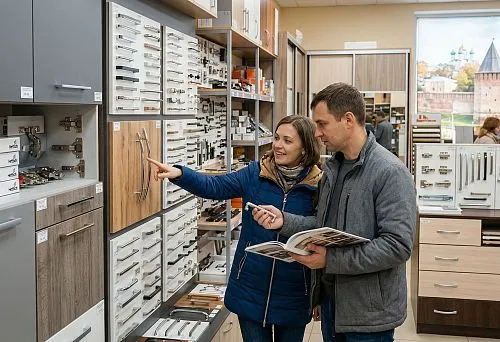
Furniture stores specializing in wooden furniture offer a wide selection of chairs in various styles, from classic to modern design. Here you can find both mass-produced items from well-known brands and exclusive models from design studios.
Advantages of buying in a furniture store:
- Opportunity to see and evaluate the product in person, check its quality and comfort
- Consultations with experienced sellers who will help you choose chairs that match your interior and needs
- Quality guarantee and after-sales service
- Option to order custom-made chairs according to your dimensions and design
Disadvantages:
- Higher prices compared to other options
- Limited selection within the specific store's assortment
- Need to visit the store in person, which requires time and effort
Online stores: convenience and wide selection
In the era of digital technology, more and more people prefer to shop online, and furniture is no exception. Online stores offer a wide selection of wooden chairs in various styles, price categories, and manufacturers.
Advantages of buying from an online store:
- Ability to choose chairs anytime, without leaving home
- Wide assortment, including models from manufacturers in different regions and countries
- Convenient search and filtering of products by various parameters
- Often lower prices due to the absence of costs for maintaining exhibition halls
- Delivery of chairs directly to your door
Disadvantages:
- Inability to see and inspect the product before purchase
- Risk of receiving chairs that do not meet expectations (color, texture, size may differ from those shown in photos)
- Difficulties with returns or exchanges in case of problems
- Delivery costs, which may be significant for large orders
Furniture factories: directly from the manufacturer
Many furniture factories have their own stores or showrooms where you can purchase their products without intermediaries. This allows you to get quality chairs at a more affordable price.
where to buy wooden chairs Directly from the manufacturer? Many factories have their own branded stores in major cities or sell products through their own websites. Some manufacturers also accept custom orders, allowing you to get chairs that perfectly match your requirements.
Advantages of buying from the manufacturer:
- Absence of intermediary markup
- Guarantee of authenticity and quality of products
- Ability to learn all details about the production process and materials used
- In some cases - opportunity to visit the production facility and see how chairs are made
Disadvantages:
- Limited assortment (only products from this factory)
- Not always convenient location of factory stores
- May require advance payment and waiting for chair production
Furniture fairs and exhibitions: novelties and trends
Furniture fairs and exhibitions offer an excellent opportunity to see and compare products from various manufacturers in one place. New and exclusive models, not yet available in general retail, are often showcased here.
Advantages of buying at a fair or exhibition:
- Opportunity to see and evaluate a large number of chairs from different manufacturers
- Special exhibition prices and promotions
- Direct communication with manufacturer representatives
- Ability to stay updated on the latest trends in furniture design
Disadvantages:
- Temporary nature of events
- Not always possible to pick up the purchase immediately (often requires waiting for delivery)
- Limited time to make a decision
How to choose the perfect wooden chairs for your interior
Choosing wooden chairs is not only about aesthetics, but also practicality, comfort, and durability. Here are several key aspects to pay attention to.
Style and design: harmony with the interior
Chairs should harmoniously fit into the overall style of your interior. Here are some recommendations for choosing chairs for different styles:
Classic style implies using chairs with traditional forms, often with carved elements, curved legs, and soft seating. Chairs made of dark wood species such as oak, walnut, or mahogany will be a good fit.
Modern style leans toward simple, minimalist forms, clean lines, and minimal decoration. Chairs may be made of light wood species or painted, often with metallic elements.
Scandinavian style is characterized by simplicity, functionality, and light tones. The ideal choice are chairs made of light wood species (birch, maple, beech) with simple forms and minimal decoration.
Provence and country styles imply using chairs with rustic elements: simple forms, sometimes with carved or painted details, often painted in pastel tones or with a distressed finish.
Loft combines industrial elements with natural materials. Chairs combining wood and metal with simple, rugged forms will be a good fit.
Ergonomics and comfort: comfort comes first
Even the most beautiful chair will not be enjoyable if it is uncomfortable to sit on. Here’s what to pay attention to from an ergonomic perspective:
The seat height should be such that the seated person’s legs can freely rest on the floor, with knees bent at a right or slightly larger angle. The standard chair seat height is 42–45 cm.
The seat depth should allow sitting with back support from the chair’s backrest, without the seat edge pressing on the hamstrings. The optimal depth is 40–45 cm.
The seat width should be sufficient for comfortable seating. The standard width is 40–45 cm, but wider seats may be needed for heavier individuals.
The backrest incline should provide support for the spine in its natural position. A slight backward tilt (around 5 degrees) is usually more comfortable than a strictly vertical backrest.
The backrest shape should match the natural curves of the spine. The backrest may be straight, curved, or with lumbar support — the choice depends on personal preference and posture.
Seat softness is a matter of personal preference. Some prefer rigid wooden seats, others prefer soft, cushioned ones. For prolonged sitting, soft seats are generally more comfortable.
Quality and durability: an investment for years
Quality wooden chairs can serve for decades, passing from generation to generation. Here’s what to pay attention to when assessing quality:
Material — chairs made of hardwood species (oak, beech, walnut, maple) are usually stronger and more durable than those made of softwood (pine, spruce).
Construction — pay attention to how parts are joined. Traditional joinery methods (dovetail, “birdsmouth”) are usually stronger than simple glue or screw connections.
Finish — quality protective coating (varnish, oil, wax) should be even, without drips, bubbles, or roughness. It protects wood from moisture, dirt, and mechanical damage.
Hardware — if the chair has metal elements (hinges, fasteners), they should be of quality, securely attached, and free of corrosion signs.
Overall finish — check for burrs, unevenness, cracks, or poorly finished areas. A quality chair should be carefully sanded and finished on all sides, including areas not visible during normal use.
Practical aspects: size, weight, foldability
In addition to aesthetics and comfort, there are several practical aspects to consider when choosing chairs:
Size — chairs should match the room size and furniture they will be used with. Too large chairs in a small room will look bulky and obstruct movement, while too small chairs in a spacious room may disappear unnoticed.
Weight - if you plan to frequently move chairs (for example, for cleaning or when guests arrive), pay attention to their weight. Chairs made of hardwood can be quite heavy.
Folding capability - for small spaces or chairs used only occasionally, foldable models can be a convenient solution. They save space when stored, but are usually less sturdy than non-foldable ones.
Stacking capability - some chair models can be stacked on top of each other, which is convenient for storage or transportation. This may be important for public spaces or for home use if you often have many guests.
Ease of maintenance - some finishes require more careful maintenance than others. For example, glossy surfaces more noticeably collect dust and fingerprints, and light colors more prominently show stains.
Caring for wooden chairs: preserving beauty for years
Proper care of wooden chairs not only preserves their attractive appearance but also significantly extends their lifespan. Here are some recommendations for caring for different types of wooden chairs.
Regular care: cleanliness and protection
Dust removal - regularly remove dust from chair surfaces using a soft dry cloth or a special furniture brush. Dust not only damages the appearance but can also act as an abrasive, scratching the surface.
Protection from moisture - immediately wipe up any spilled liquid. Even if the chair has a protective coating, prolonged exposure to moisture can cause damage. Use coasters under hot items and drinks.
Protection from sunlight - direct sunlight can cause fading and cracking of wood. Place chairs away from windows or use curtains and blinds to protect from intense sunlight.
Maintaining optimal humidity - excessively dry air can cause wood to crack, while overly humid air can cause it to swell. The optimal humidity for wooden furniture is 40-60%.
Care features for different types of finishes
Lacquered surfaces - for caring for lacquered chairs, use special lacquer furniture cleaners or simply a damp, well-wrung soft cloth. Avoid abrasive cleaning agents and stiff brushes that may scratch the lacquer.
Wax-finished surfaces - chairs treated with wax require periodic renewal of the protective layer. Use the same type of wax originally applied to the furniture. Apply a thin layer of wax with a soft cloth, let it absorb, then polish the surface with a clean dry cloth.
Oil-finished surfaces - chairs treated with oil also require periodic renewal of the protective layer. Apply a small amount of oil to a soft cloth, rub it into the wood grain, then remove excess with a clean dry cloth.
Painted surfaces - for caring for painted chairs, use a soft damp cloth. If the paint begins to flake or fade, repainting may be necessary. In this case, first remove the old paint, then sand the surface and apply a new coat of paint.
Restoration and renewal: a second life for old chairs
Even the highest quality chairs may lose their attractive appearance or sustain damage over time. But this is not a reason to discard them - many wooden chairs can be restored and given a second life.
Minor repairs - small scratches, dents, chips can be fixed yourself. To mask scratches, use special furniture pencils or chalks matched to the wood color. Dents can be tried to "raise" by placing a damp cloth over them and pressing with a hot iron.
Repainting or relacquering - if the chair's finish is severely damaged or simply outdated, it can be completely renewed. First, remove the old finish using special strippers or sanding, then apply a new finish (paint, lacquer, oil, wax) according to the manufacturer's instructions.
Replacing upholstery - if the chair has a soft seat or backrest, the upholstery may wear out or become outdated over time. Replacing upholstery is a relatively simple procedure that can be done yourself or by professionals.
Professional restoration - if the chair has serious damage (broken parts, loose joints, deep cracks) or represents historical or artistic value, it is better to consult professional restorers. They will be able to restore the chair while preserving its original characteristics and value.
Wooden chairs in various interiors: ideas and inspiration
Wooden chairs are versatile and can fit organically into the interior of any style or purpose. Let's consider how they can be used in different rooms and styles.
Kitchen and Dining Room: Functionality and Comfort
Kitchen and dining room - these are places where chairs are used most intensively. Here, aesthetics are important, but so are practicality, comfort, and ease of maintenance.
For traditional kitchens, classic wooden chairs with straight lines or gentle curves are suitable, possibly with a soft seat for greater comfort. The wood color can be matched to kitchen furniture or used as a contrasting accent.
For modern kitchens in minimalist or high-tech styles, choose chairs with a simple design, possibly with metal or plastic elements. Chairs made of light wood with geometric shapes look interesting.
For country or Provence-style kitchens, chairs with rustic elements are suitable: simple shapes, possibly with carved or painted details, often painted in pastel tones or with an aged effect.
Living room and office: representation and comfort
In the living room and office, chairs often serve not only a functional but also a decorative role, becoming an important element of the interior.
For a classic dining room, chairs with rich design, possibly with carved elements, curved legs, soft seat and backrest are suitable. Chairs made of dark wood species such as oak, walnut, or mahogany look great.
For a modern dining room, you can choose chairs with original design that will become an accent element of the interior. These may be models with unusual shapes, interesting material combinations, and bright upholstery.
For an office, comfort and elegance are important. Chairs with high backs, armrests, and soft seats are suitable. A classic choice is chairs made of dark wood with leather upholstery.
Bedroom and children's room: safety and individuality
In the bedroom, chairs are usually used less frequently than in other rooms and often serve a secondary function — for storing clothes, as part of a dressing table, etc.
For a bedroom in a classic style, elegant chairs with soft seats are suitable, possibly with upholstery that matches the bedroom's textile. Models with graceful shapes, slender legs, and decorative elements look great.
For a modern bedroom, you can choose chairs with a minimalist design that won't overwhelm the space. Models combining wood with other materials such as metal, glass, or plastic look interesting.
In a child's room, chairs should be primarily safe and sturdy. Models with rounded corners, stable construction, and no small parts that a child might detach are suitable. Color and design can be chosen according to the overall decor of the child's room.
Open spaces: terraces, verandas, gardens
For use outdoors or in rooms with high humidity (terraces, verandas, winter gardens), chairs made of wood resistant to moisture and temperature fluctuations are needed.
The best choice for such conditions are chairs made of teak, acacia, eucalyptus, or cedar. These species contain natural oils that protect the wood from moisture, rot, and insects.
Design of chairs for open spaces can vary — from classic garden models to modern minimalist or ethnic styles. The main thing is that they should be comfortable, durable, and harmonize with the surrounding environment.
Conclusion: a choice that won't disappoint
Choosing wooden chairs is an important decision that will affect the comfort and aesthetics of your home for many years. We hope our guide will help you make an informed choice and find chairs that will delight you with their beauty, comfort, and durability.
where to buy wooden chairsWhich chairs will become a true decoration of your home? The answer to this question depends on your preferences, budget, and specific needs. Specialized furniture stores, online shops, factory manufacturers, and furniture fairs — each option has its advantages and features.
The main thing is to approach the choice thoughtfully, paying attention to material quality and craftsmanship, ergonomics and comfort, compatibility with your interior and lifestyle. Quality wooden chairs are an investment that will bring joy and benefit for many years, and perhaps become a family heirloom passed down from generation to generation.
In a world where much becomes disposable and quickly loses value, wooden chairs remain a symbol of stability, quality, and good taste. They remind us of the importance of traditions, the value of handcrafted work, and the beauty of natural materials.
May your choice be successful, and the chairs you acquire become not just furniture items, but a source of daily comfort and aesthetic pleasure!