Article Contents:
- What are wooden panels for interior finishing
- What types of wooden panels for interior finishing exist
- Smooth panels
- Slatted panels
- Relief panels
- Paint-ready panels
- Panels with natural wood texture
- What materials are panels made from
- Solid wood
- MDF
- Veneer
- Combined Solutions
- Where can wooden panels be used indoors
- In the living room
- In the bedroom
- In the hallway and corridor
- In the study
- In the dining area
- In commercial interiors
- For niches, partitions, and columns
- What tasks do wooden panels solve in interior design
- How to choose panels according to interior style
- Modern style
- Minimalism
- Scandinavian interior
- Jatoba
- Neoclassicism
- Classic Interior
- How to choose panels by material and texture
- How to choose panels by size and format
- Wooden panels or slatted panels: what to choose
- How wooden panels for interior finishing are installed
- Foundation Preparation
- Mounting with adhesive
- Mounting on frame
- Panel joining
- Corners, junctions, sockets, niches
- How to combine wooden panels with other materials
- How to care for wooden panels
- Common mistakes when choosing wooden panels
- What to choose for different tasks
- For an accent wall
- For zoning
- For a calm background
- For a warm natural interior
- For a painting project
- For Apartments
- For Home
- For commercial interiors
- How to avoid mistakes: a selection algorithm
- Frequently Asked Questions

There are finishing solutions that come and go with seasonal trends. Wooden panels for interior finishing are not among them. For decades, they have remained among the most in-demand materials in residential and commercial spaces: in country houses and city apartments, in respectable offices and boutique hotels, in classic interiors and minimalist Scandinavian projects. The reason for this resilience is simple: wood provides what no synthetic analogues can recreate—living texture, warmth, depth, tactile surface value, and a sense of natural authenticity. If you plan to use wooden panels for interior finishing, this article will be your complete practical guide: from material and format selection to installation, care, and typical mistakes.
What are wooden panels for interior finishing
This term encompasses a broad class of finishing products made from natural wood or wood-based materials, intended for cladding walls, partitions, niches, columns, and other architectural surfaces inside a room. In this context, a panel is not just a sheet of material, but a complete structural element with a specific profile, format, and surface treatment, ready for installation and final finishing.
Finishing walls with wooden panels solves several tasks simultaneously that cannot be achieved with paint, wallpaper, or decorative plaster alone. First, it provides expressive texture: a three-dimensional surface interacts with light differently than a flat wall, creating a lively play of shadows and accents. Second, it allows for zoning space without constructing partitions: one fragment of a slatted or relief wall visually separates a relaxation area from a work zone, a dining group from the kitchen, a walk-in closet from the bedroom. Third, it masks structural defects: uneven concrete, signs of settling, utilities—all of this disappears behind the panel plane. Fourth, it provides additional sound and thermal insulation: a wooden structure on a frame with filling creates a noticeable buffer for both parameters.
Unlike wallpaper, wooden wall panels do not require regular replacement and can last for decades with minimal care. Unlike plaster, they provide volume and texture unattainable with flat methods. Unlike ceramic tile, wood remains warm to the touch and visually, creating that atmosphere of coziness and intimacy that is especially highly valued in modern design.




What types of wooden panels for interior finishing exist
The market offers several fundamentally different formats. Understanding the difference between them is the key to making the right choice.
Our factory also produces:


Smooth Panels
This is the most concise format: a flat plane made of natural wood, MDF, or veneered base. Smooth panels create a calm, homogeneous background that works well in minimalist and Scandinavian interiors, as well as where a neutral finish is needed that does not compete with furniture or textiles. They are mounted flush, creating the illusion of a single clad surface. When used under paint, they become a perfect chromogenic plane, accepting any tone.
Get Consultation
Rack panels
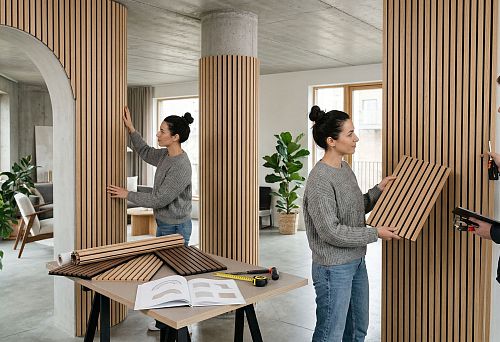
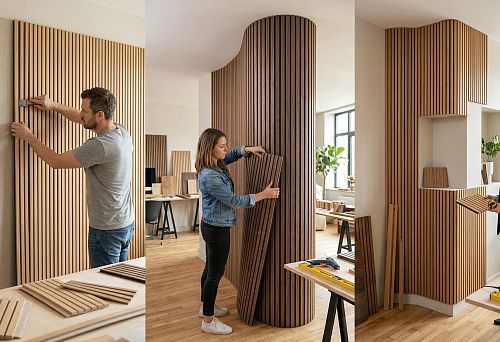
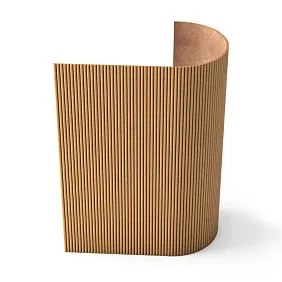
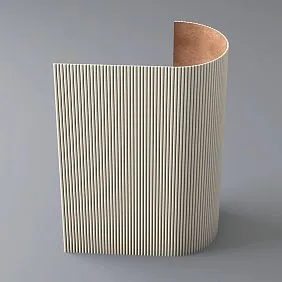
The most in-demand trend of the last six years.Rafter panels— is a structure of parallel slats of identical cross-section, fixed to an MDF backing or fabric base with uniform spacing. The rhythmic structure of the slats generates an expressive play of light and shadow under any lateral or directional lighting, transforming a flat wall into an architectural object. The vertical orientation of the slats visually elongates the room in height—a critically important technique for standard apartments with ceilings of 2.5–2.7 m. Horizontal layout, on the contrary, visually expands a narrow, elongated space. Flexible slatted panels on a fabric base wrap around columns, arches, and radius niches without deforming the slat pattern—a seamless solution for complex architectural situations.
Relief panels
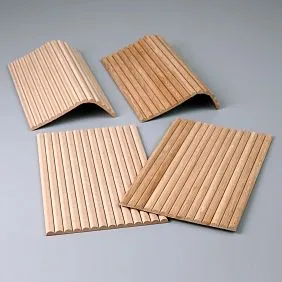
Surface with a pronounced volumetric pattern: geometric patterns, milled profiles, 3D textures. Relief panels made of wood or MDF create maximum surface depth and the strongest visual effect. Especially expressive under accent or oblique lighting. Suitable for classic and neoclassical interiors, as well as for modern projects where a pronounced decorative object on the wall is needed.
Panels for painting
A separate functional class: products made from MDF with a density of 750–850 kg/m³ with a perfectly sanded surface, ready for the application of any enamels and paints. The homogeneous structure of MDF without knots, defects, or resin pockets ensures impeccable paintwork. Panels for painting are universal in terms of chromogenic solutions: they can be painted to match the wall color—and they will dissolve into the background, leaving only a clean relief; or a contrasting accent color can be chosen. This is a working tool for those who design an interior through color.
Panels with natural wood texture
Solid wood or veneered surface with an open grain pattern, coated with clear varnish, oil, or wax. Each such panel carries a unique natural pattern that cannot be reproduced with synthetic materials.wood wall panelscreate an atmosphere of an authentic natural environment, which is especially appropriate in Japandi interiors, natural Scandinavian style, as well as in classic studies and living rooms where the status of the material is important.
What materials are panels made from
Solid wood
The most status-rich and naturally saturated material. Panels made from solid wood—oak, beech, ash, walnut, pine—carry the living grain pattern, the warmth of natural material, and a tactile value unattainable by any imitations. Oak with a density of about 700–750 kg/m³ remains the most popular choice: high hardness, resistance to mechanical wear, expressive structure, a wide range of tints—from light natural to deep wenge.Solid wood panelsare appropriate in formal living rooms, studies, libraries, representative meeting areas, and anywhere the material must be readable as natural and unquestionably high-quality. An important nuance: solid wood requires acclimatization before installation and proper coating that protects against moisture and temperature fluctuations.
MDF
Medium-density fiberboard—the workhorse of modern decorative panel production. MDF ensures perfect geometric stability: boards do not warp, do not react to seasonal humidity changes, and do not crack. This is a fundamental advantage over solid wood in the conditions of urban apartments with central heating, where the air is particularly dry in winter. The homogeneous structure of MDF without defects provides a flawless surface for painting: matte, satin, and semi-gloss enamels apply perfectly, creating a monolithic chromogenic coating.MDF panels for painting— the choice of designers who use color as the main interior tool, and an optimal solution for budget and mid-range projects where result reproducibility is important.
Veneer
A thin slice of natural wood from valuable species, glued onto a stable MDF base. Veneered wall panels provide the visual and tactile effect of solid wood at a significantly lower cost and with better geometric stability. The MDF base under the veneer does not warp or react to humidity fluctuations, making veneered solutions more practical than solid wood in apartment conditions.Veneered slatted wall panel— a union of naturalness and stability: the natural grain of oak, walnut, or ash on the surface, with a reliable engineered base inside. The optimal choice for those who want natural aesthetics with enhanced reliability.
Combined Solutions
Modern interiors often use several types of panels simultaneously or combine wood with other materials within a single structure. For example, a textured wood panel can be paired with smooth MDF for painting on one accent wall—this creates a multi-level effect without visual overload. Flexible slatted panels on columns and rigid panels on flat walls is another combination used in commercial projects to create a unified slatted look in a complex architectural context. Combined solutions are also convenient where part of the surface requires painting to match a project's specified color, and part requires natural wood grain.
Where to use wood panels indoors
In the living room
The living room is the most common place to use wood panels for interior finishing. A slatted accent wall behind the sofa or TV creates the main visual focal point of the room. Textured panels above the fireplace form a formal accent. Smooth veneered panels from floor to ceiling create the feel of a prestigious library. The format choice depends on the style: for modern interiors, slatted and smooth panels with clean lines work better; for classic interiors, textured panels with profiles and moldings are more suitable.
In the bedroom
The area behind the bed headboard is a classic spot for an accent wood panel in the bedroom. A slatted or textured surface creates the feel of an architectural headboard, visually structuring the space and replacing a textile-upholstered headboard with a more durable solution. For bedrooms, calm natural tones are recommended: light oak, warm ash, neutral gray-beige shades—which promote relaxation and rest without overwhelming the space.
In the hallway and corridor
The hallway and corridor are high-traffic areas where wood panels serve both decorative and protective functions. A lower wall strip, clad with panels up to a height of 1–1.2 m, protects the surface from scratches, impacts, and dirt, keeping the upper part of the wall clean. Full-height vertical slatted finishing in a narrow corridor visually expands the space. Dense oak or MDF with durable enamel is the optimal choice for high-traffic zones.
In the study
The study is traditionally associated with wooden finishes — this image has developed in interior design over centuries and remains relevant. Bookshelves integrated into a slatted wall system, combined with wooden wall cladding behind the desk, are a classic solution that creates an atmosphere of focus and status. Oak, beech, or walnut in natural finishes make the study a space where one wants to work.
In the dining area
A wooden accent wall behind the dining table creates warmth and coziness, characteristic of the best restaurant interiors. Slatted panels in the dining area provide an additional acoustic effect — absorbing excess reflections, making conversation at the table more comfortable. This solution works especially well in apartments with open floor plans, where the dining area smoothly transitions into the kitchen or living room.
In commercial interiors
Restaurants, cafes, boutique hotels, office meeting areas, showrooms, and fitness clubs actively usewood panels for interior finishingas the main tool for creating atmosphere. The vertical rhythm of slats in a restaurant hall creates a sense of intimacy and carefully considered design, which the guest perceives instantly. In an office context, slatted walls in meeting areas reduce acoustic discomfort and create a professional visual backdrop.
For niches, partitions, and columns
These are the most complex areas in terms of installation, where wooden finishes are especially expressive. A decorative niche in a wall, lined with slatted or textured panels, becomes an independent architectural object. Columns wrapped in flexible slatted panels on a fabric base transform from a structural element into a design detail. Partitions made of wooden slatted structures serve a zoning function, allowing light to pass through and creating a sense of openness.
What tasks do wooden panels solve in interior design
Understanding the functional capabilities of the material helps to use it with maximum precision:
-
Accent finishing — highlighting one wall or area as the visual focus of the room.
-
Zoning — dividing an open space into functional zones without constructing partitions.
-
Creating visual rhythm – the uniform spacing of slats or profiles sets the architectural rhythm for the entire space.
-
Adding texture – a wooden surface enriches the tactile and visual layer of the interior.
-
Masking imperfections – the cladding structure conceals defects in load-bearing walls without complex plastering.
-
Visually elevating the interior – natural wood is perceived as an expensive material regardless of the project's overall budget.
-
Acoustic comfort – textured and slatted surfaces diffuse sound, reducing reverberation in large spaces.
How to choose panels based on interior style
Modern style
For a contemporary interior, it's better to choose slatted panels with a clean, even rhythm, smooth paintable panels in neutral tones, or veneer with a delicate texture. Geometric precision and the absence of decorative excess are key selection parameters. Light oak or MDF with matte paint matching the wall color fit perfectly into a contemporary context.
Minimalism
Minimalism requires maximum restraint: one slatted or smooth panel as the sole decorative accent in a room, a calm monochrome palette, and no relief ornaments. Panels painted to match the wall color are the ideal solution for a minimalist interior: they add volume and rhythm without creating visual noise.
Scandinavian interior
Scandinavian aesthetics involve light natural wood, simple profiles, and whitewashed or light gray tones. Whitewashed oak slats, light pine with a natural finish, MDF painted with white or light gray enamel – all these solutions are organic in a Scandinavian context. Vertical slats create the characteristic Scandinavian interior rhythm and a sense of lightness.
Japandi
Japanese-Scandinavian hybrid style is built on wabi-sabi principles: valuing natural imperfection, a restrained palette, and the tactile quality of materials. For Japandi, choose panels made of light or warm oak with a natural oil finish, slatted constructions with moderate spacing, surfaces with an emphasized natural wood grain texture. No gloss, no symmetry for symmetry's sake – only living texture and tranquility.
Neoclassicism
Neoclassicism allows for more decorative solutions: relief panels with geometric profiles, moldings, coffered constructions. The color palette consists of neutral creamy, gray-beige, and gray tones in painted MDF or light veneer of precious wood species.Wall PanelsIn the spirit of boiserie—a finishing tool that transforms walls into a work of interior art within a neoclassical project.
Classic interior
Classic style benefits immensely from natural wood panels with rich grain patterns: oak, walnut, beech in warm tones, relief profiles, volumetric panels, carved overlays. It is here that boiserie panels—from baseboard to cornice—create that atmosphere of aristocratic presence that no other material can replicate.
How to choose panels by material and texture
Choosing the texture is one of the most crucial design decisions when working with wood finishes:
-
For a light interior: light oak in natural oil finish, whitewashed or gray-white slats, MDF with white or light gray enamel. The space remains light and airy.
-
For a warm interior: tinted oak in tobacco or cognac tones, walnut in natural finish, MDF in warm beige and ochre tones. The interior gains intimacy and coziness.
-
For a contrasting solution: dark wenge wood or oak in dark gray tint against light walls and white furniture. Strong, expressive, memorable.
-
For a natural wood palette: solid wood or veneer panels with an open grain pattern, coated with clear varnish or oil. Maximum naturalness.
-
For painting to match wall or furniture color: MDF panels with any profile, painted in the desired shade. Color becomes the main tool, form—secondary.
How to choose panels by size and format
Panel geometry influences spatial perception no less than color and texture:
-
Panel width: narrow slats (20–40 mm) create a fine, detailed rhythm suitable for small spaces; wide planks (80–120 mm) produce a large, generalized pattern more appropriate for spacious areas.
-
Length: in most cases, panels are installed from floor to ceiling in height—this creates a continuous vertical rhythm. Horizontal panels across the entire wall width work in wide rooms.
-
Thickness: determines shadow depth and relief volume. Thin planks give a delicate pattern; thick ones—a pronounced sculptural effect.
-
Slat spacing: the distance between planks critically affects surface density and rhythm. Dense spacing creates a more monolithic screen; sparse spacing—a light, openwork structure.
-
For small rooms: it's better to choose narrow slats with small spacing, vertical orientation, light tones—this visually stretches the space.
-
For large rooms: you can opt for wide planks, complex relief, dark tones—the room's scale can handle it.
Wooden panels or slatted panels: what to choose
This question arises for many: buy a ready-made panel or assemble a surface from individual slats?
Ready-madeRack panel—the optimal choice in most cases. Slats are already fixed with precise spacing on a backing, guaranteeing a perfect geometric result without complex marking. Installation takes significantly less time; seamless joining of modules creates a continuous surface. For flexible surfaces—columns, arches, radius niches—a ready-made panel on a fabric base wraps around any curvature, maintaining uniform slat spacing without a single break. This is a solution for an accent wall, TV area, dining area, and headboard zone.
Individual slats are justified where non-standard length, custom spacing, or a special layout pattern is required—for example, diagonal, herringbone, or radial. This type of installation is more complex, more expensive, and requires high skill, but delivers a unique result for custom projects.
What is better for zoning? Ready-made slatted panels create a smooth screen-partition faster and with a predictable result. For furniture projects and built-in structures—cabinets, sideboards, headboards—it is better to use individual planks or custom-made modules of the required format.
How wooden panels for interior finishing are installed
Foundation Preparation
Before installation, the wall must be dry, clean, and free of active cracks or areas with peeling plaster. The maximum allowable deviation from level when installing with adhesive is no more than 3 mm over two meters. If the wall has greater deviations, unevenness, or requires concealing utilities, installation on a frame is optimal. Solid wood panels must be acclimatized in the room for at least 48–72 hours before installation: the material adapts to the humidity and temperature levels, preventing deformation after fixing.
Mounting with adhesive
Used on perfectly flat substrates—walls leveled with drywall or carefully plastered. Polyurethane or acrylic dispersion adhesives compatible with wood and MDF are used. The adhesive is applied in a zigzag or dotted pattern to the back surface of the panel, the panel is pressed against the wall and fixed until the adhesive sets. This method provides minimal projection from the wall—critically important in narrow hallways and corridors.
Mounting on frame
The most universal method, suitable for any substrate. A metal or wooden frame is attached to the wall, leveled, ensuring a perfect plane regardless of the quality of the load-bearing wall. Sound and thermal insulation can be placed in the space between the frame and the wall. Panels are attached to the frame with screws through a backing or using hidden clips—fasteners do not appear on the front surface, and the surface remains clean. Installation on a frame adds an additional projection from the wall of 40–80 mm—this must be considered in small rooms.
Panel joining
Precise joining of modules is a key moment determining the final appearance of the surface. Slatted panels are joined so that the rhythm of the slats continues uninterrupted from module to module: for this, manufacturers calculate the module width as a multiple of the slat spacing. Smooth panels are butt-joined with the deformation gap filled with elastic sealant matching the panel color. Veneered panels require matching the grain pattern for visible joints—especially important on large surfaces.
Corners, junctions, outlets, niches
External and internal corners are covered with corner profiles matching the panel color or decorative trims. The junction of panels with the ceiling is covered with a cornice profile or a smooth transition to a ceiling skirting board. Locations for outlets and switches require preliminary marking and milling of holes before installation: doing this in place after installation is significantly more difficult. Niches and reveals are faced with the same material—this creates continuity of finish and a professional look for the detail.
How to combine wooden panels with other materials
Wooden wall paneling is not a monopolistic material in interior design, but a participant in a dialogue with other surfaces and textures:
-
With paint: the most organic combination. A wall painted to match the panel's tone or in a contrasting neutral color creates a smooth transition between zones. White or light gray walls next to a wooden accent panel is a classic scheme in modern interiors.
-
With glass: glass and wood mutually enhance each other. Glass partitions with wooden frames, mirrors in wooden frames, glass inserts in slatted structures—all these solutions work on the contrast of materials.
-
With metal: black matte metal in faucets, light fixtures, and furniture handles contrasts excellently with warm wood. Brass and bronze with wood create an atmosphere of Japandi or soft luxury.
-
With stone: natural or artificial stone next to wood is a natural pair. A stone countertop and wooden wall panels in a kitchen-dining area, stone fireplace cladding and wooden paneling around it—are well-considered combinations.
-
With textiles: upholstered furniture, curtains, and rugs in neutral tones feel significantly warmer and cozier next to wooden walls.
-
With furniture and doors: panels should be in the same tonal register as furniture and door leaves—they don't necessarily have to match in color and wood species, but should maintain a unified temperature (warm tones with warm, cool with cool). Mixing too different wood shades in one room is one of the most common mistakes.
How to care for wood panels
Proper care extends the service life of panels and preserves their original appearance for decades:
-
Regular cleaning: wipe panels with a soft, slightly damp microfiber cloth. Abrasive sponges and cleaning powders are completely excluded—they damage the varnish or oil finish.
-
Care for painted panels: surfaces with enamel or paint coating are sufficient to wipe with a neutral soap solution. Regular renewal of the coating is not required for 5–8 years with careful use.
-
Care for natural oil finishes: Panels coated with hard oil or wax should have their surface oil layer renewed every 1–2 years — this maintains protection and enriches the wood's color.
-
Care for varnished surfaces: Avoid sudden humidity changes and direct contact with water. If wear appears — perform spot varnish restoration without complete recoating.
-
What to avoid: Strong cleaning agents with chlorine and ammonia, steam cleaners, direct water ingress into joints, prolonged exposure to direct sunlight without UV-protective coating.
Common mistakes when choosing wooden panels
I'll list the most common ones that are constantly encountered in design and renovation practice:
-
Not understanding the material: Buying 'wooden' panels without understanding the difference between solid wood, MDF, and veneer means getting a mismatch between expectations and reality.
-
Choosing only by photo: Actual scale, room lighting, and material texture always differ from catalog studio shots. Whenever possible, always request a sample.
-
Confusing panel and plank: Without figuring out whether you need a ready-made panel or separate material for assembly, you can waste time and money.
-
Ignoring interior style: Dark relief panels with profiles in a Scandinavian interior is a crude design error.
-
Choosing too dark a texture for a small room: Dark wood on all walls of a small room creates a feeling of crampedness and pressure.
-
Not planning joints, corners, and adjacencies: A beautiful panel with sloppy corner joints ruins the entire work result.
-
Do not ignore outlets and switches: installing an outlet in a slatted wall after installation is labor-intensive and risks damaging the surface integrity. Plan ahead.
-
Buying without an installation diagram: without knowing the mounting method, you cannot correctly calculate the quantity and type of fasteners and underlayment.
-
Ignoring the floor and doors: panels should be in tonal harmony with the flooring and door leaves. Chaotic mixing of wood species and shades destroys the integrity of the interior.
-
Overloading the space: wooden panels on all four walls of a small room create a sense of excess. One accent wall or two adjacent surfaces is enough.
What to choose for different tasks
For an accent wall
Slatted or relief panels with pronounced texture are the best choice. The vertical rhythm of the slats turns the wall into an architectural object. For maximum effect, the accent wall should receive side or directional lighting: chiaroscuro enhances the relief and makes the texture come alive.
For zoning
A slatted structure installed as a decorative partition lets light through and visually divides the space without creating a feeling of enclosure. For zoning, both ready-made panels and individual slats on floor and ceiling tracks work well.
For a calm background
Smooth veneered panels or MDF for painting to match the wall color create a smooth background surface with a delicate texture or a completely chromatic plane. This solution does not distract from furniture and decor but adds depth and volume to the space.
For a warm, natural interior
Solid wood or veneer of oak, walnut, or beech with an oil finish and open wood grain. Natural wood texture, visible pores, warm tone — maximum naturalness. It is precisely suchwooden wall panelsthat create the atmosphere sought by nature-inspired interior styles — Japandi, boho, natural Scandinavian.
For a project intended for painting.
MDF with a dense, uniform surface, without a profile or with the desired milled relief. Coated with a water-based enamel in the chosen color according to the RAL or NCS system. This is the most flexible solution: when changing the design concept, the surface can be repainted without replacing the panels.
For apartments
In a city apartment with central heating and low winter humidity, MDF and veneered panels behave more stably than solid wood. For maximum naturalness in an apartment—oak veneer on an MDF base; for color flexibility—MDF for painting.Decorative MDF and veneer slats—this is a modern compromise between naturalness and operational reliability.
For home
In a country house, broader use of solid wood is permissible and desirable: stable climate, higher humidity, natural surroundings—all this creates the right context for solid wood. Oak, pine, larch with oil finish—a traditional and fail-safe choice for country interiors.
For commercial interiors
In restaurants, hotels, and offices, priorities are durability, ease of maintenance, and visual impact. Slatted panels made of MDF with durable enamel or veneered panels with lacquer coating meet these requirements. For large areas, modularity is important: standardized panels are installed quickly and without material waste.
How to avoid mistakes: a selection algorithm
Before proceeding to purchase, go through these six steps:
-
Define the task: accent wall, zoning, background finishing, or full wall cladding.
-
Choose the material: solid wood—for maximum naturalness; MDF—for painting and stability; veneer—for a balance of naturalness and reliability.
-
Determine the format: slatted, smooth, textured, or paintable—based on interior style and task.
-
Choose color and texture: warm or cool tone, open fiber structure or uniform surface, natural texture or coloring.
-
Plan the installation: adhesive or frame-mounted, account for ventilation, outlets, corner joints and seams.
-
Proceed to specific solutions in the manufacturer's catalog, which works with precise dimensions for your project.
Frequently asked questions
Which wood panels are best to choose for interior apartment finishing?
For apartments, veneered panels on MDF base or MDF slatted panels for painting are optimal — they are stable during low winter humidity and offer a wide choice of colors and textures.
What is better for interior finishing: solid wood, MDF, or veneer?
Solid wood — maximum naturalness and status, but requires acclimatization and stable climate. MDF — perfect geometry and versatility for painting. Veneer — the best of both: natural grain on a stable base. The choice depends on the task, budget, and room conditions.
Are wooden panels suitable for the bedroom?
Yes, they are an excellent choice. A slatted or relief panel behind the bed headboard is one of the most expressive techniques in bedroom design. Choose calm, natural tones for a relaxing atmosphere.
Can panels be used in the hallway and corridor?
Yes. Wood panels in the hallway serve both decorative and protective functions. Dense oak or MDF with durable enamel withstands mechanical loads well.
What is better for interior finishing: slatted panels or smooth ones?
Slatted panels create a pronounced architectural rhythm and work better as an accent element. Smooth panels provide a more neutral background and are better suited for background finishing. The choice depends on the interior style and task.
Can wood panels be painted to match the interior color?
Yes, if the panels are made of MDF for painting. Such surfaces accept any water-based enamels in the RAL or NCS system without loss of coating quality.
How are panels attached indoors?
Two main methods: with adhesive (for flat surfaces) and on a metal or wooden frame (for uneven walls or when hiding utilities is necessary).
Are panels suitable for room zoning?
Yes. Slatted partition panels are one of the most effective tools for zoning open spaces: they divide zones, allow light through, and do not create a feeling of confinement.
Which panels are better for a modern interior?
Slatted panels with a uniform rhythm, smooth panels for painting in neutral tones, or veneer with a delicate texture. The main criterion is clean lines and the absence of excessive decor.
How to choose panels for a small room?
Light tones, vertical orientation of slats, narrow planks with a small pitch. One accent wall instead of covering all surfaces. Installation with adhesive for minimal protrusion.
Can wooden panels be used on columns and niches?
Yes. For columns and curved surfaces, flexible slatted panels on a fabric base are used—they wrap around any geometry without distorting the pattern.
How to care for wooden panels inside the house?
Wipe with a soft, slightly damp cloth, avoid abrasives and aggressive cleaning agents. Panels with an oil finish should have a surface layer of oil renewed every 1–2 years. Lacquered surfaces do not allow direct contact with water in the joints.
Wooden panels for interior finishing are not just a finishing material. They are the language through which an interior speaks of its character: how natural, thoughtful, and crafted with attention to detail it is. Choosing the right format, material, and texture is choosing the atmosphere of the entire space.
If you are looking for a proven solution with experience in implementing hundreds of projects — pay attention to the products of STAVROS. STAVROS offersslatted panels made of MDF and solid oakfor interior wall finishing, partitions, niches, and columns, as well as a wide catalog ofwall panels and boiseriefor classic and modern projects. Here, the precision of engineering production and the natural value of solid wood come together — everything needed for finishing that will remain relevant in twenty years.