Article Contents:
- What Are Wooden Wall Panels
- Where Are Wooden Wall Panels Used
- Why Wooden Wall Panels Are in Demand Again
- Types of Wooden Wall Panels
- Panels made of solid wood
- Veneered panels
- MDF Panels with Wood Finish
- Wooden Slat Panels
- Smooth and Textured Solutions
- 3D and Decorative Formats
- How wooden wall panels differ by material
- Solid wood: appearance, status, features
- Veneer: balance of aesthetics and price
- Wood-look MDF: practical option without compromises
- What to choose for your task and budget
- How to choose the format of wooden wall panels
- Wide or narrow panels
- Vertical or horizontal orientation
- Full wall cladding or local accent
- Smooth surface or pronounced relief
- How to choose wooden panels to match the interior style
- Modern style
- Minimalism
- Neoclassicism
- Scandinavian interior
- Jatoba
- Warm classic interior
- Where wooden wall panels look best
- Accent wall in the living room
- TV area
- Bed headboard
- Entry Hall
- Home office
- Staircase areas and halls
- What to consider before purchasing or ordering wooden wall panels
- Base material
- Coating and shade
- Sizes and proportions
- Compatibility with other finishes
- Geometry and processing quality
- Installation method
- How to choose the color and texture of wooden wall panels
- How to incorporate wooden wall panels into interior style: practical examples
- What to combine wooden wall panels with
- With paint
- With moldings and trim
- With furniture and doors
- With metal and glass
- With lighting
- How lighting changes the perception of wooden wall panels
- What mistakes are most often made when choosing wooden wall panels
- Who wooden panels are suitable for, and who should choose a different format
- When Wood Is the Best Choice
- When It's More Logical to Choose MDF or Veneered Solutions
- When It's Better to Limit to an Accent Zone
- Wooden Wall Panels: Selection Algorithm
- Frequently Asked Questions About Wooden Wall Panels
- About the Company STAVROS

There are things that need no explanation—they simply work. Walk into a room where one wall is finished with wood, and you'll feel it instantly: the space becomes warmer, more alive, deeper. Not through complex designer schemes, but through one correctly chosen solution.Wooden wall panels create an environment rich in wood, where a person is constantly in contact with natural material — visually, tactilely, olfactorily. This forms a deep sense of comfort that is hard to describe in words but easily felt by the body.—is precisely such a tool: precise, versatile, and capable of changing the perception of any room.
Today, this wall finishing format is on the rise again—and not by chance. The demand for naturalness, tactility, and materiality in interiors is growing alongside weariness of faceless surfaces. Wood responds to this demand better than any other material: it is alive, it is varied, it speaks to a person in the language of nature.
But choosing wooden panels for a wall is not a matter of 'just walk in and buy.' Solid wood, veneer, MDF, slats, smooth and textured solutions, light and dark species, vertical and horizontal orientation—all of this affects the result dramatically. In this article—a complete breakdown: how to choose wooden wall panels correctly, where they work best, and how to avoid mistakes that later cannot be corrected without demolition.

What Are Wooden Wall Panels
Wooden wall panels are a finishing decorative or constructive cladding for interior surfaces using products made from natural wood, veneer, wood-like MDF, or composite materials. The panels are mounted directly on the wall, creating a finished surface with a natural texture or precise geometry.
This is not clapboard, plank, or conventional sheathing. A wooden wall panel is a self-sufficient product with a finished finish, clear dimensions, and a specific decorative character. This is precisely what distinguishes it from classic lineal sheathing: a panel is an architectural solution, not just a covering.




Where are wooden wall panels used?
Wooden wall panels are organic in any residential and commercial space. Living rooms, bedrooms, hallways, offices, dining rooms, conference halls, hotel lobbies, restaurants, boutiques, and showrooms—anywhere that requires an atmosphere of quality, warmth, and visual depth.
In residential interiors, wooden wall panels are most often used for:
-
creating an accent wall that forms the visual center of the room;
-
finishing the TV zone and the wall behind the sofa in the living room;
-
decorating the headboard area of the bed in the bedroom;
-
partial or full cladding of the hallway;
-
creating an atmospheric study with a natural character.
Our factory also produces:


Why Wooden Wall Panels Are Back in Demand
Interest in wooden wall finishes has never faded—only the formats and styles have changed. In the 2020s, this format is experiencing an obvious renaissance: slatted and smooth wooden wall panels have become a standard of quality interior design in Europe and Russia. The reason is the demand for naturalness, eco-friendliness, tactile richness of materials, and a rejection of artificial imitations.
Natural wood does not pretend. It is exactly what it is: a living material with a unique pattern, warm texture, and a physiologically proven calming effect on the perception of space.
Get Consultation
What Types of Wooden Wall Panels Are There
The market for wooden wall panels offers several fundamentally different formats. Understanding the differences between them means making the right choice even before you start selecting the wood species and color.
Solid wood panels
Solid natural wood without glue or synthetic base.Solid wood productsThey are made from oak, beech, ash, walnut, cherry, pine—each species gives a fundamentally different character to the surface.
Solid wood is maximum authenticity. Each panel carries a unique grain pattern that cannot be reproduced by any synthetic coating. The surface can be sanded, tinted, oiled or varnished, restored—it is a material whose value only increases over time.
When to choose: for premium projects, offices, country houses with a natural character, accent zones in living rooms.
Veneered panels
A thin slice of natural wood glued onto an MDF or plywood base. Veneered wall panels provide the full appearance of natural wood with significantly less weight, better stability, and a more affordable price. The range of wood species for veneer is wide: oak, walnut, maple, cherry, wenge, zebrano, merbau.
Veneered wood wall panels react to light and air in the room just like solid wood—they are 'alive' in the same sense. When properly installed, the joining of veneer sheets creates a 'bookmatch' or 'running' repeat—a symmetrical pattern that is itself a decorative technique.
When to choose: for projects requiring the visual effect of natural wood with better stability and without the high cost of solid wood.
Wood-look MDF panels
MDF is a pressed fine wood fraction with a perfectly uniform structure. MDF wall panels can have a wood-look decorative finish (film, veneer, decorative paper) or a clean surface for painting. This is the most technological and flexible format: precise geometry, predictable results, maximum possibilities for color and shape.
For slatted systems, MDF is the best substrate: a flat plane, precise spacing, seamless module connection. For boiserie wall systems with moldings and coffers, MDF is indispensable: it can be milled into any profile and accepts paint of any shade.
When to choose: for painting in any color, for replicable commercial projects, for slatted and classic wall systems.
Slatted wood panels
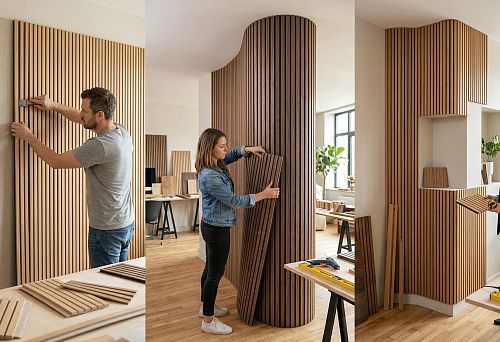
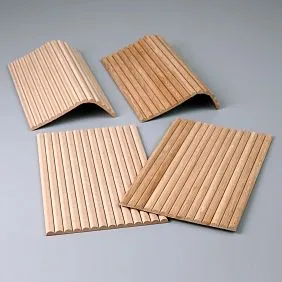
Wooden slat panels— the most in-demand format of wall finishing in the last five years. Parallel slats of identical cross-section with equal spacing on an MDF substrate or fabric backing create a linear rhythm that actively interacts with light. With side lighting, each slat casts a soft shadow—a flat wall transforms into a sculptural surface.
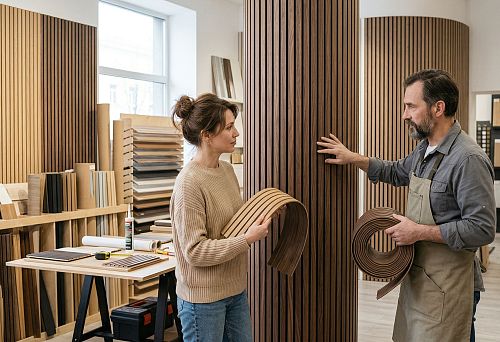
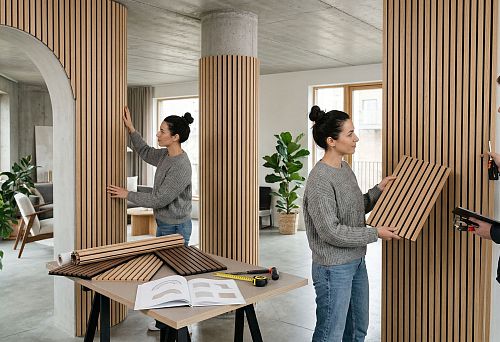
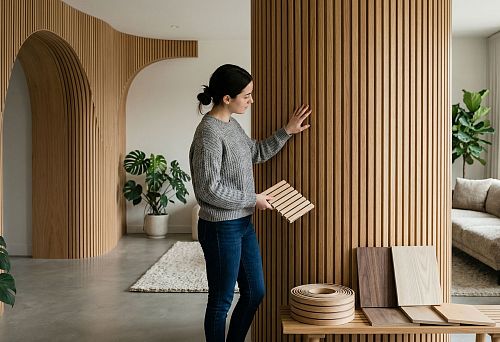
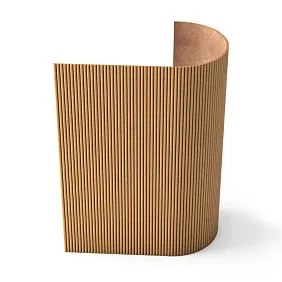
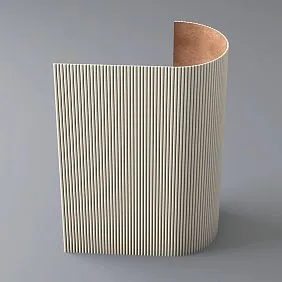
Slatted panels are available in two versions: rigid on an MDF substrate for flat walls and flexible on a fabric backing for curved surfaces—columns, arches, rounded corners. Slat material: MDF for painting or solid oak for tinting.
The vertical rhythm of the slats visually stretches the room upward—this is critically important for apartments with low ceilings. Horizontal rhythm expands the space sideways.
Smooth and Textured Solutions
A smooth wooden wall panel creates a monolithic, seamless surface without additional visual rhythm. It is a neutral, universal background for interiors with rich decor. Textured panels feature three-dimensional ornamentation: geometric patterns, coffers, waves, diamonds. With proper side lighting, the texture turns the wall into a three-dimensional decorative object.
3D and Decorative Formats
Decorative wooden panels with three-dimensional patterns and unconventional geometric designs. Used as an artistic accent in neoclassical, art deco, and bespoke interiors. Require measured use: one zone is enough.
How Wooden Wall Panels Differ by Material
This is the main question before purchase or ordering. The difference between solid wood, veneer, and MDF is not just in price. These are different materials with different purposes, different strengths, and different application scenarios.
Solid Wood: Appearance, Prestige, Features
Solid wood offers maximum natural authenticity. Each panel is unique: the grain pattern, shades of heartwood and sapwood zones, natural irregularity—all this makes the surface come alive. Oak provides a dense, heavy, and durable result with a rich pattern. Ash is lighter and more dynamic, with clearly defined longitudinal fibers. Walnut is dark, prestigious, with a noble depth of tone.
Solid wood can be sanded and restored: the surface can be refreshed several times over its entire lifespan. This is an investment in long-term results. With proper care, solid wood wall panels last for decades without loss of quality.
Suitable for: studies, country houses, premium living rooms, classic and neoclassical projects where maximum natural depth is desired.
Veneer: The Balance of Aesthetics and Price
Wood veneer wall panels are visually indistinguishable from solid wood. The reaction to light, tactile sensation, natural grain—everything is identical. At the same time, veneered panels are more stable under changing humidity and temperature conditions, significantly lighter in weight, and more affordable in price.
The main advantage of veneer is the wide range of wood species: exotic and rare types of wood, which are very expensive in solid form, become accessible for most projects in veneer.
Suitable for: residential interiors with an emphasis on natural visuals, large-format wall solutions where solid wood would be too heavy and expensive.
Wood-look MDF: A Practical Option Without Compromises
MDF is not a substitute for wood, but an independent material with its own application logic. Its main advantage is perfect geometry. No knots, resin pockets, or deformations. The panels join precisely, provide a flat surface, and accept any finish.
Paintable MDF offers maximum color freedom. The same set of wooden wall panels can be painted white, cream, anthracite, sage green, dusty pink—each time achieving a fundamentally different result. It is on this material that all classic boiserie wall systems are built.
Suitable for: boiserie wall systems, slatted solutions with precise rhythm, commercial projects requiring replication, any tasks where the priority is color and geometry, not natural texture.
What to Choose for Your Task and Budget
Simple logic:
-
Natural texture and tactile authenticity needed — solid wood
-
Natural wood visual with better stability needed — veneer
-
Painting in any color, precise geometry, reproducibility needed — MDF
-
Modern slatted rhythm with natural character needed — oak slats on MDF backing
How to choose a wooden wall panel format
The format affects the visual result no less than the wood species. The right format is the one that matches the task, the scale of the room, and the interior style.
Wide or narrow panels
Wide wooden panels create a calm, monolithic surface with fewer joints. They work well in spacious rooms with high ceilings. Narrow panels offer a more dynamic rhythm, more play of light and shadow, and are more expressive with side lighting. For small rooms, narrow formats work better: they don't make the plane look overloaded.
Vertical or horizontal orientation
Vertical wooden wall panels visually stretch the room in height — an indispensable technique in apartments with low ceilings. Horizontal panels expand the space and work well in narrow corridors and elongated hallways.
The vertical rhythm of slatted panels is the most popular choice for modern interiors: it simultaneously organizes space, adds visual weight, and creates architectural scale.
Full wall cladding or a local accent
Full wall cladding with wooden panels is a bold architectural solution that creates a sense of a finished, cohesive space. Suitable for studies, country houses, dining rooms, and classic interiors with sufficient volume.
A local accent—one wooden wall against neutral surfaces—is the safest and most versatile technique. It provides maximum visual impact with minimal finishing area. This is the best place to start if you're working with wooden cladding for the first time.
Smooth surface or pronounced relief
Smooth wooden wall panels create a calm, cohesive background—a good choice for interiors where furniture and textiles play the main decorative roles. Relief panels are an active accent that requires proper lighting and precise placement. Slatted panels occupy a middle ground: they combine rhythm, volume, and tactile texture simultaneously.
How to choose wooden panels to match the interior style
Each style has its own 'language' of materials. Wooden wall panels adapt to it through the choice of wood species, shade, format, and surface finish character.
Modern style
Modern interior is about conciseness, attention to detail, and respect for the material.slatted panels made of MDF and solid oakwith an even rhythm, neutral oak or ash shade, matte finish without gloss. No decorative excess: the rhythm and texture speak for themselves.
Minimalism
Maximum restraint in form and color. Smooth panels in the same tone as the wall—ready for painting or with a thin veneer without an active pattern. If slats are used, they have a wide spacing and minimal profile. The principle: fewer details—more space.
Neoclassicism
Structured wall systems: moldings, coffers, cornices, decorative overlays.wall panels boiserieMade of MDF with enamel paint in cream, white, or dusty green tones—this is the quintessence of neoclassicism. The geometry is precise, details are refined, and the rhythm is set by architectural logic.
Scandinavian interior
Honest texture, light natural wood, natural irregularity. Birch, ash, light oak with a matte oil finish. Wooden wall panels in Scandinavian interiors are not decoration but an expression of the 'less but better' philosophy.
Japandi
Precision of forms and silence. Narrow vertical slats of ash or oak with natural tinting, medium spacing, no decoration for decoration's sake. A wooden wall in japanandi is a meditative object that requires no additions.
Warm classic interior
Study, dining room, hunting lounge—here, full wall cladding with wooden panels is appropriate. Dark walnut, merbau, rich oak with an oil-based finish. An interior where wood creates an atmosphere of weight, history, and quality.
Where wooden wall panels look best
The rule is simple: wooden panels work in any room. The question is where and in what format.
Accent Wall in Living Room
The main wall in the living room—behind the sofa, opposite the entrance, or around the TV—is a surefire place for wooden cladding.Wooden slat panelsOn this plane, they create rhythm and depth that make the entire room more expressive. A wooden wall in the living room is a visual anchor around which the rest of the space's composition is built.
TV Zone
Wooden wall panels around the television solve several tasks at once: they create a decorative background for the screen, hide cables, and visually structure the zone. Slatted cladding for the TV wall is one of the most popular interior solutions in modern living rooms. The panels extend from the screen to the right and left, creating a sense of architectural 'framing'.
Bed headboard
The wall behind the bed headboard, clad in wooden panels, is an accent solution in the bedroom, replacing a separate soft headboard while simultaneously creating the architectural character of the entire room. The height of the zone varies: from a narrow strip directly behind the bed to the full height of the wall.
The best choice for a bedroom is light and natural shades, a calm slatted rhythm, or a smooth veneered surface without an active pattern. This creates an atmosphere of rest, not visual tension.
Entryway
The hallway is the first impression. A lower cladding belt 90–120 cm high in the corridor is a classic technique: decorative and practical at the same time. A full wooden wall in the hallway sets the tone for the entire apartment, working as an architectural statement from the first step.
Home Office
A study requires an atmosphere of concentration and weightiness. Wooden wall panels made of dark oak or walnut on the walls of the study create precisely that: a space where you want to think and work.Solid Wood ItemsFor a study, it's an investment in an environment that works for you every day.
Staircase Areas and Halls
A staircase flight with wooden panels is an architectural gesture that transforms a technical area into a decorative one. The slatted cladding follows the change in staircase height, creating a continuous rhythm that visually connects the floors.
What to consider before purchasing or ordering wooden wall panels
This section is for those who have already decided they want wooden wall panels and are now preparing to place an order.
Base Material
The first thing to determine: solid wood, veneer, or MDF? The answer depends on the task, budget, and requirements for the result. Don't choose a material just by a beautiful photo in a catalog—request samples and evaluate them in person.
Finish and shade
Matte oil, glossy varnish, tinting, enamel, bleaching—each finish changes the character of the wooden surface. Matte oil gives the most natural effect, emphasizes texture, and creates a tactile sensation of living wood. Varnish is more durable, hygienic, with a slight shine. Tinting allows you to achieve the desired shade while preserving the natural grain.
The shade of wooden wall panels should be checked under the actual lighting of the room. The same sample under warm and cool light yields two different results.
Dimensions and Proportions
The width, length, thickness, and spacing of the slats should correspond to the scale of the room. Wide panels in a small room create a sense of disproportion. Too narrow a slat spacing in a large hall results in a small, inexpressive rhythm that gets lost. Proportion is the key to a convincing result.
Compatibility with the rest of the finish
Wooden wall panels should form a coordinated system with the floor, doors, furniture fronts, and ceiling. It doesn't have to be the same wood species—harmony in color temperature is important. Warm wood goes with a warm floor. Cool gray ash goes with light neutral surfaces.
Geometry and processing quality
Precision of angles, surface evenness, uniform slat spacing, clean milled edges—all these are signs of quality manufacturing. Poor geometry will result in visible gaps during installation. Module joints should be seamless—this indicates a properly manufactured panel.
Installation method
Rigid panels on MDF backing are mounted with construction adhesive, headless finishing nails, or on a metal frame. Flexible panels on fabric backing—with construction adhesive directly onto the curved surface shape. The base must be even, clean, and dry. For significant unevenness—mount on a frame.
How to choose the color and texture of wooden wall panels
Color and texture are not the final step of selection, but one of the first. They define the character of the interior, its emotional tone.
Light wood tones—bleached oak, light ash, birch—add warmth without heaviness. The best choice for small rooms, light interiors, Scandinavian and minimalist styles.
Warm natural tones—honey oak, cherry, medium walnut—create a cozy atmosphere. Work well in bedrooms, living rooms, and studies with warm lighting.
Dark deep textures—wenge, dark walnut, merbau—an expressive accent on one wall. In small spaces—only with good lighting. Require neutral adjacent surfaces.
Calm wood pattern—uniform texture without active grain. For modern minimalism and interiors with accent furniture.
Active natural texture—curly grain, shade variations, unique pattern. Self-sufficient decor: one wooden wall with such a surface needs no additions.
How to incorporate wooden wall panels into interior style: practical examples
Theory is good. But even better are specific interior scenarios where wooden wall panels work flawlessly.
Living room in modern style: oak slatted panels with vertical rhythm behind the sofa, other walls - neutral taupe paint. The floor lamp to the right of the sofa creates side lighting that 'activates' the slat texture. The entire system works as a unified visual whole.
Bedroom in Scandinavian style: smooth veneered panels of light oak behind the headboard, white adjacent walls, wooden floor in the same tone. No bright accents - only the natural tranquility of the material.
Study with classic character:wooden wall panelsmade of solid walnut on two walls, built-in library cabinets, warm directional lighting. This is an interior that speaks of quality without words.
Hallway in neoclassical style: lower section of MDF panels with moldings painted cream, upper wall - paint in the same palette. The transition creates architectural structure and makes the hallway expressive even with limited square footage.
What to combine wooden wall panels with
Wood is one of the most 'friendly' materials in interior design. It works with practically any partner provided the right balance is chosen.
With paint
A wooden wall plus neutral paint on other surfaces is the most common and foolproof solution. The paint shade should complement the warm tones of the wood or create an intentional contrast: anthracite with whitewashed oak, sage green with natural walnut — this works.
With moldings and trim
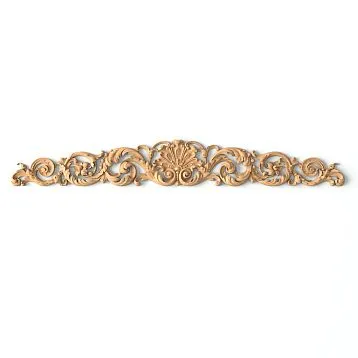
Decorative Insertsand moldings enhance the architectural character of a wooden wall, adding structure and detail. In neoclassical and classical projects, moldings are an essential part of the wall system.
With furniture and doors
For a cohesive result, wooden wall panels, furniture fronts, and doors should work within a unified tonal system. They don't necessarily have to be the same wood species — color temperature consistency is key. Warm wood + warm doors + warm flooring = a system perceived as well-considered.
With metal and glass
Brass, bronze, and matte black details — furniture legs, lighting fixtures, handles — create an elegant contrast with warm wood. Metal emphasizes the natural value of the material. Matte glass softens boundaries; mirrored glass adds depth and expands the space.
With lighting
Hidden LED strips behind or beneath slatted panels are one of the most expressive nighttime techniques. The backlighting 'activates' the texture, creating a warm, soft glow at the base of the wall. Side spotlights and wall sconces are tools for daytime activation of the relief.
How light changes the perception of wooden wall panels
Wood and light are a union without which the best panels lose half their expressiveness.
Side lighting is the main tool for working with slatted panels. Gliding light creates chiaroscuro between the slats, making the surface three-dimensional and alive. Wall sconces, floor lamps, directional spotlights next to a wooden wall are not just lighting, they activate the material.
Warm light (2700–3000 K) enhances the golden and amber tones of wood. Creates a feeling of coziness and intimacy — exactly what wooden wall panels are chosen for in residential interiors.
Cool light (4000 K) neutralizes the warm tint of wood. In residential interiors with wooden panels — use only with caution. In offices and commercial spaces — more appropriate.
Highlighting the relief. A built-in strip behind slatted panels creates a warm glow at the base, which at night turns the wall into an independent source of atmosphere. One of the most effective techniques in modern interior design.
A mistake that is important to avoid: check samples of wooden panels under the actual lighting of the room. The same shade under warm and daylight is two different results. Never choose based solely on catalog photos.
What mistakes are most often made when choosing wooden wall panels
List of real mistakes encountered when ordering and installing wooden wall panels:
-
Too dark a shade for a small room. Wenge or dark walnut on three walls in a small bedroom turn coziness into claustrophobia. Dark wooden panels — only one accent wall and only with good lighting.
-
Excessive relief in a cluttered interior. Relief cladding requires a neutral environment. If the room already has many details, active relief creates visual noise.
-
Mismatch with room style. Slatted panels in a modern style and heavy classical coffers with molding are different universes. Each format works only within its own stylistic context.
-
Choosing only by photo without assessing texture. Wood is a tactile material. It needs to be seen and touched in person, under real lighting.
-
Ignoring wall proportions. Too wide panels in a narrow hallway, too small slat spacing in a large hall—both options create disproportion.
-
Mixing incompatible wood species and shades. Two or three different wood tones without systematic logic destroy the integrity of the interior.
-
Furniture, floor, and doors are not considered. Wooden wall panels should work as part of a system, not in isolation.
-
No understanding of where an accent is needed and where a background is required. This is a conceptual error that is difficult to fix without dismantling.
Who wooden panels are suitable for, and who should choose a different format
When wood is the best choice
-
When natural texture and tactile richness of the material are needed
-
When the interior is built on a natural palette and natural materials
-
When an accent wall with maximum visual impact is needed
-
When a room — an office, living room, bedroom, or hallway — requires character and atmosphere
-
When durability and the possibility of surface restoration are important
When it makes more sense to choose MDF or veneered solutions
-
When painting in a specific color without natural texture is needed
-
When reproducibility and precise geometry across multiple rooms are important
-
When the budget is limited but the effect of natural wood is desired — choose veneer
-
When the room is commercial with high foot traffic — MDF with a wear-resistant coating is more reliable
When it's better to limit to an accent zone
-
In small apartments with low ceilings
-
In rooms with rich decor and active furniture
-
When the task is to create one visual accent, not to redesign the entire interior
-
For your first experience with wooden wall panels — start with one wall
Wooden wall panels: a selection algorithm
The final sequence that works for any project:
-
Define the task — accent, background, zoning, concealing flaws
-
Choose the location — which wall, which room, what scale
-
Choose the material — solid wood, veneer, or MDF for the task and budget
-
Choose the format — smooth, slatted, relief, modular
-
Select the shade and texture — to match the style, lighting, furniture, and floor
-
Consider the lighting — side light, warm temperature, accent lighting for texture
-
Request samples — always evaluate in person, under real lighting
-
Proceed to order — with a full understanding of all previous steps
Frequently asked questions about wooden wall panels
How do wooden wall panels differ from wood-look wall panels?
Wooden wall panels are made from natural wood (solid wood or veneer) or MDF with a natural structure. 'Wood-look' panels are typically PVC or laminated boards that imitate wood grain. These are different materials with different feels, properties, and durability.
What is better for interior design: solid wood, veneer, or MDF?
It depends on the task. Solid wood — for maximum natural authenticity. Veneer — a balance between the visual appeal of natural wood and stability. MDF — can be painted any color and offers precise geometry. There is no single correct answer — there is the correct answer for a specific task.
Are wooden panels suitable for a small room?
Yes, if the rules are followed. One accent wall, a light shade, a vertical rhythm of slats, neutral adjacent surfaces. Dark tones and textured paneling on all walls are not for small spaces.
Which panels are better for a living room?
Slatted with a vertical rhythm — for a modern accent. Smooth veneered — for a calm natural background. Textured — for neoclassical style. It depends on the style and task.
Can panels be used on only one wall?
Not only is it possible — it's recommended for most residential interiors. One wooden accent wall creates the desired effect without overwhelming the space.
What colors of wooden panels are currently the most versatile?
Neutral oak in shades from bleached to honey, light ash, matte gray ash. These are shades that fit into modern, Scandinavian, minimalist, and Japandi interiors.
Are slatted panels considered wooden wall panels?
Yes.Wooden slat panels— this is one of the formats of wooden wall panels. The material of the slats: MDF for painting or solid oak. The backing is MDF or fabric base.
How to choose panels for a modern interior?
A concise format — smooth or slatted. A neutral shade without an active pattern. Matte finish. One accent wall. No decorative excess.
About the company STAVROS
If you are looking for high-qualityWooden wall panels create an environment rich in wood, where a person is constantly in contact with natural material — visually, tactilely, olfactorily. This forms a deep sense of comfort that is hard to describe in words but easily felt by the body.— with a rich selection of species, formats, and finishes — contact STAVROS.
STAVROS — a Russian manufacturer with years of experience creating products from wood and MDF for interiors. The assortment includes —slatted panels made of MDF and solid oak, wall panels and boiserie systems, Custom solid wood products, moldings, baseboards, casings, cornices, and decorative overlays. Production is carried out to individual dimensions, with a wide range of wood species — oak, beech, ash, walnut — and finishes: from whitewashed oak to dark wenge.
STAVROS implements a full cycle: consultation, solution development, production, delivery, and installation. Showrooms in Moscow and St. Petersburg. Material samples for evaluation before ordering. Work with designers, architects, and direct clients — in any style, from modern minimalism to premium classic boiserie.