Article Contents:
- Why Wood is the Ideal Material for Terrace Columns
- Natural Beauty and Uniqueness of Each Piece
- Ecological Properties and Impact on Microclimate
- Strength and durability with proper care
- Thermal Properties of Wood
- Variety of Wooden Column Styles for Terraces
- Classic Columns: Eternal Elegance
- Carved Columns: Embodiment of Craftsmanship
- Turned Columns: Dynamics and Rhythm
- Rustic Columns: Natural Simplicity
- Modern Minimalist Columns
- Choosing Wood Species for Terrace Columns
- Coniferous species: accessibility and practicality
- Hardwood Species: Beauty and Strength
- Exotic Species: Uniqueness and Exclusivity
- Glued Lumber: Technological Advancement and Stability
- Technical Specifications and Dimensions of Wooden Terrace Columns
- Standard Sizes and Proportions
- Load-Bearing Capacity and Structural Features
- Protection from Atmospheric Effects
- Designing a Terrace with Wooden Columns
- Architectural Styles and Alignment with Overall House Design
- Functional Zoning of the Terrace
- Integration with landscape design
- Installation and Mounting of Wooden Columns on a Terrace
- Preparatory Work and Foundation
- Installation and mounting technology
- Features of installation in different climatic conditions
- Maintenance and Care of Wooden Columns on a Terrace
- Regular preventive measures
- Seasonal Work and Winter Preparation
- Repair and restoration
- Economic Aspects of Choosing Wooden Columns for a Terrace
- Cost Comparison of Different Materials and Styles
- Long-Term Economic Efficiency
- Cost optimization without compromising quality
- Conclusion: Harmony of Tradition and Modernity in Wooden Terrace Columns
A terrace is not just an extension of the house; it is a special space where the comfort of home and the freedom of nature merge. A place where you can enjoy morning coffee to the sound of birds or spend an evening with loved ones under the twinkling stars. And the key role in creating this unique space is played by architectural elements, among which wooden terrace columns hold a special place wooden columns for a terraceThey not only perform an important structural function, supporting the canopy or roof, but also become the central design element, setting the tone for the entire house exterior.
In this article, we will dive into the world of wooden terrace columns, reveal their advantages and features, discuss the variety of styles and materials, share secrets of proper selection and installation. Whether you are planning to build a new terrace or renovate an existing one, this information will help you create a space that will delight the eye and serve for many years.



Why wood is the ideal material for terrace columns




Natural beauty and uniqueness of each piece
Wood is a material created by nature, and this is its main advantage. Each terrace wooden column is unique due to its unique grain pattern, tone, and texture. Even columns made from the same blueprint will differ from each other, creating a living, organic atmosphere.
The natural texture of wood has an amazing ability to harmoniously blend into any landscape. Wooden columns do not look out of place against a garden or forest backdrop; they become a natural extension of the surrounding nature, creating a sense of completeness and cohesion in the architectural composition.
As wood ages, it develops a noble patina, becoming even more beautiful. This process of natural aging gives wooden columns a unique charm and character that cannot be achieved with artificial materials.
Our factory also produces:


Ecological friendliness and impact on microclimate
In an era of growing environmental awareness, choosing natural materials is no longer just a fashion statement but a conscious decision. Wooden columns are an eco-friendly product that does not emit harmful substances and does not generate electrostatic fields.
Wood has a unique ability to 'breathe', regulating the humidity of air on the terrace. On hot days, wooden columns will absorb excess moisture, and on dry days, they will release it back, creating a comfortable microclimate.
Moreover, wood possesses natural antibacterial properties. Some species, such as larch or oak, contain natural resins and tannins that prevent the growth of mold and fungi.
Get Consultation
Strength and longevity with proper care
Contrary to popular belief, wooden structures can serve for decades and even centuries. Evidence of this can be seen in wooden temples that have survived to this day, some of which are centuries old.
Modern wood treatment technologies significantly increase its resistance to environmental influences. Special impregnations protect wood from moisture, ultraviolet radiation, insects, and fungi, while preserving its natural beauty and eco-friendliness.
With proper selection of wood species and regular maintenance, wooden terrace columns can last for no less than 50-70 years, becoming a family heirloom passed down from generation to generation.
Thermal properties of wood
Wood has low thermal conductivity, making it an ideal material for terrace columns. On hot summer days, wooden columns do not heat up as much as metal or stone ones, thus not causing discomfort upon accidental contact.
In winter, wood does not freeze through, which is especially important for terraces used year-round. This property allows avoiding condensation formation on column surfaces during sharp temperature changes, thereby extending their service life.
Moreover, wood has good sound insulation properties. It does not create echoes or resonance, making the terrace more comfortable and private.
Variety of wooden terrace column styles
Classic columns: eternal elegance
Classic wooden columns trace their origins to ancient architecture and are characterized by strict proportions and distinctive elements — base, shaft, and capital. They impart a sense of grandeur and nobility to the terrace, creating an impression of solidity and respectability.
Depending on the complexity of the capital design, classic columns are divided into several orders:
Doric order — the most strict and minimalist, with minimal decoration and clear lines. Such columns are ideal for terraces in neoclassical or modern classical styles.
Ionic order — more elegant, with characteristic volutes (spiral curls) on the capital. These columns will add elegance and refinement to the terrace.
Corinthian order — the most decorative, with an ornate capital adorned with stylized acanthus leaves. Such columns will become a true ornament for a terrace in baroque or empire style.
Classic columns can be either smooth or fluted (with vertical grooves on the shaft), creating an interesting play of light and shadow and visually lightening massive structures.
Carved columns: embodiment of craftsmanship
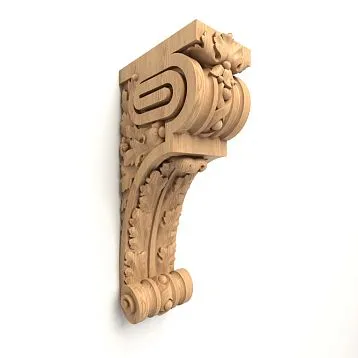
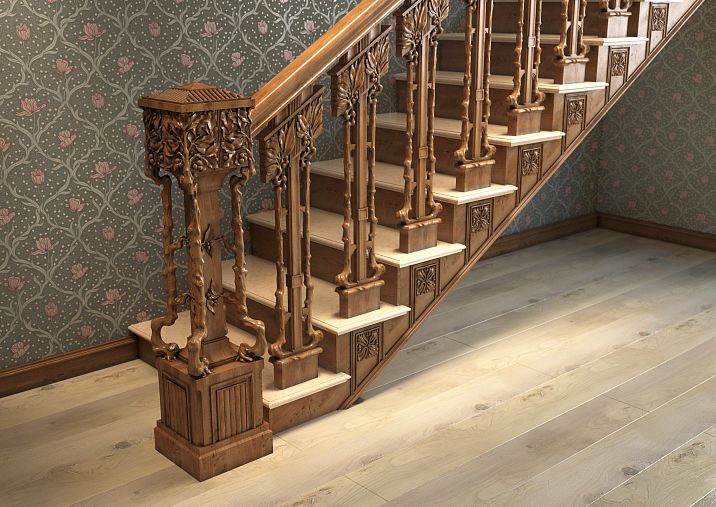
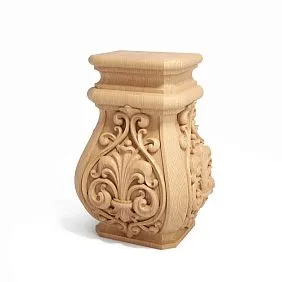
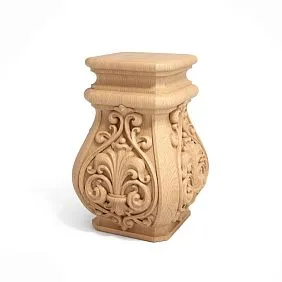
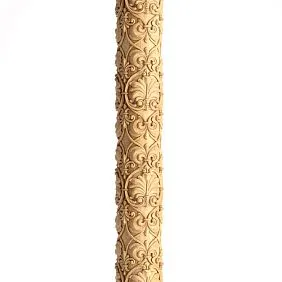
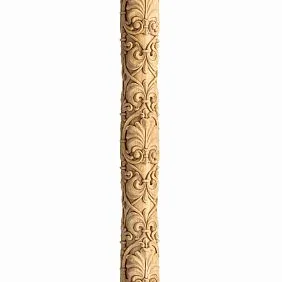
Carved wooden columns are true works of art, showcasing the highest level of woodcarving craftsmanship. They can be adorned with floral ornaments, geometric patterns, zoomorphic or anthropomorphic motifs.
In Russian tradition, columns with floral ornamentation—such as grapevines, oak leaves, and floral garlands—are especially popular. Such columns give terraces a cozy, homey atmosphere and pair well with wooden houses in Russian or Scandinavian styles.
For terraces in Eastern or colonial styles, columns with exotic motifs—such as palm leaves, bamboo, and lotuses—are suitable. They create an atmosphere of distant lands and add a touch of adventure to the exterior.
Modern technologies allow creating carved columns of any complexity, from delicate openwork carving to deep relief. Each column can be unique, crafted according to an individual sketch, enabling the realization of the most daring design ideas in wood.
Turned columns: dynamics and rhythm
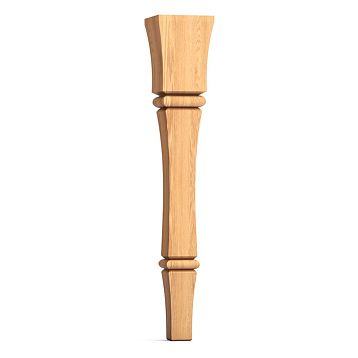
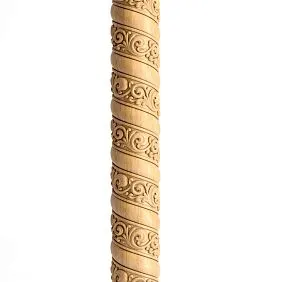
Turned columns feature smooth changes in diameter along their height, creating a sense of movement and rhythm. They can be symmetrical, with even tapering toward the middle or top, or asymmetrical, with more complex profiles.
Balusters are a smaller variety of turned columns, used for terrace railings. They create an open, light silhouette and provide good visibility, not obstructing views of the surrounding landscape.
Turned columns look especially good on terraces in country, Provence, or shabby chic styles. They add coziness and romance to the interior, creating an atmosphere of a countryside home.
Modern CNC lathes allow creating turned columns with high precision and repeatability, which is important when manufacturing several identical elements.
Rustic columns: natural simplicity
Rustic columns are made from minimally processed tree trunks, preserving their natural shape, bark, and texture. They are ideal for terraces in chalet, rustic, or eco styles.
Columns made from whole tree trunks with bark create a sense of closeness to nature and pair well with stone elements, wrought iron, and natural fabrics.
For making rustic columns, trunks of pine, cedar, or juniper are often used, which have high natural resistance to rot and insects. Each column is unique and irreplaceable, just like every tree in the forest.
Rustic columns require no complex processing or finishing, making them more affordable and eco-friendly. However, to extend their lifespan, it is recommended to treat them with protective compounds that preserve the natural appearance of the wood.
Modern minimalist columns
For terraces in modern style, minimalist columns of simple geometric shapes—square, rectangular, or multi-faceted—are ideal. They feature clean lines, lack decorative elements, and are functional.
Such columns are often made from glued-laminated timber, which ensures high strength and geometric precision. They can be painted any color or coated with transparent varnish, highlighting the wood’s texture.
Minimalist columns pair well with modern materials—glass, metal, composite panels—creating interesting contrasts of textures and forms.
Despite their apparent simplicity, modern wooden columns require high precision in manufacturing and installation, as any irregularities or defects will be noticeable on smooth surfaces.
Choosing wood species for terrace columns
Coniferous species: accessibility and practicality
Pine is the most accessible and widely used species for making terrace columns. It is easy to process, has a pleasant golden color, and a characteristic pine aroma. Pine contains a high amount of resin, which acts as a natural preservative and protects the wood from rot. However, for outdoor use, pine columns require additional treatment with protective compounds.
Larch is one of the most durable coniferous species, traditionally used for construction in high-humidity conditions. Larch wood contains a high amount of resin and tannins, making it resistant to rot, mold, and insects. Over time, larch develops a beautiful golden-brown hue and becomes even stronger. Larch columns can last for decades without additional treatment.
Cedar is a noble coniferous species with beautiful texture and pleasant aroma. Cedar wood contains natural oils that protect it from moisture and insects. Cedar columns are characterized by high dimensional and shape stability, do not crack or deform under changes in humidity. Cedar has a beautiful rose-brown color, which over time develops a silver hue.
Hardwood species: beauty and strength
Oak is a classic material for making columns, symbolizing strength and durability. Oak wood has high density, resistance to mechanical damage and rot. Oak columns can last for centuries, developing a noble patina over time. Oak has a beautiful, pronounced texture and warm golden-brown color, which can be enhanced with transparent varnishes or oils.
Ash is a strong and elastic wood with a beautiful wavy texture. Ash is easy to process, polish, and stain, allowing for columns of various styles and shades. Ash columns are highly resistant to mechanical loads and vibrations, making them ideal for terraces with heavy use.
Teak is an exotic species known for its exceptional resistance to moisture and insects. Teak wood contains natural oils that protect it from rot even in high-humidity conditions. Teak columns have a beautiful golden-brown color with distinctive dark veins and a silky texture. Teak is considered one of the best materials for outdoor use, but its high cost limits its application.
Exotic species: uniqueness and exclusivity
Iroko (African teak) is a tropical species similar in properties to true teak but more affordable. Iroko has high resistance to moisture, insects, and fungi, making it ideal for terrace columns. Iroko wood has a beautiful golden-brown color that darkens to deep brown over time.
Merbau is an exotic species with a unique texture and color ranging from red-brown to dark brown with golden veins. Merbau is characterized by high density and hardness, resistance to moisture and insects. Merbau columns look luxurious and exotic, adding a touch of tropical chic to the terrace.
Kumaru (Brazilian teak) is one of the hardest and densest wood species in the world. Kumaru has exceptional resistance to rot, mold, and termites, making it an ideal material for terrace columns in any climate. Kumaru wood has a beautiful reddish-brown color with dark streaks and an oily texture.
Glued Lumber: Technology and Stability
Glued lumber is a modern material produced by bonding multiple layers of wood with fibers oriented perpendicularly. This technology ensures high strength, geometric precision, and dimensional stability.
Glued lumber columns do not crack, deform, or twist when humidity and temperature change, which is especially important for terrace structures exposed to atmospheric conditions.
Glued lumber can be made from various wood species - pine, spruce, oak, ash - allowing selection of the optimal price-to-quality combination.
Modern technologies allow creating glued lumber columns with complex shapes - polygonal, decorative, with variable cross-sections, opening wide opportunities for design experimentation.
Technical Specifications and Dimensions of Wooden Terrace Columns
Standard sizes and proportions
Dimensions of wooden terrace columns depend on their functional purpose, architectural style, and structural features of the terrace. However, certain standards and recommendations exist to help select optimal parameters.
Column height is typically 2.2 to 3 meters for single-story terraces and 2.8 to 3.5 meters for two-story terraces. It is important to consider ceiling height and terrace proportions - too low columns will appear squat, while too high ones will look unstable.
Column diameter or cross-section depends on their height and load they must withstand. For classic round columns, the optimal height-to-diameter ratio is approximately 10:1. Thus, for a 2.5-meter-high column, the recommended diameter is about 25 cm.
The distance between columns is typically 2 to 3 meters, depending on roof construction and architectural intent. It is important to maintain even column spacing to ensure symmetry and compositional balance.
Load-Bearing Capacity and Structural Features
The load-bearing capacity of wooden columns depends on the wood species, column cross-section, and material quality. When designing a terrace, all possible loads must be considered - permanent (roof, floor weight) and temporary (snow, wind, people).
To increase the load-bearing capacity and longevity of wooden columns, various structural solutions are used:
Metal bases - special fasteners installed between the column and foundation, preventing wood contact with soil and moisture. They can be visible (decorative) or concealed.
Ventilated capitals - structures ensuring air circulation at the point where the column connects to a beam or roof, preventing moisture accumulation and decay.
Expansion joints - gaps between wooden and stone structural elements, allowing wood to naturally expand and contract with changes in humidity and temperature.
Protection against atmospheric influences
Wooden terrace columns are constantly exposed to sun, rain, snow, and temperature fluctuations, so their protection is a crucial aspect of ensuring longevity.
Structural protection involves creating conditions where columns minimally contact moisture. This is achieved through proper roof design with adequate overhang, installing columns on metal bases, and ensuring good ventilation.
Chemical protection includes treating wood with special compounds - antiseptics preventing mold and mildew, fire retardants increasing flame resistance, and hydrophobic agents protecting against moisture.
Finish coating - applying protective-decorative coatings to column surfaces - varnish, paint, oil, or wax. These not only protect wood from external influences but also highlight its natural beauty.
For maximum protection, it is recommended to combine all three approaches, allowing wooden columns to serve for decades without losing aesthetic or functional qualities.
Designing a Terrace with Wooden Columns
Architectural Styles and Alignment with Overall House Design
Wooden columns must harmoniously integrate into the overall architectural ensemble of the house and property. When selecting column style, consider:
House architectural style - columns should support and enhance its main motifs. Traditional proportions and ornamentation suit classic mansions, while minimalist geometric forms are appropriate for modern minimalist homes.
Facade materials - wooden columns should match the house’s primary materials in color, texture, and character. For example, warm brown tones suit red brick houses, while light tones or contrasting finishes complement white stucco facades.
Landscape design of the property - terrace columns should serve as a link between the house architecture and surrounding landscape. In formal gardens, strict classical columns are appropriate; in natural gardens, rustic or plant-themed ornamentation suits better.
Functional Zoning of the Terrace
Wooden columns can play an important role in functional zoning of the terrace, dividing it into different spaces without using solid partitions:
The dining area can be defined by a group of columns supporting a pergola or a light canopy. This creates the feeling of a separate 'dining room' under open sky.
The relaxation zone can be located in the corner of the terrace, framed by columns with decorative elements or climbing plants, creating an atmosphere of seclusion and comfort.
The transitional zone between the house and the garden can be designed with a row of columns supporting a canopy or arch, creating an effect of gradual transition from interior to exterior.
When designing, it is important to consider the ergonomics of the space - columns should not obstruct free movement and use of the terrace, but at the same time should effectively perform their structural and decorative function.
Integration with landscape design
wooden columns for a terrace They can become a connecting link between the architecture of the house and the surrounding landscape, if properly integrated into the overall concept of the plot:
Vertical greening - using columns as supports for climbing plants (grape, clematis, climbing roses) creates a picturesque transition between strict architectural forms and the free natural environment.
Combination with stone - installing wooden columns on stone pedestals or combining them with stone paving elements creates an interesting contrast of textures and materials.
Column lighting - properly organized lighting of wooden columns not only highlights their beauty at night, but also creates a cozy atmosphere on the terrace, as well as ensures safe movement.
Integration with water elements - placing small fountains, streams, or decorative pools near columns creates a multi-layered composition that affects all senses.
Installation and mounting of wooden columns on the terrace
Preparatory work and foundation
Correct installation of wooden columns begins with careful preparation of the foundation. This stage is critically important for ensuring the longevity and safety of the entire structure:
Marking - precise determination of column installation locations, taking into account the terrace design, structural features, and aesthetic requirements. Marking is done using a laser level, tape measure, and stakes with taut strings between them.
Foundation construction - for wooden columns, a point foundation in the form of concrete posts or piles is typically used. Foundation depth depends on soil type and frost depth, but is usually no less than 50-80 cm. The top of the foundation should be raised 15-20 cm above ground level to prevent contact between wood and soil.
Waterproofing - a waterproofing material (rubberized asphalt, bituminous mastic, special membrane) must be laid between the concrete base and the wooden column to prevent capillary moisture rise.
Installation of metal bases - on the waterproofed foundation, special metal fittings for columns - anchor plates, adjustable supports, or decorative bases - are mounted. They ensure secure fixation of columns and prevent contact with concrete and moisture.
Mounting and Fixing Technology
The process of installing wooden columns requires precision, care, and adherence to technology:
Column preparation - before installation, columns are treated with protective compounds, especially carefully at connection points and ends, where wood is most vulnerable to moisture.
Column installation - columns are installed on prepared metal bases and temporarily secured using braces and struts. A level is used to check the vertical alignment of each column.
Attachment to base - columns are secured to metal bases using bolts, studs, or special fasteners. It is important to ensure secure fixation, but not to over-tighten the fasteners to avoid damaging the wood.
Connection to upper structures - the upper part of columns is connected to beams, floors, or roof using metal fasteners - angles, plates, brackets. To ensure structural rigidity and load distribution, capitals or brackets are used.
Final finishing - after completion of installation and inspection of the structure, final finishing of columns is performed - sanding, toning, varnishing, or painting according to the design.
Installation features in different climatic conditions
Regional climatic characteristics must be considered when installing wooden columns to ensure their longevity:
In high-humidity regions, special attention is paid to protecting wood from moisture and mold. Special water-resistant impregnations are used, good ventilation of structures is ensured, and foundation heights are increased.
In hot climates with intense sunlight, it is important to protect wood from UV radiation, which causes fading and cracking. Special UV-filtering varnishes and paints are applied, and wood species with high resistance to sunlight are preferred.
In cold-climate regions, significant temperature fluctuations and the possibility of soil freezing must be considered. Foundations are installed below the frost line, and compensatory gaps are provided for thermal expansion/contraction of wood.
In coastal areas with salty sea air, special protective compounds resistant to salt are used, and wood species with high natural resistance to corrosion are selected.
Care and maintenance of wooden columns on the terrace
Regular preventive measures
To preserve the beauty and longevity of wooden columns, regular preventive measures are necessary:
Cleaning from dust and dirt - columns should be cleaned from dust, cobwebs, and other contaminants at least twice or three times a year using a soft brush or vacuum cleaner with a brush attachment. For removing more stubborn contaminants, a damp cloth and special wood-cleaning agents can be used.
Inspect for damage - regularly inspect columns for cracks, chips, signs of insect or fungal damage. Pay special attention to connection joints where moisture may accumulate.
Check fasteners - inspect the security of all column fasteners to the base and upper structures at least once a year. Tighten bolts and screws as needed, but do not over-tighten to avoid damaging the wood.
Update protective coatings - depending on the type of coating and environmental exposure intensity, protective coatings on columns should be renewed every 2-5 years. This may involve reapplying varnish, oil, paint, or protective impregnation.
Seasonal maintenance and winter preparation
Wooden columns require special care in different seasons:
In spring, after the winter period, carefully inspect columns for damage caused by frost, snow, or ice. Pay special attention to connection joints and lower parts of columns where moisture may have accumulated. Conduct local repairs and renew protective coatings as needed.
In summer, the main threat to wooden columns is intense sunlight and humidity fluctuations. Regularly check the condition of protective coatings, especially on the southern side of the terrace where sun exposure is greatest. Renew protective coatings if signs of fading or cracking appear.
In autumn, before cold weather sets in, thoroughly clean columns of fallen leaves, dust, and other debris that may trap moisture. Check the condition of all fasteners and connections, and service them as needed.
In winter, the main task is protecting columns from snow and ice. Regularly clear snow from columns and prevent ice buildup, especially at connection joints. If the terrace is not used in winter, you can additionally protect columns with special covers or plastic sheeting.
Repair and Restoration
Even with meticulous care, wooden columns may eventually require repair or restoration:
Repair minor damage - small cracks, chips, or scratches can be repaired using color-matched wood putty. After the putty dries, sand the surface and apply a protective finish.
Repair decayed areas - if areas of early-stage rot are found on a column, they must be completely removed down to healthy wood, treated with a preservative, and filled with a specialized wood repair compound or healthy wood inserts.
Complete replacement of elements - in cases of significant damage or extensive rot or insect infestation, complete replacement of the column may be necessary. In such cases, it is important to select a new column that closely matches the original in size, shape, and wood species.
Restoration of decorative elements - carved or turned column elements may lose their clarity over time due to weathering or mechanical damage. Their restoration requires high skill and should be performed by specialists in wooden restoration.
Economic aspects of choosing wooden columns for a terrace
Comparison of costs of different materials and styles
The cost of wooden columns for a terrace depends on many factors, and understanding these factors will help make an optimal choice within your budget:
The wood species has the greatest impact on cost. Columns made of pine or spruce will be the most affordable, those made of oak or ash will fall in the mid-range, and those made of exotic species (teak, iroko, kumaru) will be in the premium range.
Style and complexity of execution also significantly affect the price. Simple rectangular or round columns without decoration will cost 2-3 times less than columns with carving, turned elements, or complex profiles.
The size of columns directly affects their cost. The larger the diameter and height of the column, the more material is required for its manufacture, and the higher the price will be.
The method of manufacture also affects the cost. Machine-made columns will be cheaper than handcrafted items. This is especially true for carved elements, where the craftsman’s handwork may account for up to 70% of the cost.
Finishing and protective coatings add 15% to 30% to the base cost of columns, depending on the type and quality of materials used. Premium oils, varnishes, and paints provide better protection and appearance, but they are correspondingly more expensive.
Long-term economic efficiency
When choosing wooden columns for a terrace, it is important to consider not only initial costs but also long-term economic efficiency:
The service life of quality wooden columns made of hardwoods can be 50-100 years with proper care, making them a worthwhile long-term investment despite their higher initial cost compared to some alternative materials.
Maintenance costs should also be considered. Wooden columns require regular care and renewal of protective coatings, which represents a certain expense. However, these costs are spread over the entire service life of the columns and, when calculated annually, are quite reasonable.
Restorability is another economic advantage of wooden columns. Unlike many modern materials, wood can be successfully restored, extending the life of the item without requiring complete replacement.
Impact on property value - quality architectural elements, including wooden columns, increase the aesthetic and market value of the entire property, which can be considered an investment.
Cost optimization without loss of quality
There are several strategies that allow optimizing the cost of wooden columns without significant loss of quality or aesthetic properties:
Combining materials - for example, using more affordable species for the main part of the column and premium species for visible decorative elements.
Choosing the optimal construction - for example, using hollow columns instead of solid ones for large elements, which allows saving material and reducing the weight of the structure.
Strategic placement - using more expensive and decorative columns in key, most prominent areas of the terrace, and simpler, more affordable ones in less noticeable zones.
Phased implementation of the project - if the budget is limited, the terrace project can be implemented in stages, starting with basic structural elements and gradually adding decorative details.
Collaboration with local manufacturers - this can significantly reduce transportation costs and allow for more flexible choices in materials and design.
Conclusion: Harmony of traditions and modernity in wooden columns for the terrace
wooden columns for a terrace These are not just structural elements supporting the roof or awning. They are architectural accents that create the character and atmosphere of the space, serving as a link between the house and nature, between traditions and modernity.
Choosing wooden columns for your terrace means choosing not only aesthetics and functionality, but also a certain philosophy of life - respect for natural materials, appreciation of handcrafted work, and a desire for harmony with the surrounding world.
Modern wood processing and protection technologies allow creating columns that combine traditional beauty of wood with durability and practicality, meeting the highest requirements for quality and eco-friendliness.
Regardless of your home's architectural style and personal preferences, wooden columns can become the element that gives the terrace completeness and individuality, making it not just an extension of the house, but a fully-fledged living space with its own character and atmosphere.
STAVROS Company specializes in creating high-quality wooden products, including terrace columns, combining centuries-old woodworking traditions with modern technologies and design solutions. Each item crafted by STAVROS masters is a unique work of art, embodying the beauty of natural materials and the highest level of craftsmanship.
By contacting STAVROS professionals, you receive not just wooden columns, but a comprehensive solution for your terrace - from developing an individual design to professional installation and subsequent maintenance. This guarantees perfect alignment of the products with your expectations and many years of flawless operation.
Let your terrace with wooden columns become a special place where you can enjoy a cup of coffee to start the day, welcome sunset with loved ones, or simply savor the beauty of nature in any season. A place where traditions and modernity, nature and architecture merge into a harmonious whole, creating a living space filled with beauty and comfort.