Article Contents:
- Why Planks Have Become an Element of the New Interior Language
- From Utility to High Design
- Psychology of Perception of Linear Structures
- Ecological Awareness and Return to Nature
- Variants: Planed, Facade, Decorative
- Planed Planks: Basis of Architectural Solutions
- Decorative Planks with Complex Geometry
- Facade Planks for External Finishing
- Solid Wood and MDF Panels: How to Choose Based on Task
- Solid Wood: Premium Solutions
- MDF Panels with Plank Simulation
- Criteria for material selection
- Application: Walls, Ceilings, Zoning, Lighting
- Plank Walls: Texture and Volume
- Plank Ceilings: Acoustics and Aesthetics
- Zoning Space with Plank Partitions
- Integration of Lighting into Recessed Structures
- Modern Trends in Material Combination
- Wood and Metal: Industrial Aesthetics
- Wood and Glass: Transparency and Lightness
- Wood and Concrete: Texture Contrast
- Durability, Installation, Tips for Processing and Maintenance
- Wood processing and protection
- Technology of Installing Plank Structures
- Installing Plank Ceilings
- Installing MDF Panels with Plank Simulation
- Maintenance and Care of Plank Structures
- Acoustic Properties of Lintel Structures
- Sound Absorption and Acoustic Control
- Sound Diffusion and Spatial Acoustics
- Frequently Asked Questions
- Which Plank Section to Choose for Walls?
- What Interval Between Planks is Optimal?
- Are wooden slats suitable for humid rooms?
- How Much Does Installing Plank Structures Cost?
- Can wooden planks be painted?
- How to care for lath structures?
- Conclusion

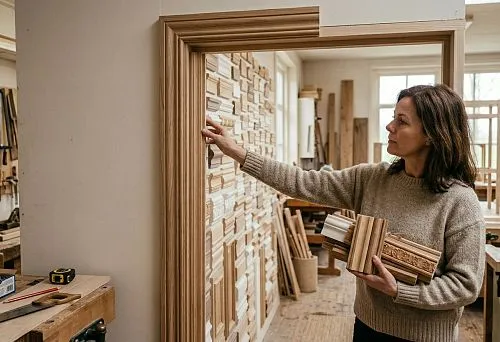
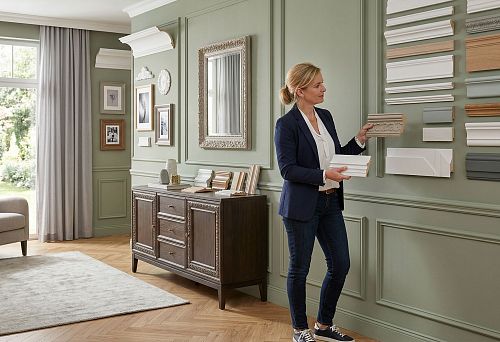
Modern interior design is undergoing a period of fundamental changes, when simple elements become the main tools for creating space.wooden planks on the wallThey are no longer utilitarian building materials but have become symbols of a new interior language, where minimalism combines with expressiveness, and functionality is complemented by aesthetics.A ceiling made of wooden planksCreates a rhythmic structure of space, controls light, and forms acoustic comfort.Finishing with wooden stripsTransforms ordinary walls into architectural masterpieces, where each element becomes part of a thoughtfully designed composition. This is a revolution in understanding how the simplest geometric forms can transform the perception of space and create interiors of a new generation.


Why lath has become an element of a new interior language




From utilitarianism to high design
The history of lath's transformation from a construction element into the main design tool reflects the evolution of our relationship with space. In traditional architecture, laths performed purely practical functions - serving as roof trusses, sheathing frames, and protection for walls against atmospheric influences.Planed wooden stripIt was a simple dimensional material of standard cross-sections without pretensions to decoration.
A turning point occurred at the beginning of the 21st century, when minimalist design trends began seeking new ways to create expressive spaces without decorative excesses.wooden planks on the wallThey perfectly matched this philosophy - the simplest geometry of linear elements created complex visual effects, rhythmic structures formed volume and depth without adding mass. Japanese aesthetics of wabi-sabi, with its attraction to the natural beauty of imperfect materials, found its ideal embodiment in laths.
Our factory also produces:


Psychology of linear structure perception
The human brain is structured such that vertical lines are perceived as aspiration upward, dynamism, and growth. Horizontal lines create a sense of stability, calm, and spatial expansion.Finishing with wooden stripsIt uses these fundamental laws of perception to manage the emotional state of a person in space. Vertical laths visually raise ceilings, making the room appear higher and more spacious. Horizontal laths expand walls, creating an illusion of greater space.
Rhythmic structures of lath compositions organize chaotic space, create order and logic. Regular intervals between laths form a visual grid that structures perception and calms the psyche. In an era of information overload and visual noise, such organization becomes necessary, a way to create an oasis of calm and harmony in the home.Wooden rails for decorationThey work on a subconscious level, forming a comfortable living environment.
Get Consultation
Ecological awareness and return to nature
Global trends toward ecological and sustainable development make natural materials not just fashionable, but necessary.Planed wooden stripMade from oak or beech, it represents a renewable resource whose production, when done with proper forestry practices, does not harm the environment. Unlike plastic and composite materials, wood is fully biodegradable and, after its service life, returns to the natural cycle.
The tactile qualities of natural wood create a unique atmosphere in the interior. The touch of warm wooden surfaces, the sensation of natural texture, the barely perceptible aroma of wood - all this forms a connection with nature, which modern megacity residents so desperately lack.wooden planks on the wallThey bring a piece of forest into urban housing, creating a biophilic interior that positively affects a person's psychological state and health.
Varieties: planed, facade, decorative
Planed lath: the basis of architectural solutions
Planed wooden stripIt represents a basic element for creating lath structures. The planing process on four-sided machines ensures ideal geometry of all faces with a tolerance of no more than 0.5 millimeters. The surface after planing becomes smooth, without fiber tears or other defects. Standard cross-sections vary from 20x40 millimeters to 50x50 millimeters, and the length of laths reaches 3000 millimeters.
Made from oak, it creates durable structures that retain their original appearance for decades.Finishing with wooden stripsMade from oak, creates long-lasting structures that retain their original appearance for decades.
Decorative laths with complex geometry
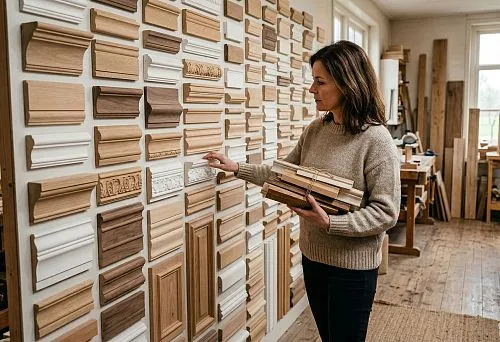
Wooden rails for decorationWith complex profiles, they expand design possibilities. Milling edges creates rounded corners, chamfers, grooves, and other decorative elements. Laths with beveled edges create play of light and shadow, adding dynamism to flat surfaces. Profiled laths with rounded edges create soft lines, suitable for interiors with children, where sharp angles are undesirable.
Combined laths of different cross-sections in one composition create complex rhythmic structures. Alternating narrow and wide laths, different intervals between elements form unique patterns that become the main decorative accent of the room.wooden planks on the wallWith variable spacing, they create a perspective effect, visually altering the proportions of space.
Facade battens for exterior finishing
Facade wooden battens have increased requirements for moisture resistance and resistance to atmospheric influences. They are made from species with natural moisture resistance — larch, cedar, thermally treated wood. Thermomodification at 180-220 degrees Celsius alters the wood structure at the molecular level, reducing water absorption to 3-5 percent and increasing biostability.
Facade battens require mandatory protective treatment before installation.Planed wooden stripRequires mandatory protective treatment before installation for facades.
Solid wood and MDF panel battens: how to choose for the task
Solid wood: premium solutions
wooden planks on the wallSolid wood battens represent a premium choice for creating respectable interiors. Oak battens display an expressive texture with characteristic growth rings and medullary rays. The color range varies from light honey to dark brown with gray undertones. The density of oak wood — 650-750 kg/m³ — ensures high mechanical strength and durability.
Beech battens feature a smooth light texture with a slight pinkish hue. Their fine-grained structure is ideal for staining — dyes penetrate evenly, creating a rich color without streaks. Beech is easy to tone, allowing for imitation of exotic wood species.Finishing with wooden stripsBeech battens are suitable for interiors where light-colored wood without contrasting texture is required.
MDF panels with batten imitation
Panels under wooden railsMDF battens represent a technologically advanced alternative to solid wood. A single panel with applied battens is installed significantly faster than individual elements, reducing installation labor. Factory production ensures perfectly even intervals between battens, precise geometry, and uniformity of all elements. The cost of MDF panels is 2-3 times lower than solid wood constructions while providing comparable visual effect.
MDF panels are suitable for projects with limited budgets, where the effect of batten finishing is required at minimal cost.Panels under wooden railsSuitable for budget-constrained projects where the effect of panel cladding is desired at minimal cost.
Criteria for Material Selection
Solid wood battens are preferred for prestigious spaces — living rooms, offices, meeting rooms.wooden planks on the wallSolid wood battens create an atmosphere of respectability and demonstrate the owner’s status. Natural wood possesses tactile warmth and natural aroma, which cannot be artificially reproduced.
For commercial spaces, offices, and public areas, MDF battens are more practical.Panels under wooden railsMDF battens provide optimal cost, quality, and performance characteristics.Finishing with wooden stripsMade from MDF, provides optimal balance of price, quality, and performance characteristics.
Application: walls, ceilings, zoning, lighting
Batten walls: texture and volume
wooden planks on the wallBatten walls transform flat surfaces into volumetric architectural elements. Vertical batten orientation visually elongates space, making ceilings appear higher. This technique is especially effective in rooms with standard height of 2.5–2.7 meters, where every centimeter of visual height gain matters. Horizontal battens widen narrow walls, creating an illusion of greater room width.
A batten wall, when paired with neutral finishes on other walls, creates a balance between expressiveness and calmness.Finishing with wooden stripsOne wall, with neutral treatment of the others, creates a balance between expressiveness and calmness.
Batten ceilings solve several tasks simultaneously. Visually, the structure conceals imperfections of the base ceiling, engineering utilities, wiring, and ventilation ducts. Acoustic materials — mineral wool, acoustic foam — are placed behind the battens, absorbing sound and improving room acoustics. This is critically important for home theaters, music rooms, and recording studios.
A ceiling made of wooden planksIntegrating lighting into a batten ceiling creates dramatic lighting scenarios. LED strips installed between battens form diffused light, softly illuminating the room without harsh shadows. Recessed spotlights embedded between battens create directional lighting for functional zones.
A batten ceiling with lighting visually floats above the room, creating a sense of lightness and airiness.A ceiling made of wooden planksWith backlighting, visually floats above the room, creating a sense of lightness and airiness.
Zoning space with batten partitions
Batten partitions solve the problem of zoning open spaces without creating solid walls. The semi-transparent structure separates functional zones while maintaining visual continuity and not blocking light diffusion.Wooden rails for decorationBatten partitions between the living room and dining room create a psychological boundary that separates spaces without fully isolating them.
Vertical slats in the partition form a rhythmic structure that organizes space and guides movement. Different density of slat placement regulates the degree of visual permeability — a frequent spacing creates a more closed partition, while a sparse one creates a light, almost transparent one.Finishing with wooden stripsPartitions from both sides provide an aesthetic view from any vantage point.
Integration of lighting into batten structures
Combinationwooden boards on the wallWith LED backlighting, it creates striking light compositions. LED strips installed behind the slats form backlighting that highlights the wood texture and creates play of light and shadow. Warm light with a color temperature of 2700–3000 Kelvin emphasizes the natural warmth of wood and creates a cozy atmosphere.
Controllable lighting allows changing the intensity and color of backlighting depending on the time of day and mood. In the morning, bright cool light energizes and activates; in the evening, warm dim light relaxes and prepares for sleep. RGB strips create colorful accents for special occasions — holidays, parties, romantic dinners.A ceiling made of wooden planksWith dynamic backlighting, it becomes an interactive element of interior design.
Modern trends in combining materials
Wood and metal: industrial aesthetics
Combinationoak planed planksWith metallic elements, it creates an industrial loft aesthetic. Black metal profiles frame wooden slats, creating a contrast between the warmth of wood and the coldness of metal. Steel fasteners remain visible, emphasizing the structural logic and creating a brutalist character of the interior. Brass elements add luxury and elegance, forming a more refined variant of industrial style.
Combined partitions made of wooden slats and metal frames have increased rigidity and stability. Black metal enhances the graphic composition, creates clear lines, and emphasizes the geometry of the structure.Wooden rails for decorationMounted on a metal base, they are easy to install and dismantle, allowing space transformation as needed.
Wood and glass: transparency and lightness
Combining wooden slats with glass panels creates light, semi-transparent structures. Glass inserts between slats allow light to pass through while maintaining visual connection between spaces. Frosted glass ensures privacy while preserving light transmission. Colored glass creates decorative effects, tinting passing light in various hues.Finishing with wooden stripsWith glass inserts, it is suitable for showers, saunas, and winter gardens.
Sliding systems made of wooden slat panels on a glass base become functional partitions. Light movement opens or closes the opening, transforming space as needed. Transparent glass makes the partition virtually invisible when open, while wooden slats add texture and draw attention.wooden planks on the wallOn a glass base, they create the effect of floating lines.
Wood and concrete: contrast of textures
Combining warm wood and cold concrete creates an expressive contrast characteristic of modern architecture.Planed wooden stripAgainst a concrete wall, it highlights the naturalness of wood, its organic texture, and tactile warmth. Rough concrete texture enhances the expressiveness of wooden elements, creating a dialogue between natural and industrial materials.
Wooden slats soften the brutality of concrete surfaces, adding coziness and comfort to the space. Vertical slats on a concrete wall create a rhythmic structure that organizes the amorphous surface and gives it scale.A ceiling made of wooden planksAbove a concrete floor, it forms a warm upper boundary of space, balancing the coldness of the lower part.
Durability, installation, care and maintenance tips
Wood Processing and Protection
Planed wooden stripRequires protective treatment to ensure longevity. Oil-based impregnations penetrate wood to a depth of 3–5 millimeters, filling pores and creating a hydrophobic barrier. Oil enhances the natural wood texture, making the grain more pronounced. The frequency of oil coating renewal is 1–2 years depending on usage intensity.
Wax coatings create a thin protective film on the wood surface. Wax imparts a silky sheen and tactile smoothness, providing water-repellent properties. Natural waxes based on beeswax, carnauba, and candellila are eco-friendly and safe for health.wooden planks on the wallWith wax coating, they feel pleasant to the touch and retain their original appearance for years.
Technology of installing slat structures
Installationwooden boards on the wallInstallation begins with preparing the base. The wall must be flat, dry, and free of contaminants. Irregularities exceeding 5 millimeters require leveling with plaster or drywall. Marking is done using a laser level to ensure perfect verticality or horizontality of lines. The first guide is installed along the edge of the composition and serves as a base for placing subsequent elements.
Slat attachment to the wall is performed in several ways. For small slats with cross-section up to 20x40 mm, polymer-based mounting adhesives are used. The adhesive is applied in dots to the back of the slat at intervals of 30–40 cm. More substantial slats require mechanical fastening with self-tapping screws or clips.Finishing with wooden stripsWith hidden fastening, it creates a clean surface without visible fastening elements.
Installation of slat ceilings
InstallationCeiling made of wooden slatsRequires the creation of a load-bearing frame. Metal or wooden guides are attached to the ceiling through hangers that allow height adjustment. The distance from the ceiling is determined by the need to accommodate engineering systems — electrical wiring, ventilation ducts, acoustic materials. Minimum distance is 50–70 millimeters.
Guides are installed perpendicular to the rails with a spacing of 60–80 centimeters. Leveling is performed using a laser level to ensure a perfectly horizontal plane. Rails are attached to the guides using clips, self-tapping screws, or special clips. The spacing between rails is determined by the designer’s intent and can vary from 10 to 100 millimeters.A ceiling made of wooden planksWith variable spacing, creates a dynamic composition.
Installation of MDF panels with a simulated lath pattern
Panels under wooden railsPanels are installed significantly faster than individual laths due to the larger module. Preparation of the base includes installing a wooden or metal frame made of 40x40 mm boards or profiles. The spacing between frame elements is 40–50 centimeters. The frame is leveled using a level, and shims are used if necessary to compensate for wall irregularities.
Panels are attached to the frame using clips that are inserted into special grooves on the back. This type of attachment remains invisible from the front, creating a clean surface. Joints between panels are minimal due to precise factory geometry.Panels under wooden railsAllows finishing large areas in one or two days of work.
Maintenance and Care of Rail Structures
Wooden rails for decorationRequire regular maintenance to preserve their appearance. Dust is removed using a soft cloth or a vacuum cleaner with a furniture attachment. Dust accumulates particularly intensely between the laths, so weekly cleaning is recommended. Wet cleaning is performed using a well-wrung cloth soaked in water with a wood care product.
Updating protective coatings extends the service life of lath structures. Oil coatings are renewed annually — old oil is removed using a soft abrasive sponge, the surface is cleaned and covered with a new layer of oil. Wax coatings are renewed when the gloss fades — a thin layer of wax is applied and polished with a soft cloth.Finishing with wooden stripsMaintains its original appearance for decades with proper care.
Acoustic properties of lath structures
Sound absorption and acoustic control
Lath structures have pronounced acoustic properties, making them indispensable in spaces where sound quality is critical. Gaps between laths act as Helmholtz resonators, absorbing sound waves of specific frequencies. The gap width and the depth of the air cavity behind the laths determine the absorption frequency range.A ceiling made of wooden planksWith gaps of 10–20 millimeters, effectively absorbs mid and high frequencies.
Placing sound-absorbing materials behind lath cladding significantly increases acoustic efficiency. Mineral wool with density of 50–80 kg/m³ absorbs a broad spectrum of frequencies. Acoustic foam with open pores is effective for high frequencies. Combining different materials creates broadband sound absorption.wooden planks on the wallWith acoustic filling, reduce reverberation and improve speech intelligibility.
Sound diffusion and spatial acoustics
Lath surfaces scatter reflected sound, preventing standing waves and flutter echo. An uneven surface with alternating protrusions and recesses reflects sound in various directions, creating a diffuse sound field. This is especially important in listening rooms, where uniform sound distribution is critical for perception.Finishing with wooden stripsOn the back wall of a home theater, improves spatial sound quality.
Varying the depth of laths creates a complex relief surface with improved diffusive properties. Alternating laths of different thicknesses form an uneven profile that scatters a broad spectrum of frequencies. Such constructions are called Schroeder diffusers and are widely used in professional recording studios.Planed wooden stripWith different cross-sections, allows creating acoustically effective surfaces.
Frequently asked questions
Which lath cross-section to choose for walls?
For walls, the optimal cross-section is 20x40 or 30x40 millimeters when installed vertically. Such laths create an expressive relief without overwhelming the space. For horizontal installation, wider laths of 40x60 or 50x70 millimeters are suitable.wooden planks on the wallLaths of larger cross-section are used to create substantial accents in rooms with high ceilings.
What is the optimal spacing between laths?
The spacing between laths is determined by design intent and practical considerations. For accent walls, the spacing equals the lath width or 1.5 times wider. This ratio creates a harmonious rhythm. For more closed surfaces, the spacing is reduced to 10–15 millimeters.Finishing with wooden stripsWith large spacing of 80–100 millimeters, creates a light semi-transparent structure.
Are wooden planks suitable for humid rooms?
For bathrooms and saunas, require wood species with enhanced moisture resistance or special protective treatment. Oak wood has natural moisture resistance and is suitable for humid environments provided it has a protective oil coating. Thermally treated wood with water absorption less than 5 percent is ideal for saunas and steam rooms.Planed wooden stripLarch wood demonstrates exceptional moisture resistance due to its high resin content.
How much does lath structure installation cost?
Installation cost depends on the complexity of the structure and the area to be finished. Installationwooden boards on the wallcosts 800-1500 rubles per square meter for simple vertical or horizontal arrangements. Complex compositions with variable spacing, diagonal placement, and integrated lighting increase the cost to 2000-3000 rubles per square meter.A ceiling made of wooden plankscosts 1200-2500 rubles per square meter including frame and fasteners.
Can wooden planks be painted?
Wooden strips are highly suitable for painting, allowing for unique color solutions. Oil or acrylic paints are used, creating an opaque finish that hides the wood texture. Stains and toners change the color while preserving the visibility of the wood grain.Wooden rails for decorationOak strips are ideal for painting due to their fine-pored structure and even absorption of dyes.
How to care for strip structures?
Regular care includes removing dust with a soft cloth or vacuum cleaner with a furniture attachment. Wet cleaning is done with a well-wrung cloth soaked in water with wood care solution. Oil finishes are renewed annually to maintain protective properties and appearance.Finishing with wooden stripswith proper care, they serve for decades without losing aesthetic qualities.
Conclusion
Wooden and MDF strips represent a universal tool for creating interiors of the new generation, where simplicity of form combines with richness of possibilities.wooden planks on the walltransform flat surfaces into volumetric architectural elements, control spatial perception, and create expressive compositions.A ceiling made of wooden plankssolve acoustic problems, conceal engineering utilities, and create striking lighting scenarios.
Finishing with wooden stripshas become a symbol of a new interior language, where minimalism is complemented by the natural expressiveness of materials, and functionality combines with aesthetic perfection.Panels under wooden railsfrom MDF expand the accessibility of strip aesthetics, making it available for projects with various budgets.Planed wooden stripandWooden rails for decorationfrom the company STAVROS represent high-quality solutions meeting the highest standards for materials, processing, and aesthetics, enabling the creation of interiors that inspire and delight with their perfection for many years.