












































































Article Contents:
- Nature and character of wooden beams
- What is a wooden beam and how it differs from other timber materials
- Wood species for beam production: character and soul of the material
- The multifaceted beam: types and classification
- By processing method: from untreated to planed
- By moisture content: natural and kiln-dried
- By quality: grade and characteristics
- Universal helper: application of wooden beams
- In construction: from foundation to roof
- In interior finishing: aesthetics and functionality
- In furniture manufacturing: from frame to decoration
- In landscape design: natural aesthetics
- Where to buy wooden beams: choosing a reliable supplier
- Selection criteria: quality, assortment, service
- Specialized stores and manufacturers
- Practical tips for working with wooden beams
- Choosing the right beam for a specific task
- Tools and techniques for processing
- Protection and care: extending the life of wooden items
- Creative potential: wooden beams in interior design
- Modern trends: from minimalism to eco-style
- DIY projects: from simple to complex
- Professional solutions: architecture and design
- Ecological aspect: wooden beams and sustainable development
- Responsible forestry and certification
- Secondary Use and Recycling
- Energy efficiency and carbon footprint
- Conclusion: eternal classic in the modern world
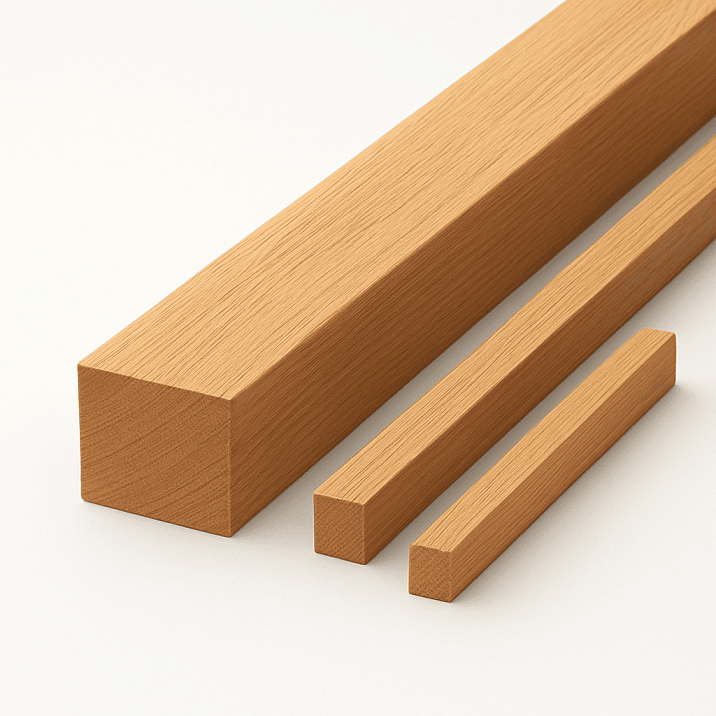
In the world of building materials, there exists a special element that combines simplicity and universality, practicality and aesthetics, ancient traditions and modern technologies. We are talking about wooden beams — a timber material that has become an indispensable helper for both professional builders and home craftsmen. These seemingly simple wooden elements open up boundless opportunities for creativity, functionality, and creating unique interior solutions. Today, we will dive into the wonderful world of wooden beams, reveal their potential, and tell you, Where to buy wooden beams high quality to bring your boldest ideas to life.


Nature and character of wooden beams




What is a wooden beam and how it differs from other lumber
A wooden beam is a type of lumber with a rectangular or square cross-section, whose dimensions usually do not exceed 100 mm in thickness and width. It is precisely this parameter that distinguishes a beam from its "older brother" - a timber, which has more imposing dimensions. A beam occupies an intermediate position between a board and a timber, combining the maneuverability of the first and the solidity of the second.
The uniqueness of a beam lies in its versatility: compact enough for fine work, yet possessing the necessary strength to create reliable structures. This makes it an indispensable material for both large-scale construction projects and small household tasks.
Our factory also produces:


Wood species for making beams: character and soul of the material
Choosing a wood species for a beam is not just a technical decision, it is choosing the character of the future product. Each species has its unique "temperament," which manifests itself in work and use:
Coniferous species (pine, spruce)
These species are distinguished by ease of processing, pleasant aroma, and affordable price. Pine beams have a beautiful golden hue and pronounced texture. They are sufficiently soft, making them ideal for beginner craftsmen. Spruce beams are lighter with less pronounced grain, but more resistant to moisture.
Larch
The true "iron lady" among trees. Larch beams are distinguished by exceptional strength, moisture resistance, and longevity. Over time, larch wood only hardens, making it ideal for outdoor work and structures subjected to high loads.
Oak
The king among trees. Oak beams are the embodiment of reliability, strength, and nobility. They have a beautiful texture, high density, and resistance to mechanical impacts. Oak is ideal for making furniture and interior elements where both aesthetics and longevity are important.
Beech
Elegance and practicality in one package. Beech beams have a uniform structure, pleasant pinkish hue, and excellent workability. They are ideal for making furniture, stairs, and other elements where aesthetic appeal is important.
Ash
Resilience and character. Ash beams are distinguished by high strength relative to their relatively low weight. They have a beautiful, pronounced texture and are easy to process. Ash is often used for making sports equipment, tool handles, and furniture.
Get Consultation
The multifaceted beam: types and classification
By processing method: from unprocessed to planed
Unprocessed (rough-sawn) beam
This is the simplest type of beam, which has undergone minimal processing - only sawing. Such beams have a rough surface and are primarily used for rough work, where appearance is not important: for frames, truss systems, and purlins.
Planed beam
Underwent additional processing - planing, resulting in a smooth and even surface. Such beams are used for finish work, where appearance matters: for furniture making, finishing, and decorative elements.
Calibrated beam
Has precise dimensions along its entire length, achieved through additional processing. Such beams are ideal for work requiring high precision: furniture making, door and window frames, stairs.
By moisture content: natural and kiln-dried
Beams of natural moisture content
Have not undergone special drying and contain natural moisture levels. They are cheaper, but may warp upon drying, limiting their use in precision work.
Dry beams (kiln-dried)
Underwent artificial drying in special kilns, where humidity is brought to optimal 8-12%. Such beams are dimensionally stable, do not warp during use, and are suitable for critical applications.
By quality: grade and characteristics
First grade (extra)
High-quality boards, free of defects, cracks, and knots. They have a uniform structure and color. Used for manufacturing premium-class furniture and interior elements where an impeccable appearance is essential.
Second grade
Minor defects are allowed: a few small knots, slight color deviations. Suitable for most tasks requiring good quality, but minor cosmetic flaws are acceptable.
Third grade
Have noticeable defects: knots, cracks, resin pockets. Used for rough work where appearance is not important.
Universal helper: application of wooden beams
In construction: from foundation to roof
Wooden beams are indispensable elements in construction. They are used to create roof trusses, gypsum board frame structures, rafter systems, and formwork. Due to their lightness and strength, beams allow for quick and high-quality execution of a wide range of construction tasks.
Beams play a special role in frame construction, where they form the basis of future buildings. Properly selected and installed beams ensure the reliability and longevity of the structure, even at relatively low weight.
In interior finishing: aesthetics and functionality
In interior finishing, beams are used to create decorative elements: moldings, cornices, baseboards. They allow for finishing joints between different surfaces, hiding unevenness, and emphasizing architectural features of the room.
Plank ceilings and wall panels made of wooden beams — a trendy solution in modern design. They create a warm, cozy atmosphere, improve room acoustics, and can visually alter its proportions.
In furniture manufacturing: from frame to decoration
In furniture manufacturing, beams are used both for creating frames (tables, chairs, beds) and decorative elements. They allow creating strong yet lightweight structures that will serve for many years.
Beams are especially popular in manufacturing furniture in Scandinavian style, where natural materials, simple forms, and functionality are valued. They are also indispensable in creating loft-style furniture, where exposed wooden elements are an essential part of the design.
In landscape design: natural aesthetics
In landscape design, beams are used to create garden structures: pergolas, gazebos, benches, fences. They allow for seamlessly integrating man-made elements into the natural environment, creating a harmonious space.
Wooden beams are also used to create raised garden beds, compost bins, and supports for climbing plants. When properly treated and protected, they can serve for many years even under high humidity and soil contact.
Where to buy wooden beams: choosing a reliable supplier
Selection criteria: quality, assortment, service
When choosing a supplier of wooden beams, it is important to pay attention to several key points:
Product quality
A reliable supplier offers beams made from high-quality wood, properly dried and treated. The material should be uniform, free of visible defects, and with precise dimensions.
Assortment
A good supplier offers a wide selection of beams of various species, sizes, and degrees of processing. This allows selecting the optimal option for a specific task.
Service
Important aspects of service include: consultation during selection, possibility of ordering non-standard sizes, convenient delivery, warranty on products.
Reputation
Customer reviews, company history, transparency in operations — all of this speaks to the reliability of the supplier.
Specialized stores and manufacturers
If you are wondering, Where to buy wooden beams High-quality beams, consider specialized companies that produce solid wood products. Such companies usually have their own production, ensuring quality control at every stage.
The advantage of working with a manufacturer is the ability to order beams of non-standard sizes, choose the wood species and degree of processing. In addition, professional consultants will help you select the optimal option for your task.
Practical tips for working with wooden beams
Choosing the right beam for a specific task
When selecting a beam, several factors are important:
Purpose
For frame structures, coniferous species are suitable; for furniture, hardwoods (oak, beech, ash) are preferable; for outdoor use, larch or thermally treated wood is recommended.
Load
The higher the expected load, the stronger the beam should be. For load-bearing structures, choose beams without defects and with proper geometry.
Operating conditions
For rooms with high humidity (bathrooms, kitchens) or for outdoor use, choose species naturally resistant to moisture or specially treated beams.
Aesthetics
If beams will be visible in the finished product, pay attention to texture, color, presence of knots and other features that may either enhance or detract from the appearance.
Tools and processing techniques
The following tools are needed for working with wooden beams:
For cutting
Hand or electric saw, miter gauge for precise angled cuts, circular saw for perfectly straight cuts.
For joining
Drill, nail gun, carpenter's glue, clamps for holding during gluing.
For final finishing
Sanding machine or sandpaper of various grits, hand plane for surface leveling, chisels for carving and cutting grooves.
Protection and maintenance: extending the life of wooden items
To extend the service life of wooden items, they must be properly protected and maintained:
Protection from moisture
Use special impregnations, oils, or varnishes that create a water-repellent layer while still allowing the wood to 'breathe'.
Protection from UV radiation
For items exposed to sunlight, choose coatings with UV filters that prevent wood from fading and cracking.
Protection from insects and mold
Antiseptic impregnations prevent wood damage from pests and fungal diseases.
Regular maintenance
Periodically renew protective coatings, clean surfaces of dust and dirt, and maintain optimal humidity levels in the room.
Creative potential: wooden beams in interior design
Modern trends: from minimalism to eco-style
Wooden beams are experiencing a true renaissance in modern interior design. They fit well into various stylistic directions:
Scandinavian style
Light beams made of pine or spruce create a cozy, natural atmosphere characteristic of Scandinavian design.
Loft
Rough, rugged beams, often with visible signs of processing, emphasize the industrial aesthetic of loft style.
Eco-style
Natural, minimally processed beams with preserved wood texture and grain - ideal for eco-interiors.
Japanese Minimalism
Clear lines, simple shapes, natural materials - wooden beams perfectly fit the philosophy of Japanese design.
DIY projects: from simple to complex
Wooden beams - ideal material for DIY projects (Do It Yourself - "make it yourself"). Here are some ideas that can be implemented even with minimal woodworking experience:
Shelves and racks
Simple constructions from beams and boards can become functional and stylish interior elements.
Mirror and picture frames
Beams allow you to create unique frames that highlight the individuality of your interior.
Decorative partitions
Lattice constructions from beams can zone space without creating a sense of enclosure.
Planters and plant boxes
Wooden beams allow you to create eco-friendly and stylish containers for houseplants.
Professional solutions: architecture and design
Professional designers and architects actively use wooden beams to create unique interior solutions:
Lattice ceilings and walls
Parallel beams create a rhythmic pattern that can visually alter the proportions of a room.
Decorative panels
Beams of different thicknesses and heights, arranged in a specific order, create dimensional panels with interesting play of light and shadow.
Stairs and railings
Wooden beams allow you to create light, airy constructions that become a central element of the interior.
Furniture
From simple stools to complex modular systems - wooden beams open up boundless creative possibilities.
Ecological aspect: wooden beams and sustainable development
Responsible forestry and certification
In an era of growing ecological awareness, it is important to pay attention to the origin of wood. Responsible manufacturers use wood from forests where sustainable forestry is practiced: new trees are planted in place of felled ones, and ecosystem balance is maintained.
FSC (Forest Stewardship Council) and PEFC (Programme for the Endorsement of Forest Certification) certificates guarantee that wood is obtained in accordance with ecological, social, and economic standards.
Secondary use and recycling
Wooden products have a significant advantage over many modern materials - they can be recycled or reused. Old wooden beams can get a new life in other projects, and at the end of their life cycle, wood naturally decomposes without harming the environment.
Energy Efficiency and Carbon Footprint
Producing wooden beams requires significantly less energy than producing metal, plastic, or concrete. Moreover, trees absorb carbon dioxide during growth, which remains bound in the wood even after processing. Thus, using wooden materials contributes to reducing the carbon footprint.
Conclusion: eternal classic in the modern world
Wooden beams are a remarkable material that combines centuries-old traditions with modern possibilities. They allow you to create strong, eco-friendly, aesthetically pleasing structures and items that will delight the eye and serve for many years.
If you are considering Where to buy wooden beams For your project, pay attention to reliable manufacturers who offer quality products made from various types of wood, with different levels of processing and in a wide range of sizes.
Wooden beams are not just a building material; they are an opportunity to bring a piece of nature into your home, create unique, one-of-a-kind interior solutions, and realize your creative ideas. This is a material with character that only improves over time, acquiring a noble patina and preserving the history of your home.
Choosing wooden beams means choosing not only practicality and aesthetics, but also eco-friendliness, sustainable development, and care for future generations. This is a choice in favor of naturalness, authenticity, and timeless values in our rapidly changing world.





