Article Contents:
- Wall Decoration as a Reflection of Style
- Molding and Planks as Tools for Dividing Space
- Ornaments and Appliqués for Expressiveness
- How to Create Harmonious Wall Geometry
- Color Integration and Patination
- Combining Textures and Forms
- Finishing Touches - Aesthetics of Rhythm and Proportion
- FAQ: Popular Questions and Answers
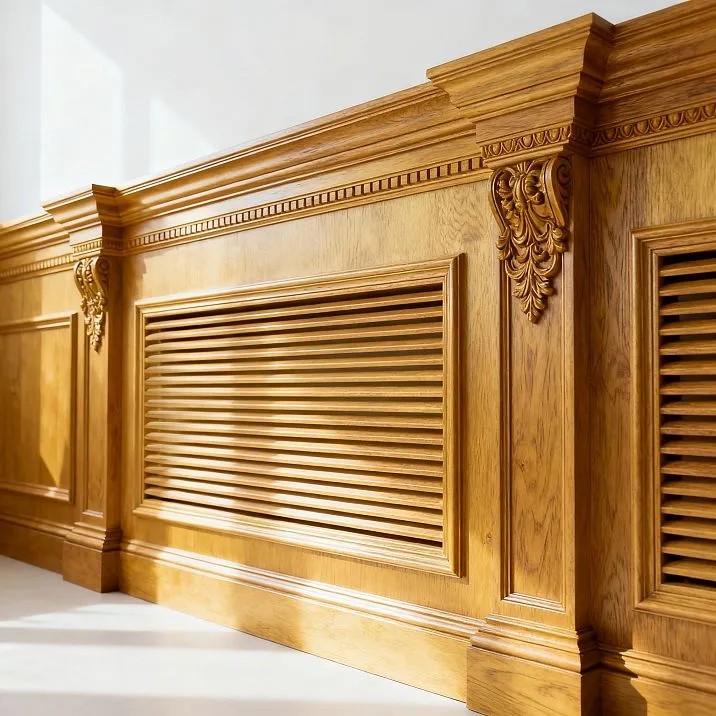
Walls set the tone for the entire space. It is they that create the atmosphere, dictate the mood, and shape the perception of the interior. Wooden wall finishing transforms an ordinary room into a work of art, where every line and detail contributes to the overall image.Moldingsmade from solid wood,Railfor wall decoration and carvedwooden ornamentare not just decorative elements, but tools for creating harmony, rhythm, and visual depth.
Modern interior design increasingly turns to natural materials and time-tested forms. Wooden wall finishing is returning to trends, but no longer as an inheritance of classical styles, but as a conscious choice of people who value authenticity and eco-friendliness. Wood breathes, lives, and changes along with the space, creating a unique energy in the home.wooden planks on the wallallow implementing the boldest design ideas while maintaining a connection to nature and craftsmanship traditions.


Wall Decoration as a Reflection of Style
Choosing wooden decoration has always been and remains a marker of the owners' status and taste. In the era of classicism, carvedMoldingsadorned palace halls, in English mansions solid wood panels set the tone for libraries and offices, and in Russian estates wooden carving became the hallmark of the house. Today, this tradition has not been lost—it has simply been reinterpreted and adapted to modern realities.
Wooden wall finishing speaks volumes: commitment to natural materials, respect for craftsmanship traditions, and a desire to create a long-lasting and meaningful interior.Ceiling Moldingsmade of polyurethane may be an alternative for budget projects, but nothing can replace the nobility of solid wood. Each wooden plank, each carved element is unique—this is the true value.
The stylistic versatility of wooden decoration is impressive. A classical interior requires elegant profiles with carved details, while modern minimalism leans toward simplewooden planks for decorationgeometric forms, Scandinavian style prefers light wood with minimal processing. Loft interiors play with the contrast between rough wood texture and industrial elements, creating a brutalist aesthetic of urban space.
The importance of wooden decoration in forming interior concepts is difficult to overestimate.Wooden moldingscreate vertical and horizontal accents, guide the viewer's gaze, and form a rhythmic structure of space. They can visually alter room proportions, raise ceilings, widen narrow walls, or, conversely, create a cozy intimacy in a large hall.
The psychology of perceiving wooden elements is linked to deep archetypes. Wood is a living material carrying memories of forests and nature, of strength and durability.Wooden boards in interiorcreate a sense of protection and stability, which subconsciously is associated with the wooden houses of our ancestors. This is a rare case where functionality and emotional component are inseparable.




Vertical and horizontal lines have governed the perception of space since ancient times. Architects of the past perfectly understood the power of linear elements and used them to create visual illusions and emphasize the architectural expressiveness of buildings. Today
they perform the same function, but on a more intimate scale of interior design.Wooden plankFinishing - the aesthetics of rhythm and proportions
Horizontal division of walls usingmolding- a classic technique proven over centuries. Traditionally, the wall is divided into three parts: a lower panel zone, a central main plane, and an upper frieze. This division is not only aesthetically pleasing but also practical: the lower part of the wall is protected from mechanical damagewooden skirting boardand panels, the middle zone can be painted or covered with wallpaper, and the upper part is adornedwith a wooden ceiling cornice.
Vertical division of space opens up other possibilities for design solutions.Wooden strips for wall decorationcreate dynamic compositions that control the visual perception of the room's height. Installed from floor to ceiling with equal spacing, they form a rhythmic structure that visually elongates the space upward. This effect is especially valuable in modern apartments with standard ceiling heights of 2.7–3 meters.
decorative wooden plankscan be used not only for visual correction of space but also for functional zoning. Strip partitions create semi-transparent boundaries between functional zones, preserving the feeling of a single space and not obstructing natural lighting. This solution is ideal for studios and open-plan apartments, where it is necessary to visually separate the living room from the dining area or the sleeping area from the workspace.
The distance between the strips plays a critically important role in the perception of the structure. Narrow gaps create an effect of a solid surface with slight perforation, preserving the privacy of the zone. Wide intervals make the partition maximally transparent, emphasizing the strips themselves as decorative elements.Finishing with wooden stripsrequires precise calculation of proportions to ensure the structure appears cohesive and harmonious.
Combining horizontal and vertical elements opens up limitless possibilities for creating complex decorative compositions. Cross structures ofmoldingform geometric patterns on walls — squares, rectangles, rhombuses — creating visual rhythm and spatial structure. These classic techniques are especially effective in interiors of neoclassical and traditional American styles.
wooden corniceat the junction of wall and ceiling completes the composition, creating a smooth transition between planes. A wide profiled cornice visually reduces the height of the room, making it more intimate and cozy. Conversely, a narrow, minimalist profile emphasizes height and adds airiness to the space. The choice of cornice profile is determined by both the interior's stylistic context and the room's proportions.
Our factory also produces:


Ornaments and appliqués for expressiveness
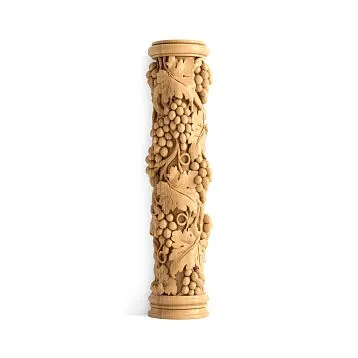
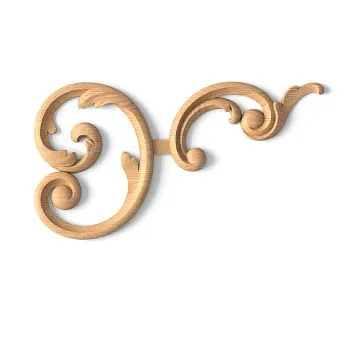
Carvedwooden ornament- this is the culmination of wall decoration, the moment when craftsmanship transforms into art. While moldings and strips establish the structure and rhythm of space, ornamental appliqués become accent elements that attract attention and create focal points in the interior.Relief DecorationCarved from solid wood, it carries centuries-old traditions of craftsmanship, combining functionality and artistic value.
Wooden carving, known in Russia since pagan times, is experiencing a second life in modern interiors. Traditional motifs — plant ornaments, geometric patterns, stylized depictions of birds and animals — fit organically into spaces of various styles. Carved appliqués can decorate room corners, frame door and window openings, accentuate mirrors, fireplaces, and furniture facades.
Techniques of wood carving are diverse and require exceptional skill. Low-relief carving creates a shallow ornament protruding several millimeters above the background. This technique is ideal for creating delicate floral patterns and arabesques. High-relief carving implies deeper detailing, creating volumetric compositions with expressive play of light and shadow. Pierced or openwork carving completely removes the background, transforming the wooden element into lacework of interwoven motifs.
Decorative stuccoCarved from wood requires special attention to the selection of wood species. For delicate, detailed carving, softer woods — linden, aspen, cedar — are preferred, as they are easy to work with and allow for carving fine details. For large architectural elements, hardwoods — oak, beech, ash — are used, ensuring strength and durability of the structure.
Placement of carved elements follows the laws of composition. Symmetrical arrangement of ornaments creates a sense of solemnity and classical harmony. Asymmetrical compositions introduce dynamism and a modern feel into the interior.Moldings decorationCarved from polyurethane may imitate wood carving in appearance, but lacks the essential element — depth, tactile quality, and liveliness of natural wood.
Carved appliqués are especially effective in decorating fireplace surrounds, where they emphasize the significance of the central element in the living room. Plant motifs, geometric rosettes, cartouches, and volutes create an elaborate frame around the fireplace, transforming it into an architectural focal point of the space.Ceiling moldingsmay also include wooden carved elements, especially at the points of attachment for chandeliers and light fixtures.
Decorating door and window openings with carved casings — a tradition rooted in ancient Russian architecture. Casings not only protect joints from drafts but also serve as important decorative elements, unifying the architecture of the facade or interior.Wooden Picture Framewith carved ornamentation can be used to frame paintings and mirrors, creating an elegant border.
Modern technologies allow creating carved elements not only by hand but also using CNC machines. This makes decorative carving more accessible while maintaining high-quality execution and the ability to reproduce complex ornaments. However, hand carving is still valued more highly for the uniqueness of each piece and the special energy infused into the work by the craftsman.
Get Consultation
How to create harmonious wall geometry
The geometry of wooden decoration follows eternal laws of composition and proportion. Proper placementmoldingandIt begins with understanding the basic principles of visual perception of space. The golden ratio, the rule of thirds, symmetry and asymmetry — all these classical principles are applied in wooden wall decoration.The golden ratio, expressed as the ratio 1:1.618, is considered the ideal proportion in art and architecture. When dividing a wall horizontally,
using this principle creates a visually perfect composition. If the height of the wall is taken as one unit, the molding is placed at a distance of 0.618 from the floor or from the ceiling, depending on which part of the wall you wish to emphasize.moldingThe rule of thirds suggests dividing the wall into three equal parts vertically or horizontally. This creates a balanced composition that is perceived as harmonious and natural.
occupies the lower third, the middle section remains the main decorative plane, and the upper third is finished withwooden baseboarda ceiling corniceceiling cornice.
Creating decorative frames on walls using molding requires precise calculation of proportions. In high rooms with ceilings of 3.5–4 meters, large rectangular panels framed by widewooden moldingsprofiles 80–120 mm wide are suitable. In standard apartments, it is better to use more delicate profiles 40–60 mm wide with elongated vertical proportions of the frames.
The distance between frames also follows geometric principles. The minimum gap should be at least half the width of the used molding; otherwise, the composition will appear cramped and overloaded. The optimal distance equals the width of the molding or slightly exceeds it, creating a rhythmic and balanced structure.
wooden planks on the wallWhen installed vertically, attention must be paid to calculating the number of elements and the spacing between them. The mathematical formula is simple: wall width minus the total width of all rails, divided by the number of gaps. It is important to achieve an even rhythm, where the gaps between boards are equal along the entire length of the wall.
Geometric patterns made from intersecting moldings create complex decorative compositions. Classic variants include dividing the wall into square or rectangular panels arranged symmetrically relative to the central axis.Polyurethane moldingcan be more flexible in use, but wooden profiles have incomparable elegance and durability.
Diagonal compositions fromwooden plankscreate a dynamic effect and visually expand the space. The angle of inclination can vary from 30 to 60 degrees, with 45 degrees considered optimal in terms of visual perception and ease of installation. Such solutions are especially effective in modern minimalist and high-tech interiors.
A ceiling made of wooden planksadds an additional dimension to the geometry of space. Planks can be arranged parallel to a short wall, visually expanding the room, or along a long wall, emphasizing the depth of space. Diagonal placement of planks on the ceiling creates an illusion of movement and adds dynamism to the interior.
The importance of precise measurements and marking cannot be overestimated. Even a slight deviation from vertical or horizontal alignment will be noticeable to the eye and spoil the overall impression of the decor. Using a laser level and careful preliminary marking are the key to successfully implementing any project involving wooden wall decoration.
Color integration and patination
The color of wooden decor determines the character of the entire interior and sets the emotional tone of the space. Natural wood tones — from light maple and beech to dark wenge and stained oak — create a natural palette that easily integrates into any color scheme.Wooden baseboardandMoldingscan be matched to the floor covering, creating visual unity in the space.
The natural texture of wood possesses a unique ability to change depending on lighting. Morning light reveals warm honey tones of pine and oak, daylight highlights silver notes of beech, and evening light deepens the richness of dark woods. This living variability makes wooden decor especially attractive for those who appreciate dynamic interiors.
Staining wood with stains and oils allows changing the natural color of wood while preserving the visibility of the texture. Light woods can be darkened to walnut or mahogany shades, creating a noble classic look. Dark woods, on the other hand, can be slightly lightened using white oils and waxes, which is especially relevant for Scandinavian and Provencal interiors.
Painting wooden elements opens up even broader possibilities for design solutions. White enamel onwooden moldingsis a classic choice for interiors in neoclassical, Provencal, and modern classic styles. Perfectly white planks create clear graphic lines against colored walls, emphasizing the architectural structure of the space.
— is a horizontal element that frames the room at the bottom of the walls where the wall meets the floor. Skirting boards perform several functions: they hide the technological gap between the wall and floor covering (necessary for thermal expansion), protect the lower part of the wall from mechanical damage, create visual completion, and may conceal wiring.allows selecting any color from the RAL palette, perfectly adapting decorative elements to the project concept. Various shades of gray create a modern sophisticated tone, black elements add drama and graphic impact, while pastel shades introduce softness and lightness.
Patination — a special technique of artificial aging of wood — gives decor an elegant antique look. The technique involves applying a thin layer of gold, silver, or colored paint to the relief surface of a carved element, which accumulates in recesses and emphasizes the ornament's volume. After partially removing the paint from raised parts, an effect of an antique object with noble patina is created.
Polyurethane moldingscan be painted with a patina effect, but the depth and naturalness of the effect on natural wood are incomparable. The wooden base absorbs coloring agents, creating a more organic and complex color, whereas polyurethane remains superficially painted.
Golden patina givescarved ornamentationa luxurious palace-like appearance associated with baroque and neoclassical styles. Silver patina creates a cooler, more refined effect, suitable for neoclassical interiors. Copper patina with a greenish oxidation tint imitates aged bronze and is especially striking in eclectic interiors.
brushing technique — mechanical removal of soft wood fibers with a stiff brush — creates an expressive relief texture, highlighting growth rings. After brushingWooden plankit acquires an aged appearance and unique tactile quality. Additional contrasting color toning of recesses enhances the visual effect.
Combining various color solutions in one interior requires a refined sense of proportion.White Wooden Baseboardit can be combined with natural door casings, creating a contrast between the classic whiteness of the lower wall section and the warmth of wood at the openings. It is important to maintain color balance, avoiding excessive clutter.
polyurethane moldings buyIt can be any color, but wooden decor with its natural tones or professional toning creates the depth of color and richness of nuances that cannot be achieved with artificial materials. Wood possesses a unique ability to reflect light, creating a complex play of shades on its surface.
Combination of textures and forms
Tactility and visual texture are the most important characteristics of wooden decor, determining its perception and role in the interior.Wooden plankIt can be sanded to an ideally smooth surface or brushed with a pronounced texture of growth rings. These differences fundamentally alter the perception of the material.
Smooth sanded surfaces create a sense of modern minimalism and elegance. They are ideal for minimalist and Scandinavian interiors, where clean lines and absence of visual clutter are essential.Wooden strips for wall decorationWith a smooth surface, they reflect light, creating a sense of lightness and airiness in the space.
Textured surfaces, on the contrary, introduce richness of tactile sensations and visual depth. Brushing, aging, rough processing create the effect of touching a living material with history. SuchWooden railsare especially appropriate in rustic, country, and loft-style interiors.
Combining smooth and textured surfaces creates visual richness in the space.MoldingsWith deep profiling, they contrast with flat smooth walls; carved appliqués stand out against sanded panels; lath structures play with the rhythm of light and shadow. These contrasts make the interior multi-layered and interesting to perceive.
Molding profiles vary from simple rectangular sections to complex multi-level forms with rounded edges, ovals, and grooves. Simple profiles suit modern interiors, while complex ornamental ones suit classical ones.wooden baseboardIt can have a simple triangular shape or represent a complex composition of several elements.
Combining various profiles allows creating unique decorative solutions. A wide flatWood skirting boardcan be complemented by an upper ornamental molding, forming a multi-level skirting block 150-200 mm high. Such solutions are characteristic of high-end classical interiors.
wooden corniceUnder the ceiling, combined with a middle molding at the door level, it creates a classic three-part wall structure. Each level may have its own profile, but it is important to maintain stylistic unity among elements. Profiles that are too different in character will conflict with each other and disrupt the composition's harmony.
A ceiling made of wooden plankscreates a dynamic texture on the upper plane of the room. Laths can be of the same cross-section, creating a regular rhythm, or vary in width, forming a more complex pattern. Transition of lath construction from ceiling to wall creates an effect of flowing space and visually unifies different planes.
Polyurethane ItemsThey can imitate various textures, but lack the natural tactility and living surface of real wood. Touching a wooden surface evokes different sensations than touching plastic, even if visually similar. This difference is especially noticeable on large elements located within reach.
Carved elements create the most expressive texture in wooden decor. The depth of carving can vary from several millimeters in low-relief technique to fully cut openwork compositions.wooden ornamentWith its complex play of light and shadow, it becomes a sculptural accent in the interior.
Contrast between smooth modern surfaces and richly textured wooden elements creates an effective combination in eclectic interiors. Glossy walls can be complemented with mattewooden laths, creating a play of shine and dullness. Such contrasts make the space visually richer and more interesting.
Finish - the aesthetics of rhythm and proportions
Wooden wall finishing is a dialogue between tradition and modernity, between functionality and beauty, between craftsmanship and art.Moldings, railsand carvedwooden ornamentscreate a visual structure of space, establish rhythm, guide attention, and form the character of the interior.
The rhythm of wooden elements is akin to a musical composition. Evenly spacedWooden railscreate a measured, calm rhythm conducive to relaxation and meditation. Alternating wide and narrow elements form a more complex syncopated rhythm, introducing dynamism and modernity. Asymmetric compositions create a jazz-like sound of space with unexpected accents and pauses.
The proportions of wooden decor determine its perception and suitability to the scale of the room. In large spaces with high ceilings, large architectural elements - wideMoldingsup to 100-150 mm wide, massivewooden cornicesand volumetric carved appliqués - are appropriate. In compact rooms, more delicate profiles are preferred, which do not overload the space.
Correct use of wooden decor transforms walls from a simple functional element into an active participant in interior composition.Decorative PlanksThey create rhythmic structures, moldings emphasize geometry, carved appliqués become artistic accents. Together, they form a cohesive visual language of the interior.
Natural wood possesses a unique ability to create an atmosphere of coziness and security that artificial materials cannot provide.Polyurethane moldingsIt may imitate the forms of wooden elements, but does not convey the energy of live material. Wood breathes, changes, ages gracefully, acquiring over time a unique patina of time.
It regulates air humidity, absorbs excess moisture, and releases it when necessary.Wooden boards in interiorThey do not lose their appearance, do not fade, and do not deform, unlike many modern synthetic materials. This is an investment in durability and quality, a choice in favor of authenticity and natural beauty.
The durability of wooden decor, with proper care, is measured in decades.Solid wood moldingsDo not lose their appearance, do not fade or deform, unlike many modern synthetic materials. This is an investment in durability and quality, a choice for authenticity and natural beauty.
The possibility of restoration is another important advantage of wooden decor. A damaged element can be sanded, re-toned, or painted to restore its original appearance.ceiling moldingIn contrast, items made from artificial materials often require complete replacement upon damage.
Wooden decor for wall finishing: from classicmoldings and baseboardsto modern lath systems and exclusive carved elements. Solid oak, beech, ash, and other valuable wood species are crafted using traditional joinery techniques and modern processing technologies.
Individual approach and the possibility of custom manufacturing allow for the realization of any design concept. STAVROS professional consultants will help select optimal solutions for a specific project, taking into account the room's characteristics, interior style, and client's budget. In-house production guarantees high-quality products and adherence to manufacturing deadlines.
Wooden wall finishing usingmolding, It begins with understanding the basic principles of visual perception of space. The golden ratio, the rule of thirds, symmetry and asymmetry — all these classical principles are applied in wooden wall decoration.andcarved ornamentsis the opportunity to create an interior in which every detail is thought out, each element is in its place, and the overall composition reflects the individuality of the owners and their understanding of true beauty.
FAQ: Popular Questions and Answers
Which moldings are better for wall finishing - wooden or polyurethane?
WoodenMoldingsThey surpass polyurethane in all aesthetic parameters: they have natural texture, material nobility, toning, and patination capabilities.Moldings made of polyurethaneThey can be a budget alternative for secondary rooms, but for main rooms, choosing natural wood is obvious. Wooden elements are more durable, eco-friendly, and with proper care, they last for decades while retaining their original appearance. They are restorable and repairable, whereas damaged polyurethane elements require replacement.
How to correctly calculate the number of planks for decorative wall treatment?
For calculation of the number ofwooden stripsit is necessary to determine the width of the decorative area and the desired spacing between elements. The standard formula: wall width divided by the sum of plank width and gap between planks. For vertical compositions, the optimal plank-to-gap ratio is from 1:1 to 1:2, creating a harmonious rhythm. It is important to note that the outermost planks are placed at half the gap distance from the wall corners. For ceiling heights of 2.7 m and using planks 40 mm wide with 40 mm gaps, on a 4-meter-wide wall, approximately 50 planks will be required.
Can wooden decor be used in humid rooms?
Wooden elements can be successfully used in bathrooms and kitchens provided they are properly treated. They require thorough impregnation with water-resistant compounds and coating with varnish or oil possessing water-repellent properties. Hardwood species — oak, beech, spruce — are preferred, as they naturally resist moisture.MDF Skirting BoardWith moisture-resistant treatment, it can also be used in humid zones. It is important to ensure good room ventilation and avoid direct contact of wooden elements with water.
How to install moldings on the wall — with glue or nails?
Wooden moldingsThey are attached with a special wood glue, ensuring a strong and aesthetic connection. Using nails or screws is undesirable, as it requires subsequent masking of fasteners with putty and repainting, which reduces the quality of finishing. For heavy elements, a combined mounting method may be used — with glue and temporary fixation using painter’s tape until the adhesive fully dries. Modern polyurethane adhesives provide reliable adhesion to most types of wall surfaces — gypsum board, plaster, painted walls. The surface prior to installation must be clean, dry, and degreased.
What care is required for wooden wall decor?
WoodenMoldingsandrailsWith varnish or oil coating, they require minimal care — regular dry or slightly damp dusting. Every few years, it is recommended to renew the protective coating, especially for elements in areas of active use.carved appliquésThey are cleaned with a soft brush or microfiber cloth, avoiding excessive moisture entering the relief grooves. With proper care, wooden decor retains its qualities for decades and can be restored if necessary.
Can wooden planks be combined with other finishing materials?
Wooden planksThey combine well with various finishing materials — paint, wallpaper, decorative plaster, ceramic tiles, glass, metal. Especially effective are combinations of wood with stone or brickwork, creating a contrast of natural textures.Polyurethane moldingsThey can complement wooden elements in budget projects, but it is important to maintain stylistic unity. Plank structures work well with suspended ceilings, hidden lighting systems, and various types of wall panels.
How to choose the type of wood for decorative elements?
The choice of wood species depends on interior style, budget, and usage conditions. Oak and beech are universal options with expressive texture and high strength, suitable for classic and modern interiors. Beech has a uniform texture and pinkish tone, ideal for neoclassical interiors. Pine and spruce are budget-friendly species for painting or staining. Exotic species — wenge, teak, merbau — create luxurious accents in premium projects.Wooden baseboardFrom hardwood species, they last longer and better resist mechanical damage.
How much does wooden wall decoration cost?
The cost of wooden wall decoration consists of material price, installation work, and additional processing.Moldings from solid woodThey cost from 500 to 3000 rubles per linear meter depending on the wood species and profile complexity.Wooden railsThey cost from 200 to 1500 rubles per linear meter. Carved elements are priced individually, from 2000 to 15000 rubles per piece. Installation work typically amounts to 30-50% of the material cost. Company STAVROS offers optimal price-to-quality ratio with the possibility of custom-made elements.