












































































Article Contents:
- Framing as a visual accent
- Why wood?
- Types of framing planks
- Framing styles: from Baroque to minimalism
- Practical application
- Installation and maintenance
- Common mistakes in selection
- Examples — visual scenarios
- STAVROS — the choice of true aesthetes
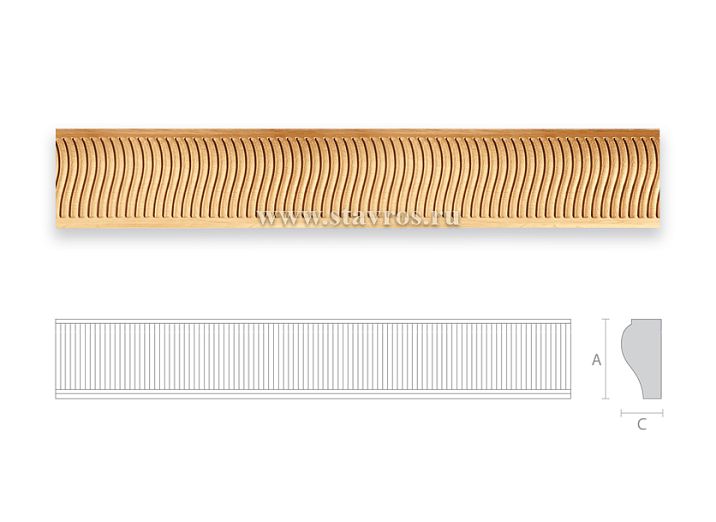
The artwork does not end at the edge of the canvas. It continues in how we present it to the world, how we frame it, and the context we create around the artistic expression. Wooden plank for framing pictures — it is not just a functional element protecting the edges of the canvas, but also the most important part of the visual dialogue between the artwork and the viewer. It is the boundary between two worlds: the inner world of the painting, created by the artist, and the outer world where the observer is located.
In the history of art, the frame has always played a special role. From richly ornamented gilded frames of the Renaissance to minimalist wooden planks of modernity — framing has always been an extension of the artistic concept, its logical conclusion. A properly chosen frame can emphasize the merits of a painting, enhance its emotional impact, and create a harmonious transition between the artwork and its surrounding space.
STAVROS, a company specializing in creating architecturally precise solid wood products, offers a wide range of solutions for framing artworks. Each plank, each profile — is the result of careful design and high-quality execution, taking into account not only aesthetic but also functional aspects. This allows creating frames that not only decorate the painting but also protect it, ensuring the longevity of the artwork.


Framing as a visual accent
Why is a frame needed? This question may seem naive, but it touches on fundamental principles of visual perception. The frame performs several crucial functions, without which a full appreciation of the artwork would be difficult.
First of all, the frame creates a visual boundary separating the artistic space from the real world. It helps the viewer focus on the content of the painting, without being distracted by surrounding objects. This is especially important in modern interiors, saturated with visual information, where without a clear frame, the artwork risks "getting lost" among other decorative elements.
The line outlining the painting significantly influences its perceived scale, color palette, and composition. A wide dark frame can visually reduce a bright canvas, making it more intimate and compact. Conversely, a thin light plank can "open up" a small work, giving it more air and space. Experienced designers and gallery curators skillfully use this effect, selecting frames that best highlight the merits of a specific artwork.
Light — another aspect influenced by framing. A wooden plank of a certain profile can create additional shadows and reflections, enriching the perception of the painting. This is especially noticeable with side lighting, when the textured surface of the frame creates a play of light and shadow, adding depth and volume to the artwork.
From a psychological standpoint, the frame performs a framing function for the world. It tells the viewer: "Here begins another reality, requiring special attention and perception." This is a kind of visual signal that switches our brain from everyday perception to aesthetic contemplation. It is no coincidence that even the most minimalist works in museums and galleries almost always have at least symbolic framing.
Moreover, the frame performs an important protective function. It protects the edges of the painting from mechanical damage, shields the canvas or paper from dust, moisture, and other negative environmental influences. For artworks on paper, a properly chosen frame using high-quality wooden planks can significantly extend their lifespan, preserving them for future generations.




Why wood?
In the era of synthetic materials and advanced technologies, wood remains the unrivaled material for framing artworks. This is due to a complex set of its unique properties, which cannot be fully replicated artificially.
The texture of wood — it is a natural pattern created by annual rings, vessels, and fibers. Each species has its own distinctive pattern, making every plank unique. This natural beauty of wood creates an organic transition between the artwork and its surrounding space, adding vitality and depth to the frame that synthetic materials lack.
The color palette of natural wood is extremely rich and diverse — from light, almost white tones of maple to deep, saturated hues of redwood or wenge. This allows selecting a frame that ideally matches the color palette of the painting. Moreover, the color of natural wood changes over time, acquiring a noble patina that further enhances the aesthetic value of the frame.
Warmth — another quality of wood that cannot be measured but easily felt. A wooden plank for framing pictures creates a sense of coziness and naturalness, which is especially important in residential interiors. Unlike metal or plastic, wood does not appear cold or artificial; it harmoniously integrates into any space, making it more alive and human.
The history of using wood in art spans millennia. This material carries cultural memory, linking contemporary art with centuries-old traditions. A wooden frame — it is not just a functional element, but also a tribute to the history of art, where wood has always played a key role.
The influence of wooden framing on interior atmosphere is difficult to overestimate. Natural wood has the ability to soften the rigidity of modern spaces, add warmth to minimalist interiors, and accentuate the elegance of classic rooms. Wooden planks of different species and shades can serve as a unifying element between various pieces of furniture and decor, creating a cohesive and harmonious interior image.
STAVROS offers framing planks made from various types of wood, each with its own character and features. Beech is distinguished by its uniform structure and pleasant light-pink hue, which pairs well with watercolors and pastels. Oak, with its expressive texture and warm golden tone, is ideal for framing oil paintings and graphics. Ash, combining strength with an elegant light tone, is versatile and suitable for a wide range of artworks.
Our factory also produces:



Types of picture framing strips
The variety of wooden framing strips for pictures is breathtaking. From the simplest rectangular profiles to complex multi-level constructions — each type has its purpose and application area.
Straight strips with smooth surfaces are the classic of minimalism, ideally suited for modern art and photography. They do not distract from the content of the artwork, creating a clear, concise border. Such strips are especially good for graphic works with sharp lines and contrasting colors.
Decorative strips with various profiles add volume and expressiveness to the frame. They may have beveled edges, rounded shapes, stepped structures. Such profiles create an interesting play of light and shadow, making the frame more dynamic and lively. Decorative strips combine well with painting, especially with works having complex textures and rich color palettes.
Smooth strips with minimal surface treatment highlight the natural beauty of wood, its texture and color. They create a sense of simplicity and naturalness, making them an ideal choice for landscapes, still lifes and other works depicting nature. Such strips are often used in Scandinavian and eco styles, where the naturalness of materials is valued.
Carved strips with decorative elements are the embodiment of a traditional approach to framing. Plant motifs, geometric patterns, classical designs — all of these give the frame special expressiveness and decorativeness. Carved strips are ideal for classical painting, historical subjects, portraits in traditional style.
Choosing the width and height of the strip is an important aspect that affects the overall perception of the painting. There is a rule according to which the frame width should be proportional to the size of the artwork: the larger the painting, the wider the frame may be. However, this is only a general principle, and in each specific case, the character of the artwork, its style and purpose must be considered.
The profile of the strip determines its cross-section and, accordingly, the visual effect it creates. A flat profile looks modern and minimalist, an inwardly beveled profile directs the viewer's gaze to the center of the painting, a convex profile creates a sense of volume and solidity. The choice of profile depends on the style of the painting, the interior where it will be placed, and personal preferences.
STAVROS products include a wide range of wooden picture framing strips meeting various stylistic and functional requirements. From classic profiles with rich carving to modern minimalist solutions — each item is distinguished by high-quality material and craftsmanship. Special attention is paid to geometric accuracy and surface finish quality, ensuring perfect element connection and flawless appearance of the finished product.
Get Consultation
Frame styles: from Baroque to minimalism
The history of art framing is as rich and diverse as the history of painting itself. Each era created its own frame styles, reflecting the aesthetic ideals and artistic trends of its time.
Classic framing style, dating back to Baroque and Rococo eras, is characterized by complex profiles, rich carving and decorative elements. Such frames were often gilded, giving them a special luxury and solemnity. Patination — an artificial aging technique — added depth and nobility, creating an antique effect. Classic frames are ideal for traditional painting, especially portraits, historical subjects and religious themes.
Modern framing style is characterized by clean lines, minimalist decoration and emphasis on the natural beauty of wood. Strips have simple geometric shapes, often with visible wood texture, enhanced by transparent varnishes or oils. Such frames create a sense of lightness and modernity, not distracting from the artwork itself. They combine well with abstract painting, contemporary photography and graphic art.
Ethnic style in picture framing draws inspiration from the traditions of various cultures. African motifs, Asian ornaments, Slavic patterns — all of these can be reflected in the design of wooden strips. Ethnic frames often have bright colors, unusual textures and distinctive decorative elements. They combine well with artworks depicting corresponding cultures, as well as with contemporary art inspired by ethnic motifs.
Boho style in framing is characterized by eclecticism, mixing of various elements and materials. Wooden strips can be combined with textiles, metal inserts, beads and other decorative elements. Such frames create a sense of creative freedom and individuality, making them ideal for boho-style artworks, Impressionist works and experimental art.
Scandinavian style in framing is characterized by simplicity, functionality and emphasis on natural materials. Strips usually have light shades, minimalist design and clear geometric shapes. Such frames create a sense of freshness and purity, making them ideal for landscapes, still lifes and contemporary Scandinavian painting.
Gallery framing style is a professional approach used in museums and exhibition halls. It is characterized by neutrality, allowing the artwork to speak for itself. Strips usually have a simple profile, understated colors and high-quality craftsmanship. Such frames suit any type of art, especially works intended for display in various contexts.
Modern style in framing is characterized by smooth, flowing lines, asymmetry and use of natural motifs. Strips may have wavy shapes, plant ornaments and unusual profiles. Such frames create a sense of movement and organic harmony, making them ideal for modern-style artworks, Symbolist painting and works with flowing, fluid forms.
Correct matching of the strip with the genre, subject and color of the painting is an art requiring knowledge and experience. Portraits usually look good in classic frames, emphasizing the dignity and status of the depicted person. Landscapes harmonize with frames having natural tones and textures that complement and extend the image of nature. Abstract works often benefit from minimalist framing, which does not compete with the complex composition of the artwork itself.
The color solution of the frame should take into account the main tones of the painting. The frame may either support the dominant color of the artwork, creating a harmonious unity, or contrast with it, creating a dramatic effect. In any case, the choice of color should be deliberate and thoughtful, considering both aesthetic and psychological aspects of perception.
Practical application
Practical application of wooden strips for picture framing requires understanding not only aesthetic but also technical aspects. Let us consider various scenarios of framing use and approaches to solving specific tasks.
Framing a single artwork intended to be the main object in the interior requires special attention to the choice of strip. In this case, the frame should not only complement the artwork itself but also harmonize with the surrounding space. To create an accent, one can use a strip of contrasting color or unusual profile that draws attention to the painting. It is important to consider the scale of the room: in a spacious hall, a wider and more expressive frame is appropriate, while in a small room, a more restrained option is preferable.
Working with a series of artworks presents additional challenges. Here, two main approaches are possible: using identical strips for all works or selecting different but harmonizing variants. The first approach creates a sense of unity and coherence of the series, emphasizing its conceptual connection. The second allows individualizing each work while maintaining a general stylistic direction. In both cases, it is important that the strips harmonize with each other in color, texture and style.
Canvas paintings are usually framed with simple-profile frames mounted directly onto the backboard. Works on paper require more complex construction using passe-partout and protective glass or acrylic. Passe-partout is a cardboard border that creates additional space between the artwork and the frame, protecting the paper from contact with glass and adding visual depth.
Choosing a strip for works on paper should consider not only aesthetic but also conservation aspects. Wooden strips for such works must be treated with special compounds preventing acid release, which could damage the paper. Additionally, it is important to use acid-free passe-partout and UV-protective glass, especially for valuable and unique artworks.
Photographs, as a special form of art, also have their own framing specifics. Modern photographs are often framed in minimalist frames made of light wood or painted in neutral tones. Historical photographs may be framed in vintage-style frames emphasizing their vintage character. In any case, it is important to consider the content and style of the photograph itself, as well as the context in which it will be displayed.
Collages and mixed techniques present a special challenge for framing. Their multi-layered structure and variety of materials require an individual approach. Often, deep frame-boxes are used for such works, protecting protruding elements and creating additional space between the artwork and glass. Strips for such frames must be sufficiently strong and have the appropriate profile, ensuring the required depth.
Installation and Maintenance
Mounting wooden strips to create a picture frame requires certain skills and tools. The traditional method involves joining strips at a 45-degree angle using special brackets or nails. To achieve an ideal result, a miter saw — a tool for precise angled cuts — and a square for checking the accuracy of the joint are needed. Modern technologies allow using special adhesives and connecting elements that ensure strong and invisible joints.
Mounting wooden strips to create a picture frame requires certain skills and tools. The traditional method involves joining strips at a 45-degree angle using special brackets or nails. To achieve an ideal result, a miter saw — a tool for precise angled cuts — and a square for checking the accuracy of the joint are needed. Modern technologies allow using special adhesives and connecting elements that ensure strong and invisible joints.
Protection from dust, light, and moisture is an important aspect of preserving artworks. For paper-based works, UV-protective glass or acrylic is recommended, which blocks harmful ultraviolet radiation causing color fading. The back of the frame should be covered with a special protective material to prevent dust and insects from entering. For additional moisture protection, silicone sealant can be applied around the glass perimeter.
Protection from dust, light, and moisture is an important aspect of preserving artworks. For paper-based works, UV-protective glass or acrylic is recommended, which blocks harmful ultraviolet radiation causing color fading. The back of the frame should be covered with a special protective material to prevent dust and insects from entering. For additional moisture protection, silicone sealant can be applied around the glass perimeter.
Recommendations for using wooden frames include several important points. First, avoid placing artworks under direct sunlight, which can cause color fading and deformation of wooden elements. Second, maintain a stable humidity level in the room, as sudden fluctuations can lead to wood cracking. Third, regular inspection of the frame's condition and timely repair of minor damages will help prevent more serious problems in the future.
Care for wooden frames includes regular dusting with a soft dry cloth or special brush. For deeper cleaning, a slightly damp cloth can be used, but it is important to immediately dry the surface to avoid damaging the wood. To restore shine and protect the surface, it is recommended to periodically treat the frame with specialized wood care products suitable for the finish type.
Maintaining the aesthetics of wooden frames for decades requires a comprehensive approach. This includes proper material selection, quality processing, professional installation, and regular maintenance. High-quality wooden strips, such as those offered by STAVROS, can retain their beauty and functionality for many years with proper care, becoming not just frames for artworks but also valuable heirloom items passed down through generations.
Mistakes in Selection
Choosing a wooden strip for framing artwork is a process requiring knowledge and taste. Let's consider the most common mistakes and how to avoid them.
Mismatch with the artwork's style is one of the most common mistakes. A modern abstract painting in an ornate classical frame or a traditional landscape in a minimalist frame can create visual dissonance, disrupting the overall perception. It is important that the frame style harmonizes with the artwork's language, supporting and emphasizing its features. To determine the appropriate framing style, one should analyze not only the subject but also the technique, color palette, and historical period of the artwork's creation.
Too wide or too narrow frame — another common problem. An excessively wide frame may 'absorb' a small artwork, making it visually less significant. A too narrow frame does not provide sufficient visual transition between the artwork and the surrounding space, failing to fulfill its framing function. There is a proportion rule, according to which the frame width should be approximately 1/10 of the artwork's width for small works and 1/6–1/8 for large ones. However, this is only a guideline, and in each specific case, one must consider the artwork's characteristics and the space where it will be placed.
Incorrect color combination of wood and image can significantly reduce the artwork's aesthetic impact. A highly contrasting frame may distract from the artwork itself, while a color too similar may blend in, failing to create the necessary framing effect. When choosing wood color, one should base it on the artwork's primary tones, selecting shades that harmonize with them or create a deliberate contrast. It is also important to consider how the wood color may change over time, especially for species prone to darkening or color shifts.
Ignoring the surrounding interior — an error that can result in even a perfectly matched frame appearing inappropriate in a specific space. Framing should consider not only the artwork's characteristics but also the room's style, wall color, furniture, and other decorative items. Ideally, the frame should create a harmonious transition between the artwork and the interior, integrating them into a unified whole.
Using low-quality materials and hardware can lead to rapid frame wear, deformation, fading, and other issues negatively affecting the artwork's perception. Saving money on the quality of wooden strips, fasteners, and protective materials in the long term results in additional costs for restoration or replacement of the frame. Investing in high-quality materials from reputable manufacturers, such as STAVROS, ensures longevity and preservation of the frame's aesthetic qualities for many years.
How to avoid these and other mistakes? First, carefully analyze the artwork itself, its style, technique, and color palette. Then consider the characteristics of the interior where it will be placed and the functional requirements for framing. When selecting a strip, pay attention not only to its appearance but also to the material quality, finish, and fasteners. In case of doubt, consult professionals — designers, gallery owners, or conservators with experience in selecting frames for various types of artworks.
Examples — Visual Scenarios
To better understand the role of wooden framing in interior design, let's consider several specific scenarios demonstrating different approaches to using wooden strips.
An interior with one large artwork in a wooden frame can be a striking example of how framing affects the perception of the artwork and the space as a whole. Imagine a modern living room in neutral tones, where the central element is a large abstract painting in a wide frame of dark oak with a simple yet expressive profile. Such a frame creates a clear boundary between the artwork and the wall, emphasizing the artwork's significance and adding depth. The dark wood color contrasts with light walls, creating a dramatic effect, while the natural oak texture adds warmth and organic feel to the minimalist space. This scenario demonstrates how properly chosen framing can transform an artwork into the focal point of the interior, around which the entire room composition is built.
A gallery of several paintings with strips of different profiles represents a more complex but no less interesting case. Imagine a wall in a home study, where 4–6 works of different sizes and styles — from classical landscapes to modern graphics — are displayed. Each work is framed in individually selected wooden strips, which differ in profile, width, and tone, but are united by a common stylistic direction. This approach allows highlighting the uniqueness of each artwork while maintaining the composition's integrity. It is important that, despite their diversity, the strips harmonize in color and texture, creating visual connections between different gallery elements. This scenario shows how wooden framing can serve as a unifying element for diverse artworks, creating a cohesive ensemble.
A mirror framed in the same style as the paintings demonstrates the versatility of wooden strips and their ability to create stylistic unity in the interior. Imagine a bedroom where a mirror hangs above a chest of drawers in a beech frame with delicate carved ornamentation, and small watercolors are placed on the side walls in frames of the same material and similar decoration. This approach creates visual rhythm, linking different interior elements into a unified composition. The mirror in a wooden frame becomes not just a functional item but also a decorative element continuing the artistic line established by the framed artworks. This scenario illustrates how wooden strips can be used to create a cohesive design solution, unifying different functional zones and interior items.
Integrating wooden framing into various stylistic contexts demonstrates its versatility and adaptability. In a classical interior with moldings, parquet flooring, and antique furniture, ornate dark wood frames with carving and gilding are appropriate, supporting the overall atmosphere of luxury and tradition. In a loft with brick walls, exposed utilities, and industrial aesthetics, rough, brutal frames made of unfinished wood with visible texture and tool marks work well, emphasizing authenticity and 'honesty' of the material. In a neoclassical interior combining traditional forms with modern interpretation, elegant frames with clean lines and restrained decoration, made from noble woods with matte finish, are suitable. These examples show how wooden strips for framing can adapt to various stylistic contexts while maintaining their functionality and aesthetic value.
From STAVROS — this is not just construction material, but a carefully designed architectural element capable of transforming any artwork. Unlike mass-produced items, STAVROS products are distinguished by thoughtful design of every detail, from wood selection to surface finishing.
Wooden plank for framing pictures The solid wood molding offered by the company is made from premium-grade wood, carefully dried and processed. This ensures dimensional stability, which is especially important for creating perfectly flat and strong frames. Each strip undergoes multi-stage quality control, guaranteeing the absence of defects that could affect the appearance or longevity of the product.
Unique surface treatment — another advantage of STAVROS products. The company uses both traditional and innovative technologies to highlight the natural beauty of wood and provide reliable protection against external influences. From fine sanding to application of special protective coatings — each stage of processing is performed with maximum care and attention to detail.
Premium quality standards followed by STAVROS are not only reflected in the products themselves but also in the service provided by the company. Clients can expect professional consultation when selecting strips, taking into account the specific characteristics of the artwork and the interior where it will be placed. This is especially valuable for those who lack specialized knowledge in framing but aim for an ideal result.
The ability to order custom sizes — another advantage of working with STAVROS. The company is ready to manufacture strips of any length and configuration, allowing the creation of frames for artworks that are non-standard in size or shape. This is especially relevant for contemporary art, where traditional formats often give way to experimental solutions.
Delivery across Russia ensures accessibility of STAVROS products for clients from any region of the country. The company pays special attention to packaging and logistics, guaranteeing that the products arrive at the customer in perfect condition, without damage or deformation.
Delivery across Russia ensures the accessibility of STAVROS products for customers from any region of the country. The company pays special attention to packaging and logistics, guaranteeing that items arrive at the customer's location in perfect condition, without damage or deformation.





