Article Contents:
- Legacy of Centuries: The History of Wooden Half-Columns in Architecture
- From antiquity to the present day
- Wooden Half-Columns in Russian Architecture
- Revival of Traditions in Modern Design
- Anatomy of Perfection: What a Wooden Half-Column Is Made Of
- Structural Elements
- Architectural Orders in Wooden Half-Columns
- Proportions and Dimensions
- Wood as a Noble Material: Types and Characteristics
- Wood Species for Manufacturing Half-Columns
- Wood Processing and Protection Technologies
- Ecological and durable
- Functional Grandeur: Application of Wooden Half-Columns in Interior Design
- Space zoning
- Framing Openings and Niches
- Decorative Treatment of Furniture and Fireplaces
- Concealing Structural Elements
- Stylistic Diversity: Wooden Half-Columns in Different Interiors
- Classic and neoclassic: eternal elegance
- Art Deco: Geometric Luxury
- Country and Provence: Rustic Charm
- Modern Minimalism: Concise Expressiveness
- Eclecticism and Fusion: Creative Synthesis
- Technical Aspects: Selection, Installation, and Maintenance
- How to Choose the Perfect Wooden Half-Columns
- Installation and Setup: Professional Approach
- Care and restoration
- Designer Secrets: How to Maximize the Impact of Wooden Half-Columns
- Play with Light and Shadow
- Color Solutions and Finishing
- Combining with other materials
- Non-Standard Solutions
- Practical Examples: Wooden Half-Columns in Various Rooms
- Grand Hall and Foyer
- Living Room: Center of Composition
- Bedroom: Intimacy and Elegance
- Kitchen and Dining Room: Functionality and Style
- Office and Library: Intellectual Atmosphere
- Economic aspects: investment in beauty and status
- Pricing and cost factors
- Long-Term Investment in Interior Design
- Comparison with alternative solutions
- Conclusion: Timeless Elegance in Every Interior

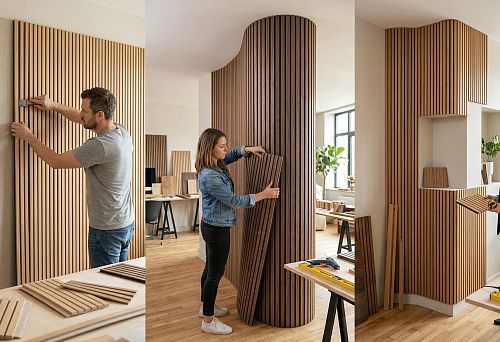
Have you ever noticed how one detail can completely transform a space? How a single touch can turn an ordinary room into a work of art? In the world of interior design, there are elements possessing truly magical transformative power. And today we will talk about one such element – the wooden half-columnan architectural masterpiece capable of infusing life and character into any room.




Legacy of Centuries: The History of Wooden Half-Columns in Architecture




From antiquity to the present day
Wooden half-columns are not just a trendy feature of modern design. Their history spans millennia, tracing back to ancient times. In ancient Greece and Rome, architects used half-columns as structural and decorative elements. Indeed, they were mostly made of stone back then, but by the Middle Ages, wood became one of the primary materials for creating these architectural elements.
In Gothic cathedrals, one can see elegant wooden half-columns reaching upward and creating a sense of infinite space. The Renaissance brought more classical forms inspired by antiquity. Baroque and Rococo added opulence and ornamentation. Each historical period left its mark on the evolution of this architectural element.
Our factory also produces:


Wooden Half-Columns in Russian Architecture
Half-columns occupy a special place in Russian architectural tradition. In wooden architecture of Rus', half-columns were used both for decorating facades and for interior decoration of terem and palaces. Carved wooden half-columns became a hallmark of Russian style.
In the 18th-19th centuries, with the arrival of classicism, wooden half-columns became an indispensable part of noble estates and urban mansions. They framed doorways, supported ceiling vaults, adorned fireplaces and mirrors. Master carpenters perfected the art of creating wooden half-columns, combining classical proportions with virtuoso carving.
Get Consultation
Revival of traditions in modern design
Today we are witnessing a true renaissance of interest in classical architectural elements. Wooden Half-Column once again holds a prestigious place in interiors – from luxurious classical to modern minimalist.
Modern wood processing technologies allow creating half-columns of incredible precision and beauty. At the same time, the handcrafted work of masters preserves each piece’s uniqueness and soul. This combination of tradition and innovation makes wooden half-columns more in demand than ever.
Anatomy of Perfection: What a Wooden Half-Column Consists Of
Structural elements
To truly appreciate the beauty and complexity of a wooden half-column, it is necessary to understand its anatomy. A classical half-column consists of three main parts:
- Base (plinth) – the lower part of the half-column, usually wider than the shaft. The base can be simple or complex, with multiple profiles and decorative elements. It serves not only decorative purposes but also ensures the stability of the entire structure.
- Shaft (fust) – the main part of the half-column, which can be smooth or fluted (with vertical grooves). The shaft usually has a slight entasis – a barely noticeable bulge in the middle – which creates an optical illusion of perfect verticality and gives the structure visual stability.
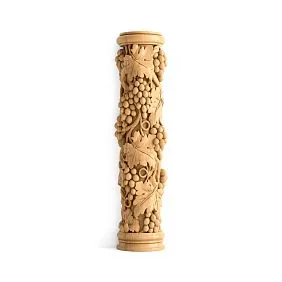
- Capital – the top part of the half-column, its "crown." The capital is often the most decorative element, defining the architectural style of the half-column. In wooden half-columns, capitals can be adorned with various levels of carving.
Architectural Orders in Wooden Half-Columns
An architectural order is a system of proportions and forms that determines the appearance of a column or half-column. In classical architecture, five main orders are distinguished, each of which can be embodied in wood:
- Doric order – the simplest and most austere. Doric half-columns have minimal decoration; their capitals consist of a simple cushion (echinus) and a square slab (abacus).
- Ionic order – more elegant and decorative. Its distinguishing feature is a capital with characteristic volutes (spiral scrolls).
- Corinthian order – the most ornate and decorative. Corinthian capitals are adorned with stylized acanthus leaves, making them especially expressive in wooden execution.
- Tuscan order – a simplified version of the Doric, characteristic of Roman architecture.
- Composite order – combines elements of the Ionic and Corinthian orders.
In modern design, original variations of these classical orders are often used, adapted to specific interiors.
The height of the base should correspond to the users' height and the intended use of the table. For dining tables, the optimal height is 720-750 mm; for work tables, 740-760 mm; for bar counters, 1050-1100 mm.
Classical architectural canons prescribe strict proportions for half-columns of each order. For example, the height of a Doric half-column should be 7–8 diameters of its shaft, Ionic – 8–9 diameters, Corinthian – 10 diameters.
However, in modern interior design, these proportions are often adapted to specific spaces. The height of half-columns can vary from small decorative elements (30–50 cm) to monumental structures from floor to ceiling (2.5–3 meters and more).
The diameter of the shaft is usually 10–30 cm for interior half-columns, although in spacious rooms with high ceilings, more substantial variants may be used.
Wood as a Noble Material: Types and Characteristics
Wood Species for Manufacturing Half-Columns
Choosing a wood species for a half-column is not only an aesthetic but also a practical consideration. Different species have varying characteristics that affect the appearance, durability, and cost of the product:
- Oak – one of the most popular materials for manufacturing half-columns. Oak has high strength, moisture resistance, and a distinctive texture. Oak half-columns can last for decades, acquiring a noble patina over time. The color of oak ranges from light golden to dark brown, allowing for color matching with any interior.
- Beech – a dense and hard wood with a uniform structure. Beech is easy to work with, allowing for the creation of half-columns with fine decorative details. The color of beech wood ranges from light cream to pinkish-brown.
- Ash – a strong and elastic wood with a beautiful grain pattern. Ash is highly flexible, making it ideal for creating half-columns with entasis or complex profiles. The color of ash ranges from nearly white to light brown with characteristic dark streaks.
- Walnut – a noble wood with a dark brown color and purple or chocolate tone. Walnut half-columns look luxurious and substantial, making them ideal for premium classical interiors.
- Cherry – wood with a warm reddish-brown tone that becomes even richer over time under light exposure. Cherry half-columns bring a sense of warmth and coziness to interiors.
- Pine and spruce – more affordable coniferous species often used for manufacturing half-columns in Russian or Scandinavian styles. They have a light color and a distinctive ring pattern.
Wood Processing and Protection Technologies
Modern production of wooden half-columns includes several processing stages ensuring the quality and longevity of the products:
- Wood drying – a critically important stage that prevents deformation and cracking of finished products. Professional manufacturers use kiln drying to achieve optimal wood moisture content (8–12%).
- Mechanical processing – includes sawing, planing, milling, and turning. Modern CNC equipment allows creating parts with precision down to fractions of a millimeter, ensuring perfect geometry of half-columns.
- Sanding – a multi-stage process during which the wood surface becomes perfectly smooth. Quality sanding is the guarantee of a flawless finish.
- Protective treatment – includes applying antiseptics that protect wood from fungi, mold, and insects, as well as fire-retardant compounds that increase fire safety.
- Finish coating may include staining (changing the wood color), varnishing, waxing, or painting. Modern varnishes and paints not only protect wood but also highlight its natural beauty.
Ecological and durable
Wooden Half-Column It is not only a beautiful but also an eco-friendly interior element. Wood is a renewable natural material that, when properly treated, does not emit harmful substances and creates a favorable microclimate in the room.
With proper care, wooden half-columns can serve for decades, sometimes even centuries. This is evidenced by preserved historical interiors with wooden architectural elements that still look magnificent today.
It is important to note that modern wood protection technologies solve traditional problems of this material — sensitivity to moisture, susceptibility to biological damage and fire. A properly treated wooden half-column is not afraid of time or circumstances.
Functional elegance: use of wooden half-columns in interior design
Space Zoning
One of the most important functions of half-columns in modern interiors is zoning space without erecting solid partitions. This technique is especially relevant in the era of open floor plans, when it is important to visually separate functional zones while maintaining the unity of the space.
Wooden half-columns can effectively delineate:
- Living room and dining area
- Kitchen and dining space
- Bedroom and home office
- Entryway and living area
When placed in pairs or as a colonnade, they create an architectural rhythm and form visual "portals" between different functional zones. At the same time, half-columns do not hinder air circulation and light penetration, preserving the sense of spaciousness.
Framing openings and niches
Wooden half-columns are ideal for architectural decoration of door and window openings, arches, and niches. They give these interior elements completeness and expressiveness:
- Pair half-columns on either side of the entrance door create a majestic portal, emphasizing the importance of the entry zone.
- Half-columns framing an arched opening between rooms transform it into an architectural focal point of the interior.
- Half-columns flanking a window opening form a classic frame reminiscent of palace interiors.
- Half-columns flanking a niche transform it into an eye-catching spot for placing a sculpture, vase, or other decorative object.
Such use of half-columns has not only aesthetic but also practical value — they protect the corners of openings from damage and conceal joints between finishing materials.
Decorative treatment of furniture and fireplaces
Wooden half-columns are often used as decorative elements for furniture and fireplaces:
- In kitchen cabinets, half-columns can decorate the ends of cabinets, islands, and bar counters.
- In libraries and offices, half-columns often decorate bookshelves and shelves.
- In bedrooms, half-columns can be part of the headboard of a bed or frame a dressing table.
- Fireplaces decorated with wooden half-columns become a focal point of attention and a focal point of the interior.
Such use of half-columns creates stylistic unity between the architecture of the room and its contents, forming a harmonious and cohesive interior image.
Masking structural elements
A practical function of half-columns, often overlooked, is concealing various structural and engineering elements:
- Load-bearing columns, which often look out of place in interiors, can be transformed into decorative elements by cladding them with wooden half-columns.
- Engineering verticals (water, sewage, ventilation) can easily be concealed behind decorative half-columns.
- Corners of walls prone to damage can be protected and decorated using corner half-columns.
- Joints between different finishing materials are elegantly concealed by half-columns.
This allows turning technical necessities into decorative assets of the interior.
Stylistic diversity: wooden half-columns in different interiors
Classic and neoclassic: eternal elegance
In classical and neoclassical interiors, wooden half-columns are not merely decorative elements but an essential part of the architectural ensemble. Here, they appear in all their historical grandeur:
- Strict proportions based on classical canons
- Clear division into base, shaft, and capital
- Use of traditional orders – most often Corinthian or Ionic
- Richly decorated capitals, often gilded or patinated
In classical interiors half-columns made of wood Usually made from noble woods – oak, walnut, or mahogany. They can be painted white to imitate marble or retain the natural wood color with a transparent lacquer finish.
Placement of half-columns in a classical interior follows strict rules of symmetry and rhythm. They are often used in pairs to frame doorways, fireplaces, mirrors, or niches.
Art Deco: geometric luxury
The art deco style reinterpreted classical architectural elements, giving them geometric clarity and exotic charm. Wooden half-columns in this style are characterized by:
- Simplified, geometric forms
- Stepped capitals and bases
- Contrasting color combinations – black with gold, dark wood with light
- Use of exotic wood species – ebony, zebrawood, palisander
In art deco interiors, half-columns are often part of a complex composition including mirrors, metallic details, and geometric ornamentation. They may be inlaid with metal, mother-of-pearl, or colored glass, giving them a special luxury.
Country and Provence: rustic charm
In rustic styles – country, Provence, rustic – wooden half-columns acquire a completely different character:
- More rugged, "handcrafted" finish
- Intentional irregularities and tool marks
- Weathered surface with scratches and cracks
- Natural, muted colors or white paint with patina effect
In such interiors, half-columns are often made from pine, spruce, or other accessible wood species. They may be painted in pastel tones characteristic of Provence, or retain the natural wood color with a light wax finish.
Placement of half-columns in rustic interiors is less formal – they may frame a fireplace, support ceiling beams, or decorate a kitchen island.
Modern minimalism: concise expressiveness
It seems that minimalism and classical architectural elements are incompatible, but modern designers prove the opposite. In minimalist interiors, wooden half-columns acquire a new sound:
- Extremely simplified forms without decorative details
- Absence of pronounced capitals and bases or their minimalist interpretation
- Monochromatic color palette, often matching wall tones
- Emphasis on wood texture and quality of finish
Such half-columns create a subtle play of light and shadow, adding depth and architectural character even to the most minimalist interiors. In minimalism, half-columns are often made from light-colored woods – maple, beech, birch – or painted white, gray, or black.
Eclecticism and fusion: creative synthesis
Eclectic style allows the most free experimentation with wooden half-columns. Here, the most unexpected solutions are possible:
- Combining classical forms with modern materials and finishes
- Use of non-traditional colors – bright, saturated, or metallic
- Combining different orders within one space
- Decorating half-columns with atypical elements – mosaic, mirrored inserts, textiles
Eclecticism allows creating unique, personalized interiors where wooden half-columns become an expression of the owner's individuality.
Technical aspects: selection, installation, and maintenance
How to choose ideal wooden half-columns
Choosing wooden half-columns for interior – a responsible step requiring consideration of many factors:
- Room proportions. The height and diameter of half-columns must correspond to the room size. Too massive columns will 'consume' space, while too thin ones will look unconvincing.
- Interior style. Half-columns must harmonize with the overall style of the room. Traditional orders are suitable for classical interiors, while more minimalist options suit modern interiors.
- Wood species. Choosing wood affects not only appearance but also durability, weight, and cost. The wood species should match other wooden elements in the interior.
- Finish type. Determine which finish suits your interior best – natural wood texture with transparent coating, painting in a specific color, or imitation of another material.
- Functional purpose. Determine the role half-columns will play – decorative, zoning, or masking. This affects their placement and structural features.
- Budget. The cost of wooden half-columns may vary significantly depending on the wood species, size, and complexity of decoration. Set a reasonable budget in advance.
Installation and mounting: professional approach
Installing wooden half-columns requires precision and care. Main installation stages:
- Surface preparation. The wall must be flat, clean, and strong. Leveling and priming may be required if necessary.
- Marking. Accurate marking will ensure perfect symmetry and verticality of half-columns.
- Mounting. Depending on the construction and weight, half-columns may be mounted on:
- Adhesive (for lightweight decorative elements)
- Screws and anchors with subsequent covering of mounting sites
- Mounting plates (for heavy half-columns)
- Combined method (mechanical fastening + adhesive)
- Final finishing. After installation, joints are spackled, sanded, and finished (if half-columns are delivered without finishing).
For complex and heavy structures, it is recommended to consult professional installers who will ensure the safety and longevity of the installation.
Maintenance and restoration
Proper care will extend the service life of wooden half-columns and maintain their attractive appearance:
- Regular cleaning from dust using a soft dry cloth or special brushes for carved details.
- Periodic treatment with protective compositions – varnishes, oils, or waxes – protects wood from moisture and ultraviolet rays.
- Maintaining optimal microclimate in the room. Sudden changes in temperature and humidity may cause deformation of wooden elements.
- Protection from direct sunlight, which may cause fading or yellowing of the wood.
In case of damage, wooden half-columns can be restored. Minor chips and scratches can be filled with wax pencils or wood putty. More serious damage requires professional restoration, which may include replacing individual elements, restoring carvings, and renewing the finish.
Design Secrets: How to Use Wooden Half-Columns Most Effectively
Play with light and shadow
Proper lighting can significantly enhance the expressiveness of wooden half-columns:
- Directed light creates dramatic shadows that highlight the relief and texture of the wood.
- Hidden backlighting behind half-columns creates a glowing effect and visually separates them from the wall.
- Spotlights placed between half-columns create a rhythmic light pattern.
- Decorative wall sconces mounted on half-columns turn them into functional lighting elements.
Experimenting with different types of lighting can create various moods and change the perception of the interior depending on the time of day or occasion.
Color solutions and finishing
The color and finish of wooden half-columns can either support the overall interior color scheme or create striking accents:
- Natural wood texture with transparent varnish highlights the material's inherent beauty.
- Staining allows changing the color of wood while preserving its visible texture.
- Painting in white or pastel tones creates a light, airy look.
- Patina gives half-columns a vintage, aged appearance.
- Gilding or silvering individual elements (especially capitals) adds luxury and grandeur
Modern finishing technologies allow creating various decorative effects on wooden half-columns – from marble imitation to aged surfaces with craquelure.
Combining with other materials
Wooden half-columns combine well with other materials, opening up wide possibilities for design experimentation:
- Wood and stone – a classic combination, where the warmth of wood contrasts with the cool texture of stone.
- Wood and metal – a modern solution, especially effective in loft and industrial styles.
- Wood and glass – a light, airy combination, creating a play of transparency and density.
- Wood and textile – a cozy combination, especially suitable for bedrooms and living rooms.
Such combinations allow creating multi-layered, textured interiors with a rich visual palette.
Non-standard solutions
Modern design does not limit itself to traditional approaches to using wooden half-columns. Creative solutions include:
- Transformer half-columns with built-in functional elements – shelves, lights, mirrors.
- Asymmetric compositions of half-columns of different heights and diameters.
- Half-columns with inlays of unusual materials – glass, metal, ceramic.
- Deconstructivist half-columns with intentionally distorted classical proportions.
Such non-standard solutions allow creating unique, memorable interiors reflecting the owner's individuality.
Practical Examples: Wooden Half-Columns in Various Rooms
Grand hall and foyer
The first impression of a home is formed in the entryway or hall, and wooden half-columns here serve as a calling card. In these spaces, they can be used for:
- Framing the entrance door, creating a majestic portal
- Decorating mirrors, transforming them into architectural compositions
- Supporting arched openings leading to main rooms
- Creating niches for sculptures, vases, or other decorative elements
In spacious halls, full-height half-columns look striking. half-columns made of wood In compact entryways – more modest versions up to door height or even half-height.
Example: In the hall of a country house, oak Corinthian half-columns frame a large mirror in a carved frame. The warm honey tone of the wood contrasts with white walls, creating an elegant yet cozy atmosphere. Built-in backlighting highlights the relief of the carved capitals, creating a play of light and shadow.
Living room: center of composition
The living room is an ideal place to showcase architectural refinements. Here, wooden half-columns can become the central element of the entire composition:
- Surrounding the fireplace with half-columns turns it into a majestic portal
- Half-columns around the room create the feeling of a classic salon
- Paired half-columns can highlight an area for placing a television or home theater
- Half-columns supporting decorative arches form cozy niches for relaxation
In the living room, both monumental half-columns with rich decoration and more restrained versions harmonizing with the overall interior style are appropriate.
Example: In a spacious neoclassical living room, four walnut Ionic half-columns frame a niche with an electric fireplace. The half-columns support a decorative entablature with a cornice, on which busts and vases are placed. The dark wood with matte lacquer finish harmonizes with the parquet floor and creates an atmosphere of an aristocratic salon.
Bedroom: Intimacy and Elegance
In the bedroom, wooden half-columns acquire a special intimacy and elegance. Here, they are often used for:
- Creating a headboard – half-columns on both sides with decorative tops
- Decorating a dressing table or mirror
- Highlighting a wardrobe area or entrance to the bathroom
- Decorating niches for night lighting
In the bedroom, more elegant and refined half-columns are preferred, possibly with romantic motifs in the decoration. Materials should be warm and pleasant to the touch – wood with a soft texture and silky finish.
Example: In a Provence-style bedroom, two whitewashed wooden half-columns with simplified capitals flank the headboard. They support a decorative arch housing reading lamps. The weathered surface of the wood with a light patina creates an atmosphere of a French country house.
Kitchen and Dining Room: Functionality and Style
In the kitchen and dining room, wooden half-columns must combine decorative appeal with practicality. In these spaces, they may:
- Decorate a kitchen island, giving it solidity and stability
- Frame a range hood, turning it into an architectural focal point
- Decorate a bar counter separating the kitchen from the dining room
- Create an eye-catching frame for a wine cabinet or display case with tableware
For the kitchen and dining room, it is important to choose wood species and finishes resistant to moisture and stains.
Example: In a spacious kitchen-dining room, four wooden Tuscan half-columns made of cherry wood frame the passage to the dining area. They support a decorative beam on which wrought iron hooks for kitchenware are mounted. The warm reddish tone of cherry wood creates a cozy, welcoming atmosphere.
Office and library: intellectual atmosphere
In workspaces – offices and libraries – wooden half-columns create an atmosphere of seriousness and intellectual depth. Here, they may:
- Frame bookshelves and shelves
- Decorate a desk or meeting zone
- Decorate a fireplace or relaxation zone
- Create architectural framing for collections or memorabilia
In offices and libraries, traditionally dark, noble wood species – oak, walnut, mahogany – with deep, rich finishes are used.
Example: In a home library, Doric order wooden half-columns made of dark oak are integrated into the construction of bookshelves surrounding the room. They visually support ceiling beams of the same shade, creating a sense of architectural unity. The matte finish with a slight aging effect gives the space an atmosphere of an old scholar’s study.
Economic Aspects: Investment in Beauty and Status
Pricing and cost factors
The cost of wooden half-columns depends on several key factors:
- Wood species. Premium and rare species (walnut, mahogany, exotic woods) are significantly more expensive than common ones (pine, spruce, birch).
- Size and proportions. The larger the half-column, the higher its cost due to increased material consumption and manufacturing labor intensity.
- Decorative complexity. Carved capitals, fluting on the stem, and decorative base elements increase cost due to additional labor.
- Finish type. Complex finishes (patina, gilding, multi-layer varnishing) increase the final product cost.
- Manufacturing method. Handcrafted work by a master carpenter is valued higher than items produced using CNC machines.
On average, the cost of wooden half-columns may vary from several thousand to tens of thousands of rubles per item, depending on the aforementioned factors.
Long-term investment in interior design
Despite the relatively high initial cost, half-columns made of wood should be considered a long-term investment in interior design:
- Durability. Well-made wooden half-columns serve for decades, sometimes even centuries, without losing their appeal.
- Timeless aesthetics. Unlike trendy styles that quickly become outdated, classical architectural elements remain relevant always.
- Increased property value. Interiors with quality architectural details made of natural materials increase the market value of real estate.
- Status. Wooden half-columns create an atmosphere of luxury and nobility, which is impossible with cheaper decorative solutions.
- Ecological value. Natural wood is an eco-friendly material that creates a healthy microclimate in the room and does not emit harmful substances.
Comparison with alternative solutions
To objectively assess the investment attractiveness of wooden half-columns, it is useful to compare them with alternative solutions:
- Polyurethane half-columns are cheaper than wooden ones, but less durable, have an artificial appearance, and may yellow or deform over time.
- Gypsum half-columns are affordable but fragile, fear moisture, and require regular renewal.
- MDF half-columns occupy a middle ground in price, but they fall short of solid wood in terms of durability and aesthetic qualities.
- Stone half-columns are comparable to or more expensive than wooden ones, durable, but create a cooler atmosphere and are more difficult to install due to their greater weight.
In the long term, wooden half-columns are often the most economically advantageous solution due to the optimal combination of durability, aesthetic qualities, and practicality.
Conclusion: Timeless elegance in every interior
Wooden Half-Column It is not merely a decorative element, but an architectural masterpiece capable of transforming any space. Combining functionality and aesthetics, practicality and luxury, tradition and modernity, wooden half-columns become a key element in creating an interior with character and soul.
Natural wood brings warmth and coziness into the home, creating a unique energy and connection with nature. Each wooden half-column is unique due to the distinctive wood grain pattern, which cannot be replicated in artificial materials. This gives the interior individuality and authenticity, which are highly valued in the age of mass production.
Choosing wooden half-columns for your interior means choosing not just a trendy fashion, but timeless classicism that will always remain relevant. You are investing in beauty that is not subject to fashion whims, in quality proven over centuries, and in status that cannot be purchased with money.
STAVROS Company specializes in creating high-quality wooden architectural elements, including half-columns of various styles and sizes. STAVROS masters combine traditional woodworking techniques with modern technologies, creating pieces that become true works of art.
Each half-column from STAVROS is the result of meticulous work by experienced carpenters who invest not only skill but also soul into their creations. Using only premium wood, careful drying and finishing, attention to the smallest details — all this guarantees flawless quality and longevity of the products.
Entrust the creation of a unique interior to STAVROS professionals — and the classic elegance of wooden half-columns will transform your space, filling it with architectural nobility and refined style that will delight you and your guests for many years.