Article Contents:
- Philosophy of the Wooden House: Unity of Material and Form
- Natural Harmony in Every Detail
- Stylistic Diversity of Wooden Architecture
- Technical Aspects of Selection and Installation
- Engineering Requirements for Support Elements
- Features of Installation in Wooden Structures
- Wood Species: Choosing for Each Case
- Coniferous Species – Accessibility and Practicality
- Broadleaf Species – Prestige and Durability
- Stylistic solutions for different interiors
- Traditional Russian Style
- Scandinavian minimalism
- Modern eclecticism
- Manufacturing and processing technologies
- Traditional Processing Methods
- Innovative technologies
- Protection and Maintenance of Wooden Elements
- Modern Protective Systems
- Regular Maintenance
- Integration with smart home systems
- Modern technological solutions
- Monitoring of Structural Condition
- Economic aspects and budget planning
- Pricing factors
- Long-Term Economic Efficiency
- Ecological aspects and sustainable development
- Ecological Nature of Natural Wood
- Secondary Use and Recycling
- Conclusion
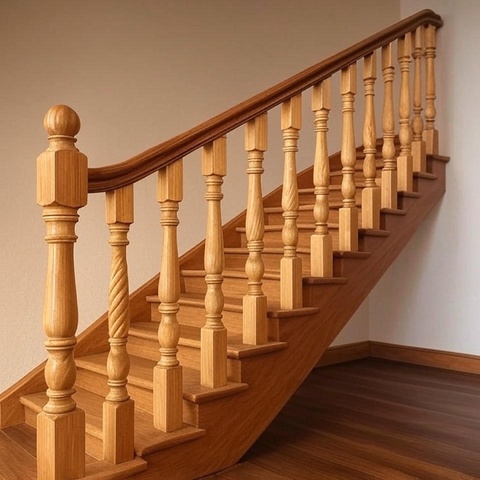
There is something magical in how sunlight plays through rows of elegant wooden posts, creating whimsical patterns of light and shadow on the floor of a wooden house. These vertical elements do not merely serve a safety function—they become the soul of the interior, its character, and its unique face. In the world of wooden architecture, every detail matters, but it is precisely these support elements that can transform an ordinary staircase into an architectural masterpiece.
Imagine a house made of natural wood without these elegant vertical posts. Emptiness, devoid of character and nobility. That is why choosing the right railing elements becomes a crucial moment in creating a harmonious space, where every line breathes the warmth of natural material.


Philosophy of the Wooden House: Unity of Material and Form




Natural Harmony in Every Detail
A wooden house is not just a structure—it is a living organism, where each element must be in harmony with the overall concept. When we speak of balusters in a wooden housewe mean not merely functional elements, but the most important components of the architectural symphony.
Wood as a material possesses a unique ability to create a sense of warmth and coziness. Each wood species has its own character, texture, and aroma. Pine offers the house a resinous freshness of northern forests, oak brings a sense of immutability and eternity, while larch delights the eye with golden hues and exceptional strength.
The choice of wood species for support elements should harmonize with the material of walls, beams, and other structural elements of the house. This creates visual unity and emphasizes the natural beauty of the material.
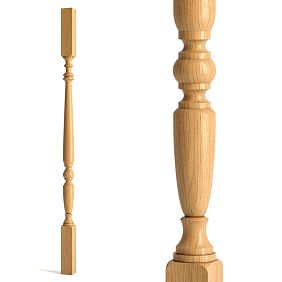
Our factory also produces:



Stylistic Diversity of Wooden Architecture
A modern wooden house can embody various architectural styles—from traditional Russian architecture to Scandinavian minimalism. Each style dictates its own requirements for the form and decoration of vertical supports.
The Russian style implies rich carving, complex ornaments reflecting folk traditions. Here, posts with plant motifs, geometric patterns, and symbolic images are appropriate. Such elements transform a staircase into a true piece of folk art.
Scandinavian style, on the contrary, leans toward simplicity and functionality. Here, preference is given to minimalist forms that highlight the natural beauty of wood. Minimal decoration, maximum attention to the quality of processing and perfection of proportions.
Get Consultation
Technical aspects of selection and installation
Engineering requirements for support elements
Beauty without functionality is a waste of money. Vertical supports in a wooden house must primarily ensure safe movement along the staircase. Building codes establish clear requirements for the distance between posts, their height, and strength.
The maximum distance between the axes of posts should not exceed 150 millimeters. This requirement is especially important in homes where children live — such a gap prevents the risk of a child getting stuck or falling. The height of the railing is usually 900-1000 millimeters, providing comfortable support for an adult.
Structural strength is critically important for safety. Each post must withstand a horizontal load of at least 100 kilograms. This requirement takes into account not only normal use but also extreme situations when a person may suddenly lean on the railing.
Features of installation in wooden structures
Installation of support elements in a wooden house has its own features related to the natural properties of wood. Wood is a living material that breathes, expands, and contracts depending on humidity and temperature.
A wooden house may shrink by up to 10-15 centimeters in the first two years after construction. This must be considered when designing staircase structures. Compensatory gaps and adjustable connections help avoid deformations and damage.
Mounting posts to wooden treads requires special attention to waterproofing. Moisture penetrating the joints may cause rot and structural damage. Using special sealants and protective coatings extends the service life of the components.
Wood species: selection for each case
Coniferous species – accessibility and practicality
Spruce remains the most popular material for manufacturing staircase elements in wooden houses. Its accessibility, ease of processing, and good operational characteristics make spruce the optimal choice for most projects.
The natural resinous nature of spruce provides protection against insects and fungal damage. However, for maximum longevity, additional treatment with antiseptic compounds is recommended. Modern impregnations not only protect the wood but also enhance its natural beauty.
Larch surpasses spruce in density and moisture resistance. This species is especially valued for its ability to become stronger over time. Larch posts are practically immune to rot and deformation, making them ideal for humid environments.
Although less popular, fir is also used in manufacturing staircase elements. Its light-colored wood with minimal resin pockets is ideal for items intended for painting.
Broadleaf species – prestige and longevity
Oak is traditionally considered the standard of strength and nobility in wooden architecture. Its hard wood with distinctive grain creates a sense of solidity and respectability. Oak balusters in a wooden house become a true interior decoration.
Processing oak requires special equipment and high skill from craftsmen. The hardness of the wood makes mechanical processing difficult, but the result justifies the cost. Oak products can last for centuries, acquiring a noble patina over time.
Ash attracts designers with its light-colored wood featuring contrasting annual rings. This species is characterized by high strength relative to its relatively low weight. Ash elements are easily tinted, allowing for unique color solutions.
Beech is valued for its uniform structure and ability to create complex curved forms. In the controlled microclimate of a wooden house, beech elements demonstrate exceptional longevity.
Stylistic solutions for different interiors
Traditional Russian style
Russian wooden architecture is renowned for its rich decorative elements. Carved posts with traditional ornaments transform the staircase into a piece of folk art. Plant motifs, geometric patterns, symbolic images — all of these create a unique atmosphere of a Russian home.
Color solutions in traditional style tend toward natural wood tones. Golden spruce, dark oak, reddish larch — each species brings its own color character to the overall composition. Contrasting combinations of light and dark elements create expressive accents.
Carving techniques can range from simple geometric patterns to complex narrative compositions. Relief carving creates delicate structures that play with light and shadow. Raised carving allows for creating three-dimensional images with rich plasticity.
Scandinavian minimalism
Scandinavian style in a wooden house implies maximum simplicity and functionality. Here, it is not decoration but perfection of proportions and quality of surface finishing that matters. Minimalist forms highlight the natural beauty of wood.
The color palette is limited to light tones. White spruce, light ash, whitewashed oak create a sense of spaciousness and purity. This solution is especially relevant for small houses, where visually expanding the space is important.
Surface finishing in Scandinavian style implies preserving the natural wood texture. Matte oil-based finishes highlight the material’s structure, creating tactilely pleasant surfaces.
Modern Eclecticism
A modern wooden house often combines elements of various styles, creating a unique eclectic composition. Here, traditional carved elements can coexist with minimalist modern forms, creating interesting contrasts.
Using different wood species in one structure allows creating expressive color compositions. Combining light ash with dark wenge, golden larch with red wood opens up boundless creative possibilities.
Modern processing technologies allow creating unique textures and effects. Brushing highlights the structure of annual rings, thermally treating wood imparts exotic shades, and patination creates an effect of noble antiquity.
Manufacturing and processing technologies
Traditional finishing methods
Hand carving remains the pinnacle of craftsmanship in producing wooden elements. Each piece crafted by an experienced carver is unique and irreplaceable. Such work requires the highest level of skill and may take weeks or even months.
Turning allows creating classic turned forms with smooth transitions in diameter. Modern turning machines provide high precision and repeatability of products. Computer control enables creating complex multi-stage profiles.
Milling opens up wide possibilities for creating decorative elements. Different types of milling cutters allow forming grooves, spiral grooves, geometric patterns. Modern milling centers are capable of performing three-dimensional processing.
Innovative technologies
CNC machines revolutionize the production of wooden items. The ability to create complex three-dimensional forms with high precision opens new horizons for designers and architects.
Laser processing allows creating ultra-precise decorative elements with minimal tolerances. This technology is especially effective for creating intricate patterns and complex geometric shapes.
3D printing with wooden composites is beginning to find application in creating unique architectural elements. This technology allows realizing the most daring design ideas, inaccessible through traditional processing methods.
Protection and maintenance of wooden elements
Modern protective systems
The longevity of wooden elements in a house largely depends on the quality of protective treatment. Modern coating systems provide comprehensive protection against moisture, ultraviolet radiation, biological damage, and mechanical impacts.
Deep-penetration primers create a reliable base for finish coatings. They strengthen surface layers of wood and ensure better adhesion of subsequent layers. Antiseptic additives prevent the growth of fungi and mold.
Finish coatings serve both protective and decorative functions. Oil-based compositions highlight the natural wood texture, varnishes provide maximum protection against wear, and waxes create a pleasant silky surface.
Regular Maintenance
Even the highest-quality protective coatings require periodic renewal. Regular inspection and timely maintenance can extend the service life of wooden elements several times over.
Cleaning from dust and dirt should be performed regularly using soft materials and special wood care products. Abrasive materials may damage the protective coating and spoil the appearance of the items.
Coating renewal is recommended every 3-5 years depending on the intensity of use and environmental conditions. Timely renewal prevents moisture penetration into the wood structure and extends the service life of the items.
Integration with smart home systems
Modern technological solutions
A wooden house of the 21st century can be equipped with the most modern technologies. Integrating lighting systems into stair railings not only creates beautiful visual effects but also enhances safety during nighttime movement.
Built-in LED strips at the base of posts provide soft step lighting. Motion sensors automatically turn on the lighting when a person approaches the stairs. Dimming systems allow adjusting brightness according to the time of day.
Wireless charging devices built into handrails provide convenience for using mobile devices. Such solutions are especially relevant for modern homes where technology is seamlessly integrated into traditional materials.
Monitoring of structural condition
Modern sensors allow real-time monitoring of the condition of wooden structures. Humidity sensors warn of exceeding critical values, while deformation sensors signal potential issues with load-bearing elements.
Climate control systems maintain optimal conditions for wood, preventing cracking and deformation. Automatic humidification in winter and dehumidification in summer ensure dimensional stability of wooden elements.
Economic aspects and budget planning
Pricing Factors
Cost wooden balusters for home depends on many factors. The type of wood remains the main pricing factor. Pine items are accessible to most builders, while oak elements belong to the premium segment.
Processing complexity directly affects the final cost. Simple turned profiles are significantly cheaper than hand-carved items. Using modern automated equipment allows reducing labor costs for manufacturing standard elements.
Order volume also affects pricing. Manufacturing a large batch of identical items allows optimizing production processes and obtaining significant discounts. Individual orders in small batches cost more.
Long-term economic efficiency
Quality wooden elements represent a long-term investment. With proper care, they serve for decades without requiring replacement or major repairs. This is especially relevant for elements made from hardwoods.
The impact on property value should also be considered when planning the budget. Quality stair railings increase the attractiveness of a home to potential buyers and can significantly increase its market value.
The energy efficiency of a wooden house can be improved through proper design of stair structures. Well-designed railings do not obstruct natural air circulation, which is important for maintaining a healthy microclimate.
Ecological aspects and sustainable development
Ecological purity of natural wood
Wood remains one of the most ecologically clean building materials. It is fully renewable, absorbs carbon dioxide during growth, and does not emit harmful substances during use. Using local wood species reduces the carbon footprint from transportation.
Modern logging and processing technologies minimize environmental impact. FSC certification guarantees that wood is sourced from responsibly managed forests in compliance with ecological and social standards.
Waste-free production has become a standard for modern woodworking enterprises. Sawdust and shavings are used to produce fuel briquettes, while offcuts are used to manufacture small items or composite materials.
Secondary use and recycling
Wooden elements at the end of their service life can be fully recycled or reused. High-quality solid wood items often find new applications in restoration projects or furniture making.
Composting untreated wood enriches soil and promotes the growth of new plants. This creates a closed-loop cycle where waste from one process becomes a resource for another.
Conclusion
balusters in a wooden house These are not merely functional safety elements, but key components of architectural harmony. They define the character of the interior, set the mood, and highlight the uniqueness of the home.
The right choice of material, form, and finish transforms an ordinary staircase into a work of art. Modern manufacturing and processing technologies open up boundless creative possibilities, enabling the realization of the most daring design concepts.
Investments in quality wooden elements pay off through long service life, enduring beauty, and increased property value. The ecological nature of natural wood makes such a choice environmentally responsible.
When selecting a partner to create staircase elements, it is important to engage with proven manufacturers with years of experience and impeccable reputation. STAVROS combines traditional wooden craftsmanship with modern production technologies, creating products that serve as benchmarks of quality and beauty. Our craftsmen understand the nuances of working with various wood species and are ready to bring even the most complex projects to life. Choosing STAVROS means investing in the beauty, reliability, and longevity of your wooden home.