Article Contents:
- Revolution of Perception: How Decoration Changes Space
- Visual Psychology of Interior Design
- Emotional Impact of Decorative Elements
- Architectural Heritage in Modern Interpretation
- Classic Forms – Eternal Values
- Technology vs. Tradition: New Possibilities
- Material Science of Decorative Elements
- MDF: Democratizing Beauty
- Polyurethane: Lightness and Strength
- Solid Wood: Classic for Connoisseurs
- Stylistic Palette of Modern Decoration
- Neoclassicism: Traditions in a New Interpretation
- Modern: natural forms in interior
- Art Deco: geometry of luxury
- Functional Beauty: Practical Aspects of Decoration
- Hidden Functions of Decorative Elements
- Assembly Without Headaches
- Color solutions: from classic to avant-garde
- Monochromatic Elegance
- Contrasting solutions
- Zoning Space with Decorative Means
- Visual Separation Without Walls
- Creating Focal Points
- Technological Innovations in Decor Production
- Digital technologies in design
- Production Automation
- Ecological Aspects of Modern Decoration
- Sustainable Development in the Decorative Industry
- Recycling and Longevity
- Trends and development prospects
- European Classical School
- Integration with smart technologies
- Practical Recommendations for Selection and Use
- Rules of Harmonious Composition
- Avoiding Common Mistakes
- Conclusion: STAVROS — Workshop of Beauty and Perfection
- Regular Maintenance – Guarantee of Longevity
- Restoration and renewal
- Frequently Asked Questions
- Conclusion: STAVROS – Your Guide to Refined Decoration
Is there magic in an ordinary home? Absolutely! But its secret lies not in spells, but in the ability to see the potential of every wall, every corner, every surface. decorative interior ornaments This is the very magic wand that transforms an indifferent space into a living, breathing world of beauty and harmony.
Stop! Don’t rush to close the page, thinking this is another article about expensive trinkets for the wealthy. This is about real art of transformation, accessible to anyone willing to open their eyes to beauty and invite it into their home. Modern decorative solutions have radically changed our perception of what a stylish interior is and how much it costs.
Why do some homes remain unforgettable forever, while others fade from memory the moment we step over their threshold? It’s not about room sizes or renovation costs. The secret lies in the details—in those very decorative elements that create a unique atmosphere and character of space.


Revolution of Perception: How Decoration Changes Space




Interior Visual Psychology
Imagine two identical rooms. In the first, bare walls, simple furniture, nothing extra. In the second, the same dimensions, the same furniture, but the walls are adorned with elegant moldings, the ceiling framed with decorative cornices, and corners accentuated with elegant appliqués. Which room appears larger? Higher? Cozier?
The answer is obvious to anyone who has ever encountered a well-designed interior. Decorative Elements in Interior Design They work not only as decorations—they radically alter the perception of space, create optical illusions, direct the gaze, and shape mood.
Horizontal moldings visually expand narrow rooms. Vertical elements lift ceilings. Corner decorative details create smooth transitions between planes, softening the sharpness of architectural forms. This is not just theory—it is proven practice of designers around the world.
Our factory also produces:


Emotional Impact of Decorative Elements
Our brain reacts remarkably to visual stimuli. Smooth, rounded shapes activate pleasure centers, creating a sense of safety and comfort. Sharp angles and rigid lines, on the contrary, mobilize attention and add dynamism.
That is why Wall decorative ornaments Plant motifs are so popular in bedrooms and living rooms—they create an atmosphere of calm and harmony. Geometric compositions are more often chosen for office spaces and modern minimalist interiors.
Color also plays a key role in emotional impact. Warm tones of decorative elements create a sense of coziness and closeness. Cool tones add respectability and solemnity. Contrasting solutions attract attention and create dynamic accents.
Get Consultation
Architectural Heritage in Modern Interpretation
Classic Forms—Timeless Values
Where do modern decorative elements originate? Their roots go back centuries, to ancient Greek and Roman temples, medieval cathedrals, and Renaissance palaces. But this does not mean modern interiors must replicate museum halls.
Ceiling molding Today, it is a creative reinterpretation of classical canons, taking into account modern materials and technologies. Traditional motifs are reinterpreted by designers, adapted to the aesthetics of the 21st century, and acquire new resonance within the context of modern lifestyles.
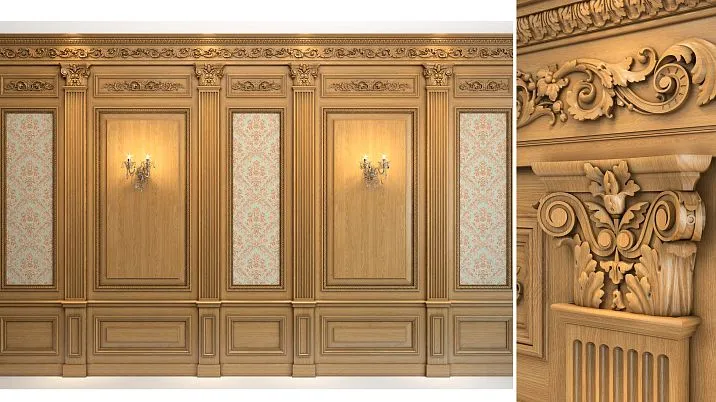
Rosettes, cornices, pilasters, moldings—each element has its own history and symbolic meaning. But today, they serve less as a demonstration of status and more as a means of creating beauty and comfort in the home of an ordinary family.
Technology vs. Tradition: New Possibilities
Modern manufacturing technologies have opened incredible possibilities for creating decorative elements. What once required months of a skilled craftsman’s work can now be produced on high-precision equipment in a matter of hours.
But does this mean technology has triumphed over craftsmanship? Far from it! On the contrary, technology has freed artisans from routine work, allowing them to focus on creativity and developing unique, original solutions. Today, you can order a decorative element based on an individual sketch with the same ease as you once selected a standard profile from a catalog.
Material Science of Decorative Elements
MDF: democratization of beauty
The revolution in the world of decorative elements was brought about by MDF—a material that combines the beauty of natural wood with the technological efficiency and affordability of modern production. Its uniform structure, absence of knots and cracks, and excellent workability make it ideal for creating complex decorative forms.
Decorative Accents for Furniture MDF products do not fall short in beauty compared to solid wood items, but they cost significantly less. Moreover, the ecological characteristics of modern MDF meet the strictest standards—the E1 emission class guarantees safe use in residential spaces.
The processing possibilities of MDF are astonishing. Milling of any complexity, creation of deep reliefs, meticulous detailing—all of this is achievable with this material. Additionally, the ability to repaint multiple times allows easy changes to the appearance of decorative elements in accordance with interior changes.
Polyurethane: lightness and strength
Polyurethane decorative elements have gained popularity due to their unique combination of properties. Their low weight simplifies installation, especially for ceiling elements. Water resistance allows their use in bathrooms and kitchens. Resistance to deformation guarantees a long service life.
Buy decorative ornaments Polyurethane elements—this is an investment in durability and practicality. Modern polyurethane compositions do not fall short in detail compared to traditional materials, but surpass them in operational characteristics.
Solid Wood: Classic for Connoisseurs
For those who value authenticity and are willing to invest in quality, solid wood remains an unmatched material. The natural beauty of wood grain, the warmth of natural material, and the possibility of fine hand-finishing—all of this makes wooden decorative elements an elite segment of the market.
Each wood species has its own character and application area. Oak impresses with its strength and solidity. Beech delights with its soft tones and dense structure. Lime is ideal for carving due to its softness and uniformity. Choosing a species is not only an aesthetic but also a technical decision.
Stylistic Palette of Modern Decor
Neoclassicism: Traditions in a New Reading
The neoclassical style became a kind of bridge between historical heritage and modern needs. It takes the best from classical tradition—proportionality, symmetry, nobility of form—and adapts it to the realities of modern life.
Corner decorative elements Neoclassical style is characterized by restraint and elegance. It does not shout about its presence, but creates a subtle play of light and shadow, highlighting the architectural features of the room.
The color palette of neoclassicism leans toward neutral tones—white, cream, gray. This creates a universal background that easily pairs with any furniture and textiles. Accents can be bolder, but they must be measured and thoughtfully chosen.
Modern: natural forms in interior
The modern style revolutionized decorative art by abandoning historical motifs and turning to nature for inspiration. Botanical motifs, asymmetrical compositions, fluid lines—all of this created a fundamentally new language of decoration.
Decorative ornaments patterns Modern style is captivated by naturalness and dynamism. Curves of branches, petals of flowers, silhouettes of insects—nature becomes an inexhaustible source of decorative motifs.
Modern interpretations of modernism often use stylization and abstraction. Recognizable natural forms transform into decorative symbols, preserving emotional impact while gaining universal applicability.
Art Deco: geometry of luxury
Art Deco became the style of the era of technological progress and urbanization. Geometric forms, symmetrical compositions, and the use of new materials reflected the spirit of the time—the pursuit of perfection and technological advancement.
Decorative elements in the Art Deco style are distinguished by clear lines and expressive silhouettes. Zigzags, concentric circles, stylized sun rays create dynamic compositions full of energy and optimism.
Modern interpretations of Art Deco often use contrasting color combinations—black and gold, white and silver. Such solutions create dramatic interiors full of theatricality.
Functional beauty: practical aspects of decoration
Hidden functions of decorative elements
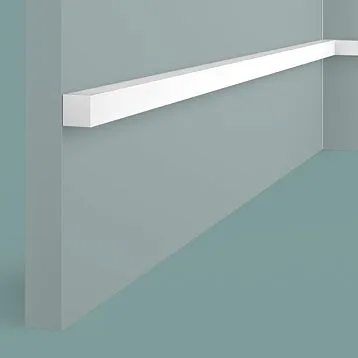
Modern decorative interior ornaments These are not only beauty, but also practicality. Moldings conceal joints between different finishing materials. Cornices hide curtain rods and lighting systems. Baseboards cover deformation joints and cable channels.
This functionality is not accidental. In an era when every square meter counts, decoration must not only beautify but also solve practical problems. Thoughtfully designed decorative elements can significantly simplify the operation and maintenance of the interior.
Many modern elements have a modular construction, allowing easy replacement of individual parts upon damage. This significantly reduces the cost of maintaining the interior in perfect condition.
Easy installation
One of the most important factors in the popularity of modern decorative elements is ease of installation. If previously installing moldings required hiring highly skilled specialists, today many elements can be installed independently.
Hidden mounting systems, special adhesives, precisely fitted corner elements—all of this makes decorating accessible for DIY enthusiasts. Detailed instructions and video tutorials help avoid mistakes and achieve a professional result.
The lightness of modern materials also simplifies installation. Polyurethane elements can be mounted on ceilings without additional fastening—just quality adhesive. This opens up new opportunities for creativity and experimentation.
Color solutions: from classic to avant-garde
Monochromatic Elegance
White decorative elements are classic and never go out of style. White is universal, it pairs with any wall and furniture colors. White moldings on white walls create a subtle play of textures, adding depth and interest to the surface.
But monochrome does not mean boredom. Different shades of white—from warm ivory to cool Arctic—create a rich palette of possibilities. The interplay of matte and glossy surfaces adds dynamism and depth.
Gray tones of decorative elements are gaining popularity in modern interiors. They create an elegant neutral background that highlights the beauty of furniture and accessories without competing with them.
Contrasting solutions
Black decorative elements are a bold solution that can radically change the character of the interior. Black moldings on light walls create a graphic effect, giving the interior a modern and refined look.
Contrasting solutions require a delicate sense of proportion. Too much black can make the interior heavy and gloomy. But properly dosed black accents add depth and character.
Colored decorative elements offer the opportunity to create a unique interior. Gold and bronze tones add luxury. Silver tones create a sense of coolness and modernity. Bright colors can become the focal point of the interior's color composition.
Zoning space with decorative means
Visual division without walls
In modern open-plan layouts, decorative elements play the role of invisible walls, visually dividing space into functional zones. Ceiling beams separate the kitchen from the living room. Arches mark transitions between zones. Different wall finishes create cozy corners in large rooms.
Such zoning does not deprive the interior of a sense of spaciousness, but creates psychological comfort, giving each zone its own identity. This is especially important in studio apartments, where one space must perform multiple functions.
Creating Focal Points
Decorative elements help create compositional centers in the interior. A fireplace framed by a classical arch automatically becomes the focal point of the living room. A bed headboard with carved appliqués draws attention in the bedroom. An arched opening transforms an ordinary door frame into an architectural focal point.
Focal points are necessary to create a harmonious interior. They structure the space, making it understandable and comfortable to perceive. Without them, the interior risks becoming a chaotic collection of objects.
Technological innovations in decorative production
Digital Technologies in Design
Modern design of decorative elements is unthinkable without computer technologies. 3D modeling allows you to see the future element in the interior even before its manufacture. This helps avoid errors and optimize the design.
Parametric design opens up possibilities for creating elements with variable characteristics. One basic design can be adapted to different room sizes and various architectural features.
Production automation
Modern CNC routers provide incredible precision in manufacturing decorative elements. Deviations are measured in hundredths of a millimeter, ensuring perfect alignment of elements during installation.
Automation does not mean standardization. On the contrary, it makes it economically viable to produce individual items according to custom projects. Today, ordering a unique decorative element is just as easy as selecting a standard one from a catalog.
Ecological aspects of modern decor
Sustainable development in the decorative industry
Modern consumers are increasingly paying attention to the ecological nature of interior materials. This applies to decorative elements as well. Manufacturers actively develop new compositions that reduce emissions of harmful substances.
MDF class E1 emits almost no formaldehyde. Water-based paints exclude volatile organic compounds. Natural materials – wood, stone, plaster – remain the benchmark for ecological safety.
Recycling and longevity
Quality decorative elements serve for decades. This in itself is a contribution to ecology – durable items do not require frequent replacement, reducing environmental impact.
Many modern materials are recyclable. MDF can be recycled into new composite materials or used as fuel for energy production. This creates a closed production cycle, minimizing waste.
Trends and development prospects
Personalization as a megatrend
The era of mass production is giving way to an era of individualization. People want their homes to reflect their personality, tastes, and history. This creates demand for unique decorative solutions.
Modern technologies make personalization accessible. Scanning historical elements, creating original designs, adapting classical motifs to modern interiors – all of this has become commonplace.
Integration with smart technologies
The future of decorative elements lies in integration with smart home systems. Lighting built into moldings, sensors hidden in decorative outlets, acoustic systems disguised as classical elements – technologies open up new horizons.
Such integration should not disrupt the decor's aesthetics. On the contrary, technologies should be invisible, enhancing beauty and comfort, rather than competing with them.
Practical recommendations for selection and use
Rules of harmonious composition
Successful use of decorative elements is based on understanding composition principles. The rule of three – no more than three dominant elements in one room. The principle of scaling – the size of the decor should correspond to the size of the room.
Rhythm and repetition create harmony. Identical elements repeated at equal intervals create a sense of order and stability. Disruptions to rhythm should be intentional and justified.
Avoiding typical errors
The most common mistake is over-decorating. The principle 'more is better' does not apply here. It is better to use several high-quality elements than many small details.
Mismatch in scale is another common problem. Large elements in small rooms create a feeling of confinement. Small decor in large spaces becomes lost and looks unconvincing.
Ignoring architectural features of a room may lead to disharmony. Decor should highlight the strengths of architecture and conceal its weaknesses, rather than fight against them.
Care and maintenance of decorative elements
Regular maintenance is the key to longevity
Quality decorative elements, with proper care, serve for decades. Regular dry cleaning with soft brushes removes dust from recessed areas. Wet cleaning using neutral cleaning agents refreshes the surface.
Elements with decorative finishes require special attention. Gold leafing, silvering, patination – all these finishes are delicate and require special care. Aggressive chemical substances may irreversibly damage the finish.
Restoration and renewal
Even with the most careful handling, decorative elements may sustain damage. Scratches, chips, and abrasions – all of this is repairable. Local repairs are often more economical than replacing the entire element.
The ability to repaint is one of the main advantages of modern decorative elements. Changing the interior's color scheme does not require replacing decor – simply repaint it in a new color.
Frequently asked questions
What style of decorative elements to choose for a modern interior?
The choice of style depends on the overall interior concept and personal preferences. Neoclassicism is universal and suitable for most modern interiors. Minimalist solutions are ideal for small spaces. Baroque elements are appropriate for prestigious spaces. The key is to maintain stylistic unity throughout the interior.
Can decorative elements of different materials be combined in one interior?
Combining different materials is possible and even desirable for creating a rich, multi-layered interior. It is important to maintain stylistic and color harmony. For example, wooden and polyurethane elements of the same profile and color will harmoniously complement each other.
How to calculate the number of decorative elements for a room?
The calculation depends on the size of the room and the chosen decoration concept. For moldings, measure the room's perimeter and add 10-15% for trimming. The number of corner elements equals the number of corners. Decorative appliqués are calculated individually according to the design plan.
Can decorative elements be installed by oneself?
Most modern decorative elements can be installed by oneself with basic tool-handling skills. Lightweight polyurethane and MDF elements are especially convenient for self-installation. Heavy plaster or wooden details are better left to professionals.
How to choose the color of decorative elements?
The color should harmonize with the overall color scheme of the interior. White is universal and suits any style. Wall color or contrasting colors create interesting visual effects. Metallic finishes add luxury. Use bright colors cautiously – they quickly become tiresome.
How to care for decorative elements?
Regular dry cleaning with soft brushes is the basis of care. For textured surfaces, use brushes with soft bristles. Wet cleaning is permissible for elements with moisture-resistant coatings. Avoid abrasive cleaners and stiff sponges. Gilded elements require especially delicate care.
How long do modern decorative elements last?
With proper installation and care, quality decorative elements last 15-20 years or more. Polyurethane items are especially durable due to their resistance to deformation and moisture. MDF elements with quality coatings also exhibit longevity. The possibility of repainting significantly extends their service life.
How do decorative elements affect property value?
Well-executed decoration significantly increases the attractiveness of real estate to potential buyers. It creates an impression of a luxurious, thoughtfully designed interior, positively affecting the appraisal value. Investments in decoration typically pay off when selling real estate.
Conclusion: STAVROS – your guide to exquisite decor
The world of interior decorative ornaments is endlessly diverse and constantly evolving. From classical canons to futuristic concepts, from handcrafted masterpieces to high-tech production – everyone can find solutions that match their tastes, needs, and budget.
In this diversity, it is especially important to find a reliable partner who will help you navigate the maze of possibilities and make the right choice. The company STAVROS has been a recognized leader in creating interior decorative elements for many years, combining deep respect for traditions with readiness for the boldest innovations.
Our production represents a unique synthesis of advanced technologies and the craftsmanship of experienced specialists. Modern European equipment allows us to create elements of any complexity with unparalleled quality of execution. Each item undergoes careful quality control, guaranteeing compliance with the highest standards.
STAVROS offers not just decorative elements – we offer comprehensive solutions for creating dream interiors. Our team of designers will help you choose the optimal decoration concept, our technology ensures flawless manufacturing quality, and our experienced installers guarantee professional installation.
We understand that every home is unique, as is its owner. Therefore, our approach is always individual – from the first consultation to the final touch in your interior. Investing in STAVROS products means investing in beauty, quality, and longevity, in the emotions of joy and pride that your home will continue to give you for many years.
Let us become your partners in creating an interior that will become not just a place to live, but a true home – a space where every detail speaks of your impeccable taste and pursuit of perfection.