Article Contents:
- Wall Decor Evolution: From Antiquity to the Digital Age
- Psychology of Wall Space: How Decor Influences People
- Material Foundation of Wall Decor: Tradition vs. Innovation
- Solid Wood: The Living Warmth of Nature
- Polymer Materials: Technologies of the Future
- Composite Solutions: The Best of Both Worlds
- Stylistic Palette: From Historical Reconstructions to Futuristic Concepts
- Classic Heritage: Dialogue with Great Eras
- National Traditions: Preserving Cultural Identity
- Modernist Directions: Revolution of Forms
- Functional Typology of Wall Decor: From Utility to Art
- Architectural Elements: Emphasizing Structure
- Ornamental Appliqués: Accentuating Details
- Moldings and Bases: Framing and Completion
- Panel Systems: Creating Texture
- Technological Aspects of Production: From Concept to Realization
- Hand carving: the art of individuality
- Machine Production: Precision and Efficiency
- Casting Technologies: Possibilities of Polymers
- Practical Aspects of Application: From Concept to Implementation
- Residential Spaces: Creating Comfort
- Public Spaces: Creating an Image
- Installation and mounting: technical perfection
- Preparatory work
- Joining technologies
- Finishing operations
- Maintenance and servicing: preserving beauty
- Regular Cleaning
- Controlling microclimate
- Preventive Maintenance
- Economic aspects: investments in lasting beauty
- Pricing
- Impact on property value
- Long-term perspective
- Trends and development prospects
- Digital technologies
- Ecological innovations
- Personalization
- Frequently Asked Questions About Wall Decor
- Conclusion: The Art of Creating Unique Spaces
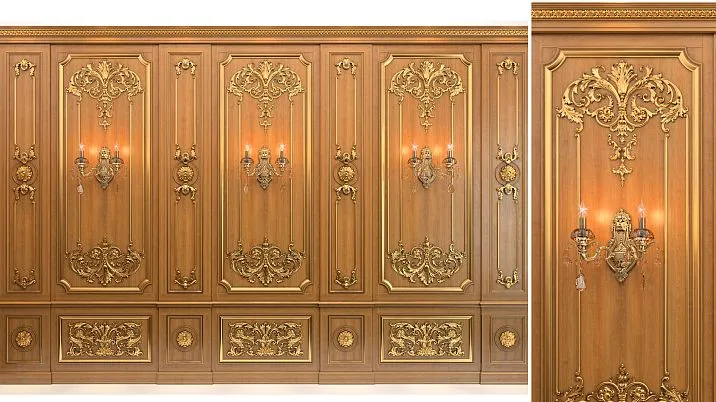
In the world of modern design, there is an unshakable truth: walls are not merely boundaries of space, but canvases for self-expression, stages for realizing bold ideas and subtle nuances of style. wall decor for interior They can transform even the most mundane room into an exquisite salon, where every square centimeter tells a story of taste and appreciation of beauty.
Why do some interiors captivate the soul at first glance, while others remain bland, despite expensive finishes? The secret lies in the skill to work with vertical surfaces — those very walls that surround us daily and shape our mood, productivity, and sense of comfort. Wall decorative elements are the language of interior design, its intonations and accents, capable of turning an ordinary room into a dream space.
The modern interior decor industry is experiencing a true boom in innovation. Traditional woodworking techniques coexist with high-tech polymer materials, classic ornaments acquire new tones through contemporary designers' interpretations, and personalization possibilities reach unprecedented heights. This era opens before us boundless opportunities for creativity and self-expression through the design of living spaces.


Wall Decor Evolution: From Antiquity to the Digital Age
The history of wall decoration spans millennia of human civilization. From cave paintings of ancient hunters to exquisite Renaissance frescoes, from luxurious medieval tapestries to minimalist panels of modern lofts — each era found its own ways to transform vertical surfaces into objects of admiration.
Wall decor has always been a marker of the owner's status, taste, and cultural level. In ancient cultures, wall decoration carried not only aesthetic but also sacred significance. Egyptian hieroglyphs on tomb walls, Byzantine mosaics in churches, Chinese silk panels in imperial palaces—all of this testified to an understanding of the deep connection between the surrounding environment and a person's spiritual state.
The Industrial Revolution of the 19th century radically changed approaches to producing decorative elements. Mass production made refined ornaments accessible to the middle class, but simultaneously threatened the uniqueness and individuality of interiors. In response to this challenge, the Arts and Crafts movement emerged, proclaiming a return to handcraft and individualized treatment of each item.
The 20th century brought new materials, technologies, and design philosophies. Modernism, with its slogan 'form follows function,' temporarily pushed decorative elements to the background, but by the end of the century, the pendulum swung back. Postmodernism revived interest in ornament, color, texture, and the emotional quality of space.
The digital era has opened new horizons for interior decoration productsCAD systems enabled the creation of intricate ornaments with mathematical precision, laser technologies allowed designers to realize their boldest fantasies in material, and the internet made decorative art samples accessible from around the world.
Modern trends in wall decor reflect the dichotomy of globalization: on one hand, the standardization of styles and accessibility of international samples, on the other hand, a desire for local identity, revival of traditional techniques, interest in handmade and uniqueness. Consumers want to be part of a global cultural space, yet still preserve their individuality.




Psychology of wall space: how decor affects a person
Scientific research of the last decade has convincingly demonstrated: wall decoration directly affects a person's psychological state, cognitive abilities, and emotional well-being. Interior neuro-psychology is an emerging field of knowledge studying the relationship between space design and brain function.
Vertical surfaces occupy a significant portion of the visual field in any room. Their decoration creates a dominant visual backdrop on which our daily lives unfold. Monotonous, undecorated walls may evoke feelings of boredom, apathy, or depression. Properly chosen wall decor elementson the contrary, stimulate creative activity, improve mood, and create a sense of coziness and security.
Color solutions for wall decor exert a powerful influence on the psyche. Warm tones of natural wood create a sense of stability, reliability, and connection to nature. They particularly benefit people experiencing stress, helping them relax after a hard day. Cool tones—white, gray, blue—promote concentration and are suitable for workspaces and offices.
The texture of decorative elements also plays an important role in shaping the emotional climate of a room. Smooth surfaces create a sense of modernity and technology, but may appear cold and impersonal. Relief and textured decorations add tactile qualities, coziness, and humanity to the interior.
Rhythmic structures in decor influence the subconscious level. Regular repetitions create a sense of order, stability, and predictability. They are suitable for spaces where concentration is important—offices, libraries. Asymmetric, irregular rhythms stimulate creative thinking and are suitable for creative workshops and children's rooms.
The scale of decorative elements should correspond to the size of the room and the psychological needs of its inhabitants. Large elements create a sense of monumentality and grandeur, but may overwhelm small spaces. Small details require careful observation and create an intimate, chamber-like atmosphere.
Our factory also produces:


Material basis of wall decor: choosing between tradition and innovation
The choice of material for wall decorations determines not only their appearance but also their durability, ecological properties, ease of maintenance, and cost of operation. Each material has its own 'soul,' unique properties that influence the atmosphere of the room.
Get Consultation
Solid wood: the living warmth of nature
Natural wood remains a favorite among materials for decorative inserts due to its unique properties. Each species has a distinct character, determining its area of application and aesthetic possibilities.
Oak is the king of decorative species, symbolizing strength, longevity, and aristocracy. Its dense structure allows for creating the finest carved details, which retain sharp contours for decades. Over time, oak elements acquire a noble patina, becoming even more attractive. Oak is ideal for creating monumental compositions and emphasizing the status of an interior.
Beech attracts craftsmen with its uniformity and plasticity. Its light, creamy wood creates a sense of freshness, lightness, and optimism. Beech items are easily stained and painted, offering wide possibilities for color design. Beech's fine-grained structure ensures a perfectly smooth surface after processing.
Ash, with its expressive, contrasting texture, is ideal for modern interiors. Clearly defined annual rings create natural decorative effects, emphasizing the organic origin of the material. Ash combines beautifully with metallic and glass elements in contemporary style.
Polymer materials: technologies of the future
Modern polymer materials have revolutionized the production of wall decor. High-density polyurethane allows creating items indistinguishable from carved wooden analogs, yet surpassing them in several operational characteristics.
Polyurethane elements are completely moisture-resistant, making them indispensable for bathrooms, kitchens, and high-humidity areas. They do not deform under temperature fluctuations, do not crack, and do not absorb odors. The lightness of polyurethane simplifies installation and reduces load on structures.
The ability to precisely reproduce complex forms makes polyurethane an ideal material for restoring historical interiors, where it is necessary to recreate lost elements with archaeological precision. Modern compositions allow imitating the texture of various materials—from wood to stone and metal.
Composite solutions: the best of two worlds
MDF and other wood-particle materials occupy an intermediate position between natural wood and fully synthetic materials. They retain the ecological properties of wood but lack many of its drawbacks—knots, cracks, internal stresses.
MDF provides a perfectly flat surface, stable geometric dimensions, and the ability to create elements of any configuration. Modern technologies allow creating MDF panels with textured surfaces that imitate various types of wood, stone, and fabric.
Stylistic Palette: from historical reconstructions to futuristic concepts
The world of wall decor is amazed by the diversity of stylistic directions. Each style has its philosophy, historical basis, characteristic motifs, and compositional principles.
Classical Heritage: dialogue with great epochs
Neoclassicism requires strict adherence to canonical proportions and use of time-tested motifs. Antique elements — palmettes, meanders, acanthus, Ionic — must be reproduced with archaeological accuracy. Symmetry of compositions, clarity of lines, noble materials create an atmosphere of solemnity and eternity.
Baroque impresses with opulence, theatricality, dynamism of forms. Complex multi-level compositions, abundance of gilding, play of light and shadow create a sense of movement, energy, celebration. Baroque elements require appropriate scale — they look best in spacious rooms with high ceilings.
Rococo brought French refinement and lightness to decorative art. Asymmetric compositions, pastel tones, elegant floral motifs create the atmosphere of an 18th-century boudoir. Rocaille elements are especially suitable in feminine interiors, where romance and elegance are important.
National Traditions: preservation of cultural identity
Russian decorative art represents a unique phenomenon in world culture. Each region of Russia developed its own motifs and techniques, creating an unmistakable stylistic signature. Northern carving is characterized by geometricity and restraint, central — by richness of floral ornamentation, southern — by vividness and decorativeness.
The symbolism of Russian carving is deeply rooted in folk consciousness. Solar signs symbolize life energy, rosettes — protection from evil forces, grapevines — fertility and abundance. Wooden decoration set In Russian style, it creates a special energy that links modern interiors with multi-century traditions of ancestors.
Modernist Directions: revolution of forms
Modernism revolutionized the understanding of decorative art, turning to natural forms as a source of inspiration. Asymmetric compositions, stylized floral motifs, flowing lines create a sense of organicism and movement. Modern Collection Offers a modern interpretation of this revolutionary style.
Art Deco combined luxury of materials with geometric stylization of forms. Zigzag lines, stepped compositions, metallic accents create an atmosphere of dynamic 20th century, era of technical progress and social change.
Minimalism uses decorative elements extremely sparingly. Each detail must be functionally justified and impeccably executed. Simple geometric forms, ideal proportions, absence of excess — principles that transform minimalism into a philosophy of life.
Functional typology of wall decor: from utility to art
Wall decorative elements can be classified not only by stylistic affiliation, but also by functional purpose. Understanding this typology helps make the right choice for a specific project.
Architectural elements: emphasizing structure
Pilasters, columns, cornices, friezes — elements inherited from classical architecture, but finding new application in modern interiors. They help structure space, create rhythm, emphasize ceiling height. Wall Panels Using architectural elements transforms an ordinary room into a grand hall.
Ornamental appliqués: accentuating details
Small decorative elements — rosettes, cartouches, medallions — serve to create focal points, draw attention to specific zones. They can be standalone ornaments or part of more complex compositions.
Moldings and picture frames: framing and finishing
Profiled elements serve to create transitions between different surfaces, frame panels, pictures, mirrors. They give interiors a sense of completeness, neatness, professional quality of execution.
Panel systems: creating texture
Large decorative panels completely change the perception of walls, creating new texture, color, pattern. They can imitate various materials — leather, fabric, stone — or create abstract compositions.
Technological aspects of production: from concept to realization
Modern production of wall decor represents a synthesis of traditional craftsmanship and high-tech processes. Each method has its advantages and areas of application.
Hand carving: the art of individuality
Handmade work remains the benchmark of quality and uniqueness. Each item created by a master’s hands carries the imprint of his personality, becoming a work of art. An experienced carver does not merely reproduce the given form — he interprets it, adds his own vision, creating a living artwork.
Hand carving requires not only technical skill but also artistic sensitivity. The craftsman must feel the material, understand its structure, anticipate possible difficulties. Every movement of the chisel is deliberate and precise — errors are practically impossible to correct.
Machine production: precision and efficiency
Modern CNC milling machines provide unprecedented accuracy in reproducing complex shapes. Computer control allows creating items with micron-level precision, perfect parameter repeatability, and flawless surface quality.
Multi-axis machining centers can create three-dimensional elements in a single setup, eliminating repositioning errors. Automatic tool change allows performing various operations — roughing and finishing, drilling, milling — in a single cycle.
Casting technologies: possibilities of polymers
Manufacturing of polyurethane elements is done by casting into silicone molds. High pressure and precise molds ensure reproduction of the finest details of the original. Modern polyurethane compounds have high fluidity, filling the thinnest elements of the mold.
Two-component casting technology allows creating elements with different properties in different zones — harder in mounting areas, more elastic in decorative areas.
Practical aspects of application: from concept to implementation
Successful application wall paneling requires understanding the characteristics of different rooms, their functional purpose, and operating conditions.
Residential spaces: creating comfort
The living room is the formal space of the house, where guests are received and family celebrations are held. Here, the most expressive and representative decorative elements are appropriate. A fireplace can become a compositional center, adorned with a portal and mantel. Wall panels create a cozy atmosphere, while ceiling elements add grandeur.
The bedroom requires a more delicate approach to decoration. Atmosphere of peace, relaxation, and intimacy is important. The headboard of the bed can become the main decorative element, adorned with carved appliqués or soft panels. The color palette should promote relaxation — warm, muted tones.
Children's rooms allow using brighter, more playful motifs. Fairy tale characters, animals, plant ornaments create an atmosphere of play and creativity. Safety is the main criterion: all elements must be securely fastened and have no sharp edges.
Public spaces: creating an image
Offices require restrained, professional decor. Strict geometric forms, quality materials, and minimal distracting details create a business atmosphere. Corporate colors can be integrated into decorative elements.
Restaurants and cafes allow using more emotional, expressive decor. Thematic elements help create the desired atmosphere — from a cozy family café to an upscale restaurant.
Hotels require decor that creates a sense of luxury and comfort, yet remains neutral for guests of different tastes and cultures.
Installation and mounting: technical perfection
Quality installation of wall decor is no less important than the quality of the elements themselves. Even the best decorations can be ruined by unskilled mounting.
Preparation Work
The wall surface must be perfectly prepared. Irregularities exceeding 3 mm must be removed with plaster or putty. The surface must be strong — loose areas must be reinforced with deep-penetration primers.
Marking is performed using laser levels and precision measuring tools. Accuracy is especially important when creating symmetrical compositions — even minor deviations will be noticeable and spoil the overall impression.
Mounting technologies
The choice of mounting method depends on the material of the element, its weight, dimensions, and wall material. Lightweight polyurethane elements can be mounted with quality adhesives. Heavy wooden parts require mechanical fastening — self-tapping screws, dowels.
Hidden mounting ensures the aesthetic appeal of the finished composition. Special clamps, slots, and magnetic systems are used for this purpose. Visible mounting must be decoratively integrated or maximally concealed.
Finishing operations
After installing the main elements, joints are sealed, damaged areas are touched up, and protective coatings are applied. All materials must be compatible with each other and with the main decorative elements.
Maintenance and care: preserving beauty
Proper care extends the life of wall decor and preserves its original appeal.
Regular cleaning
Dust is the main enemy of decorative elements. It is especially noticeable in carved recesses, where it is difficult to remove by conventional methods. For cleaning, soft brushes, vacuum cleaners with adjustable power, and special care products for specific materials are used.
Microclimate control
Wooden elements are especially sensitive to humidity and temperature. Optimal conditions: humidity 45-65%, temperature 18-22°C. Sudden changes may cause cracking or deformation.
Preventive maintenance
Minor damage — scratches, chips, scuffs — must be addressed immediately before they become more serious problems. Special repair compounds exist for each material.
Economic aspects: investments in long-lasting beauty
Quality wall decor is a serious investment that should be considered in the long term.
Pricing
The cost of decorative elements depends on the material, complexity of manufacturing, order volume, and manufacturer's reputation. Handmade items are always more expensive than machine-made ones, but they ensure uniqueness and the highest quality.
Impact on property value
Well-designed interiors significantly increase the market value of real estate. Unique decorative solutions become competitive advantages when selling or renting.
Long-term perspective
Quality elements serve for decades, amortizing initial costs. The possibility of restoration and updating extends their service life almost indefinitely.
Trends and development prospects
The wall decoration industry constantly evolves, adapting to changing market needs.
Digital technologies
3D printing opens new possibilities for creating unique shapes. Virtual reality allows clients to "try on" decor in their interiors. Artificial intelligence helps create personalized designs.
Ecological Innovations
Growing environmental awareness stimulates the development of sustainable materials and technologies. Bio-composites, recycling, and carbon-neutral production become important competitive advantages.
Personalization
Consumers want unique solutions that reflect their individuality. Mass customization — mass personalization — is becoming a new industry standard.
Frequently Asked Questions about Wall Decorations
How to choose the right style of wall decor for your interior?
Style selection should be based on the overall interior concept, architectural features of the room, personal preferences, and lifestyle. Classic styles suit traditional interiors with high ceilings and large areas. Modern trends look better in compact city apartments. It is important to ensure stylistic unity among all decorative elements.
What materials are best suited for different rooms?
Material selection depends on usage conditions. For humid areas (bathrooms, kitchens), polyurethane or moisture-resistant wood species with special treatment are recommended. In living rooms, natural wood is ideal. For children's rooms, material eco-friendliness and safety are crucial. In offices, practical materials requiring minimal maintenance are preferred.
Can decorative elements be installed by oneself?
Simple elements — moldings, small inserts — can be installed independently with basic skills and quality tools. Complex compositions, heavy elements, and high-altitude work are better entrusted to professionals. Incorrect installation may damage elements or create safety hazards.
How long do quality decorative elements last?
With proper care, quality elements made of natural materials can last 30–50 years or more. Polymer materials also have high durability — 20–30 years. Metal elements, with proper corrosion protection, last practically indefinitely. Regular maintenance significantly extends the service life of any material.
How to calculate the required quantity of decorative elements?
Calculation should be based on a detailed project indicating the placement of all elements. It is necessary to account for losses due to trimming (usually 10–15%), and to provide a small reserve for damage during installation. For complex compositions, consultation with a professional designer is recommended.
Do decorative elements affect property value?
Quality decor significantly increases the attractiveness of a property to buyers and renters. The increase in value may range from 15–25% depending on the quality and uniqueness of decorative solutions. Elements made by hand and historical styles in appropriate interiors are especially valued.
Conclusion: the art of creating unique spaces
wall decor for interior These are not just decorative elements, but tools for creating emotionally rich, aesthetically perfect spaces. In an era of globalization and standardization, they offer a unique opportunity to express individuality and create an atmosphere that will inspire and delight for many years.
Modern technologies open unprecedented opportunities for creativity. Traditional techniques acquire new sounds, classic motifs receive modern interpretations, and personalization possibilities reach unprecedented heights. It is important not to get lost in this diversity, to preserve a sense of proportion and stylistic unity.
Choosing decorative elements is an investment in quality of life, daily aesthetic enjoyment, and creating a space that will support and inspire. Quality decor serves for decades, becoming a witness to important life events and creating a backdrop for happy memories.
The future of wall decor is linked to further technological development, emergence of new materials, and evolution of societal aesthetic preferences. Smart materials will make decor interactive, ecological innovations — more sustainable, and digital technologies — more personalized.
STAVROS is at the forefront of these changes, combining respect for traditions with openness to innovation. For more than two decades, STAVROS has created decorative elements that adorn interiors around the world, setting new standards of quality and beauty.
STAVROS understands that each project is unique, and each client has their own preferences and requirements. Therefore, the company offers not only a wide range of ready-made solutions but also services for creating exclusive elements based on individual projects.
STAVROS’s production facilities are equipped with the most modern equipment — from precision machining centers to traditional chisels of master craftsmen. This allows producing products of any complexity, from simple moldings to intricate carved compositions.
STAVROS works exclusively with verified raw material suppliers, using wood from certified timber producers, eco-friendly polymers, high-quality pigments and varnishes. Strict quality control at all production stages guarantees compliance with the highest standards.
The STAVROS team combines experienced masters preserving decorative art traditions with young specialists open to innovations and new technologies. This combination of experience and enthusiasm allows creating products meeting the most demanding requirements.
STAVROS’s service is built around client needs. Professional consultations help make the right choice, logistics ensure timely delivery, and technical support helps resolve any issues.
STAVROS continuously develops, adopting new technologies, expanding its product range, and improving service quality. The company actively participates in industry exhibitions, supports educational projects, and collaborates with leading designers and architects.
Choosing STAVROS, clients receive a quality guarantee based on years of experience and impeccable reputation. STAVROS is not just a manufacturer of decorative elements — it is a partner in creating dream interiors, a design advisor, and a guarantor of successful implementation of the most ambitious projects.
STAVROS remains true to its mission — to make beautiful interiors accessible, high-quality, and long-lasting. In a world where beauty is often sacrificed for functionality, STAVROS proves that perfection is achievable when tradition meets innovation, and craftsmanship meets technology.