Article Contents:
- The truth about hidden load: why brackets are more important than you think
- Fundamentals of calculation: kilograms and centimeters
- What is load and how to calculate it
- Concept of force moment
- Calculated load vs. maximum load
- Types and materials of brackets: from iron to art
- Metal brackets: classic and reliable
- Wooden brackets: craftsmanship and warmth
- Polyurethane brackets: innovation and practicality
- Stylistics: when a bracket becomes an accent
- Classic style: baroque and empire
- Minimalism and modernity
- Rustic and Country
- Vintage and Retro
- Practical installation: from wall to shelf
- Determining wall type
- Calculating mounting points
- Installation: step by step
- Calculation examples: from theory to practice
- Example one: bookshelf in the living room
- Example two: decorative shelf for trinkets
- Example three: corner shelf above the table
- Integration with interior: consistency and harmony
- Coordination with furniture legs
- Coordination with moldings
- Matching with wooden cornice
- Typical mistakes when choosing and installing
- Error one: incorrect load calculation
- Error two: incorrect choice of wall fasteners
- Error three: incorrect marking
- Error four: using too thin screws
- Error five: ignoring aesthetics
- Special Cases and Non-Standard Solutions
- Shelves above the sofa
- Shelves in the bathroom
- Shelves on a sloped wall
- Shelves for TV
- Facts about brackets that will surprise you
- Answers to popular questions
- Professional recommendations
- Innovations in bracket manufacturing
- Economics of choice: price versus quality
- Conclusion: the choice that defines the interior




The truth about hidden load: why brackets are more important than you think
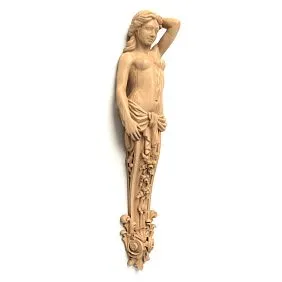
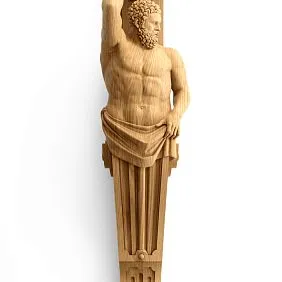
Look at a bookshelf with beautiful brackets. What do you see? A decorative element that pleases the eye. What do you not see? Four kilograms of books pressing down on each bracket. Maybe it's eight kilograms. Maybe even fifteen. And that's the whole drama.Decorative brackets for shelvesIt's not just decoration, it's an engineering structure that must support weight, distribute load, and resist gravity.
Most people choose brackets for their appearance, forgetting about physics. Result: a slanted shelf, bent brackets, things falling. And then they think: 'Well, the brackets are bad.' In reality, they were poorly chosen — for incorrect load, incorrect material, incorrect wall.
This article is about how to choose brackets, understanding not only their appearance but also what lies beneath it. How to calculate load, choose material, install correctly. And yes, how to do all this beautifully.




Basics of calculation: kilograms and centimeters
Our factory also produces:
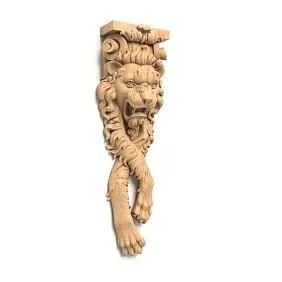
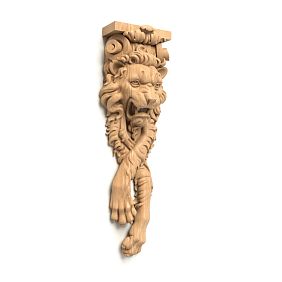



What is load and how to calculate it
Load is the weight that will rest on the shelf. But it's not simply the sum of all items you place on the shelf. Load has direction, point of application, and distribution.
Imagine: you have a 100-centimeter-long shelf supported by two brackets placed 20 centimeters from each end. You place a 20-kilogram brick block in the middle of the shelf. Will each bracket bear approximately 10 kilograms? No, it will be more, because the bricks are closer to one bracket than the other.
Here's the rule: uniform load distribution — when the shelf is loaded relatively evenly — means each bracket supports half the weight. Non-uniform distribution — when the weight is concentrated in one area — means one bracket supports more.
How to calculate? Use this simple formula:
Load on one bracket = (Shelf weight + Content weight) / Number of brackets + Adjustment for unevenness
"Adjustment for unevenness" is a 20-30% allowance for cases when the weight is not distributed ideally.
Example: shelf weighs 5 kilograms, content weighs 15 kilograms, total 20 kilograms. Two brackets. Base load: 20 / 2 = 10 kilograms. With adjustment: 10 + 10 * 0.25 = 12.5 kilograms per bracket.
Get Consultation
Concept of moment of force
Here physics intervenes, which many forget. A bracket is a lever. The longer the lever (shelf depth), the greater the moment of force, the greater the load on the bracket.
Moment of force = Load × Distance from pivot point
If your shelf is deep (40 centimeters), the load on the bracket will be greater than if the shelf were shallow (20 centimeters), with the same content weight.
Practical implication: deeper shelves require stronger brackets or more frequent placement.
Calculated load vs. maximum load
Manufacturers indicate on brackets the maximum load — for example, "50 kilograms." This is a laboratory value obtained under ideal conditions. In practice, use 60-70% of this value as the calculated load.
Why? Because conditions are never ideal. Vibrations, micro-cracks in the material, improper installation, humidity—all of this reduces actual strength.
Rule: if the bracket is rated for 50 kilograms, use it for loads no more than 30-35 kilograms.
Types and materials of brackets: from iron to art
Metal brackets: classic and reliable
Decorative brackets for shelvesOften made of metal—steel, iron, brass. Metal is a reliable material that withstands heavy loads.
There are several types of metal brackets:
Type one—steel brackets. The most practical. Steel is a strong material, resistant to corrosion (if coated with a protective layer), looks modern. Disadvantage—cold appearance, requires harmony with the interior.
Type two—cast iron brackets. Classic option. Cast iron allows creating complex shapes and ornaments. Looks stylish, especially in classic interiors. Disadvantage—brittleness. Cast iron is not flexible and may crack if improperly mounted.
Type three—brass brackets. Expensive, beautiful, long-lasting. Brass does not rust and develops a noble patina over time. Ideal for classic and vintage interiors.
Type four—aluminum brackets. Lightweight, inexpensive, look modern. But less strong than steel. Suitable for light shelves.
Wooden brackets: craftsmanship and warmth
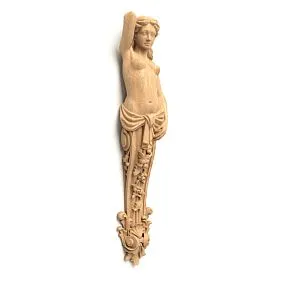
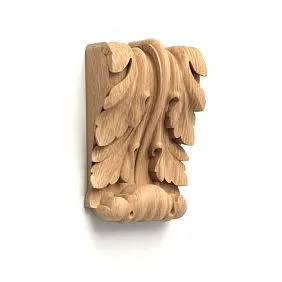
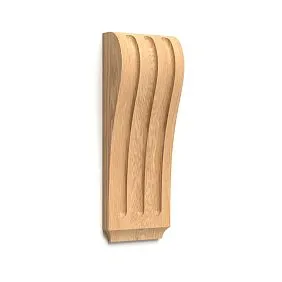
wooden corniceand wooden brackets—are a separate category. WoodenDecorative brackets for shelveslook warmer and cozier than metal ones. They are ideal for home libraries and classic living rooms.
Advantages of wooden brackets: natural appearance, possibility of carving and complex ornaments, harmony with wooden furniture.
Disadvantages: less strong than metal (usually withstand 20-30 kilograms), require maintenance (protection from moisture, periodic varnishing), prone to deformation.
Polyurethane brackets: innovation and practicality
Modern manufacturers offer brackets made of polyurethane. This is a new solution combining the best qualities of wood and metal.— everything must correspond to the chosen era.made of polyurethane often include brackets.
Advantages: look like wood but are not prone to deformation, withstand heavy loads (if internally reinforced), require no maintenance, cheaper than wooden ones.
Disadvantages: not as durable as metal, may appear less "authentic" than natural wood.
Stylistic: when the bracket becomes an accent
Classic style: baroque and empire
A classic interior requires appropriate brackets. Here, wrought metal brackets with scrolls, carved wooden elements, brass details are suitable.
Characteristic: curved lines, ornaments, gilding or blackening, sense of "historical".Decorative brackets for shelvesin classic style often have a console base—a curved projection.
Tip: if the room has classic-style wooden furniture, the brackets should be made of the same wood and finish.
Minimalism and modernity
A modern interior requires simplicity. Straight lines, no unnecessary decorations.Furniture supportin minimalist style—simple form, minimalist.
Brackets for such an interior: steel, powder-coated, without ornamentation. Colors: black, gray, white, natural metal.
Tip: in minimalism, there are fewer details, but higher quality. Choose well-made brackets, even if they are more expensive.
Rustic and Country
Rustic style requires "rustic" brackets. Here, heavy wooden brackets, wrought iron with a "rough" look, and natural materials are appropriate.
Characteristic: heaviness, visible seams, unpolished surface. Full harmony with wooden shelves and vintage furniture.
Vintage and Retro
Vintage style often looks back to the past — to the 1950s, 1960s, and 1970s. Brackets in vintage style: chrome, brass, glass.
Characteristic: shiny surfaces, geometric shapes, but not strict, rather "soft" geometric shapes. Brackets with retro ornamentation are often used.
Mounting Practice: from wall to shelf
Wall Type Definition
Before mounting brackets, you need to understand what kind of wall you are mounting to. This is critical for choosing fasteners.
Wall Type 1 — brick or stone. This is an ideal wall for brackets. Holds well. Uses brick anchors (chemical or spreader).
Wall Type 2 — concrete. Also holds well. Uses special concrete anchors.
Wall Type 3 — drywall. This is more complex. Drywall is soft and may not withstand heavy brackets. You must mount to the internal stud or use special drywall anchors.
Wall Type 4 — wood (wooden wall or paneling). Brackets are mounted with wood screws. This is simple and reliable.
Mounting Point Calculation
Question: Where to mount brackets? At what distance from each other, at what height?
For shelves, standard recommendation: brackets spaced 60–80 centimeters apart. If the shelf is deep (40+ centimeters), distance is less — 40–60 centimeters. If the shelf is shallow (20 centimeters), you can increase to 100 centimeters.
Bracket mounting height: usually 5–10 centimeters from the edge of the shelf. This hides the brackets and creates an illusion that the shelf "floats" in the air.
Installation: Step by Step
Step 1: Marking. Using a level and tape measure, mark the bracket mounting points. All points must be on the same horizontal line; otherwise, the shelf will be tilted.
Step 2: Drilling. Drill holes in the wall according to the marked points. Use a drill bit matching the wall type and anchor type.
Step 3: Installing anchors. Insert anchors into the holes. Ensure they are fully seated and do not protrude from the wall.
Step 4: Mounting brackets. Screw the brackets onto the anchors. Use the correct screw size — they should tighten snugly without gaps.
Step 5: Installing the shelf. Place the shelf on the brackets. Check that it is level (using a level). If needed, adjust the bracket positions.
Step 6: Securing the shelf. If the shelf must be fixed, screw it to the brackets. If mobility is needed, leave the shelf freely resting.
Calculation Examples: From Theory to Practice
Example 1: Bookshelf in the Living Room
Task: Install a 100 cm long, 25 cm deep wooden bookshelf. Shelf weight — 5 kg. Expected book weight — 30 kg.
Calculation:
-
Total weight: 5 + 30 = 35 kg
-
Number of brackets: 2 (standard)
-
Basic load per bracket: 35 / 2 = 17.5 kg
-
Moment of force: 17.5 × 0.25 (shelf depth) = 4.375 kg·cm
-
With unevenness correction: 17.5 × 1.25 = 21.9 kg
Conclusion: brackets rated for at least 35 kg each (to allow for safety margin). Installation: 20 cm from each end of the shelf, on drywall with molly anchors.
Example 2: decorative shelf for trinkets
Task: install a small decorative shelf 60 cm long, 15 cm deep. Shelf weight - 2 kg. Contents weight - 5 kg (trinkets, photo frames).
Calculation:
-
Total weight: 2 + 5 = 7 kg
-
Number of brackets: 2
-
Basic load: 7 / 2 = 3.5 kg
-
With correction: 3.5 × 1.2 = 4.2 kg per bracket
Conclusion: for such a shelf, lightweight decorative brackets rated for 10-15 kg each are sufficient. Can use polyurethane or brass brackets.
Example 3: corner shelf above a desk
Task: install a corner shelf for a laptop and documents. Shelf is L-shaped, each side 60 cm.
Calculation is more complex because the load is distributed in two directions. Simplified: one side supports laptop weight (2-3 kg), the other supports documents and figurines (5 kg).
Total: brackets rated for 8-10 kg each. Important: for L-shaped shelves, 3 brackets are needed (two on each side, one at the corner), not 2.
Integration with interior: consistency and harmony
Coordination withwith matching legs
If the room has wooden furniture withFurniture legsIf the furniture has simple cylindrical legs, brackets should be simple. If legs are twisted, brackets should be twisted or have ornamentation.
Coordination withmoldings
If the room has moldings, outlets, or other decorative elements, brackets must harmonize with them. Material, style, and color must match.Furniture supportanddecorative elementsThey must "speak" to each other.
Matchingwooden cornice
If the ceiling is adorned with a wooden cornice or molding, brackets can appear as its "echo". For example, if the cornice is gilded, brackets can be brass.
Typical Errors in Selection and Installation
Error 1: incorrect load calculation
Person buys brackets "by eye" without calculation. Installs them on drywall for a heavy bookshelf. Result: shelf collapses within a month.
Correct approach: always calculate the load. If unsure, ask the seller or an engineer.
Error 2: incorrect choice of wall anchors
For example, using simple drywall anchors instead of molly anchors. Or using wooden anchors for concrete walls.
Correct approach: determine wall type, select appropriate anchors.
Error 3: Incorrect mounting
Brackets are mounted at different heights, the shelf is tilted. This looks wrong, and may also cause items to slide.
Correct approach: use a level. Mark two points on the same horizontal line, then run the level along them.
Error 4: Using too thin screws
Screws are tightened, but do not hold the bracket securely. The bracket wobbles, and the shelf becomes loose.
Correct approach: use screws of the correct size. They should be tightened with effort, but without stripped threads.
Error 5: Ignoring aesthetics
Brackets are chosen only for functionality, look unattractive and do not harmonize with the interior.
Correct approach: find a balance between functionality and beauty. Good brackets should be both strong and attractive.
Special cases and non-standard solutions
Shelves above the sofa
A shelf above the sofa requires special attention. If something falls, it may injure a person. Therefore, the mounting must be especially secure.
Recommendation: use 3 brackets instead of 2, even if the shelf is narrow. This creates redundancy and safety.
Shelves in the bathroom
Humidity is the enemy of wooden brackets and low-quality metal. Choose stainless steel, brass, or polyurethane brackets.
Recommendation: regularly check the mounts, ensure they are not corroding.
Shelves on a sloped wall
If the wall is sloped (in an attic or loft), load calculation becomes more complex. Part of the weight will be directed not downward, but sideways.
Recommendation: if you are unsure, install more brackets or use stronger ones.
Shelves for television
Television is heavy and may be unstable. Shelves for TVs require especially strong brackets, often requiring 3-4 mounts.
Recommendation: use TV-specific brackets designed for such loads, or install a separate support column in front of the TV.
Facts about brackets that will surprise you
-
The word 'bracket' comes from the German 'Kragstein', meaning 'projecting stone'.
-
In medieval castles, consoles (ancestors of modern brackets) were used to support machicolations — tooth-like projections on walls from which defenders would drop objects on enemies.
-
Victorian-era brass brackets sometimes contained lead to improve workability. Today, such brackets require caution during restoration.
-
The most expensive brackets in the world are artistic wrought iron brackets from the 16th century, sold at auctions for thousands of dollars.
-
Modern engineers use 3D modeling to calculate bracket loads with precision down to the kilogram.
Answers to Popular Questions
Q: How much weight can a typical bracket support?
A: It depends on the type. Lightweight decorative polyurethane brackets — 10–20 kilograms. Metal brackets — 30–50 kilograms. Heavy steel brackets — 100+ kilograms.
At what distance from the ends of the shelf should the brackets be?
O: Usually at a distance of 15-25 centimeters from the ends. This prevents the ends of the shelf from being pulled too tight.
V: Can brackets be installed on drywall?
O: Yes, but only using special anchors (molly) or if you are mounting them to a hidden metal profile. Standard anchors are not suitable for heavy loads.
V: Which material is better for brackets - wood or metal?
O: For functionality - metal is stronger. For aesthetics - depends on the interior. For combination - metal with a wooden face or polyurethane.
V: How often should brackets be checked?
O: Annual inspection is recommended. Ensure that the fasteners are not loose, there are no signs of corrosion or deformation.
V: Can the shelf's slope be adjusted after installation?
O: If the shelf is installed unevenly, it is better to reinstall the brackets correctly. Attempting to adjust may damage the wall and weaken the fasteners.
V: How to protect brackets from rust?
O: Use stainless steel, brass, or brackets with a protective coating. Regularly wipe them clean of dust and moisture.
V: Which brackets to choose for an old house?
O: For historic interiors, choose wrought or cast brackets that resemble the era of the house. Material - iron, copper, brass. Avoid plastic and aluminum.
Professional Recommendations
From experienced installers and designers:
Tip one: Never cut corners on fasteners. If a bracket looks good but the fasteners are weak, it’s a poor choice.
Tip two: Plan the load with a safety margin. If you calculated 20 kilograms, buy brackets rated for 30 kilograms. Life teaches us that we often load more than planned.
Tip three: Check the fasteners after the first month. New fasteners sometimes loosen as the material settles.
Tip four: Use a level, even if you think you can see it perfectly with your naked eye. Your eye can deceive you.
Tip five: Combine functionality and beauty. A bracket is not just an engineering solution, it’s a design element.
Innovations in bracket manufacturing
Modern manufacturers offer new solutions:
-
Smart brackets with built-in sensors that alert you when the load exceeds the allowable limit.
-
Adjustable brackets that allow changing the shelf’s incline angle.
-
Brackets made from composite materials combining properties of metal and wood.
-
3D-printed brackets allowing creation of unique shapes tailored to specific interiors.
Economics of choice: price versus quality
Beautiful brackets cost more than functional ones. Is it worth paying extra?
Answer: it depends on context. For a hidden shelf in the basement - no, take cheap functional brackets. For a living room where the shelf is visible - yes, invest in beautiful brackets that will delight your eyes for years.
The real cost of a bracket is not just its price, but also its durability, appearance, and harmony with the interior.
Conclusion: the choice that defines the interior
Decorative brackets for shelvesThis is an element that often goes unnoticed while everything is working properly. But when something breaks or when brackets look out of place, they become the center of attention.
Choosing the right brackets requires balance. A balance between functionality and aesthetics, between reliability and beauty, between engineering and art.
When you calculate the load, consider the wall material, choose brackets matching the interior style, and install them neatly — you make the right choice. The shelf will hold securely, the brackets will look beautiful, and the interior will appear complete.
STAVROS understands this importance. It offers not just brackets, but a full range of solutions for home interiors. Fromfurniture legsandfurniture supportstoof stucco elementsandwooden crown moldings— all of this works as a unified system, creating a harmonious interior.
Buy decorative elementsCan be chosen individually, but it’s better to select them in the context of the overall home design. STAVROS helps with this, offering consultations, material and style pairing recommendations.
Properly installed brackets serve not just as shelf holders. They serve as architectural accents that define the room’s style, create visual interest, and support the overall design.
Choose brackets thoughtfully. Calculate the load. Select the material according to conditions. Harmonize with the interior. And your home will be not just functional, but also beautiful.