Article Contents:
- Why a bedroom needs not active decor, but calm relief
- How decorative elements work in the bedroom: functions that aren't immediately obvious
- They create architecture where there is none
- They work with light
- They maintain symmetry - the most important bedroom constant
- They create a visual connection between the wall and furniture
- Why a bedroom needs wooden skirting and why it's more important than it seems
- Wooden skirting completes the interior from below
- Wood adds warmth where it's especially needed
- Wooden skirting board connects floor, walls and furniture
- Wooden skirting board or MDF: when to choose what
- How to combine decorative elements and wooden skirting board so the bedroom looks calm
- Balance principle: not two accents simultaneously
- Unified color scheme
- Rhythm, not chaos: how to arrange elements
- Connection with furniture, floor and textiles
- Which wooden skirting board to choose for bedroom: parameter breakdown
- By height
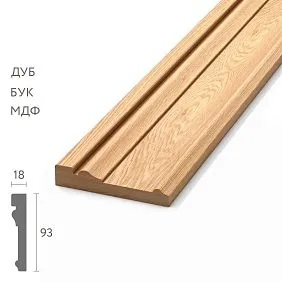
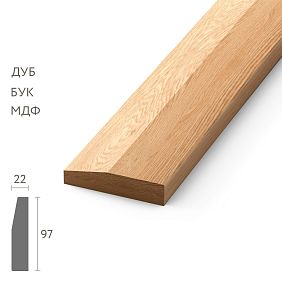
- By Profile
- By color: three working scenarios
- By decorative level: when natural texture is needed
- In which bedrooms this solution works best
- Light bedroom
- Bedroom in Neoclassical Style
- Modern bedroom with warm wood
- Bedroom with soft textures
- Small bedroom: delicate relief without losing volume
- Bedroom with high ceilings
- Mistakes that make a bedroom feel heavy
- Relief on all four walls
- Dark baseboard in a light interior without support
- Too many different profiles
- Baseboard conflict with door trim and furniture
- Excess details instead of execution quality
- Wooden baseboard and textured wall: practical combinations
- Combination 1: Light neoclassicism
- Combination 2: Modern bedroom with warm wood
- Combination 3: Warm-toned bedroom with pronounced wood
- Practical checklist before choosing decor and baseboard for bedroom
- FAQ: answers to questions about decorative elements and wooden baseboard for bedroom
- Conclusion

The bedroom is the only space in the home where a person allows themselves to let go of control. There is no place for aggressive decor, ostentatious luxury, or visual clutter. And that is precisely why designing a bedroom is more difficult than it seems: empty smooth walls look cold and unfinished, and any attempt to add decor risks turning the room into an overloaded exhibition space.
The answer to this challenge lies in a delicate balance.decorative elementsgive the walls soft architecture, depth, and shadow.Wooden baseboardgathers the lower line of the space, adds the warmth of natural wood, and completes the interior in a way that neither plastic nor MDF can. Together, these two elements create a calm relief—not heavy, not loud, but precisely the kind that makes you want to breathe deeper and sleep sounder.
Today, we'll break down how this works in practice. No generalities, no fluff—only interior logic and specific solutions.





Why a bedroom needs calm relief, not active decor
Think about it: what happens to you in a bedroom where every wall is saturated with patterns, bas-reliefs, intricate moldings, and heavy dark frames? The eye has nowhere to rest, nowhere to pause. The brain continues to process information even when lying down—and falling asleep becomes a task.
A bedroom should work in the opposite direction: calm the vision, reduce the load, create a feeling of soft silence. But this doesn't mean the walls should be perfectly empty. An empty wall is also information, just of a different kind: it speaks of incompleteness, temporariness, that the interior 'hasn't come together.'
The solution is calm relief. Not active, not loud, but the kind that creates depth without pressure: a soft shadow from applied molding, a gentle outline of a frame behind the headboard, a clean line of a wooden baseboard around the perimeter of the room. These elements are enough to bring the walls to life—without letting them dominate the bedroom.
Decorative elements in a bedroom should work in the background, not in the foreground. Their task is to create a structure you feel but don't analyze. Like good music: it's present, influences the mood, but doesn't interfere with thinking.




How decorative elements work in a bedroom: functions that aren't immediately obvious
When people talk about wall decor, they usually mean something visually active: paintings, mirrors, applied ornamentation, tiles, frescoes. But in the bedroom, decorative elements perform a much subtler job.
Our factory also produces:
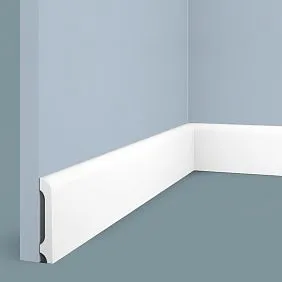
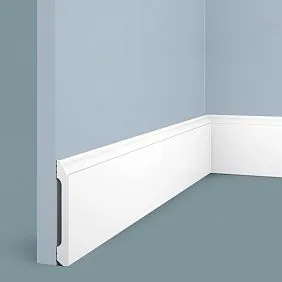
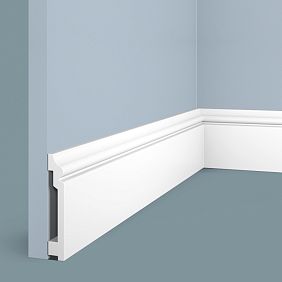
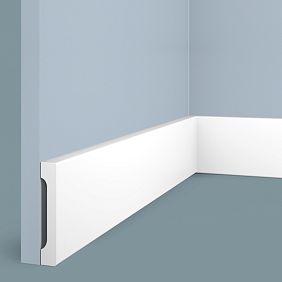
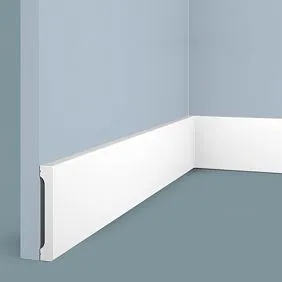
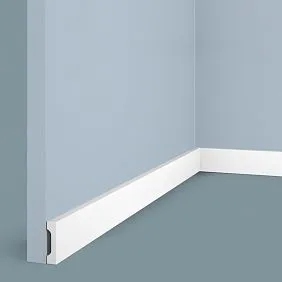
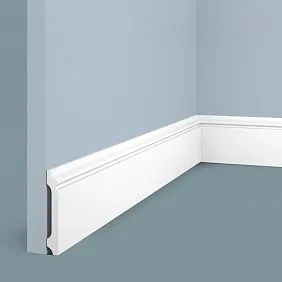

They create architecture where there is none.
Most modern apartments have rectangular rooms with smooth walls—no niches, no pilasters, no architectural character. It's functional, but visually poor.decorative elements— applied frames, molding outlines, corner appliqués, horizontal bands—add to the wall what architects call 'scale articulation': they divide the plane into logical fields, giving each section of the wall meaning and proportion.
This is especially valuable in the bedroom behind the headboard. The wall behind the headboard is the most 'active' zone of the bedroom in terms of perception. It's the wall you look at upon waking up, and it forms the first and last impression of the room each day. Properly decorated with elements, this wall transforms from an empty plane into a calm architectural accent.
Get Consultation
They work with light.
Good relief is about managing shadow. An applied molding even 8–10 mm high creates a soft shadow line that enlivens the wall surface. With side or diffused lighting, these shadows become especially expressive—and the wall begins to 'breathe,' without feeling heavy in volume.
In the bedroom, this is particularly important: soft evening lighting (sconces, bedside lamps, floor lamps) creates exactly that play of shadows where the delicate wall decor reveals its full strength.
They support symmetry—the most important bedroom constant.
Symmetry in the bedroom is not an architectural whim, but a psychological necessity. A symmetrical space is perceived as calm, balanced, and safe. Decorative elements on the wall behind the headboard, symmetrically arranged relative to the bed's axis, enhance this feeling and turn the headboard into a full-fledged architectural center of the room.
They create a visual connection between the wall and the furniture.
One of the subtlest techniques in bedroom design is the echo between the profile of a decorative element on the wall and the profile of the bed legs, mirror frame, or cornice. When they belong to the same formal family, the interior reads as a cohesive whole, not as a collection of random items.
Why a bedroom needs a wooden baseboard and why it's more important than it seems
Many treat the baseboard as a purely technical element: to close the gap between the floor and the wall—and that's enough. But in a bedroom, where every detail contributes to the atmosphere, the baseboard plays a far more significant role than just a 'technical filler.'
A wooden baseboard completes the interior from below.
Imagine a bedroom as a painting in a frame. The decorative elements on the walls are the details within the painting. And the baseboard is the lower part of the frame. Without it, the painting looks cropped, unfinished, random. The right oneWooden baseboardcloses the bottom line of the wall, creates a clear horizontal, and gives the space a sense of completion.
This is especially important in a bedroom with high ceilings: without a good baseboard, the walls 'float' in space, lacking a clear foundation. A good baseboard literally 'places' the walls on the floor.
Wood adds warmth where it's especially needed.
A bedroom is about warmth. Not in terms of temperature, but in terms of feeling. Cold materials (metal, concrete, glossy lacquer) work against this feeling in a bedroom. And wood works for it.wooden baseboardSolid oak or beech skirting adds exactly that organic warmth to the bedroom that neither plastic, nor aluminum, nor MDF skirting can provide.
The living texture of wood—annual rings, shade transitions, natural matte surface—creates a sense of craftsmanship and natural origin. This calms and creates the right 'background' for rest.
Wooden skirting connects the floor, walls, and furniture.
The bedroom often features parquet, engineered wood flooring, or laminate with a wood texture. Decorative elements on the walls can also be made of wood or a material with a wood texture.wooden baseboards for floorMade from the same or a harmonious material, they become the connecting link between the horizontal floor surface and the vertical wall planes. This unity of material is one of the key principles of a calm, cohesive interior.
Wooden Skirting or MDF: When to Choose What
This question arises for most people. The answer depends on the context. If you want the living texture of wood, the possibility of restoration and repainting, and durability for decades—solid wood skirting is preferable. If absolute geometric precision is important and the budget is limited—MDF Skirting Boardis also a worthy solution, especially in modern bedrooms with a laconic character. But in a bedroom where wood is the main or one of the main materials, solid wood skirting creates a fundamentally different feeling.
How to combine decorative elements and wooden skirting so the bedroom looks calm
The most important section of the article—because it is here that the answer to the question 'why some bedrooms look harmonious, while others—as if something is superfluous in them' lies. The secret is in the balance of expressiveness.
Balance principle: not two accents simultaneously
If you have chosen active decorative elements on the wall behind the headboard—pronounced relief, dense molding pattern, volumetric overlays—the wooden baseboard should be calm. A smooth profile without complex relief, height 60–80 mm, neutral or harmonious tone.
Conversely: if the baseboard is tall (100–150 mm), with a pronounced profile and dark tone—the decorative elements on the walls should be more delicate. Thin molding trim, a simple frame, minimal overlay decor.
Two active elements simultaneously—top and bottom—create a feeling of 'squeezedness' and visual conflict. One active, one calm—creates a dialogue.
Unified color scenario
Decorative elements and wooden baseboard should belong to the same tonal family. This does not mean they must be the same color—a difference of one or two tones enlivens the scheme. But they should not 'clash':
-
Light decorative elements (white, ivory, light gray)—baseboard in a warm light wood tone: whitewashed oak, natural maple, light beech
-
Neutral elements in the wall tone—baseboard in a more saturated wood tone, to create a soft contrast with both the floor and the wall simultaneously
-
Dark accent elements—baseboard in dark walnut or stained oak, which supports the richness
Rhythm, not chaos: how to arrange elements
Decorative elements on walls work through rhythm. When arranged symmetrically, the bedroom is calm. When chaotic, it's restless.
Working schemes for the bedroom:
-
One accent wall behind the headboard with a frame molding outline — all other walls are clean, baseboard around the entire perimeter
-
Two symmetrical decorative panels on the wall behind the headboard (on either side of the bed's axis) — continuous baseboard, uniform around the entire perimeter
-
Waist-height wall division with horizontal molding at 90–100 cm + wooden baseboard at the bottom — creates the effect of a 'lower panel' without actual paneling
Connection with furniture, floor, and textiles
The bedroom also includes furniture, textiles, and lighting. Decorative elements and baseboards don't exist in a vacuum. To make the space cohesive:
-
The baseboard tone should be close to the floor tone or furniture tone — not identical, but harmonious
-
The profile of decorative elements on the wall should echo the profile of bed legs or mirror frames
-
Textiles (bedding, curtains, decorative pillows) should support the overall tonality — dark walnut baseboard with beige textiles looks warmer than the same baseboard with cool gray
Which wooden skirting board to choose for a bedroom: breakdown by parameters
This is a practical block that will help you make a decision without unnecessary doubts.
By height
Skirting board height is the first and most important parameter. In a bedroom, it works differently than, for example, in a hallway or kitchen, because here everything is subordinated to a sense of softness and proportion.
| Baseboard Height | When appropriate |
|---|---|
| 40–60 mm | Minimalist modern bedroom with low ceilings (up to 2.5 m), laconic interior |
| 60–80 mm | Universal height for most bedrooms with ceilings 2.5–2.8 m |
| 80–100 mm | Bedroom with ceilings 2.8–3 m, neoclassical, warm modern classic |
| 100–150 mm | Spacious bedroom with high ceilings (3 m and above), pronounced classical architecture |
Simple rule: the height of the skirting board should not exceed 1/18–1/20 of the ceiling height. With ceilings of 2.7 m — maximum 135–150 mm, with standard 2.5 m — no higher than 125 mm.
By profile
For a bedroom, the best profile options are delicate, without excessive relief:
-
Smooth rectangular profile — maximum laconicism, suitable for modern and Scandinavian bedrooms
-
Beveled profile — one smooth chamfered edge; adds a bit more character without overloading
-
Profile with a soft cornice finish — a small cornice band along the top edge; suitable for neoclassical and classic bedrooms
-
Profile with a cove — a concave arc at the base; a classic technique creating a soft shadow between the baseboard and floor
For the bedroom, avoid complex multi-stepped profiles with several cornice bands — they are suitable for living rooms with high ceilings but look heavy in the bedroom
By color: three working scenarios
Baseboard matching the floor — the calmest option. The bottom line of the wall 'disappears,' not emphasized. The gaze glides from floor to wall without stopping. Ideal for a small bedroom where preserving visual volume is important
Baseboard matching the furniture — creates a connection between the horizontal floor and vertical furniture fronts. Works especially well when the bed, nightstands, and wardrobe are of the same material and tone
Baseboard contrasting with the wall — a clear dark line on a light wall creates a pronounced architectural accent. This is a bold solution that works in bedrooms with high ceilings and confident character — but not in small, light ones where such contrast would feel oppressive
By level of decorativeness: when natural texture is needed
to buy wooden baseboardSolid oak or beech — this is a choice in favor of living texture. Natural fibers, organic grain, warm matte sheen of oil finish — this is what makes the baseboard not just a construction element but an interior detail that wants to be noticed
In a bedroom with wooden floors, wooden or walnut furniture, and textiles in natural tones —buy wooden skirting boardsolid wood is logical from both practical and aesthetic perspectives. Restoration, repainting, sanding — all of this is possible with solid wood for decades.
In which bedrooms does this solution work best
Decorative elements combined with wooden baseboards — a universal technique, but it is implemented differently in each type of bedroom.
Light bedroom
A light bedroom is the perfect environment for delicate relief. White or cream walls create a neutral background, against which even a thin applied molding casts a noticeable, beautiful shadow. In such a bedroom, a wooden baseboard in a warm tone (light oak, natural beech) adds the only color accent in the lower zone — and that is enough for the space to look expensive and well-thought-out.
A mistake in a light bedroom — a dark contrasting baseboard without support elsewhere in the interior. If the furniture is light, the floor is light, and the baseboard is suddenly dark — it will look like a random element from another interior.
Bedroom in Neoclassical Style
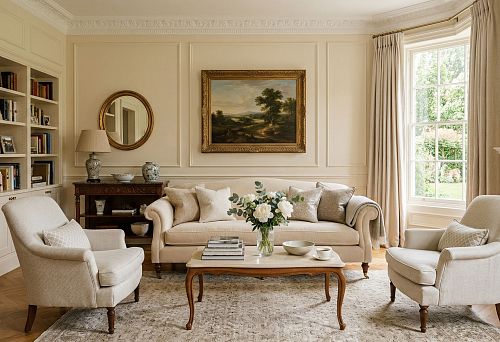
Neoclassical bedroom — perhaps the best environment for working with decorative elements and wooden baseboards. Here, relief is appropriate, architectural features are welcome, and wood as a material organically fits into the concept of 'classic without excess'.
Decorative elements in a neoclassical bedroom: applied frame outlines on the walls, a horizontal molding belt at headboard height, symmetrical panels behind the bed. Baseboard — 80–100 mm, with a soft cornice profile, in the tone of solid walnut or dark oak.
Modern bedroom with warm wood
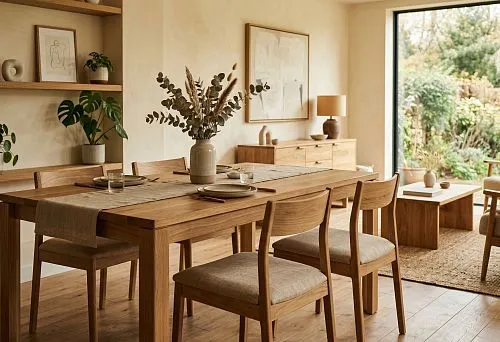
In a modern interior where wood in all its forms is the main material, decorative elements should be as restrained as possible. A simple frame outline behind the headboard without additional overlays is sufficient. In this context, a wooden baseboard is not a decorative accent but an organic continuation of the wooden floor and furniture. It simply 'exists'—and that's correct.
Bedroom with soft textures
If the bedroom has a lot of textiles—heavy curtains, a velvet headboard, blankets, decorative pillows with texture—the decorative elements on the walls should be laconic to avoid an excess of textures. A simple, thin molding around the perimeter of the accent wall,Wooden baseboardwith a smooth profile—is enough. The textiles handle all the textural work, while the finishing elements support the structure, remaining in the background.
Small bedroom: delicate relief without losing volume
In a small bedroom, decorative elements can easily become the enemy of space. Dense relief, dark frames, active overlays—all of this visually 'compresses' the walls. In a small bedroom, only delicate solutions work:
-
Thin overlay molding (profile height 8–12 mm) only on one wall—behind the headboard
-
Baseboard no higher than 60–70 mm in a neutral or floor-toned color
-
Light surfaces everywhere except the accent wall
Bedroom with high ceilings
High ceilings (3 meters and above) are a rare luxury that is important not to 'lose'. In such a bedroom, a tall wooden baseboard (100–150 mm) and developed decorative elements on the walls are organic and justified. Here, you can afford a two-level frame system, a horizontal belt at a height of 120–130 cm, and voluminous corner overlays. All of this works precisely because there is breathing space—the ceiling height maintains the scale.
Mistakes that make a bedroom feel heavy
Even with the highest quality materials and correctly chosen elements, incorrect decisions ruin a bedroom. Let's examine typical mistakes—not for criticism, but to avoid them.
Relief on all four walls
This is the most common mistake. When decorative elements are placed on all walls, the bedroom turns into a corridor or a ballroom. The walls start 'looking' at you from all four sides, and the feeling of rest disappears. The rule of one accent wall is the most important for a bedroom. The other walls are neutral, without relief or with minimal relief.
More about the balance of decor and when it starts working against you—in the article aboutwall and ceiling molding.
Dark baseboard in a light interior without support
A dark wooden baseboard is a beautiful, confident solution. But only when it is supported by dark elements in the rest of the interior: dark flooring, dark furniture frames, dark bed legs. If the entire interior is light and the baseboard is dark, it looks like a mistake.
Too many different profiles
If one wall features molding with a classic cornice profile, overlay elements with a straight edge, and a baseboard with a bead—three different geometric languages create visual noise. In a bedroom, it is especially important that all profiles belong to one family of forms: all soft or all geometrically strict.
Conflict between baseboard and door trim or furniture
Baseboards do not exist separately from doors and furniture. If door trims are in one profile and tone, the baseboard is in another, and the furniture is in a third, the interior breaks into unrelated fragments. The tone and stylistic affiliation of the baseboard should at least not conflict with the trims, and preferably support them.
Excess of details instead of quality of execution
A bedroom with many inexpensive decorative elements with sloppy edges, visible seams, and uneven painting looks worse than a bedroom with minimal but high-quality decor. Less, but better—for the bedroom, this is the principle of principles.
Wooden baseboard and textured wall: practical combinations
To avoid staying in abstraction, let's examine several specific combinations that work well in a bedroom.
Combination 1: Light neoclassicism
Walls: white or warm cream
Accent wall behind the headboard: frame molding outline in two fields—upper and lower
Baseboard: wooden, 80 mm, profile with a soft cornice finish, tone 'natural oak'
Floor: light oak parquet board
Furniture: white with gold handles or solid light oak
Result: a calm, noble, warm atmosphere without pretentiousness.
Combination 2: Modern bedroom with warm wood
Walls: light gray or warm gray-beige
Accent wall behind the headboard: one wide applied frame, centered on the width of the bed
Baseboard: wooden, 60 mm, smooth rectangular profile, 'smoked oak' or 'bleached oak' tone
Floor: gray-brown walnut engineered board
Furniture: matte gray with wooden elements
Result: modern restraint with a sense of natural warmth.
Combination 3: Bedroom in warm tones with pronounced wood
Walls: warm beige or ochre
Accent wall behind the headboard: horizontal molding belt at 90 cm height + decorative elements in the center of the upper field
Baseboard: tall wooden, 100–120 mm, profile with a bead, 'dark walnut' tone
Floor: dark-toned oak parquet
Furniture: dark walnut with patina
Result: a rich, saturated interior with a warm character—yet calm, without baroque overload.
Practical checklist before choosing decor and baseboard for the bedroom
Beforeto buy wooden baseboardand decorative elements, answer these questions. They will help narrow the choice to the right solution.
Regarding space:
-
What is the ceiling height in the bedroom — this determines the most appropriate maximum height of the baseboard
-
Is the bedroom large or small — this affects the activity of the relief and the number of decorative elements
-
Are there any architectural features in the bedroom — niches, sloped ceilings, protrusions?
By style and materials:
-
What is the main floor material — the baseboard tone will be selected to match it
-
Is there wood in the interior in furniture or finishes — if so, solid wood baseboard will be more organic than MDF
-
What is the tone of the walls — light, neutral, or saturated?
-
Is an accent needed on the wall behind the headboard, or does the interior assume a neutral background?
Decorative elements:
-
What level of relief is needed — minimal (thin molding), medium (frame trim), or pronounced (multi-level frame system)?
-
On how many walls will there be decorative elements — only behind the headboard or elsewhere as well?
-
Will decorative elements be painted to match the wall color or remain in the wood tone?
Regarding the baseboard:
-
Is a tall wooden baseboard needed, or is a standard one sufficient?
-
Which profile — a simple rectangular one or one with a soft relief?
-
Is the possibility of subsequent restoration or repainting needed — if yes, solid wood is preferable
View the assortmentwooden productsfor the bedroom — baseboards, moldings, decorative overlays — can be found in the STAVROS catalog.
FAQ: answers to questions about decorative elements and wooden baseboards for the bedroom
Which decorative elements are suitable for a bedroom?
For a bedroom, applied frame moldings, thin linear outlines around the perimeter of an accent wall field, and horizontal molding belts work best. Voluminous carved decor, massive overlays, complex architectural elements are excessive for a bedroom and create overload. The main criterion: a decorative element in the bedroom should create a shadow, not volume.
What wooden skirting board is best to choose for a bedroom?
For most bedrooms, a skirting board with a height of 60–100 mm and a smooth or slightly relief profile is optimal. Material — solid oak or beech with an oil finish. Tone — harmonious with the floor tone. Avoid complex multi-stepped profiles: in a bedroom they look heavy.
Can a tall wooden skirting board be used in a small bedroom?
Yes, but carefully. In a small bedroom (up to 12–14 sq. m), a skirting board taller than 80 mm already begins to 'press' on the space. If the ceilings are low (up to 2.5 m) — the maximum appropriate skirting board height is about 60–70 mm.
How to combine a wooden skirting board and light walls?
A wooden skirting board on light walls works on the principle of soft contrast. A skirting board in a warm neutral tone (light oak, natural beech) on white or cream walls creates a delicate warm line without sharp contrast. A skirting board in a rich dark tone on light walls is an accent that needs support in the rest of the interior (dark floor, dark furniture).
How to create relief in a bedroom without a sense of overload?
The rule of three 'not's: not on all walls, not on a large scale, not several different profiles at once. One accent wall, thin frame molding, a wooden skirting board in a unified tonal system — this is enough for a calm but expressive relief.
Is a wooden skirting board suitable for a modern bedroom?
Absolutely. A wooden skirting board with a smooth geometric profile works perfectly in a modern bedroom — especially where the floor is made of parquet board or engineered board. Wood adds warmth, which is often lacking in modern interiors with cold neutral colors.
Should decorative elements be placed on all bedroom walls?
No. One accent wall is optimal for a bedroom. In most cases, this is the wall behind the headboard. The other walls can remain clean — and this is the correct solution, not an unfinished one.
Can a wooden skirting board be combined with a soft velour headboard?
Yes, and it's one of the most beautiful combinations in a modern bedroom. A soft headboard made of velour or burlap, a wooden skirting board in a warm tone — these are two poles of texture (soft and hard, warm and structured) that complement each other perfectly. The only condition is a unified tonal palette.
Conclusion
The bedroom forgives neither emptiness nor excess. And that is precisely why working with it is such a subtle art. Decorative elements give the walls architecture: soft, measured, alive. A wooden skirting board gathers the space from below, adds the warmth of natural material, and creates that visual foundation without which the interior looks unfinished.
Together, these two elements make the bedroom exactly what it should be: calm, cohesive, noble — without pretense, without fuss, and without a single random detail. Calminterior decoration— is not the absence of character, but its highest form. When everything is in place, everything is proportionate, and everything is made of the right material.
The company STAVROS produces decorative elements for walls and furniture, skirting boards made of solid oak and beech, moldings, cornices, and a full range of millwork products for interiors. All products are made of natural wood with full production control: from wood selection to the finishing coating. STAVROS is a manufacturer that understands that a calm interior is built from the right details. And it makes these details so that they serve for decades without losing their shape or warmth.