Article Contents:
- Historical heritage and modern reinterpretation
- Evolution of styles and approaches
- Variety of forms and structural solutions
- Carved cornices and their role in composition
- Friezes as narrative elements
- Central rosettes and medallions
- Corner elements and their significance
- Materials as the basis of artistic expression
- Wood: warmth of tradition
- Polymer composites: technologies of the future
- Combined Solutions
- Stylistic Directions of Modern Decoration
- Classic interpretations
- Russian style: revival of traditions
- Modernist approaches
- Masterpiece as a Form of Art
- Functional Aspects of Decorative Design
- Protective functions
- Energy efficiency and thermal engineering
- Concealment of utilities
- Manufacturing technologies and innovations
- Computer-Aided Design and Modeling
- Computer Numerical Control Machines
- Additive technologies
- Installation and integration into architectural ensemble
- Preparation Work and Planning
- Joining technologies
- Sealing and protection against moisture
- Maintenance and longevity
- Protective Coatings and Their Renewal
- Preventive care
- Repair and restoration
- Trends in development and future directions
- Ecological sustainability and development
- Integration with "smart" technologies
- Personalization and customization
- Regional Specificity and Cultural Features
- Climate adaptations
- Cultural and historical traditions
- Economic Aspects and Investment Appeal
- Price-to-Quality Ratio
- Impact on property value
- Frequently asked questions about decorative elements of the pediment
- Conclusion
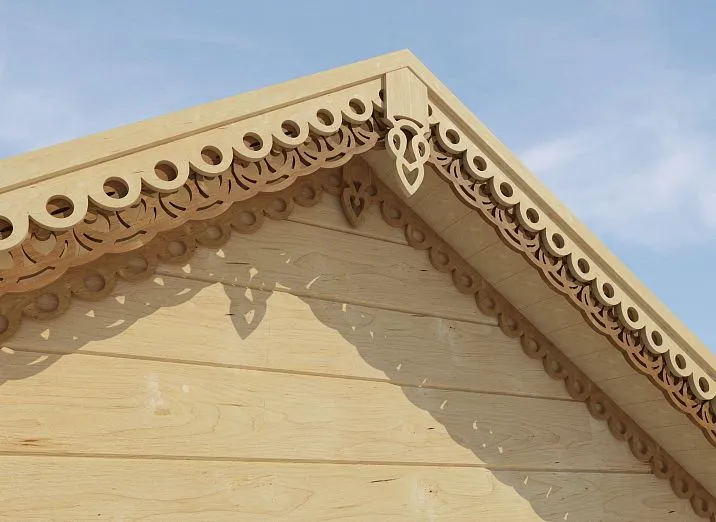
What makes a building facade truly expressive and memorable? Undoubtedly, Decorative Elements of the Facade Gable play a key role in creating a unique architectural appearance. These refined details transform an ordinary building into a work of art, demonstrating the owner's taste and the skill of the architects.
In today's world, where standardization often deprives buildings of individuality, decorative elements of the pediment become a true salvation for those who strive to create a unique architectural environment. They do not merely decorate—they tell a story, convey an atmosphere, and create a mood.


Historical heritage and modern reinterpretation
The pediment as an architectural element originates in ancient Greek architecture, where the triangular finish of the temple facade symbolized the connection between earth and heaven. Ancient masters understood: it is precisely the details that create an impression, and it is through ornamentation that a building acquires soul.
In Russian architecture, decorative elements of the pediment acquired special significance. Our ancestors transformed every house into a true terem, where carved details not only pleased the eye but also carried deep symbolic meaning. Vegetal ornaments symbolized fertility, geometric patterns protected against evil forces, and solar symbols attracted prosperity.
Modern Decorative Elements of the Facade Gable They preserve this tradition but receive a new embodiment. They become a bridge between the past and the present, allowing the creation of facades that are simultaneously rooted in tradition and meet modern aesthetic requirements.




Evolution of styles and approaches
Each era brought its own vision of beauty to the decoration of pediments. Gothic contributed pointed arches and delicate carving, Baroque—luxury and dynamism, Classicism—strict harmony of proportions. Modernism revolutionized approaches, proposing smooth lines and natural motifs.
Today we observe a remarkable phenomenon: modern masters do not merely copy historical samples, but creatively reinterpret them. Decorative elements of pediments become platforms for experimentation, where classical forms receive a new interpretation through the prism of modern technologies and materials.
Our factory also produces:


Variety of forms and constructive solutions
The world of decorative pediment elements is astonishing in its diversity. Each element performs its unique function in creating a harmonious architectural image.
Get Consultation
Carved cornices and their role in composition
Carved Cornices They are horizontal elements that create a transition between different parts of the facade. They do not merely conclude the composition—they set the rhythm for the entire building. A cornice may be minimalist, emphasizing the strictness of lines, or richly decorated, creating a sense of festivity and solemnity.
The quality of a cornice lies in its ability to 'read' from different distances. From afar, it appears as a powerful horizontal line structuring the facade. As one approaches, the richness of details—scrolls, rosettes, plant motifs—comes into view, creating a play of light and shadow.
Friezes as narrative elements
Decorative friezes transform the pediment into a true book written in the language of ornament. These horizontal bands may contain abstract geometric motifs or specific images—from plant patterns to narrative compositions.
The modern approach to creating friezes is distinguished by particular delicacy. Masters have learned to create ornaments that do not overload the facade but add depth and expressiveness. A frieze may be barely noticeable, creating a subtle surface texture, or boldly pronounced, becoming the main compositional accent.
Central rosettes and medallions
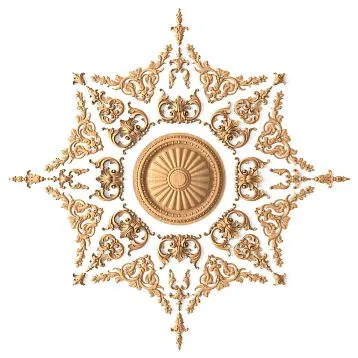
What could be more beautiful than a well-thought-out central accent? Rosettes and medallions serve as sort of 'jewels' of the pediment, drawing attention and creating a compositional center. These elements require special craftsmanship, as they must be visible from afar but not lose expressiveness upon close inspection.
Decorative Inserts In the form of rosettes, they can be executed in the most diverse styles—from strict classical forms to romantic floral motifs. Their placement requires impeccable sense of proportion and understanding of compositional laws.
Angular elements and their significance
Often underestimated, angular decorative elements play a critically important role in creating a cohesive image. They not only solve the practical task of decorating junctions of different planes, but also create visual continuity throughout the entire composition.
Well-executed angular elements can transform a simple rectangular pediment into an elegant architectural form. They may imitate stone masonry, create an illusion of massiveness, or, conversely, add lightness and airiness.
Materials as the basis of artistic expression
The choice of material for manufacturing decorative pediment elements determines not only the appearance, but also durability, cost, and possibilities of artistic expression.
Wood: warmth of tradition
Wood remains a classic material for creating decorative pediment elements. Its natural beauty, workability, and eco-friendliness make it an ideal choice for those who value authenticity and coziness.
Facade Decoration Wood possesses a unique energy. Each wooden detail is unique due to the distinctive pattern of wood grain. Masters have learned to use this feature, creating elements where the natural beauty of the material harmoniously combines with handcrafted ornamentation.
Modern wood processing technologies allow creating elements of any complexity—from simple geometric forms to intricate lace-like compositions. At the same time, wood retains its main advantages: ability to 'breathe', create a comfortable microclimate, and provide visual warmth.
Polymer composites: technologies of the future
Advancements in materials science have opened new possibilities for creating decorative elements. Modern polymer composites allow realizing the most daring design ideas while ensuring durability and minimal maintenance costs.
The main advantage of polymers is the ability to create elements of complex shapes using molding. This opens practically limitless creative opportunities for designers. Polymer elements can imitate any material—from wood to stone—but they are lighter, cheaper, and easier to install.
Combined Solutions
The most interesting results are achieved by combining different materials. For example, a wooden base can be supplemented with metallic details creating refined accents. Stone elements combine beautifully with wooden carving, creating a sense of solidity and nobility.
Modern decorative styles
The modern approach to pediment decoration is characterized by an astonishing variety of stylistic solutions. Each direction offers its own understanding of beauty and functionality.
Classic interpretations
Classical style in pediment decoration does not mean blind copying of historical samples. Modern classicism is a creative reinterpretation of traditional forms taking into account contemporary needs and possibilities.
Classical decorative elements of pediments are distinguished by strict proportions, symmetry, and use of proven ornamental motifs. However, modern masters adapt these principles to new realities, creating elements that look traditional but are manufactured using modern technologies.
Russian style: revival of traditions
The Russian style occupies a special place in modern decoration, experiencing a true revival. Carved MouldingsTraditional ornaments and national motifs become the basis for creating facades that organically fit into the Russian landscape.
Modern Russian style is not a museum reconstruction, but a living development of traditions. Masters study historical samples, but do not copy them mechanically, but develop the principles embedded in them, creating new forms based on traditional aesthetics.
Modernist Approaches
Modernist approaches to facade decoration offer a radically different approach. Here, the emphasis is on line purity, functionality, and the use of modern materials. Modernist decorative elements of the facade are often built on texture contrast, geometric form play, and expressive proportions.
This approach is especially attractive to those who appreciate minimalism and modern aesthetics. Modernist elements may be extremely laconic, but it is precisely in this laconism that their strength lies.
Eclecticism as an Artistic Method
Modern architecture increasingly turns to eclecticism — a deliberate mixing of various styles and approaches. Eclectic facades can combine classical columns with modernist geometric inserts, traditional carving with modern materials.
The success of an eclectic approach depends on the author's skill, their ability to create a harmonious composition from disparate elements. When executed successfully, an eclectic facade becomes a unique work reflecting the individuality of the owner and the craftsmanship of the creator.
Functional aspects of decorative finishing
The beauty of decorative facade elements should not come at the expense of their functionality. A modern approach to design implies a harmonious combination of aesthetic and practical considerations.
Protective functions
Many decorative elements perform important protective functions. Eaves divert rainwater from walls, preventing their destruction. Overhangs protect entrances and windows from atmospheric precipitation. Even elements that appear purely decorative at first glance may play a role in protecting the building from adverse influences.
When designing decorative elements, regional climatic conditions must be taken into account. In areas with harsh winters, elements must withstand significant snow loads. In regions with frequent rainfall, special attention is paid to water drainage.
Energy Efficiency and Thermal Engineering
Modern decorative facade elements can contribute to the energy efficiency of a building. Properly designed overhangs create shade in summer and allow sunlight in winter. Decorative screens can serve as an additional layer of thermal insulation.
The role of decorative elements in passive conditioning systems is especially important. They can create air flows that promote natural ventilation or form zones of comfortable microclimate.
Acoustic properties
Relief decorative elements affect the acoustic characteristics of the facade. They can scatter sound, reducing noise from external sources. This is especially important for buildings located in noisy areas.
Manufacturing Technologies and Innovations
Modern production of decorative facade elements uses both traditional craft methods and the most advanced technologies.
Computer-aided design and modeling
The process of creating complex decorative elements begins with detailed computer design. Three-dimensional modeling allows visualizing the future element, assessing its proportions and impact on the overall facade appearance.
Modern software enables creating elements of any complexity, accurately calculating their strength characteristics, and optimizing the structure. Parametric modeling allows quickly generating variations of the basic design, adapting it to specific requirements.
Computer Numerical Control (CNC) machines
CNC machines revolutionized the production of decorative elements. They allow manufacturing parts with precision down to fractions of a millimeter, reproducing the most complex shapes. These technologies are especially effective when working with wood — a material traditionally processed by hand.
CNC machines do not replace craftsmanship, but complement it. They take over routine operations, freeing the craftsman for creative work on finishing and final processing of the items.
Additive technologies
3D printing opens new horizons in creating decorative elements. This technology is especially effective for producing prototypes and small-batch products. It allows creating elements that cannot be manufactured using traditional methods — for example, with complex internal cavities.
Installation and Integration into the Architectural Ensemble
The success of decorative facade treatment largely depends on the quality of installation and how well the elements are integrated into the overall architectural concept.
Preparation and planning
Installing decorative elements requires careful preparation. It is necessary to precisely determine mounting locations, calculate loads, prepare fasteners. Special attention is paid to waterproofing — mounting points should not become sources of leaks.
The most important stage is creating a detailed installation plan. It must take into account the sequence of element installation, the need for special equipment, possible difficulties, and ways to resolve them.
Mounting technologies
Modern fastening technologies allow securely fixing even large decorative elements. Both mechanical fasteners — anchors, self-tapping screws, bolts — and chemical ones — various adhesive compositions — are used.
The choice of fastening method depends on the material of the elements, the characteristics of the supporting base, climatic conditions, and aesthetic requirements. Quality fastening should be not only reliable but also inconspicuous.
Sealing and Protection from Moisture
Proper sealing of joints is the key to the longevity of decorative elements. Modern sealants provide reliable protection against moisture while maintaining the elasticity of the joint. This is especially important for wooden elements, which change size with changes in humidity.
Maintenance and longevity
Facade decorative elements are long-term investments in the beauty and functionality of a building. Their longevity largely depends on the quality of manufacture, correct installation, and regular maintenance.
Protective coatings and their renewal
Most decorative elements require protective coatings. For wooden elements, varnishes, paints, and impregnations are used to protect against moisture, ultraviolet radiation, and biological effects. Modern coatings can retain their protective properties for many years, but require periodic renewal.
Metallic elements are protected from corrosion by special coatings. Polymer elements usually do not require additional protection, but may fade under ultraviolet exposure.
Preventive Care
Regular preventive care significantly extends the service life of decorative elements. It includes cleaning from dirt, checking fasteners, identifying and eliminating minor defects. Especially important is cleaning of drainage channels and gutters, which ensure water runoff.
Repair and Restoration
Even high-quality decorative elements may require repair over time. Modern technologies allow restoring even severely damaged parts. For wooden elements, special repair compounds are used, allowing restoration of lost fragments.
In case of serious damage, new elements may need to be manufactured. Here, the ability to precisely reproduce the original design is crucial, which is ensured by preserving design documentation and technical drawings.
Trends and future directions
The world of facade decorative elements is constantly evolving. New materials, technologies, and aesthetic concepts open up new opportunities for creativity and self-expression.
Ecological Sustainability
Modern consumers are increasingly paying attention to the ecological properties of building materials. This stimulates the development of technologies for producing decorative elements from renewable materials, using environmentally friendly coatings and adhesives.
An important direction is creating elements with extended service life, which reduces the need for replacement and, consequently, environmental impact.
Integration with "smart" technologies
Facade decorative elements are increasingly becoming carriers of various technological solutions. They can integrate lighting systems, sensors, and climate control elements. This opens new opportunities for creating adaptive facades that change their characteristics depending on external conditions.
Personalization and Customization
The development of digital technologies makes deep personalization of decorative elements possible. Clients get the opportunity to participate in the design process, contributing their own ideas and preferences. Flexible manufacturing technologies allow producing unique elements without significant cost increases.
Regional specificity and cultural characteristics
Facade decorative elements should harmonize with local architectural traditions and cultural context. Each region has its own characteristics that must be considered during design.
Climate Adaptations
Different climatic zones impose specific requirements on decorative elements. In northern regions, material and structural frost resistance is critically important. In southern areas, the main threat is ultraviolet radiation and high temperatures.
Coastal regions require special attention to corrosion resistance. Mountainous areas impose higher requirements for wind load. All these factors must be considered when selecting materials and structural solutions.
Cultural and historical traditions
Facade decorative elements are a way to preserve and develop cultural traditions. In each region of Russia, unique approaches to facade decorative design have developed. Northern Russian traditions differ from southern ones, Volga region traditions differ from Siberian ones.
Modern masters study these traditions not for mechanical copying, but to understand the principles embedded in them and creatively develop them in modern conditions.
Economic Aspects and Investment Attractiveness
Facade decorative elements represent an investment in beauty, functionality, and property value. Properly designed and high-quality elements can significantly enhance the attractiveness and market value of a building.
Price-to-quality ratio
When selecting decorative elements, it is important to find the optimal balance between cost, quality, and aesthetic characteristics. Cheap elements may seem attractive, but their low quality often leads to additional expenses for maintenance and replacement.
High-quality elements from reputable manufacturers may cost more, but their longevity and aesthetic qualities more than compensate for the additional expenses.
Impact on property value
Studies show that high-quality facade decoration can increase property value by 10-20%. This is especially true for unique, original solutions that make a building recognizable and attractive.
Furniture fronts And architectural decoration operate on similar principles - they create added value through aesthetic perfection and functionality.
Frequently Asked Questions about facade decorative elements
What is the service life of wooden facade decorative elements?
When properly manufactured, installed, and maintained, wooden elements can serve for 25-50 years or more. Key factors for longevity are wood quality, protective coatings, and regular maintenance.
Can decorative elements be installed on old buildings?
Yes, decorative elements are ideal for renovating old buildings. They can completely transform the appearance of a structure, conceal architectural flaws, and add modern functional capabilities.
Do decorative elements require special permits for installation?
In most cases, installing decorative elements does not require special permits, as it does not involve load-bearing structures. However, when working with historic buildings or in protected zones, approvals may be required.
How to choose the style of decorative elements?
The choice of style depends on the building's architecture, personal preferences, and surrounding construction. It is important to ensure harmony between different elements and the overall facade concept.
Can unique elements be made according to an individual project?
Modern technologies allow manufacturing unique decorative elements of virtually any complexity. This can involve adapting existing designs to specific dimensions or creating entirely original solutions.
How to ensure compatibility of different decorative elements?
Compatibility is achieved through unity of style, proportions, and color scheme. It is recommended to develop a comprehensive facade design project, where all elements harmoniously complement each other.
What errors are most commonly made when choosing decorative elements?
Main errors include mismatch between elements and building architecture, violation of proportions, use of elements from different styles without a thought-out concept, cutting corners on material quality and installation.
Conclusion
The world of decorative elements for facades represents a wonderful blend of art, craftsmanship, and technology. Each element carries immense creative and technical potential, capable of transforming an ordinary building into an architectural masterpiece.
Modern production and installation capabilities open up practically limitless horizons for creativity. However, it is important to remember that true beauty arises not from blind adherence to trends, but from a deep understanding of principles of harmony, functionality, and cultural context.
Decorative elements for facades are an investment in the future. They not only beautify our homes today but also shape the architectural environment for future generations. Therefore, their selection and manufacturing should be approached with special responsibility and attention to detail.
For many years, the company STAVROS has been creating high-quality decorative elements for facades and interiors. By combining the best traditions of artisan craftsmanship with modern technologies, STAVROS offers solutions that meet the highest standards of quality and aesthetics. Each element created by STAVROS masters is not merely a decorative detail, but a work of art capable of transforming any space and highlighting the individuality of its owner.