Article Contents:
- The Drama of Entry: First Impression Defines Everything
- Psychological Portrait of the Door
- The Theater of Everyday Life
- Anatomy of Beauty: Breaking Down Door Decor Elements
- Inlays: Sculpture in Miniature
- Moldings: Architectural Poetry
- Rosettes: Precious Stones of Decoration
- Material Science of Door Decor: Choice for Centuries
- Wood: Living Energy in the Interior
- Polyurethane: Technology Serving Beauty
- Stylistic Palette: From Classicism to Avant-Garde
- Classicism: Eternal Values in the Modern Home
- Baroque: Theater of Beauty
- Modern: Nature as Teacher
- Minimalism: Philosophy of Simplicity
- Technological Aspects: From Idea to Realization
- Design: Birth of the Image
- Production: Symphony of Precision
- Finishing: The Master’s Final Touch
- Installation: Final Symphony of Beauty
- Preparation: Foundation of Success
- Installation: Jewelers’ Work
- Stylistic Solutions for Different Rooms
- Front Door: The House’s Business Card
- Interior Doors: Harmony of the Interior
- Care and Maintenance: Beauty for Years to Come
- Regular maintenance
- Restoration and renewal
- Economic aspects: investments in beauty
- Cost and Return on Investment
- Long-term perspective
- Future of Door Decor: Technology and Tradition
- Innovative materials
- Digitalization of processes
- Frequently Asked Questions
- Conclusion: STAVROS — Where Perfection is Born
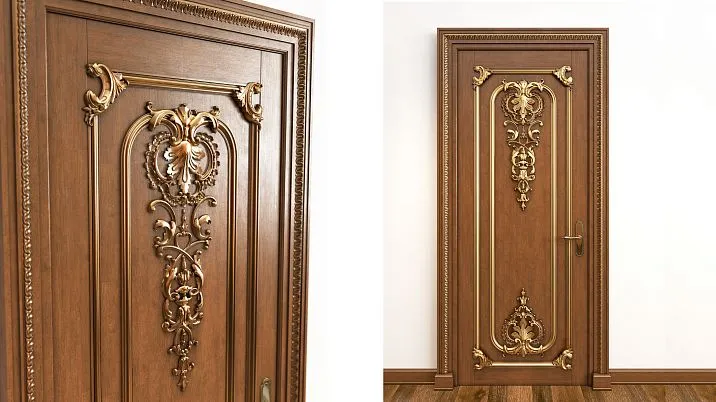
What does a person see when entering your home for the first time? An ordinary door or a work of art that invites one into a world of elegance and impeccable taste? Every morning, leaving your home, and every evening, returning home, we interact with the door — but have you ever considered its potential to become a true masterpiece? Door decorative trim It is not just a way to improve the entrance’s appearance — it is a philosophy of creating a space where every detail speaks of the character, style, and soul of the home.
Imagine a standard interior door — a flat panel, devoid of individuality. Now imagine the same door adorned with exquisite carved appliqués, framed by elegant moldings, and enhanced with delicate rosettes. This is no longer just a functional element — it is a theatrical curtain slowly rising to reveal a new chapter in your home’s story.
In the world of modern design, where mass production often triumphs over individuality, the art of door decoration becomes a way to restore uniqueness to our homes. It is an opportunity to tell your story through the language of forms, textures, and ornamentation, creating visual poetry that will delight the eye and inspire the soul every day.


Entrance drama: first impression defines everything




The psychological portrait of the door
Did you know that the human brain forms its first impression of a space within the first seven seconds? And the door plays a key role in this process. It does not merely divide spaces — it creates expectations, sets an emotional tone, and prepares one for the encounter with the interior.
Interior psychologists assert: a beautiful door acts as a tuning fork for the entire house. It sets the tone, creates anticipation, and shapes the relationship to the space. Guests have not yet stepped over the threshold, yet they already form an opinion of your taste and lifestyle. That is why investing in door decorative appliqués is an investment in reputation and self-perception.
But the influence of a beautiful door extends beyond guests. Every time you pass through an adorned portal, you subconsciously receive a signal: 'You deserve beauty. You live in a world where details and quality matter.' This is daily beauty therapy that fosters a positive attitude toward your own home and life in general.
Our factory also produces:

Theater of everyday life
Home is the theater of our everyday life, and doors are its stage curtains. Each transition from room to room becomes a change of scenery, each door opening a new act in the domestic play. And like in a real theater, the quality of the decorations determines the impact of the performance.
Great directors know: the audience must believe in the reality of what is happening on stage from the first glance. The same occurs in interior design. A well-decorated door instantly transports you into the atmosphere of the chosen style — whether the grandeur of classicism, the refinement of modernism, or the minimalist elegance of minimalism.
Get Consultation
Anatomy of beauty: breaking down door decoration elements
Appliqués: miniature sculpture
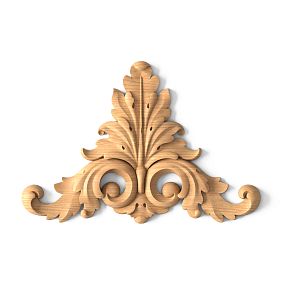
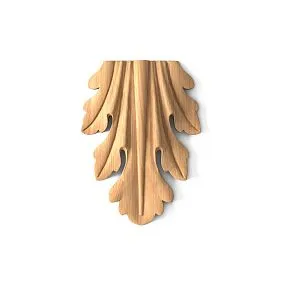
carved appliqués They are true miniature sculptures capable of transforming a flat door surface into a three-dimensional work of art. Each appliqué tells its story through the language of ornamentation.
Plant motifs awaken associations with nature, growth, and life energy. Grapevines symbolize abundance and hospitality. Oak leaves speak of strength and reliability. Roses embody beauty and romance. Choosing a specific ornament is not merely decorating the door — you are encoding a message that will be subconsciously read by every visitor.
Geometric appliqués work differently. They appeal not to emotions, but to reason. Correct proportions, mathematical precision, strict logic of forms create a sense of order, stability, and reliability. Such decoration is especially suitable for offices, libraries, and study rooms — places where concentration and seriousness matter.
Moldings: architectural poetry
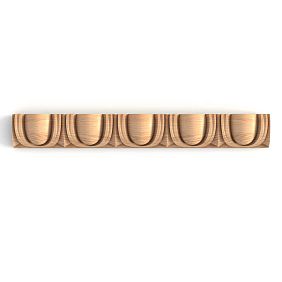
Moldings are architectural poetry written in the language of lines and volumes. They do not merely decorate the door — they structure its surface, create rhythm, and establish proportions. Quality moldings can visually alter the perception of the door, making it appear taller, wider, heavier, or, conversely, more elegant.
Straight moldings create strict geometry, emphasizing rational design. Curved forms add softness, femininity, and romance. Combining different profiles allows creating complex compositions rich in play of light and shadow.
The size and proportions of moldings must correspond to the scale of the door and room. Thin profiles suit elegant interiors, while heavy profiles suit grand spaces. The right choice of moldings can radically change the character of the door without significant expense.
Rosettes: jewels of decoration
Rosettes in door decoration play the role of jewels in jewelry. They create focal points, attract attention, and serve as compositional centers. A rosette placed in the right location can radically change the perception of the entire door.
Traditionally, rosettes are placed at the locations of handles, at the center of the door panel, or at the corners of decorative panels. They can be round, oval, polygonal, replicate the shape of the main ornament, or contrast with it.
Modern technologies allow creating rosettes of incredible complexity and beauty. Multi-level compositions, meticulous detailing, various finishes open boundless creative possibilities.
Material science of door decoration: choice for centuries
Tree: Living Energy in the Interior
Why wood remains the unmatched material for creating decorative door embellishmentThe answer lies in the very nature of this amazing material. Wood is frozen life, growth energy, preserved in its fibers. Each ring in the wood structure is a year of the tree’s life, its history, its character.
Different wood species have unique properties. Oak impresses with its expressive texture and unmatched strength. Oak items serve for centuries, becoming more beautiful with age. Patina of time does not ruin oak decor, but enhances it, adding nobility.
Beech delights with its soft pinkish tones and dense, uniform structure. It is an ideal material for delicate carving, allowing the creation of the finest details with jewel-like precision. Walnut impresses with the elegance of its natural pattern and depth of brown tones.
Modern wood processing fully reveals its beauty. Special compositions protect against moisture and pests, without depriving wood of its ability to 'breathe'. Various finishes — from natural oils to colored enamels — allow adapting wooden decor to any style.
Polyurethane: Technology at the Service of Beauty
The development of modern technologies has given designers new opportunities. Polyurethane elements combine the beauty of traditional forms with the practicality of modern materials. They do not fall short of wooden analogs in detail, but possess a number of unique advantages.
Polyurethane does not fear moisture, making it ideal for bathrooms, kitchens, and humid areas. It does not crack, does not deform, does not attract insects. Moreover, polyurethane elements are significantly lighter than wooden ones, simplifying installation.
Modern manufacturing technologies allow creating polyurethane elements with detail unattainable through hand carving. The finest lines, most complex interweavings, multi-level reliefs — all this is possible thanks to the precision of modern equipment.
Stylistic palette: from classicism to avant-garde
Classicism: eternal values in a modern home
The classical style of door decor is based on principles developed by ancient masters and refined by Renaissance architects. Here, there is a strict hierarchy of elements, mathematical precision of proportions, noble restraint of forms.
The basis of classical decor is the order system. Pilasters imitate columns, cornices create horizontal divisions, friezes adorn central parts of compositions. Each element has its place in the overall system; violation of which destroys harmony.
Classicism ornamentation draws motifs from ancient art. Palmettes, meanders, acanthus, laurel wreaths — all these symbols have deep cultural roots. Palmette symbolizes the tree of life, meander — eternity, acanthus — overcoming difficulties, laurel — victory and glory.
The color palette of classical decor is nobly restrained. White symbolizes purity of idea, gold — divine origin, natural wood tones — connection with nature. Contrasts are soft, transitions are smooth.
Baroque: theater of beauty
If classicism is the music of reason, then baroque is the symphony of emotions. It is a style of emotions, theatrical effects, luxurious opulence. Baroque interiors are not merely beautiful — they are captivating, thrilling, creating a sense of celebration.
The main feature of baroque decor is the dynamism of forms. Nothing here is static — everything is in motion. Plant ornaments seem to sway in the wind, architectural elements curve and intertwine. Asymmetry is used as an artistic device, creating a sense of life and spontaneity.
Baroque materials are the most luxurious. Valuable wood species, gold, inlays, colored enamels. Every surface must shine, shimmer, attract attention. It is a style for those who are not afraid of luxury and know how to wear it.
Modern: nature as teacher
The modern style revolutionized decorative art, for the first time directly turning to nature as a source of forms. Here, there is no copying of historical samples — only creative interpretation of natural motifs.
Modern plant ornaments are maximally naturalistic. One can identify specific plant species, feel the season, guess the artist’s mood. Irises and lilies, dragonflies and butterflies, sea waves and tongues of flame — all nature becomes a source of inspiration.
Modern asymmetry is not theatrical, as in baroque, but natural, as in nature. Compositions develop organically, following the internal logic of growth. This creates a sense of naturalness, harmony with the surrounding world.
Minimalism: philosophy of simplicity
A minimalist approach to decor may seem paradoxical — how to decorate by rejecting decoration? But this is precisely the depth of minimalism: to find maximum expressiveness in minimal means.
Minimalist decor elements are based on pure geometric forms. Each line here is significant, every volume is precisely balanced. There is no room for chance — everything is subject to strict compositional logic.
Special attention is paid to the quality of execution. A simple form does not forgive imperfections — any inaccuracy immediately stands out. This requires the highest craftsmanship from manufacturers, jewel-like precision in every detail.
Technological aspects: from idea to realization
Designing: birth of the image
The creation of a high-quality decorative element begins long before the first touch of a tool to the material. It all starts with an idea, with understanding the tasks the decoration must fulfill.
Modern design uses computer technologies. 3D modeling allows you to see the future element within the interior context, evaluate proportions, and calculate its interaction with other details. Parametric design enables creating variations of basic forms.
Special attention is paid to ergonomics. Door decorative trim It must not only look beautiful but also be easy to install, securely hold, and harmoniously match with hardware.
Production: symphony of precision
Modern manufacturing technologies have reached an incredible level of precision. High-precision milling centers reproduce the most complex ornaments with micron accuracy. What used to require months of work by an experienced craftsman is now accomplished in hours.
But technology is merely a tool. The soul of the item still comes from the human. CNC programs are created by experienced technologists who understand the subtleties of the material. Finishing is performed by masters who feel every millimeter of the surface.
Quality control at all stages guarantees that finished items meet the highest standards. Each element undergoes multi-stage inspection — from incoming raw material control to final acceptance of finished products.
Finishing: the final touch of the master
Finishing decorative elements is an art requiring deep understanding of the material and technology. Different types of coatings not only protect the item but also reveal its beauty.
Natural oils highlight the wood texture, making it more expressive. Waxes create a noble matte sheen. Lacquers provide durable protection and can vary from completely matte to mirror-gloss finishes.
Colored coatings open up additional possibilities. Patination creates an aging effect, emphasizing the ornament's relief. Gold leaf adds luxury and solemnity. Modern enamels allow achieving any color and texture.
Installation: the final symphony of beauty
Preparation: the foundation of success
Quality installation begins with careful preparation. The door surface must be perfectly flat, clean, and degreased. Even minor defects may become visible after installing the decoration, spoiling the overall impression.
Marking requires mathematical precision. decorative elements They must be placed strictly symmetrically, at equal distances, with correct orientation. Modern laser levels and precise measuring tools help achieve the required accuracy.
The choice of fastening materials depends on the type of door, size, and weight of the elements. Lightweight parts can be attached with special adhesive, while heavy ones require mechanical fastening. It is important to ensure reliable connections for the entire service life.
Installation: delicate work
The installation process requires professional skills and specialized tools. Each element must fit perfectly into its place — without gaps, misalignments, or visible fastening marks.
Special attention is paid to the joining of elements. Moldings must fit together without the slightest gap, appliqués must precisely match the marking, and rosettes must be placed exactly at the center of compositions.
Finishing the joints and fastening areas completes the process. All installation marks are carefully removed, surfaces are sanded, and if necessary, touched up. The result should look as if the decoration was originally part of the door.
Stylistic solutions for different rooms
Entrance door: the face of the house
The entrance door is the first thing guests see and the last thing you see when leaving the house. It must make a strong impression, match the owner's status, and harmonize with the building's architecture.
Entrance doors are suitable for more massive, solemn decorative elements. Large appliqués, wide moldings, and expressive rosettes create a sense of solidity and respectability. Materials must be especially strong and durable.
The color scheme of the entrance door can contrast with the building's facade or harmoniously blend into it. Dark, saturated colors emphasize seriousness and status. Light tones create a sense of openness and hospitality.
Interior doors: harmony of the interior
Interior doors should support the overall interior style, but may have their own character. Decorating door panels Allows creating transitions between different areas of the house.
In the bedroom, softer, romantic motifs are appropriate. Plant ornaments, smooth lines, pastel tones create an atmosphere of calm and comfort. In the office, it is better to use strict geometric forms that emphasize a professional attitude.
The children's room allows for more playful solutions. Bright colors, fairy-tale motifs, unusual shapes can turn a door into an element of play space.
Care and maintenance: beauty for many years
Regular Maintenance
Decorative elements require careful, but not complicated, care. The main enemy of any decor is dust. It accumulates in ornament recesses, gradually clogging details and depriving them of expressiveness.
Regular dry cleaning with soft brushes is the basis of care. For complex reliefs, brushes of different shapes and stiffness are used. It is important to work carefully, without damaging delicate details.
Wet cleaning is performed using special agents that do not contain aggressive components. Wood does not like excessive moisture, so the cloth should be only slightly damp.
Restoration and renewal
Even with the most careful handling, decorative elements may sustain damage. Modern restoration technologies allow restoring even severely damaged details.
Minor chips and scratches are removed using special putties and restoration compounds. More serious damage may require partial or complete replacement of elements.
The possibility of updating is one of the advantages of quality decor. Repainting allows radically changing the appearance without replacing elements. This allows adapting the decor to changes in the interior.
Economic aspects: Investment in beauty
Cost and return on investment
Door decorative trim — is an investment that pays off many times over. Beautiful interiors increase property value, create a positive impression, and influence mood and self-esteem.
Quality decorative elements serve for decades without losing their aesthetic properties. This makes them more cost-effective compared to cheap alternatives that require frequent replacement.
When planning a budget, it is important to find a balance between desired and possible. It is better to use several expensive high-quality elements than many cheap details of dubious origin.
Long-term perspective
Quality decor is an investment for many years. Unlike fashion trends, classical forms and time-tested proportions do not become outdated. They remain relevant and beautiful for decades.
The possibility of restoration and updating makes such investments even more attractive. Once installed elements can serve as a basis for various stylistic experiments over many years.
The future of door decor: technology and tradition
Innovative materials
Advancements in materials science open new possibilities for door decor. Composite materials combine the advantages of different substances. Smart polymers can change their properties depending on conditions.
Nanotechnology allows creating coatings with unique properties. Self-cleaning surfaces, antibacterial compositions, color-changing coatings — all of this is no longer science fiction.
Process digitization
Digital technologies revolutionize the decor creation process. Artificial intelligence analyzes historical ornaments and creates new variations. Virtual reality allows seeing the result even before starting work.
3D printing opens opportunities for creating forms unattainable by traditional methods. Personalization becomes accessible thanks to flexible manufacturing technologies.
Frequently asked questions
Which decor style to choose for a modern interior?
The choice of style depends on the overall interior concept and personal preferences. For modern interiors, minimalist geometric forms, minimalist solutions, or stylized natural motifs are suitable. It is important to maintain stylistic unity throughout the house.
Can elements of different styles be combined on one door?
Combining is possible, but requires a professional approach. The key to success is finding a unifying element: color, material, scale, or proportions. It is better to limit oneself to 2-3 stylistic directions and ensure smooth transitions between them.
How to choose the size of decorative elements?
The size should correspond to the scale of the door and room. Large elements suit tall doors, medium-sized elements suit standard doors, and small details suit compact spaces. The rule of proportions: decor should not occupy more than 30% of the door panel area.
What materials are best suited for door decor?
Natural wood remains the standard of quality and beauty. Oak and beech provide maximum durability. Polyurethane is an excellent alternative for humid areas. MDF is suitable for budget projects provided it is properly finished.
How long does it take to install decor on a door?
Time depends on the complexity of the project. Simple overlays can be installed in 2-3 hours. Complex compositions with multiple elements may require a full working day. Quality of execution is more important than speed.
Can decorative elements be installed on a metal door?
Yes, modern adhesive compounds allow securely attaching decorative elements to metal surfaces. It is important to properly prepare the surface and use appropriate fastening materials.
How to care for gilded elements?
Gilding requires especially delicate care. Use only dry cleaning with soft brushes. No abrasive materials or aggressive chemicals. In case of damage to the coating, consult restoration specialists.
Does decoration affect the door's functionality?
When properly designed and installed, decorative elements should not interfere with the door's operation. It is important to consider the placement of hinges, locks, handles when positioning overlays and other details.
Conclusion: STAVROS — where perfection is born
In a world where beauty is becoming increasingly rare, it is especially important to find those who remain loyal to high quality standards and understand the true value of beauty. The STAVROS company has been an unrivaled leader in creating decorative elements for doors for many years, bringing to life the boldest design ideas and transforming ordinary doors into works of art.
The philosophy of STAVROS is based on a deep understanding that every detail in a home matters, and each decorative element tells its own story. We do not merely produce door ornaments — we create keys to the world of beauty and harmony, opening doors to a new level of life.
Our production is equipped with the most modern European equipment, enabling the reproduction of the finest details with mathematical precision. But behind every machine stands a master — a person who understands the soul of the material, feels every millimeter of the surface, and invests a part of their talent into each product.
The STAVROS team is a union of traditional craftsmanship and modern technologies. Our designers study historical ornaments and create new interpretations of timeless motifs. Technologists develop innovative solutions while preserving the authenticity of classic forms. Masters bring ideas to life in the material with jewel-like precision.
We offer not just decorative elements, but comprehensive solutions for creating unique interiors. From initial consultation to final installation — STAVROS accompanies every project at all stages of implementation.
Over the years, our products have adorned thousands of homes throughout Russia and CIS countries. Each completed project is a testament to our professionalism, a sign of client trust, and a source of inspiration for new creative pursuits.
Choosing STAVROS, you choose not just quality decor. You choose a philosophy of life where beauty is paramount, where every detail is perfected, where craftsmanship traditions are passed down from generation to generation.
Let us become your companions on the journey to your dream home. Entrust us with creating the very door that will become a portal to a world of beauty, harmony, and flawless style. For it is through beautiful doors that we enter a beautiful life.