Article Contents:
- Architecture of Beauty's Geometry
- Proportional Logic in Modern Interiors
- Visual Psychology of Spatial Transitions
- Material Science of Decorative Solutions
- Natural Wood: Traditions and Innovations
- Polyurethane: Technological Revolution
- MDF: A Democratic Alternative
- Stylistic Directions of Decorative Finishing
- Classical Heritage in Modern Interpretation
- Baroque: Theatricality and Emotion
- Modern minimalism: philosophy of simplicity
- Professional Installation — Guarantee of Results
- High-precision manufacturing
- Professional Installation
- Final Finishing and Protection
- Functional Advantages of Decorative Framing
- Architectural Correction of Proportions
- Protective function
- Defect Concealment
- Technologies of the Future in Decorative Arts
- Cost Factors
- Long-Term Economic Efficiency
- Modern Trends and Development Prospects
- Ecological sustainability and development
- Individualization and customization
- Integration with smart technologies
- Conclusion: Investments in Beauty and Comfort
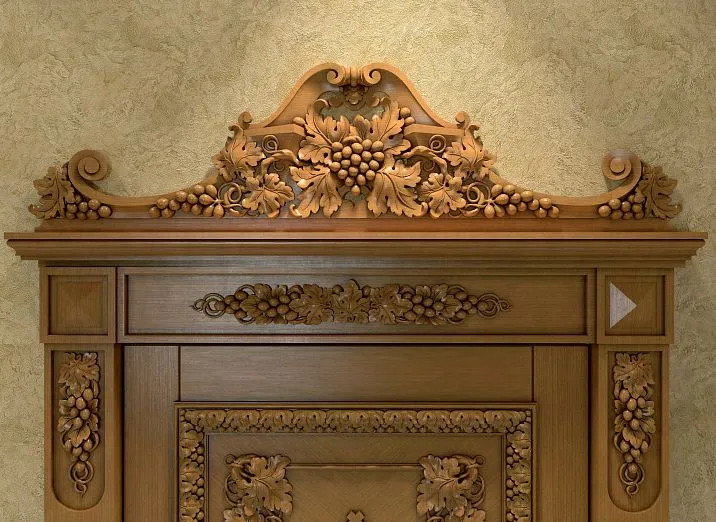
Every home has elements that can completely change the perception of space, transforming an ordinary interior into a work of architectural art. decorative door opening The doorway — precisely such an element capable of instantly elevating the status of a room and creating an atmosphere of unique elegance.
Why some interiors are remembered forever, while others remain bland? The secret lies in details that professional designers call 'accent points.' A doorway is a natural boundary between spaces, and its treatment can either emphasize the architectural logic of the building or become a random element devoid of meaning and beauty.
Imagine: a guest enters your home, and the first thing that catches their attention is not the furniture, not the wall color, but the elegant framing of the doorway, which seems to invite them to proceed further, promising new discoveries. It is precisely such an impression that a professionally executed decorative door opening doorway creates.


Architecture of Beauty's Geometry
Creating a harmonious doorway framing begins with understanding the mathematical foundations of beauty. The golden ratio, classical proportions, modular systems — all these principles lie at the foundation of the visual appeal of architectural elements.




Proportional Logic in Modern Interiors
Great architects of the past intuitively understood: beauty arises from correct proportions. The width of the framing should relate to the height of the doorway in a specific mathematical progression, creating a sense of natural harmony. Too narrow framing disappears against the doorway, too wide — suppresses the space.
Modern designers have developed a universal formula: the width of the decorative element should be 1/7–1/9 of the doorway height for classical interiors and 1/12–1/15 for minimalist solutions. These proportions work regardless of room size, creating visual stability in the composition.
Moldings and door opening framing Require special attention to detail of joints. Corners must be perfectly fitted, profiles must match exactly. The slightest inaccuracy in geometry instantly reveals amateur work and destroys the impression of quality.
Our factory also produces:


Visual Psychology of Spatial Transitions
The human brain perceives a doorway as a symbolic boundary between different functional zones. The quality of this boundary subconsciously affects our sense of comfort and safety. A clearly defined, beautifully framed doorway creates a sense of order and control over space.
The height at which decorative elements are placed is also critically important. Wall decorative ornaments They should be placed at eye level or slightly above, creating a natural point of visual focus. Too high placement makes elements barely noticeable, too low — creates a sense of pressure.
Color accents in framing can radically change the perception of room proportions. Contrasting solutions attract attention and emphasize the significance of the transition, tonal — create a soft integration with the overall interior. The choice of strategy depends on the desired emotional impact.
Get Consultation
Material Science of Decorative Solutions
Choosing a material for decorative framing — is choosing a philosophy of longevity. Each material has its own aesthetics, technical characteristics, possibilities, and limitations.
Natural wood: traditions and innovations
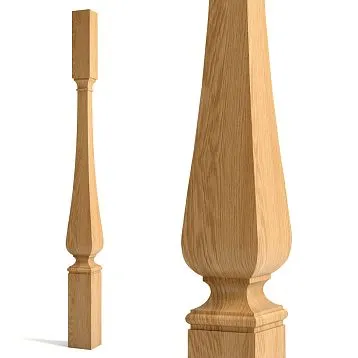
Wood remains an unmatched material for creating a warm, cozy atmosphere in interiors. Window and Door Framing Made from solid noble woods — oak, beech, walnut — they create a sense of solidity and respectability.
Modern wood processing technologies allow creating surfaces with various effects. Brushing highlights the natural wood texture, creating tactile appeal. Thermally treated wood changes its color, giving it noble dark tones without using dyes.
An important aspect of working with wood is understanding its 'living' nature. Wood reacts to changes in humidity and temperature, which must be considered during design. buy door frames Made from properly dried and treated wood — the guarantee of construction longevity.
Polyurethane: Technological Revolution
High-density polyurethane has brought a true revolution to the world of architectural decoration. This material allows creating elements with a level of detail unattainable with traditional materials in mass production. Corner Polyurethane Element Can reproduce the finest nuances of hand-carved details.
Polyurethane is absolutely dimensionally stable, does not fear humidity, temperature fluctuations, or mechanical impacts. It does not attract insects, is not susceptible to rot, and requires no special maintenance. The service life of quality polyurethane elements is measured in decades without losing their original appearance.
The material's lightness is another indisputable advantage. Elements that appear massive in appearance weigh significantly less than their wooden counterparts, simplifying installation and reducing load on structural elements. This is especially important when working with historic buildings, where additional loads are undesirable.
MDF: a democratic alternative
MDF (fine particle board) represents a compromise solution between natural wood and fully synthetic materials. MDF for Painting Allows creating elements of complex shapes at an affordable cost.
The main advantage of MDF is its perfectly smooth surface, requiring no additional processing before painting. The material holds paint well, allowing for various decorative effects — from matte to high-gloss finishes.
MDF ceiling moldings for painting Especially popular in modern interiors, where the ability to quickly change color schemes is important. MDF elements can be repainted at any time, adapting them to a new design concept.
Decorative styling directions
Each architectural style has its own language of decorative forms, and understanding this language is key to creating a harmonious interior.
Classical heritage in modern interpretation
The classical style in decorative design is based on principles of ancient architecture, where each element has symbolic meaning. decorative door opening A classical doorway includes basic elements of the order system — base, shaft, capital.
The base creates visual support for the entire composition. It can be simple — in the form of a flat skirting board, or complex — with profiled edges and decorative elements. The height of the base is usually 1/3 of the total frame height.
The shaft — the main part of the frame — can be smooth or decorated with fluting, panels, or other elements. Its proportions determine the character of the entire composition. A wide shaft creates a sense of monumentality, a narrow one — elegance.
The capital crowns the composition, creating a transition to horizontal interior elements. It can be simple — in the form of a profiled cornice, or complex — with floral motifs, volutes, or other decorative elements.
Baroque: Theatricality and Emotion
Baroque decorative door opening A doorway is an architectural spectacle, where each element plays its role in creating an emotional impact. Curved lines, rich plasticity, and abundance of decorative details create a sense of movement and life.
Characteristic elements of the Baroque style — cartouches with monograms, garlands of flowers and fruits, putti, shells, mascarons. decorative interior ornaments In the Baroque style, they should create an impression of abundance and luxury, but while maintaining compositional logic.
The color scheme of Baroque framing can be very rich. Gold leaf, silvering, multi-colored painting — all means are suitable for creating the desired impression. But even in the most lavish compositions, a certain restraint must be maintained, otherwise the decoration will turn into tasteless tinsel.
Modern minimalism: philosophy of simplicity
The minimalist approach to decorative design is based on the principle of maximum impact with minimal means. Paintable Molding In a minimalist interior, it should be almost imperceptible yet perfectly fulfill its function.
Simple geometric shapes, clean lines, absence of unnecessary details — these are the main characteristics of minimalist framing. But simplicity does not mean primitiveness. Behind the apparent ease lies complex work to find ideal proportions and quality of execution.
Corner elements for walls In the minimalist style, they must be extremely concise yet flawless in execution. Every line must be perfectly straight, every angle exactly 90 degrees, every surface impeccably smooth.
Technological aspects of production and installation
Modern technologies allow creating decorative elements with a quality level unattainable by manual methods. But technology is merely a tool; success depends on understanding the material and the master's experience.
High-precision manufacturing
CNC machines ensure ideal repeatability of dimensions and surface quality. Milling of complex profiles occurs with precision down to fractions of a millimeter, guaranteeing perfect fitting of elements to each other.
Polyurethane wall molding for painting It is manufactured by casting into silicone molds. The quality of the finished product depends on the accuracy of mold fabrication and the stability of the casting process parameters.
Quality control at all production stages is a mandatory condition for obtaining high-class products. Each element undergoes multi-stage checks for dimensions, surface quality, and compliance with technical requirements.
Professional installation
— only half the job; it is important to ensure its professional installation. Buy door opening framing — only half the job, it's important to ensure its professional installation.
Preparing the base is critically important for installation quality. Walls must be leveled and cleaned of dust and contaminants. Any irregularities in the base will be transferred to the decorative elements, spoiling the overall impression.
Marking the position of elements must be done using high-precision measuring tools. Laser levels, digital protractors, precision tape measures — the entire arsenal of modern tools is used to achieve an ideal result.
Final finishing and protection
The final stage of work — finishing, which not only gives elements a completed appearance but also ensures their longevity. MDF skirting board for painting Requires quality priming before applying the final coating.
Modern paint and coating materials allow creating finishes with various effects — from deep matte to mirror gloss. The choice of a specific type of coating depends on the interior's style and usage conditions.
Protective functions of the coating are no less important than decorative ones. Quality paint or varnish protects the material from moisture, ultraviolet radiation, and mechanical damage, extending the service life of the entire structure.
Functional advantages of decorative framing
Decorative framing of a doorway is not only beauty but also practicality. Properly designed elements solve numerous functional tasks.
Architectural correction of proportions
decorative door opening The opening can visually alter the proportions of the room. Vertical elements increase the apparent ceiling height, horizontal elements expand the space.
Using contrasting colors enhances the correction effect. Light framing on a dark background visually increases the opening, while dark framing on a light background reduces it. These techniques allow adapting standard openings to individual needs.
Corner decorative elements They help create smooth transitions between different planes, eliminating sharp geometric intersections that may cause discomfort when perceiving space.
Protective function
Decorative framing protects walls from damage when passing through the opening. The corners of doorways are the most vulnerable areas, susceptible to chipping and abrasion. Quality framing takes on mechanical impacts, preserving the integrity of the main structures.
Paintable moldings in interior design Made from durable materials, they can serve for decades, protecting walls from damage and preserving the original appearance of the interior.
Hiding defects
Decorative framing effectively hides defects of the opening — wall irregularities, plaster chips, construction inaccuracies. Properly selected profiles can mask significant shortcomings, creating an impression of perfect geometry.
This is especially important during repairs of old buildings, where achieving ideal opening geometry may be technically difficult or economically impractical. Decorative Accents for Furniture and interior design allow creating an impression of high-quality finishing at reasonable costs.
Economic aspects of decorative finishing
Investments in quality decorative trim are investments in the long-term future. Proper economic calculation must consider not only initial costs but also operating expenses and impact on property value.
Cost Factors
The price of decorative trim depends on many factors: material of manufacture, profile complexity, batch size, delivery time, manufacturer's reputation. buy MDF valances for painting can be priced several times lower than wooden equivalents at comparable quality.
Custom solutions always cost more than standard ones, but they allow obtaining a unique result fully matching the designer's concept. Mass production reduces cost but limits customization options.
Installation complexity also affects the overall project cost. Simple profiles can be installed by homeowners, while complex compositions require professional installation.
Long-term Economic Efficiency
Quality decorative trim serves for decades without losing its appearance or functional characteristics. MDF skirting board for painting, buy — means investing in a solution that will not require replacement throughout the building's entire service life.
Cheap materials may require replacement within a few years, ultimately costing more than initial quality investments. Saving on materials and labor often leads to additional expenses in the future.
Impact on property value should also be considered in economic calculations. Quality decorative finishing increases the attractiveness of the property to potential buyers or tenants, potentially offsetting initial costs.
Modern Trends and Development Prospects
The market for decorative materials is constantly evolving, offering new solutions, materials, and technologies. Understanding current trends helps make choices that will remain relevant for many years.
Ecological sustainability
Ecological requirements are becoming an increasingly important factor when selecting finishing materials. Wooden decorative details from certified forests, polyurethane composites based on plant raw materials, recycled materials — all of this meets modern ecological responsibility requirements.
Consumers are increasingly interested in the full life cycle of products — from raw material extraction to waste disposal. Manufacturers demonstrating ecological responsibility gain competitive advantages in the market.
Individualization and customization
Mass production is giving way to individual solutions. Modern technologies allow creating unique decorative elements in single units without significant cost increases. MDF details buy can be sourced from a standard catalog or custom-sized.
Digital design technologies allow clients to participate in design creation, make changes, and view results in virtual reality. This increases client satisfaction and reduces the risk of misunderstandings.
Integration with smart technologies
Decorative elements are becoming part of a "smart home" system. Built-in lighting, motion sensors, security elements — all of this can be integrated into decorative door opening the opening without compromising aesthetics.
Wireless technologies simplify integration of various systems. Hidden speakers, air quality sensors, lighting elements — possibilities are limited only by the designer's imagination and project budget.
Conclusion: Investments in Beauty and Comfort
decorative door opening door opening — is an investment in quality of life, daily aesthetic pleasure, prestige, and comfort of your home. Properly selected and professionally installed elements will delight the eye and serve for decades, becoming an indispensable part of the interior.
In a world where technology allows realizing any designer's fantasy, it is especially important to preserve a sense of proportion and understanding of true beauty. Decorative trim should not shout about itself, but delicately highlight the space's merits, creating an atmosphere of harmony and comfort.
When choosing materials and installers, remember: saving on quality is rarely justified. Cheap materials quickly lose their appearance, poor installation creates problems that are expensive to fix. Investments in quality pay off through longevity, beauty, and enjoyment of use.
Every home deserves beautiful finishing, every interior can become cozier and more elegant thanks to thoughtfully designed decorative elements. Do not fear experimenting, seek your style, create a space that reflects your individuality and brings joy every day.
STAVROS company has helped people create beautiful interiors for more than two decades, combining traditional craftsmanship with modern technologies. A wide range of decorative elements, from classic wooden profiles to innovative polyurethane compositions, allows finding a solution for any style and budget.
STAVROS professional team provides full-cycle services — from material selection consultation to final finishing of ready elements. Individual approach to each project, use of premium materials, strict quality control at all stages — these are the principles that make STAVROS a reliable partner in creating dream interiors.