Article Contents:
- Polyurethane: A Material Ahead of Its Time
- Chemical Foundations of Superiority
- Online Trading: A New Era in the World of Decoration
- Advantages of Digital Shopping
- Variety of Decorative Solutions
- Basic Elements of Interior Decoration
- Central Decorative Elements
- Architectural elements
- Technical specifications: the science of quality
- Physical and Mechanical Properties
- Production Technologies
- Design Styles and Directions
- Classical styles
- Modern directions
- Production Technologies: The Path to Perfection
- Production Stages
- Quality Control
- Installation: The Art of Professional Mounting
- Preparatory work
- Joining technologies
- Economic aspects: investments in beauty
- Comparative Cost
- Long-Term Savings
- Ecological Aspects and Safety
- Fire safety
- Waste disposal and recycling
- Innovations and the Future of the Industry
- Digital technologies
- Integration with "Smart Home"
- Regional application specifics
- Northern Regions
- Southern Regions
- Coastal zones
- Psychology of perception of decorative elements
- Influence on mood
- Creating Status
- Trends in Modern Design
- Eco-Minimalism
- Neo-Victorian Style
- Industrial Aesthetics
- Professional Secrets of Designers
- Principles of Composition
- Playing with Light
- Color solutions
- Maintenance and operation
- Regular Cleaning
- Protection against damage
- Updating Finishes
- Conclusion: The Art of Accessible Luxury
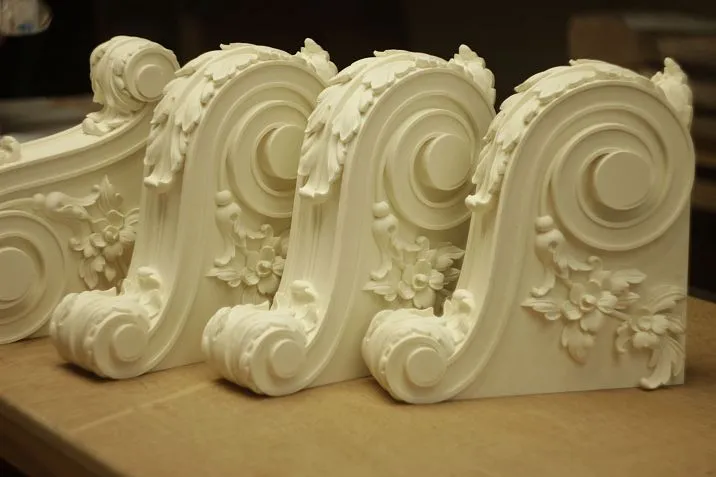
When architectural forms of the past meet innovative materials of the present, something truly remarkable is born. Imagine: you enter a room where every line, every curve of decorative elements tells a story of elegance and refined taste. Ceilings adorned with delicate cornices, walls framed by elegant panels, and the air filled with an atmosphere of aristocratic grandeur.
Today, such luxury is accessible to everyone. Modern technologies allow to buy moldings online in a store, turning dreams of a beautiful interior into tangible reality. But what lies behind this accessibility? What secrets does the world of polyurethane decoration hold, and why has this material become a revolution in the industry of interior design?


Polyurethane: A Material Ahead of Its Time
The history of polyurethane began in 1937 in the laboratories of German chemist Otto Bayer. At that time, few could have imagined that this synthetic polymer would radically change perceptions of decorative materials. Today, polyurethane moldings are not merely an alternative to traditional plaster — they are a material surpassing its predecessors in all key parameters.
What makes polyurethane so special? The secret lies in its unique molecular structure. During polymerization, long chains of molecules are formed, linked by urethane groups. This structure provides the material with exceptional flexibility while maintaining high strength.




Chemical Foundations of Superiority
Polyurethane is created as a result of the reaction between polyols and isocyanates. Adding various catalysts, stabilizers, and modifiers allows obtaining a material with desired properties. For decorative elements, special compositions with low density and high surface detail are used.
Foam agents create micropores in the material, reducing the overall weight of products without compromising strength. Antioxidants prevent polymer aging due to oxygen exposure, while UV stabilizers protect against destructive effects of solar radiation.
Our factory also produces:


E-commerce: A new era in the world of decor
The digital revolution has fundamentally changed the ways of purchasing building and finishing materials. Polyurethane moldings Now you can select and order without leaving home, and the variety of products in online catalogs surpasses the capabilities of any physical store.
Online platforms offer customers unique opportunities. Detailed photos allow viewing every relief detail, technical specifications contain comprehensive information about material properties, and 3D visualization systems enable seeing how decorative elements will appear in a specific interior.
Get Consultation
Advantages of digital shopping
24/7 Accessibility
Online stores operate without weekends or holidays. You can browse catalogs, compare options, and place orders at any convenient time. This is especially important for busy individuals whose work schedules do not allow visiting traditional stores during business hours.
Comparative Analysis
Online platforms allow easily comparing different models by characteristics, prices, and customer reviews. Special filters help find exactly the elements that match your requirements in style, size, and budget.
Expert Consultations
Quality online stores offer online consultations with professional designers. Specialists help select optimal solutions, calculate required material quantities, and provide installation recommendations.
Variety of Decorative Solutions
Offers an impressive variety of design solutions. From minimalist, sleek forms to richly decorated baroque ornaments — every style finds its embodiment in polyurethane corner elements. This versatility opens boundless creative opportunities for designers and architects. decorative elements made of polyurethane Impresses with variety of shapes, styles, and sizes. From miniature appliqués to large-scale architectural compositions — possibilities are virtually limitless.
Basic Elements of Interior Decor
Crown Mouldings and Profiles
Crown mouldings are the foundation of any relief composition. They serve both decorative and functional roles, concealing junctions between walls and ceilings, and creating a complete architectural image. Modern collections include hundreds of profile variations — from minimalist geometric to ornately decorated.
Profile complexity is determined by the number of transitions and decorative elements. Simple profiles suit minimalist interiors, while complex profiles are suitable for classical and baroque styles.
High-design baseboards
Baseboards have long ceased to be merely functional elements. Modern polyurethane baseboards are full-fledged decorative elements capable of radically changing the perception of space.
High baseboards visually raise ceilings, creating a sense of monumentality. Profiled baseboards with decorative elements add elegance and completeness to the interior.
Central Decorative Elements
Receptacles and medallions
Ceiling Rosettes are a classic of palace interiors, adapted to modern realities. They serve not only to frame chandeliers but also as independent decorative accents, creating compositional centers on large ceiling surfaces.
The size of the rosette should correspond to the scale of the room and the proportions of the chandelier. For standard apartments, rosettes with a diameter of 40–60 cm are optimal; for spacious halls — 80–120 cm and larger.
Wall Panels and Frames
Wall panels create rhythm and structure in the interior. Polyurethane frames and moldings allow creating complex compositions that visually divide walls and produce interesting lighting effects.
The modularity of modern systems allows creating panels of any size and configuration. Corner elements ensure perfect alignment at room corners.
Architectural elements
Columns and Pilasters
Full and half-columns made of polyurethane allow creating grand architectural compositions. Modern production technologies ensure ideal geometry and high detail of capitals.
The modular production system allows creating columns of any height by combining standard elements — bases, shafts, and capitals. This ensures universal application in rooms of varying heights.
Architectural elements
Arches are the pinnacle of decorative art. Creating high-quality arch elements requires the highest level of production precision and flawless element fitting. Decorative arch elements made of polyurethane allow creating impressive compositions in any interiors.
Technical characteristics: science of quality
The quality of polyurethane moldings is determined by numerous technical parameters. Understanding these characteristics helps make the right choice and avoid disappointments during operation.
Physical and mechanical properties
Material density
The optimal density of decorative polyurethane elements is 400-600 kg/m³. This indicator ensures an ideal balance between strength, weight, and material workability.
Too low density may lead to insufficient strength of the items, especially under mechanical stress. Excessive density increases the weight of elements and complicates installation.
Strength characteristics
The compressive strength of quality polyurethane is 15-25 MPa, and bending strength — 20-35 MPa. These indicators significantly exceed the properties of plaster and ensure the longevity of decorative elements.
Polyurethane's impact resistance is 3-5 times higher than that of plaster. This is critically important for elements located in areas subject to possible mechanical stress.
Operational characteristics
Moisture resistance and water absorption
The closed-porous structure of polyurethane ensures minimal water absorption — no more than 2% by volume within 24 hours. This allows using decorative elements in humid rooms without risk of deformation or damage.
Temperature stability
The operating temperature range of polyurethane moldings is from -50°C to +80°C. The linear expansion coefficient is minimal, which eliminates deformation due to seasonal temperature fluctuations.
Chemical resistance
Polyurethane is resistant to most household chemicals. It does not degrade under detergents, does not absorb odors, and easily cleans off contaminants.
Design styles and directions
The versatility of polyurethane decor allows its use in interiors of the most diverse styles — from strict classicism to modern high-tech.
Classic styles
Baroque and Rococo
These styles are characterized by an abundance of decorative elements, complex curved forms, and rich ornamentation. polyurethane panels with plant motifs, scrolls, and rosettes are ideally suited for creating an atmosphere of palace luxury.
Rococo's asymmetrical compositions require special skill in arranging elements. Each detail must harmoniously fit into the overall composition, creating an impression of lightness and elegance.
Neoclassicism and Classicism
The strictness and monumentality of Neoclassicism are reflected in geometrically correct forms of decorative elements. Military symbolism, laurel wreaths, eagles — characteristic motifs of this style are naturally reproduced in polyurethane.
Classicism implies strict adherence to proportions and mathematical harmony. Each element of the composition must be in a specific relationship with the other parts.
Modern interior styles also use oak skirting boards, but in a different interpretation. Minimalism prefers simple rectangular profiles without decorative elements. Smooth surfaces with matte finish create a sense of strictness and elegance.
Neoclassicism
Modern interpretation of classical forms implies simplification of decorative elements while preserving their basic proportions and rhythm. Simplified moldings and cornices create an elegant base for modern interiors.
Art Deco
Geometric ornaments, stepped forms, solar motifs — characteristic elements of art deco are beautifully reproduced in polyurethane. This style allows creating dynamic compositions that highlight the modernity of the interior.
Minimalism with Accents
Even in minimalist interiors, decorative elements can play an important role. One expressive element — a complex-profile cornice or decorative panel — can become the compositional center of the entire space.
Production Technologies: The Path to Perfection
Modern production of polyurethane molding is a high-tech process combining traditional molding techniques with innovative materials and equipment.
Production Stages
Creating the Master Model
The process begins with creating a reference model of the future product. For traditional ornaments, historical samples are used, carefully restored and adapted to modern production technologies.
Computer modeling allows creating new decorative elements with perfect geometry and calculated aesthetic proportions.
Mold Making
Silicone molds ensure the transfer of the finest relief details with precision down to the micron. The quality of the mold is critically important for obtaining high-class products.
Modern silicone compounds withstand thousands of casting cycles while maintaining original geometric accuracy.
Molding and Curing
Polyurethane mixture is poured into special climatic chambers with controlled temperature and humidity. The polymerization process takes from 30 minutes to several hours depending on the size of the item.
Quality control
Each item undergoes a multi-stage quality control. Geometric dimensions, surface quality, absence of pores and other defects are checked. Only items meeting all requirements are approved for sale.
Installation: The Art of Professional Mounting
Quality installation is a guarantee of longevity and aesthetic appeal of decorative compositions. Modern installation technologies have significantly simplified, but require adherence to certain rules.
Preparation Work
Analysis and Preparation of the Base
The base must be strong, dry, and free of contaminants. Moisture should not exceed 4% for mineral bases. Irregularities exceeding 2 mm per linear meter must be corrected.
Layout and Marking
Precise marking is the key to an ideal result. Using laser levels and special templates ensures flawless geometry of the composition.
Mounting technologies
Adhesive connections
Specialized polyurethane adhesives provide maximum adhesion and compatibility with the material of decorative elements. Setting time is 10-15 minutes, full curing — 24-48 hours.
Mechanical fastening
For heavy elements, adhesive joints are reinforced with mechanical fasteners. Special concealed-head screws are filled in after installation and become invisible.
Economic aspects: Investment in beauty
Using polyurethane decor is an economically justified solution, providing an optimal price-to-quality ratio.
Comparative cost
Polyurethane molding is significantly cheaper than analogs made of natural stone or high-quality plaster. At the same time, the operational characteristics of polyurethane often surpass traditional materials.
Ease of installation reduces labor costs and shortens project completion time. This is especially important for commercial projects, where downtime critically affects project economic efficiency.
Long-term savings
Low operational costs and high durability make polyurethane decor a profitable long-term investment. The service life of quality items is 25-30 years without the need for replacement or major repairs.
Ecological aspects and safety
Modern polyurethane compositions meet the strictest ecological standards. The material does not emit harmful substances, contains no formaldehyde or other hazardous compounds.
Fire safety
Special flame-retardant additives give polyurethane self-extinguishing properties. When exposed to open flame, the material does not support combustion and does not emit toxic gases.
Disposal and recycling
After the service life of polyurethane products, they are subject to recycling to obtain secondary raw materials for the production of other polymer materials.
Innovations and the future of the industry
The development of technologies opens new horizons for polyurethane decoration. Nanotechnologies allow creating materials with programmable properties — self-cleaning surfaces, color-changing coatings, antibacterial additives.
Digital technologies
3D printing and computer modeling make it possible to create unique decorative elements according to individual projects. Personalization of decoration becomes accessible to every consumer.
Integration with "smart home"
Embedded electronics transform decorative elements into components of an automation system. Cove lighting can be controlled by voice commands, and motion sensors integrated into moldings control security systems.
Regional application specifics
Climate conditions of various regions influence the choice of decorative elements and the technology of their installation.
Northern regions
Extremely low temperatures require the use of special frost-resistant adhesive and sealant compositions. facade elements Produced with increased frost resistance for northern regions.
Southern regions
Intense solar radiation and high temperatures require the use of UV-resistant compositions and special protective coatings.
Coastal zones
High humidity and salt deposits require the use of special anti-corrosion coatings and moisture-resistant adhesive compositions.
Psychology of Perception of Decorative Elements
Scientific research confirms the influence of architectural environment on human psychological state. Quality decoration reduces stress levels and increases comfort in indoor spaces.
Impact on Mood
Smooth, rounded shapes have a calming effect, creating a sense of safety. Geometric ornaments stimulate mental activity and improve attention concentration.
Creating status
Quality molding is subconsciously associated with high social status and material well-being. This is an important factor for commercial spaces — offices, restaurants, hotels.
Trends in modern design
Modern trends in interior design determine new requirements for decorative elements.
Eco-minimalism
Combination of eco-friendly materials with minimalist forms. Simple profiles and geometric elements Perfectly fit into the concept of eco-minimalism.
Neo-Victorian style
The revival of interest in the Victorian era stimulates demand for richly ornamented decorative elements with botanical motifs.
Industrial Aesthetic
Combining rough textures with elegant decorative elements creates interesting contrasts in modern interiors.
Professional Designers' Secrets
Experienced designers know many effective ways to use decorative elements.
Principles of composition
Adhering to the golden ratio proportions, creating visual rhythm, proper scaling of elements — foundations of harmonious composition.
Playing with light
Properly placed molding interacts with lighting, creating volume and depth in space. Hidden cove lighting creates a "floating" ceiling effect.
Color Solutions
Monochromatic solutions emphasize the form and texture of elements. Contrasting colors create bright accents. Metallic coatings add luxury and grandeur.
Care and Maintenance
Proper care ensures the preservation of the original appearance of decorative elements for many years.
Regular cleaning
Smooth surfaces are easily cleaned with a damp cloth. Relief elements require the use of soft brushes or vacuum cleaners with appropriate attachments.
Protection against damage
During renovation, decorative elements are protected with film. Special attention is paid to protruding parts when moving furniture.
Coating renewal
Periodic updating of coatings maintains the aesthetic appeal of elements. Modern paints allow easy refreshment without dismantling.
Conclusion: the art of accessible luxury
Polyurethane molding ushered in a new era in interior decoration. The combination of classic aesthetics with modern technologies has made elegance accessible to everyone. Molding to buy online Shopping in the store has become a simple and convenient way to transform any space.
The richness of choice, high quality of execution, ease of installation, and durability make polyurethane decor the optimal solution for modern consumers. Investing in quality molding is investing in beauty, comfort, and increased property value.
It is important to choose products from reputable manufacturers that guarantee compliance with international quality and safety standards. Only quality materials and professional installation will ensure the longevity and aesthetic appeal of decorative compositions.
Modern technologies continue to evolve, opening new opportunities for creativity and self-expression. Polyurethane molding is not just decoration—it is a way to create a unique space that reflects the individuality and taste of the owner.
STAVROS Company has been a recognized leader in producing high-quality polyurethane molding for many years. The combination of advanced technologies, strict quality control, and deep understanding of customer needs makes STAVROS products a benchmark in the decorative materials industry. Choosing STAVROS means choosing reliability, innovation, and flawless quality, proven over time.