Article Contents:
- Why wall plaster decor is again at the peak of interest
- What belongs to plaster decor for walls: a complete overview of elements
- Moldings: basic tool
- Decorative Frames
- Ornaments and overlays
- Pilasters
- Half-columns and columns
- Plaster panels
- Cornices and friezes
- What tasks does plaster on walls solve: function, not just decoration
- Expressiveness and character of the wall
- Space zoning
- Visual Proportion Correction
- Creating an accent zone
- In which styles does wall molding look impeccable
- Classical and Empire
- Neoclassicism
- Modern classicism
- Modern interior with architectural accents
- Where to use molding decor in the interior: room-by-room breakdown
- Living Room
- Bedroom
- Entry Hall
- Office
- Dining Room
- Niche
- Popular wall molding design scenarios
- Symmetrical frames across the entire wall
- Accent central composition
- Molding decor around a mirror
- Wall decoration behind the sofa
- Bed headboard decoration
- Decorative panels and inserts
- How to choose molding decor for a specific task: reference table
- How to combine wall molding with other materials
- Molding and painting
- Moldings and decorative plaster
- Molding and panels
- Moldings and mirrors
- Molding and sconces, spot lighting
- Moldings and Furniture
- How not to overload the interior with molding: important rules
- Rule of one accent
- Rule of Scale
- Rule of rhythm
- Rule of "one style"
- Rule of color restraint
- Common mistakes when decorating walls with molding
- Mistake 1. Too complex decor for a small room
- Error 2. Incorrect element scale
- Error 3. Conflict with furniture style
- Error 4. Excess of small details
- Error 5. Lack of compositional center
- Error 6. Molding at the wrong stage of renovation
- Error 7. Ignoring frame proportions
- How to choose wall molding decor: a practical algorithm
- Wall molding in interior design: modern trends
- FAQ: answers to popular questions about wall molding decor
- What is wall molding decor and how does it differ from ceiling molding?
- What material is best for wall decoration with molding?
- How to choose wall molding: by width or by profile?
- Can molding be used in a small room?
- How to make molding match the wall color?
- Where does wall molding look best?
- How do pilasters differ from regular moldings?
- Is it necessary to level the wall before installing molding?
- Can Moldings Be Glued to Wallpaper?
- How to avoid overloading the interior with molding?
- About the Company STAVROS
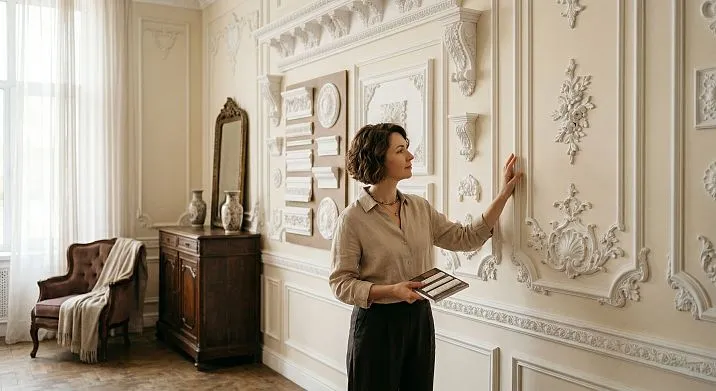
A wall is not just a plane between furniture and the ceiling. It is an architectural statement that either remains silent or speaks. Decorative molding on walls knows how to speak—quietly, but with character. Frame moldings, ornaments, pilasters, decorative panels—all of these transform an ordinary wall into a thoughtful visual story. And today, such solutions work not only in classic interiors but also in restrained modern presentations: a concise molding in the color of the finish on a dark blue wall is no longer just a story; it is contemporary design.
How to choose wall molding decor without overloading the room? Which elements are suitable for the living room, and which for the hallway? When does an ornament become an accent, and when is it a mistake? Let's break it all down step by step and to the point.




Why wall decor with stucco is back at the peak of interest
Ornate paneled wall clock
There was a period when the word 'stucco' evoked images of a dusty Soviet sanatorium—curlicues on the ceiling, heavy cornices, awkward excess. But that period is long gone. Today'swall decor with stuccois subtle, precise, and intentional.
Several things have changed. First, materials: polyurethane, MDF, modern polystyrene profiles allow for crisp relief without extra weight and with easy installation. Second, the approach: instead of 'decorating everything possible'—'choose one wall, one accent, one rhythm.' Third, style: stucco has moved away from strict classicism and entered neoclassicism, modern architectural presentation, and Scandinavian minimalism with details.
What specifically has changed in the perception of wall stucco?
-
Decor in the wall color works as architectural relief, without overloading the space
-
Geometric moldings on an accent wall have become a full-fledged design tool
-
Pilasters and architectural elements have returned to residential interiors as a status-conscious yet restrained accent
-
Decorative frames made from moldings have displaced traditional patterned wallpaper in the role of the 'main wall'
A wall with molding does not require paintings, expensive fabrics, or complex light fixtures. It is self-sufficient—and that is its main value for a modern interior.




What is included in wall molding decor: a complete overview of elements
Before making a choice—you need to understand what you are working with. Wall molding decor is not one type of product, but a whole system of elements with different functions, scales, and visual roles.
Our factory also produces:


Moldings: the basic tool
Moldings—these are profile strip moldings used to create frames, horizontal bands, area framings, and lines. This is the most versatile and popular element of wall molding. A molding can be from 10 mm to 12 cm or more in width, with a simple or complex profile.
What molding does on a wall:
-
Forms framed panels, breaking the wall into sections
-
Creates a horizontal 'chair rail' band at a height of 90–120 cm
-
Frames a mirror, niche, television, fireplace
-
Sets the rhythm and proportions of the wall
Get Consultation
Decorative frames
These are ready-made or composite frame structures made of moldings. Rectangular or square frames, arranged rhythmically on the wall, create the effect of architectural panel division. Frames can be single (one row) or double (outer and inner strips with a gap), with a more or less complex profile.
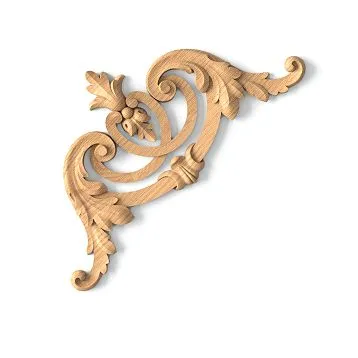
Ornaments and overlays
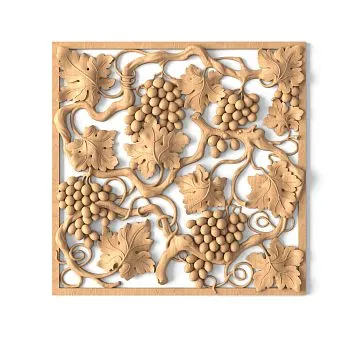
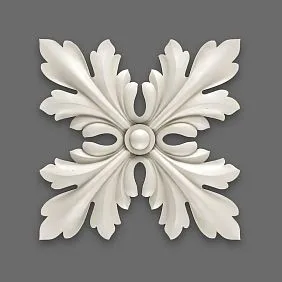
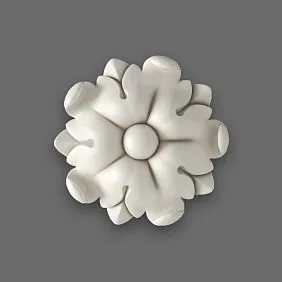
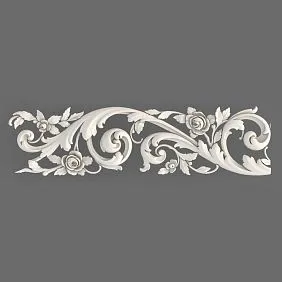
Relief decorative elements — floral motifs, geometric inserts, cartouches, medallions. They are used as independent accents in the center of a panel or as decorative inserts inside a frame. A wall ornament is good if it is the only one on the surface — then it reads as an artistic object.
Pilasters
pilasters— these are flat vertical decorative elements imitating a column. They fit flush against the wall, creating an architectural rhythm horizontally. A pilaster is a serious element: it raises the status of the interior, creates a sense of the significance of the space. Used in classicism, neoclassicism, Empire style.
Pilasters work effectively in pairs: symmetrically flanking a doorway, fireplace, or mirror. In a living room, a double pilaster on either side of the fireplace is an architectural accent that holds the entire wall.
Half-columns and columns
A more voluminous element than a pilaster. A half-column protrudes from the wall plane by half its circumference — it is more voluminous, visually heavier, and creates real three-dimensionality. Classic options are Doric, Ionic, and Corinthian orders. Used in representative formal spaces, halls, and studies.
Stucco panels
Decorative panels are a larger format. This can be a ready-made relief insert in a wall section, a panel with an ornament, or a smooth geometric panel framed by molding. Panels create a solid decorative zone, not a point accent.
Cornices and friezes
The upper horizontal element of the wall — the transition from the wall to the ceiling. A cornice frames the upper part of the wall, providing completeness. A frieze is a decorative band under the cornice or above the molding with an ornament. Both elements belong to the classical three-part division of the wall: panel zone — main field — entablature.
What problems does wall molding solve: function, not just decoration
The question 'why is wall molding needed?' is not rhetorical. Each of the listed elements has a specific design task, and knowing these tasks helps make the right decision.
Expressiveness and character of the wall
A bare, monochrome wall is a 'silent' background. Molding, a frame, or an ornament turns it into an architectural object. A wall with decor becomes an independent element of the interior, not just a neutral surface.
Space Zoning
Horizontal molding at a height of 120 cm clearly divides the wall into 'bottom' and 'top'—this is a classic technique of panel zoning. Vertical frame sections break up a long wall into equal parts, creating rhythm. In a living room-studio, moldings can visually mark a zone boundary without partitions.
Visual proportion correction
Molding can work with the geometry of a room:
-
Vertical moldings and pilasters stretch the wall upward—useful for rooms with low ceilings
-
A horizontal molding belt at one-third of the wall's height visually 'grounds' a room that is too tall
-
Narrow vertical frames in a small hallway create an effect of expanding the space
Creating an accent zone
An accent wall with molding is the most common scenario today. One wall is decorated with frame panels, while the others remain neutral. The eye of someone entering immediately focuses on the decor, and this is where the sofa, bed, fireplace, or mirror is placed.
In which styles does wall molding look impeccable?
Wall molding decor works across a wide stylistic range—from strict classic to modern architectural interiors. But the rules for selection differ in each case.
Classic and Empire
Here, maximum decorative richness is permissible: complex cornice profiles, ornamented belts, floral overlays, pilasters with capitals. In such an interior, molding is an organic part of the architectural language, not an embellishment on top of it. Colors: white, ivory, gold on relief details.
Neoclassicism
A more restrained approach. Moldings—yes, but with a simple, clean profile. Pilasters—yes, but without excessive capitals. Ornament—one, in the center, as an artistic accent. In neoclassicism, molding creates structure, not furnishing.Wall-mounted stucco decorPolyurethane molding is ideal here—it provides precise, 'cold' geometry without the handmade inaccuracy of plaster.
Modern classic
A symbiosis of classical forms and modern restraint. Frame panels made from molding in the wall color are the main tool. No ornament, no curls. Pure geometry, correct rhythm, one material. In such a room, molding feels like architecture, not decor.
Modern interior with architectural accents
The most non-obvious but very effective scenario. A dark blue or graphite wall with white moldings in the form of frame panels—this is not classic, it's modern design. Or gray moldings matching a dark gray wall: the relief is noticeable only with side lighting, creating a subtle play of light and shadow. This solution works in living rooms, bedrooms, and studies.
Where to apply molding decor in the interior: a room-by-room breakdown
Decorative wall molding works everywhere — but differently in each room. Let's explore specific scenarios.
Living Room
The main space in the house — and the main stage for wall decor. Everything is appropriate here: from framed panels to pilasters and fireplace surrounds. The most advantageous scenarios:
Accent wall with molding frames. The wall opposite the entrance or behind the sofa is divided into symmetrical panels. The size of the sections is proportional to the height of the wall. Inside the frames, you can leave plaster, apply a decorative finish, or hang paintings.
Fireplace wall with pilasters. The fireplace is flanked by two pilasters made of wood or polyurethane, with a molding cornice above it. This is a classic architectural scenario that works in any version of a classic interior. When choosingdecor for the fireplace area, it's important to consider the material — only fire-resistant elements should be used near the fireplace.
TV zone wall. The television is built into a niche or mounted on the wall, surrounded by a molding frame, with pilasters or symmetrical panels on the sides. This design 'integrates' the screen into the wall's architecture and eliminates the effect of a black rectangle on a white background.
Bedroom
Here, moderation is needed. An accent wall at the headboard is the main scenario. Molding frames, possibly an ornamental element in the center above the headboard, vertical notes of symmetry. The style of presentation should match the character of the bedroom: calm, rhythmic, without aggressive ornamentation.
Molding in the bedroom in the color of the wall is one of the best solutions. The relief is barely noticeable under direct lighting and becomes vividly apparent under side lighting — from a sconce or floor lamp. This creates a subtle atmosphere without visible effort.
Entryway
The hallway is the first thing a guest sees. Even a small element here works to its full potential. Horizontal molding at a height of 120–130 cm from the floor breaks up the vertical tube of a narrow corridor. Vertical frames on the walls make the space more proportionate.
In a wide hallway or foyerdecorative wall moldingcan be more saturated: frame panels around the entire perimeter, ornament above the archway passage, mirror framing with molding.
Office
Here, molding works as a tool of status and concentration. Strict vertical pilasters, deep panel frames, dark finish with contrasting moldings. No floral elements—only geometry.Pilasters made of woodin the study emphasize the seriousness of the space and create the right architectural atmosphere.
Dining Room
In the dining room, molding works well on the wall with a sideboard or cabinet, as well as on the wall opposite the window. A classic scenario is frame panels on the lower third of the wall combined with a molding frieze under the ceiling. This solution gives the dining room solemnity without excessive decor.
Niche
A decorated niche with wall molding is a winning technique. Molding frames the niche opening, inside—frame division or ornamental insert. The niche becomes an object, not just a recess in the wall.
Popular Scenarios for Wall Decoration with Molding
Specific examples are the best answer to the question 'what does it look like?' Let's examine the most in-demand formats.
Symmetrical frames across the entire wall
The most classic and stable scenario. The wall is divided into equal sections by rectangular molding frames. The height of the frames is typically from 40 to 80% of the wall height. The gap between frames is 5–10 cm. The color of the molding matches the wall color or is 1–2 shades lighter.
This technique works in any room, in any style—from classic to contemporary minimalism. It doesn't require expensive materials or complex installation, but the result gives the impression of thoughtful design.
Accent central composition
One large decorative element in the center of the wall—a medallion, ornament, or frame with an ornament inside. Everything else is a neutral background. This technique works in small rooms where there's no space for a full wall breakdown, but an accent is still needed.
Decorative molding around a mirror
Molding that forms a frame around a mirror is one of the most effective wall techniques. The mirror transforms from an everyday object into an architectural accent. The width of the molding is chosen proportionally to the size of the mirror: for small mirrors—3–5 cm, for large ones—up to 10 cm.Wall decoration with moldingsMolding around a mirror works in the bathroom (using moisture-resistant polyurethane), the bedroom, and the hallway.
Decorating the wall behind the sofa
An accent wall in the living room behind the sofa is the main working surface for decorative molding. The standard sofa height is 85–95 cm. Molding frames start from the floor and go up to the ceiling or form two tiers: the lower one up to the level of the sofa's top edge, the upper one—higher. This breakdown creates completeness and visually 'levels' the wall along the horizon.
Decorating the headboard of the bed
A rectangular or arched frame made of molding above the headboard replaces the headboard as such. Or complements it: a wide wooden panel plus molding framing around it—a status and calm result.
Decorative panels and inserts
Decorative inserts in wall sections are another popular technique. Between pilasters or within a large frame, a relief panel, decorative texture, fabric insert, or mirror element is placed. Each insert functions as an independent object within the architectural context of molding layout.
How to choose molding decor for a specific task: reference table
| Task | Element | Material | Notes |
|---|---|---|---|
| Light delicate decor | Thin molding up to 4 cm | Polyurethane, polystyrene | Suitable for any rooms |
| Accent wall with frames | Molding 4–8 cm | Polyurethane, MDF | The most versatile scenario |
| Classic interior | Pilasters, cornice, ornaments | Gypsum, wood, polyurethane | Requires scale and symmetry |
| Fireplace area | Pilasters, cornice | Gypsum, wood | Only fireproof materials |
| Mirror framing | Composite molding | Polyurethane | Selection proportional to the mirror |
| Cabinet, representative hall | Pilasters, columns | Wood, polyurethane | High detail |
| Small room | Thin molding in wall color | Polystyrene, polyurethane | Without ornamentation |
| Modern presentation | Geometric frames | Polyurethane, MDF | Simple profile, no curls |
How to combine wall molding with other materials
wall decoration with molded decoration— it is not an isolated element, but part of a material ensemble. How to properly build combinations?
Moldings and painting
The most common combination. The wall is painted, the moldings are the same color or with a slight difference. This is 'quiet' molding that creates architecture without overloading the space. Monochrome decor works well in bedrooms, studies, and living rooms in calm tones.
Contrast painting is another technique. White moldings on a dark wall (olive, anthracite, blue) create a clear, readable pattern. This is a modern, confident presentation.
Molding and decorative plaster
Textured plaster looks excellent inside molding frames: Venetian, travertine, fine graphite. The molding acts as a frame for the 'artistic canvas,' and the plaster inside serves as a textural filler. This combination works in living rooms, bedrooms, and restaurant and hotel interiors.
Moldings and panels
Decorative panels made of solid woodin combination with molding frames is one of the most expressive and at the same time status solutions. Wood and molding create a contrast of tactile sensations: texture versus relief. This looks especially advantageous in the lower part of the wall: wooden panels up to the 'chair rail' level, above — molding frames and ornaments.
Molding and mirrors
A mirror in a molding frame has already been discussed above. But mirror inserts inside molding frames are a separate technique. A small mirror panel in a frame, flanked by pilasters, creates a depth effect and enhances the sense of space.
Moldings and sconces, spot lighting
Side lighting is the best way to reveal molding. Sconces placed on the sides of an accent wall provide diffused light at an angle—and the relief of moldings, frames, and ornaments comes to life: the depth of shadows emphasizes the shape. Built-in narrow LED profiles under the lower edge of molding shelves or cornices create a similar effect.
Moldings and furniture
Furniture and molding should exist in a unified stylistic register. Concise geometric molding does not pair well with bulky Baroque carved furniture—and vice versa. The general principle: the richer the ornamentation of the molding, the more restrained the furniture should be, and vice versa.
How to avoid overloading an interior with molding: important rules
Molding is a powerful tool. But like any powerful tool, it requires careful handling. Overloaded decor is worse than its complete absence.
Rule of one accent
Choose one wall. Create a decorative story with molding there. The other walls serve as a neutral background. Attempting to decorate all four walls at once leads to visual chaos.
Rule of Scale
The profile of the molding should be proportionate to the room. In a 12 m² room, a 10 cm wide molding will be overwhelming. In a 50 m² hall, a 2 cm molding will get lost. A guideline: the width of the main wall molding = 1–1.5% of the room's height.
Rule of rhythm
Frame panels should be rhythmic—equal intervals, proportional height-to-width ratios. Asymmetry works only as an intentional artistic technique. Sloppy or random asymmetry ruins everything.
Rule of 'one style'
Do not mix floral classical molding with geometric minimalist moldings on the same wall. Choose one stylistic direction and follow it from the first molding to the last ornament.
Rule of color restraint
Three colors in stucco decor is already too many. Ideal: one wall color and one stucco color (the same, slightly lighter or slightly darker). Gilding on ornament details is acceptable, but only in a classic interior and only in moderation.
Common mistakes when decorating walls with stucco
Knowing common mistakes in advance makes them much easier to avoid.
Mistake 1. Too complex decor for a small room
Heavy ornaments, wide cornices, and dense frames in a 9–12 m² space turn the room into a cramped box. For a small room — only thin molding in the wall color, only one accent.
Mistake 2. Incorrect scale of elements
Too small moldings on a large wall look hesitant. Too large ones look aggressive. The scale should be selected based on the area and height of the specific wall, not just choosing 'what you liked'.
Mistake 3. Conflict with furniture style
Classical ornaments with swirls and modern high-tech style furniture is a war, not an interior. Before purchasing stucco decor, make sure the style registers are compatible.
Error 4. Excess of small details
Too many small decorative overlays on one wall create visual noise. One large accent is better than twenty small ones. A mosaic of patterns does not create architecture—it creates clutter.
Error 5. Lack of a compositional center
A wall with molding should have a focal point—a mirror, fireplace, painting, or niche. Decoration for decoration's sake, placed on the wall without logic, doesn't work. Start with the 'center' and build the molding around it.
Error 6. Molding installed at the wrong stage of renovation
Moldings and relief elements are installed before the final wall painting. If you glue them afterward, seams and joints will be difficult to paint over, and dust from the finishing putty will settle on already painted surfaces.
Error 7. Ignoring frame proportions
Frame panels with aspect ratios that do not match the proportions of the wall itself look random. Focus on the classic 'golden ratio': frame ratios of 3:5, 2:3, 1:2—these proportions work instinctively.
How to choose wall molding decor: a practical algorithm
To avoid confusion in your choice, use a simple sequence.
Step 1. Define the task. Accent, zoning, visual correction, or simply 'I want it to look beautiful'? The task dictates the format of the decor.
Step 2. Determine the scale. Wall area, room height, viewing distance — all of this influences the choice of molding profile and ornament size.
Step 3. Choose a style. Classic, neoclassical, contemporary presentation — the stylistic context determines everything: profile shape, presence of ornamentation, color scheme.
Step 4. Choose the material. For DIY installation — polyurethane. For a classic, expensive interior — plaster or wood. For wet areas — polyurethane. Near a fireplace — only plaster or wood.
Step 5. Create a layout drawing. On paper or in a simple program, indicate where the frames will be, the margin from the edges, and the spacing between elements. This will take 20 minutes and save several hours during installation.
Step 6. Check compatibility. Compare the selected elements with the wall finish, furniture, and textiles. Everything should work as a unified ensemble.
Wall molding in interior design: modern trends
What's currently trendy in wall decor with molding — and why it works?
Monochrome. Molding in the color of the wall — a key trend of recent years. No white on cream or gold on white. Only one color, only relief.
Minimalist profile. The simpler the molding shape, the more contemporary the result. Square and rectangular sections, without pear-shaped or oval profiles with volutes.
Tall frames. Floor-to-ceiling frame panels are a bolder and more architectural approach than the classic lower third of the wall. This works in modern classic and neoclassical styles.
Dark wall with molding. Anthracite, dark blue, bottle green plus moldings in the same tone or slightly lighter — one of the strongest contemporary techniques.
Molding in the bathroom. Moisture-resistant polyurethane allows the use of moldings and frame panels in bathrooms. This elevates the finish to SPA level without significant costs.
FAQ: answers to popular questions about wall decoration with molding
What is wall molding decoration and how does it differ from ceiling molding?
Wall molding refers to decorative elements mounted on vertical surfaces: moldings, frames, pilasters, ornaments, panels. Unlike ceiling decor, wall molding works at eye level and directly interacts with furniture, textiles, and lighting.
What is the best material for wall molding decoration?
For most living spaces, the best choice is polyurethane: lightweight, durable, moisture-resistant, easy to install. For classic, representative interiors — plaster or wood. Near fireplaces — only fire-safe materials.
How to choose a wall molding: by width or by profile?
First — by scale: the width should be proportionate to the wall area. Then — by profile: for a modern interior, choose simple straight or rectangular profiles; for classic styles — pear-shaped, oval, composite profiles.
Can molding be used in a small room?
Yes, but only thin moldings (up to 4 cm) in the wall color and one accent element. In a small room, molding should create proportion, not additional visual noise.
How to make molding match the wall color?
The installed molding is primed and painted with the same paint as the wall. Two thin coats—and the relief visually integrates into the surface.
Where does wall molding look best?
Best results: living room (accent wall behind the sofa), bedroom (headboard area), study (work wall), hallway (horizontal belt), fireplace zone.
How do pilasters differ from regular moldings?
Molding is a horizontal or frame-like linear element. A pilaster is a vertical architectural element imitating a column. A pilaster works as an independent architectural accent, molding—as structure-forming.
Does the wall need to be leveled before installing molding?
Yes. Molding on a crooked wall emphasizes unevenness. The wall must be level, primed, and dry.
Can moldings be glued onto wallpaper?
Not recommended: adhesive may peel wallpaper along with molding. Better to remove wallpaper in installation areas or plan moldings before wallpapering from the start.
How to avoid overloading interior with moldings?
One accent wall, one style of elements, molding in wall color or 1–2 shades different, simple profile for small rooms, no ornament on multiple walls simultaneously.
About the company STAVROS
When it comes to high-quality wall molding decor, the professionals' choice is STAVROS. The company with twenty years of manufacturing experience specializes in decorative elements made of polyurethane, MDF, and solid wood for interiors and facades.
STAVROS assortment covers the entire spectrum of wall decor:Moldings for wallsin a wide range of profiles and sizes,pilasters and decorative columnsmade of natural wood, ornaments, cornices, capitals, and architectural elements for any styles – from strict classics to contemporary architectural presentation.
All STAVROS products are made from certified European materials, feature high relief detailing, moisture resistance, and fire safety. The company is a laureate of the 'Industry Leader of Russia' title and provides nationwide delivery – enabling projects of any scale regardless of geography.
Want to turn an ordinary wall into an architectural statement? STAVROS is precisely the tool that will allow you to do it accurately, beautifully, and for the long term.Browse the full catalog of molding decorand find solutions that will perfectly fit into your interior.