Article Contents:
- Why polyurethane decor is in demand in interior design
- How polyurethane decor is convenient for apartments and houses
- Why it is chosen for classical and modern interiors
- When polyurethane interior decor is especially appropriate
- What types of polyurethane decor can be chosen in Moscow
- Moldings for walls and decorative frames
- Cornices for decorating the wall and ceiling joint
- Ceiling rosettes for chandeliers and accent decor
- Pads and Decorative Inserts
- Baseboards and finishing profiles
- Wall decor: collections and solutions
- Ceiling decor: the complete arsenal
- Combined interior compositions
- Where polyurethane decor is used for interiors
- In the living room
- In the bedroom
- In the hallway and corridor
- In the study
- In the kitchen-dining room
- In offices, salons, and commercial spaces
- How to choose polyurethane decor to match the interior
- By room style
- By room size
- By ceiling height
- By purpose: accent, framing, zoning, finishing
- By combination of several elements
- What to choose for different interior zones
- For walls
- For ceiling
- For doorways
- For niches and accent zones
- For large empty walls
- For a restrained decorative effect
- How to use polyurethane decor in interiors without overloading
- When moldings are enough
- When accent overlays are needed
- How to combine wall and ceiling decor
- Why it's important to consider room proportions
- How to assemble a harmonious decorative system
- Advantages of polyurethane decor for interiors
- Lightness and practicality
- Wide selection of shapes and profiles
- Suitable for various interior scenarios
- Expressive relief and neat geometry
- Convenience of creating a cohesive composition
- What mistakes are most often made when choosing interior decor
- Elements are chosen individually, not as a system
- Not considering room size
- Overloading the wall with complex decor
- Mixing incompatible profiles
- Do not consider interior style
- How to buy polyurethane decor in Moscow and not make a mistake
- Determine which zone needs decoration
- Choose element type for the task
- Check dimensions and proportions
- Immediately plan the combination of several elements
- Compare solutions for walls, ceilings and accent zones
- Checklist before choosing polyurethane decor
- Comparison table for types of interior polyurethane decor
- FAQ: Answers to Popular Questions
- Which polyurethane decor is best suited for the interior?
- What to choose for walls: moldings or overlays?
- Which decor is better to use on the ceiling?
- Is polyurethane decor suitable for a small room?
- Can several types of decor be combined in one room?
- Where to buy polyurethane decor in Moscow?
- How to choose decor for a neoclassical interior?
- How to decorate an accent wall with polyurethane decor?
- Conclusion

There are questions that are difficult to answer with a single word. For example: what exactly turns an ordinary room into a thoughtful space with character? Furniture — of course. Lighting — absolutely. But it is the decorative elements that become that very focal point which gives the interior completeness, style, and history. And when it comes to a practical, durable, and truly expressive solution,Polyurethane Decorholds a special place in the arsenal of modern design.
Moscow is a city where renovations are constant and the demands for results are consistently high. People want not just a functional space, but a stylish, meaningful one, a place they want to live in. That is precisely whypolyurethane decor for interiorshas become one of the most sought-after finishing tools — for both apartments and offices, restaurants, salons, and country houses.
This article is not for those who want a general idea of what polyurethane is. It is for those who have already decided to use this material and want to understand: what exactly to choose, for which area, for which style, how to avoid mistakes, and how not to overload the interior with unnecessary details.



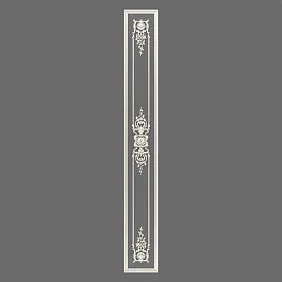
Why polyurethane decor is in demand in interior design




Why polyurethane decor is convenient for apartments and homes
Interior trends come and go, but some solutions remain relevant regardless of fashion—because they work. Polyurethane decor is precisely one of those solutions.
The first thing everyone notices when working with this material for the first time is its exceptional lightness. Polyurethane weighs several times less than plaster and even less than natural stone. This means installation doesn't require complex fasteners, doesn't burden the wall structure, and doesn't need additional reinforcement. You can mount molding, cornice, or ceiling rosette yourself using special adhesive—without a hammer drill, without bolts, without a team of installers.
The second advantage is precision of relief. Polyurethane is pressure-cast into metal molds, producing perfectly clear and repeatable patterns. No chips, shifts, or irregularities—every element comes out of the mold with identical accuracy. This is crucial when creating symmetrical decorative systems where moldings must match precisely over several meters of wall.
Third—moisture resistance. Polyurethane isn't afraid of humidity fluctuations, doesn't swell, and doesn't crack from temperature changes. Thanks to this, it can be used in kitchens, bathrooms, hallways, and any areas with unstable microclimates.
Fourth—versatility in painting. Polyurethane surface accepts any paints well: water-based, alkyd, acrylic. Decor can be painted to resemble white classical stucco, aged gold, dark anthracite—or matched to the wall color, where it works as a textural accent rather than a color spot.
Our factory also produces:


Why it's chosen for classical and modern interiors
There's a common misconception thatPolyurethane decor for interiorsis exclusively 'classical': swirls, baroque, empire, rosettes with petals. In reality, the range of profiles is much broader and richer.
For classical interiors, there are richly ornamented moldings with botanical motifs, multi-tiered cornices, rosettes with lush relief. For neoclassical—more restrained profiles with clean geometry and minimal ornamentation. For modern interiors—strict rectangular moldings, flat frames, concise ceiling cornices without decoration. Company STAVROS produces collections covering this entire range: from 'Versailles' and 'Peterhof' to 'Neoclassic', 'Neoclassic Light' and 'Japandi'.
In other words, polyurethane decor isn't tied to a single style. It follows the design rather than dictating it. That's why designers working with both lavish eclecticism and strict minimalism use it.
Get Consultation
When polyurethane interior decor is especially appropriate
There are several scenarios where this particular material proves to be the optimal choice.
Renovation of an apartment in an old building. High ceilings, long corridors, arched openings — all of this creates the perfect context for stucco decor. But plaster stucco would be too heavy and expensive here. Polyurethane cornices, moldings, and rosettes allow you to recreate the atmosphere of an old Moscow interior without structural intervention.
A modern apartment in a new building. Empty white walls look neutral but lifeless. A few moldings on the wall, a ceiling cornice, and a rosette for a chandelier — and the space gains completeness and character.
Commercial premises. A restaurant, hotel, office, showroom — here decor works as a tool for atmosphere creation and branding. Properly selecteddecorative polyurethane elementsset the tone, style, and level of the establishment.
What types of polyurethane decor can be chosen in Moscow
Before discussing how to choose, it's important to clearly understand what exactly falls into this category. The assortment is significantly wider than it seems at first glance — and each type of product solves its own task.
Moldings for walls and decorative frames
Moldings made of polyurethane— the most universal type of decor. A molding is a profile strip with a relief or smooth front surface, which is attached to a wall, ceiling, or around the perimeter of an opening.
Main scenarios for using moldings:
-
creating decorative frame-panels on walls;
-
decorating the perimeter of a room along the wall and ceiling line;
-
framing mirrors, paintings, niches, TV zones;
-
zoning walls by height — separating the lower panel zone and the upper one;
-
decorating slopes, door and window openings.
Molding profiles can be rectangular, oval, with a smooth surface, or with a relief ornament — from modest geometric patterns to complex floral designs. In width, they range from 2 to 15 centimeters or more. There are also flexible moldings — for decorating arches, columns, and walls with complex geometry.
Cornices for decorating the wall and ceiling junction
Polyurethane Crown Molding— profile elements that cover the transition between the wall and ceiling. This is one of the most noticeable interior details: the cornice is visible from any point in the room, forms a visual boundary of the space, and sets its scale.
A narrow cornice with a simple profile gives the room a modern, restrained look. A wide multi-tiered cornice with ornament creates a sense of classical stucco, richness of detail, and historical style. A properly chosen cornice can visually raise the ceiling or, conversely, make a tall room more cozy and proportionate to a person.
Important: the width of the cornice should be proportional to the room. In a room with a 2.7 m ceiling, a cornice 6–10 cm wide is appropriate. With a height of 3.5 m or more — you can choose profiles 15–20 cm wide or more, creating multi-tiered solutions.
Ceiling rosettes for chandeliers and accent decor
ceiling rosettes— one of the most expressive decorative elements. They are located in the center of the ceiling, typically around the chandelier suspension point, and create an accent decorative node.
Ceiling rosettes come in round, square, with petal ornamentation, with geometric patterns, small (diameter from 20 cm) and large (up to 80–100 cm and more). The choice depends on the ceiling area, chandelier size, and interior style. In high rooms, massive rosettes with rich relief are appropriate. In standard apartments — more laconic ones, with a clear but not overloaded pattern.
Ceiling rosettes are also used not only for chandeliers but also as an independent accent in the center of the ceiling plane — especially with spot lighting, when the rosette becomes a decorative medallion.
Overlays and decorative inserts
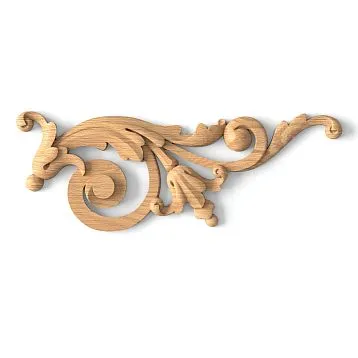
Polyurethane appliqués— are three-dimensional decorative elements that are mounted on the surface of a wall or ceiling to create accents. Unlike moldings, they do not form long linear profiles but represent separate shaped parts: corner elements, decorative 'roses', keystones over openings, inserts with plant ornamentation.
Overlays work well where a local accent needs to be created — without overloading the entire space but highlighting the desired point. Corner overlays complete a frame made of moldings. Keystones emphasize an arched opening. Decorative inserts add rhythm to a long monotonous wall or decorate a frieze under the ceiling.
Baseboards and finishing profiles
Polyurethane Baseboards— the lower boundary of the wall, its visual 'podium'. It seems like an inconspicuous detail — but it is the baseboard that determines the feeling of completion of the renovation. A flat, thin baseboard looks modern and minimalist. A wide profiled baseboard with a cavetto — classic and substantial.
Polyurethane baseboard is not afraid of moisture, easily painted in any color, and cuts well to the desired angle. It reliably protects the joint between the wall and floor from mechanical damage and remains precise in details — the relief does not crumble or chip from accidental impacts.
Wall decor: collections and solutions
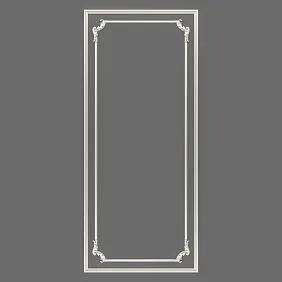
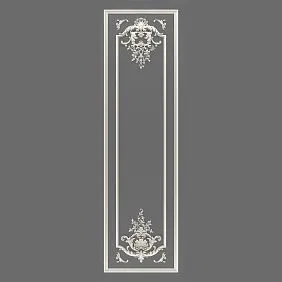
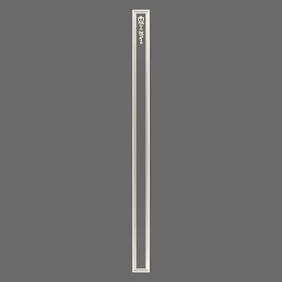
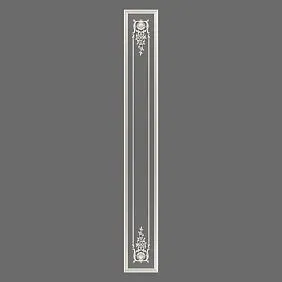
Polyurethane wall decor— a separate large category, including decorative panels, frames, pilasters, half-columns, corner elements. STAVROS collections cover a wide stylistic range: from classic 'Versailles' and 'Peterhof' to modern 'Neoclassic', 'Japandi', and laconic 'Neoclassic Light'.
Decorative wall panels are elements of regular geometric shape with a three-dimensional relief pattern on the front surface. They are used to create accent walls, decorate a bed headboard, design a TV zone, and zone open-plan spaces. The relief surface of the panels creates a play of light and shadow, giving the wall volume and expressiveness.
Ceiling decor: the full arsenal
polyurethane ceiling decorincludes cornices, rosettes, ceiling moldings, friezes, and more complex compositional solutions. Ceiling decor works differently than wall decor: it is immediately visible, sets the first impression of the room, and defines its 'ceiling' in both literal and figurative senses.
Combined interior compositions
The most expressive result comes not from using one type of decor, but from creating a system—when the cornice, moldings, rosette, and baseboard are selected from the same collection or from compatible profiles. Such a system works as a visual framework for the interior: it structures the space, sets the rhythm, and creates a sense of integrity.
Exactly thereforePolyurethane moldings—cornices, moldings, baseboards in a unified profile—are so popular among designers: they allow creating a decor system where each element complements the other.
Where polyurethane interior decor is used
In the living room
The living room is the main representative space of an apartment or house. This is where decor works to its fullest potential. For the living room, the use of decorative frames made from moldings on an accent wall behind the sofa or in the TV area, a wide ceiling cornice around the entire perimeter, and a rosette for the central chandelier are typical.
If ceiling height allows—two- or three-tier cornices are appropriate, creating a sense of monumentality. In living rooms with panoramic windows, moldings organize the rhythm of the wall, balancing large light openings. In classic interiors, pilasters on the sides of the TV niche create a theatrical stage effect.
In the bedroom
The bedroom requires a delicate approach: decor here should create coziness and tranquility, not excitement or overload. For the bedroom, medium-profile moldings forming a frame above the bed headboard are ideal—this technique visually 'frames' the rest area and gives it an accent status.
A ceiling rosette for the chandelier above the bed creates a symmetrical accent and adds completeness to the interior. A cornice around the perimeter is optional but a pleasant touch, especially if the ceiling is high. Decor in the bedroom is best done in the same tone as the walls or with minimal contrast—so it is perceived as texture, not as a color spot.
In the hallway and corridor
The hallway is the first space a guest sees and the last thing the owner notices when leaving. Here, concentration is important: one or two expressive elements work better than an overloaded wall.
Perimeter molding around the mirror in the hallway is a classic and always appropriate solution. A cornice under the ceiling in a narrow corridor visually raises the space. Overlays above doorways give the corridor an architectural character — not just a transitional zone, but part of a cohesive interior.
In the study
The study — a space for intellectual work and personal style. Herepolyurethane decor for interiorsit can be more saturated than in the bedroom, but more restrained than in the formal living room.
A panel of moldings on the wall behind the desk, pilasters on the sides of the bookcase, a cornice around the perimeter — such a system creates the atmosphere of a study in a classic mansion, where it's pleasant to think and make important decisions. The decor here works as an architectural background, shaping the mood.
In the kitchen-dining room
In the kitchen, polyurethane decor should be pragmatic: moisture-resistant, easy to clean, not accumulating dust in complex reliefs. Concise perimeter moldings on the ceiling, a simple cornice, a neat baseboard — a minimal set that nevertheless transforms the space.
In the dining area, if it is separate, a more saturated decorative solution is appropriate: frames made of moldings on the wall, a ceiling rosette above the dining table. This visually highlights the dining zone and gives it significance.
In offices, salons, and commercial spaces
In commercial space, decor performs branding and atmosphere-forming functions. A restaurant with cornices and moldings in a classic style is perceived differently than the same restaurant without decor. A hotel with properly selected decorative elements gains a sense of level without expensive architectural solutions.
In offices and meeting rooms, strictWall Decor— moldings as frames, a concise cornice — creates a professional atmosphere and demonstrates attention to detail. For spas and beauty spaces, decor in soft classicism forms a feeling of relaxed comfort.
How to choose polyurethane decor to match the interior
Based on the style of the room
Style is the first and main guideline when choosing decor. Before looking at the catalog, you need to clearly answer the question: in what direction is the interior designed?
-
Classicism, neoclassicism, baroque — rich profiles, floral ornaments, multi-tiered cornices, lush rosettes, pilasters with capitals.
-
Modern style, minimalism — simple rectangular moldings, smooth cornices, concise rosettes without complex relief.
-
Art Deco — geometric patterns, stepped profiles, vertical accents.
-
Eclecticism — a mix of elements from different styles, united by a color scheme.
By room size
This rule is simple but often ignored: decor should be proportional to the room. A large, wide cornice in a small room 'eats up' space and creates a feeling of pressure. A thin, elegant molding in a spacious hall gets lost and looks random.
For rooms up to 15 sq. m — profiles up to 5–6 cm wide, small rosettes, minimal decor. For rooms 20–35 sq. m — medium profiles, moldings 6–10 cm, rosettes 30–50 cm in diameter. For large halls — wide cornices, large rosettes, a systematic approach.
Based on ceiling height
Ceiling height is the second key parameter. With a standard height of 2.5–2.7 m, you should choose compact profiles that do not weigh down an already low space. With a height of 3 m or more, the possibility for more saturated decor opens up.
Rule: the higher the ceiling, the more massive the cornice can be. A high ceiling without a cornice looks unfinished—the cornice 'closes' the upper boundary and makes the space proportionate.
By function: accent, framing, zoning, finishing
Each decorative element serves a specific purpose:
-
Molding—framing, creating borders, horizontal or vertical zoning;
-
Cornice—finishing the wall at the upper boundary, a visual transition to the ceiling;
-
Rosette—an accent center on the ceiling, framing the chandelier;
-
Overlay—a local accent, decoration of joints and connections;
-
Baseboard—lower finishing of the wall, a visual 'podium' of the room.
By combining several elements
The most common mistake when working with decor is selecting elements individually without considering the system. Molding from one collection, cornice from another, rosette from a third—instead of a cohesive interior, you get a random set of unrelated details.
Rule of the systematic approach: choose elements from the same collection or from profiles that are compatible in style and scale. Then the cornice, moldings, and baseboard will work as a unified decorative language for the room.
What to choose for different interior zones
For walls
Polyurethane wall decor— primarily includes moldings, decorative panels, and frames. On walls, they create a rhythmic structure, break up a monolithic plane into visual zones, and give the surface architectural expressiveness.
For walls in a classic interior — vertical panels made of moldings with ornamental overlays at the corners of the frames. For a modern interior — smooth rectangular frames without decoration, executed in the same tone as the walls. For an accent wall — panels with a relief pattern covering the entire surface.
For the ceiling
ceiling decor— cornices, rosettes, ceiling moldings. On the ceiling, decor works with particular strength: it sets the scale of the room, creates a sense of completeness, and 'closes' the upper plane.
Minimal ceiling decor — a cornice around the perimeter and a rosette in the center. This already creates a feeling of a decorated, lived-in space. A more saturated option — ceiling molding with a frieze, a rosette with rich relief, decorative inserts in the corners.
For doorways
The doorway is an active zone of the interior; it constantly falls within the field of vision. Proper framing of the opening visually 'builds' the architecture of the room. Moldings around the door perimeter, overlays above the lintel, keystones above arched openings — each of these elements works as a small architectural detail.
For modern interiors — smooth frames made of simple profiles. For classic styles — profiled architraves with corner overlays.
For niches and accent zones
Niches in walls are an ideal place for decor. Moldings around the perimeter of the niche, a rosette or decorative insert in the upper part — and the niche transforms from a functional recess into a decorative element of the interior.
Accent wall decorateddecorative inlaysor panels with a relief pattern, becomes the visual center of the room. This works especially effectively in combination with directional lighting: chiaroscuro emphasizes the relief and creates depth.
For large empty walls
A large empty wall is both an opportunity and a problem at the same time. Without decoration, it looks monotonous. A few horizontal moldings dividing the wall into zones, or a series of vertical panels — and the wall turns into a full-fledged architectural element.
For a restrained decorative effect
Not every interior requires rich decoration. Sometimes one neat cornice around the perimeter and a small rosette in the center of the ceiling are enough — and that is already sufficient to give the space a sense of completeness. Minimalism in decor is not the absence of decor, but a correctly chosen minimum.
How to use polyurethane decor in an interior without overloading it
When are moldings enough
Moldings are the most delicate decorative tool. They do not claim the main role, but they create a sense of order and architectural quality. If the room is small or the style implies restraint — moldings alone are enough.
Two or three horizontal moldings on a living room wall, dividing it into zones — that is already decor. Molded frames on an accent wall in a bedroom — that is already character. A molding around the perimeter of the ceiling instead of a full cornice — that is already completeness.
When accent overlays are needed
Overlays are appropriate where a local accent needs to be created without overloading the entire space. They work as a finishing touch — corner elements in molded frames, decorative 'roses' at profile intersections, keystones above openings.
Overlays should not 'shout' — they should add detail and depth. Therefore, it is better to choose them from the same collection as the moldings.
How to combine wall and ceiling decor
Wall and ceiling decor should speak the same language. If the walls have strict rectangular moldings, the ceiling cornice should also be laconic. If the walls feature rich classical profiles, the cornice and rosette can be more elaborate in relief.
The principle of style unity is not about selecting identical elements, but about coordinating scale, ornament, and mood.
Why it's important to consider room proportions
Decor that disrupts proportions ruins an interior more than its absence. A too-wide cornice in a low room feels oppressive and creates a claustrophobic effect. Too-small moldings in a large hall look like a random detail lost on a vast plane.
Golden rule: the height of the cornice should be approximately 1/10–1/12 of the ceiling height. The width of a molding frame should be no more than 1/3 of the wall width.
How to assemble a harmonious decorative system
A harmonious decorative system is built on the principle from general to specific:
-
Determine the interior style and select the corresponding collection.
-
Choose the 'heavy' elements — the cornice and baseboard — which set the tone.
-
Add wall moldings — they form the middle link of the system.
-
Finish with a ceiling rosette and overlays at nodal points.
Such a system creates an interior where everything is connected — not formally, but in spirit and scale.
Advantages of polyurethane decor for interiors
Lightweight and practical
Polyurethane density ranges from 150 to 420 kg/m³ — this ensures an ideal balance between strength and weight. Installation does not require special tools and is done with adhesive in a few hours. Polyurethane is resistant to temperature fluctuations in the range from −60 to +80°C — this means it can be used even in unheated rooms, on glazed balconies, in country houses with periodic heating.
Wide selection of shapes and profiles
Catalogpolyurethane products from STAVROSincludes dozens of collections and hundreds of profiles — from minimalist to lavishly ornamented. This means that for any task, any style, and any room, you can find an exact solution, not an approximate analogue.
Suitable for different interior scenarios
Polyurethane decor works equally well in private apartments, country houses, commercial premises, and public spaces. It does not require special storage, installation, or operating conditions — and yet maintains a flawless appearance for decades.
Expressive relief and neat geometry
Casting precision ensures perfect profile repeatability—each element in a batch matches the previous one. This is fundamentally important when creating long linear profiles: joints are almost invisible, and the profile looks monolithic. The relief remains clear and does not crumble—polyurethane does not chip, flake, or crack during use.
Ease of creating a cohesive composition
Since all elements are produced within collections with unified stylistic and scale principles, creating systematic decor is significantly simplified. There is no need to 'match' elements from different manufacturers—just choose a collection and equip it by zones.
What mistakes are most often made when choosing interior decor
Elements are chosen individually, not as a system
This is perhaps the most destructive mistake. A beautiful molding chosen separately from the cornice, and a rosette from another collection—ultimately create a sense of randomness, not design. The decor is perceived as a 'set of random elements,' not as a thoughtful system.
Not considering the room size
A wide, massive cornice in a small hallway turns it into a dark tunnel. A thin molding in a large hall gets lost on the wall and does not create the desired effect. Always consider size first, then the profile.
Overloading the wall with complex decor
Several rows of moldings, plus overlays, plus pilasters, plus decorative panels—all together turn into visual noise. Decor should structure the space, not compete with furniture and lighting for attention.
Mixing incompatible profiles
Baroque ornament next to geometric Art Deco—this is a stylistic conflict that destroys the sense of unity. You can only mix what is compatible in character: for example, classic with neoclassical—but not Baroque with minimalism.
Do not consider interior style
Polyurethane molding in the 'Versailles' style in an apartment with Scandinavian minimalism is not an 'interesting solution', but a crude stylistic violation. Decor should support the interior style, not argue with it.
How to buy polyurethane decor in Moscow without making a mistake
Determine which zone needs decor
First of all, answer the question: where exactly is decor needed? Walls, ceiling, openings, niches - each zone has its own logic and its own tools. There's no need to try to decorate everything at once: it's better to choose a priority and start with it.
Choose the type of element for the task
Having decided on the zone, choose the type of element. For walls - moldings and panels. For the ceiling - cornice and rosette. For openings - architraves and overlays. For the lower boundary of the wall - baseboards. For accent points - decorative overlays.
Check the dimensions and proportions
Before ordering, be sure to measure the room: ceiling height, wall width, opening sizes. Based on this data, select profiles that will be proportional to the space - and allow a 10-15% reserve for cutting and joints.
Immediately consider the combination of several elements
Don't order one element hoping to 'add the rest later'. Immediately decide whether it will be a system - cornice + moldings + rosette + baseboard - or a limited accent. This will help avoid a situation where one beautiful element turns out to be incompatible with the rest of the interior.
Compare solutions for walls, ceiling, and accent zones
Before making the final choice, review all three directions:Wall Decor, ceiling decorandoverlays for accent zones. Even if you only need wall moldings — make sure a suitable ceiling cornice exists in the same collection, otherwise in the future you'll find yourself in a situation where there's nothing to complete the system with.
Checklist before choosing polyurethane decor
Before opening the catalog and placing an order, go through this list — it will save time and prevent mistakes:
-
For which room is the decor needed — living room, bedroom, study, hallway, office?
-
Which areas need to be decorated — walls, ceiling, openings, or comprehensively?
-
What interior style — classic, neoclassic, modern, art deco, Scandinavian?
-
What are the room dimensions — area, ceiling height, opening widths?
-
Do you need a calm composition or accent decor — a restrained background or an expressive accent?
-
Do you need a single element or a system—just a cornice, just moldings, or a full set?
-
How will the decor coordinate with furniture and finishes—color, scale, style?
Comparison table for types of polyurethane interior decor
| Element type | Where it is used | What effect it gives | When is it better to choose |
|---|---|---|---|
| Molding | Walls, ceiling, reveals, frames | Structures the surface, creates frames and panels | When you need to organize a wall or frame an area |
| Cornice | Wall and ceiling junction | Visually raises the ceiling, finishes the upper boundary | Always—as a basic element of the decorative system |
| Ceiling rosette | Center of the ceiling | Creates an accent focal point, frames the chandelier | When there is central lighting or accent on the ceiling is needed |
| Overlay | Walls, ceiling, nodes and connections | Adds local accent and detailing | As a final touch in a decorative system |
| Baseboard | Lower wall boundary | Completes the wall from below, protects the floor-wall joint | In any room as a mandatory finishing element |
| Decorative panel | Accent walls | Creates a relief accent surface with light play | For accent wall behind sofa, bed, in TV zone |
| Pilaster | Walls, on the sides of openings | Vertical rhythm, architectural expressiveness | In classical and neoclassical interiors |
FAQ: Answers to popular questions
Which polyurethane decor is best suited for the interior?
There is no single correct answer — everything depends on style, space, and task. For classical interiors, moldings with ornament, cornices with profiled relief, and rosettes with lush patterns work best. For modern spaces — laconic rectangular profiles, smooth cornices, minimalist rosettes.
What to choose for walls: moldings or overlays?
Moldings and overlays are not competitors, but partners. Moldings create linear structure — frames, horizontal belts, zoning. Overlays add detailing — decorate corner joints, create local accents. The best result is their combined use within a single system.
Which decor is best to use on the ceiling?
For the ceiling, the basic choice is cornice and rosette. The cornice covers the transition to the wall and visually organizes the space. The rosette creates the center of the ceiling composition. Additionally, ceiling moldings or frieze can be added — but only if the ceiling height allows.
Is polyurethane decor suitable for a small room?
Yes — with the correct choice of scale. In a small room, thin profiles, simple frames, and small rosettes are needed. Properly selected decor will not make a small room feel cramped — it will add structure and character to it. The mistake is choosing massive profiles without considering the size of the room.
Can multiple types of decor be combined in one room?
Yes, you can and should — if we are talking about a systematic approach. Cornice + moldings + rosette + baseboard from one collection — that is a complete decorative system. The problem arises when elements from different collections or styles 'meet' in one room without logic and connection.
Where to buy polyurethane decor in Moscow?
Full rangepolyurethane products— cornices, moldings, rosettes, baseboards, overlays and decorative panels — is presented on the STAVROS website with the possibility of ordering and delivery to Moscow and all of Russia.
How to choose decor for a neoclassical interior?
For neoclassicism, choose profiles with clean geometry and minimal ornament — the 'Neoclassic' and 'Neoclassic Light' collections. Frames made from moldings without complex overlays, a laconic medium-width cornice, a rosette with a neat geometric pattern. Color — white or matching the walls with a slight contrast.
How to decorate an accent wall with polyurethane decor?
For an accent wall, the optimal use is decorative panels with a relief pattern or a system of moldings creating a grid of panels. When using panels — directional lighting will enhance the volume effect. When using moldings — contrasting painting of the inner field of the frame will make the wall more expressive.
Conclusion
Polyurethane decor for interiors is not a single element bought on inspiration, but a thoughtful system of solutions that is built from concept to details. You need to choose it not based on a beautiful photo in someone else's interior, but for a specific room, its style, dimensions, and tasks. The best result is always achieved by selecting compatible elements for walls, ceilings, and accent zones — when the cornice, moldings, rosette, and baseboard form a unified decorative grammar of the space.
Company STAVROS offers a full range ofpolyurethane molding decorationfor interiors: from laconic modern profiles to rich classic collections. The catalog features Wall Decor, Ceiling decoration, Crown Molding, ceiling rosettes, applique, Baseboards, Moldings and millwork— everything you need to create a cohesive and expressive interior. Each collection is designed as a system: elements are compatible in style and scale, making decor selection precise and predictable.
STAVROS is European-quality material, precise relief, environmental safety, and decades of flawless service. Your interior deserves exactly this.