Article Contents:
- What is Furniture Decor and Why is it Needed
- How Furniture Decor Changes the Appearance of Facades
- When Decorative Elements are Truly Appropriate
- For Which Tasks Furniture Decor is Chosen
- What Furniture Decor Can Be Bought in Moscow
- Decorative Overlays for Facades
- Rosettes for Furniture
- Moldings and profiles
- Corners and Accent Elements
- Carved decor for furniture
- Decorative element sets
- Which furniture is decorative decor suitable for
- For cabinets
- For dressers and cabinets
- For kitchen fronts
- For display cases and buffets
- For doors and furniture panels
- For furniture restoration and updating
- How to choose furniture decor to match interior style
- For classic furniture
- For neoclassical style
- For restrained decorative design
- For accent facades
- How to avoid overloading furniture with decor
- How to choose decor for furniture facades
- By facade size
- By shape and symmetry
- By relief depth
- By combination of several elements
- By overall furniture style
- What to choose for different tasks
- If you need to update old furniture
- If you need decor for a classic wardrobe
- If you need to decorate dresser fronts
- If you need accent decor for the kitchen
- If a restrained decorative solution is required
- If you need a more expressive carved effect
- Advantages of furniture decor
- Helps transform facades
- Gives a more finished appearance
- Allows assembling furniture in a unified style
- Suitable for new and updated items
- Provides more opportunities for individual design
- How to buy furniture decor in Moscow without making mistakes
- First, determine which furniture needs decor
- Then choose the type of elements
- Check dimensions and proportions
- Immediately plan the composition
- Select decor not as individual elements, but as a system
- What mistakes are most commonly made when choosing
- Choose decor that is too large for small facades
- Mix incompatible elements
- Select decor without reference to furniture style
- Overload facades with details
- Look only at individual elements, not at the composition
- How to use furniture decor without overloading
- When one overlay is enough
- When symmetrical compositions are needed
- How to combine rosettes, moldings, and overlays
- Why is it important to consider facade proportions
- How to maintain balance between furniture and decor
- Checklist before buying furniture decor
- Comparison table: types of furniture decor
- FAQ: Answers to Popular Questions
- Which furniture decor is better to choose
- Where to buy furniture decor in Moscow
- What is suitable for cabinet and dresser facades
- Which elements to choose for classic furniture
- Can decor be used to update furniture
- What is better: one overlay or a set of elements
- How to choose decor based on the size of the facade?
- How to combine furniture decor with the interior?
- Conclusion

Furniture without decor is like architecture without a facade. It functions but does not speak. It is the decorative elements that turn a cabinet into an item with character, and a kitchen facade into part of a classic interior, where every detail is in its place.
decor for furniture— is not a whim of lovers of lavish interiors. It is a tool. Professional, precise, designed for a specific task: emphasis on the facade, completeness of the silhouette, rhythm on the door panel, a sense of style and quality that is perceived at first glance.
But this is where the main question arises: how to choose? What types of furniture decor are there? What is suitable for a wardrobe, and what for a kitchen facade? How to avoid overloading and yet not make it too plain? Let's break this down in detail, practically, and without fluff.

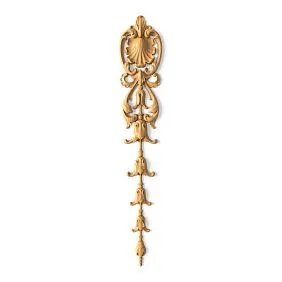

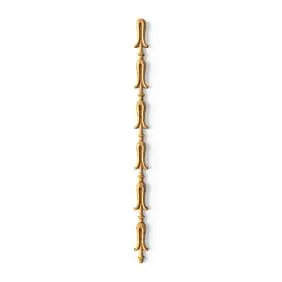
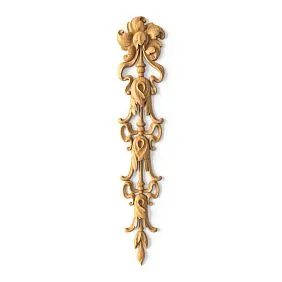

What is furniture decor and why is it needed




How furniture decor changes the appearance of facades
Imagine two identical sliding wardrobes with white facades. One has smooth surfaces without a single detail. The other has a thin molding around the perimeter, a decorative rosette in the center, and a small overlay on the corners. Both wardrobes are the same size and material. But they are perceived fundamentally differently: the first as a functional box, the second as furniture with intent.
This is exactly whatdecor for furniture facades: creates visual depth, structure of the plane, a sense that labor and thought have been invested in this item.
Our factory also produces:



When decorative elements are truly appropriate
Furniture decor is appropriate when it solves a problem, not just 'adds beauty'. Problems can be different:
-
Accentuate the central part of the facade
-
Create vertical or horizontal rhythm on a wide plane
-
Emphasize corners and door frame
-
Add 'historical depth' to classic style
-
Update old furniture without complete replacement
If the problem is clearly formulated — the decorative element is chosen precisely. If there is none — there is a risk of randomly picking up random details that do not form a system.
Get Consultation
For what problems furniture decor is chosen
Three main scenarios:
New furniture. Decoration is incorporated at the design or manufacturing stage. It becomes part of the overall concept: the molding is integrated into the dimensions of the facade, the rosette is centered, and the overlays are symmetrical.
Updating existing furniture. Decorative elements are glued or attached to finished facades — changing the appearance without replacing the cabinet. This is significantly cheaper than a full furniture replacement.
Restoration. Restoring lost parts on antique or classic furniture: recreating carved overlays, replacing lost rosettes, restoring molding patterns.
What furniture decor can be bought in Moscow
Decorative overlays for facades
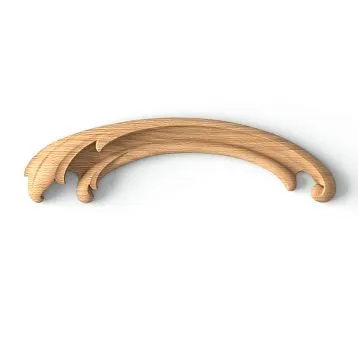
Overlays are the most universal type of furniture decor. These are flat or three-dimensional elements that are attached to the surface of the facade and create relief.
Molding shapes:
-
Rectangular — for corner areas of the facade, framing the door
-
Oval and round — in the center of the facade, as an accent element
-
Shaped — leaves, floral motifs, cartouches, shells
-
Corner — for decorating molding intersections
Inlays for furnitureWooden moldings have a clear relief and can be easily painted in any color to match the overall furniture finish. This makes them a versatile solution — both for furniture manufacturers and for those updating existing pieces.
Furniture Rosettes
Rosettes are round or oval decorative elements with a relief ornament. In furniture, they are used as a central accent on a door front, above a lock or handle, or in the center of a panel.
A classic rosette with acanthus leaves, floral patterns, or geometric ornamentation is a marker of classical or neoclassical style. A laconic rosette with a smooth relief is an element of modern decorative design.
Sizes of furniture rosettes: from 3–4 cm (small cabinets, drawers) to 15–20 cm (central elements on wardrobe fronts).
Moldings and profiles
Molding is a decorative profile that creates a frame or linear pattern on a flat front surface. It is one of the most frequently used elements in classical furniture.
Application of moldings in furniture:
-
Frame molding around the perimeter of a door — creates the impression of a panel
-
Horizontal molding as a zoning element for a wardrobe
-
Vertical molding as a column on a wide front
-
Corner molding for panel joints
Furniture moldings are available in straight and flexible versions (for radius fronts). Made from solid wood, MDF, and polyurethane. Polyurethane moldings are especially convenient for kitchens — they are not afraid of moisture.
Corner pieces and accent elements
Decorative corner pieces — small elements in the shape of an angle that are attached at the intersections of molding or in the corners of a door frame. They create completeness for the frame composition.
Corner pieces can be:
-
Smooth — minimal accent
-
With ornament — floral, geometric
-
Volumetric — with pronounced relief
Carved decor for furniture
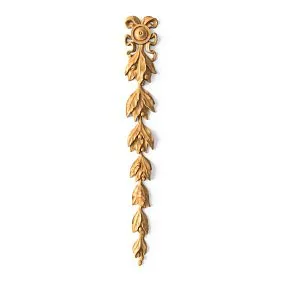
Carved decor is the most expressive type of furniture decoration. These are volumetric carved overlays made from solid wood with deep relief: acanthus leaves, grapevines, shells, cartouches, heraldic motifs.
Carved furniture decorIt is appropriate in a rich classical setting: on library cabinets, buffets, beds, display cases, kitchen unit fronts in a classical style. It requires proportionate space and harmony with the rest of the interior.
Decorative element sets
A furniture decor set is a collection of compatible elements from one line: overlay, rosette, molding, corner pieces. All are designed in a unified style, scale, and relief—and when used together, they create a cohesive decorative composition.
The set approach eliminates the risk of mismatched patterns and scale—the most common mistake when selecting pieces independently.
What furniture is decorative decor suitable for
For wardrobes
The wardrobe is the largest piece of furniture in most rooms. Its front occupies a significant wall surface, which is why it requires a well-thought-out decorative solution.
For wardrobes, suitable options include:
-
Frame moldings on each door
-
Central rosettes on wide doors
-
Corner overlays at molding intersections
-
Cornice with decorative profile on top
For tall cabinets up to the ceiling — vertical decorative profiles like pilasters, visually breaking up the monolithic plane.
For dressers and cabinets
A dresser is an item with several pull-out drawers. Each drawer is a separate front plane. Decoration here works on the principle of rhythm: identical overlays on each drawer create vertical and horizontal order.
For dressers: decorative overlays in the center of each drawer, molding frames around the perimeter, small rosettes above the handles.
For kitchen fronts
The kitchen is an area of high humidity and temperature fluctuations. Therefore, for kitchen fronts, it is better to use polyurethane decor or decor made of MDF with moisture-resistant finishing.
Decor for the kitchen:
-
Molding frames on the fronts — create a sense of a classic kitchen
-
Overlays in the center of the upper cabinets
-
Decorative cornices along the upper perimeter of the kitchen set
-
Decorative corners on the door frames
For showcases and buffets
A showcase is furniture where the front works as a masterpiece. Glass doors with a molding frame, overlays on the top part, carved cornice elements—all this creates the image of a buffet or showcase in a classic style.
For doors and furniture panels
Door decor is not just an ornament, but a way to turn a standard MDF door into an element with character. Molding around the perimeter plus a central overlay—and the door transforms from a simple rectangle into a classic paneled construction.
For furniture restoration and updating
Restoration with furniture decor is a separate big scenario. An old Soviet wardrobe, a Soviet chest of drawers from the 60s, neoclassical furniture with lost parts—all of this can be transformed by adding compatible decorative overlays, moldings, and rosettes in style.
How to choose furniture decor to match the interior style
For classic furniture
Classic style requires rich relief, floral and acanthus motifs, symmetrical compositions. Carved overlays with leaves, large rosettes, profiled moldings, corner elements with ornament—all of this fits organically into classic furniture.
Decor for classic furnituremade from solid wood is the best choice: it accepts any finish, lays perfectly into the relief, and creates a sense of authenticity that cannot be achieved with film imitations.
For neoclassical style
Neoclassicism requires restraint. Here, molding with a simple profile, smooth or minimally ornamented overlays, and concise corner elements are appropriate. The relief is clear but not overloaded. The ornament is geometric or minimally floral.
For restrained decorative design
One element, precisely placed, is sometimes better than a system of five. A small overlay in the center of a cabinet door in a modern interior is a delicate accent that speaks to attention to detail without turning the furniture into a museum exhibit.
For accent facades
An accent facade is a highlighted plane that attracts attention. The central door of a sliding wardrobe, the facade of a sideboard, a panel above the bed—here you can allow richer decor: a large rosette, a carved overlay, a relief ornament.
How not to overload furniture with decor
The rule of three: no more than three decorative elements on one facade. Molding + rosette + corners is enough. If you add another overlay and an additional profile, the plane stops 'breathing'.
Another rule: decor should work with the plane, not against it. An element that is too large on a small facade dominates and overwhelms. One that is too small on a large facade gets lost and looks random.
How to choose decor for furniture facades
Based on facade size
The size of the decorative element should be proportionate to the size of the facade:
-
Facade width 30–40 cm — overlay or rosette diameter 5–8 cm
-
Facade width 50–70 cm — overlay 8–12 cm, perimeter molding
-
Facade width 80–100 cm and more — large rosettes 12–18 cm, frame molding, possible vertical composition of several elements
By shape and symmetry
Classical furniture is built on symmetry. The decorative element must be precisely centered or positioned symmetrically: horizontally, vertically, or along both axes simultaneously.
Asymmetrically placed decor is an error that immediately catches the eye.
By relief depth
The depth of the decorative relief should correspond to the character of the furniture:
-
Laconic furniture — flat or weakly expressed elements (up to 5 mm relief)
-
Moderate classic — medium relief (5–12 mm)
-
Rich classic — deep relief (12–25 mm and more)
By combining several elements
If several elements are used on one facade, they must be from the same collection or the same style. You cannot combine a geometric overlay pattern with a floral molding: the visual conflict destroys the sense of unity.
By the overall style of the furniture
Decor is an extension of furniture, not a standalone object. Before choosing an element, determine what kind of furniture it is: strict, neutral, decorative? This will define both the style of the decor and its scale.
What to choose for different tasks
If you need to update old furniture
For updating, self-adhesive or adhesive overlays, moldings on wooden facades are optimal. Light sanding of the surface, applying glue, installing the decor — and the old furniture gets a new look. Additionally, you can repaint the entire surface together with the decor in a single color.
If you need decor for a classic wardrobe
Frame molding on each door + corner overlays + central rosette. All elements from the same series. Finish — to match the color of the furniture. Result: the wardrobe acquires the appearance of furniture in a classic style with elaborated facades.
If you need to decorate the facades of a chest of drawers
On each drawer — the same overlay in the center. Molding frame around the perimeter of each drawer — optional. Important: all overlays are the same size and the same pattern. Rhythm is the main principle of decorating a chest of drawers.
If you need accent decor for the kitchen
For the kitchen — polyurethane decor or MDF with moisture-resistant coating. Molding frames on the fronts, decorative cornice along the perimeter of the unit, small overlays on the upper cabinets. Without deep relief — the kitchen requires restraint.
If a restrained decorative solution is required
One type of element — molding or one overlay. Without corner pieces, without rosettes, without additions. One delicate touch — and the furniture goes from neutral to having character.
If a more expressive carved effect is needed
Deep carved decor made of solid wood: overlays with acanthus leaves, large rosettes with ornament, frame moldings with profiled relief. For library cabinets, buffets, display cases, classic kitchens. Requires proportionate space.
Advantages of furniture decor
Helps transform the fronts
Decorative overlays and moldings literally change the front: from a flat, neutral plane it becomes structured, expressive, finished. This is one of the most accessible ways to change the perception of furniture.
Gives a more finished appearance
Furniture with thoughtful decor is perceived as 'made' rather than 'bought from the nearest store.' This is important for both private interiors and commercial spaces: restaurants, hotels, offices, and executive suites.
Allows you to assemble furniture in a unified style
When decor is used systematically—across all furniture in a room from one collection—it creates visual unity that brings the pieces together into an interior ensemble.
Suitable for new and updated items
decor for furnitureWorks both in the production of new items and in updating existing ones. Its flexibility makes it a universal tool.
Offers more possibilities for individual design
A manufacturer using furniture decor can offer a wide range of variations of the same cabinet: different decor on the fronts creates different 'versions' of one model for various interior tasks.
How to buy furniture decor in Moscow without making a mistake
First, determine which furniture needs decor
Wardrobe, chest of drawers, kitchen front, display case, door—each has its own requirements for size, shape, and decor style.
Then select the type of elements
Overlay, molding, rosette, corner, carved element — or a set. Determine what exactly is needed: one accent element or a system.
Check the dimensions and proportions
Measure the facade. Center the intended element on paper or in visualization. Ensure the size and relief are proportionate to the plane.
Consider the composition right away
One element or a system? If several — how are they positioned relative to each other? Symmetrically? Along the vertical axis? Along the facade frame?
Select decor not as a single element, but as a system
Buy furniture decorChoosing from one collection means guaranteed matching of relief, scale, and style of all elements. This eliminates the most common mistake — a random assortment of incompatible details.
What mistakes are most often made when choosing
They take decor that is too large for small facades
A rosette with a diameter of 20 cm on a facade 30 cm wide is not an accent, it's a dominant feature. Decor should be smaller than the facade.
They mix incompatible elements
Geometric molding + botanical overlay + Baroque corner piece — these are three different styles on one plane. Visual chaos.
They choose decor without reference to the furniture style.
A classic carved overlay on a minimalist, unfinished facade is a style conflict. Decor should support the furniture style, not contradict it.
They overload facades with details.
Molding + rosette + corner pieces + additional overlays + frames — that's overload. Less is often better.
They look only at the individual element, not at the composition.
Every element in the catalog is beautiful on its own. But it only works in the context of a specific facade and specific furniture. Always evaluate the decor assembled — with the furniture, its dimensions, and color.
How to use furniture decor without overloading
When one overlay is enough
One overlay in the center of the facade — a minimal yet effective technique. It fixes the gaze, creates a focal point, and gives the door completeness without excess.
When symmetrical compositions are needed
Two identical elements symmetrically — a classic. Four corner overlays along the perimeter of the frame — a system. This is a principle that always works.
How to combine rosettes, moldings, and overlays
Molding creates a frame — a structure. A rosette or overlay in the center — an accent. Corners at the intersections of the molding — finishing touches. This is a three-level system: frame + accent + finishing points.
Why it's important to consider the proportions of the facade
The facade is a space. It has a center, edges, proportions. Decor should work with this space, not fill it chaotically.
How to maintain balance between furniture and decor
Furniture comes first. Decor comes second. Decorative elements enhance the image of the furniture, not create it. If the furniture is well-designed — little decor is needed. If the furniture is neutral — decor takes on more.
Checklist before buying decor for furniture
-
For which furniture is decor needed — wardrobe, chest of drawers, kitchen set, display cabinet?
-
For a new product or to update existing furniture?
-
What furniture style — classic, neoclassic, modern?
-
Is restrained or pronounced decorativeness needed — one accent or a system?
-
Is symmetrical pattern important — central or frame?
-
What are the dimensions of the facades — width and height of each door?
-
Is one element or a set needed — rosette, molding, overlays, corners?
Comparison table: types of furniture decor
| Type of decor | For which furniture | What effect it gives | When to choose |
|---|---|---|---|
| Overlay | Wardrobe, chest of drawers, kitchen | Accent point on the facade | For one expressive element |
| Rosette | Cabinet, showcase, sideboard | Central ornamental accent | For classic large facades |
| Molding | Any furniture | Frame, rhythm, plane structure | For facade organization |
| Corner piece | Any furniture | Completion of frame system | In combination with molding |
| Carved element | Classic cabinets, buffets | Rich volumetric relief | For a rich classic style |
| Decorative set | Any furniture | Integrated decorative system | When unity of all details is needed |
FAQ: Answers to popular questions
Which furniture decor is best to choose?
Depends on the task. For updating — overlays and moldings. For classic style — carved decor and rosettes. For the kitchen — polyurethane decor. For a neutral modern facade — one laconic element.
Where to buy furniture decor in Moscow?
The STAVROS company catalog offers a wide rangefurniture decor: overlays, rosettes, moldings, carved elements made from solid wood. All elements are ready for painting or come with a finished finish.
What is suitable for cabinet and dresser fronts?
For cabinets — frame molding around the door perimeter, a central rosette, corner overlays. For dressers — identical overlays in the center of each drawer, molding frames.
Which elements to choose for classic furniture?
Carved overlays with floral ornamentation, large rosettes with relief, profiled moldings. All made from solid wood — for maximum decorativeness and the possibility of any finish.
Can decor be used to update furniture?
Yes. Decorative overlays and moldings are attached to existing fronts — they change the appearance without replacing the carcass. After installing the decor, the furniture can be repainted in a unified tone.
What is better: one overlay or a set of elements?
One overlay — for a delicate accent. A set — for creating an integrated decorative system. In a classic interior, a set delivers a stronger result.
How to choose decor based on the size of the facade?
Measure the width and height of the facade. The central element should be no more than 25–30% of the facade width. Perimeter molding — indentation from the edge 2–4 cm.
How to combine furniture decor with the interior?
Furniture decor should be in the same stylistic 'register' as the overall interior: classic to classic, neoclassical to neoclassical. The color of the decor should match the furniture color, not contrasting.
Conclusion
Furniture decor is not a final touch 'for beauty'. It is a tool for shaping an image, which works exactly like architectural decor on a building facade. A correctly chosen overlay, molding, or rosette transforms a neutral facade into an interior element with character, history, and style.
ChooseFurniture decorshould not be based on the principle of 'liked the pattern', but on the principle of the task: for which furniture, for which style, what size, in which system with other elements. Only then will the result be cohesive.
STAVROS is a manufacturer of decorative products made from solid wood and polyurethane for furniture, interiors, and facades. In the STAVROS catalog —Inlays for furniture, rosettes, moldings, carved decorative elements for facades, cabinets, dressers, kitchen sets, and restoration projects. For over 24 years, production has been carried out with attention to relief, proportions, and element compatibility.
STAVROS is decor that works as a system.Open the catalogand find a solution for your furniture.