Article Contents:
- Why bother with doorway design at all?
- Basic decorative elements: what beauty is built from
- Door casings: the foundation of the composition
- Door cornice: the crown of the composition
- Panel above the door: what it is and why
- Pilasters and capitals: for formal portals
- Moldings and overlays: touches of individuality
- Ready-made design schemes: from simple to complex
- Scheme 1: Minimalist framing
- Scheme 2: Classic framing with profiled casings
- Scheme 3: Framing with a door cornice
- Scheme 4: Portal with pilasters and capitals
- Scheme 5: Modern geometry
- Scheme 6: Framing with wall decor
- Selecting a scheme for specific conditions
- Ceiling height
- Room size
- Interior style
- Budget
- Materials: wood vs polyurethane vs MDF
- Wooden Paneling: Classic Beyond Time
- MDF: a practical alternative
- Polyurethane: Modern Possibilities
- Material Combinations
- Color solutions: monochrome, contrast, tonality
- Monochromatic solution
- Contrasting solution
- Tonal solution
- Natural Wood
- Installation: do it yourself or hire professionals?
- When you can do it yourself
- When it's better to hire specialists
- Features of designing different types of openings
- Standard single-leaf opening
- Double-leaf opening
- Arched opening
- Doorless opening
- Mistakes to avoid
- First mistake: scale mismatch
- Second Mistake: Stylistic Dissonance
- Mistake three: sloppy jointing
- Mistake four: poor material quality
- Mistake five: ignoring finishing touches
- Inspiration and ideas: look, learn, create
- Practical tips: from planning to implementation
- Create a sketch
- Measure accurately
- Calculate materials with a margin
- Prepare surfaces
- Use quality adhesive
- Allow time for drying
- Paint correctly
- Decor care: how to preserve beauty
- Regular Cleaning
- Protection against damage
- Recoating
- Questions and Answers: Everything You Wanted to Know
- Can a doorway be decorated without removing old trim?
- What trim width is optimal for a standard door?
- Is it necessary to use a cornice above the door?
- Can polyurethane decor be painted to look like wood?
- What is the triangular element above the door called?
- How much does it cost to decorate one doorway?
- How to choose the color of decoration?
- Are special tools needed for installation?
- How long does glued decor last?
- Can the same decor be used for all doors in an apartment?
- STAVROS: your partner in creating beauty
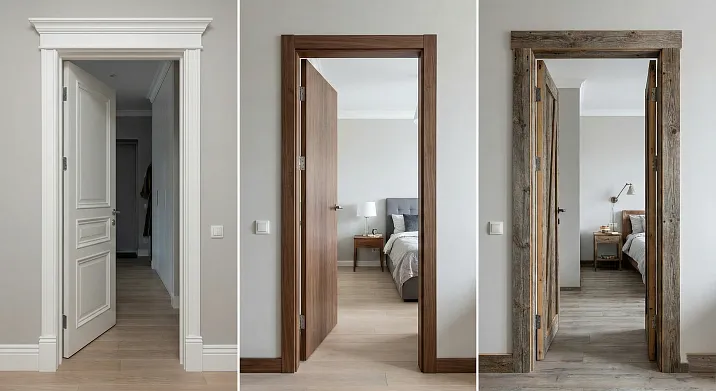
You know what distinguishes an ordinary apartment from a space you want to live in? Details. Those very little things that seem insignificant at first glance, but they're exactly what turn a bland box into a home with character. And one of the most underrated details is doors. Or rather, not the doors themselves, but how they're decorated.
Decor for interior doors and proper doorway framing can completely change the perception of an interior. A simple smooth door can become an architectural accent, and a boring doorway can become an elegant portal that's pleasant to pass through from room to room. This doesn't require dismantling existing structures, major renovations, or astronomical expenses. It's enough to understand composition principles, know available solutions, and follow proven decoration schemes.


Why bother decorating doorways at all?
A fair question. The door opens, closes, performs its function—what more do you need? But let's look at it more broadly. A doorway is a boundary between spaces, a transition from one zone to another. It occupies a significant area of vertical surface and is constantly in the field of vision. An undecorated doorway looks unfinished, like an incomplete sentence.
Door Frame TrimIt serves several purposes at once. First, it masks the technological gaps between the frame and the wall that inevitably occur during installation. Second, it protects corners from damage—this is where chips and wear most often appear. Third, it creates a visual connection between the door and the room's interior.
But most importantly—doorway decoration affects the atmosphere of the entire room. Strict classical trim adds respectability. Carved elements bring sophistication. Concise modern profiles emphasize minimalist aesthetics. The choice of decoration scheme depends on the interior style, ceiling height, room dimensions, and, of course, your personal preferences.




Basic decor elements: what beauty is built from
Before discussing specific decoration schemes, we need to understand the basic elements. What exactly is used to create door decor and frame doorways?
Our factory also produces:


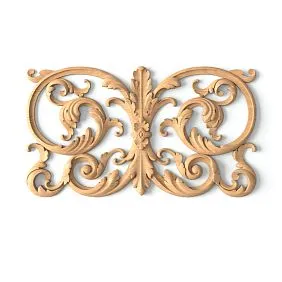

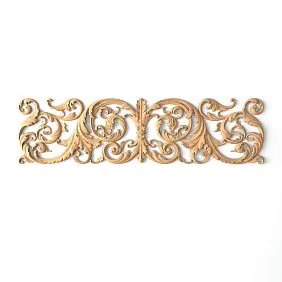
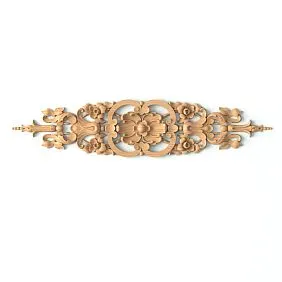
Door Casings: The Foundation of the Composition
A door casing is a decorative trim installed around the perimeter of a door frame to cover the joint between the frame and the wall. Seems simple? In reality, the casing is the foundation of the entire composition, upon which the overall impression depends.
decorative door architravesThey vary in width, profile, and degree of ornamentation. Narrow casings (50-70 mm) create a delicate frame and are suitable for small rooms. Medium casings (80-100 mm) are a universal option for most interiors. Wide casings (110-150 mm and more) are used in spacious rooms with high ceilings, where large-scale design is required.
The casing profile can be flat, rounded, shaped, or carved. Flat casings with a small bevel are the choice for modern, minimalist interiors. Shaped casings with flutes, beads, and grooves are for classic styles. Carved casings with ornaments are for interiors where ornamentation and handcrafted work are valued.
Material is also important. Solid wood casings made of oak or beech have natural beauty and durability. MDF casings are a more affordable option that, with quality finishing, can look as good as solid wood. Polyurethane casings are lightweight, moisture-resistant, and unaffected by temperature fluctuations.
Get Consultation
Door Cornice: The Crown of the Composition
Door Corniceis a horizontal decorative element installed above the door, completing the composition of the opening. It can be a simple projecting profile or a complex structure with consoles and brackets.
A cornice visually increases the height of the opening, giving it monumentality and architectural completeness. Cornices look especially impressive in interiors with classic styling—Empire, Baroque, Neoclassical. However, for modern spaces, a simple, minimalist cornice can be chosen to add structure without excessive ornamentation.
The projection of the cornice from the wall plane is typically 50-150 mm. The greater the projection, the more expressive the shadow beneath the cornice and the more voluminous the composition appears. The cornice profile can include various elements: ovolo, cyma reversa, scotia, beads, astragals. Each profile creates its own play of light and shadow, its own character.
Panel Above the Door: What It Is and Why
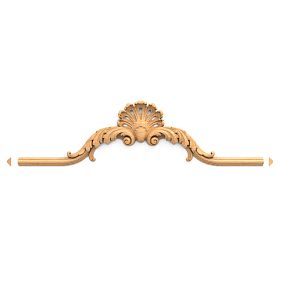
A common question is:what is the decorative panel above the door called?The answer depends on the specific form of the element. If it is a horizontal projecting profile—it's a cornice. If it is a triangular or arched completion—it's a pediment. If it is a decorative overlay with an ornament—it's a pediment hood (sundrik). If it is brackets supporting the cornice—they are consoles.
A pediment hood (sundrik) is an exquisite element placed above the door, creating a canopy effect. It can be adorned with carving, molding, or ornaments. A sundrik transforms an ordinary opening into a ceremonial portal, adding solemnity and status.
A pediment is a triangular completion reminiscent of classical antique architecture. It can be full (a closed triangle) or broken (with an opening in the center, sometimes containing a decorative rosette or cartouche). A pediment is suitable for interiors in the style of Classicism, Palladianism, Neoclassicism.
Consoles are decorative brackets that visually support the cornice. They are placed in pairs on both sides of the opening at the top. Consoles can be simple (in the form of corner elements) or complex (in the shape of volutes, acanthus leaves, ornate scrolls).
Pilasters and Capitals: For Ceremonial Portals
When particularly ceremonial decoration is required, vertical elements—pilasters—are used. A pilaster is a flat, vertical projecting detail that imitates a column. It is installed on the sides of the door opening from the floor to the cornice.
A pilaster is topped with a capital—a decorative upper part that serves as a transition to the horizontal cornice.CapitalsThey vary by style: Doric (simple, strict), Ionic (with volutes), Corinthian (with acanthus leaves), Composite (a combination of several orders).
The combination of pilasters with capitals and a cornice transforms a door opening into an architectural order—a complete composition built according to classical canons. This solution is for spacious rooms with ceiling heights of at least 3 meters, where there is space to appreciate a large-scale composition.
Moldings and Overlays: Touches of Individuality
To create additional accents, moldings are used—narrow decorative strips of various profiles. They can be placed on the door leaf itself, creating frames and panels, or on the wall around the opening, forming a decorative surround.
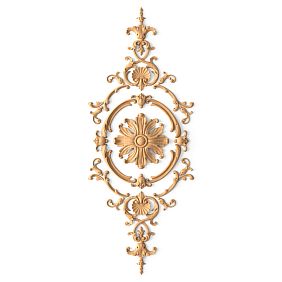
Carved overlays are three-dimensional decorative elements with ornaments: rosettes, corner elements, central medallions, vertical and horizontal inserts. Overlays are placed at key points of the composition—in the center of a pediment, at the junctions of moldings, in the corners of frames. They add richness of detail and create visual accents.
Ready-Made Design Schemes: From Simple to Complex
Theory is good, but how to apply it in practice? Let's consider proven schemes for decorating door openings, from the simplest to the most complex.
Scheme 1: Minimalist Framing
For modern interiors where minimalism and clean lines are valued.
Contents:
-
Narrow flat casings with a small bevel (60-70 mm)
-
Color — white, light gray, or matching the wall color
Installation:
Casing is mounted on three sides of the opening (two vertical, one horizontal). Joints at corners are cut at a 45-degree angle for neat convergence. No additional elements are required.
Effect:
The opening looks clean and neat. The casing does not draw attention but creates necessary structure. This design is suitable for small apartments where visual calm is important and one does not want to overload the space with details.
Where to apply:
Scandinavian interiors, minimalism, modern classic, loft (when using metallic-finish casing).
Scheme 2: Classic framing with profiled casing
A universal solution suitable for most interiors.
Contents:
-
Profiled casing of medium width (80-100 mm) with a shaped profile
-
Color — white, ivory, natural wood
-
Optional: corner rosettes at casing joints
Installation:
Casing is installed around the perimeter of the opening. If corner rosettes are used, the casing is cut at a right angle and joined via the rosette. If rosettes are not used — cutting at a 45-degree angle.
Effect:
The opening acquires classic elegance. The shaped profile creates a play of light and shadow, adding volume. Corner rosettes (if used) serve as decorative accents.
Where to apply:
Classic interiors, neoclassicism, American classic, traditional styles.
Scheme 3: Framing with a door cornice
The next level of complexity — adding a horizontal cornice above the door.
Contents:
-
Profiled casing (90-110 mm)
-
Door cornice with a classic profile, projection 70-100 mm
-
Optional: consoles on the sides under the cornice
Installation:
Vertical casing is installed on the sides of the opening from the floor to the height of the door frame. A horizontal cornice is mounted above the door, resting on the top ends of the vertical casing. If consoles are used, they are placed under the cornice at the points of its contact with the casing.
Effect:
The opening becomes more expressive and architectural. The cornice creates a visor, adds vertical height, and draws the eye. Consoles (if present) enhance the sense of support and structural integrity.
Where to apply:
Classic interiors with ceiling heights from 2.7 m, living rooms, studies, dining rooms, halls.
Scheme 4: Portal with pilasters and capitals
A formal scheme for creating a ceremonial entrance.
Contents:
-
Pilasters on the sides of the opening (width 100-150 mm)
-
Capitals on the pilasters
-
Horizontal entablature (cornice) above the door
-
Optional: pediment above the cornice
Installation:
Pilasters are mounted vertically from the floor to the height of the door frame. Capitals are installed on the pilasters. A horizontal cornice is placed on top of the capitals. If a pediment is added, it is attached to the wall above the cornice.
Effect:
The door opening transforms into a full-fledged architectural portal, reminiscent of classical temples and palaces. The composition looks monumental, solemn, and prestigious.
Where to apply:
Spacious rooms with ceiling heights from 3 m, formal living rooms, halls of country houses, representative spaces.
Scheme 5: Modern geometry
For those who love contemporary aesthetics but want to add structure.
Contents:
-
Wide flat casings with rectangular profile (100-120 mm)
-
Horizontal panel above the door of the same width
-
Color — contrasting to the walls (black on white, dark gray on light)
Installation:
Casings are installed on three sides of the opening, joining at right angles (without 45-degree miter cuts). The horizontal panel above the door can be the same thickness or slightly thicker, creating a canopy effect.
Effect:
The opening gains graphic quality and contemporary expressiveness. Contrasting colors emphasize the geometry. The composition looks clear, structured, and technological.
Where to apply:
Contemporary interiors, minimalism, high-tech, industrial style, contemporary.
Scheme 6: Framing with wall decor
A maximally decorative scheme where not only the opening but also the wall around it is decorated.
Contents:
-
Profiled casing (90-110 mm)
-
Door cornice with consoles
-
Wall moldings forming frames or panels around the opening
-
Carved overlays at key points
Installation:
The base framing (casings + cornice) is mounted as in scheme 3. Then, additional moldings are placed on the wall around the opening, creating decorative panels. Carved overlays are installed at joints, in the center of the pediment, and at panel corners.
Effect:
The door opening becomes the focal point of the entire wall composition. Decorative framing attracts attention, creates richness of detail, and demonstrates attention to finishing.
Where to apply:
High-end classical interiors, palace styles, luxurious living rooms, grand halls.
Selecting a scheme for specific conditions
How to choose the appropriate finishing scheme for your apartment? Several factors need to be considered.
Ceiling height
Low ceilings (2.5-2.7 m) require restraint. Massive cornices and pilasters will visually reduce the height. It's better to choose schemes 1 or 2 — minimalist or classical framing with narrow to medium casings.
Standard ceilings (2.7-3 m) allow the use of schemes 2, 3, 5 — you can add a door cornice, use wider casings, and experiment with profiles.
High ceilings (from 3 m) open up all possibilities. Schemes 4 and 6 — with pilasters, capitals, wall decor — will look harmonious and appropriate.
Room size
In small rooms, excessive decor creates a feeling of crampedness. It's better to choose a concise design — scheme 1 or 2. In spacious rooms, more decorative solutions can be allowed — schemes 3, 4, 5, 6.
Interior style
Style dictates the choice of profiles, proportions, and degree of decorativeness. Classical interiors require profiled elements, symmetry, and traditional proportions. Contemporary ones require concise forms, clean lines, and possibly contrasting colors.
Budget
Simple schemes (1, 2) require fewer materials and are easier to install, therefore cheaper. Complex schemes (4, 6) require more elements, more complex installation, possibly involving specialists, therefore more expensive.
But even with a limited budget, you can create expressive finishing by correctly choosing materials and placing accents. For example, using polyurethane elements instead of carved wooden ones — they are cheaper but look impressive.
Materials: wood vs polyurethane vs MDF
The choice of material affects appearance, durability, and cost of decor.
Solid Wood: Timeless Classic
Wood — the traditional material for architectural decor. Oak and beech casings, cornices, and pilasters possess natural beauty, warmth, and noble texture. Wood can be painted, stained, or varnished to create any desired shade.
Wooden decor is durable, eco-friendly, and can be repaired and restored. It is ideal for classical interiors where authenticity and naturalness of materials are important.
Disadvantages: wood reacts to changes in humidity and temperature and can warp if stored improperly. It requires protective coating and periodic maintenance. Carved solid wood elements are quite expensive due to labor-intensive manufacturing.
MDF: A Practical Alternative
MDF is medium-density fiberboard. MDF architraves are more stable than solid wood, they do not warp or crack. They can be painted, laminated with wood-grain film, or coated with enamel.
MDF is cheaper than solid wood, and with high-quality finishing, it can look just as good as wood. It's a good choice for budget projects or rooms with unstable humidity.
Disadvantages: MDF lacks the natural wood grain texture (although imitation can be convincing). If the protective coating is damaged, the board can swell from moisture. Carving possibilities are limited — complex carved elements are not made from MDF.
Polyurethane: modern possibilities
Polyurethane architraves, cornices, consoles, and capitals are produced by casting. This allows for reproducing the most complex ornaments with high detail. Polyurethane is lightweight, moisture-resistant, not afraid of temperature fluctuations, and does not deform.
Polyurethane decor is easy to install — elements are glued, requiring no special fasteners. It can be painted in any color, creating patina, gilding, and aging effects.
Disadvantages: Polyurethane is a synthetic material, which is important for those who value naturalness. It is more difficult to restore after mechanical damage than wood. For some styles (e.g., rustic, ethnic), polyurethane may look inauthentic.
Material Combination
Often the optimal solution is to combine materials. For example, the main framing (architraves, cornice) from MDF or polyurethane, and accent elements (carved overlays, central rosette) from solid wood. This optimizes the budget and creates interesting visual effects.
Color Solutions: Monochrome, Contrast, Tonal
The color of the decor is a powerful tool for creating mood.
Monochromatic solution
Architraves, cornice, and door are painted the same color — usually white. Walls are also white or very light. This creates the effect of a unified light space, visually enlarges the room, and adds airiness.
Monochrome suits Scandinavian interiors, modern classics, minimalism. It requires impeccable execution quality — any unevenness, gaps, or flaws will be noticeable on a monochrome surface.
Contrasting solution
Architraves and cornice contrast with the door and walls. A classic combination is white architraves on colored walls or dark architraves on light walls. Contrast draws attention to the opening, making it a graphic accent.
Contrast design suits modern interiors, Art Deco, eclecticism. It requires boldness and a precise sense of balance — too strong a contrast can look aggressive.
Tonal Solution
Different shades of the same color are used. For example, walls in light gray, architraves in medium gray, door in dark gray. Or walls in beige, architraves in light brown, door in dark brown.
Tonality creates depth, volume, and an interesting play of shades. This is an elegant solution for interiors where sophistication and complexity of color combinations are valued.
Natural wood
Solid wood decor with a transparent coating (varnish, oil) showcases the natural wood texture and color. This suits interiors in classic, rustic, Scandinavian, eco-style. Natural wood creates a sense of warmth, coziness, and connection with nature.
Installation: Do it yourself or hire professionals?
Installationdecorative architraves on doorsand other framing elements requires precision and care. Can you handle it yourself?
When you can do it yourself
Simple schemes (1, 2, 3) with straight-line elements are quite manageable for a DIYer with basic tool skills. You will need: a tape measure, level, miter box for cutting corners, a handsaw or miter saw, glue or liquid nails, paint and brushes.
The main thing is precise marking and careful corner cutting. Architraves must join without gaps, be strictly vertical and horizontal. If in doubt — it's better to practice on samples before installing on doors.
When it's better to hire specialists
Complex schemes (4, 6) with pilasters, capitals, wall decor, carved elements require a professional approach. Here, experience, understanding of proportions, ability to work with heavy elements, and knowledge of fastening technology are important.
A professional installer or decorator will accurately calculate the composition, ensure reliable fastening, and perform finishing without flaws. Yes, it's more expensive, but the result will be impeccable.
If you want to create a truly expressivedoor framing, especially in the formal areas of an apartment or house, it's better to entrust the work to professionals.
Features of Different Types of Openings
Not all openings are the same. Let's consider the features of different situations.
Standard Single-Leaf Opening
The most common option is a door 70-90 cm wide in a standard height opening. All described schemes are suitable for it. The main thing is to maintain proportions: the width of the architraves should be proportionate to the width of the door.
Double-Leaf Opening
A wide opening with a double-leaf door (width from 120 cm) requires more large-scale design. Narrow architraves will get lost. It's better to use wide profiles (100-150 mm), add a cornice, possibly pilasters.
With double-leaf doors, a symmetrical composition with pilasters at the edges and a cornice or pediment above the door looks especially impressive. This creates a sense of grandeur and solemnity.
Arched Opening
Arched openings require special flexible architraves that follow the curve of the arch, or assembled elements. You can use segmented polyurethane arch profiles — they are flexible and easily take the desired shape.
Designing an arch is more complex than a rectangular opening, so consultation with a specialist is especially recommended here.
Opening Without a Door
If there is no door between rooms (open opening), the design becomes even more important — after all, the opening is constantly in view. Architraves are installed on both sides of the wall. Decorative elements are often added: cornices with consoles, pilasters, wall panels around the opening.
An open opening can be turned into a full-fledged architectural portal, which will become the highlight of the interior.
First mistake - unstructured mixing. A classic chair, loft table, Scandinavian chest, and minimalist cabinet in one room is not eclecticism, but visual chaos. Each item draws attention to itself, not creating cohesion. A system, logic, unifying idea is needed. Choose one dominant style, add a second as an addition, and possibly a third as an accent. But no more than three, and all should have something in common - color, material, era, or functionality.
Even with the correct scheme selection, mistakes can be made that will spoil the result.
First Mistake: Scale Mismatch
Too narrow architraves on a wide door or too massive a cornice in a room with low ceilings. Check proportions at the planning stage, use the rule: architrave width = 1/8 — 1/10 of the opening width.
Error two: stylistic dissonance
Baroque carved cornices in a minimalist interior or strict flat architraves in a classic living room. The decor should match the overall style of the room.
Third Mistake: Sloppy Joining
Gaps in corners, uneven cuts, noticeable seams — all these are signs of unprofessionalism. Use quality tools (miter box, miter saw), don't rush, check each joint before gluing.
Fourth Mistake: Poor Quality Materials
Cheap architraves with crooked geometry, cornices with uneven surfaces, carved overlays with unclear detailing. Saving on materials will lead to disappointment in the result. Choose products from trusted manufacturers.
Fifth Mistake: Ignoring Finishing
The decor is installed but not painted or painted carelessly — drips, missed spots, unevenness. Finishing is as important as installation. Use quality paint, apply it in several thin layers, sand between layers.
Inspiration and Ideas: Look, Learn, Create
Where to look for ideas for designing your own door openings?
Historical interiors — palaces, estates, old mansions — demonstrate classical techniques of architectural decor. Visiting museums, tours of historical buildings provide an understanding of proportions, composition, and stylistic features.
Modern interior projects published in magazines and on websites show current trends and unconventional solutions. Here you can see how classical elements are reinterpreted in a modern context.
Showrooms and exhibitions by decor manufacturers allow you to see elements in person, assess quality, touch, compare different options. Many companies offer designer consultations that will help select the optimal design scheme.
Finally, your own imagination and courage are the best source of unique solutions. Don't be afraid to experiment, combine different elements, create your own compositions. Your home is your creativity.
Practical Tips: From Planning to Implementation
Create a sketch
Before purchasing materials, draw a sketch of the future design with dimensions. This can be done on paper or in a graphic editor. The sketch helps visualize the result and calculate the amount of materials.
Measure accurately
Take measurements of all openings you plan to decorate. Record the height, width, and wall thickness. Keep in mind that openings may vary slightly even within the same apartment.
Calculate materials with a margin
Add 10-15% to the calculated quantity of architraves, cornices, and moldings for trimming and possible errors. It's better to have a small surplus than to buy materials later—there may be issues with batch matching, shade, or profile.
Prepare surfaces
Walls and door frames must be clean, dry, and even. Remove old coatings if they are peeling. Degrease surfaces before installation.
Use quality adhesive
For wooden elements—carpenter's PVA or polyurethane adhesive. For polyurethane elements—special polyurethane adhesive or quality liquid nails. Don't skimp on adhesive—the reliability of the fastening depends on it.
Allow time for drying
Don't rush. After installing elements, allow the adhesive to dry completely (usually 24 hours) before finishing. Haste leads to element displacement and defects.
Paint correctly
Apply paint in several thin layers, not one thick one. Sand lightly with fine sandpaper between layers. This gives a perfectly smooth finish without drips.
Decor care: how to preserve beauty
Installed decor requires minimal but regular care.
Regular cleaning
Wipe architraves, cornices, and carved elements with a soft dry or slightly damp cloth every 1-2 weeks. Dust accumulates in recesses of the relief, so use a soft brush or a vacuum with a brush attachment for hard-to-reach areas.
Protection against damage
Decorative elements protrude above the surface and are therefore vulnerable. Be careful when moving furniture, avoid impacts. If an element is damaged, small chips can be restored with putty and touch-up paint.
Recoating
Every 3-5 years, renew the protective coating on wooden elements. Lightly sand the surface and apply a new layer of varnish or paint. This maintains both aesthetic and protective properties.
Questions and answers: everything you wanted to know
Can an opening be decorated without removing old architraves?
If old architraves are firmly attached and have an even surface, new decorative elements can be installed over them. But it's better to remove the old ones—this ensures quality adhesion and prevents future problems.
What is the optimal architrave width for a standard door?
For doors 70-80 cm wide, the optimal architrave width is 80-100 mm. For wider doors (90-100 cm)—100-120 mm.
Is it necessary to use a cornice above the door?
No, a cornice is an optional element. For rooms with low ceilings or minimalist interiors, architraves on three sides of the opening are sufficient.
Can polyurethane decor be painted to look like wood?
Yes, modern paints allow imitation of wood texture on polyurethane. Use special compounds with texture effects or multi-layer painting techniques with tinting.
What is the triangular element above a door called?
The triangular finish above a door is called a pediment. If it's a small decorative canopy—a sandrik. A horizontal protruding profile—a cornice.
How much does it cost to decorate one opening?
The cost depends on the design scheme and materials. Simple trim with casing starts from 3000 rubles per opening (materials). Complex designs with cornices, brackets, and carved elements range from 10,000 to 30,000 rubles. The craftsman's work will add 50-100% to the material cost.
How to choose the color of the decor?
Start from the overall color palette of the interior. If the walls are light, the decor can be either matching (monochrome) or contrasting (dark). If the walls are colored, white or natural wood is a fail-safe option.
Are special tools needed for installation?
Basic set: tape measure, level, miter box, handsaw, glue, brushes. For more precise work, a miter saw is desirable. Specialized equipment is not required.
How long does glued-on decor last?
With proper installation and the use of high-quality glue, decorative elements last for decades. The adhesive bond is as strong as mechanical fastening.
Can the same decor be used for all doors in the apartment?
Yes, uniform decoration of all doors creates interior cohesion. But you can also vary it: use more decorative designs for formal areas (living room, hallway) and more restrained ones for private areas (bedrooms, bathrooms).
STAVROS: your partner in creating beauty
When it comes to quality door decor and a professional approach to interior design, STAVROS holds a leading position in the market. For over twenty years, STAVROS has been creating architectural decor elements that transform ordinary spaces into environments with character and soul.
Assortment of wooden casingsincludes dozens of profiles and sizes. From simple flat strips to exquisite carved pieces with hand-finished details—each element is made from premium-grade solid oak and beech. The wood undergoes thorough drying and processing, ensuring geometric stability and durability.
cornices and moldingsSTAVROS cornices are available in classic and modern profiles. Each cornice creates its own play of light and shadow, its own compositional character. A wide range of sizes allows you to select an element for any opening scale.
Capitals for pilastersSTAVROS capitals are crafted with jeweler-like precision. Each carving detail is worked by masters who put not just skill but soul into their work. STAVROS capitals are not mass-produced items but high-class, unique pieces.
STAVROS polyurethane products are distinguished by high material density, casting precision, and relief detailing. Brackets, consoles, pediments, rosettes—the full range of elements for creating classical portals is available in the catalog.
But STAVROS offers more than just products. A team of specialists is ready to assist with element selection, composition development, and material quantity calculations. An individual approach to each project, consultations with professional decorators, and a flexible discount system make cooperation with STAVROS comfortable and effective.
Over the years, STAVROS products have adorned thousands of interiors across Russia. Each completed project is a confirmation of quality, a testament to trust, and a source of inspiration for new creative solutions.
Choosing STAVROS means choosing more than just door decor. You choose quality tested by time. Craftsmanship traditions combined with modern technology. Attention to detail that transforms the ordinary into the beautiful.
Let STAVROS become your partner in creating an interior that will delight you every day. Entrust the design of door openings to professionals who know and love their craft. After all, beauty begins with details, and details begin with STAVROS.