Article Contents:
- Evolution of Decorative Art in Baluster Architecture
- Baroque: triumph of ornamentation
- Classicism: Return to Harmony
- Modern Baluster Decoration Techniques
- Wood Carving: Traditions in a New Form
- Inlay: Play of Materials and Textures
- Painting and Patination
- Stylistic Directions in Baluster Decoration
- Classic Decoration: Eternal Values
- Baroque opulence
- Color Solutions and Final Finishing
- Modern minimalism
- Technological Aspects of Decoration
- Surface Preparation
- Tools and Materials
- Quality Control
- Regional Decoration Traditions
- Russian Traditions
- European Schools
- Eastern influences
- Modern Trends and Innovations
- Digital technologies
- Eco-Friendly Materials
- Master Classes and Demonstration Zones
- Practical Aspects of Decoration
- Choosing a Decoration Style
- Care for Decorated Balusters
- Economic Aspects
- Conclusion

Imagine a staircase without soul — bare steps, devoid of elegance and character. Now add exquisitely decorated balusters to this scene, and the space instantly transforms, acquiring nobility and a unique style. Baluster Decoration — it is not merely an architectural element’s ornamentation, but the art of creating an atmosphere capable of transforming an ordinary staircase into a piece of applied art.
In the modern world of interior design, baluster decoration is experiencing a true renaissance. Designers and architects increasingly turn to this element as a key tool for creating a unique character of space. After all, it is the details that define the overall impression of an interior, and decorated balusters can become that very distinctive feature that makes a home unique.




Evolution of Decorative Art in Baluster Architecture
The history of baluster decoration traces back to ancient times, when masters of ancient Greece and Rome first began adorning architectural elements with ornamentation and carving. Each era brought its own characteristics to the decorative treatment of these vertical supports, creating unique stylistic directions.
Ancient heritage laid the foundations of classical baluster decoration. Strict proportions, mathematically precise relationships of parts, restrained ornamentation — all of this became the foundation for the subsequent development of decorative art. Ancient masters understood: beauty lies not in excess ornamentation, but in the harmony of form and content.
The Middle Ages introduced religious symbolism and Gothic stylistics into baluster decoration. Carved crosses, vegetal ornamentation, depictions of saints — all of this transformed ordinary architectural elements into carriers of spiritual meaning. Gothic balusters amazed with their upward reach and delicate detailing.
The Renaissance marked a return to ancient ideals, but with a new understanding of decorative art. Italian masters created balusters adorned with complex vegetal motifs, mythological scenes, and geometric ornamentation. It was precisely during this period that the fundamental principles of decoration were established, which remain relevant today.




Baroque: triumph of decoration
The Baroque style of the 17th–18th centuries elevated the art of baluster decoration to unprecedented heights. Opulence, theatricality, abundance of decorative elements — all of this characterized Baroque balusters. Masters of that time created true sculptural compositions, where each element was meticulously crafted with jewel-like precision.
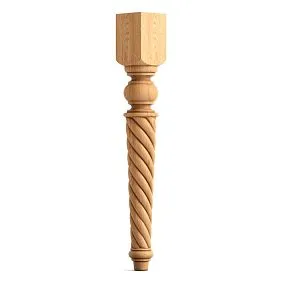
High-relief technique allowed creating volumetric compositions that played with light and shadow. Spiral columns entwined with grapevines, figures of amorini, complex cartouches — all of this transformed balusters into works of art.
Our factory also produces:




Classicism: Return to Harmony
Classical decoration of the 18th–19th centuries restored the strictness and elegance to balusters. Symmetrical compositions, classical motifs, restrained color palettes — all of this created a sense of noble simplicity and refinement.
Get Consultation
Modern Baluster Decoration Techniques
Wood Carving: Traditions in a New Form
Carved decoration remains one of the most popular ways to decorate balusters. Modern masters are skilled in numerous techniques that allow them to create items of any complexity — from simple geometric ornaments to complex narrative compositions.
Relief carving creates three-dimensional images on the surface of the baluster. Plant motifs, geometric patterns, stylized animal images — all of these can become decorative elements. The depth of the relief varies from several millimeters to centimeters, creating various visual effects.
Contour carving is a more restrained form of decoration. Thin lines cut into the wood surface create elegant patterns that do not disrupt the overall shape of the baluster. This type of decoration is especially popular in modern interiors, where minimalism is valued.
Through-carving transforms the baluster into an ornate structure. Complex interweavings of lines, creating a lace-like effect, require the highest level of craftsmanship. Such balusters become true works of art, capable of adorning the most refined interior.
Inlay: play of materials and textures
Metal inlay creates striking contrasts between warm wood and cool metallic sheen. Thin copper or brass threads woven into the wooden base create refined patterns. Silver and gold inserts add a special luxury to balusters.
Mother-of-pearl inlay adds a mother-of-pearl sheen to balusters. Thin mother-of-pearl plates, skillfully inserted into the wood, create a sparkling effect, especially noticeable under artificial lighting.
Stone inlay uses the natural beauty of minerals to create unique decorative effects. Malachite, lapis lazuli, amber — each stone brings its own color palette and energy.
Painting and patination
Artistic painting opens up boundless possibilities for decorating balusters. From simple floral motifs to complex narrative compositions — everything depends on the artist's imagination and the interior's style.
Gilding gives balusters a regal appearance. Thin sheets of gold leaf applied to a specially prepared surface create a precious effect. Various gilding techniques allow achieving both glossy and matte surfaces.
Patination creates an effect of noble antiquity. Special compounds allow mimicking the natural aging of the material, giving balusters the appearance of antique pieces. Green patina of copper, silver patina of tin, golden patina of bronze — each tone creates its own atmosphere.
Stylistic directions in baluster decoration
Classic decoration: eternal values
Classic baluster decoration It is based on time-tested principles of harmony and proportion. Antique motifs — acanthus leaves, palmettes, meanders — create a sense of connection with the great traditions of the past.
Symmetrical compositions emphasize the strictness and solemnity of the classical style. Each decorative element has its place within the overall composition, creating a sense of order and stability.
The restrained color palette of classical decoration is based on natural wood tones with the addition of gold and silver accents. This creates a sense of nobility and refinement.
Baroque opulence
Baroque decoration is characterized by an abundance of decorative elements and complex compositions. Spiral columns entwined with grapevines, figures of amorini, intricate cartouches — all of this creates a sense of festivity and grandeur.
The play of light and shadow is a key element of baroque decoration. Deep reliefs create dramatic contrasts, emphasizing the volume and dynamism of the composition.
Gilding and polychromy give baroque balusters a special luxury. The combination of gold with bright colors creates a precious effect.
Modern: natural forms
The modern style introduced natural motifs and flowing lines into baluster decoration. Stylized plants, insects, sea waves — all of this became a source of inspiration for artists at the beginning of the 20th century.
Asymmetrical compositions create a sense of movement and life. Each baluster becomes unique, like a work of nature.
New materials — colored glass, metal, ceramics — expanded the palette of decorative possibilities.
Modern minimalism
Minimalist decoration is based on the principle of 'less is more'. Simple geometric shapes, clean lines, absence of excess — all of this creates a sense of modernity and functionality.
Textural effects replace traditional ornaments. Various surface treatments — brushing, sanding, firing — create tactile and visual effects.
Contrasting material combinations — wood and metal, matte and glossy surfaces — create dynamic compositions.
Technological aspects of decoration
Surface preparation
Quality surface preparation is the foundation of successful decoration. The wood must be carefully sanded, all defects removed, and the surface dust-free.
Priming ensures better adhesion of decorative materials to the base. Different types of primers are used depending on the planned decorative style.
Marking decorative elements requires special precision. Special templates and stencils are used to ensure symmetry and repetition of patterns.
Tools and materials
Carving tools — chisels, knives, bits — must be perfectly sharpened. The quality of the tool determines the cleanliness and precision of the carving.
Brushes and airbrushes are used for applying paints and varnishes. Different types of brushes allow creating various effects — from fine lines to broad fills.
Special compositions — paints, varnishes, patinas — must be compatible with each other and suitable for a specific type of wood.
Quality control
Step-by-step control ensures high-quality decoration. At each stage of work, the result is checked against specified parameters.
Final finishing includes applying protective coatings, polishing, and final refinement of details.
Regional decoration traditions
Russian traditions
Russian carving is distinguished by its expressiveness and symbolism. Traditional motifs — birds, flowers, geometric patterns — carry deep meaning and reflect the people's worldview.
Gorodets painting brings vibrant colors and cheerfulness to baluster decoration. Characteristic rosettes, kubavkas, and birds create a festive atmosphere.
Khokhloma painting, with its gold patterns on a black background, gives balusters a special solemnity and elegance.
European Schools
The Italian school is renowned for the refinement and delicacy of its decoration. Complex floral ornaments, mythological scenes, and virtuoso execution techniques — all characterize Italian traditions.
The French school is distinguished by elegance and grace. Rococo with its asymmetrical scrolls, and Neoclassicism with its strict solemnity — each style has its own characteristics.
The German school is valued for precision and durability. German masters create decorations that serve for centuries without losing their original beauty.
Eastern influences
Chinese motifs bring to baluster decoration the philosophy of harmony and balance. Dragons, flowering branches, and characters create an atmosphere of Eastern wisdom.
Japanese aesthetics, with its principle of 'wabi-sabi', value natural beauty and imperfection. Simple forms, natural materials, minimal decoration — all create a sense of calm and tranquility.
Indian traditions are distinguished by rich ornamentation and symbolism. Complex interweavings of lines, floral and geometric motifs create captivating compositions.
Modern trends and innovations
Digital technologies
Laser engraving allows creating ultra-precise patterns and images. Computer control ensures perfect repeatability and the possibility of creating complex compositions.
3D modeling helps visualize future decoration even during the design stage. The client can see the result before work begins and make necessary adjustments.
CNC milling ensures the highest precision in executing complex three-dimensional forms. This opens new possibilities for creating unique decorative elements.
Eco-Friendly Materials
Natural dyes replace synthetic analogs. Plant-based pigment paints are not only safe for health but also create special color effects.
Water-based eco-friendly varnishes provide wood protection without emitting harmful substances. They allow wood to 'breathe', preserving its natural properties.
Recycled materials find application in creating decorative elements. This is not only eco-friendly but also allows creating unique effects.
Interactive elements
Built-in lighting transforms balusters into lighting elements. LED strips hidden within decorative elements create an eye-catching staircase illumination.
Sensory elements allow controlling lighting and other home systems by touching the baluster. This combination of beauty and functionality is especially relevant in 'smart homes'.
Practical aspects of decoration
Choice of decoration style
Compatibility with interior design is the main principle for choosing baluster decoration. The decoration style should harmonize with the overall concept of the room, complementing and emphasizing it.
Functional requirements also influence the choice of decoration. Balusters in children's rooms must be safe, without sharp protruding elements. In public buildings, the durability of the decorative coating is important.
Budget constraints determine the complexity and materials of decoration. Simple techniques can be no less effective than complex and expensive ones.
Regular cleaning of decorated surfaces requires a gentle approach. Soft brushes, special formulations for various types of finishes — all of this helps preserve the original beauty.
Periodic renewal of protective coatings extends the lifespan of the decor. Lacquers and waxes should be renewed according to the manufacturer's recommendations.
Professional restoration may be required for serious damage to the decor. Experienced craftsmen are capable of restoring even complex decorative elements.
The cost of decorating depends on the complexity of the work, materials used, and the skill level of the craftsmen. Simple staining will cost orders of magnitude less than artistic carving.
Economic Aspects
The long-term return on quality decor is reflected in increased property value and a long service life without the need for renewal.
The possibility of staged decorating allows costs to be distributed over time. One can first perform basic decorating, then gradually add more complex elements.
The option for staged decoration allows you to distribute expenses over time. You can first perform basic decoration and then gradually add more complex elements.
Conclusion
The art of decorating balusters represents a unique combination of traditional craftsmanship and modern technologies. In a world where standardization often triumphs over individuality, decorative balusters remain islands of handcrafted beauty, capable of transforming an ordinary dwelling into a work of art.
Modern decorating possibilities are practically limitless. From traditional wood carving to innovative digital technologies — everyone can find a way to express their individuality. It is important to remember that decor should not only please the eye but also harmoniously fit into the overall interior concept.
Choosing quality materials and professional execution is the guarantee of durability and beauty of decorated balusters. Investments in quality decor pay off not only in aesthetic pleasure but also in increased property value.
The development of eco-friendly technologies makes decorating balusters even more attractive. Natural materials, safe coatings, energy-efficient technologies — all of this allows creating beauty without harming the environment.
When selecting craftsmen for decorating balusters, special attention should be paid to the experience and portfolio of the artisans. Quality decorating requires not only technical skills but also artistic taste, understanding of styles and traditions.
STAVROS has established itself as a leading manufacturer of high-quality decorative elements made from solid wood. Years of experience, use of premium materials, and modern technologies enable STAVROS to create decorated balustersthat fully meet the highest quality standards and exceed even the expectations of the most discerning clients seeking to create unique interiors with character and individuality.