Article Contents:
- Evolution of material management systems in furniture manufacturing
- Historical context of development
- Technological breakthroughs version 10
- Architecture of modern material database
- Structural Organization of Information
- Material property parametrization
- Methodology for creating professional libraries
- Principles of selection and cataloging
- Visual representation of materials
- Sheet materials: foundation of cabinet furniture
- MDF - universal structural material
- MDF - material for creative solutions
- Solid wood - classic beyond time
- Trim items and their classification
- Edge banding materials
- Profiles and strips
- Hardware as a system of functional solutions
- Hinges - foundation of furniture mechanics
- Guides for sliding elements
- Finishes and decorative materials
- Lacquers and wood stains
- Films and veneers
- Innovative materials and technologies
- Composite materials of new generation
- Smart materials
- Ecological aspects of modern materials science
- Sustainable development and circular economy
- Recycling and reuse
- Material quality and certification
- Quality control systems
- International standards
- Digitalization of material management
- Internet of Things in materials science
- Artificial intelligence in material selection
- Economic aspects of material management
- Cost Optimization
- Risk Management
- Frequently Asked Questions

The mastery of a modern furniture maker is largely determined by the ability to effectively work with digital design tools.Furniture Maker 10 MaterialsRepresent the fundamental basis for creating quality furniture, combining precise technical specifications with visual data. Every professional knows: a properly configured material base is not just a set of data, but a powerful tool capable of radically changing the approach to design and production.
In the modern world of furniture design, speed and accuracy in decision-making play a decisive role. The software of the tenth version has brought revolutionary changes to working with material resources, providing capabilities that were once only dreamed of. But how effectively are these capabilities used in real practice?


Evolution of Material Management Systems in Furniture Production




Historical Context of Development
The path from paper catalogs to digital libraries took several decades of persistent work by engineers and programmers. What has changed radically with the advent of the tenth version of the program? The integration of materials data has reached an unprecedented level of detail and accuracy.Furniture Maker 10 MaterialsAllow not only to visualize the future product, but also to predict its behavior under various operating conditions.
The revolutionary aspect was the introduction of parametric material models, where each element is described by a set of interrelated characteristics. Physical properties, technological parameters, economic indicators — all this is unified into a single system, providing a comprehensive approach to design.
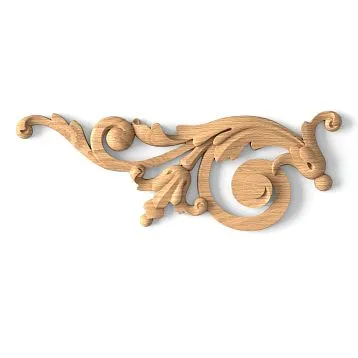
Special attention is paid to the integrationfurniture decorinto the overall material base structure. Decorative inlays, carved elements, profiled shapes require a special approach to parametrization, taking into account not only aesthetic but also functional aspects of application.
Our factory also produces:


Technological Breakthroughs of Version 10
What innovations has the tenth version brought to material management? The approach to storing and processing texture information has been fundamentally changed. High-dynamic image range allows conveying the finest surface nuances, creating photorealistic project visualizations.
Intelligent systems for material compatibility analysis automatically warn about potential problems when combining different components. Coefficients of thermal expansion, chemical compatibility, mechanical properties — all these parameters are taken into account when forming recommendations.
Material version control system ensures tracking of changes in material characteristics over time. This is critically important for long-term projects, where stability of material parameters affects the quality of the final product.
Get Consultation
Architecture of the Modern Material Base
Structural Organization of Information
Effective organizationFurniture Maker 10 MaterialsBegins with a correct understanding of the hierarchical structure of data. Each level of classification carries a certain semantic load and affects the speed of finding the required information.
The top level includes basic categories of materials: sheet, profile, volumetric, finishes, hardware. Each category is divided into subcategories based on the material's origin, method of production, and area of application.What new-generation furniture is made of — a question customers must receive comprehensive answers to. Eco-friendliness, durability, ease of care — specific advantages speak louder than abstract 'innovation'.— this fundamental question determines the logic of building the entire classification system.
The third level of detail includes specific trade marks, manufacturers, size ranges. Here, the critical importance of information accuracy lies, as manufacturers' assortments are constantly updated, new finishes appear, and technical characteristics change.
Material Properties Parametrization
Each material in the database is described by multiple parameters, divided into several groups. Physical characteristics include density, modulus of elasticity, strength limit, coefficients of linear expansion. These data are critically important for engineering calculations and predicting the durability of products.
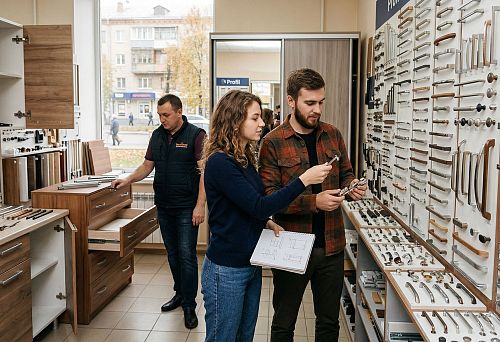
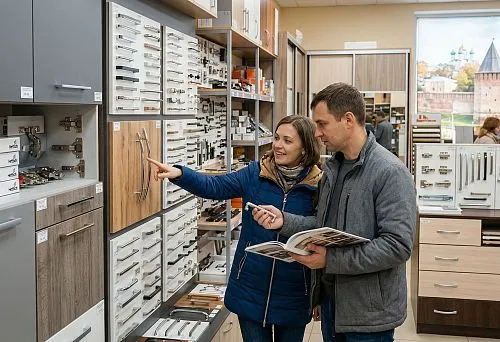
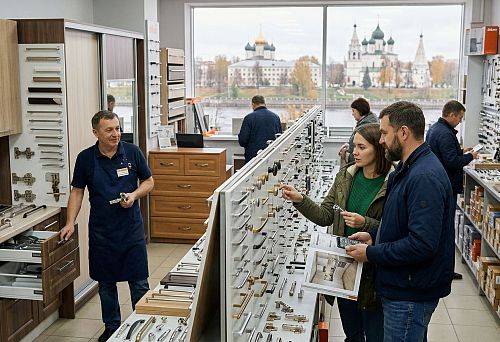
Technological parameters define the characteristics of material processing: cutting modes, drilling and milling capabilities, compatibility with various types of adhesives and coatings.Furniture hardwareRequires special detail in methods of fastening and assembly.
Economic characteristics include material cost, utilization coefficients during cutting, logistics parameters. Integration with enterprise management systems allows automatically calculating the cost of products at the design stage.
Methodology for Creating Professional Libraries
Principles of Selection and Cataloging
Creating an effective material library begins with analyzing the specific production needs. Which materials are used most frequently? Which characteristics are critically important for making design decisions?Furniture Maker 10 Materialsmust reflect the actual capabilities and limitations of production.
Standardization of names and part numbers ensures data consistency and eliminates information duplication. A unified coding system enables automation of many processes: from generating supplier orders to controlling inventory levels.
The timeliness of information regarding material availability is critical. The system must track changes in supplier assortments, the introduction of new items, and the discontinuation of outdated materials. Integration with supplier catalogs automates data updates.
Visual representation of materials
The quality of material visualization directly affects the client's perception of the project. Modern scanning technologies allow creating high-quality digital images of surfaces with the transmission of the finest texture details.
Color management systems ensure consistent display across different devices. Calibrated monitors, standardized color profiles, and controlled lighting during sample photography—all these factors influence color accuracy.
Moldings for DecorationRequire a special approach to creating visual materials. Textured surfaces must correctly display light and shadow play, emphasizing the volume and expressiveness of profiles.
Sheet materials: the basis of cabinet furniture
Laminated particleboard - a universal construction material
Laminated particleboard remains the foundation of modern furniture production due to its optimal combination of consumer properties and cost-effectiveness.Furniture Maker 10 Materialscontain detailed information about hundreds of finishes from leading manufacturers.
Each Laminated Particleboard finish is characterized not only by visual parameters but also by technical properties: formaldehyde emission class, moisture resistance, mechanical properties. Understanding these characteristics is critically important for selecting the right material for specific usage conditions.
A synchronized finish system ensures harmonious combination of various furniture elements. Edge banding materials, countertops, wall panels must ideally match the main cabinet material in color and texture.
MDF - material for creative solutions
Medium-density fiberboard opens up wide possibilities for implementing complex design solutions. The homogeneous structure of the material allows for deep milling, creating complex profiles, and integrating decorative elements directly into the product's construction.
MDF coatings vary widely: from simple lacquers to complex multi-layer systems with embossing and metallization. Each coating type requires an individual approach to processing and use.
The ecological properties of MDF make it a preferred choice for children's furniture and medical equipment. The absence of formaldehyde resins in modern boards ensures safe usage.
Solid wood - timeless classic
Natural wood will never lose its relevance in furniture production. Each wood species has unique characteristics: color, texture, mechanical properties, workability.
Oak remains the benchmark for strength and durability in premium-class furniture. Its high density and tannin content provide natural protection against pests and fungi.furniture legsMade from oak, they can withstand significant loads for decades.
Beech is characterized by a homogeneous structure and excellent workability. Its light tone and neutral texture make beech a versatile material for various interior styles.
Trimming items and their classification
Edge banding materials
The quality of edge banding largely determines the perception of the entire product. Modern edge banding materials feature a variety of thicknesses, textures, and application methods.Furniture Maker 10 Materialsinclude detailed compatibility characteristics of edge banding with base materials.
PVC edge banding provides reliable protection of ends from moisture and mechanical damage. Various edge banding thicknesses—from 0.4 to 3 mm—allow selecting the optimal solution depending on the product's purpose and project budget.
Melamine edge banding is attractive for its cost-effectiveness and ease of application. However, its use is limited to products with low requirements for moisture resistance and mechanical strength.
Profiles and strips
Decorative profiles allow creating expressive accents in furniture design. Aluminum profiles are distinguished by strength and variety of finishes: anodizing, powder coating, film lamination.
Plastic profiles attract with variety of shapes and colors. Modern polymers ensure stability of geometry and color throughout the entire service life.
Wooden profiles create a sense of naturalness and warmth. Different wood species and processing methods allow integrating profiles into any stylistic concept.
Hardware as a system of functional solutions
Hinges - the basis of furniture mechanics
Modern furniture hinges are high-precision mechanisms ensuring smooth and silent door opening. Each type of hinge is designed for specific application conditions and requires precise installation technology.
Surface-mounted hinges provide maximum ease of installation and adjustment. Their use is justified in budget projects where cost-effectiveness is important without compromising functionality.
Insert hinges require precise fitting, but provide a more aesthetic appearance and greater adjustment possibilities. Modern hinges with closers create a sense of premium product quality.
Guides for sliding elements
The quality of guides determines the comfort of using drawers and shelves. Ball-bearing guides are economical but have limited load capacity and service life.
Ball-bearing guides ensure smooth operation under significant loads. Telescopic construction allows fully extending drawers, providing convenient access to all contents.
Hidden-mount guides create a minimalist appearance of the product. Integration of closers and dampers increases comfort of use and longevity of mechanisms.
Finishes and decorative materials
Wood finishes and paints
The choice of wood finishing system depends on the operating conditions of the product and aesthetic requirements. Water-based varnishes are eco-friendly and provide a natural wood appearance, but have limited resistance to mechanical impacts.
Polyurethane varnishes create a durable coating resistant to abrasion and chemical exposure. Their use is justified for furniture subjected to intensive use: countertops, work surfaces, children's furniture.
Oil finishes highlight the natural beauty of wood, creating a tactilely pleasant surface. Regular renewal of oil finish maintains protective properties and appearance of the product.
Films and veneers
Decorative films allow imitating various materials while maintaining economical production. PVC films provide moisture resistance and ease of maintenance, which is important for kitchen furniture.
Natural veneer retains all advantages of solid wood while significantly saving material. Modern technologies allow creating large-format veneer sheets with minimal joints.
Reconstructed veneer combines the aesthetics of natural wood with production efficiency. The possibility of creating decorative patterns not found in nature expands designers' creative possibilities.
Innovative materials and technologies
New-generation composite materials
The development of polymer chemistry led to materials with specified properties. Wood-polymer composites combine the eco-friendliness of natural raw materials with the technological advantages of synthetic materials.
Fillers made from recycled wood reduce material cost and improve its ecological characteristics. The possibility of recycling composites solves the problem of disposing of used products.
Reinforcing fibers increase the strength characteristics of composites, allowing to create thin-walled structures with high rigidity. This is especially important for large furniture with minimal weight.
Smart Materials
Integration of electronic components into furniture materials opens new possibilities for functionality. Heating elements in countertops, LED strips in shelves, wireless charging in work surfaces - all this becomes reality.
Materials with shape memory allow creating transformable furniture that adapts to user needs. Thermosensitive coatings react to touch temperature, creating interactive surfaces.
Self-cleaning coatings with nano-structure solve problems of furniture maintenance. Antibacterial properties of materials are especially important for medical furniture and children's products.
Ecological aspects of modern materials science
Sustainable development and circular economy
The concept of sustainable development fundamentally changes approaches to material selection and use.where to buy decorUsing renewable resources is no longer just a matter of availability, but an ethical choice for manufacturers.
FSC certification guarantees that wood originates from responsibly managed forests. This information must be integrated into the material database to automatically generate product environmental declarations.
The carbon footprint of materials includes energy consumption for production, transportation, use, and disposal. Lifecycle assessment systems allow comparing different materials based on their environmental impact.
Recycling and reuse
Design for disassembly has become a mandatory requirement for modern furniture. Materials must allow easy separation into components for subsequent recycling.
Material labeling simplifies sorting during disposal. QR codes can contain complete information about material composition, recycling methods, and contact details of disposal organizations.
Modular furniture construction allows replacing worn components without dismantling the entire item. Standardization of connecting elements ensures compatibility of components from different manufacturers.
Material Quality and Certification
Quality Control Systems
Ensuring stable material quality requires a comprehensive approach to control at all production stages. Incoming raw material inspection, monitoring of technological parameters, and testing of finished products — each stage is critically important.
Statistical process control allows identifying deviations before defects occur. Automated control systems ensure objective assessment and eliminate human factors.
Traceability of products from raw materials to finished goods enables rapid localization of quality issues and implementation of corrective actions. Digital technologies make such traceability economically justified.
International Standards
Compliance with international quality standards opens access to global markets. EN standards regulate requirements for furniture materials in Europe, while ANSI standards apply in North America.
Environmental certifications confirm the safety of materials for human health. GREENGUARD, OEKO-TEX, and Cradle to Cradle certifications are becoming mandatory for many market segments.
ISO 9001 Quality Management System ensures a systematic approach to quality assurance. Regular audits confirm compliance with established procedures and continuous improvement.
Digitalization of Material Management
Internet of Things in Materials Science
Integrating sensors into materials and products allows real-time monitoring of their condition. Humidity sensors in wood materials warn of critical changes that could lead to deformation.
Temperature sensors monitor storage conditions for materials. Many modern materials require strict adherence to temperature regimes to preserve their properties.
RFID tags automate material inventory on the warehouse. Scanning tags updates the database in real time, eliminating manual accounting errors.
Artificial Intelligence in Material Selection
Machine learning algorithms analyze material usage history and recommend optimal solutions for new projects. Taking into account climatic conditions, usage intensity, and budget constraints allows finding the optimal compromise.
Computer vision systems automatically classify materials based on external characteristics. This is especially important when working with natural materials, which exhibit natural variability in properties.
Predictive analytics forecasts material behavior under various operating conditions. Models trained on large datasets can accurately predict product lifespan.
Economic Aspects of Material Management
Cost Optimization
Effective management of material resources directly impacts production profitability. ABC analysis of materials identifies positions requiring special attention from a cost perspective.
Just-in-time deliveries reduce inventory storage costs but require reliable suppliers and efficient logistics.Furniture Maker 10 Materialsmust contain up-to-date information on delivery times and minimum order quantities.
Group purchasing allows obtaining more favorable terms from suppliers. Cooperation with other manufacturers can significantly reduce material costs.
Risk Management
Supplier diversification reduces production disruption risks in case of problems with one partner. The database must include information on alternative suppliers for critical materials.
Hedging against currency risks is important when working with imported materials. Long-term contracts with fixed prices protect against sharp currency fluctuations.
Material inventory insurance protects against losses due to force majeure. Accurate assessment of inventory value is critically important for calculating insurance premiums.
Frequently asked questions
What is included in the Basis Furniture Designer 10 material base?
The material base includes a full spectrum of components for furniture production: sheet materials (MDF, particleboard, plywood, solid wood), edge banding materials, hardware, coatings, and finishing materials. Each material is described by technical specifications, visual parameters, economic indicators, and compatibility with other components.
How often should the material base be updated?
Price information should be updated monthly, technical specifications - quarterly. New materials are added as they become available in supplier catalogs. Critical updates related to safety or quality must be implemented immediately.
Can materials from different suppliers be imported?
Yes, the program supports importing data from various sources in standard formats: Excel, CSV, XML. Many furniture hardware manufacturers provide ready-made catalogs in compatible formats. When importing, field mapping must be configured.
How to ensure accurate color representation of materials?
To ensure accurate color representation, use calibrated monitors, standardized lighting conditions when photographing samples, and color profiles. It is recommended to periodically compare digital samples with physical material samples.