Article Contents:
- Historical journey: the evolution of balustrades through centuries
- From ancient times to the Renaissance: the birth of classical form
- Baroque and Rococo: triumph of refinement and ornamentation
- Classicism and Empire: return to strictness and monumentality
- Eclecticism and Modernism: experiments with form and materials
- Contemporary: from minimalism to high-tech
- Anatomy of perfection: constituent elements of balustrades
- Balusters: the heart and soul of balustrades
- Handrails: comfort and safety in elegant form
- Base and cornice: structural integrity and visual balance
- Decorative elements: individuality and character
- Functional splendor: practical application of balustrades
- Staircase balustrades: safety with every step
- Balcony and terrace railings: combination of protection and view
- Parapets and bridge railings: monumentality and durability
- Decorative balustrades: aesthetics of pure form
- Materials and Technologies: From Traditions to Innovations
- Natural stone: eternal classic
- Wood: warmth and coziness of natural texture
- Metal: from artistic forging to high-tech
- Glass and composite materials: transparency and lightness
- Design solutions: balustrade as interior accent
- Classic Style: Timeless Elegance
- Modern Minimalism: Functionality and Clean Lines
- Ethnic motifs: cultural heritage in modern interpretation
- Eclecticism and fusion: bold combinations and unexpected solutions
- Practical aspects: selection and installation of balustrades
- Defining style and material: key factors in decision-making
- Calculating dimensions and proportions: mathematics of beauty
- Installation technology: from project to realization
- Regulatory requirements and safety: compliance with standards
- Inspiring examples: balustrades in architectural masterpieces
- Historic palaces and estates: luxury in details
- Modern Architecture: Innovative Solutions
- Landscape Art: Balustrades in Landscape Design
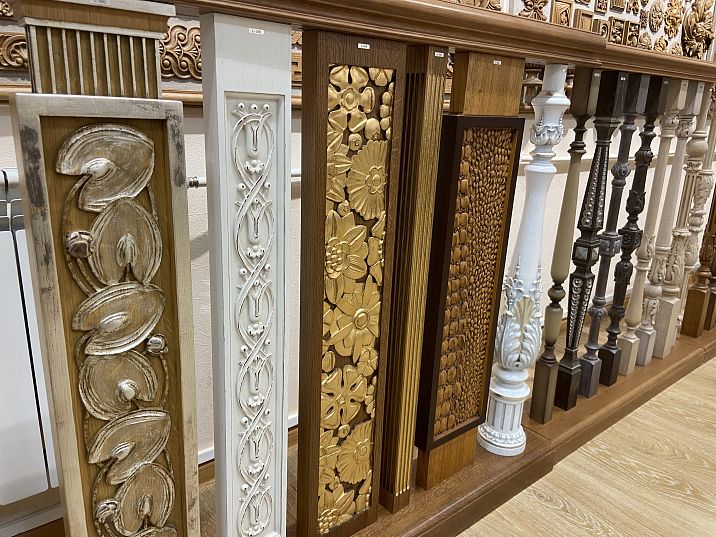
Have you ever paused before a majestic mansion, admiring the elegant lines of its facade? Or perhaps, ascending the luxurious staircase of a historic building, you involuntarily touched the exquisite railing, feeling the coolness of marble or the warmth of wood under your fingers? In both cases, your attention was likely captured by it — the balustrade, an architectural element that combines functionality with high art.
Balustrade photo This is not merely a collection of images of decorative railings. It is a visual encyclopedia of architectural craftsmanship, demonstrating how a utilitarian safety element can transform into a work of art that sets the tone for the entire space. Let’s immerse ourselves in this wonderful world, where every detail matters, and beauty is inseparably linked to practicality.



Historical Journey: The Evolution of Balustrades Through the Centuries




From Ancient Times to the Renaissance: The Birth of Classical Forms
Balustrades did not appear overnight. Their history spans millennia, and each era has left its unique mark on their development. Early prototypes of balustrades can be found in the architecture of ancient Assyria and Babylon, where they served not only as railings but also as important decorative elements, emphasizing the status of the building.
However, the true flourishing of balustrades began in ancient Greece and Rome. It was here that classical proportions of balusters — vertical posts forming the basis of the structure — were established. Ancient Roman architects, particularly Vitruvius, laid the foundational principles of balustrade design, which remain relevant to this day.
The Middle Ages introduced Gothic motifs into balustrade design — upward-reaching forms, intricate carvings, and symbolic elements. Balustrades of cathedrals and castles from this period reflected the spiritual aspirations of the era, combining functionality with deep symbolism.
A true revolution in balustrade aesthetics occurred during the Renaissance. Architects, inspired by ancient models, created harmonious proportions that became canonical. The works of Palladio, Brunelleschi, and other masters of the Renaissance demonstrate the ideal balance between massiveness and elegance, strength and visual lightness.
Our factory also produces:



Baroque and Rococo: Triumph of Refinement and Ornamentation
If the Renaissance sought harmony and balance, the Baroque era brought dynamism, expressiveness, and theatricality to balustrade design. Balusters acquired complex, sinuous forms reminiscent of flames or ocean waves. Surfaces were adorned with lavish decoration — botanical motifs, mythological scenes, heraldic symbols.
Balustrade photo The Baroque period demonstrates the incredible imagination of artists of that time. Particularly impressive are the works of Italian and Austrian architects, who created true stone symphonies for palaces and churches.
Rococo, building upon Baroque trends, added even more refinement and delicacy to balustrades. Forms became asymmetrical, shell motifs, floral garlands, and amorini appeared. Materials also became more diverse — alongside traditional stone and wood, gilded bronze, porcelain, and exotic woods were widely used.
Get Consultation
Classicism and Empire: Return to Rigor and Monumentality
A reaction against the excesses of Baroque and Rococo, Classicism restored rigor and clarity of form to balustrades. Inspired by ancient models, architects created structures distinguished by noble simplicity and restraint. Balusters acquired clear geometric outlines, and decoration became minimalist and symbolic.
Empire, developing Classicism during the Napoleonic era, added imperial grandeur to balustrades. Characteristic elements included laurel wreaths, eagles, and military trophies. Materials also reflected the idea of imperial power — marble, granite, bronze.
Eclecticism and Modernism: Experiments with Form and Materials
The 19th century, with its eclectic approach to architecture, brought incredible diversity to balustrade design. Architects freely combined elements from various historical styles, creating unique compositions. Neo-Gothic, Neo-Renaissance, and Neo-Baroque balustrades emerged, along with exotic variants inspired by Eastern art.
The style of Modernism (Art Nouveau) holds a special place in the history of balustrades. Rejecting direct quotations of historical forms, architects of this movement created organic, flowing lines reminiscent of plant stems or ocean waves. Materials also became more diverse — alongside traditional ones, cast iron, wrought iron, and glass appeared.
Contemporary: From Minimalism to High-Tech
The 20th century brought radical changes to architecture and, consequently, to balustrade design. Functionalism and minimalism reduced ornamentation to a minimum, focusing on the practical function of the railing. Balustrades transformed into simple geometric structures made of metal, glass, and concrete.
However, alongside minimalist trends, directions emerged that revived ornamentation. Postmodernism played with historical references, creating ironic combinations. High-tech turned balustrades into technological constructions of metal and glass, reminiscent of elements of spacecraft.
Today Balustrade photo Demonstrates incredible diversity of styles and approaches. From neoclassical variants reproducing historical samples with the highest precision, to avant-garde constructions challenging gravity and traditional notions of form.
Anatomy of Perfection: Components of a Balustrade
Balusters: The Heart and Soul of a Balustrade
Balusters are vertical elements forming the basis of a balustrade. It is they that primarily determine the visual character of the entire structure. A classical baluster has a symmetrical shape with thickening in the middle (called the "bulge" or "cup") and tapering at the base and top.
However, there are countless variations in baluster forms — from simple cylindrical posts to complex sculptural compositions, from strict geometric shapes to whimsical organic lines. Each architectural style developed its characteristic types of balusters, by which one can unambiguously determine the era and regional origin.
Materials for manufacturing balusters are also extremely diverse:
- Stone (marble, limestone, granite) - traditional material for monumental balustrades. Distinguished by durability and noble texture, but requires high craftsmanship in processing.
- Wood - a warm, eco-friendly material allowing for both simple and intricate carved forms. Requires regular maintenance and protection from moisture.
- Metal (cast iron, bronze, steel, aluminum) - provides strength with relative lightness of construction. Allows for delicate, detailed forms.
- Concrete - an economical alternative to natural stone. Modern technologies allow creating concrete balusters indistinguishable from stone.
- Polymer materials - the latest direction in baluster production. Distinguished by lightness, resistance to external influences, and ease of installation.
Handrails: comfort and safety in elegant form
Handrail - the upper horizontal element of a balustrade, directly contacting the human hand. Its shape and dimensions must ensure comfortable grip and secure support, so ergonomics plays at least as important a role here as aesthetics.
A classic handrail has a rounded top surface 6-8 cm wide - optimal for comfortable hand grip. However, more complex profiles also exist, including grooves, protrusions, and other decorative elements.
The handrail material must be pleasant to the touch and sufficiently strong to withstand significant loads. Traditionally, the same materials used for balusters are employed, but combined variants are possible - for example, a wooden handrail on stone balusters.
Base and cornice: structural integrity and visual balance
Base (foundation) of a balustrade - the lower horizontal element on which balusters are mounted. It ensures the stability of the entire structure and even load distribution. The base's shape can be simple (rectangular in cross-section) or profiled, with various decorative elements.
Cornice (tie beam) - an intermediate horizontal element connecting the upper parts of balusters. In some constructions, it may be absent, but it is usually a crucial component of the balustrade, ensuring its structural integrity and visual completeness.
The base and cornice, in addition to their practical function, play an important role in forming the overall silhouette of the balustrade, creating a frame for balusters and emphasizing horizontal lines in architectural composition.
Decorative elements: individuality and character
In addition to the main structural components, a balustrade may include various decorative elements, giving it individuality and character:
- Newels - massive vertical elements installed at the beginning and end of a balustrade, as well as at turns. They visually anchor the composition and often serve as a base for sculptural decoration.
- Planters - decorative vessels mounted on newels or directly on the handrail. Can be used for live plants or purely as decorative elements.
- Sculptural elements - figures of people, animals, mythological creatures, integrated into the balustrade structure.
- Relief panels - decorative inserts between balusters, adorned with carving or sculptural ornamentation.
These elements not only enrich the visual appearance of the balustrade but may also carry symbolic meaning, telling the story of the building or reflecting the status of its owner.
Functional grandeur: practical application of balustrades
Staircase balustrades: safety with every step
Staircase balustrades - arguably the most common and functionally necessary type of these structures. They ensure safety during ascent and descent, preventing falls and providing hand support.
Designing a staircase balustrade requires special attention to ergonomics and safety. The handrail height should be 90-100 cm from the stair level - sufficient to prevent falls but not so high as to create inconvenience during use. The distance between balusters should not exceed 10-15 cm to prevent slipping between them, especially if there are children in the house.
Functionality does not exclude aesthetics. Balustrade photo Staircase constructions demonstrate incredible design diversity - from classic versions with carved wooden balusters to modern minimalist structures made of glass and metal.
A special subtype are spiral staircases, where the balustrade must follow a spiral trajectory. This requires special skill in design and fabrication, but the result often becomes a central interior element, attracting admiring glances.
Balcony and terrace railings: combination of protection and view
Balconies and terraces - spaces where the protective function of balustrades is especially important due to significant height. However, the aesthetic component is equally important, as these elements often form the exterior appearance of the building.
Balcony and terrace railings must withstand significant wind loads and atmospheric influences, so higher requirements are placed on material strength and corrosion resistance. Traditionally, stone and metal were used for these purposes, but modern technologies allow using also tempered glass, composite materials, and even specially treated wood.
Balcony railings often reflect the architectural style of the entire building. In historical structures, they may be richly decorated, using intricate wrought iron patterns or carved stone elements. In modern architecture, more minimalist solutions prevail, where the main emphasis is on clean lines and material quality.
Bridge parapets and railings: monumentality and durability
Railings along waterfronts, bridges, and other public spaces are designed for intensive use and extreme operating conditions. They must withstand significant loads, resist vandalism, and maintain an attractive appearance for decades.
Materials for such structures are selected for maximum durability — granite, high-grade concrete, stainless steel. Design is usually more restrained, emphasizing monumentality and visual stability.
However, artistic expression also finds its place here. Many historic bridges are adorned with railings that are true works of art. Modern projects also often include original design solutions, transforming a functional element into an important part of the urban landscape.
Decorative railings: aesthetics of pure form
Not all railings serve a direct protective function. Some are used exclusively as decorative elements, highlighting the architectural style of a building or delineating space.
Such structures can be seen in gardens, around fountains, as barriers for podiums and raised areas. Their height may be significantly less than standard (sometimes only 40-50 cm), and their design is primarily oriented toward aesthetic perception.
Decorative railings often become a central element of landscape design, organizing space and creating visual accents. They can serve as a base for vertical greening, support for lighting fixtures, or simply an elegant boundary between different functional zones.
Materials and technologies: from traditions to innovations
Natural stone: eternal classic
Natural stone is historically the first and remains one of the most prestigious materials for making railings. Its main advantages are durability, natural beauty, and status.
Marble, with its noble texture and ability to be polished to a mirror finish, is traditionally used to make elegant, classical railings. Each piece of marble is unique in pattern and tone, giving products made from this material special value.
Limestone and sandstone are more workable, allowing for complex carved details. They have a warmer, more natural appearance, well-suited to landscape design and the architecture of country homes.
Granite is distinguished by exceptional strength and resistance to atmospheric effects, making it ideal for outdoor railings in regions with harsh climates. Modern processing technologies allow creating from granite not only massive, monumental forms, but also relatively elegant structures.
The technology of manufacturing stone railings combines traditional hand-carving methods with modern CNC equipment, allowing for the highest precision and repeatability of elements.
Wood: warmth and coziness of natural texture
Wood is a material that brings a special warmth and coziness to railings. Its natural texture, pleasant to the touch surface, and wide color palette make wooden railings especially popular in residential interiors.
Various types of wood are used to make balusters and handrails, each with its own characteristics:
- Oak — symbol of strength and durability. It has a beautiful, expressive texture and high density, making it ideal for manufacturing elements subjected to significant loads.
- Beech — a hard wood with a uniform structure, well-suited for turning. It has a light, warm tone that can be easily stained to various colors.
- Ash — elastic and strong wood with a beautiful grain pattern. It polishes well, creating a smooth, pleasant-to-touch surface.
- Walnut — noble dark wood with rich texture. Traditionally used for manufacturing premium railings in classical style.
- Exotic species (teak, merbau, iroko) — distinguished by high resistance to moisture and rot, making them suitable for outdoor use.
Modern wood processing technologies allow creating complex shapes with high precision. Special protective coatings ensure durability and preservation of attractive appearance even under intensive use.
Metal: from artistic forging to high-tech
Metal railings offer a unique combination of strength, durability, and design flexibility. Depending on the selected metal and processing technology, they can appear traditionally or ultra-modern.
Artistic forging — a classic technique allowing to create unique, detailed railings with plant motifs, scrolls, and figurative elements. Forged items possess a special charm of handcrafted work, where each element is unique.
Casting — a technology allowing to reproduce complex shapes with high precision. Cast iron was widely used in the 19th century to create ornate railings in Gothic Revival and eclectic styles. Modern technologies allow casting elements from aluminum, bronze, and other alloys.
Laser cutting and bending — innovative methods opening new possibilities for metal railing design. They allow creating complex geometric patterns, perforations, and three-dimensional forms with high precision.
Among metals used for manufacturing railings, special attention is given to:
- Stainless steel - a modern material combining strength, corrosion resistance, and an aesthetic appearance. Especially popular in minimalist and high-tech interiors.
- Brass and bronze - alloys with a warm golden hue, traditionally used for crafting elegant balustrades in classical style.
- Wrought iron - a material with rich traditions, enabling the creation of both massive and delicate structures with high artistic value.
- Aluminum - a lightweight, corrosion-resistant metal, ideal for modern, minimalist balustrades.
Glass and composite materials: transparency and lightness
Glass has revolutionized balustrade design, enabling the creation of visually light, almost weightless structures that do not clutter space. Modern manufacturing technologies for tempered and laminated glass ensure the necessary strength and safety.
Glass balustrades can be fully transparent, matte, tinted, or decorated in various ways - from sandblasting to digital printing. They are ideal for modern interiors where preserving the feeling of openness and light is essential.
Glass panel mounting is achieved through various methods - using point holders, clamp profiles, or special adhesive compounds. Each method has its own aesthetic and technical characteristics.
Composite materials - a relatively new direction in balustrade production. They consist of combinations of various components (polymers, mineral fillers, fibers), providing an optimal balance of strength, weight, and cost.
Polyurethane and fiberglass balusters can visually imitate traditional materials - stone or wood - but offer advantages such as resistance to moisture and rot, lightness, and ease of installation. They are especially popular in the restoration of historical buildings, where complex decorative elements must be recreated with minimal load on the structure.
Design solutions: balustrade as an interior accent
Classic style: Timeless elegance
Classic balustrades embody harmony, proportion, and restrained luxury. They are based on architectural canons of antiquity and the Renaissance, where each element has its designated place and significance.
Characteristics of classic balustrades:
- Symmetrical, turned balusters with a clearly defined 'bulge' in the central part
- Proportional relationships between height, width, and spacing between elements
- Use of traditional materials - marble, limestone, noble wood species
- restrained decoration based on classical motifs - acanthus leaves, ovals, meanders
- Smooth, rounded handrail shapes, comfortable for hand grip
Balustrade photo In classical style, this design demonstrates an amazing ability to remain relevant regardless of fashion trends. Such balustrades fit organically into both historical interiors and modern spaces where traditions and solidity are valued.
The color palette of classic balustrades is usually restrained - white, cream, natural wood tones, sometimes with gold accents. This creates a sense of nobility and visual purity.
Modern minimalism: functionality and purity of lines
Minimalist balustrades are the complete opposite of classic ones. They sacrifice ornamentation for functionality, clean lines, and visual lightness.
Main principles of minimalist balustrades:
- Simple geometric shapes without unnecessary details
- Use of modern materials - glass, stainless steel, aluminum
- Minimal number of vertical elements or their complete absence (in the case of solid glass panels)
- Hidden fastenings creating an impression of 'lightness' of the structure
- Monochromatic color palette - black, white, gray, metallic
Such balustrades are ideal for modern interiors in minimalist, high-tech, and loft styles. They do not attract excessive attention but create a sense of thoughtfulness and technological sophistication in the space.
Glass balustrades without visible vertical elements have gained particular popularity. They visually do not clutter space, allow light to circulate freely, and create an effect of 'floating' stairs or balconies.
Ethnic motifs: cultural heritage in a modern interpretation
Ethnic balustrades draw inspiration from the cultural traditions of various peoples around the world. They introduce exotic notes into the interior and create an atmosphere of travel.
Among the most popular ethnic styles:
- Eastern style - delicate wooden or metal balustrades with geometric patterns characteristic of Islamic architecture. Often used are arabesque, star, and polygonal motifs.
- Mediterranean style - balustrades made of terracotta, limestone, or stained wood with motifs of grapevines, olive branches, and seashells.
- Asian style - wooden balustrades with elements characteristic of Chinese or Japanese architecture: diamond-patterned lattices, stylized cloud, dragon, and floral motifs.
- Scandinavian style - simple wooden balustrades in light shades with minimalist geometric decor or traditional carving.
Ethnic balustrades look especially striking in interiors of corresponding style, but can also become a bright accent in a more neutral space, bringing character and individuality to it.
Eclecticism and fusion: bold combinations and unexpected solutions
Eclectic balustrades combine elements of various styles, eras, and cultures, creating unique, memorable compositions. This approach allows designers to freely experiment with forms, materials, and techniques.
Characteristics of eclectic balustrades:
- Mixing different materials in one construction (e.g., wood and metal, stone and glass)
- Combining historical and modern elements
- Playing with contrasts - heavy and light, matte and shiny, traditional and avant-garde
- Using unexpected color solutions - bright accents, contrasting combinations, gradients
Eclectic balustrades are ideal for interiors where individuality and creative approach are valued. They can become a central design element, setting the tone for the entire space.
Fusion, as a type of eclecticism, often refers to exotic cultures, creating unexpected combinations of Eastern and Western motifs, historical and futuristic elements.
Practical aspects: selection and installation of balustrades
Defining style and material: key factors in decision-making
Choosing a balustrade is a responsible step requiring consideration of many factors. First, you must determine the style that should harmonize with the overall concept of the interior or exterior.
For classic interiors, balustrades with turned balusters made of wood or stone are suitable. In modern spaces, minimalist constructions of glass and metal are more appropriate. Eclectic interiors allow for bolder experiments with forms and materials.
When selecting material, consider:
- Location of installation - for outdoor balustrades, resistance to atmospheric conditions is critical; for bathrooms, water resistance is essential.
- Intensity of use - in high-traffic areas, materials must be especially strong and resistant to wear.
- Overall style of the room - the balustrade material should harmonize with other interior elements (floors, walls, furniture).
- Budget - the cost of different materials can vary significantly, although modern technologies allow creating high-quality imitations of expensive materials.
- Safety requirements - especially important for families with children and elderly people.
Calculating dimensions and proportions: the mathematics of beauty
Correct proportions - the key to the aesthetic appearance of the balustrade. There are classical ratios, tested over centuries:
- The height of the balustrade from the floor or steps to the top of the handrail is usually 90-100 cm for residential spaces and 110-120 cm for public buildings.
- The optimal distance between centers of adjacent balusters is 15-20 cm (the gap between them should not exceed 10 cm for safety reasons).
- In the classical variant, the ratio of baluster height to its maximum width is approximately 7:1.
- The height of the balustrade base is usually 1/8-1/10 of the total structure height.
These proportions may vary depending on style and specific conditions, but they provide a good starting point for design.
When calculating dimensions, ergonomic requirements must also be considered - the handrail should be comfortable to grasp, and the balustrade height should be sufficient to prevent falls.
Installation Technology: From Project to Implementation
The installation process of the balustrade includes several stages:
- Design - creating a detailed drawing specifying all dimensions, materials, and mounting methods. At this stage, it is important to consider the characteristics of the base (floor, steps) to which the balustrade will be attached.
- Manufacturing elements - depending on the selected material and design, this process may include turning, threading, forging, casting, or other technologies.
- Base preparation - cleaning, leveling, and if necessary, reinforcing the structure for secure balustrade mounting.
- Mounting the base - installing the lower horizontal element to which the balusters will be attached.
- Installing balusters - securing vertical elements with equal spacing and vertical alignment.
- Installing the handrail - mounting the upper horizontal element connecting all balusters.
- Final finishing - sanding, painting, varnishing, or other treatments depending on the material.
Each material has its own installation characteristics:
- Stone balustrades are usually installed using cement mortar or special adhesives. Elements may additionally be secured with metal pins.
- Wooden balustrades are attached using carpentry joints, glue, and screws. It is important to consider possible wood expansion and contraction due to changes in humidity.
- Metal balustrades can be mounted using welding, bolted connections, or special clamps.
- Glass balustrades require special attention to mounting, which must evenly distribute load and prevent stress concentration in the glass.
Regulatory Requirements and Safety: Compliance with Standards
Balustrade installation is regulated by building codes and regulations that ensure safe use:
- SP 54.13330.2016 defines requirements for railings of staircases, balconies, and terraces in residential buildings.
- GOST 25772-83 establishes technical specifications for railings of staircases, balconies, and roofs.
- SNiP 31-01-2003 contains requirements for safety of railings in residential buildings.
Main requirements concern:
- Railing height - at least 90 cm for residential spaces and 110 cm for public buildings.
- Structural strength - ability to withstand horizontal load of at least 0.3 kN/m (approximately 30 kg per linear meter).
- Child safety - the distance between vertical elements should not exceed 10 cm to prevent slipping between them.
- Absence of sharp angles and protruding elements that could cause injury.
For public buildings and special facilities (schools, hospitals, senior homes), additional requirements exist, taking into account their specific usage.
Inspiring Examples: Balustrades in Architectural Masterpieces
Historic palaces and estates: luxury in detail
Historical palaces and estates offer a rich source of material for studying balustrades of various epochs and styles. These structures, created by the best architects and craftsmen of their time, demonstrate the highest level of craftsmanship and attention to detail.
The Palace of Versailles in France impresses with the grandeur of its marble balustrades, decorating both interiors and gardens. Particularly striking is the famous Mirror Gallery, where the colorful marble balustrades of the windowsills harmoniously blend with the overall decor of the room.
The Winter Palace in St. Petersburg showcases luxurious baroque-style balustrades, where traditional forms are enriched with ornate decoration and gilding. The Jordan Staircase stands out with its monumental marble balusters and sculptural elements.
The Kuskovo Estate in Moscow presents a more restrained, yet no less refined, variant of balustrades from the classical era. Here, one can see elegant wooden structures painted white, which beautifully complement the overall interior style.
Balustrade photo These historical objects serve as an inexhaustible source of inspiration for modern designers striving to recreate the atmosphere of luxury and refinement in their projects.
Modern Architecture: Innovative Solutions
Modern architectural masterpieces demonstrate a completely new approach to balustrade design, where traditional forms give way to innovative solutions.
The Guggenheim Museum in Bilbao, designed by Frank Gehry, impresses with its futuristic glass and titanium balustrades, which seamlessly integrate into the building's overall concept with its fluid, sculptural forms.
The Oslo Opera House, designed by the architectural firm Snøhetta, features minimalist glass balustrades that are almost invisible, creating a sense of open, unobstructed space and emphasizing panoramic views of the fjord.
The Aqua residential complex in Chicago, designed by Studio Gang Architects, is known for its wave-like balconies with innovative balustrades, which create a unique, recognizable silhouette of the building.
These examples show how modern architects reinterpret the traditional function of balustrades, transforming them from purely utilitarian elements into an important part of the building's artistic image.
Landscape Architecture: Balustrades in Landscape Design
In landscape architecture, balustrades play a special role, organizing space and creating architectural accents within the natural environment.
The gardens of Villa d'Este in Tivoli (Italy) are renowned for their Renaissance balustrades, which frame terraces and fountains, creating a harmonious transition between architecture and landscape.
Peterhof near St. Petersburg demonstrates magnificent baroque-style balustrades adorned with vases and sculptural groups. They not only serve the practical function of enclosing terraces and staircases, but also act as pedestals for fountains and sculptures.
Modern landscape projects also actively use balustrades, but in a more minimalist manner. For example, the gardens of the Museum of Modern Art in New York include elegant metal balustrades that create clear geometric lines, contrasting with the organic forms of plants.
These examples show how balustrades can become an important element of landscape design, helping to structure space and create visual connections between different zones of the garden.