Article Contents:
- History of balustrades: from antiquity to the present day
- Origin and evolution
- Symbolic meaning in different cultures
- Materials for balustrade manufacturing
- Wood: traditions and modernity
- Stone: eternal classic
- Metal: strength and elegance
- Glass: modern trends
- Composite materials: innovations in action
- Styles and balustrade design
- Classic balustrades
- Modern Minimalist Solutions
- Ethnic and regional characteristics
- Custom design and exclusive solutions
- Technical aspects and safety requirements
- Standards and regulations
- Structural features of different types of balustrades
- Installation and mounting
- Maintenance and care
- Balustrades in various interior styles
- Classic Interior
- Modern style
- Loft and Industrial Style
- Eco-Style and Natural Materials
- Designing and selecting a balustrade
- Considering architectural features of the room
- Ergonomics and functionality
- Individual approach and working with a designer
- Budgeting and cost assessment
- Trends and innovations in balustrade design
- Modern manufacturing technologies
- Ecological sustainability and development
- Integration with Smart Home
- Practical tips for choosing and ordering a balustrade
- What to Pay Attention to When Choosing
- How to avoid common mistakes
- Working with the manufacturer: from measurement to installation
- Conclusion: balustrade as an investment in beauty and comfort
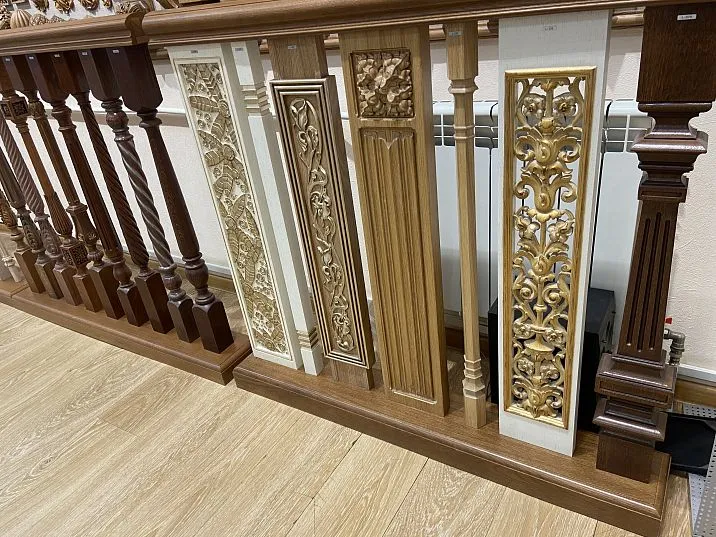
What turns an ordinary staircase into a work of art? What makes guests pause in awe as they ascend the steps of your home? The answer is simple yet complex — it is balustrade for staircaseThis architectural element, inherited from ancient times, is currently experiencing a true renaissance, becoming not just a functional barrier, but a central design element capable of transforming space beyond recognition.
Imagine: you ascend the staircase, your hand glides over a perfectly polished handrail of noble wood, and your gaze involuntarily lingers on the elegant balusters, each one a small masterpiece of carved art. This is not merely a path from one floor to another — it is a journey filled with aesthetic pleasure. It is precisely such sensations that a properly chosen balustrade provides.


Modern wood processing technologies allow significantly increasing the durability of wooden balustrades. Special impregnations protect wood from moisture, ultraviolet radiation, mold, and insects, while innovative varnishes and oils highlight the natural texture, preserving the wood's natural 'breathing'.




Origin and Evolution
The word 'balustrade' comes from the Italian 'balaustro', meaning 'pomegranate flower'. The first balusters, vertical posts supporting railings, resembled the shape of this fruit. The history of balustrades began in ancient Assyria and Persia, where they were used to decorate palaces and temples. However, the true heyday of this architectural element came during the Renaissance in Italy.
Great Italian architects of the 15th-16th centuries, such as Bramante, Palladio, and Michelangelo, actively used balustrades in their projects, giving them refined forms and proportions. From Italy, the fashion for balustrades spread throughout Europe, where each country introduced its own national characteristics into their design.
Symbolic Meaning in Different Cultures
Our factory also produces:


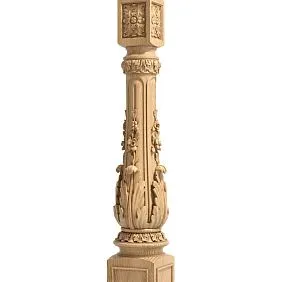
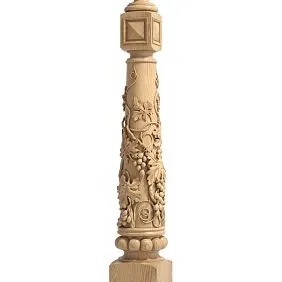

Interestingly, in different cultures, balustrades had not only aesthetic but also symbolic significance. In European tradition, an ornate
was a symbol of the owner's status and wealth. The more complex and refined the carving, the higher the owner's position in society was considered. balustrade for staircase In Eastern cultures, especially in China and Japan, balustrades were often adorned with symbolic images of dragons, phoenixes, and other mythical creatures, which were meant to bring good luck and protect the house from evil spirits.
In the modern world, balustrades have retained their significance as elements of prestige and good taste. Classical wooden balustrades are associated with tradition, stability, and respectability, while modern metal or glass constructions symbolize innovation and progressiveness.
Materials for Making Balustrades
Get Consultation
Wood - a traditional and, perhaps, the most popular material for making balustrades. Its popularity is due not only to aesthetic qualities but also to practical advantages:
Wood: traditions and modernity
Warmth and naturalness: wooden
- creates a cozy and comfortable atmosphere in the home that no other material can provide. balustrade for staircase Ecological safety: natural wood is a completely safe material for health, emitting no harmful substances.
- Restorability: unlike many other materials, wooden balustrades can be restored and renewed, extending their service life for decades.
- Acoustic properties: wood does not create unpleasant resonance when walking on stairs, which is especially important in residential spaces.
- Various types of wood are used to make balustrades, each with its own characteristics:
Oak - recognized as the leader among premium materials for balustrades. It is distinguished by exceptional strength, durability, and expressive texture. Oak balustrades can serve for centuries, acquiring a noble patina over time.
- Beech - a dense and hard wood with a uniform structure, which is well-suited for turning, allowing the creation of balusters with complex shapes. Beech has a light, slightly pinkish hue that can be easily stained to any color.
- Ash - has a beautiful texture with distinct annual rings and high strength. Ash is easily bent, allowing the creation of curved balustrade elements.
- Walnut - a noble wood of dark brown color with a purple tint. Walnut balustrades look luxurious and prestigious, perfectly fitting into classical interiors.
- Larch - one of the most durable species, resistant to moisture and decay. Larch balustrades can be used even on open terraces and verandas.
- Modern wood processing technologies allow significantly increasing the durability of wooden balustrades. Special impregnations protect the wood from moisture, ultraviolet radiation, mold, and insects, while innovative varnishes and oils highlight the beauty of the natural texture while preserving the wood's natural 'breathing'.
Minimalist forms - absence of unnecessary details, clean lines, geometric simplicity.
Stone: Eternal Classic
Stone balustrades - embodiment of monumentality and eternity. They are used primarily in luxurious mansions, palaces, and prestigious buildings. Main types of stone for making balustrades:
- Marble - a classic material symbolizing luxury and refinement. Marble balustrades can be white, cream, gray, or even colored, with distinctive veins creating a unique pattern.
- Granite - an extremely strong and durable material, resistant to any atmospheric effects. Granite balustrades are often used for outdoor staircases and terraces.
- Limestone - a softer and warmer-looking stone, easier to work with, allowing the creation of complex decorative elements.
- Tufa - a porous stone with an interesting texture, giving balustrades a unique antique appearance.
Stone balustrades require a strong foundation due to their significant weight. They are practically eternal, but have high cost and complex installation, limiting their use in ordinary residential homes.
Metal: Strength and Elegance
Metal railings combine strength, durability, and wide design possibilities. Main metals used for manufacturing railings:
- Wrought iron - a traditional material allowing to create unique, artistic railings with intricate patterns. Each wrought iron item is the result of a craftsman's handwork, making it unique.
- Brass and bronze - noble golden-hued metals that acquire a beautiful patina over time. Used primarily in classical interiors of high class.
- Stainless steel - a modern material ideally suited for minimalist and high-tech interiors. Steel railings can have matte, polished, or satin finishes.
- Aluminum - a lightweight and corrosion-resistant metal often used for outdoor railings. Aluminum structures can be painted in any color or anodized.
Metal railings are often combined with other materials - wood, glass, stone, allowing to create interesting design solutions.
Glass: modern trends
Glass railings - a modern design trend allowing to create light, visually weightless structures that do not clutter space. Such railings are made of tempered or triplex glass 10 to 19 mm thick, which has high strength and safety.
Glass railings can be:
- Transparent - create a sense of weightlessness, visually expanding space.
- Matte - provide privacy, diffuse light, creating soft glow.
- Tinted - add a color accent to the interior.
- With a pattern or photo print - become a unique decorative element.
Glass is often combined with metal posts and handrails, creating a modern, technological look. Such railings are ideal for minimalist, contemporary interiors, as well as for spaces where it is important to preserve maximum natural light.
Composite materials: innovations in action
The modern industry offers innovative composite materials for manufacturing railings, combining the advantages of traditional materials with new technological capabilities:
- Polyurethane - a lightweight, strong material that perfectly imitates wood or stone, but is not susceptible to rot, insect damage, and requires minimal maintenance.
- Fiber concrete - a composite based on cement, reinforced with fibers, allowing to create strong, lightweight, and durable railings of any shape.
- Glass-fiber reinforced plastic - a material based on glass fibers and polymer resins, combining lightness with high strength and resistance to atmospheric effects.
Composite railings are often chosen for outdoor use, where they are exposed to precipitation, ultraviolet radiation, and temperature fluctuations. They are also popular in restoration projects of historical buildings, where it is necessary to recreate complex decorative elements without excessive load on the structure.
Styles and design of railings
Classic balustrades
Classic style - timeless elegance that never goes out of fashion. Classic railings for staircases are characterized by:
- Symmetry and proportion - all railing elements are strictly balanced and follow a unified rhythm.
- Traditional baluster shapes - most often these are vase, pear, or column shapes with characteristic bulges and tapers.
- Rich carving - classic railings are often adorned with carved elements: acanthus leaves, rosettes, volutes, garlands.
- Massive starting posts - they serve not only as structural elements but also as decorative accents, often adorned with carved finials or sculptural elements.
Classic railings are primarily made of valuable wood species (oak, walnut, mahogany), marble, or wrought iron. They fit perfectly into interiors in the styles of classicism, empire, baroque, as well as in modern classicism and neoclassicism.
Modern minimalist solutions
Modern minimalism offers a completely different approach to railing design:
- Functionality - each element has a practical purpose, decorative effect is achieved through proportions and quality of materials.
- Combination of materials - often combinations of wood with metal, metal with glass, creating interesting textural and color contrasts.
- Minimalist balustrades can be made from stainless steel with rope or glass infill, from monolithic glass with minimal fixings, or from simple wooden elements with clear geometry.
- Hidden fasteners - technical elements are maximally concealed, creating an impression of lightness and purity of lines.
Minimalist railings can be made of stainless steel with rope or glass infill, of monolithic glass with minimal fixings, or of simple wooden elements with clear geometry.
Ethnic and Regional Features
Different cultures and regions of the world have created their unique balustrade styles, reflecting local traditions and aesthetic preferences:
- Mediterranean style - characterized by use of natural materials (stone, wood), smooth lines, plant motifs. Often uses balusters in the shape of amphorae or columns.
- Eastern style - distinguished by complex geometric carving, delicate patterns, inlays. In Islamic tradition, arabesques and calligraphic motifs are often used.
- Scandinavian style - simplicity of forms, light wood species, minimal decoration, emphasis on functionality and natural materials.
- Russian style - rich carving with traditional Slavic motifs (solar symbols, plant ornaments), use of contrasting colors, massive turned balusters.
Ethnic balustrades add character and individuality to interiors, creating an atmosphere of a specific culture or region.
Author's design and exclusive solutions
For those seeking absolute uniqueness, it is possible to create custom balustrades based on an individual project:
- Sculptural balustrades - where each baluster is an artistic piece depicting figures of people, animals, or fantastical creatures.
- Thematic balustrades - reflecting the owner's hobbies or profession (maritime theme, musical instruments, sports motifs).
- Interactive balustrades - with built-in lighting that changes color depending on the time of day or the mood of the owners.
- Biomorphic balustrades - with forms imitating natural structures: tree branches, coral, waves.
Author's balustrades are created through close collaboration between designer, architect, and craftsman, taking into account all client preferences and interior specifics.
Technical aspects and safety requirements
Standards and regulations
Design and installation balustrades for stairs are regulated by construction codes and regulations that ensure the safety and functionality of the structure:
- The height of the balustrade should be at least 90 cm from the stair level in residential buildings and at least 110 cm in public buildings.
- The distance between balusters should not exceed 10 cm to prevent children from slipping between them.
- The handrail should have a comfortable grip shape, usually round or oval cross-section with a diameter of 3-5 cm.
- The structure must withstand a horizontal load of at least 50 kg/m for residential buildings and 100 kg/m for public buildings.
Compliance with these regulations is mandatory, regardless of the chosen style and material of the balustrade.
Constructive features of different types of balustrades
The construction of a balustrade depends on the material it is made from and the characteristics of the staircase:
- Wooden balustrades are typically composed of balusters, which are attached to the stair stringer from below and to the handrail from above. To strengthen the structure, sub-balusters—horizontal elements to which the lower ends of balusters are attached—are often used.
- Metallic balustrades can be mounted on the sides of steps (side mounting) or on top (top mounting). For curved staircases, curved handrails and special connecting elements are used.
- Glass balustrades require special attention to the mounting system. Point fixings, clamp profiles, or special embedded elements in the concrete base are used.
- Combined balustrades combine elements made of different materials, which requires consideration of their different physical properties, especially thermal expansion.
Installation and Mounting
Correct installation of the balustrade is the guarantee of its longevity and safety:
- The preparatory stage includes precise measurements, creating drawings, selecting materials and components.
- Manufacturing balustrade elements according to the project, taking into account all technical requirements.
- Preparing the base—cleaning, leveling, and if necessary, reinforcing mounting locations.
- Installing initial posts—they are key elements ensuring the rigidity of the entire structure.
- Installing balusters with equal spacing and vertical alignment of each element.
- Installing the handrail with smooth line continuity and secure attachment to the balusters.
- Final finishing—sanding, painting, varnishing, or other protective treatment depending on the material.
It is better to entrust the installation of balustrades to professionals, especially if dealing with complex structures or expensive materials.
Care and Maintenance
The longevity and attractive appearance of balustrades depend on proper maintenance:
- Wooden balustrades require regular treatment with protective compounds (varnish, oils, waxes) to prevent drying, cracking, and protect against moisture. Protective coatings should be renewed periodically, especially in areas of heavy use.
- Stone balustrades require periodic cleaning from dust and dirt. For marble and limestone, pH-neutral cleaning agents should be used to avoid damaging the surface.
- Metallic balustrades require protection against corrosion. Wrought iron items are usually coated with special anti-corrosion compounds or paint. Stainless steel only requires periodic wiping to remove dust and fingerprints.
- Glass balustrades require regular cleaning from dust and fingerprints using special glass cleaners that do not leave streaks.
Regular inspection of balustrades allows timely detection and elimination of minor damage, preventing its development and the need for major repairs.
Balustrades in various interior styles
Classic interior
In a Classic Interior balustrade for staircase is one of the central elements that sets the tone for the entire space:
- Materials—primarily natural: hardwoods (oak, walnut, mahogany), marble, bronze.
- Shapes—symmetrical, proportional, with characteristic bulges and tapers of balusters.
- Decor—carving, inlay, gilding, carved finials on initial posts.
- Color palette—natural wood tones, white or colored marble, patinated bronze.
Classic balustrades harmonize well with parquet floors, ceiling moldings, crystal chandeliers, antique or styled furniture.
Modern style
In modern interiors, balustrades acquire a new sound:
- Materials—stainless steel, glass, concrete, exotic woods.
- Shapes—minimalist, geometrically clear, often asymmetrical.
- Decor—minimal or absent, emphasis is placed on material quality and line purity.
- Color palette - monochromatic, with accents of contrasting colors or natural textures.
Modern railings often become art objects, attracting attention through unusual shapes or materials. They pair well with minimalist furniture, open spaces, and large windows.
Loft and industrial style
Loft and industrial style interiors require a special approach to railing design:
- Materials - raw metal, weathered wood, concrete, glass in metal frames.
- Shapes - simple, functional, often with visible structural elements.
- Decor - industrial details, rivets, welds, which are not hidden but become part of the design.
- Color palette - natural colors of materials, often with an aged or patina effect.
Loft-style railings can be made from metal pipes or profiles, supplemented with cables, mesh, or rough-hewn wood. They pair well with brick walls, exposed utilities, and concrete surfaces.
Eco-style and natural materials
Eco-style implies using natural materials and forms inspired by nature:
- Materials - untreated or minimally processed wood, bamboo, rattan, natural stone.
- Shapes - organic, resembling natural structures, often asymmetrical.
- Decor - natural textures of the materials themselves, minimal additional ornamentation.
- Color palette - natural tones of wood, stone, plant green hues.
Eco-style railings can be made from tree trunks with bark preserved, woven rattan or bamboo, or river stones in metal mesh. They create an atmosphere of closeness to nature, especially when combined with live plants, natural fabrics, and wooden furniture.
Designing and selecting a railing
Considering architectural features of the room
When selecting a railing, it is necessary to consider the architectural features of the space where it will be installed:
- Interior style - the railing should harmoniously fit into the overall style of the room, supporting its main lines and proportions.
- Room size - in small spaces, it is better to use lightweight, visually weightless structures (glass, thin metal), while in spacious rooms, more substantial railings are appropriate.
- Lighting - in rooms with insufficient natural light, lighter, light-reflecting materials or transparent structures that do not create additional shadows are preferable.
- Functional purpose - in residential spaces, railings may be more decorative, while in public buildings, durability and practicality take precedence.
Ergonomics and Functionality
Besides aesthetic qualities, the railing must be comfortable and functional:
- The handrail height should be comfortable for hand support - usually 90-100 cm from the step level.
- The handrail shape should fit comfortably in the hand, ensuring a secure grip. The optimal shape is oval or round with a diameter of 4-5 cm.
- The distance between balusters should ensure safety, especially if there are children or elderly people in the house.
- The structural strength must match the intensity of staircase use and expected loads.
Individual approach and working with a designer
Creating the ideal railing is a complex process requiring a professional approach:
- Consulting with a designer helps determine the optimal style, materials, and construction of the railing, matching the overall interior concept.
- Creating a 3D model helps visualize the future railing in the interior, assess proportions, and evaluate spatial compatibility.
- Material selection taking into account not only aesthetic preferences but also practical aspects: durability, ease of maintenance, eco-friendliness.
- Development of detailed drawings indicating all dimensions, fastenings, decorative elements.
- Project coordination with the client, incorporating necessary adjustments.
An individual approach allows creating a balustrade that not only perfectly fits the interior but also reflects the personality and taste of the home's owner.
Budgeting and cost estimation
The cost of a balustrade depends on many factors:
- Material - from affordable wood species to exotic varieties, from simple metal to bronze and brass.
- Design complexity - simple geometric shapes or intricate artistic carving.
- Dimensions and configuration - a straight staircase requires fewer expenses than a spiral or complex-shaped one.
- Finishing and protective coatings - from simple painting to gilding or patination.
When planning the budget, it is important to consider not only the cost of the balustrade itself, but also expenses for delivery, installation, possible foundation preparation, and final finishing.
Trends and innovations in balustrade design
Modern manufacturing technologies
Modern balustrade production uses innovative technologies that expand design possibilities and improve product quality:
- CNC machining allows creating wooden and metal elements with high precision, reproducing complex shapes and patterns.
- 3D printing opens new horizons for creating balustrades of unique shapes that cannot be manufactured using traditional methods.
- Laser cutting of metal and other materials allows creating delicate, filigree patterns with perfect accuracy.
- Hydro-abrasive cutting enables cutting complex shapes from stone, glass, and other hard materials without thermal impact.
These technologies not only expand designers' creative possibilities but also make production more efficient, reducing manufacturing time and costs.
Ecological Sustainability
Modern balustrade design trends reflect growing concern for the environment:
- Use of certified wood from sustainably managed forests, where new trees are planted in place of felled ones.
- Use of recycled materials - metal, glass, composites made using secondary raw materials.
- Non-toxic finishing materials - water-based paints, varnishes, stains that do not emit harmful substances.
- Local production - use of local materials and manufacturers, reducing the carbon footprint from transportation.
Eco-friendly balustrades are not only safe for residents' health but also contribute to preserving the planet's natural resources.
Integration with smart home
Innovative balustrades become part of a smart home system:
- Built-in LED lighting, controllable via smartphone or voice commands, can change color and intensity depending on time of day or mood.
- Sensory handrails may include lighting on the staircase upon touch or serve as a security element, signaling movement during nighttime.
- Integrated sensors can monitor air quality, temperature, humidity, transmitting data to the smart home system.
- Wireless charging stations built into handrails or initial posts allow charging mobile devices without cables.
Such innovations make balustrades not just decorative elements, but functional components of modern living spaces.
Practical tips for selecting and ordering a balustrade
What to pay attention to when choosing
When choosing balustrades for stairs It is important to consider the following aspects:
- Style compatibility - the balustrade should harmoniously fit into the overall design concept, supporting the main lines and color solutions.
- Practicality and ease of use - the handrail should be easy to grip, and the construction should be safe and durable.
- Quality of materials and manufacturing - this affects not only the appearance but also the longevity of the balustrade.
- Ease of maintenance - depending on lifestyle and maintenance capabilities, choose materials requiring minimal upkeep.
- Budget compatibility - it is important to find the optimal price-to-quality ratio without compromising safety.
How to avoid common mistakes
When designing and installing balustrades, errors are often made, which can be avoided:
- Style mismatch - a balustrade that does not match the overall interior style will appear as an out-of-place element.
- Incorrect proportions - an overly heavy balustrade in a small room or a too light one in a spacious hall disrupts the spatial harmony.
- Cutting corners on materials - using cheap, low-quality materials may lead not only to rapid wear but also to dangerous situations.
- Ignoring safety regulations - insufficient height, overly large gaps between balusters, unreliable fastenings may cause accidents.
- DIY installation without experience - installing a balustrade requires special skills and tools; improper installation may lead to rapid deterioration of the structure.
Working with the manufacturer: from measurement to installation
The process of ordering and installing a balustrade usually includes the following stages:
- Initial consultation - discussing preferences, style, materials, and budget.
- Specialist visit to the site for precise measurements and assessment of installation conditions.
- Design project development taking into account all preferences and technical requirements.
- Project and cost estimate approval - clarifying all details, possible adjustments.
- Manufacturing the balustrade according to the approved project.
- Delivery and installation - professional installation following all technical requirements.
- Final finishing - painting, varnishing, patination, or other treatments (if not done at the factory).
- Work acceptance - checking quality, compliance with the project, functionality.
Working with a reliable manufacturer with positive reviews and a portfolio of completed projects guarantees a high-quality result and avoids unpleasant surprises.
Conclusion: balustrade as an investment in beauty and comfort
balustrade for staircase It is not just a functional element ensuring safety during ascent and descent. It is an architectural detail capable of transforming space, giving it character and individuality. A properly selected balustrade becomes a central element of the interior, attracting attention and evoking admiration.
Investing in a quality balustrade is an investment in the beauty and comfort of your home for many years. Unlike many other interior elements that change with fashion trends, a well-designed classic-style balustrade remains relevant for decades, sometimes even centuries.
When choosing a balustrade, it is important to find a balance between aesthetics and functionality, tradition and innovation, individuality and harmony with the surrounding space. The modern market offers a vast variety of materials, styles, and technologies, enabling the realization of the most daring design ideas.
STAVROS is a recognized leader in producing high-quality wooden balustrades and other staircase elements. Years of experience, use of premium materials and modern technologies, attention to every detail allow STAVROS to create items that become true interior ornaments and serve for many years without losing their beauty and functionality.
Choosing STAVROS means choosing not just a balustrade, but a work of art created with love for wood and respect for craftsmanship traditions. Every STAVROS item is a blend of classic elegance and modern technology, reliability and sophistication, functionality and aesthetic perfection.
May your staircase with a STAVROS balustrade become not just a path from one floor to another, but a journey into the world of beauty, comfort, and harmony, beginning every time you touch the perfectly polished handrail with your hand.