












































































Article Contents:
- Origin and evolution of form
- Balustrade in various architectural styles
- Balustrade in Russian architecture
- Anatomy of balustrade: main elements and their functions
- Structural components of classical balustrade
- Technical features and construction solutions
- Proportions and ergonomics
- Materials for balustrade manufacturing: traditions and innovations
- Wood: warmth and nobility of natural material
- Stone: eternity and monumentality
- Metal: strength and plasticity of forms
- Composite and innovative materials
- Balustrade design: from classicism to avant-garde
- Stylistic solutions for various interiors
- Individual and authorial solutions
- Color Solutions and Finishing
- Functional aspects of balustrade
- Safety and regulatory requirements
- Acoustic and thermal properties
- Ergonomics and Ease of Use
- Installation and mounting of balustrades
- Preparation work and measurements
- Technology of mounting various types of balustrades
- Typical installation errors and ways to avoid them
- Maintenance and care of balustrades
- Specifics of caring for different materials
- Extending service life and preventive measures
- Restoration and repair
- Conclusion: balustrade as an investment in beauty and functionality
- Architecture is frozen music, where each element plays its unique part. In this symphony of forms and lines, special place is held by
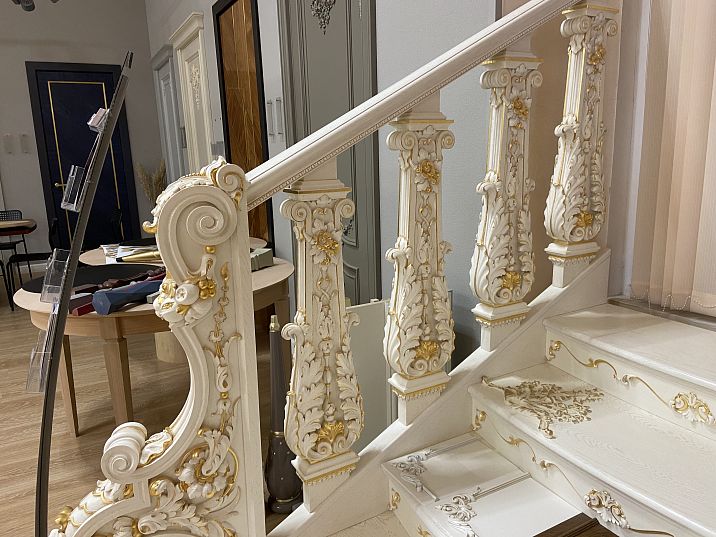
Architecture is frozen music, where each element plays its unique part. In this symphony of forms and lines, special place is held by – an elegant railing that has adorned staircases, balconies, terraces, and parapets for centuries. It is not merely a functional safety element, but a true work of art capable of transforming any space, giving it character and individuality. What makes
What makes balustrade so attractive to architects, designers, and homeowners for centuries? Why does this architectural element remain relevant despite changing eras and styles? How to choose the perfect balustrade for your home, and what secrets lie within its construction and design?
In this article, we will delve into the wonderful world of balustrades—from their historical roots to modern interpretations, from classic materials to innovative solutions, from technical features to aesthetic impact. Whether you are planning to install a new balustrade or simply interested in architectural elements, this information will help you view this magnificent example of architectural art in a new light.




History of the Balustrade: From Antiquity to the Present Day




Origin and Evolution of Form
The word 'balustrade' comes from the Italian 'balaustro' (baluster) and the French 'balustrade' (railing made of balusters). The earliest prototypes of balustrades appeared in the architecture of ancient Assyria and Persia, where columns were used to fence open galleries and balconies. However, this architectural element truly developed during the Renaissance.
In the 15th century, Italian architects, inspired by ancient models, began actively using balustrades in their projects. Filippo Brunelleschi, Donato Bramante, Andrea Palladio—all contributed to the development and popularization of this element. The balustrade became an indispensable part of palazzi, villas, and churches, emphasizing their grandeur and harmony.
The form of balusters (vertical posts that make up the balustrade) evolved from simple columns to complex ornamental elements. The classical baluster acquired a characteristic vase or cup shape—with expansion at the top and bottom and narrowing in the middle. This form is not only aesthetically pleasing but also structurally justified, ensuring optimal load distribution.
Our factory also produces:




Balustrades in Various Architectural Styles
Each era and architectural style brought its own characteristics to balustrade design:
Renaissance – balustrades of this period are characterized by classical harmony and proportionality. Balusters have a vase-like shape with a clearly defined profile, often adorned with plant motifs. Examples of such balustrades can be seen in the Medici Palace in Florence or the Rotonda Palladio villa.
Baroque – this style is characterized by lavish, dynamic forms. Balusters become more curved, with rich carving and decoration. Baroque balustrades are often asymmetrical, creating a sense of movement and drama. A striking example is the balustrades of the Palace of Versailles or St. Peter's Basilica in Rome.
Rococo – balustrades of this period are distinguished by elegance and lightness. Balusters acquire even more curved forms, often asymmetrical, with an abundance of decorative elements—shells, flowers, scrolls. Examples can be seen in the Winter Palace in St. Petersburg or the Sanssouci Palace in Potsdam.
Neoclassicism – the return to classical ideals led to simplification of balustrade forms. Balusters become more austere, with clear proportions and minimal decoration. Such balustrades adorn many government buildings and estates of the 18th–19th centuries.
Modernism – this style brought a new vision of balustrades. Instead of classical balusters, smooth, organic forms inspired by nature—plant stems, waves, animal figures—were often used. Metal balustrades of modernism, with their characteristic 'woven' patterns, can be seen in the works of Antoni Gaudí or Victor Horta.
Modern styles – today, balustrade design reflects the diversity of architectural directions: from neoclassicism to minimalism, from high-tech to eco-style. Modern balustrades can be made from traditional and innovative materials, combining various stylistic elements and technologies.
Get Consultation
Balustrade in Russian Architecture
In Russia, balustrades appeared during the Peter the Great era along with European architecture. The first examples can be seen in Peterhof, the Summer Garden, and Tsarskoye Selo. Russian craftsmen quickly mastered the technique of making balustrades and began creating their own versions, adapted to local traditions and materials.
Particularly interesting are the carved wooden balustrades of Russian estates and urban mansions of the 18th–19th centuries. They combine European forms with national carving motifs—solar symbols, plant ornaments, mythical characters. These balustrades not only served a practical function but also demonstrated the skill of Russian woodcarvers.
During the Soviet period, balustrades were primarily used in public buildings and parks, symbolizing a connection to classical heritage. Notable examples include the balustrades of the Moscow Metro, VDNKh, sanatoriums in Crimea and the Caucasus.
Today, there is a renewed interest in balustrades in both classical and modern forms in Russia. They are actively used in private home construction, landscape design, and the restoration of historical buildings.
Anatomy of the Balustrade: Main Elements and Their Functions
Structural Components of a Classical Balustrade
– an elegant railing that has adorned staircases, balconies, terraces, and parapets for centuries. It is not merely a functional safety element, but a true work of art capable of transforming any space, giving it character and individuality. – it is not simply a set of identical posts, but a complex architectural system, each element of which has its own purpose and shape:
Balusters – vertical supporting elements that form the base of the balustrade. A classical baluster has a symmetrical shape with expansions at the top and bottom and narrowing in the middle. This shape ensures optimal load distribution and visual lightness of the structure. Depending on the style and purpose, balusters may be simple or richly decorated, identical or alternating in shape.
Handrail (rail) – a horizontal element located at the top of the balustrade. It serves as support and safety, as well as visually unifying the entire structure. The handrail may have various profiles—from a simple rectangular to a complex ornamental shape with grooves, rounded edges, and decorative elements.
Handrail (newel post) – the lower horizontal element on which balusters rest. In stair railings, the handrail often has a slope matching the staircase incline. This element ensures structural rigidity and even load distribution.
Posts (supporting columns) – heavier vertical elements installed at the start, end, and turns of the railing. They provide the primary load-bearing function and are often more decorative than standard balusters.
Decorative elements – spheres, finials, rosettes installed on top of posts or at connection points of handrails. They not only embellish the railing but also conceal technical joints.
Technical Features and Construction Solutions
In addition to visible elements, railings include a series of technical components ensuring their strength and longevity:
Fastening elements – special metal parts ensuring secure connection of balusters to the handrail and handrail. These may include dowels, bolts, angles, hidden fasteners. Modern fastening systems allow creating strong structures without visible fasteners.
Compensators – elements allowing compensation for thermal expansion/contraction of materials. Particularly important for outdoor railings exposed to significant temperature fluctuations.
Waterproofing elements – for outdoor railings, protection against moisture is critically important, especially at junctions with the base. Special gaskets, sealants, and protective coatings are used.
Reinforcements – internal metal rods or profiles strengthening the railing structure. Particularly relevant for long spans and tall railings, as well as when using brittle materials.
Proportions and Ergonomics
Correct proportions – key to aesthetic and functional railing design:
Railing height is determined by its purpose and safety requirements. For residential spaces, the optimal height is 90–100 cm from floor or step level. For public buildings, this may be increased to 110–120 cm.
The distance between balusters is regulated by building codes and should generally not exceed 10–15 cm (to prevent children from slipping between balusters). From an aesthetic standpoint, the optimal distance is approximately half the baluster width.
Baluster thickness depends on material and railing height. For wooden balusters, standard diameter is 5–7 cm; for stone, 10–15 cm. It is important to maintain proportions – too thin balusters will appear fragile, too thick ones will look bulky.
Handrail profile should be comfortable to grip. Optimal handrail width is 6–8 cm, with rounded edges or an ergonomic profile.
Materials for Railing Construction: Traditions and Innovations
Wood: Warmth and the Nobility of Natural Material
Wood – one of the oldest and most popular materials for railing construction. Its advantages are obvious:
Aesthetic qualities – natural texture, warm color, pleasant tactile sensations make wooden railings especially attractive for residential interiors. Wood creates an atmosphere of comfort and elegance.
Technological versatility – wood is easy to process, allowing creation of balusters with complex shapes, fine carving, and decorative elements. Modern woodworking technologies, including CNC machines, offer virtually unlimited design possibilities.
Ecological properties – wooden railings do not emit harmful substances, create a favorable microclimate indoors, and can be disposed of without harming the environment at the end of their service life.
Various wood species are used for railing construction, each with its own characteristics:
Oak – classic material for premium railings. It features high strength, dimensional stability, resistance to moisture and mechanical damage. Oak railings can last decades, acquiring a noble patina with age.
Beech – a hard wood with uniform structure, well-suited for turning and polishing. It has a beautiful light-golden color that can be easily tinted to various shades.
Ash – strong and elastic wood with distinctive texture. Ideal for manufacturing balusters of complex shapes and resistant to mechanical loads.
Larch – one of the most durable species, resistant to moisture and rot. Ideal for outdoor railings – terraces, balconies, entrance areas.
Spruce and pine – more affordable coniferous species suitable for budget railings. With proper treatment and protection, they can serve for many years.
Stone: Eternity and Monumentality
Stone railings – symbols of status and longevity. They are primarily used in monumental buildings, palace complexes, and luxurious mansions:
Marble – classic material for refined railings. The variety of marble colors and patterns allows creating unique compositions. Marble railings feature smooth surfaces and noble luster but require regular maintenance and protection from atmospheric exposure.
Granite is one of the strongest and most durable materials. Granite balustrades are resistant to frost, moisture, pollution, and retain their appearance for decades. They are primarily used for outdoor structures — parapets, terraces, and quays.
Limestone and sandstone are softer rocks that are easier to process. This allows creating balusters with complex shapes and detailed carving. However, such balustrades require more careful protection from moisture and pollution.
Artificial stone — a modern alternative to natural stone. Made from a mixture of cement, sand, pigments, and modifying additives. Allows creating balustrades of any shape and color at lower cost and weight.
Metal: strength and plasticity of form
Metal balustrades are characterized by high strength relative to their relatively small weight and cross-section of elements. This allows creating delicate, visually light structures:
Wrought iron — a traditional material for manufacturing artistic balustrades. The technique of forging allows creating complex patterns, plant motifs, and figurative elements. Wrought iron balustrades are especially popular in Baroque, Modern, and Classicism styles.
Cast iron — a material widely used in the 19th century for urban and park balustrades. Casting technology allows mass-producing complex decorative elements. Cast iron balustrades are characterized by high strength and durability, but require regular protection against corrosion.
Stainless steel — a modern material for balustrades in high-tech, minimalism, and loft styles. Does not require painting, resistant to corrosion, and has an attractive metallic sheen. Often combined with glass or wood.
Aluminum — a lightweight and corrosion-resistant material, ideal for outdoor balustrades. Modern technologies allow creating aluminum profiles of any shape and coating them with powder paints of various colors and textures.
Composite and innovative materials
Modern technologies offer new materials for balustrade manufacturing, combining the advantages of traditional materials with additional properties:
Polyurethane — a lightweight and strong material allowing to create precise replicas of historical balustrades. Polyurethane balusters are resistant to moisture and ultraviolet radiation, do not crack or rot. Ideal for restoration work and creating classic interiors at lower cost.
Fiberglass (glass fiber reinforced plastic) — a composite material based on glass fibers and polymer resins. Characterized by high strength, lightness, corrosion resistance, and resistance to atmospheric effects. Primarily used for outdoor balustrades.
Acrylic and organic glass — transparent or tinted materials creating a sense of weightlessness. Often used in modern interiors in combination with metal or wood.
Composite wood (WPC) — a material combining wood fibers and polymers. Mimics the appearance of natural wood but is more resistant to moisture and ultraviolet radiation, does not require regular painting or protection.
Balustrade design: from classic to avant-garde
Stylistic solutions for various interiors
The choice of balustrade design should match the overall style of the interior or exterior. Let's consider the main stylistic directions:
Classic style — balustrades with symmetrical balusters in the shape of vases or columns, with clear proportions and moderate decoration. Materials — hardwoods (oak, walnut, mahogany), marble, bronze. Color palette — natural wood tones, white, gold, patina.
Baroque and Rococo — lavish, dynamic balustrades with curved forms, abundant carving, gilding, and decorative elements. Balusters are often asymmetrical with plant motifs. Materials — carved and gilded wood, marble, gilded wrought iron.
Empire and Neoclassicism — strict, monumental balustrades with straight lines and classical motifs. Balusters have the shape of classical columns with fluting. Materials — marble, granite, bronze, wood with stone imitation.
Modern — smooth, organic forms inspired by nature. Balusters may imitate plant stems, animal figures, waves. Materials — wrought iron with plant motifs, wood with smooth lines, colored glass.
Art Deco — geometric forms, contrasting colors, exotic materials. Balusters often have stepped or zigzag shapes. Materials — polished exotic wood, chrome-plated metal, black lacquer, glass.
Minimalism and high-tech — simple geometric forms, absence of decoration, emphasis on material and texture. Balusters may be replaced by glass panels, metal cables, or simple vertical posts. Materials — stainless steel, glass, concrete.
Eco-style — natural materials and forms reminiscent of nature. Balusters may be made from unprocessed tree trunks, branches, roots. Materials — natural wood with bark, stone, bamboo.
Color solutions and finishing
The color of the balustrade plays an important role in forming the overall impression of the interior:
Natural wood tones — from light beech to dark wenge — emphasize the material's texture and create a warm, cozy atmosphere. Such balustrades pair well with parquet, wooden furniture, and natural-toned textiles.
White color — a classic solution for balustrades in neoclassical, Provence, and Scandinavian styles. A white balustrade visually lightens the structure, making the space appear brighter and more spacious.
Black and dark tones — create a dramatic effect, emphasizing the balustrade's silhouette. Pair well with contrasting walls, metallic accents, and modern furniture.
Contrasting combinations — for example, a dark handrail and white balusters — create a graphic, expressive image, emphasizing the architecture of the staircase or balcony.
Metallic finishes — gold, silver, bronze, patina — add luxury and elegance to the balustrade. Especially effective in classical and Baroque interiors.
Modern finishing technologies allow creating various effects:
Patina – creating an aged effect, adding depth and volume.
Crackle – decorative cracks imitating old paint or varnish.
Multi-layered painting – creating complex color effects by applying several layers of paint in different shades.
Decoupage and painting – decorating the balustrade with artistic motifs matching the overall interior style.
Individual and original solutions
In addition to standard balustrades, it is possible to create individual, original constructions:
Combining materials – for example, wooden handrails with metal or glass balusters, stone posts with wooden infill.
Integration of lighting – built-in LED elements in the handrail or balusters, step lighting, decorative lighting of posts.
Non-standard shapes – balustrades with curved forms, variable height, and individual baluster patterns.
Thematic design – balustrades reflecting the professional interests, hobbies, or cultural preferences of the home’s owners.
Interactive elements – for example, balustrades with built-in touch panels for controlling lighting, climate, or multimedia.
Functional aspects of balustrades
Safety and regulatory requirements
The primary function of a balustrade is safety, so when designing and installing it, certain standards must be followed:
Height of the railing – according to building codes, the minimum height of a balustrade in residential spaces is 90 cm from the floor or step level. For public buildings, this measurement increases to 110–120 cm.
Distance between balusters – should not exceed 10–15 cm to prevent children from slipping through the railing elements.
Structural strength – the balustrade must withstand a horizontal load of at least 50 kg/m for residential spaces and 100 kg/m for public buildings.
Absence of sharp angles and protruding elements – all edges must be rounded, and decorative elements must be securely fastened.
Resistance to corrosion and rot – especially important for outdoor balustrades exposed to atmospheric conditions.
Fire safety – materials must comply with fire safety requirements for the specific type of building.
Ergonomics and ease of use
In addition to safety, the balustrade must be convenient to use:
Handrail shape – should provide comfortable grip. Optimal handrail width is 6–8 cm, with rounded edges or an ergonomic profile.
Continuity of the handrail – especially important for stair balustrades. The handrail must be continuous along the entire length of the staircase, including turns and landings.
Handrail height – optimal height is 90–100 cm from the step level, corresponding to the average height of an adult.
Distance from the wall – if the balustrade is installed alongside a wall, the distance between the wall and the inner edge of the handrail should be at least 5 cm for comfortable grip.
Lighting – for stair balustrades, good lighting is essential to prevent tripping and falling. Modern balustrades often include built-in lights in the handrail or posts.
Acoustic and thermal properties
The material of the balustrade affects the acoustic and thermal characteristics of the room:
Wooden balustrades have good sound insulation properties, absorb sound, and do not create echoes. Wood is also pleasant to the touch and does not feel cold upon contact.
Stone balustrades may amplify sound reflection, creating acoustic effects in large rooms. Stone feels cold to the touch, which may be uncomfortable in residential spaces.
Metallic balustrades may conduct sound vibrations, creating additional noise when walking on stairs. Metal also heats up and cools down quickly, which may be uncomfortable upon contact.
Glass elements in railings reflect sound, but do not create additional noise when properly installed using damping pads. Glass is neutral to the touch.
When designing railings, it is important to consider these properties and select materials appropriate for the functional purpose of the space.
Installation and mounting of railings
Preparation and measurements
Correct installation of railings begins with careful preparation:
Measurements and design – precise measurement of the space where the railing will be installed, determining the number of balusters, handrail length, and placement of posts. Modern technologies allow creating a 3D model of the future railing, helping visualize the result and avoid errors.
Foundation preparation – for floor railings, ensure a flat, strong surface. For stair railings, check the readiness of steps and stringers for mounting the railing.
Material acclimatization – especially important for wooden railings. Elements must remain in the room where installation will occur for at least 48 hours to adapt to temperature and humidity.
Preparation of tools and materials – various tools are required depending on the material: drill, screwdriver, saw, chisels, level, tape measure, adhesive, fasteners.
Technology for installing different types of railings
The installation process depends on the type of railing and material:
Wooden stair railings:
- Installation of the starting post at the beginning of the staircase.
- Installation of the stringer (handrail support) taking into account the staircase slope.
- Marking locations for baluster installation with equal spacing.
- Attaching balusters to the stringer (via dado joints, pegs, or metal fasteners).
- Installation and attachment of the handrail to the balusters.
- Installation of the end post and decorative elements.
- Final finishing and treatment of joints.
Stone railings for terraces and parapets:
- Construction of a strong foundation or base.
- Installation of the railing base – horizontal element on which balusters will rest.
- Installation of balusters using cement mortar or special adhesive.
- Installation of the top horizontal element (handrail).
- Sealing joints and treating surfaces with protective coatings.
Metallic balustrades:
- Preparation of mounting locations – drilling holes, installing anchor elements.
- Installation of posts using anchors, welding, or bolted connections.
- Installation of horizontal elements or filling between posts.
- Attaching the handrail to the posts.
- Final treatment of joints, painting, or other finishing.
Glass railings:
- Installation of load-bearing profiles or point fasteners.
- Mounting glass panels using special clamps or adhesive.
- Installation of handrail (if provided by design).
- Checking the reliability of fasteners and sealing joints.
Typical installation errors and how to avoid them
When installing railings, errors are often made that can lead to operational problems or premature wear:
Insufficient fastening strength – the railing must be securely attached to the base, especially starting and corner posts, which experience the greatest load.
Uneven baluster spacing – a visually noticeable error that spoils the overall appearance of the structure. To ensure even distribution of balusters, templates or preliminary marking are recommended.
Absence of compensating gaps – especially critical for wooden and composite railings, which may expand and contract due to changes in temperature and humidity.
Incorrect handrail slope – for stair railings, the handrail must exactly match the staircase slope, without steps or breaks.
Insufficient moisture protection – for outdoor railings, it is necessary to ensure water runoff and protection against moisture penetration into joints and materials.
Failure to maintain baluster verticality – even a slight tilt of balusters is noticeable to the eye and creates an impression of sloppy installation.
To avoid these errors, it is recommended:
- Use high-quality materials and fasteners suitable for the load and operating conditions.
- Engage experienced specialists or thoroughly study the installation technology.
- Use modern measuring tools – laser levels, templates, marking devices.
- Follow the manufacturer's recommendations for installation and material treatment.
- Conduct intermediate quality control at each stage of installation.
Maintenance and care of railings
Care specifics for different materials
Proper care significantly extends the service life of the railing and preserves its attractive appearance:
Wooden balustrades:
- Regular cleaning from dust with soft cloth or brush.
- Removal of dirt using special wood surface cleaners.
- Periodic renewal of protective coating – varnish, oil, or wax (every 2-5 years depending on usage intensity).
- Control of indoor humidity – avoiding sharp fluctuations that may cause wood cracking.
- Protection from direct sunlight, which may cause fading and cracking.
Stone balustrades:
- Cleaning from dust and dirt with soft brush or vacuum cleaner.
- Periodic wet cleaning using neutral cleaning agents.
- For marble and limestone – avoid acidic cleaning agents that may damage the surface.
- For outdoor balustrades – treatment with hydrophobic compounds to protect against moisture and dirt (every 2-3 years).
- Periodic inspection and sealing of joints and cracks.
Metallic balustrades:
- Regular cleaning from dust and dirt using soft cloth.
- For chrome and stainless steel surfaces – use of special metal polishes.
- For painted surfaces – gentle cleaning without abrasive agents.
- For wrought iron elements – periodic treatment with anti-corrosion compounds and repainting or revarnishing.
- Inspection and tightening of fastening elements.
Glass elements:
- Cleaning with special glass cleaners without abrasive components.
- Removal of fingerprints and smudges using soft microfiber cloth.
- Checking the integrity of glass and reliability of fasteners.
Minor damage to oak balusters can be repaired yourself using special wax pencils or wood putty. It is important to select the material to match the wood tone precisely for an undetectable repair.
Even the highest quality balustrades may require repair or restoration over time:
Wooden balustrades:
- Removing scratches and scuffs – sanding and re-finishing the damaged area.
- Repairing chips and cracks – filling with color-matched wood-specific compounds.
- Replacing damaged balusters – selecting similar elements in shape and material.
- Restoring carved elements – work by a woodcarver.
- Complete re-coating – removal of old finish, sanding, and application of new protective layer.
Stone balustrades:
- Cleaning from dirt and biological damage – use of special compounds and soft abrasive.
- Repairing chips and cracks – filling with specialized stone repair compounds.
- Restoring geometry – leveling tilted or sunken elements.
- Replacing severely damaged balusters – manufacturing copies based on original.
- Surface treatment with protective compounds after restoration.
Metallic balustrades:
- Removing rust and corrosion – mechanical cleaning, treatment with rust converter.
- Restoring finish – priming and painting damaged areas.
- Repairing welded joints and connections – reinforcing or replacing weakened elements.
- Correcting deformations – heating and mechanical action.
- Restoring decorative elements – work by a blacksmith or foundry worker.
Extending service life and preventive measures
Regular preventive measures significantly extend the service life of balustrades:
For all types of balustrades:
- Regular inspection for damage, loosened fasteners, and deformations.
- Timely removal of even minor defects that could lead to more serious problems.
- Load control – avoiding excessive pressure on the handrail, placing heavy objects on the balustrade.
For outdoor balustrades:
- Seasonal preparation – additional protection before the winter period.
- Snow and ice removal in winter – use non-abrasive tools and avoid aggressive de-icing agents.
- Regular inspection of drainage holes and water runoff systems to prevent moisture accumulation.
- Update protective coatings before the start of the rainy or snowy season.
- Installation of temporary protective structures in areas with extreme weather conditions.
For wooden balustrades:
- Maintain optimal indoor humidity level (40-60%).
- Regular treatment with special compositions that nourish wood and prevent it from drying out.
- Protection from direct sunlight using curtains, awnings, or special UV-filtering coatings.
For metal elements:
- Periodic treatment with anti-corrosion compounds, especially at joints and fasteners.
- Check electrochemical compatibility of different metals in the structure to prevent galvanic corrosion.
- Timely restoration of protective coating upon detection of chips or scratches.
Conclusion: Balustrade as an investment in beauty and functionality
– an elegant railing that has adorned staircases, balconies, terraces, and parapets for centuries. It is not merely a functional safety element, but a true work of art capable of transforming any space, giving it character and individuality. It is not just an architectural element, but an investment in the aesthetics and safety of your home. A properly selected and high-quality balustrade becomes a central interior element, highlights the owner’s status, creates an atmosphere of luxury and solidity.
When choosing a balustrade, it is important to consider many factors – from interior style and material to technical features and safety requirements. But the result is worth the effort – an elegant balustrade will delight the eye and serve faithfully for many years.
Modern technologies allow creating balustrades of any complexity and design, combining traditional forms with innovative materials and manufacturing methods. This opens practically limitless possibilities for realizing the most daring design ideas.
STAVROS Company specializes in creating high-quality wooden items, including balustrades, combining centuries-old woodworking traditions with modern technologies and design solutions. Every item created by STAVROS masters is a unique work of art, embodying the beauty of natural materials and the highest level of craftsmanship.
By contacting STAVROS professionals, you receive not just a balustrade, but a comprehensive solution for your interior – from individual design development to professional installation and subsequent maintenance. This guarantees perfect alignment of the product with your expectations and many years of flawless operation.
Let your balustrade become not just a functional element, but a source of pride, a focal point for guests, a testament to your impeccable taste and commitment to perfection in every detail of your home.





