Article Contents:
- Philosophy of wooden architecture in the modern world
- Psychology of perception of wooden elements
- Variety of species: from classic to exotic
- Coniferous species: accessibility without compromise
- Technological aspects of creating perfection
- The art of carving in the digital age
- Design Solutions: From Classic to Avant-Garde
- Modern design trends
- Technical specifications and quality standards
- Methods of testing and quality control
- Installation and Mounting: Art of Precision
- Features of working with different species
- Care and maintenance: Preserving beauty for years
- Seasonal Care Considerations
- Economic aspects: investment in quality
- Comparison with alternative materials
- Trends and innovations
- Personalization and individual approach
- Conclusion

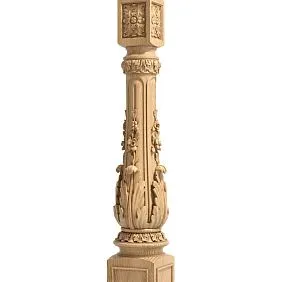
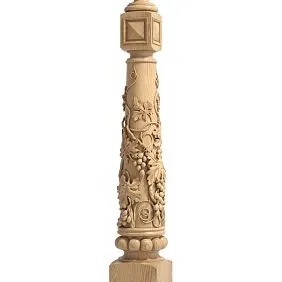
What turns an ordinary staircase into a work of art? What makes guests pause at the base of the staircase, involuntarily running their hand over the smooth surface of the handrail? The answer lies in the details that create the magic of space. Balusters and posts made of wood These are not just functional safety elements, but living sculptures that breathe with the house, age alongside its inhabitants, and preserve the family's history within their fibers.
In the world of modern architecture, where plastic and metal often displace natural materials, wood remains a symbol of eternity and warmth. Each baluster is a small poem written by nature in its growth rings, and the craftsman merely liberates this beauty from the superfluous, creating a form that will delight the eye and serve generations.
Imagine a morning in a country house. The first rays of sunlight penetrate through the window and fall upon the wooden posts of the staircase, highlighting the unique wood grain. At this moment, it becomes clear: choosing natural wood is choosing life, beauty, and harmony with nature.


Philosophy of wooden architecture in the modern world
Why, in an era of advanced technology, do we still reach for wood? The answer lies deeper than rational explanations—it is rooted in our genetic memory, in the thousand-year connection between humans and forests. Wood is not just a material; it is a living substance that continues to live even after becoming part of architecture.
The energy of natural material is felt on a subconscious level. Scientific studies confirm: people living in homes with wooden elements experience less stress, sleep better, and feel more harmonious. Wooden balusters and posts create a unique atmosphere of coziness that cannot be replicated with artificial materials.
The tactile sensations from touching high-quality wood are incomparable to anything else. The hand instinctively reaches for the wooden handrail, feeling its warmth and living texture. This is not just a physical sensation—it is an emotional connection with a material that has served humanity for centuries.
The aromatherapeutic properties of different wood species create a unique microclimate in the home. Coniferous species release phytoncides, which purify the air and positively affect the respiratory system. Deciduous species fill the space with subtle, barely perceptible aromas that create a sense of closeness to nature.




Psychology of perception of wooden elements
The human eye is structured to best perceive natural forms and textures. Wooden balusters with their natural lines and organic transitions create visual comfort, reduce eye strain, and promote relaxation.
The color palette of natural wood harmonizes perfectly with any shades in interior design. From honey-gold tones of pine to deep chocolate hues of oak—each species offers its own palette that seamlessly integrates into the overall design concept.
The play of light and shadow on the surface of wooden posts creates a living, constantly changing picture. Throughout the day, lighting changes, and with it, the perception of the staircase space transforms. Morning light highlights the softness of the texture, daylight reveals contrasts, and evening light creates a cozy, intimate atmosphere.
Our factory also produces:



Variety of species: from classic to exotic
Choosing a wood species for making balusters and posts is not only an aesthetic question but also an understanding of the material's character and its behavior under various usage conditions. Each species has unique properties that determine its suitability for specific tasks.
Oak — king among trees. Its majestic beauty and unmatched strength make oak balusters a symbol of reliability and status. Oak density reaches 700-800 kg/m³, ensuring exceptional longevity of products. Tannins contained in the wood create natural protection against pests and decay.
Ash — embodiment of elegance. Light-colored wood with expressive texture is ideal for modern interiors. Ash has high impact resistance, making it resistant to dynamic loads. This species easily accepts staining, allowing for various color solutions.
Beech — master of transformations. Uniform structure and excellent workability make beech an ideal material for creating complex forms. It easily takes on any shades when stained, from soft pink to deep brown.
Get Consultation
Coniferous species: accessibility without compromise
Pine is democratic beauty. Do not underestimate this species due to its accessibility. High-quality pine, properly processed, creates beautiful balusters that serve for decades. High resin content provides natural moisture protection.
Larch — the northern pearl. This species combines the beauty of conifers with the durability of hardwoods. Larch is practically resistant to rot and can be used even in high-humidity conditions. Its reddish-brown hue creates a warm, cozy atmosphere.
Cedar — the aristocrat among conifers. The noble pinkish tone and delicate aroma make cedar balusters especially valuable. This species possesses natural antiseptic properties and creates a unique microclimate in the home.
Technological aspects of creating perfection
Modern Production balusters and posts made of wood This is a symbiosis of traditional craftsmanship and advanced technologies. Each production stage requires deep knowledge of the material and flawless mastery of tools.
The selection and preparation of raw materials begin with a careful analysis of each log. The craftsman evaluates the grain direction, presence of defects, and wood density. Only material meeting strict criteria is allowed for further processing.
Drying is a critically important stage. The moisture content of finished products must not exceed 8–12%, achieved through multi-stage kiln drying. The process may last several weeks, but it ensures the geometric stability of finished balusters.
Mechanical processing is performed on high-precision equipment. Modern CNC lathes allow reproducing complex profiles with accuracy down to fractions of a millimeter. At the same time, manual finishing remains possible to create unique elements.
The Art of Carving in the Digital Age
Hand carving remains the pinnacle of craftsmanship, despite the development of automation. An experienced carver can create a work of art where every detail bears the imprint of the human soul. Such items become family heirlooms passed down from generation to generation.
Multi-axis machine carving allows reproducing complex ornaments with perfect repeatability. This is especially important when manufacturing large batches of balusters for large-scale projects.
A combined approach combines the advantages of both technologies. The main shape is created on machines, while final finishing is done manually, ensuring an optimal balance of quality and cost.
Design solutions: from classic to avant-garde
The world of baluster and post design is astonishing in its diversity. From strict classical forms to bold avant-garde solutions — every style finds its embodiment in wood.
The classical style never goes out of fashion. Balusters with fluting, capitals, and bases in the spirit of ancient orders create an atmosphere of solemnity and respectability. Proportions, perfected over centuries, ensure harmonious perception of the entire composition.
Baroque and Rococo offer opulence and ornamentation. Complex carved elements, twisted columns, floral ornaments transform each baluster into a work of art. Such items require the highest level of craftsmanship.
Modernism introduces smooth lines and natural motifs. Stylized plants, wavy forms, asymmetrical compositions create a sense of movement and life.
Modern design trends
Minimalism values purity of form and functionality. Simple geometric balusters without excessive decoration highlight the beauty of the material itself. Their strict lines create a sense of order and calm.
Eco-style strives for maximum naturalness. Balusters with minimal processing, preserving the natural wood texture, create a sense of closeness to nature. Sometimes, even natural irregularities and knots are retained as design elements.
Fusion boldly combines different styles and materials. Wooden balusters can be complemented with metal inserts, glass elements, creating unique compositions.
Technical Specifications and Quality Standards
The beauty of balusters should not compromise their functionality. Building codes establish clear requirements for strength, dimensions, and methods of attaching stair railings.
The height of railings for residential spaces should be at least 90 cm, for public buildings — 110 cm. These requirements ensure the safety of stair users.
The distance between balusters should not exceed 15 cm center-to-center to prevent children from slipping. At the same time, visual harmony is important — too frequent balusters create a "grid" effect.
Load-bearing characteristics regulate the ability of railings to withstand horizontal loads. The standard load is 100 kg per linear meter, but high-quality wooden balusters can withstand significantly greater forces.
Testing methods and quality control
Static tests check the ability of balusters to withstand constant loads without deformation. Samples are subjected to loads exceeding operational limits by several times.
Dynamic tests simulate real operating conditions, taking into account impact loads and vibrations. This is especially important for public buildings with high pedestrian traffic.
Climate tests check the stability of products under changes in temperature and humidity. Quality balusters must maintain their geometry under a wide range of conditions.
Installation and mounting: the art of precision
Even the highest quality wooden balusters and posts may disappoint if installed improperly. Installation requires not only technical skills but also an understanding of wood behavior.
Foundation preparation includes careful checking of step horizontal alignment and wall verticality. Any deviations must be corrected before installing balusters.
Installation marking is performed with jewel-like precision. Laser levels and special templates are used to ensure ideal geometry.
Mounting methods are chosen depending on the type of balusters and operating conditions. Traditional mortise-and-tenon joints provide maximum strength, while modern metal fasteners offer ease of installation.
Features of working with different species
Hardwood species require pre-drilling holes for fasteners. The drill bit diameter should be 1-2 mm smaller than the fastener diameter to ensure a tight fit.
Softwood species allow screwing in fasteners without pre-drilling, but require caution to avoid cracking the wood.
Adhesive joints complement mechanical fastening, ensuring airtightness and additional strength. Modern polyurethane adhesives create bonds stronger than the wood itself.
Care and Maintenance: Preserving Beauty for Years
Proper care of wooden balusters and posts ensures their longevity and preservation of their original appearance. Wood is a living material that requires attention and care.
Regular cleaning should be done with gentle means that do not damage the protective coating. Dust is removed with a soft dry cloth or vacuum cleaner with a soft attachment.
Controlling humidity in the room helps prevent wood deformation. Optimal air humidity is 40-60% at a temperature of 18-22°C.
Coating renewal is recommended every 3-5 years depending on usage intensity. Timely renewal of varnish or oil protects wood from wear and contamination.
Seasonal care specifics
Winter with heating may lead to wood drying out. Using air humidifiers helps maintain optimal microclimate.
Summer with high humidity requires good room ventilation. Stagnant humid air may lead to mold growth.
Transitional seasons are characterized by sharp temperature and humidity fluctuations. During this time, it is especially important to monitor the condition of wooden elements.
Economic Aspects: Investment in Quality
Choosing high-quality wooden balusters and posts is an investment in long-term value. Initial costs are offset by durability, aesthetic qualities, and ability to increase property value.
Material cost depends on wood species, processing complexity, and order volume. Coniferous species offer optimal price-to-quality ratio, while hardwoods offer premium characteristics.
Installation costs account for 30-50% of material cost with professional installation. Cutting costs on installation may result in additional expenses in the future.
Operational costs are minimal with proper care. High-quality wooden balusters do not require frequent repairs or replacement.
Comparison with alternative materials
Metal balusters may be cheaper to produce, but require regular anti-corrosion treatment and create a sense of coldness.
Glass railings look modern but require constant care and may be hazardous if damaged.
Composite materials offer durability but cannot match natural wood in aesthetic qualities and eco-friendliness.
Trends in development and innovation
Industry production wooden balusters and posts The industry is constantly evolving, adopting new technologies and materials. The future of the industry lies in combining traditional craftsmanship with innovative solutions.
Digital technologies revolutionize the design process. 3D modeling allows clients to see the future result even before production begins, while virtual reality lets them 'walk' through the staircase.
Ecological innovations include using certified wood, waste-free production technologies, and water-based eco-friendly coatings.
Smart technologies are integrated into traditional products. Built-in lighting, motion sensors, and monitoring systems can be seamlessly incorporated into wooden balusters.
Personalization and Individual Approach
Mass customization allows creating unique items during serial production. Parametric design enables easy modification of dimensions and design details.
Designers' collections are becoming increasingly popular. Each collection reflects an individual vision of beauty and functionality.
Family traditions in balustrade design allow creating items reflecting the history and values of a specific family.
Conclusion
The world of wooden balusters and posts is a wonderful universe where beauty and functionality, traditions and innovations, craftsmanship and technology come together. Each item carries a part of the craftsman's soul and the breath of nature, creating a warm and cozy atmosphere in the home.
Choosing wooden balusters and posts is a choice in favor of eco-friendliness, durability, and unique beauty. It is an investment not only in the functionality of the staircase but also in the emotional comfort of all inhabitants of the house.
Modern technologies open boundless opportunities for creativity, but the foundation remains a deep understanding of the material and respect for the traditions of craftsmanship. It is precisely this combination that ensures the creation of items that will delight not just one generation.
In a world where individuality and authenticity are increasingly valued, wooden balusters and posts become a way to express one's personality and create a unique interior. They transform the home into a place where one wants to live, create, and be happy.
STAVROS, recognized as a leading company in the production of wooden architectural elements, embodies the finest craftsmanship traditions and the most modern technologies in its products. Years of experience, use of premium raw materials, and strict quality control at every stage of production enable STAVROS to create balusters and posts that become true works of art. Choosing STAVROS products means investing in beauty, quality, and durability, receiving items that will serve your family for many years, creating an atmosphere of warmth and comfort in your home.